
Sabra Botch-Jones, M.S., M.A., D-ABFT-FT, is a forensic toxicologist at Boston University School of Medicine/fTox Consulting, LLC. With the move towards decriminalization of marijuana across North America comes the issue of legal DUI tolerances with cannabis impairment. Sabra wrote this accredited, scientific article specifically for DyingWords. Thanks, Sabra!
Introduction
 Several States have moved into a new era with the legalization of medical and/or recreational use of marijuana. With this shift we must stop and ask the question of “are we ready”?
With the year 2014 behind us, we have 24 states with legislation allowing the use of marijuana for certain medical conditions and two states (Colorado and Washington) having passed laws allowing its use recreationally. This is a historical shift for a substance that has had a world-wide presence since 28th century B.C.
 Safety-sensitive functions such as operating a motor vehicle require our full attention and distracted or impaired operation can be catastrophic. Driving under the influence of an impairing substance, including legal recreational (i.e alcohol) and prescription drugs, puts our lives and those around us at risk.
Therefore, let us explore the risk posed by driving “high” and what research is telling us.
What We Know
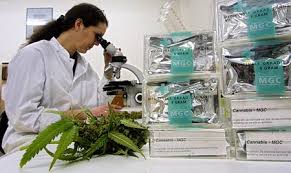 A multitude of studies exist on cannabis intoxication and its effect on the skills needed to drive safely. With this magnitude of information, the answer to our previous question “are we ready” should be yes, but is it?
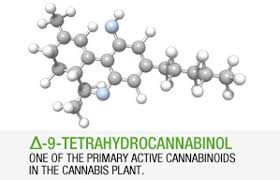
We know that drug use, alone or in combination with alcohol, increases our risk of being involved in a motor vehicle accident; however, the level(s) (if any) of tetrahydrocannabinol (THC) used to determine impairment is the subject of debate.
Research shows inter-individual variation in impairment, with some individuals being dangerously impaired at very low levels. Conversely, there are individuals who showing no appreciable cognitive effects test well above the suggested levels.1-7
 This variability makes passing legislation based on compound levels extremely difficult and may lead to erroneous perceptions that driving while high is not dangerous.
Complex tasks such as driving require attentiveness, accurate perception of speed and timing as well as altertness.1-6 These are all areas that THC can negatively effect.1-6
In a placebo-controlled cross-over study investigating the acute effects of smoking high-potency cannabis joints on psychomotor skills related to driving, researchers found that subjects still reported experiencing a “high” or “feelings of intoxication” well past peak levels, with measured concentrations dropping below the legal level 5 ng/mL set by some states.1
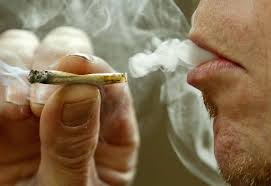 It is challenging to correlate what this level means to actual impairment due to the fact that THC levels in the blood peak quickly following inhalation and decline rapidly based on pharmacokinetics.6 Adding to the complexity of analytical interpretation of THC in the blood is time, with subjective effects felt as soon as after 1 to 2 inhalations.8
Researchers have also shown that significant impairment of tracking skills (used as an indication of accurate motor control) accompanies marijuana use.1 Ultimately these authors concluded “that smoking cannabis significantly decreases psychomotor skills and globally alters the activity of the main brain networks involved in cognition even at low concentrations of THC in the blood.”1
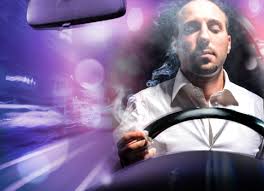 In addition to these skills, attention alone, divided attention, visual functions, and reaction time are all areas impaired when an individual drives “high”.1-3 The impairment of each of these skills differs depending on the dose and potency of the drug. Therefore the effects of marijuana and the detrimental consequence on a particular skill varies depending on the particular function being employed.
What Should We Do?
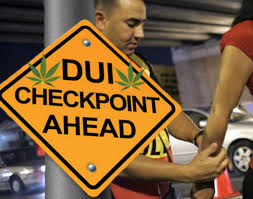 Establishing levels of THC in which a jurisdiction considers an individual impaired is challenging. Some countries have established a zero-tolerance approach to compensate for individual-to-individual impairment. In the United States, we have created similar laws for certain drugs to account for lack of scientific knowledge and/or user variability and this may be an approach to consider.
Regardless of what approach is taken, as with all drugs (recreational or prescription) ultimately it is the individual that must be responsible for their actions.
Refrain from operating a motor vehicle when impaired and be aware that negative effects can continue well past the feeling of being “high”.
References:
-
Battistella, Giovanni et al. “Weed or Wheel! fMRI, Behavioural, and Toxicological Investigations of How Cannabis Smoking Affects Skills Necessary for Driving.” Ed. Lin Lu. PLoS ONE 8.1 (2013): e52545. PMC. Web. 5 Jan. 2015.
-
Walsh, J. Michael et al. “Drugs and Driving”. Traffic Injury Prevention. Vol. 5, Iss. 3, 2004
-
Sewell, R. Andrew, James Poling, and Mehmet Sofuoglu. “THE EFFECT OF CANNABIS COMPARED WITH ALCOHOL ON DRIVING.” The American journal on addictions / American Academy of Psychiatrists in Alcoholism and Addictions 18.3 (2009): 185–193. PMC. Web. 5 Jan. 2015
-
Moskowitz H. Marihuana and driving. Accid Anal Prev. 1985;17:323– 345.
-
Hall W. The Health and Psychological Consequences of Cannabis Use. Canberra: Australian Government Publication Service; 1994.
-
Kurzthaler I, Hummer M, Miller C, et al. Effect of cannabis use on cognitive functions and driving ability. J Clin Psychiatry. 1999;60:395– 399.
-
Liguori A, Gatto CP, Robinson JH. Effects of marijuana on equilibrium, psychomotor performance, and simulated driving. Behav Pharmacol. 1998;9:599–609.
-
Berghaus G, Scheer N, Schmidt P. Effects of Cannabis on Psychomotor Skills and Driving Performance-A Metaanalysis of Experimental Studies. Schafer Library of Drug Policy. Accessed Jan. 08, 2015
http://druglibrary.org/schaffer/misc/driving/s16p2.htm
* * *
 Sabra Botch-Jones, M.S., M.A., D-ABFT-FT of Boston University School of Medicine/fTox Consulting, LLC, is a Forensic Toxicologist and full-time faculty member at Boston University’s Biomedical Forensic Sciences graduate program. She teaches courses in Drug Chemistry, Forensic Toxicology and Instrumental Analysis in Forensic Laboratories.
She began her career with the Federal Aviation Administration’s Bioaeronautical Sciences Research Laboratory at the Civil Aerospace Medical Institute and was a Senior Forensic Toxicologist/Quality Manager at the Tarrant County Medical Examiner’s Office.
 Sabra is board certified as a Diplomate by the American Board of Forensic Toxicology. She earned her Master of Science degrees in Drug Chemistry and Forensic Toxicology from the University of Florida as well as undergraduate and graduate degrees in Criminal Justice from the University of Central Oklahoma. She conducts research in the areas of forensic toxicology, analytical chemistry, as well as epidemiological studies on drug use.
 Sabra has authored and co-authored 14 scientific articles. She is active in a number of professional organizations including the National Safety Council’s Alcohol, Drugs and Impairment Division (Executive Board), Society of Forensic Toxicologists, Southwestern Association of Toxicologists, Association for Women in Science (Writer-AWIS Magazine), and the American Academy of Forensic Sciences.
Sabra was recently selected to be a member of the toxicology subcommittee of the Organization for Scientific Area Committees.