
Author Archives: Garry Rodgers

About Garry Rodgers

After three decades as a Royal Canadian Mounted Police homicide detective and British Columbia coroner, International Best Selling author and blogger Garry Rodgers has an expertise in death and the craft of writing on it. Now retired, he wants to provoke your thoughts about death and help authors give life to their words.

FORENSIC FACTS IN THE JFK ASSASSINATION

Forensic WorkshopHere’s a bit of news for DyingWords followers that I’m kinda proud to share. I’ve been invited to present at the 4th International Conference on Forensic Research & Technology being held on September 28-30, 2015, in Atlanta.  I’ll be doing a 2 hour workshop on The Forensic Facts in the JFK Assassination

The theme of this years conference is From Evidence To Verdict . It’s a prestigious event attended by hundreds of prominent forensic scientists and tech wizards from around the world, so it’s really humbling to be recognized for my dig into the JFK murder. Here’s the abstract I submitted which outlines the presentation.
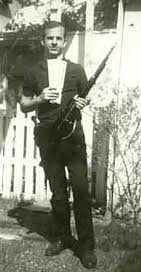
LHO Backyard 6Fifty-one years after United States President John F. Kennedy was assassinated in Dallas, Texas, nearly eighty percent of Americans polled believe that Lee Harvey Oswald was involved in a conspiracy to murder JFK. A portion even think that Oswald might have been completely innocent – the ‘patsy’ which Oswald claimed to be.

The JFK evidence was never presented in a trial and Oswald’s ‘twelve peers’ were never asked to deliver a verdict because Oswald was murdered before he could stand trial. Six different government investigations have resulted in conflicting conclusions. In fact, the last probe in 1978 found a possibility that a second gunman fired, therefore there was a ‘probability’ of conspiracy.
CE399A half century has produced many forensic breakthroughs, some of which applied to the JFK homicide give us a better understanding of what really went down in Dealey Plaza, on November 22nd, 1963, and a clearer look at Lee Harvey Oswald’s guilt or innocence.
If you were presented the factual forensic evidence, what would your verdict be?
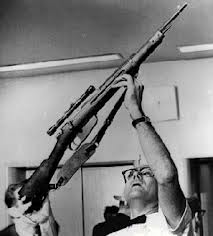
LHO Rifle -Lt DayJoin retired homicide detective, forensic coroner, and firearms expert Garry Rodgers as he lays out the forensic facts in the JFK case and how modern science interprets it. Rodgers’s life-long study of the most thoroughly investigated, highest profile homicide case of all time is delivered in an easy to follow and understand look at the ballistics, acoustics, autopsy, photographic, fingerprint, document, and other forensic evidence.

Attend this two hour workshop and deliver your own verdict on who murdered America’s 35th President.

Here’s the link to the conference website  http://forensicresearch.conferenceseries.com/ There’s a cool promo-banner there.

JFKSome additional news is that my book Lone Nuts – A No BS Guide to the JFK Assassination is with Wiley Publishing to be released as The JFK Assassination For Dummies.

DEMYSTIFYING SHOW VS. TELL IN FICTION WRITING

Friend and fellow crime-writer, Sue Coletta, gives this insightful cameo on the show vs. tell struggle in storytelling.

Sue15We’ve all heard it many times. Show vs. Tell, the advice that haunts many new writers. It can be very confusing. All telling can be just as bad as all showing. More experienced writers know that it is that perfect mix of both that creates a dynamic, well-rounded story.

Sue7The best advice I can give is to read, read, then read some more. Study how the best-sellers spin a good yarn. Basically it comes down to this: We need to show our stories as they unfold, but we need to do it in a way that evokes a visceral response in our reader. In a way that allows the reader to fill in the blanks with their imagination. But we also need to tell parts of that story so our characters don’t sound melodramatic and our books don’t end up being six hundred pages long.

If you think back to your favorite books undoubtedly they’ll be the ones that you pictured in your mind as you were reading them. Those are the novels that stay with you. Why? Because those authors used a perfect mix of telling, showing, and really showing.

Sue10It’s no secret that I’m a huge Karin Slaughter fan. Anyone who knows me can attest to that. So, awhile back I found her on Facebook and I was reading some of the comments she was getting from her fans. For those not familiar with her work in addition to stand-alones she has two series: Grant Pass series and Will Trent series. One of her fans wrote in and asked what Will Trent looked like.

Her response: “He looks exactly how you pictured him.”

Because the fan was a reader and not a writer she didn’t fully understand why she meant by that or why she wouldn’t expound. But the truth is she couldn’t. If she did she’d ruin the image her other readers had created in their mind of Will Trent.

We writers can help that image along by showing a specific characteristic without giving a laundry list of features. For instance:

Sue16Telling: “He had bright blue eyes and was six feet tall.” Showing: “His piercing blue eyes looked straight into my soul, and I knew he’d soon uncover all my lies.”

In the latter we’ve given a specific characteristic by showing our character’s emotional response to that feature. This becomes more important with main and secondary characters than with walk-ons– a minor character in one or two scenes. And here’s where telling comes into play. If it’s necessary for the reader to know that a nurse, say, is a blonde, then just tell them. No need to waste extra words on non-essential characters.

Telling: “That guy’s an ass.”

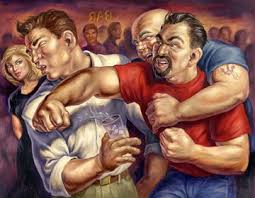
Sue18To show your reader that the guy’s an ass you’d have him crunch someone’s glasses under his foot, or beat up an old man. Really showing is when that same man is in a bar fight with your MC and he smells the guy’s sweat, watches his facial ticks, hears someone from the crowd shout “Kill him!”, tastes blood in the back of his throat.

During short interludes– when not a lot happens over a period of time– we tell the reader what happened. This could be a couple of sentences or a paragraph in length. It could even be three words. “Two days later.”

Sue9Basically, we use telling when we need to transition from point A to point B, or when we are divulging the character’s backstory– in tiny bits peppered throughout the novel.

Let’s say for instance nothing happens on the ride over to a crime scene. The reader does not need the play-by-play. They don’t need to be inside the MC’s head the whole time. Tell them what happened. Tell them that “the detectives arrived thirty minutes later.” When it’s a plot point we want to show the reader what happened. Showing can be a sentence or a paragraph in length. Really showing can go on for several paragraphs or even pages.

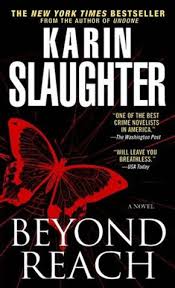
The following example of “showing” is from Karin Slaughter’s Beyond Reach.

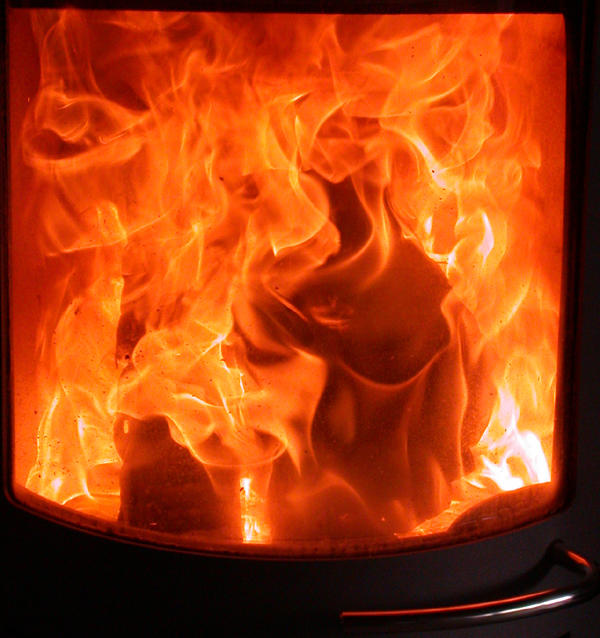
Sue12The lighter dropped onto her lap, the flame igniting the liquid, the liquid burning her clothes. There was a horrible keening– it was coming from her own throat as she sat helplessly watching the flames lick up her body. Her arms jerked up. Her toes and feet curled in like a baby’s. She thought again of that long-ago trip to Florida, the exhausting heat, the sharp, unbearable rip of pain as her flesh cooked to the seat.

The following example of “really showing” is from Karin Slaughter’s Fractured.

Sue14Automatically, her hands wrapped around his thick neck. She could feel the cartilage in his throat move, the rings that lined the esophagus bending like soft plastic. His grip went tighter around her wrists, but her elbows were locked now, her shoulders in line with her hands as she pressed all of her weight into the man’s neck. Lightening bolts of pain shot through her shaking arms and shoulders. Her hands cramped as if thousands of tiny needles stabbed into her nerves. She could feel vibrations through her palms as he tried to speak. Her vision tunneled again. She saw starbursts of red dotting his eyes, his wet lips opening, tongue protruding. She was sitting on him, straddling him, and she became aware of the fact that she could feel the man’s hip bones pressing into the meat of her thighs as he arched up trying to buck her off.

And it goes on for a few more paragraphs. As you can see, the difference between showing and really showing is length and detail. With really showing the writer gets into the finer details of the scene. “Lightening bolts of pain shot through her shaking arms…”

By really showing a scene the writer makes use of most or all of the senses– sight, touch, hearing, taste, smell– instead of just using one or two.

Sue1In short, we use telling for transition or traveling or telling what we’ve already shown so we aren’t being repetitive, and showing for plot points, actions, reactions, responses, to crank up the tension, etc. It takes more words to show a scene than to tell it.

By mixing them, we keep our reader engaged and keep them flipping pages. And that is what makes our stories come alive on the page.

*   *   *

Sue3Sue Coletta is a crime fiction writer who’s authored four novels– soon to hit the shelves, so keep watch! She’s a member of Sisters In Crime and Crime Space and blogs with twenty-four traditionally published authors at: www.auniqueandportablemagic.blogspot.com.

Visit her Murder Blog, where she discusses writing tips, musings, and crime fiction at: www.crimewriterblog.com or follow Sue on Twitter @SueColetta1

Sue2


THE REAL AFGHANISTAN FROM A MARINE RECON’S VIEW

I was sent this piece from an author wishing to remain anonymous. From knowing soldiers who served in Afghanistan and hearing first-hand of their experiences with that country and its people, I think it’s a very realistic look at a destitute situation.

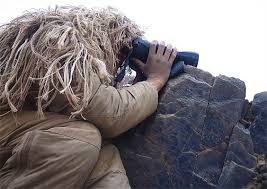
Af1I’m a Reconnaissance Marine in Afghanistan writing from the Sand Pit. I’m freezing my balls off here – sitting on hard, cold dirt between rocks and shrubs at the base of the Hindu Kush Mountains, along the Dar’yoi Pamir River, and watching a hole that leads to a tunnel that leads to a cave. Stake out, my friend, and no pizza delivery for thousands of miles.

I also glance at the area around my ass every ten to fifteen seconds to avoid another scorpion sting. I’ve actually given up battling the chiggers and sand fleas, but the scorpions give a jolt like a cattle prod. Hurts like a bastard. The antidote tastes like transmission fluid, but God bless the Marine Corps for the five vials of it in my pack.

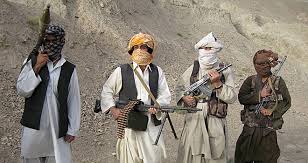
Af2The one ugly truth the Taliban cannot escape is that, believe it or not, they are human beings, which means they have to eat food and drink water. That requires couriers and that’s where a bounty hunter like me comes in handy.

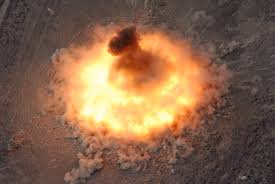
I track the couriers, locate the tunnel entrances and storage facilities, type the info into the handheld, and shoot the coordinates up to the satellite link that tells the air commanders where to drop the hardware. We bash some heads for a while, and then I track and record the new movement. It’s all about intelligence.

Af3AWe haven’t even brought in the snipers yet. These scurrying rats have no idea what they’re in for. We are but days away from cutting off supply lines and allowing the eradication to begin. But you know – I’m a romantic. I’ve said it before and I’ll say it again: This country blows, man. It’s not even a country.

There are no roads, there’s no infrastructure, there’s no government. This is an inhospitable, rock pit shit hole ruled by eleventh century warring tribes. There are no jobs here like we know jobs. Afghanistan offers only two ways for a man to support his family; join the opium trade or join the army. That’s it. Those are your options.

Af4Oh, I forgot, you can also live in a refugee camp and eat plum-sweetened, crushed beetle paste and squirt mud like a goose with stomach flu, if that’s your idea of a party. But the smell alone of those ‘tent cities of the walking dead‘ is enough to hurl you into the poppy fields to cheerfully scrape bulbs for eighteen hours a day.

I’ve been living with these Tajiks and Uzbeks, and Turkmen and even a couple of Pashtus for over a month-and-a-half now, and this much I can say for sure: These guys, are Huns….actual, living Huns. They LIVE to fight. It’s what they do. It’s ALL they do. They have no respect for anything, not for their families, nor for each other, nor for themselves.

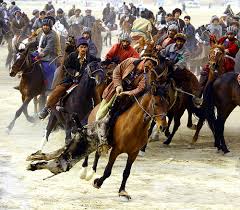
Af5They claw at one another as a way of life. They play polo with dead calves and force their five-year-old sons into human cockfights to defend the family honor. Huns, roaming packs of savage, heartless beasts who feed on each other’s barbarism. Cavemen with AK-47’s. Then again, maybe I’m just a cranky bastard.

I’m freezing my ass off on this stupid hill because my lap warmer is running out of juice, and I can’t recharge it until the sun comes up in a few hours.

Oh yeah! You like writing, Garry. Do me a favor. Write a letter to CNN and tell Wolf Blitzer and Anderson Cooper and that awful, sneering, pompous Aaron Brown to stop calling the Taliban ‘smart’.

They are not smart.

Af6I suggest CNN invest in a dictionary because the word they are looking for is “cunning.” The Taliban are cunning, like jackals and hyenas and wolverines. They are sneaky and ruthless, and when confronted, cowardly. They are hateful, malevolent parasites who create nothing and destroy everything else.

Smart! Bullshit! Yeah, they’re real smart, they’ve spent their entire lives reading only one book (and not a very good one, as books go) and consider hygiene and indoor plumbing to be products of the devil! They’re still figuring out how to work a Bic lighter.

Af7Talking to a Taliban warrior about improving his quality of life is like trying to teach an ape how to hold a pen. Eventually, he just gets frustrated and sticks you in the eye with it.

OK, enough. Snuffle will be up soon, so I have to get back to my hole. Covering my tracks in the snow takes a lot of practice, but I’m good at it.

Please, I ask you to tell my fellow Americans, and the rest of the civilized world, to turn off the TV sets and move on with your lives. The story line you’re getting from CNN and other news agencies is utter bullshit and designed not to deliver truth, but rather to keep you glued to the screen so you will watch the commercials.

Af8CThe worst thing you guys can do right now is sit around analyzing what we’re doing over here, because you have no fucking idea what we’re doing and, really, you don’t want to know. We are your military, and we are only doing what you sent us here to do.

“Semper Fi” – Freedom is not free, but the U.S. Marine Corps will pay most of your share.