Author Archives: Garry Rodgers

About Garry Rodgers

After three decades as a Royal Canadian Mounted Police homicide detective and British Columbia coroner, International Best Selling author and blogger Garry Rodgers has an expertise in death and the craft of writing on it. Now retired, he wants to provoke your thoughts about death and help authors give life to their words.

THE BOOK THAT WAS NEVER MEANT TO BE

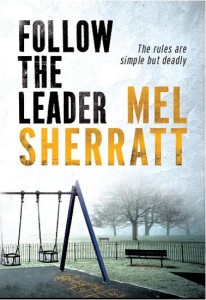
I recently connected with British BestSelling crime-writer, Mel Sherratt, after reading some of her superbly crafted work. Mel generously shares on DyingWords how her about-to-be released new book, Follow The Leader, came to be.
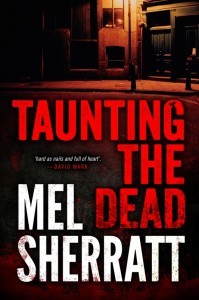
Mel1When I wrote Taunting The Dead back in 2010, I had no idea that I was going to write a police procedural. My character, Allie Shenton, started off as a police family liaison officer, but as the plot evolved and she needed to be out of the suspect’s house more than I had originally planned, it made sense to make her a detective sergeant – plus the book benefited from being in multiple viewpoints.
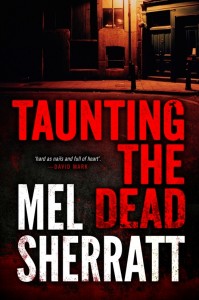
When I published Taunting The Dead, it was my debut novel, although it was the fifth book I had actually written. I had no idea of its reach. I mean, how does anyone know when they publish a book? The most you hope for when you start out is that someone might like it enough to recommend it to someone else… and then some.
Mel4Step back a little to the four books I had already written. Three of these are the books that currently make up The Estate Series. Feeling passionate about these books after two of them had been rejected by several mainstream publishers, I decided to re-edit them and publish them off the back of Taunting The Dead and when they did well, I thought perhaps Taunting The Dead had been a fluke.

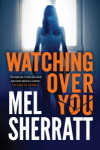
At that time, I had written 10,000 words of a follow-on from Taunting The Dead, but then decided to write a psychological thriller and take the fast pacing and twisting of Taunting The Dead and the emotion and fear of The Estate Series and combine the two. That ended up as Watching Over You

Mel2When I got a two book deal with Thomas & Mercer, I chatted to my editor about the 10,000 words I’d written and so I concentrated on writing Follow The Leader. I’m now putting the finishing touches to the third in the series, Only The Brave. I can’t tell you how much I’ve enjoyed writing about Allie Shenton again.

What I learned from all this – despite thinking that I didn’t enjoy writing police procedurals, and instead concentrating on one or two main characters in Watching Over You, I actually like writing books with multiple viewpoints and sub-plots. Follow The Leader was a challenge because I had to get rid of the baggage but once I’d done this, the words began to add up.
Mel5I learned such a lot from my editor at Thomas & Mercer. She made me into a better writer, I’m sure. And now I’m happy with the direction my writing is heading. I am a gritty writer, not afraid to write about touchy subjects, no matter how harsh the reviews are sometimes. But I enjoy what I do – and hopefully a lot of readers do too. I have over 1700 reviews across my books on Amazon – with 85% of those 4 and 5 stars – that ain’t too bad.  So, for anyone who has read one of my books and left a review to say so, or contacted me to say so, THANK YOU so much.

The book that was never meant to be, Follow The Leader, will be published 10 February 2015, followed by Only The Brave, penned in for 26 May 2015.

Mel8The three books tie up a sub-plot that runs through them all. In Only The Brave, you’ll get re-acquainted with the Ryder family… oh, how I’ve enjoyed that! I’ve mirrored a lot of things from Taunting The Dead and in Only The Brave, but all three books can be read as stand-alones – there is a crime to be solved in each book.

I’m writing more books in The Estate Series at the moment too. But, funnily enough, now that I’ve written three books with Allie Shenton as my main character, I’ve found myself planning two more… 

*   *   * 

Mel7Mel Sherratt has been a self-described ‘meddler of words’ ever since she can remember. Since successfully self-publishing Taunting The Dead and seeing it soar to the rank of number one best-selling police procedurals in the Amazon Kindle store in 2012, Mel has gone on to publish three more books in the critically acclaimed The Estate Series. 

Her new book, Watching Over You, came out on 14 January 2014 and went to #1 in psychological thrillers in the UK, US, German and Australian Kindle charts.

Since its re-release in December 2013, Taunting The Dead has also gone to #1 in police procedurals in the UK, US and Australian Kindle charts.

Mel4The three books in The Estate Series also hit spots #1, #2 and #3 in the overall top 100 Australian charts and recently all three entered the top 100 in the UK. They have all been #1 in the UK psychological thrillers category.

Mel2Watch for Mel’s next book Follow The Leader which is set for release on February 10th, 2015, and shortly followed by Only The Brave on May 26, 2015. Mel has also generously agreed to a Q&A interview here on DyingWords and we’ll post that in time for the launch of Follow The Leader.

Here’s Mel Sherratt’s website http://melsherratt.co.uk/

Follow Mel on Twitter  @writermels

Her Facebook page is https://www.facebook.com/pages/Mel-Sherratt/218120504951096

Thanks so much for doing this, Mel!

BREAKTHROUGHS IN FORENSIC TECHNOLOGY

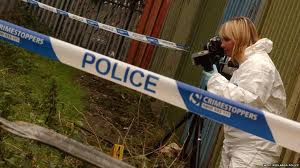
tech1Technology has made huge breakthroughs over the past thirty-five years that I’ve been around criminal and forensic investigation (CSI). Without question, the next thirty-five are going to bring mind-blowing advances. I’ve looked into my forensic crystal ball to come up with five things I think will be real by 2050.

But first… let’s look at the top five since 1980.

1. Computers

When I started policing, the PC was unheard of.

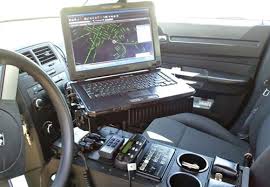
tech2The only computing system we had was a mammoth of a beast that filled-up many rooms at headquarters. CPIC, or the Canadian Police Information System, was in its infancy as was its American counterpart, NCIC or National Criminal Intelligence Center. Both systems are still around but, instead of having to phone to book appointments to use the system, the information now comes straight to the patrol cars or to a detective’s smart device.

Computers have affected every facet of forensic investigation.

Despite complex computerized analysis being fast and accurate, the routine is much easier. Report writing is far simpler – no more carbon paper to make multiple copies, no more white-out, and thank God for spell-check. Communications are instant with internet email and gone are the days of waiting for a report to show up in snail mail. Training is done through computerized simulation, sketching is replaced by computer-aided drawing, and administration is now done by the keyboard. Computers are what allowed the next four advances to occur.

2. AFIS – Automated Fingerprint Identification System

tech3The science of fingerprinting has been around nearly one hundred and fifty years, but the mechanism of storage and matching prints was cumbersome. Known prints from criminals used to be rolled in ink and stored on paper and the latent prints from crime scenes were lifted in powder were stored in plastic sheets. There was no effective system to easily match the two. Today, suspect prints are digitally scanned and stored in data bases. Latent prints are still lifted in conventional manners, but they’re then scanned and put into a search engine where they can be matched right from the crime scene.

3. Photography

tech4Today’s digital photography is a tremendous time-saver compared to the days of negative and image development. It’s instantaneous to share over the internet, even allowing an investigator to snap a digital photo in the field and email it to the other side of the world. Another facet of crime fighting is the incredible amount of mobile and stationary cameras that are out and about in society which capture movements of criminals before, during, and after events. Many crooks have gone down because they failed to realize they were on camera.

4. Education

tech5Today’s forensic investigators are far better educated than in the 1980’s. Much of that is due to the ease of which information can be shared. Where it used to take great blocks of time and huge resources to assemble courses and conferences, many agencies now use webinars and on-line presence to create ‘virtual’ classrooms. Education and sharing information are the jewels in crime-fighting.

5. DNA

tech13Deoxyribonucleic acid or genetic fingerprinting is probably the best crime-fighting tool ever developed. Today, thanks to the computer, the sophistication and expediency of DNA testing has led to it being commonly – and accurately – used in the majority of serious crime investigations. Many convictions have been secured on DNA evidence alone. Conversely, many innocent people have been cleared of suspicion due to elimination by DNA typing.

So that’s what happened over the past third century. Ever wonder what’s going to happen over the next third?

Well, I’m gazing into the crystal ball and predict five things.

1. Holograms

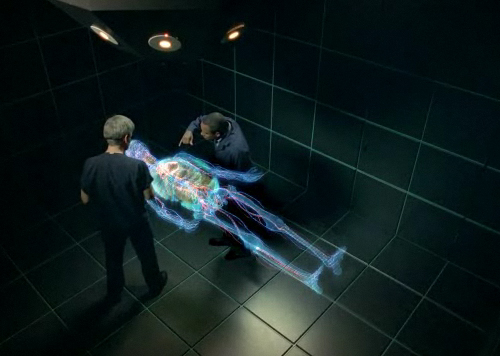
tech73-D technology is commonplace in movies and on TV. Many criminal prosecutions are already presented through computer-aided reconstruction to lay out the scene, bullet paths, vehicle motions, and blood-spatter patterns.

I see a day when virtual-reality holograms are imaged in the middle of the courtroom so the jurors can watch a total recreation of how the crime went down.

2. Brain-Scan Polygraphs

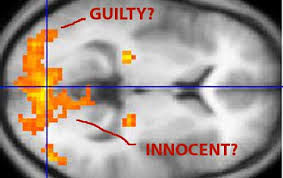
tech8Conventional polygraphs have only slightly evolved in three decades and that was by the replacement of the old ink-needle charts with laptop technology. The basics of polygraphy still depends on the ability of a skilled operator to formulate key questions and then interpret the subject’s involuntary body reactions – pulse, respiration, blood pressure, galvanic skin responses, and perspiration.

I see a day when brain mapping and analysis of how a subject responds under electroencephalography (EEG) and function magnetic resonance imaging (fMRI) will replace the current polygraph. The technology is already here and research is underway towards its forensic application.

2. Laser Devices

tech9I think lasers have phenomenal potential in forensics. Currently, laser lighting is used to amplify fingerprint and tool marking evidence. It’s also used in ballistic matching where the old electron-scanning comparison microscopes are being replaced by laser/laptop examiners like the Bullettrax 3D which makes the peaks and valleys of a ballistic engraving show up like satellite ground mapping radar images.

I see a day when forensic investigators will map out a crime scene with hand-held laser devices to perfectly record information which will be transformed into hologram reproductions.

4. Ion-Sniffers

tech10Detection of ions through gas chromatography mass spectrometers has been around fifty plus years and is still used daily in crime labs. What’s missing are portable devices to assist in field searches of buildings, vehicles, boats, planes, and the great outdoors. Often investigators know exactly what they’re looking for – a firearm, explosives, contraband, or even a dead body – but the parameters of the search area turn it into the needle-in-a-haystack scenario.

I see a day when the ionic signature of the article(s) being searched for are dialled into the device and it zooms right into the location.

5. Satellite Tracking of Dangerous Criminals

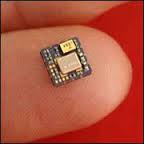
tech11Over the past few decades we’ve got a better handle on controlling violent and prolific offenders through DNA profile banks and ankle bracelets of parolees. We’ve also had tremendous advances in satellite technology where smart-bombs are delivered down terrorist’s chimneys and GPS aps tell you exactly where you are on the planet. We have microchips in everything from our bank cards to our pet Schnauzers and there are more cell phones in Africa than people. What we don’t know is where the dangerous .001 percent of the population are and have been.

AB23479I see a day that we’ll ditch these guy’s rights. We need to protect the 99.999 percent of the population that’s at risk. Common sense will prevail and there’ll be court orders mandating satellite tracking chips being surgically implanted into dangerous offenders.

I’ll check back with you in 2050. It’ll be interesting to see what I’ve missed.

ARE YOU A WRITER? THEN WRITE!

Great to have BestSelling author and social media expert Rachel Thompson as a guest on DyingWords. I follow Rachel on her sites, BadRedHeadMedia and Rachel in the OC, and love her No-BS style. She generously agreed to share some thoughts on writing.

Rachel1AI noticed an extremely talented writer friend hadn’t blogged for awhile, so I checked in on her last night. She decided to take a break due to some harsh comments from those supposedly ‘in the know,’ and was taking time to lick her wounds and hadn’t written in months. I am a true fan, and was shocked to see her so affected. But I could relate. 

Been there, done that. I gave her this advice: ‘Screw ‘em. Trust your voice. They’re jealous of your amazing talent, and by silencing you, they are somehow feeling better about their lack of it.’

Write, my dear friends. Ignore what THEY say. Trust your voice, believe in yourself. You are amazing.

‘YOU CAN’T WRITE’

Rachel2AI’ve been there. Someone I respected, who was ‘in the know,’ told me that my work wasn’t ‘ready for publication, was boring, that nobody would read it.’ So, I walked away from that situation. Doesn’t matter who that person is. What’s important is that I listened, I let it affect me, and I crawled into a dark, gray hole. For a nanosecond.

SO I WROTE ANYWAY

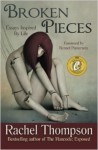
Rachel3And then completely ignored this person’s advice, wrote Broken Pieces, the book this person said nobody would read, because I trusted my voice. And it not only changed my life, it also connected me to so many amazing survivors, writers, readers, bloggers, reviewers…to PEOPLE I likely would never have otherwise met.

LET PEOPLE HELP YOU

Your first draft is going to be awful. Terrible. Shit. So what? You’re no different than…

Ernest Hemingway: The first draft of anything is shit” or

Rachel 4BAnne Lamott: “Almost all good writing begins with terrible first efforts. You need to start somewhere. Start by getting something—anything—down on paper. What I’ve learned to do when I sit down to work on a shitty first draft is to quiet the voices in my head.”

I personally refer to my first drafts as ‘word vomit.’ The problem, I’ve discovered, is that most new writers try too hard to make their writing perfect on the first try (impossible, I tell you!), so that when they receive criticism (and they will), they crumple. I was no different. So…what to do?

Blogging helps. Share your writing.

Rachel5BBut when it comes to getting ready for publication (no matter which direction you take), hire a writing coach, or a professional editor, someone who knows about writing and does this for a living. Not your Aunt Edna who used to correct English papers back in the day.

You are too close to it to edit your own work. And by edit, I do not mean grammar and proof — no, no, no. I mean structural edits — looking at the entire content and seeing what flows, what fits, what doesn’t, what needs revision, what needs to be cut.

BUT I HAVE NO MONEY!

Rachel6AGosh, if I had a nickel for every time I’ve heard this, I’d be rich by now. I get it, I do. I’m there, too. But guess what? Your book will not sell if it’s riddled with errors. You cannot afford not to hire a professional. Would you do your own heart surgery? No.

Besides, there are terrific options now: crowdfund using Pubslush (a crowdfunding platform just for book projects), look at Bibliocrunch (find quality professionals for your book publishing needs within your budget), barter services, whatever! Make it happen.

Point is this: writers write.

Don’t let anyone influence you about you. Trust your voice. Protect it, above all else.

Figure the rest out later.

 “Express yourself, don’t repress yourself” ~ Madonna (Human Nature)

*   *   *

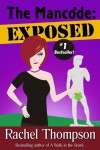
Rachel7Rachel Thompson is the author of the award-winning Broken Pieces, as well as two additional humor books, A Walk In The Snark and Mancode: Exposed. Rachel is published and represented by Booktrope.

Rachel9She owns BadRedhead Media, creating effective social media and book marketing campaigns for authors, and Rachel in the OC where she gives writing and marketing advice.

Rachel10Her articles appear regularly in The Huffington PostThe San Francisco Book Review (BadRedhead Says…), 12Most.com, bitrebels.com, BookPromotion.com, and Self-Publishers Monthly.

Rachel1Rachel is the creator and founder of #MondayBlogs and #SexAbuseChat and an advocate for sexual abuse survivors. She hates walks in the rain, running out of coffee, and coconut. She lives in California with her family.

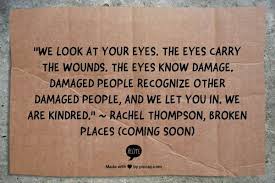
Watch for Rachel Thompson’s new book, Broken Places, which is being released shortly.