Author Archives: Garry Rodgers

About Garry Rodgers

After three decades as a Royal Canadian Mounted Police homicide detective and British Columbia coroner, International Best Selling author and blogger Garry Rodgers has an expertise in death and the craft of writing on it. Now retired, he wants to provoke your thoughts about death and help authors give life to their words.

CJ LYONS – DIRTY LITTLE SECRETS OF PUBLISHING

It’s a real privilege to host acclaimed New York Times Multi-BestSelling author CJ Lyons as a guest on www.DyingWords.net. CJ generously offered to share this piece of wisdom about what it takes to be successfully published in today’s ever-changing writing industry.

CJ1B81% of Americans say they want to write a book someday. The most common mistake unpublished writers make is that they don’t write. They talk about writing. They’ll polish the same ten pages for contest entries over and over, bring the same scene to their critique partners repeatedly, work for ten years on the same manuscript, and complain about not getting published.

Here’s Ten Secrets about what it takes to get published.

Secret #10: Writers write… successful writers keep writing.

Yes, they’ll hone their craft. Yes, they’ll pour their heart and soul into a project. Yes, they’ll revise until it’s the best they can do. But they also keep writing. They’re always open for new ideas, new directions, new challenges. It might mean trying a new genre, stretching their point of view skills, or trying a new plotting or editing technique.

CJ2They’re in constant search for something that will spark their passion. That “one thing” no one has tried before or been able to pull off the way they know they can. They don’t want to fit in with the herd. They want to outrace it, be trail-blazers, forging their own unique paths…this is how they find their voice. And once they find it, they embrace it, instead of denying it.

They learn how to finish a project and when a project needs to be set aside because “good” just isn’t “good enough.” They realize that they’re not competing with other unpublished authors, they’re competing with New York Times bestsellers. They’re prepared to work just as hard as any bestseller when it comes to honing their craft, learning the business, and managing their career. 

Secret #9: Your first book won’t be the first book you sell. 

Most published authors will have written at least half a million words, usually between four to six completed novels, before they sell.

Makes perfect sense–you wouldn’t let a college freshman or even a med student do brain surgery, right? Be prepared to finish projects and move on if they aren’t striking a chord with industry professionals. It might mean your writing needs work, or the market is over-saturated, or your wonderful idea just isn’t hitting the right desks at the right time.  
CJ4Embrace every rejection letter not as a failure but a success. Because with each one, you’ve done more than most people dream of…you finished a novel and had the courage to set it free. And, when you do find your voice and polish your craft and hit the right desk at the right time, the first thing your new agent is going to ask you is: what else do you have for me?   

Then you’ll be very happy that you have those other completed manuscripts ready and waiting!

Secret #8: It’s not about finding an agent, it’s about finding the RIGHT agent! 
CJ3Finding an agent is like going on a blind date and getting married that same night. You’ve probably never met, or if you have, it was for a ten minute pitch session when everyone is playing a role and on their best behavior. Once you sign with an agent you are entrusting them with your reputation, your finances, your future. Take the time to find the Right One for you.

Secret #7: Know your readers. Know your genre. Know your market.  

CJ5AOnce you have your agent, you don’t get to slink back to your cave and just write. Yes, your agent may have some ideas about which editors and publishers are right for your work, but you need to know who your A list editors are and why. Talk to your agent about long-term career planning. Do you always see yourself writing in this genre? How do you want your agent to market you? There’s a big difference between an agent telling an editor, “I have a hot new thriller writer” and “I have a hot new romantic suspense author” even though the book might be the same.

Understand where the market and genre you’ve chosen have been, where they are, and where they’re heading. Educate yourself. Target the editors you submit your work to. Find the ones who respond to your writing, but more importantly find one who will champion your work. 

Secret #6: Contracts only favor the publisher!  

CJ6You did it! You’ve sold!! Yeah!!! Now what? Your agent will already have some negotiating points in mind, but first you need to educate yourself on the basics. What’s a pre-empt? What’s an auction?  What’s an advance? Who’s making the most: a “nice” deal for $30 K, a “very nice” deal for $50 K, a “good” deal for $100K? 

If the first is for one book, the second for two, and the third for five books, then your “good” deal author may be in trouble. How far are you willing to fight for your subrights, like movie/TV, e-books, audio? Where will you draw the line? You and your agent need to have the answers before you sign the contract.

Secret #5: The average book receives $800 in marketing from their publisher.

Actually, based on some recent conversations, I fear this is actually more money than most books get for their marketing budget.

CJ1Yes, we’re repeatedly told that part of our jobs as writers is to build a platform, create a brand, get out there and blog, Tweet, Facebook, and sell, sell, sell!!!  Here’s the reality: Marketing is worthless without your publisher behind you.  AND the one thing publishers forget while they’re telling you to get busy selling your books, is that the BEST marketing is taking the time to write the next one!  Protect your work instead of getting frenzied promoting it. Write the next book. Then, if you have energy left over to promote, go for it!

Secret #4: People DO judge books by their covers.  
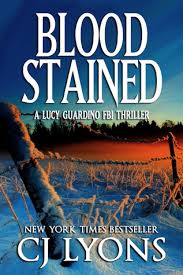
CJ9My first publishing deal was a debut author’s dream: a hard cover pre-empt with a major NYC publisher, over a dozen NYT bestseller endorsements (including one from Sandra Brown!), great pre-orders and pre-sale buzz…enough to lead the publisher to double their initial planned print run. Until…the cover art finally arrived.

Monochrome shades of bile green destined to make anyone trying to read the cover quotes or cover flap material literally nauseous. Yes, my wonderful debut found itself dressed in the ugliest, most physically revolting cover I’d ever seen!

I wasn’t the only one who felt this way. As soon as the booksellers saw it, they cancelled all their orders. But the publisher stood by their cover art (rather than my book) and pulled it 100 days prior to publication….no more debut dream for me…. 

Secret #3: Expect change, embrace change.   

CJ10As you can see from the story above, change is the one constant in this business. You’ll be faced with new editors, new agents, maybe even new publishing lines as companies trim and merge and re-structure. Be professional. Know how to break up and still stay friends. Be alert to new opportunities: new publishing models, new genres…always growing your brand rather than dividing it. And above all else, stay true to your vision! 

(Which, by the way, is exactly what I did and that book-that-never-was is now a bestselling e-book!)

Secret #2: Write 2K / Read 2K  
CJ11Ever have someone tell you they want to write a book or they are writing a book and then say, “I don’t read”? Happens all the time. But if you’re going to have a career in writing, you need to love reading. Read everything. Not just your genre but others as well. Look for the cutting edge in trends, new twists on language that make you smile, even bad writing that makes you cringe—so that you can learn how to avoid those pitfalls.
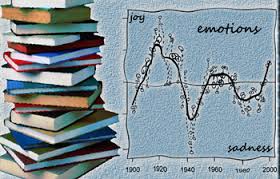
CJ12It’s difficult, because once we begin to write we often find it hard not to edit as we read–and we have less time than ever. I have finally given myself permission to not finish a book that isn’t working for me. When a book does work for me, when it transports me so that my internal editor turns off, I’ll drink it in, immersing myself in it. Then I’ll set it aside for a day or two before I go back and try to dissect why it worked or make note of any particularly magical phrases, word choices.

Not to steal, but to study.

Why did I connect so strongly with this character? How was the setting used to evoke emotion? What made the plot twist at the end both believable and devastatingly surprising? W2K / R2K is a formula my agent came up with: Write 2,000 words a day / Read 2,000 words a day. 

Secret #1: Writers may write alone, but you can’t be a writer alone.  
CJ13We may have the innate talent to become storytellers, but there’s no way to walk the road to publication without a lot of help from a lot of people. When people ask me the secret to getting published, I tell them, it’s surrounding themselves with the right people – even if they never meet in person.

Those people could be the authors of the kind of books they aspire to write, online teachers and mentors on writing forums who offer support and advice, a group of like-minded professionals like those in Romance Writers of America or International Thriller Writers, the spouse who understands that when they start mumbling dialogue it doesn’t mean they’re talking to themselves.

Throughout history storytellers have held a revered place in communities.

CJ14EIt takes a village–support from non-writers (aka enablers who feed your addiction), fellow writers who understand all about the voices in your head, mentors, your publishing/career team, booksellers, reviewers, and above all readers.

How do you know you made it?  

CJ15For some it’s being able to quit the day job, for others seeing their name in print and getting good reviews, but for me it’s hearing from fans who tell me my stories–those silly voices in my head that got me into so much trouble when I was a kid–that my books have made a difference in their lives. Like the commercial says… priceless. Becoming a career novelist is not simply a question of perseverance. It’s a question of passion.   

Where’s your passion? How can you be the best you instead of a pale imitation of someone else? Are your stories the kind of stories that speak to the eternal, that resonate with your audience, that will still have something to say to people decades from now? Be committed. To lifelong work, lifelong learning, lifelong growth. You’ll never have all the answers. 
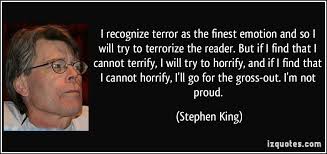
CJ16Take a lesson from writers like Stephen King who insist on constant re-invention and challenging themselves. King says, “Talent is cheaper than table salt. What separates the talented individual from the successful one is a lot of hard work”.

When asked, “How do you write?” I invariably answer, “One word at a time.”  

Happy writing!  CJ 

*   *   *

CJ17As a pediatric ER doctor, CJ Lyons has lived the life she writes about in her cutting edge thrillers. In addition to being an award-winning, bestselling author, CJ is a nationally known presenter and keynote speaker.

CJ8CJ has been called a “master within the genre” (Pittsburgh Magazine) and her work has been praised as “breathtakingly fast-paced” and “riveting” (Publishers Weekly) with “characters with beating hearts and three dimensions” (Newsday). 

CJ20Her award-winning, critically acclaimed Angels of Mercy series (LIFELINES, WARNING SIGNS, URGENT CARE and CRITICAL CONDITION) is available now. Her newest project is as co-author of a new suspense series with Erin Brockovich.

You can learn more at http://www.cjlyons.net or find her writing books at www.NoRulesJustWrite.com .

Follow CJ on Twitter @CJLyonswriter

Like her on Facebook 

Here’s the link to download CJ’s original article

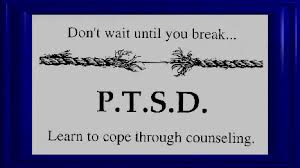
POST-TRAUMATIC STRESS DISORDER IS A NASTY BITCH

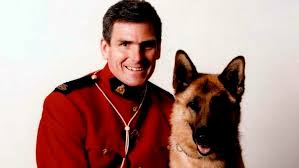
PTSD1CLast month another police officer took his own life after a lengthy battle with Post-Traumatic Stress Disorder. I’ve handled lots of suicide cases over the years, but this one hit close to home –  I knew Corporal Ken Barker. We’d worked together prior to the events which brought on Ken’s PTSD.

Ken was one of the best-liked, most approachable Royal Canadian Mounted Police members I ever met. He certainly wasn’t the stereotype who’d you think would suffer a PTSD mental illness. Wait – there’s no such thing as a stereotype PTSD sufferer and, yes, PTSD is a mental illness.

PTSD2There’s a higher awareness of PTSD today than back in the 1990’s when I was posted with Ken. Personally, I’ve experienced events as a cop and a coroner which should have brought on PTSD in me, but didn’t. I was very aware of the disorder and knew to recognize the signs. Also, I wasn’t scared to talk about PTSD and I think that’s the best form of prevention and treatment.

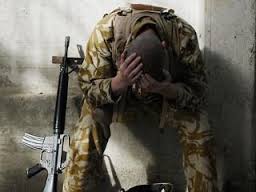
Today, I watch with caution as my son’s career in the Canadian Army unfolds and the suicide deaths of soldiers pile up into a national crisis. There are more Canadian soldiers who died of PTSD related suicides than were killed in ten years of active combat in Afghanistan.

So who is this Post-Traumatic Stress Disorder bitch?

Clinically, PTSD is classified as a trauma and stress related disorder stipulated in the Diagnostic and Statistical Manual of Mental Disorders IV. 

It’s simply summarized as:

1. Exposure to a traumatic event.

This includes both physical harm, or the risk of serious injury or death to self or others, and a response to the event that involved intense fear, horror, or helplessness. The traumatic event should be of a type that would cause significant symptoms of distress in almost anyone, and that the event was outside the range of usual human experience.

2. Persistent re-experiencing.

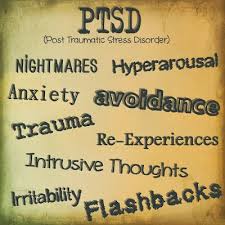
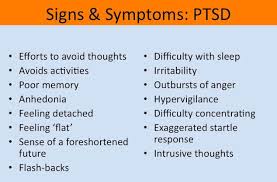
PTSD3One or more of these must be present in the victim: flashback memories, recurring distressing dreams, subjective re-experiencing of the traumatic event(s), or intense negative psychological or physiological response to any reminder of the traumatic event(s).

A. Persistent avoidance and emotional numbing.

PTSD4This involves a sufficient level of avoidance of stimuli associated with the trauma, such as certain thoughts or feelings, or talking about the event(s) and avoidance of behaviours, places, or people that might lead to distressing memories as well as the disturbing memories, dreams, flashbacks, and intense psychological or physiological distress. It includes the inability to recall major parts of the trauma(s), or decreased involvement in significant life activities as well as a decreased capacity (down to complete inability) to feel certain feelings, and an expectation that one’s future will be somehow constrained in ways not normal to other people.

B. Persistent symptoms of increased arousal not present before.

These are all physiological response issues, such as difficulty falling or staying asleep, or problems with anger, concentration, or hyper-vigilance. Additional symptoms include irritability, angry outbursts, increased startle response, and concentration or sleep problems.

C. Duration of symptoms for more than 1 month.

If all other criteria are present but 30 days have not elapsed, the individual is diagnosed with acute stress disorder. Anything longer would be considered chronic.

D. Significant impairment.

The symptoms reported must lead to clinically significant distress or impairment of major domains of life activity, such as social relations, occupational activities, or other important areas of functioning.

PTSD5Although most people with PTSD will develop symptoms within three months of the traumatic event, some people don’t notice any symptoms until years after. A major increase in stress, or exposure to a reminder of the trauma, can trigger symptoms to appear months or years later.

Who’s susceptible to PTSD?

Generally, at highest risk are those who experience traumatic events more frequently and for longer exposure. Combat personnel (soldiers, sailors, and airmen) are at the forefront, followed by emergency responders like police, firefighters, and medical professionals.

PTSD6There are other risk groups. Survivors of violent acts like sexual assault and attempted murder commonly experience post-traumatic stress. This extends to accident victims and witnesses of violent incidents.

What’s the medical reason for PTSD?

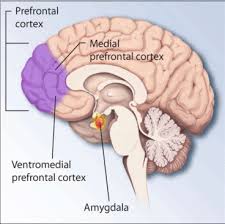
Three areas of the brain which control and administer PTSD have been identified. They’re the prefrontal cortex, the amygdala, and the medial prefrontal cortex.

Traumatic events cause an over-reactive adrenaline response, which creates deep neurological patterns in the brain.

PTSD7These patterns can persist long after the event that triggered the fear, making an individual hyper-responsive to future fearful situations. During traumatic experiences, the high levels of stress hormones secreted suppressed hypothalamic activity that may be a major factor toward the development of PTSD.

These biochemical changes in the brain and body differ from other psychiatric disorders such as major depression and bi-polar. Individuals diagnosed with PTSD respond more strongly to a dexamethasone suppression test than individuals diagnosed with clinical depressions.

PTSD8In addition, most people with PTSD also show a low secretion of cortisol and high secretion of catecholamines in urine with a norepinephrine / cortisol ratio consequently higher than comparable non-diagnosed individuals. This contrasts to the normal fight-or-flight response, in which both catecholamine and cortisol levels are elevated after exposure to stress.

Getting clinical – brain catecholamine levels are high and corticotropin concentrations are high. Together, these create an abnormality in the hypothalamic-pituitary-adrenal (HPA) axis.

The HPA axis is responsible for coordinating the hormonal response to stress. Given the strong cortisol suppression to dexamethasone in PTSD, HPA axis abnormalities are predicated on strong negative feedback inhibition of cortisol, itself likely due to an increased sensitivity of glucocorticoid receptors.

Translating this reaction to human conditions gives a patho-physiological explanation for PTSD by a maladaptive learning pathway to fear response through a hyper-sensitive, hyper-reactive, and hyper-responsive HPA axis.

PTSD9Low cortisol levels may also predispose individuals to PTSD and studies indicate that people that suffer from PTSD have chronically low levels of serotonin, which contributes to the commonly associated behavioral symptoms such as anxiety, ruminations, irritability, aggression, suicidality, and impulsivity. Serotonin also contributes to the stabilization of glucocorticoid production.

Insufficient dopamine levels in patients with PTSD can contribute to anhedonia, apathy, impaired attention and moto-skill defects. Increased levels of dopamine leads to psychosis, agitation, and restlessness.

Why are flashbacks so common in PTSD sufferers?

In a traumatic experience, the mind processes and stores the memory differently than it stores regular experiences.

Sensory information about the trauma – smells, sights, sounds, tastes, and the feel of things – is given high priority in the mind and is remembered as something threatening.

PTSD10Once this happens, whenever the sufferer is faced with a touch, a taste, a smell, a feel, or a sight that reminds them of the trauma, the memory (and the feeling of threat) comes back up and vivid memories or flashbacks about the trauma occur.

Getting all clinical again, a hyper-responsiveness in norepinephrine receptors in the prefrontal cortex is connected to the flashbacks. A decrease in other norepinephrine functions prevents the memory mechanisms in the brain from processing that the experience and emotions the person is experiencing during a flashback are not associated with the current environment. In other words, it takes them right back to the trauma time and it seems very, very real.

What can be done about it?

Many sufferers feel guilt or shame around PTSD because they’re often told they should just ‘suck-it-up’ to get over difficult experiences. Others feel embarrassed in talking with others. Some feel like it’s somehow their own fault.

Here’s the common treatments.

Counselling

PTSD11Cognitive-behavioural therapy (CBT) is effective. Very effective. CBT teaches how thoughts, feelings, and behaviours work together and how to deal with problems and stress. Relaxation techniques, such as meditation and hypnosis are used. This exposure therapy helps the sufferer talk about their experience and helps reduce avoidance.

In my experience, this stuff works. But the sufferer has to know the disorder before accepting the treatment.

Medication

A number of medications can prevent PTSD or reducing its incidence, especially when given in close proximity to a traumatic event. These include:

SSRIs (Selective Serotonin Reuptake Inhibitors)

SSRIs are considered to be a first-line drug treatment. They include citalopram, escitalopram, fluoxetine, paroxetine, and sertraline.

Tricyclic antidepressants 

Amitriptyline benefits distress and avoidance symptoms. Imipramine is effective for intrusive symptoms.

Alpha-adrenergic antagonists

In a study of combat veterans, prazosin shows substantial benefit in relieving or reducing nightmares. Clonidine helps with startle, hyper-arousal, and general autonomic hyper-excitability.

Anti-convulsants, mood stabilizers, and anti-aggression agents

PTSD12Carbamazepine reduces arousal symptoms involving noxious affect, as well as mood or aggression factors. Topiramate is effective in achieving major reductions in flashbacks and nightmares. Zolpidem proves useful in treating sleep disturbances. Lamotrigine reduces re-experiencing symptoms as well as avoidance and emotional numbing. Valproic acid reduces symptoms of irritability, aggression, impulsiveness, and reducing flashbacks. Similarly, lithium carbide works well to control mood and aggressions (but not anxiety) symptoms. Buspirone has an effect similar to lithium, with the additional benefit of reducing hyper-arousal symptoms.

Antipsychotics

Risperidone is the main medication for dissociation, mood issues, and aggression issues while cyproheptadine, a serotonin antagonist, helps with sleep disorders and nightmares.

Atypical antidepressants

Nefazodone works with sleep disturbance symptoms, secondary depression, anxiety, and sexual dysfunction symptoms. Trazodone reduces or eliminates problems with anger, anxiety, and disturbed sleep.

Beta Blockers 

Propranolol has demonstrated possibilities in reducing hyper-arousal symptoms, including sleep disturbances – but the jury’s out.

Benzodiazepines

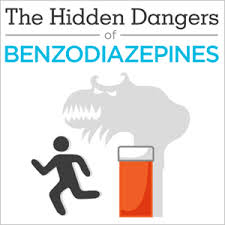
PTSD13These drugs are not recommended by clinical guidelines for the treatment of PTSD due to a lack of evidence of benefit. Nevertheless, some doctors use benzodiazepines with caution for short-term anxiety relief of hyper-arousal and sleep disturbance, and believe that the use of benzodiazepines is proper for acute stress, as this group of drugs promotes dissociation and ulterior revivals. While benzodiazepines can alleviate acute anxiety, there is no consistent evidence that they can stop the development of PTSD, or are at all effective in the treatment of posttraumatic stress disorder.

Additionally, benzodiazepines may reduce the effectiveness of psychotherapeutic interventions, and there’s some evidence that benzodiazepines contribute to the development and chronification of PTSD. Other drawbacks include the risk of developing a benzodiazepine dependence and withdrawal syndrome. Additionally, individuals with PTSD are at an increased risk of abusing benzodiazepines.

Glucocorticoids

High-dose corticosterone administration was recently found to reduce ‘PTSD-like’ behaviours in a rat models. In this study, corticosterone impaired memory performance, suggesting that it may reduce risk for PTSD by interfering with consolidation of traumatic memories. The neurodegenerative effects of the glucocorticoids, however, may prove this treatment counterproductive.

That’s great lab-rat stuff which I’m not going to try myself. However, the next stuff is something that I think ‘where’s there’s smoke – there’s fire”.

Cannabis

PTSD14There’s a study underway between a University and one of Canada’s largest producers of medicinal cannabis, suggesting that the active ingredients in marihuana – tetrahydrocannabinol and cannabinoids – may be very effective in reducing PTSD symptoms. Many PTSD sufferers self-medicate through black-market cannabis and swear by it. It’ll be interesting to see this clinical study’s results.

Support groups

PTSD15Support groups definitely help. Here people share experiences and learn from others. Connecting with people who understand what the sufferer goes through is probably the most effective form of treatment and this leads to identifying other forms of treatment such as medication and psychological intervention.

PTSD awareness is much greater in the twenty-first century, but the disorder is long known and buried. Historically they called it battle fatigue, shell-shock, and the thousand-yard stare. Soldiers were actually shot by their own command for perceived cowardness. I’ll bet the majority weren’t afraid – they were just suffering a nasty bitch of a disorder.

PTSD16On a personal note – looking back – I believe my dad suffered from PTSD. He was a gunner on a RCAF Lancaster bomber during World War II; the veteran of 113 operational runs. If that doesn’t do something to the psyche, I don’t know what would. I remember him sitting for long periods… on a big flat rock in our yard… in that thousand-yard stare… until his cigarette… burned down to his fingers… and snapped him back to reality.

After nearly six decades of life experience and being exposed to more traumatic life & death exposures than I can count, I can’t say that I’ve experienced PTSD.

Grief, yes. Compassion; in spades. Fear – I’ve been absolutely shit-scared, bewildered, and abhorred; being down on my belly under gunfire and questioning the existence and authority of Infinite Intelligence. But I’ve never experienced guilt and I don’t know much about it. Guilt seems like an evil, degenitive force who’s metaphysical purpose is to destruct. A lot more needs to be known about the psychological effects of guilt.

I think guilt is the nasty bitch in PTSD and I think that guilt walks hand-in-hand with shame.

Post-Traumatic Stress Disorder is a complex mix of psychological, physiological, and metaphysical workings and it’s nothing to be guilty about or ashamed of. It’s a naturally-occurring, mental illness. With proper support and effective treatment, PTSD sufferers can fully recover.

Remember, PTSD isn’t about what’s wrong. It’s about what’s happened.

Please leave your comments, ask questions, or tell about your experiences. It’s okay to talk about PTSD and raising awareness is the best form of treatment… and prevention.

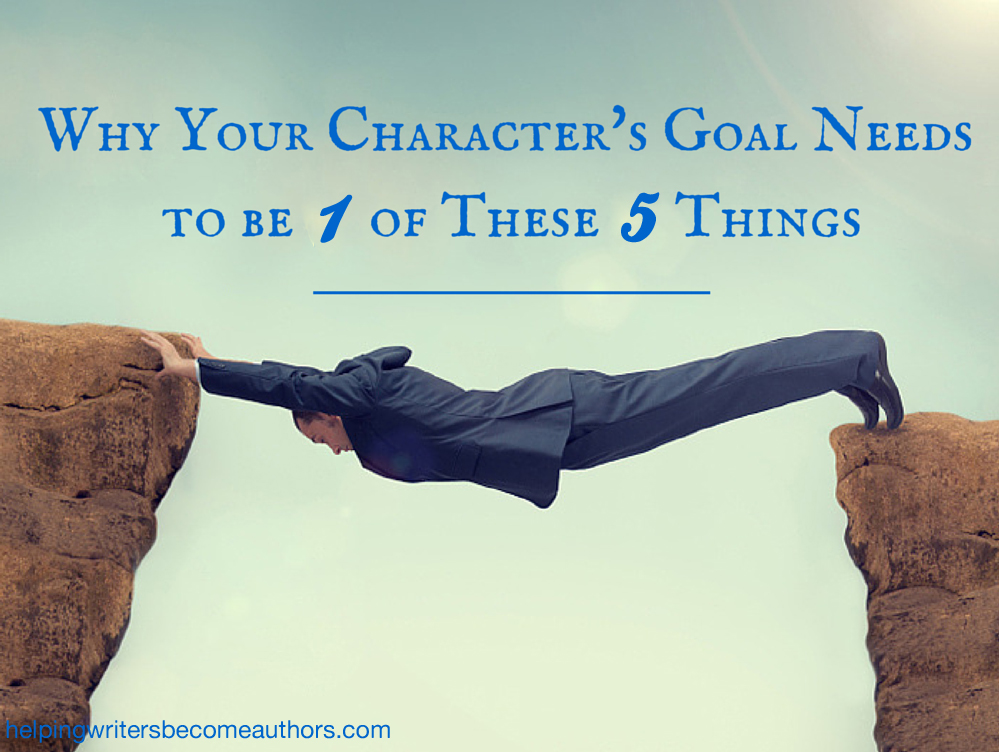
WHY YOUR CHARACTER’S GOAL NEEDS TO BE 1 OF THESE 5 THINGS

I’ve been following KM (Katie) Weiland’s ‘Helping Writers Become Authors’ for a few years. She recently posted this piece on character motivation. It’s excellent, so I asked Katie if she’d share it with DyingWords followers.

Every story comes down to just one thing. Know what it is?

KM Weiland8Conflict’s a good guess (“no conflict, no story” and all that), but before a story can offer conflict, it has to first offer something else:desire. In short, story is always going to be about a character’s goal.

Your character has two conflicting goals. The thing he Needs. And the thing he Wants.

Between them, these two desires drive your entire story, pushing and pulling your protagonist and the people around him until they end up in a completely different place from that in which they began the story.

But here’s another question for you: Does it matter what your character wants?

Obviously, a character’s goal has to tie into the plot in a logical way. But there’s more. In order to resonate deeply with your very human audience, your character’s goal needs to be one of five specific things.

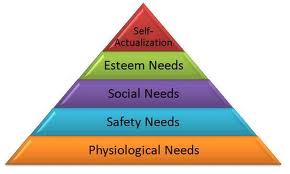
Take a look at the motivation triangle in Maslow’s Hierarchy of Needs and Why It Matters to Authors.

KM Weiland1

Abraham Maslow’s “hierarchy of needs” is a theory that suggests all human desires fall into five categories, grouped from basic physical needs to those of self-empowerment and realization: physiological, safety and security, love and belonging, esteem and recognition, and self-actualization.

According to Maslow, the order of these five needs is also the progression humans must experience as they grow into a better awareness of themselves and the world around them, allowing them to become centered, healthy individuals.

Same goes for your character. Your character’s wants and needs–your character’s goal–is going to fall into at least one of those categories, depending on where he currently finds himself in his progression from primal survivor to empowered individual.

Let’s take a closer look at each of the five categories of needs.

1. Physiological

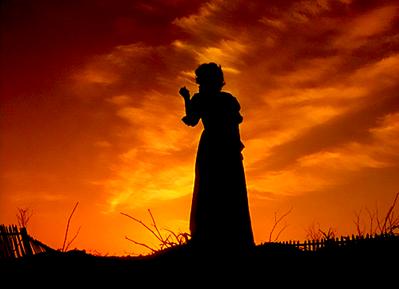
Gone With The Wind

Gone With The Wind

Physiological needs are those essential to human survival. Without these, your character dies. They’re the foundation of the pyramid. If your character has to consciously think about pursuing these needs, then he’s not likely to have the time or energy to devote much thought or effort to those needs higher up on the scale. Physiological needs might include:

  • Air
  • Water
  • Food
  • Clothing
  • Shelter

EXAMPLE OF A CHARACTER’S GOAL:

In Gone With The Wind, Scarlett O’Hara’s vow to “never be hungry again” is born of her starved search for a root in the ruined fields of Tara at the end of the Civil War.

2. Safety and Security

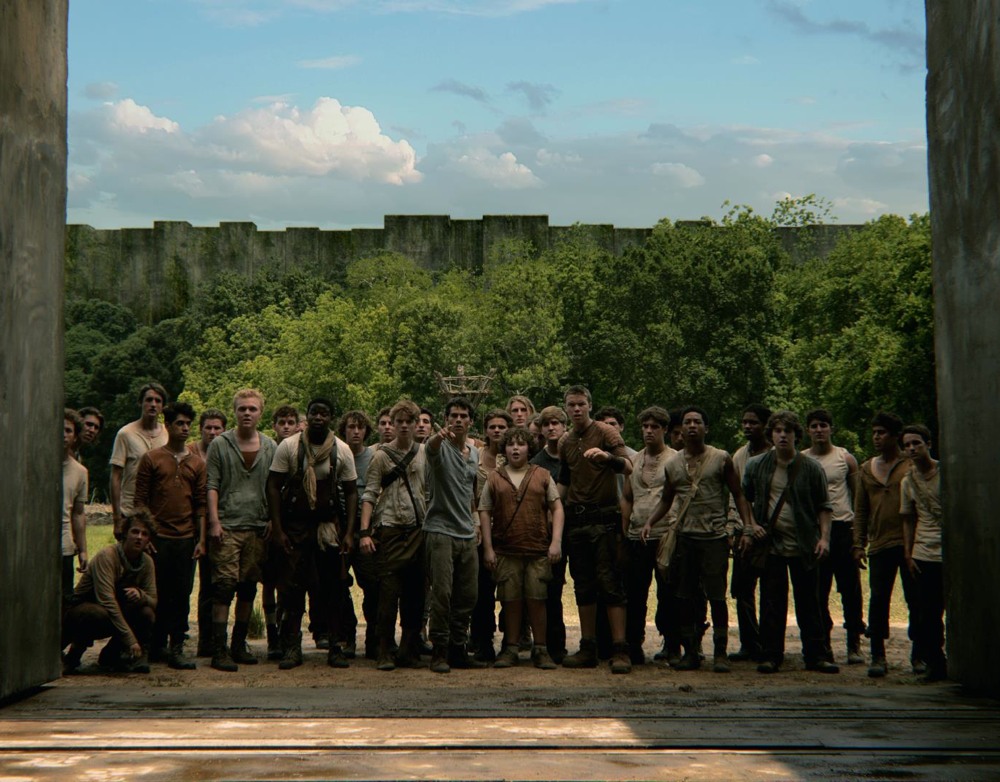
The Maze Runner

The Maze Runner

Once physiological needs have been met, your character’s goal will most likely evolve into a desire for safety and security for himself and those he cares about. He wants to protect his body, so he doesn’t have to consciously think about his physiological needs. Safety and security needs might include:


  • Protection against assault or injury
  • Adequate money
  • Steady employment
  • Good health
  • Protection of private property

EXAMPLE OF A CHARACTER’S GOAL:

In The Maze Runner, Alby and the other boys build a sustainable sanctuary in the Glade in order to avoid the lethal Grievers that roam the Maze.

3. Love and Belonging

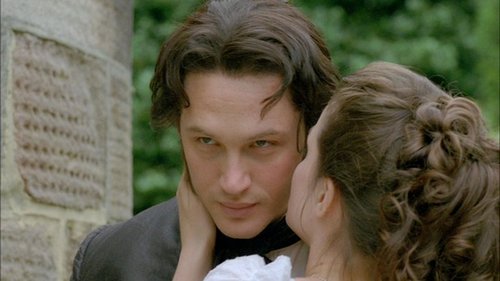
Wuthering Heights

Wuthering Heights

Once basic physical needs are met and assured for the foreseeable future, your character will get to focus on his emotional needs and desires. If your character isn’t on the run or trying to keep from getting killed, then he’ll probably be dealing with interpersonal conflict in an attempt to find harmony and fulfilment in his relationships with other people. Love and belonging needs might include:

  • Friendship
  • Romance
  • Intimacy
  • Family

EXAMPLE OF A CHARACTER’S GOAL:

In Wuthering Heights, every bit of Heathcliff’s lifelong quest for vengeance is based on his burning desire to be loved (especially by Cathy) and to find a sense of belonging in a world that rejected him almost entirely from his childhood onward.

4. Esteem and Recognition

THE PURSUIT OF HAPPYNESSOnce your character has his physical and emotional needs reasonably met, he’s going to start wanting to feel as if who he is and what he does is worthy of respect. We all want to feel as if we’re doing a good job, as if we’re making a difference in the world around us. Otherwise, what’s the point? Your character’s goal in this category may not be immediately quantifiable as a desire for “esteem and recognition.” What readers may end up seeing on the page will be simply his desire to be President, to get someone to buy his invention, or to get an A+ on his history paper. Esteem and recognition needs might include:

  • Independence
  • Compensation
  • Respect
  • Promotion
  • Credit
  • Gratitude
  • Appreciation

EXAMPLE OF A CHARACTER’S GOAL:

In The Pursuit Of Happiness, Chris Gardner wants to not just find a job that will allow him and his son to survive, but to become a successful stockbroker.

5. Self-Actualization

KM Weiland6Finally, at the tippy-top of that hierarchy of needs is the desire to find and fulfil the deeper meaning in life. Your character wants to do more than just live, he wants to thrive. He wants to reach the full extent of his personal potential. He probably has most of his other needs taken care of, which allows him the time and energy to focus on discovery and creation. Self-actualization needs might include:

  • Higher education
  • Spiritual enlightenment
  • Artistic pursuits
  • Travel and experience
  • Altruistic and charitable contributions to others

EXAMPLE OF A CHARACTER’S GOAL:

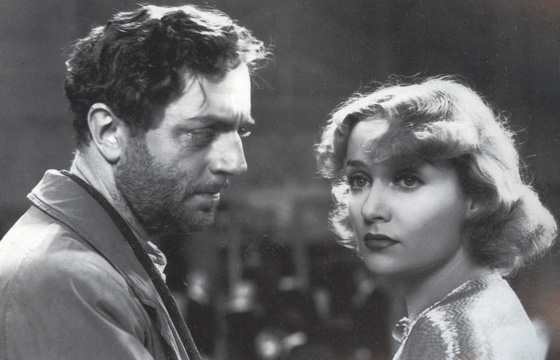
In My Man Godfrey, Godfrey abandons his riches and social position to live first as a hobo and then as butler to another wealthy family, out of a desire to find a purpose in his entitled life.

When Your Character’s Needs Overlap

KM Weiland9Have you spotted which of the categories into which your protagonist’s story goal fits? It could be his goal actually fits into more than one category. In fact, it’s pretty likely. Life isn’t exactly as neat as Maslow likes to make it look. We may be struggling through any combination of these needs all at the same time. For example, the protagonist in Pursuit of Happiness has a main goal that fits into all the categories except Love and Belonging (and we could maybe even make an argument for that one too).

As Angela Ackerman and Becca Puglisi point out in the appendix to their Negative Trait Thesaurus (which includes tons of great examples of goals and motivations for all five categories of needs):

KM Weiland7Please note that needs may fit into multiple categories depending upon the character’s motivation. For example, the need to acquire an education could be based on a need for security (if the character’s purpose is to escape a bad neighborhood), esteem (if the goal is being pursued out of desire to prove oneself to others), or self-actualization (if the character is seeking knowledge as a way to become more self-aware).

In many stories, an overlap between the categories can actually be an asset, since it creates multidimensional motivations and goals for your character.

But even if your character’s goal only falls into one of these categories, you’ll be able to verify you’ve created a deeply realistic story, one that will resonate on a primal level with readers everywhere.

Tell me your opinion: Which of these five categories does your character’s goal fit into?

*   *   *

KM Weiland10K.M. Weiland lives in make-believe worlds, talks to imaginary friends, and survives primarily on chocolate truffles and espresso.

KM Weiland11She is the IPPY and NIEA  Award-winning and internationally published author of the Amazon bestsellers Outlining Your Novel and Structuring Your Novel, as well as Jane Eyre: The Writer’s Digest Annotated Classic, the western A Man Called Outlaw, the medieval epic Behold the Dawn, and the portal fantasy Dreamlander.

When she’s not making things up, she’s busy mentoring other authors on her award-winning blog at KMWeiland.com. She makes her home in western Nebraska.

Check out Katie’s website at www.KMWeiland.com.

Follow her on Twitter @kmweiland

Find her on Facebook https://www.facebook.com/kmweiland.author