
Are you planning on murdering someone, but your only stop is the fear of getting caught?
 Or are you plotting a thriller where your serial-slayer stays steps ahead of that dogged detective who’s also top-tier in her trade?
Maybe both? Well, I’ll give you a cake and let you eat it, too… if you’ll follow me on how homicide cops investigate murders.
Think about it. There are only four ways you can get caught. Or get away with it. All seasoned sleuths intrinsically know this, and they build their case on these four simple pillars. Let’s take a look at them.
What not to do
 # 1 Don’t leave evidence behind that can identify you to the scene. Such as fingerprints, footwear or tire impressions, DNA profiles, ballistic imprints, gunshot residue, toolmarks, bitemarks, handwritten or printed documents, hair, fiber, chemical signatures, organic compounds, cigarette butts, spit chewing gum, toothpicks, a bloody glove that doesn’t fit, or your wallet with ID (seriously, that’s happened).
 # 2 Don’t take anything with you that can be linked. Including all of the above, as well as the victim’s DNA, her car, jewelry, money, bank cards, any cell phone and computer records, that repeated modus operandi of your serial kills, no cut-hair trophies, no underwear souvenirs, and especially don’t keep that dripping blade, the coiled rope, or some smoking gun.

# 3 Don’t let anyone see you. No accomplices, no witnesses, and no video surveillance. Camera-catching is a huge police tool these days. Your face is captured many times daily – on the street, at service stations, banks, government buildings, private driveways, and the liquor store.
 # 4 Never confess. Never, ever, tell anyone. That includes your best drinking buddy, your future ex-lover, the police interrogator, or the undercover agent.
So, if you don’t do any of these four things, you can’t possibly get caught.
Now… What To Do
Humans are generally messy and hard creatures to kill – even harder to get rid of – so murder victims tend to leave a pool of evidence. Therefore it’s best not to let it look like a murder.
Writers have come up with some fascinating and creative ways to hide the cause of death. Problem is – most don’t work. Here’s two sure-fire ways to do the deed and leave little left.
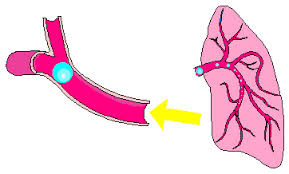 # 1 Cause an Arterial Gas Embolism (AGE) This one’s pretty easy, terribly deadly, and really difficult to call foul. An AGE is a bubble in the blood stream, much like a vapor lock in an engine’s fuel system. People die when their central nervous system gets unplugged, and a quick, hard lapse in the carotid artery on the right side of the neck can send an AGE into their cerebral circulation. The brain stops, the heart quits, and they drop dead.
Strangulation is an inefficient way to create an AGE and it leaves huge tell-tale marks. You’re far better off giving a fast blast of compressed air to the carotid… maybe from something like that thing you clean your keyboard with… just sayin’.
 # 2 Good Ol’ Poison Ah, the weapon of women. Man, have there been a lot of poisonings over the centuries and there’s been some pretty, bloody, diabolical stories on how they’re done. Problem again. Today there’s all that cool science. The usual suspects of potassium cyanide, arsenic, strychnine, and atropine still work well, but they’ll jump out like a snake-in-the-box during a routine tox screen.
You need something that’s lethal, yet a witch to detect. I know of two brews – one is a neurotoxin made from fermented plant alkaloid, and the other is a simple mix of fungi & citrus. This stuff will kill you dead and leave no trace, but I think it’s quite irresponsible to post these formulas on the net.
So there, I’ll leave it with you to get away with murder. But if you have some crafty novel plot that needs help, I’m dying to hear your words.
Oh, and watch out for what’s in that cake that you’re eating.