Author Archives: Garry Rodgers

About Garry Rodgers

After three decades as a Royal Canadian Mounted Police homicide detective and British Columbia coroner, International Best Selling author and blogger Garry Rodgers has an expertise in death and the craft of writing on it. Now retired, he wants to provoke your thoughts about death and help authors give life to their words.

THE ASTOUNDING SECRET BEHIND LEONARDO DA VINCI’S CREATIVE GENIUS

Leonardo da Vinci had the world’s most observant and creative mind. With an estimated IQ well over 190 — probably 200+ — da Vinci was a true, versatile Renaissance man. He was far ahead of his time in art, anatomy, architecture, engineering, mathematics and many other disciplines. Few came even close to Leonardo’s prolific output of artistic masterpieces and scientific discoveries. And many deeply pondered the astounding secret behind Leonardo da Vinci’s creative genius.

Author Leonard Shlain spent years exploring da Vinci’s work and analyzing what made him so outstanding. In the book Leonardo’s Brain: Understanding da Vinci’s Creative Genius, Shlain makes an excellent case that Leonardo da Vinci was biologically different from practically all other humans. According to Shlain, da Vinci’s brain was the perfect balance of right and left hemispheres. It was because of a one-of-a-kind abnormality in Leonardo da Vinci’s corpus callosum—the part of the brain responsible for controlling analytical left-brain observation and right-brain creativity.

In Understanding da Vinci’s Creative Genius, Leonard Shlain did what he calls a “postmortem brain scan”, seeking to illuminate the exquisite wiring inside Leonardo da Vinci’s head. It’s an in-depth psychological/neurological profile about what’s known of da Vinci’s phenomenal behavior and the ingenuity of his works. At the end of this fascinating book, Shlain concludes that Leonardo da Vinci’s brain was so advanced that his understanding of all things in nature and his grip on personal creative ability allowed him to access unique ways of thought.

Shlain postulates that da Vinci saw universal interconnectedness in everything… everywhere. Biologically advantaged by some quirk of nature, da Vinci elevated his mind to a higher state of consciousness than achieved by other people. Leonardo da Vinci—according to author Leonard Shlain—evolved into a superhuman.

*   *   *

Genetically, there didn’t appear to be anything special about Leonardo da Vinci. He was born out of wedlock in 1452 at the Italian town of Vinci in the Florence region. His mother was a peasant and his father was a notary—somewhat of a playboy. Infant and toddler Leonardo was raised by his mother and neglected his father who only supplied modest child support.
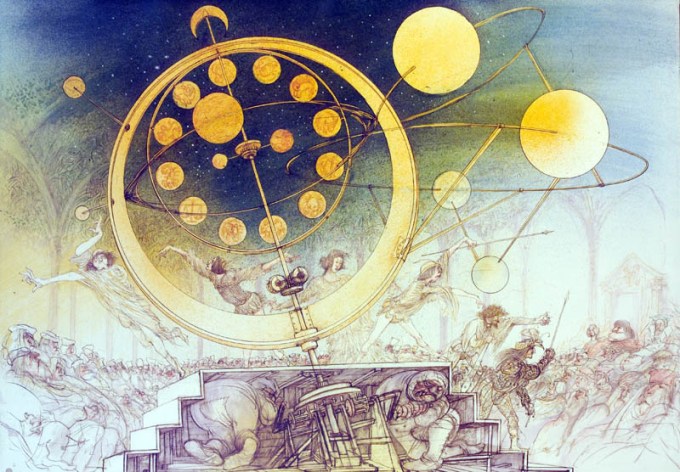
Because Leonardo da Vinci came from low class, he wasn’t eligible for a formal education as were nobility associated with the church and state. In fact, da Vinci had no conventional schooling as a youth. He wasn’t able to learn the “secret code” associated with the education of the time. That was learning to speak, read and write Latin and Greek which unlocked the doors to classical learning. Without knowing these two prominent languages, it was practically impossible for da Vinci to conventionally participate in making the Renaissance.

Leonardo da Vinci was taken from his dysfunctional mother at age 5 or 6. His kindly uncle Francesco did the best he could to provide for the boy. Regardless of his lack of formal schooling, da Vinci showed a remarkable curiosity and intellectual ability right from a young age. He seemed “gifted” and was able to visualize abstracts including art forms and mathematical equations far beyond normality. Soon, the Florentine painter and artistic leader Andrea del Verrocchio saw a protégé and took Leonardo da Vinci under his wing.

For most of his life, the European world recognized Leonardo da Vinci as a painter. In reality, da Vinci wasn’t a prolific painter. He painted sporadically and nominally as a side-line commission. Art experts at Christie’s auction in New York estimate that over 80 percent of Leonardo da Vinci’s paintings were lost over the years. Today, there are only 15 verified da Vinci paintings in the world including Mona Lisa, The Last Supper and Annunciation. Salvator Mundi sold in 2017 for $450.3 million US.

But Leonardo da Vinci was really prolific in his drawings and writing. His anatomical sketches, scientific diagrams and thoughts across the spectrum fill volumes now held in private collections and public museums. Da Vinci’s unquenchable curiosity and feverishly inventive imagination consumed his waking hours. The world is extremely fortunate that many of Leonardo da Vinci’s notebooks still exist.

Da Vinci’s interest held no bounds. He was a true polymath who studied astronomy, anatomy, architecture, botany, engineering, science, music, math, language, literature, geology, paleontology, ichnology, painting, drawing and sculpting. Leonardo da Vinci also invented. Concepts for the helicopter, parachute and airplane wing came from da Vinci. He even built the first automated bobbin winder before the sewing machine came to be, and Leonardo worked with solar power, double-hulled ships and even armored military tanks. He also thought-out a robotic knight.

 

Unlike most innovators who are a fine-line between nut and genius, Leonardo da Vinci was incredibly well-balanced on an emotional scale. Besides having an extremely high intelligence quotient (IQ), it’s said Leonardo had a tremendous emotional quotient (EQ) as well. Nowhere is there any suggestion he was an egomaniac or unapproachable. History indicates da Vinci was a pacifist, vegan and humanitarian with a good sense of humor.

So what made Leonardo da Vinci so special? Short answer—his brain. There was something nearly out-of-this-world going on in da Vinci’s mind. And there might be a scientific explanation what it was.

Twenty-first-century science knows a bit of how the human brain functions. But, it’s far from comprehensive knowledge. Science has almost no grasp or understanding of how human consciousness works, and there’s a good reason for that. Brain science is tangible where grey matter can be physically dissected and electrophysiological waves are recordable on computerized graphs. You can fund, study and measure with reports.

Consciousness is a whole different matter. Conventional science has no grip on what human consciousness—or any form of consciousness—really is because it’s non-tangible and can’t be defined within current terms. Because consciousness is slippery, it’s not fundable. There’s no money in it. You can’t measure to monetize it. So consciousness study is left to individual groundbreaking leaders like David Chalmers and Sir Roger Primrose… but back to da Vinci.

Leonardo’s Brain: Understanding da Vinci’s Creative Genius takes a really good look at how LDV’s brain activated his mind to tap into a higher state of consciousness—the world of “Forms”, as Plato termed it, or the source of where all “in-form-ation” sits. In current consciousness research, there’s a distinct difference between the physical brain, the non-physical mind and the plane of infinite intelligence where all ideas come from.
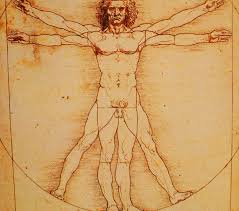
Leonardo da Vinci’s brain was so evolved—author Shlain writes—that his mind easily accessed information not readily there for normal people. Da Vinci’s brain/mind power was so special that he “thought” his way to fantastic ideas. It also let da Vinci observe what was going on in the universe and record it. That might have been simplistic beauty as in the Lady With an Ermine, an anatomical analogy like Vitruvian Man or a geometric complexity seen in the Rhombicuboctahedron.

Despite Leonardo da Vinci being bright, talented and affable, he was an outlier in the Renaissance period. Da Vinci was biologically different. He was a misfit in the world of conventional ideas and creativity. He thought different. He acted different. He dressed and talked different. That made others uncomfortable. Back then, da Vinci sat at the back of the bus and today he’d still be so far ahead that the rest of us would see dust. Author Leonard Shlain tells us his version why:
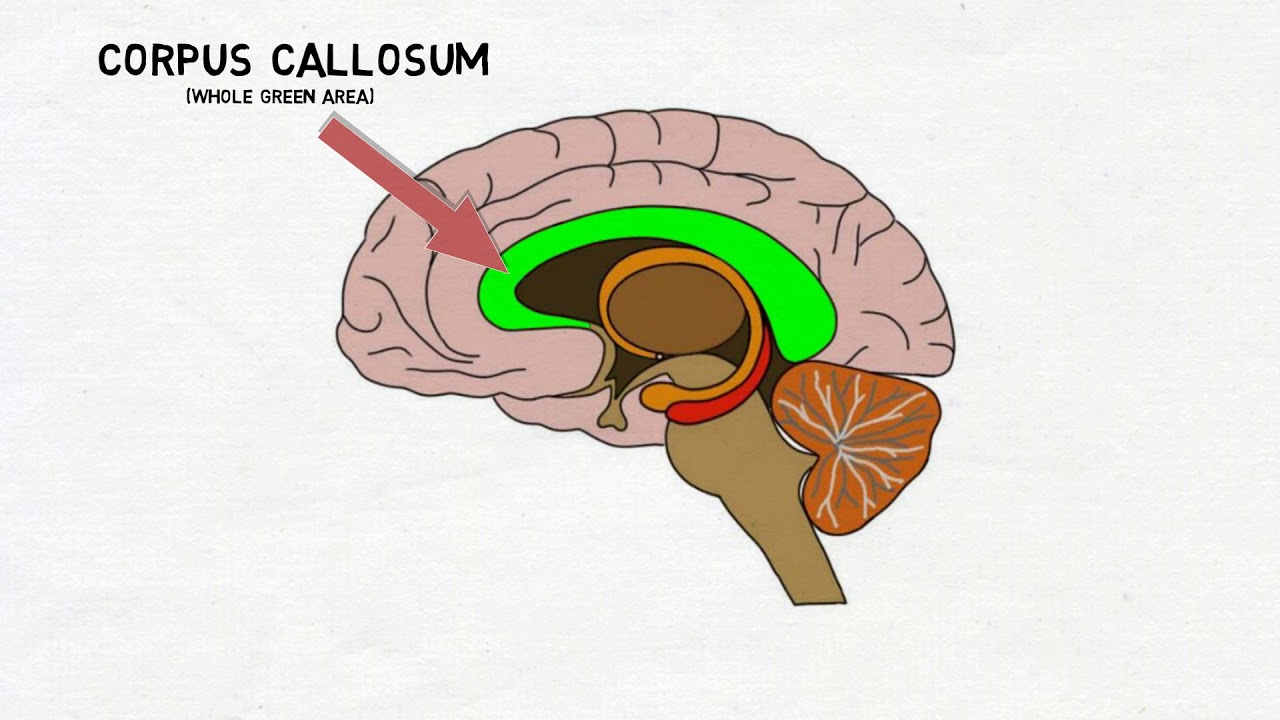
“Leonardo da Vinci’s left and right brain hemispheres were intimately connected in an extraordinary way. Because of a large and uniquely developed corpus callosum, da Vinci’s left and right sides constantly communicated and kept each other in the loop on observations and creative options. Each brain side knew what the other was doing, and this gave da Vinci’s mind unprecedented and unrestricted freedom to observe, understand and create.

In current brain science, the left hemisphere is the analytical and conservative side. The right is the creative, liberal sphere. Brain scientists think that’s nature’s safety mechanism to prevent humans from getting too stupid or smart in either extreme. Da Vinci’s brain seems to have found the middle ground—the apex of the triangle or the tip of the see-saw.”
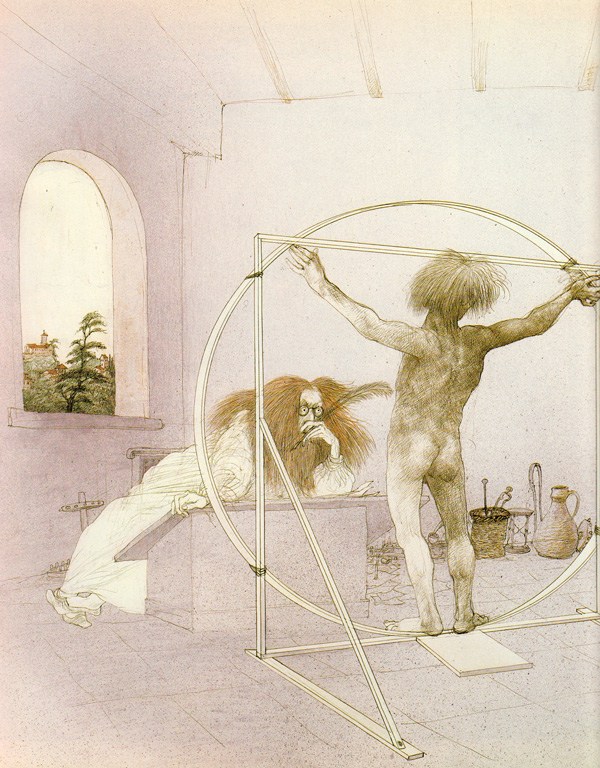
In Leonardo’s Brain: Understanding da Vinci’s Creative Genius, Leonard Shlain backs-up his theory with facts. The most interesting fact supporting da Vinci’s left/right corpus callosum uniqueness is his handiness. Leonardo da Vinci was a southpaw—he was left-handed.

Left-handers aren’t that unusual in human population. Studies show approximately 8-10 percent prefer left-hand prominence. A tiny proportion are ambidextrous, but the vast majority have manual-dexterous abilities with their right. However, there are unusual advantages south-paws have. They tend to be far more creative than right-handers.

It’s no news the left side of the brain controls the right side of the body—same with vise-versa. When one hemisphere is dominant over the other, a person is usually analytical or creative. But, when both sides are equally balanced, something phenomenal happens.

Anatomically, the corpus callosum—aka the callosal commissure—is a wide and thick nerve bundle sitting at the brain’s foundation. It’s the largest white matter brain structure that binds the left and right gray matter. The corpus callosum isn’t big. It’s about 10 centimeters or 4 inches long. Neurologically though, it’s huge—having about 250 million axonal projections.
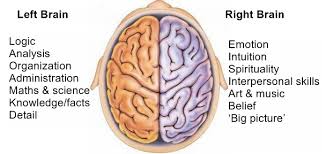
The corpus callosum regulates electrical activity happening in the left and right brain sides. It’s got a big job to do. One of its jobs is responsible for the primordial fight-flight response ingrained in all of us. But the corpus callosum also lets humans get imaginative, like the right brain inventing tools to slay saber-toothed tigers while the left side stays alert.

The Leonardo’s Brain: Understanding da Vinci’s Creative Genius book goes beyond a left/right brain dichotomy. It delves deep into something uniquely known about da Vinci’s left-handedness. Leonardo da Vinci’s brain let him write left-handedly in a mirror image. Da Vinci’s writings, notes and diagram annotations have him writing right to left where you need a mirror to decipher them.
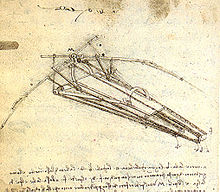
This mirror-image phenomenon provides profound insight into Leonardo da Vinci’s psyche. Here is a poor-boy without formal education who developed his own style independent of traditional academic influences—even choosing which hand to use and how to communicate with. Da Vinci was the poster-boy of self-taught, self-investigating and self-assured individuals—the likes the world never experienced in his time or so-far thereafter.

Leonardo da Vinci’s lack of indoctrination by limiting dogma taught through conventional institutions like the church and its lap-dog societal constraints liberated him from mental restraints. Combined with perfect neuro-equilibrium between inquisitive left and creative right brain functions, da Vinci broke free of earthly bounds and set his mind soaring into airy lofts not there for common minds.

Author Leonard Shlain of Leonardo’s Brain: Understanding da Vinci’s Creative Genius makes another interesting observation and conclusion. Because da Vinci was removed from his biological mother’s hold so early, he became mentally self-reliant. Da Vinci was also gay or at least asexual. He wasn’t driven by a common male preoccupation with the little head thinking for the big one.

Brain science recognizes that “normal” human brain thoughts primarily focus on survival concerns like food, shelter and sex. That didn’t seem a factor with Leonardo as he progressed in life. He just abnormally sensed reality. Then he painted, sketched or wrote what he knew.

No, Leonardo da Vinci was much more than “normal”. He was the prime exemplar of a universal genius whose brain far out-thought humankind. Looking back… and forward, if da Vinci showed up for a job interview, his unique selling proposition on his resume would be “I have an unusual brain and my mind knows how to use it”.

That’s the astounding secret behind Leonardo da Vinci’s creative genius.

UNCONVENTIONAL CRIME WRITING WITH L.A. SCREENWRITER & NOVELIST JENNIFER GRAESER DORNBUSH

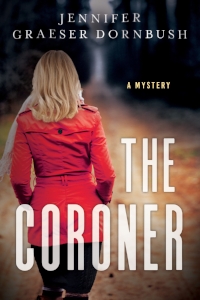
…Or How to Capitalize On An Unconventional (aka Crazy) Childhood & Other Personal Adventures  Los Angeles based screenwriter, author and speaker, Jennifer Graeser Dornbush chats about her life as a coroner’s daughter, her new mystery novel The Coroner, her love of forensics, the realities of working in Hollywood and what common crime writers can do to capitalize on their own personal stories.

Hi Jen! Welcome to DyingWords! We’ve kicked around crime writing & screenplay ideas for a while now, but have something in common besides forensic and scribing stuff. You grew up in northern Michigan, close to me in southern Manitoba, Canadaboth of us under very unusual circumstances. I won’t shudder you with mine, but tell us about yours.

Long before American television was saturated with CSI and Forensic Files, I was living my own weekly CSI adventure with my family in northern Michigan. My father was a medical examiner for three counties and my mother assisted as his office manager. They ran the office out of our home because the county was underfunded.

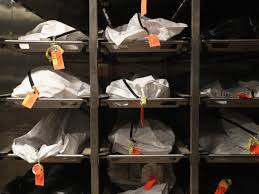
Dad performed autopsies at the small county hospital morgue, but all the records, paperwork, and photographs were kept in our family office. Samples of blood and body tissue were stored in a basement freezer, right under the pork chops and frozen beans like some B-rated horror flick. Dinnertime conversations often revolved around the case of the week. “Let me tell you about an interesting suicide I saw today,” my dad would say. “Oh, and pass the corn, please.”

When I started writing I began to tap into my past and the treasure trove of knowledge from those decades of death investigation with my family. My new novel, The Coroner is one result of that.

The title “Coroner” is sorta familiar to me… like deja vu all over again. What’s your new novel The Coroner about?

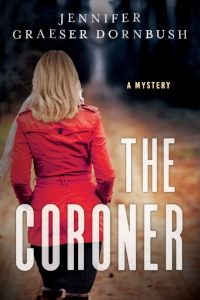
Recently engaged and deeply ensconced in her third year of surgical residency in Chicago, Emily Hartford gets a shock when she’s called home to Freeport, MI, the small town she fled a decade ago after the death of her mother. Her estranged father, the local medical examiner, has had a massive heart attack and Emily is needed urgently to help with his recovery.

Not sure what to expect, Emily races home, blowing the only stoplight at the center of town and getting pulled over by her former high school love, now Sheriff, Nick Larson. At the hospital, she finds her father in near total denial of the seriousness of his condition. He insists that the best thing Emily can do to help him is to take on the autopsy of a Senator’s teen daughter whose sudden, unexplained death has just rocked the sleepy town.

Reluctantly agreeing to help her father and Nick, Emily gets down to work, only to discover that the girl was murdered. The autopsy reminds her of her many hours in the morgue with her father when she was a young teen―a time which inspired her love of medicine. Before she knows it, she’s pulled deeper into the case and closer to her father and to Nick―much to the dismay of her big city fiance. When a threat is made to Emily herself, she must race to catch the killer before he strikes again in The Coroner, expertly written and sharply plotted, perfect for fans of Patricia Cornwell and Julia Spencer Fleming.

You have a set of guidelines you use when drafting stories about real people or events. What does that look like?

There are many more from the hundreds of stories in my memory bank. But when writing about the past, I try to keep the following things in mind:

* Base characters off of real people but give them different names, personality traits, and visual description.

In The Coroner, Dr. Emily Hartford was based off of conglomeration of myself, and my two younger sisters. Emily is little bits of all of us. My middle sister is more blood and guts oriented like Emily. My younger sister has the tenacity, style, and individuality of Emily. And I have lived in major cities, including Chicago, for most of my life, but always find myself returning home to my rural roots.

* Use real places to help with world building.

For instance, the town of Freeport is based on my hometown of Fremont. I know, not a far cry from its original name. But that actually helped me picture the real place when I wrote. Of course, I kept the place of Chicago and I think that helps ground the story some and gives it an element of reality. When I write I picture different places around “Freeport.” The library, the downtown, the lakes, countryside, hospital. This helps me create authentic descriptions. I also have a deep, deep love for the place where I grew up. I think that love shows through in the tone and in how Emily, Nick, and her father view Freeport. I really want Freeport to be a character unto its own.

* Tap into the unpleasant memories.

Some of the memories I have of being a coroner’s daughter are neutral, some comedic, some embarrassing, and some downright unpleasant or scary. For instance, we had a human leg in our barn for years and I was scared to into the barn alone with that leg. This was really bummer (not to mention a bit smelly) because our childhood fort was situated right above it in the barn loft. I would fling the barn door open, flip on the light, and then run past the leg and scramble up the ladder to get to my loft fort where I could spend hours reading and holding tea parties. 

So rewrite your scary childhood memories in a way that takes power away from the scary and unsavory. Keep the emotion and be true to the experience. Writing it removes the negative power it holds in your memory. Sharing makes it seem less scary.

* Feel the fear and use it!

We all have those tangible fears like fear of heights, snakes, or tornados. But what are your biggest psychological fears? Figure it out and tap it that for your characters. One of mine is fear of missing out. I think Emily carries that same fear because of the trauma she experienced when she was left out of her mother’s death investigation. This drives everything she’s done in her life since. She’s gone full out to experience life at its fullest. Even in her romantic relationship with Brandon. He leads her into a world she would have never experienced back in Michigan.

* Embrace the crazy.

Everyone’s childhood is unique and special. Once you can frame it this way in your mind, it becomes less embarrassing. Try to see your experiences as a view into a world that no one has ever experienced before and is dying (no pun intended) to know about. I spent many years been deeply embarrassed and disgusted by what my father did for a living. I thought it was weird and gross. This was pre-Forensic Files era when no one knew anything about forensic science and Abby Scuito wasn’t making it cool on NCIS. Where was Abby when I was a teen!? We woulda been Insta-besties. I know it. After all, dead bodies sometimes slept in my garage.

* Leave the family skeletons in the closet.

We literally had a family skeleton. His name was Sam and he was a made of real human bones. He spent a good deal of time in my father’s medical practice, but in his later years ended up living in a box in our barn. Sam died of lung cancer. Or so we surmised by evidence of a cigarette dangling from his yellowed teeth bones. Sam has since gone on to enjoy the rest of his boney life in a high school biology lab.I suspect I’ll get disagreement here, but I’m not a big fan of using fiction to launch a passive aggressive attack on family, air dirty laundry, or take revenge on a family member by making them an unsavory antagonist.

Show some human decency and respect the privacy of yourself and your real life family. There’s enough other drama and dysfunction out there to go around.  So, just to be clear, none of the things that happened to the Hartford family ever happened to my own mom and dad. Their circumstances, backstories, and demises are purely, 100 percent fictional!

* If it made you cringe, use it!

Those embarrassing moments and experiences of our childhood are universal. Draw from these because they will help your audience become endeared to your characters.I’ve had my share of embarrassing moments as a coroner’s daughter. I’ll never forget the time I was dating my now husband and his friends came over. They were in the basement hanging out when they decided to look in the fridge for some soda. Instead, they found blood vials labeled with the names and DODs of the deceased. This was simply the property of the medical examiner’s office, nothing sinister.

This particular incident didn’t make it into the current novel, but one can imagine how awkward or odd it might have been for Emily, as a young teen, to have a dating life. It didn’t scare Nick away. And thankfully, not my husband either. Honor the real victims. In The Coroner, Julie Dobson’s murder is based off a girl in my hometown who was thrown from her horse, hit her head, and as a result, died. She and I were both in junior high school when this happened.

There was nothing sinister about girl’s death. It was purely accidental, but the tragedy of this young girl’s early demise deeply affected my community. I wanted to memorialize this young victim. She may have died long ago, but she’s not forgotten. When I was trying to come up with a case for Emily to investigate, I started playing the “what if” game. What if a teen equestrian were suddenly found dead? What if it were a murder? Who would want her dead and why? And the rest is between the jacket cover.

What inspired you to first start writing?

I’ve been writing since before I could actually write, so I guess you could say it was a gift that was given to me rather than something that inspired me. I’m grateful every day for this gift and my prayer is that I will continue to be a good steward of it.

What piece of advice do you have for authors or screenwriters starting out?

Have patience. Have perseverance. Have a real life.

Well put. Now, what was your favorite book when you were a kid? Do you have a favorite book now?

I have so many… I can’t choose just one. My tastes vary a lot. As a kid, my parents led me to the shore of story sea. I waded in and never got out.

Do you ever get writer’s block? If so, what do you do to get back on track?

I guess that depends on what is the definition of Writer’s Block? Do I have those days when I feel stuck and muddy and don’t get much done? Of course. That’s part of the job. Do I even not know what to write about? Never. I think the best tool for a writer is to cultivate the skills of listening and looking around. If you do, you’ll find there’s always fodder for story.

You’ve consulted with writers on various TV series like… Suits, Prison Break, Rectify, White Collar and Bull. Can you tell us about those experiences?

It probably sounds more exciting than it really is. Often times writers on shows will contact me for forensic advice. Some of the writers I know personally. Others, I do not. Mostly I serve them via email correspondence so I’m not on set or in the writers’ room, per se. But they do send me really interesting questions like…

If a body was burned to ash, how much tissue/bone/teeth/other substance do we need to DNA match the remains?

Or this one… a man who already takes smart drugs (like Adderall or Ritalin) is poisoned by someone who secretly put heavy doses of his smart drug in his hand sanitizer. When the man uses the hand sanitizer he absorbs the smart drug through his skin and it’s enough (in addition to the smart drug he already took orally) to cause a heart attack. Would this work?

You started writing in Hollywood before you delved into novels. Or, I think you once corrected that “Hollywood” is actually called the Los Angles film industry business. What’s that like, being around “Hollywood” and all?

That’s right… after several other careers in journalism and teaching, I trained to be a screenwriter and moved to “Hollywood” 12 years ago. I write film and TV. I had a film release in September (God Bless the Broken Road). But my love is TV. I’m hoping to get staffed or sell my own show. My goal for 2019 is to be a working TV writer and use my forensic background on crime dramas.

You also wrote the non-fiction book Forensic Speak? How did that come about?

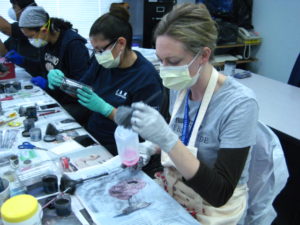
FS started out as a project for an independent study course I designed in order to earn my certificate at the Forensic Science Academy. To pass the academy, I needed a prerequisite course and when that course was canceled after the first week of class, I convinced the director of the program to allow me to write a handbook for crime writers instead. I was the only writer in the class and I wanted to tailor something specific to my educational goals. The director loved the idea, so off I went. Later, my writing group encouraged me to publish it. But I was so busy at the time that I dismissed it.

What was your process for writing Forensic Speak and getting it published?

After I finished the academy a writer friend sent me a YouTube video to Michael Wiese Publishing. In the video, Ken Lee announced that MWP was seeking material. My friend encouraged me to send in a query. The book was far from ready, but I thought, why not? On a lunch break one day, I wrote a query and sent it off. In less than an hour later, Ken contacted me to say MWP was interested. However… it took us a year from to get the pitch right and figure out what the book would be. So I didn’t actually sign the book contract until a year after I sent the query. From there it took me another year to write the book. This month will mark exactly three years since I entered the Forensic Science Academy and had the idea to write the book.

Having such an intense upbringing around forensic science, how did you decide what to include and what to discard?

My upbringing dealt primarily with death investigation, not so much criminology, DNA, ballistics, and fingerprinting. I wanted to round out my knowledge of crime investigation so I attended the Forensic Science Academy here in Los Angeles. When I was telling my writer friends about my experiences in the academy, they said that they wished they could go through it. I thought, well, why not put the academy in book form for those who aren’t able to take the academy?  That inspired me to create a book built on the forensic foundation we were taught in the academy. Forensic science is vast and growing! My book is a smorgasbord. You get a sample of everything. You can pick and choose what you need. And if you want more of one thing, I’ve provided resources that will bring you to a larger meal.

What are the three biggest mistakes new writers make when writing in the crime genre?

1. Not spending the time, energy, or research to get the forensic facts right.

2. Thinking that what they see on TV or in movies is correct procedure.

3. Writing crime scenes that come off at cliche, plastic, or static (in action and dialogue!).  Learn how to speak forensics! Read Forensic Speak!

Additional advice for crime writers?

  • Read and watch crime fiction.
  • Figure out what brand of crime fiction best suits you.
  • Keep a journal or file of interesting cases you want to explore in your writing.
  • Create interesting, dynamic antagonists. Give them a story, a life, an emotional motivation.

Advice for non-fiction writers?

Write about your hobbies and interests to benefits others. Find your niche and explore 10 ways you can share what you know with others.

For example… I took the concept behind Forensic Speak and created a monthly newsletter that features a forensic fun fact, a forensic link of the month, a forensic term of the month and a crime writer’s Q&A of the month. Then, I created a series of seminars… Writing the Killer Procedural, 10 Essential Steps in Death Investigation, How to Choose a Crime Show That’s Write For You…  You get the picture… be creative and do what inspires you.

What do you know now that you wish you knew when you first started writing?

How long things take!!! I wish I had started out with more patience. I still get impatient and anxious at times. I want things to happen sooner, faster, better!

Not to be so hard on myself, but I guess that’s human nature and my stubborn work ethic. It’s okay to push. But you also have to play. Trust in the process and the journey.

Focus on Being Thankful! Have daily gratefulness and keep a gratitude journal. Keeps you sane. You can see how much you really have. Reminds you how far you’ve been. Thank goodness for coffee, yoga, and my wiener dogs.

Could you give a sneak peek into your next projects?

I’m always spinning many plates… here are a few of the dishes I’m working on…

A mystery/thriller novel called Hole in the Woods based on true crime story that I’ve followed for 25 years. We have several publishers waiting to see it. Fingers crossed!

I’ve just finished a crime drama TV pilot called Prey based on the real-life experiences of a group of nuns who pose as prostitutes to save sex trafficked victims. Now we have to go pitch it and try to sell it!

This fall, I’ve been pitching my novel, The Coroner, as a TV series. We have some solid interest so it will be interesting to see what unfolds in 2019 with that project. The second Coroner novel is also completed and releases in fall, 2019.

Which novel/novella/short story have you read that you would like to see made into a movie? 

The short story, Before Gwen by Dennis Lehane. A very good friend of mine who is a female director introduced this story to me. She wants us to partner on it. It’s stunning and haunting. I’m all in.

Thanks so much for sharing your experience, expertise and encouragement to crime novelists and screenwriters, Jen. Leaving off, where can DyingWords readers find you and your work?

Go directly to my website. You can sign up for my newsletter here and it’s a great place to find my books, more forensic resources, other free crime stuff and connect on social media!

*   *   *

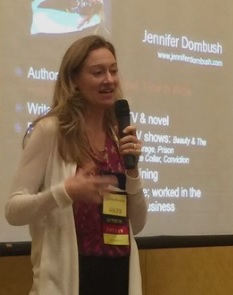
The television or movie screen is the closest most people will ever come to witnessing the forensic world. But Jennifer Dornbush actually lived it. As a daughter of a medical examiner, whose office was in her home, she investigated her first fatality, an airplane crash, when she was 8 years old. Since that first case she has had decades of on-sight experience in death investigation and 360 hours of forensic training through the Forensic Science Academy.

Jennifer now uses these experiences to pen crime fiction for film, TV, and novel. Currently, Jennifer has several crime drama series being developed for television; her mystery novel series, The Coroner, releases in 2018.

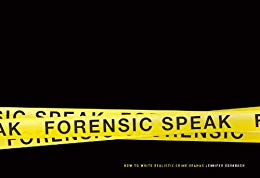
Wanting to share her love of forensics with other storytellers, she scribed non-fiction work, Forensic Speak: How To Write Realistic Crime Dramas, published by Michael Wiese Productions, hailed as a north star to creating authentic crime dramas.

 She teaches seminars and speaks on writing crime fiction for screen and novel, surviving and thriving the artist’s life, the novelization process of scripts, crime scene science, forensic fundamentals, and death investigation. A more complete list of seminars is found on www.jenniferdornbush.com.

She is frequently asked to consult with writers and has consulted on shows such as *Beauty & The Beast   *Deception   *Hawaii Five-O   *Leverage   *Prison Break   *Rectify  *Revolution   *Suits   *White Collar   *Conviction

Jennifer hosts a YouTube channel on forensics and crime writing. She has also taught webinars on crime writing through Writer’s Digest; and collaborated with The Writers Store and Script Magazine to produce a video on crime writing for writers. She has taught screenwriting on the high school and university level and mentored writers through the Act One Program, Regent University, and Universita Catholica Milano.

Some of her past speaking clients include The Writers Store, Great American Pitchfest, Crime Writers Weekend, Sisters in Crime, Greenhouse, Act One, Scriptwriters Network, Romance Writers of America, Mystery Writers of America, Story Expo, American Christian Fiction Writers, Highbridge Film Festival, and Universita Cattolica Milano, Italy; Write Canada, and the Pacific Northwest Writers Group.

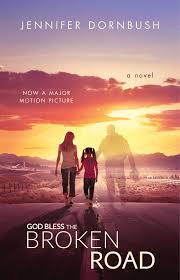
Additionally. Jennifer’s scripts have placed her on the shortlists of the Fox/Blacklist TV Program, Final Draft Big Break, Nichols, Austin, American Zoetrope, and NBC’s Writers on the Verge. Her half-hour forensic comedy, Home Bodies, received a Humanitas’ New Voices Award. Her feature film, God Bless the Broken Road, with God’s Not Dead director, Harold Cronk released in 2018. She also penned the novel adaptation for Howard Books/Simon & Schuster.

As an award-winning film scribe, TV writer, and novelist, Jennifer delivers story tools that will help you create high stakes, entertaining crime dramas while incorporating current and authentic forensic methods. She has a distinct knowledge of 14 different forensic disciplines and has served as a forensic consultant for TV and film.  She regularly leads seminars on crime writing and forensics for writers in the U.S. and abroad. For more information or to book a speaking engagement, with Jennifer please visit www.jenniferdornbush.com.

Leave Jen a Comment. Whether it’s a forensic, crime-writing or just an interest – don’t be shy. 

KUDOS TO WHOEVER WHACKED GANGSTER JAMES “WHITEY” BULGER

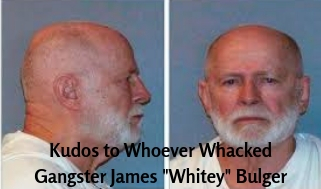
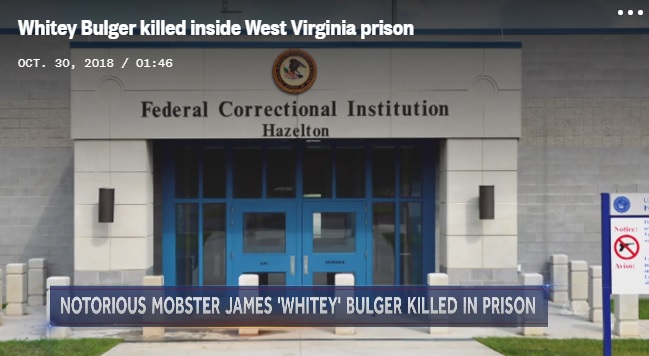
One of the world’s most infamous criminals is dead. 89-year-old James Joseph Bulger, aka Whitey—once head of the Boston Mob—was murdered inside Hazelton Federal Penitentiary in West Virginia on October 30, 2018. Authorities transferred Bulger from a Florida maximum security jail to the WV medium security facility less than 12 hours earlier. The wheelchair-bound, high-risk geriatric inmate got placed in general population. Credible prison sources say other prisoners quickly isolated and beat Bulger beyond recognition using the “lock-in-a-sock” technique, tearing his eyes from their sockets and cutting out his tongue. It was a signature end for the notorious American gangster.

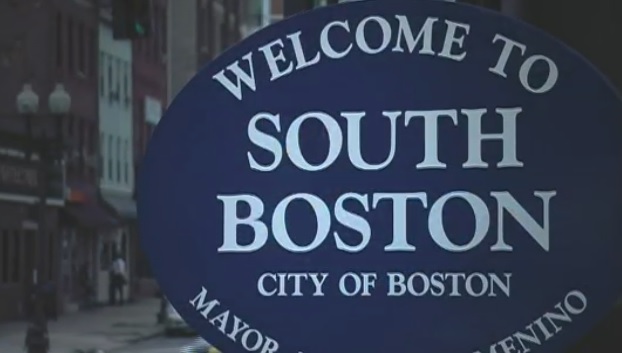
Whitey Bulger was more than a larger-than-life mobster—he was a devious, double-crossing sonofabitch convicted of eleven brutally cruel murders inflicted on organized criminal associates during the 70s and 80s when South Boston’s Irish Mob ruled town. Bulger also acted as a top FBI informant and turned into a Bureau embarrassment while he continued his criminal enterprise under federal government immunity. Just before indictment on racketeering charges, Bulger’s FBI handler tipped him off. That corrupt information about pending arrest gave Bulger years on the lam before he was taken down in 2011.

My opinion is Whitey Bulger deserved what he got, and kudos to whoever whacked him. It was long overdue. Bulger should have been executed years earlier had the State of Massachusetts retained the death penalty and nabbed him. However, his murder inside the joint raises the question of what protection a high-profile and vulnerable prison inmate like Whitey Bulger is entitled to.

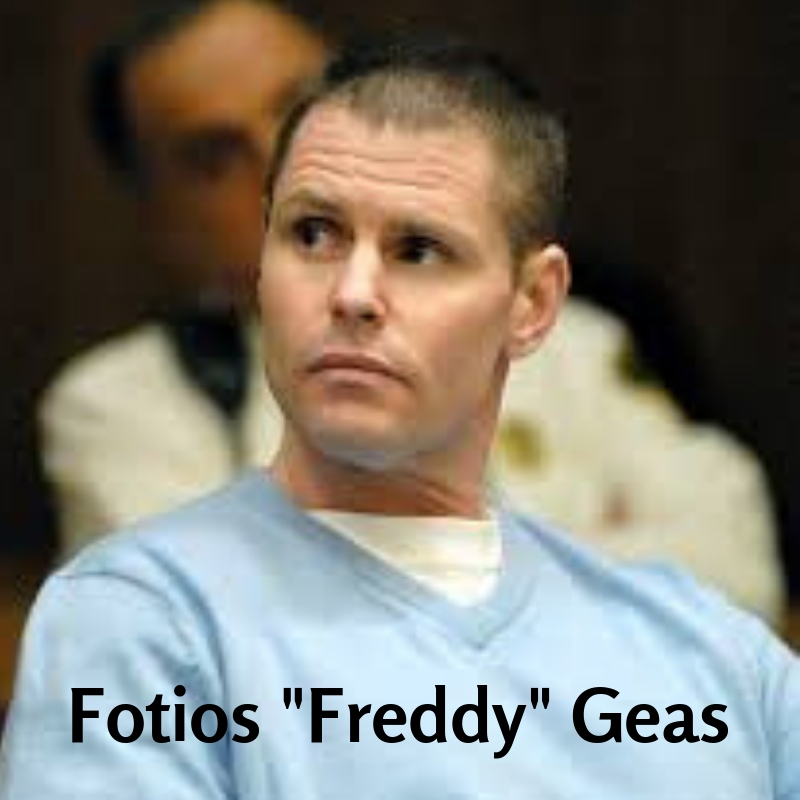
That Bulger died less than a day after arrival at Hazelton suggests powers within the U.S. Bureau of Prisons intentionally placed Bulger in peril. It’s likely no coincidence convicted Boston mafia hitman, Fotios “Freddy” Geas, was on the scene and in the cell when Bulger died. Currently, Freddy sits on ice. He’s in the hole pending an investigation.

Before examining who in the system is accountable for setting up an old con-man’s death, let’s look at Bulger’s past and what he did as a sociopathic killer.

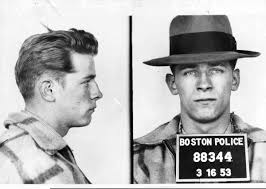
James Bulger was born in 1929 at Everett in North Boston. His father was injured in an accident and unable to work, placing the family in poverty. From an early age, James Bulger bounced between relatives’ homes and whoever would put up with his delinquent behavior. Nicknamed “Whitey” for his platinum hair, Bulger preferred being called “Jimmy”. However, the name Whitey stuck and it stayed with him throughout his criminal career.

Whitey Bulger developed a nasty reputation as a cruel dude. At fourteen, he was a seasoned street fighter and enforcer for the South Boston Shamrock gang. Also at fourteen, Bulger went to jail for theft and burglary. He was placed in adult population and learned from some of the country’s most experienced cons.

Bulger was in and out of prison during the war years. He tried reforming in 1948 by joining the U. S. Air Force, but that didn’t work. Whitey Bulger was jailed in military prison for assaults and being absent without leave. To get rid of Bulger, the Air Force released him with an honorable discharge in 1952. He went back to the streets of South Boston.

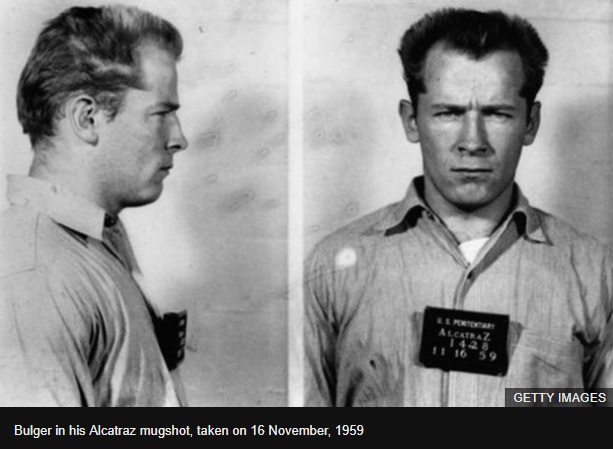
Whitey Bulger graduated to extortions, drug trafficking and armed robberies. By 1956, he was incarcerated for robbery in Atlanta but was transferred to Alcatraz prison at San Francisco. Bulger was too much for Alcatraz authorities to handle so they sent him to the super-maximum pen at Leavenworth. He made parole in 1965 and never saw another day in jail for 46 years.

Back in Boston, Whitey Bulger joined the Killeen gang who were established pimps and bookies as well as experienced loan sharks and bone bashers. During a gang war between the Killeens and their rival Mullen gang, Bulger committed his first known murder by shooting an unarmed man between the eyes, then biting off the end of his nose. Things heated up for the Killeens and Bulger, so he turn-coated to the powerful South Boston mob. Bulger joined the Winter Hill gang and went about setting up the Killeens to eliminate their leaders.

Whitey Bulger rapidly rose in South Boston’s underworld. He had a peculiar modus operandi, or MO, for a con. Bulger preyed only on other criminals, not the general public. It was a pattern that worked well for Bulger, as it was high-level criminals who controlled the money, and he used the lower lying cons to rat out their bosses.

Whitey Bulger manipulated other influential people, too. He was a paid informant for the Boston Police and given leeway to operate with impunity. Bulger worked both ends against the middle. By the mid-70s, Whitey Bulger was in complete control of the South Boston mob. Secretly, he was also the FBI’s snitch.

In 1971, the FBI recruited Whitey Bulger. Or, it was more like Bulger recruited the FBI. What Whitey Bulger wanted was the FBI’s help in eliminating the Italian Mafia while leaving him alone, and it worked. Soon Mafioso members were being rounded up and jailed. Other Bulger rivals were disappearing or turning up dead. Throughout the 1980’s, Whitey Bulger ran unopposed and committed or ordered at least nineteen known murders. His body count might be higher.

There was a problem, though. That was Bulger’s FBI handler, Special Agent John Connolly who’d been giving Bulger carte blanche permission to operate freely as long as Connolly got arrests. Connolly was eventually exposed by the Bureau as a crooked cop, but not before tipping Whitey Bulger off that a Racketeer Influenced and Corrupt Organizations Act (RICO) indictment was about to fall on Bulger’s head.

With FBI Agent Connolly’s help, Whitey Bulger went into hiding. This was in 1994. For the next seventeen years, Bulger was a wanted man, and for twelve of them, Bulger was on the FBI’s most wanted list at #2—right behind Osama bin Laden. A $2 million reward was offered for Bulger’s scalp and sightings came in all over the world.

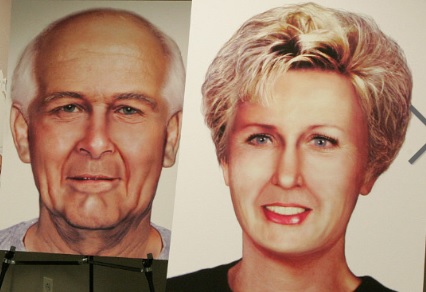
But the truth was, Whitey Bulger never left the States. He and his long-time girlfriend, Catherine Greig, holed-up in California where they rented a quiet apartment in Santa Monica. Finally, after the FBI did a media blitz with age-corrected sketches of Bulger and Greig, a neighbor recognized the pair and turned them in.

It was June 22, 2011, when the police captured Whitey Bulger. He was now 81. In Bulger’s apartment, they seized over $800,000 cash and a horde of firearms along with plenty of fake ID. Bulger and Greig were extradited back to Massachusetts where Grieg pleaded guilty to harboring a fugitive. She drew six years. Bulger went to trial.

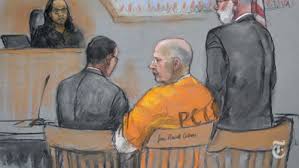
Whitey Bulger was charged with 48 felony counts—19 of them first-degree murders. The trial lasted three months and heard from a rogue’s gallery of convicted mafia members, mobsters and hitmen. It also heard from relatives of Bulger’s victims. The jury convicted Bulger on 11 murders, and he was sentenced to two consecutive life terms, plus an extra five years for good measure.

Evidence told of Bulger’s viciousness. He had many people severely tortured, especially those suspected of informing on him. Some of those maimed and then killed were women—girlfriends of Bulger’s subordinates in the gang world. Others were rival drug dealers and racketeers who posed business threats to Whitey Bulger. Further evidence showed Bulger being involved with arms trafficking to the Irish Republican Army terrorist group as well as firebombing Senator Ted Kennedy’s house.

Upon sentencing Whitey Bulger, Judge Denise Casper told him, “The scope, the callousness, the depravity of your crimes are almost unfathomable. Your crimes are more than heinous because they were all about money.” Bulger replied, “Money is the common denominator in crime. It will never stop.” Bulger also said he wanted an epitaph on his tombstone stating, “I’d rather be in Alcatraz.”

*   *   *

Whitey Bulger was also indicted for murders in Florida and Oklahoma, however, prosecutors there stayed charges due to his age and existing life sentences. Bulger first went to the Coleman II U.S. Penitentiary in Somerville, Florida where he was held in protective custody. Later, he moved to the Federal Transfer Center in Oklahoma City, also in protective custody, then back to Florida. All of Bulger’s federal pen time from 2014 till 2018 was in maximum security and tight protection—never given access to the general inmate population. Even though he was old, Whitey Bulger was a marked man and a high-value target inside the system.

Then, on October 29, 2018, Bulger was suddenly transferred from protective custody in a Florida max jail to open population at a medium place in West Virginia. He arrived at 9:53 pm and by 8:20 the next morning, Whitey Bulger was whacked in his cell. Conveniently, the cameras didn’t catch the actual death sentence, and somehow Freddy Geas and friends were lying in wait. This reeks of a system-orchestrated event.

When I say kudos to whoever whacked Whitey Bulger, you might think I’m condoning planned and premeditated murder. I’m not—not for ordinary, law-abiding and peaceful citizens that is. But, I’ve got no sympathy for the devil, and I think guys like Whitey Bulger, Freddy Geas and their kind deserve what they get in the end. Career criminals are not remotely like you and me. These animals have no regard for human rights and human life. It’s the law of the jungle in their world, and it’s fitting that Whitey Bulger finally got whacked.

But, what I’m having a hard time getting my head around is how bureaucrats and employees in the correctional system stuck their necks out like this. I’ve been around the system for decades and I know most system players are government appointees and employees. They value security, promotions, pensions and non-publicity. Yet, somebody—some people—within the United States Bureau of Prisons let Whitey Bulger’s murder happen.

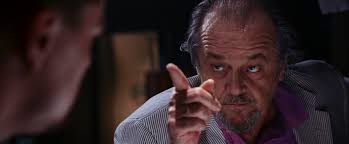
This case made the news. There’s a fascination with gangster and gang lifestyles in America and around the world. Whitey Bulger was a pop-figure and a cult idol. Just look at two high-profile movies like The Departed where Jack Nicholson won an Oscar portraying Bulger’s character. Then Johnny Depp hit the big screen as Bulger in Black Mass. Currently, there’s a lot on the news about Whitey Bulger.

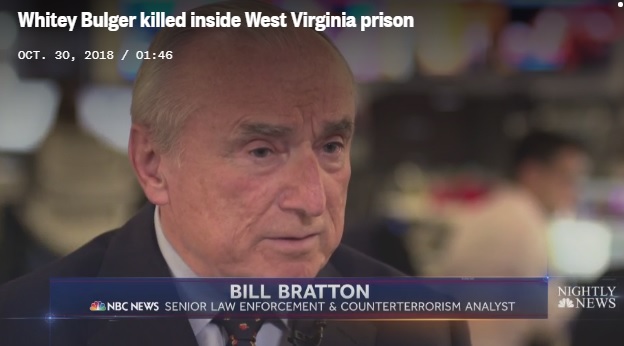
I found an interesting interview in the Washington Post with retired Boston PD Sergeant Bill Bratton. He knew Whitey Bulger and described him as, “The consummate gangster. The consummate manipulator. He was a brutal, feared, stone-cold killer.” Another cop, not wanting to be identified, simply said, “He was a bad, bad, bad guy.”

Although it’s interesting to hear comments about Bulger’s character, I was more curious about how people in the correctional system responded. I found an answer through NBC where Rick Heldreth agreed to a statement. Heldreth is president of AFGE Local 420 Prison Workers Union representing employees at Hazelton Penitentiary in West Virginia. Here’s how Rick Heldreth explained it.

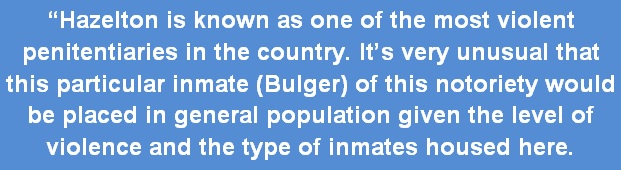
“Hazelton is known as one of the most violent penitentiaries in the country. It’s very unusual that this particular inmate (Bulger) of this notoriety would be placed in general population given the level of violence and the type of inmates housed here. This decision was made far above us. Hazelton has a reputation of con-honor and placing a massive turncoat like him (Bulger) in general population and not in protective custody made him particularly vulnerable to attack. I know how he was labeled in the system, and it’s not something that went well with our inmate population.”

Rick Heldreth offered insight about how recent federal government cutbacks affected their staffing levels. Heldreth reported that Hazelton normally holds 120 high-profile, violent inmates. It’s one of the most dangerous environments in America’s prison system. In the past three months, there were two other inmate murders, both happening immediately after admission. Heldreth said inmates always know who’s coming in. “It’s really like in the movies.”

Heldreth stated it takes 880 staff to manage 120 inmates at Hazelton. That’s a 7.3:1 ratio. “Since the Trump-era hiring freeze, we’re down about one hundred staff and can’t replace them. We have prison plumbers and teachers filling in for guards.”

In my opinion, forces within the U.S. Bureau of Prisons purposely sent Whitey Bulger to his death at Hazelton Penitentiary. Bulger was far from a model prisoner. He was a problem—a psychopath and without any form of normal conscience. Shortly before being sent to Hazelton, Bulger’s file records that he masturbated in front of a female prison worker and—at 89—threatened to kill another prison official. They had enough of him.

We’re not in a perfect world. If we were, Whitey Bulgers wouldn’t exist. But they do, and now one of them got a just reward. I say kudos to whoever whacked Whitey Bulger. He was fair game after prison authorities threw fresh meat over the fence and into the jungle. But autonomous authorities shouldn’t authorize death sentences and capital punishment really has to follow a legal and due process.