Author Archives: Garry Rodgers

About Garry Rodgers

After three decades as a Royal Canadian Mounted Police homicide detective and British Columbia coroner, International Best Selling author and blogger Garry Rodgers has an expertise in death and the craft of writing on it. Now retired, he wants to provoke your thoughts about death and help authors give life to their words.

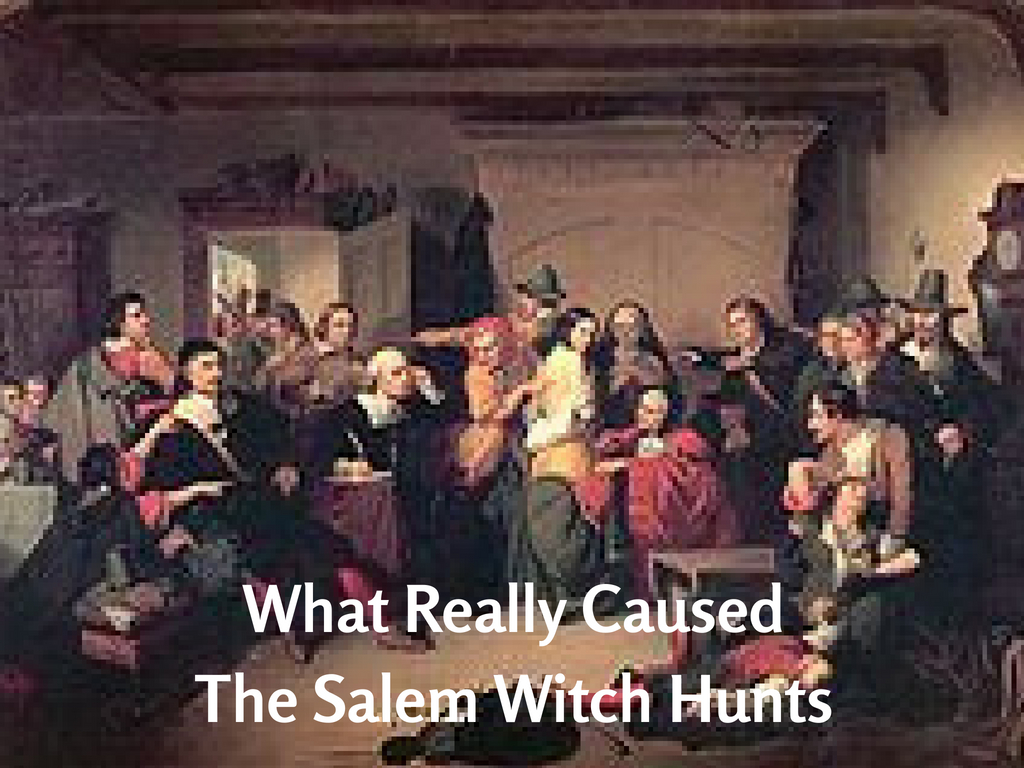
WHAT REALLY CAUSED THE SALEM WITCH HUNTS

The Salem witch hunts and mass executions of innocent victims falsely accused of sorcery is an American historical black mark. Through June to October of 1692, Puritan authorities in Salem, Massachusetts hung nineteen citizens after trying and convicting them for witchcraft. They crushed another man to death with heavy stones, and let five others perish—shackled in chains. Two imprisoned souls were mere children.
Today, all Salem witch hunt victims are officially exonerated. This terrible debacle became the poster case for trumped-up accusations and wrongful convictions. In fact, the term “witch hunt” is symbolic for going after those profiled for a vengeance need or paranoid forces “out to get someone”. Even the current United States president Twitters-on about witch hunts.

This horrific travesty of malicious injustice was an American turning point. Historians call the Salem witch trials the rock upon which theocracy shattered. They were the perfect storm of isolationism, religious extremism, fanaticism and divided socio-economic structure. The witch trials were also unprecedented as bad jurisprudence and a miscarriage of justice.
Today, few educated or rational people believe in evil witchcraft or black magic. (Modern peaceful Wiccan practitioners are a different matter.) That old destructive medieval and ignorant mindset sieved from America after the Salem witch trials. But, for over three centuries, few people understood why the disaster happened. Various theories suggested Freudian mass-hysterics, a widespread fungus causing mind-altering behavior and even meddling by alien forces aligned with the dark side.

Now the truth is out there. A meticulous, scientific study by two American academics published in the book Salem Possessed wraps up the witch hunt reason. It’s not some supernatural power or psychedelic drug. The answer lies in a complex mix of sociology, geography, demography, human psychology and forensic pathology. Something far more sinister than sorcery really caused the Salem witch hunts.

History of the Salem Witch Hunts

It trigged with teenagers. In January 1692, three bored girls played a game similar to today’s Ouija Board. They cracked eggs and separated the whites in a pan of cold water, then used imagination to decipher patterns divulging hidden secrets and foretelling future events. They got carried away. Soon they were writhing in fits and cramping into twisted contortions.

The girls were relatives of Salem Village vicar Samuel Parris, a Massachusetts Bay Puritan parishioner who referred the distorted girls to a local physician. The doctor found no medical cause for the girls’ discomfort. He suggested it was work of witchcraft and turned it back to the minister. The reverend sided with Satanic superstition and went about extracting accusations from the young girls.
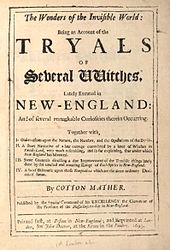
They implicated three Salem women for bewitching and causing their erratic behavior—Sarah Good, Sarah Osborne, and Tituba. Good was known for tardy church attendance. Osborne was a loose-moraled beggar. And Tituba was a Carib slave house servant. The trio were hardly credible to Salem’s upper crust and certainly suitable scapegoats not equipped to defend themselves.

Good and Osborne fervently denied being witches. Despite intensive interrogation in magistrate’s court, they held to their denials. Tituba, on the other hand, confessed. She gave wild accounts of signing Satan’s book and offered crazy tales of human hogs, great black dogs, red cats and yellow birds. Tituba also named of other Salem witches.

From there, everyone got carried away. Authorities rounded-up scores of witch suspects, hauling them before interrogatories. More people—women and men—confessed under duress and named more names. In a few months, nearly two hundred “witches” were accused, hunted down and arrested in Salem and neighboring communities. Quickly, the arrests turned to trials and mass hangings began.

The 17th Century Salem Legal System

1692 was an important year in 17th Century Salem’s legal system. It coincided with a new charter for the Province of Massachusetts Bay following the 1680s King William War. The colonists were deeply divided in Salem and the surrounding area’s social structure. It was protective Puritism vs. progressive private enterprise. The King’s newly-appointed Governor, William Phip, arrived with the charter in January,1692—just as the witchcraft accusations arose.

The spiraling sequence of accusations, arrests and confession led to mass hysteria and a “thronged” legal system. To accommodate justice, Governor Phip convened a Special Court of Oyer (hearing) and Terminer (deciding). He appointed magistrates, judges and sheriffs based on local recommendations by powerful people in the religious sphere.
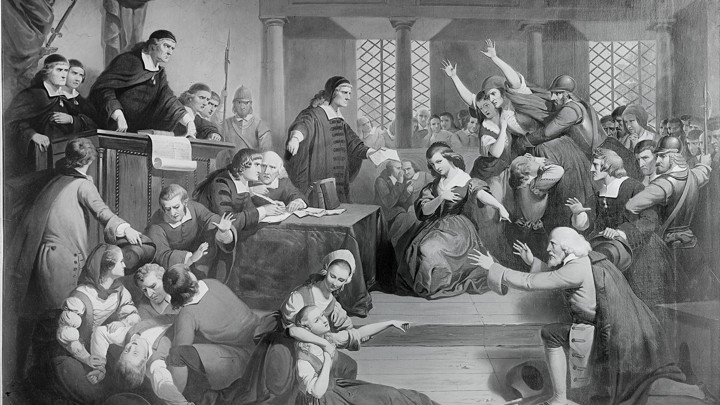
The Salem witch trials occurred long before the United States Constitution was a gleam in revolutionary eyes. Rules of evidence stemmed from English common law and principles based on religious doctrine. For witchcraft cases, evidence came from accusatory mouths of uneducated and manipulated common folk, not from corroborated independent and credible witnesses.

Once a citizen claimed their loss or discomfort was witchcraft caused, they laid a complaint against the accused before an appointed magistrate. If the complaint appeared credible by the magistrate’s standard, the accused was arrested and brought in for mandatory interrogation. This was well before the right to remain silent.

Interrogations were public events. Open questions by a panel and audience members given standing were standard procedure. Every effort pressed the accused to confess and reveal other witches. It was a Puritanical purging of Salem’s evils and a chance to rid society of undesirables. Once a grand jury heard interrogation evidence, they preferred an indictment and the ‘witch” was set on trial.
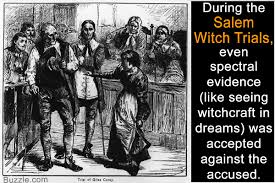
Witch trials depended on what’s called “spectral evidence”. This was testimony of the afflicted who claimed to see the apparition of the accused witch appear in a ghostly form while performing witchcraft upon them. Theologically, the court evidence relied on whether or not the accused gave the Devil permission to use their shape. The Salem witch courts contended the Devil could not perform evil acts using a person’s shape without that person’s expressed permission—therefore, if the afflicted complainant had seen the accused’s shape—it was in facto proof the accused was guilty of witchcraft and complicit with the Devil. According to Puritan law, the witch must die.

This convoluted logic resulted in immediate hangings and a compression death through layered stoning. It also caused deaths of those awaiting trial while shackled in dungeons. In three months, twenty-four innocent people were dead and many more awaited similar fates. That’s until someone accused Governor Phip’s wife of being a witch.

Suddenly, the executions stopped. Phip ordered an evidentiary review. It determined spectral evidence was inadmissible, noting it was not credible and highly prejudicial to the accused. Phip stayed the remaining execution warrants and commuted sentences, essentially freeing all those facing witchcraft allegations. Within three years, the Province of Massachusetts Bay officially exonerated all accused witches and ordered a consolidating day of fast and remembrance.

Cause of the Salem Witch Hunts

Many historians and writers pondered how normally rational people got so swept by the wind of witchcraft craze. Certainly, there was a mass psychological hysteria and paranoia. But the actual reason—the root cause—of why so many witch accusers and so many accused witches behaved so bizarrely was unknown. For years, suspected causes for bewitched symptoms like convulsing and hallucinating fell on the Claviceps purpurea fungus found in Puritan bread. It’s known for LSD-like side effects.
But a bread acid trip didn’t cut current standards, even though the mass hysteria was long-explained by archaic superstitions of wanton witchcraft and the Devil’s demons. Everybody ate Puritan bread in Salem, and only a few presented weird symptoms. No, a rational look at the Salem witch hunts needed further investigation by reasonable and independent thinkers.

That rationality came from two Harvard-educated history professors at the University of Massachusetts who wrote the intriguing book Salem Possessed. Paul Boyer and Stephen Nissenbaum’s work took an in-depth look at the social, economic and geographical factors affecting Salem’s citizens back when the witch hunts started. They also took a forensic approach to the psychological and pathological influences causing the complainant’s symptoms.

Boyer and Nissenbaum came to an astounding social conclusion. However, they weren’t the first to arrive there. In 1867, New England historian Charles W. Upham produced an accurate map of how Salem Village appeared in 1692. Then he plotted the houses where witch accusers and accused witches lived. Astonishingly, almost all accusers lived on the west side of Salem Village. The accused lived on the east side.

Salem Possessed’s authors concluded that if the Devil had come to Salem, he was being very choosy about which homes he visited. No, they concluded. The reason for the witch hunts had to lie in Salem’s history, and they were right.
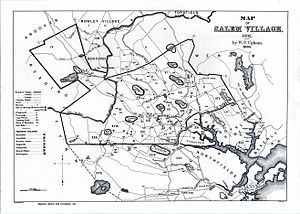
Salem is one of the oldest European settlements in North America’s New England region. As the crow flies, it’s less than twenty miles northeast of downtown Boston. English immigrants of the Puritan faith first occupied Salem to establish a community based on their conservative views to protect old ways threatened by the age of Enlightenment and the then-liberal Anglican Church.

The Puritans were agricultural people. Naturally, they chose to settle in the best farmland which lay to the west of Massachusetts Bay. Over the course of eighty years—roughly four generations back then—the Puritans built a religious and agricultural society centered around what they called Salem Village. Today, the area is known as Danvers, Massachusetts which is a different jurisdiction from present-day Salem.

During the mid-1600s, a harbor community developed on Massachusetts Bay, east of the village. It became known as Salem Town. Commercially progressive settlers occupied Salem Town and focused on making money rather than praising the Lord and preserving old ways. As Salem Town grew, it pressed westward and crossed the border into the village. That didn’t sit well with the Puritan villagers.

Boyer and Nissenbaum uncovered a tangled history of feuds, jealousy, mistrust and hostility between the west Salem villagers and their eastern invaders. West Salem had two tightly-knit prominent families who married within. The easterners were a mix of newcomers who married outside family lines. For some reason, everyone who displayed physical symptoms of being witch victims came from the two prominent Puritan families.
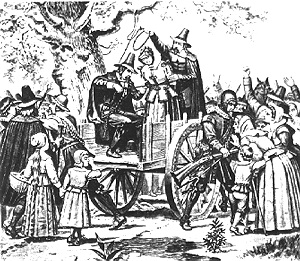
From a socio-economic and religious point, it’s clear the impact of commercial capitalism and the shifting role of the church left the backward Puritans threatened by their modern newcomers. It led to unbearable tensions which broke once the first bewitched symptoms showed in January of 1692. That opened a floodgate of superstitious opportunity to kill the eastern Salem villagers.

Salem Possessed makes a powerful argument that human personality partially caused the Salem witch hunts. If that be the Devil in humanity, then so be it. However, the Devil isn’t a good forensic reason for why the teen girls experienced peculiar symptoms like mood swings, cramps and hysterical contortions. Something else was at work, and the pathology points at genetics.

Putting it bluntly, the Puritans were inbred. Their closed circle was more than religious and economic. They married within and secluded their gene pool. Huntington’s Chorea or Huntington’s Disease is common in people with dysfunctional genes. It’s a hereditary neurodegenerative illness with physical, cognitive and emotional symptoms exactly like the west Salem village girls experienced. The gene mutation creates a protein that kills cells in the brain’s cerebral cortex.

Many adults in the Puritan community already had some stage of Huntington’s Disease. That impaired their thought processes as well as their offspring’s. Because of longevity in the Salem region and that power still clung to the Puritan Church in the late 1600s, Puritans made up the judicial force that persecuted the alleged witches. Their personality and pathology dysfunction is what really caused the Salem witch hunts.

For three centuries, lore held that the witches of Salem were hung from scaffolding in the center of today’s Gallows Park. That’s not correct. Several years ago, the Gallows Project funded by the University of Massachusetts did a thorough research based on historical records and advanced forensic techniques like GPS analyzation and ground penetrating radar. They conclusively identified the execution spot as a tree at Proctor’s Ledge. It’s right beside a Walgreens and the community built a small memorial honoring the wrongfully-accused witches of Salem.

RFK ASSASSINATION — THE SECOND GUNMAN EVIDENCE

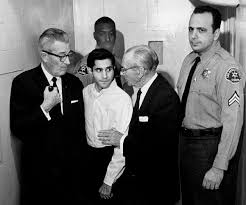
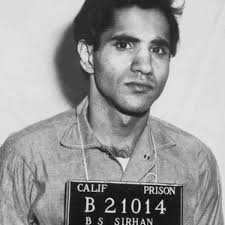
It’s been 50 years since United States Senator Robert Francis (Bobby) Kennedy’s murder in the kitchen of Los Angeles’ Ambassador Hotel. Bobby Kennedy just won the California Democratic nomination as their presidential candidate. Kennedy left the hotel ballroom after his acceptance speech and cut through the pantry where he suffered three bullet wounds, one of them fatal. Caught red-handed—holding a smoking gun—was Christian Palestinian immigrant Sirhan Bishara Sirhan, later convicted of RFK’s assassination.

Despite overwhelming evidence that Sirhan intentionally shot at Bobby Kennedy, there’re dark doubt shadows looming over the case. They indicate Sirhan didn’t act alone. Problems with witness statements, autopsy findings and ballistic testing suggest evidence that a second gunman conspired in RFK’s shooting. Mistakes and incompetence in the original police investigation also amplify suspicion of a second gunman accomplice.

A highly-credible medical team recently reviewed the original RFK medical and autopsy evidence. For the first time in history, independent professionals looked at the facts and circumstances surrounding Kennedy’s injuries and treatment. In June 2018, they published findings in a medical field’s leading gazette, the Journal of Neuroscience. This clear and concise report examines what happened from a medical perspective and whether there’s any pathological basis providing evidence that a second gunman helped shoot Bobby Kennedy to death.

RFK’s Deadly Road Towards the Presidency

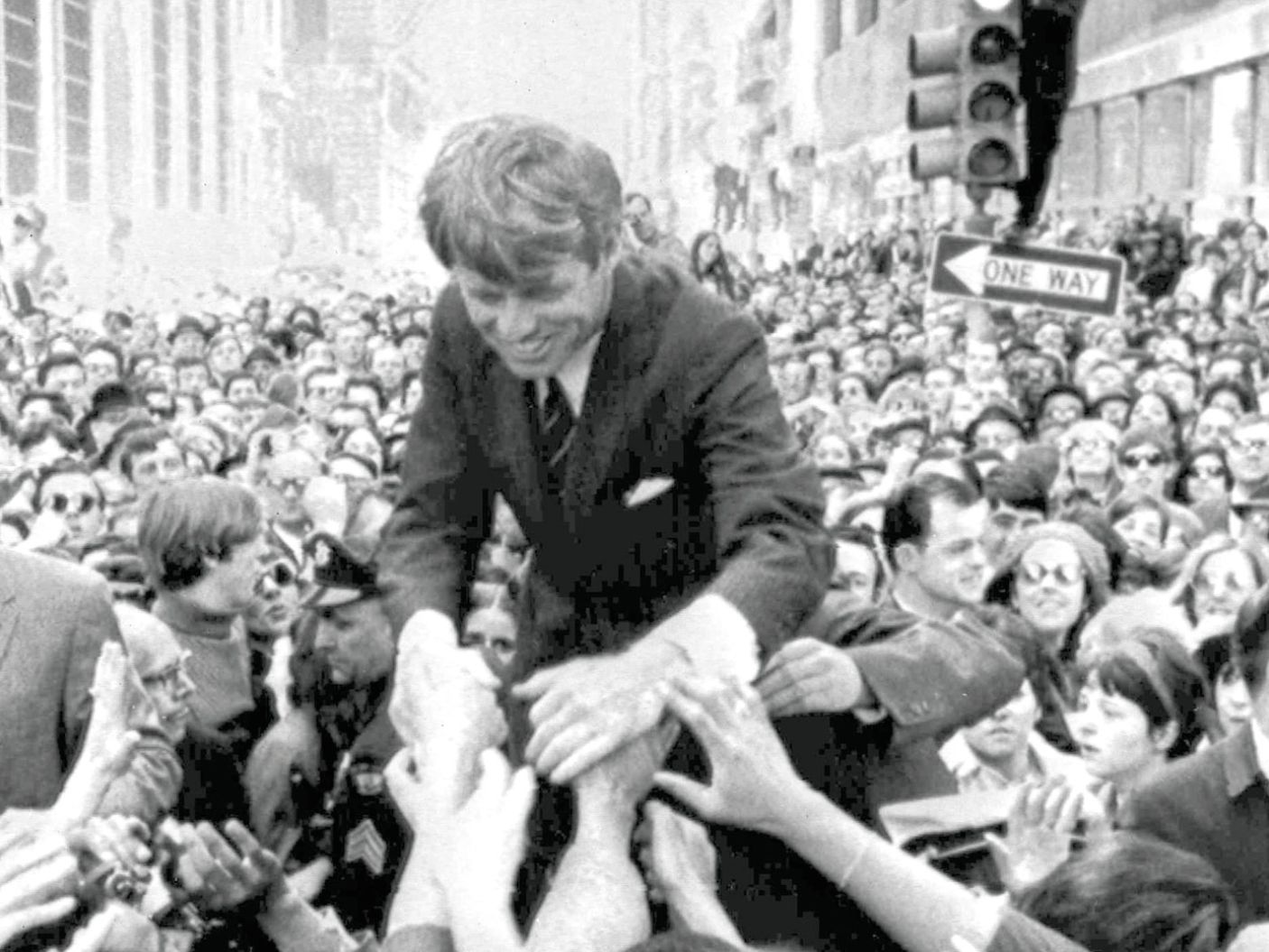
In 1968, Bobby Kennedy seemed certain to win the Democratic Party’s nomination for United States President. Riding on his experience as his brother John F. Kennedy’s attorney general, sympathy over JFK’s assassination and the famous Kennedy name, RFK was well on his road to winning the American presidency. Lyndon Johnson declined a second term, and other Democratic candidates ran a distant second to RFK’s popularity.

Despite being admired, Bobby Kennedy had his enemies. As AG, RFK took on the mob and the communists as well as volatile groups like the Teamsters Union and the Ku Klux Klan. FBI Director J. Edgar Hoover hated the Kennedys, and the high profile name made Bobby a target for right-wing activists and lefty nut cases alike. Without a doubt, there were many sights gunning for Robert F. Kennedy.

Unlike today’s tight reins, there was little security for presidential primary candidates back in 1968. The Secret Service had no detail for political candidates, and they did little or no threat assessment or background checks on anyone thought dangerous to candidates. RFK’s security team consisted of a retired NFL linebacker, a former Olympic Medalist and a hired part-time security guard carrying a .38 Special. That’s all the protection Bobby Kennedy had when he arrived at the Ambassador Hotel in downtown LA.

Securing the California primary significantly strengthened RFK’s run for the White House. Democratic runner-up, Senator Eugene McCarthy of Minnesota, fell further behind as did former Vice President Hubert Humphrey. Republican presidential candidate Richard Nixon seemed certain to be Kennedy’s challenge for the Oval Office. Had Kennedy lived, Nixon might have lost, and Watergate would never have happened.

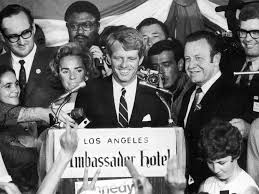
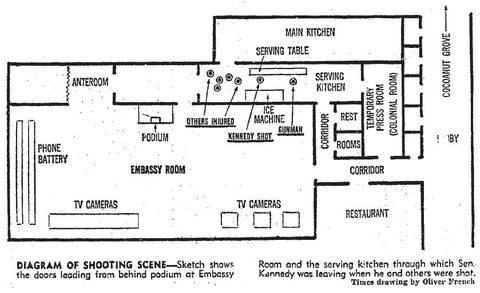
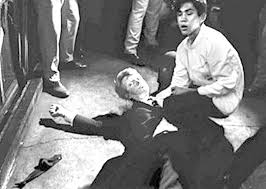
That’s not how history went down. On June 4, 1968 Bobby Kennedy won the California Democratic nomination and gave a rousing acceptance speech to a packed house of enthusiastic supporters. Just after midnight, at 12:15 am on June 5, Kennedy stepped from the podium and exited to the kitchen where a smaller crowd of hotel staff and assistants wished him well. RFK moved through the packed pantry, shaking hands and acknowledging folks.

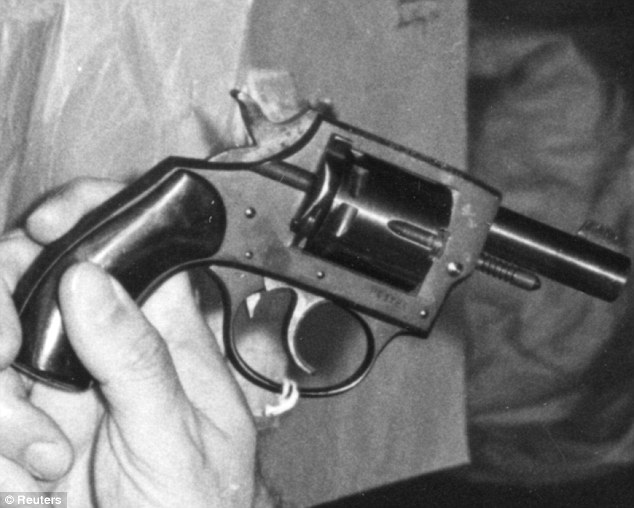
Sirhan laid in wait at the galley’s west end. As Kennedy approached, Sirhan whipped out a .22 caliber, 8-shot Iver Johnson Cadet revolver and emptied it towards RFK. Bullets struck Kennedy three times and collaterally wounded five bystanders. Bobby Kennedy fell to the floor, semi-conscious but mortally wounded with a gunshot wound to the brain. Kitchen staff jumped Sirhan. They wrested the now-empty gun from his hand.

RFK lay motionless for 17 minutes before first responders arrived. A dispatch communication mistakenly sent Kennedy to the nearby Central Receiving Hospital instead of the larger Good Samaritan Hospital which was far better equipped to handle cranial gunshot wounds. Assessing Kennedy’s grave condition, Central’s staff transferred him directly to Samaritan. The delay took nearly an hour post-shooting, however, the 2018 medical review determined it made no difference to RFK’s fate. Despite heroic surgery attempts, his brain wound was untreatable.

Robert Francis Kennedy died at 1:44 am on June 6, 1968. The nation mourned another Kennedy assassination. RFK’s road to the presidency ended in violence, and his dream of furthering civil rights and middle-class prosperity died with him. Sirhan stood trial as the lone gunman. He was convicted, sentenced to death, but later commuted to life in prison. Today, Bobby Kennedy rests under the grounds of Arlington and Sirhan sits behind bars in San Diego.

The RFK Conspiracy Theories Start

Like most high-profile deaths, there are those refusing to buy official conclusions despite how solid evidence seems. John Kennedy’s assassination is the mother of all conspiracy theories, but little brother Bobby’s fate is no exclusion. In fact, there are three deeply disturbing discrepancies in the RFK murder worth investigating.

The big problems with the RFK assassination lie in the true number of shots fired as well as the position and distance of Sirhan relative to Kennedy in the kitchen. Officially, Sirhan fired all 8 shots in his revolver from the front and approximately 2 to 3 feet ahead of RFK. Unofficially, more than 8 shots went off with some bullets allegedly fired from behind Robert Kennedy. That suggests a second gunman.

Further, the eye-witness evidence appears clear that Sirhan maintained some distance, firing from the front on a level and downward angle. The medical and autopsy evidence seems clear that RFK’s fatal brain wound came from a near point-blank gunshot occurring behind his right ear and from an upward angle. Again, that suggests a second gunman.

On the surface, this conflicting evidence is more than troubling. There was also trouble during Sirhan’s trail with inaccurate testimony and confusion by police forensic experts over identifying the RFK murder weapon. There were so many errant issues raised that the United States government appointed a 1975 commission to reinvestigate the RFK assassination. It was supported by the FBI who took no role in the original murder case as the Los Angeles Police Department maintained primary jurisdiction.

The RFK reinvestigation struggled with inconsistent witness statements, confusing forensic evidence and now-missing pieces to the puzzle. Despite perceived problems with proof and procedure, the commission ruled Sirhan Bishara Sirhan acted alone. They found no credible evidence of a second gunman. That was despite being unable to explain a few troubling issues.

Many people don’t accept Sirhan’s original trial verdict or the commission conclusions. This takes in members of the Kennedy family like Robert F. Kennedy, Junior. As well, some of the victims wounded in the Ambassador Hotel shooting and various eyewitnesses present at the time are convinced of a second gunman. Like other conspiracy theorists, they point to the perceptual problems associated with the number of shots and the location of RFK’s fatal wound.

No sensible spectator or serious student of the RFK assassination suggests Sirhan didn’t fire 8 shots. That evidence is overwhelming. But, there’s a lot of information published pointing to more than eight bullet strikes in the Ambassador kitchen. How credible that information is—is the question.

The other major issue—according to conspiracy promoters—is the head wound. By all official accounts, Sirhan never got within a few feet of RFK and remained facing him from the front. The medical and autopsy evidence clearly shows stippling from gunpowder residue burns on Kennedy’s skin and hair at the bullet entrance wound. That evidence seems consistent with the fatal firearm being discharged within inches of RFK’s head, not several feet.

The 2018 independent review published in the Journal of Neurosurgery examined RFK’s hospital treatment and autopsy evidence. They didn’t deal with the “more-than-8-shots” issue. The expert panel left that for the conspiracy theorists and those wanting to research RFK crime scene examination evidence.

The 2018 Journal of Neurosurgery (JNS) Review

Three prominent neurosurgeons and trauma practitioners privately reviewed RFK’s medical records and autopsy report. This was independent of any government agency or special interest group. First, they outlined the history of Robert Kennedy’s campaign and the circumstances bringing him in contact with Sirhan.

Next, the review panel outlined RFK’s emergency treatment and follow-up surgery as well as post-op care. Then, the panel focused on the so-called “perfect autopsy” performed by the famous Los Angeles coroner and forensic pathologist, Dr. Thomas Noguchi. Finally, the experts reassessed Kennedy’s medical care to see if anything more could have been done to save RFK’s life.

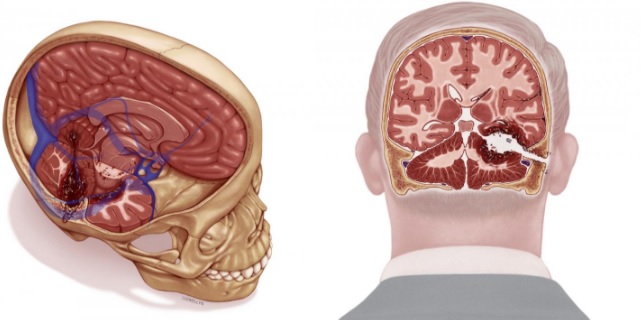
Robert F. Kennedy suffered 3 separate .22 caliber gunshot wounds. Two were superficial and non-life-threatening. The third was ultimately fatal. One entered the right side of his back. This bullet was recovered intact inside RFK’s body. The second non-lethal bullet entered his right armpit and exited his shoulder. It was not recovered. The fatal bullet entered RFK’s skull behind his right ear. It fragmented, sending lead shrapnel and bone chips deep into RFK’s brain, remaining in the gray matter.

The JNS report outlines the brain injury and medical treatment in impressive detail. The doctor panel concludes so much cranial damage occurred that it was a miracle RFK lived as long as he did. They credit the 1968 medical intervention as first-rate. They report even with today’s medical advancements, if RFK was shot this way in 2018, no modern trauma team would be able to save him.

The JNS panel confirmed Dr. Noguchi’s autopsy findings of close-contact gunshot residue (GSR) stippling identified at RFK’s headshot entrance wound. They correctly observed in the autopsy report Noguchi made no reference to the distance the firearm’s muzzle was from RFK’s skin at discharge. Rather, they reported “a discrepancy between eyewitness reports that Sirhan came no closer than 12 to 18 inches from Kennedy when the shooting occurred and Noguchi’s later writings, stating the gun was no more than 3 inches of the right ear when fired”.

The JNS team also referenced a public Noguchi quote where he made clear his autopsy report didn’t imply Sirhan was the lone shooter. That early quote forever fueled conspiracy fires and formed the foundation for those purporting the second gunman claim. On the record, Noguchi always maintained whoever fired the fatal gunshot into Bobby Kennedy was slightly behind him and in very close quarters.

The More-Than-8-Shots Issue

The JNS doctors steered clear of this positioning can of worms. Rightfully so. This wasn’t their field of expertise. That evidence belongs in the police and forensic investigation wheelhouse. Arm-chair detectives with a half-century of hindsight picked the position puzzle apart from every angle. So they’ve done with the number of shots.

Essentially, the Los Angeles police investigators accounted for eight crime scene bullets. They also tested Sirhan’s .22 caliber, 8-shot revolver and ballistically linked the recovered bullets to Sirhan’s gun—except for the fatal bullet from RFK’s brain. It was too fragmented to identify microscopic striations unique to Sirhan’s firearm.

Most of the “evidence” for the more-than-8-shot theory came from news media reports focused on a photo apparently displaying two bullet holes in a door frame in the Ambassador kitchen. Conspiracy theorists used the logic that if eight bullets were already accounted for, then two extra holes formed positive proof of a second gunman. After all, Sirhan’s revolver contained 8 empty shell casings. He did not have time to reload.

Conspiracy theorists also rely on varying eye and ear witnesses to support their more-than-8-shot suspicions. Many in the kitchen reported hearing 10, 12 and as many as 15 shots blasting off. The RFK case even took a scientific sound step where a media recording allegedly taken during the assassination captured the shots on audio. Various forensic experts extensively analyzed the audio but can’t conclusively agree there were more than 8 shots fired.

There’s a rabbit hole of hints, innuendo and suggestions of extra shots out there in the RFK assassination world. But, there’s one true fact not resolved by the official investigation. That’s that the fatal fragments from RFK’s brain have not been forensically linked to Sirhan’s revolver. It leaves the suspicion door open that it’s physically possible for a second gunman being involved.

Nowhere in the documented RFK assassination evidence is there any reference to forensic authorities trying other tests on the brain bullet fragments than examining for microscopic striations. Bullet lead composition analysis (BLCA) and neutron activation analysis (NAA) techniques were available in 1968. In fact, the John F. Kennedy assassination investigators employed both scientific processes. BCLA and NAA became a ballistic cornerstone establishing Lee Harvey Oswald as JFK’s lone assassin.

Every experienced forensic investigator realizes that BLCA and NAA analysis are indicative or exclusive tests rather than conclusive evidence like tool markings left by firearm rifling engravings. That means running BLCA and NAA tests on RFK’s brain fragments and comparing them to groups analyzed from the known Sirhan bullets would either eliminate or associate them as originating from the same ammunition source.

Unfortunately, there’s no record of anyone conducting these two important forensic examinations. Assuming the RFK bullet exhibits are still available, there’s no reason they couldn’t be done today. That could establish or further rule out the second gunman theory. But, there’s no apparent appetite for any official review, regardless of requests from Kennedy family members to reopen the case.

Sirhan Bishara Sirhan’s Background and Motive

Every homicide investigation team looks at their suspect’s motive and associates. It’s always necessary to establish or rule out accessories to the crime. The RFK murder is no different for investigating who Sirhan was, why he did it and if he had help.

Sirhan originated in the Middle East’s Palestinian region. He was a Christian, not a Muslim as many believe. Sirhan immigrated to America in 1956 when he was 12. His family settled in Pasadena, California where he matured. Little in Sirhan’s history shows him as a potential political assassin.

Investigation after RFK’s murder found Sirhan’s diary which was full of apparently psychotic references repeating “Bobby Kennedy Must Die”. It seems Sirhan, in some twisted way, fixated on killing RFK and sought an opportunity. That presented at the 1968 Democratic convention when Sirhan simply walked into the Ambassador kitchen through an unlocked door, hung around and then opened fire.

Nothing in Sirhan’s background found him politically linked or motivated by terrorist agenda. He seemed an immigrant Arabic lone wolf version of the All-American psychopath. Like Oswald, Sirhan gained fame by shooting someone famous.

Sirhan was a rubber ball of confessions, recantations and failed recollections. Initially, Sirhan told police investigators he shot RFK because of Kennedy’s policy of arming Israelis with Phantom fighter jets to bomb Palestinian people. At trial, Sirhan denied this motive but admitted being the shooter. Later, he totally recanted his testimony. Over the decades, Sirhan molded himself into a self-serving position of failed memory due to some form of external hypnosis influence during RFK’s shooting.

One thing’s consistent about Sirhan’s statements. Although his motive remains questionable, he never outwardly accused anyone of being his accomplice. Sirhan never said there was a second gunman—at least to his knowledge. He leaves it to conspiracy theorists and authorities to explain inconsistencies like the number of shots fired, the gunshot residue, the distance from the muzzle to RFK’s skin and the relative positions while Bobby Kennedy was shot.

Reconciling the RFK Assassination Discrepancies

And, every murder investigation has evidentiary discrepancies being tough to reconcile. There’s no reason RFK’s assassination should be the exception. Experienced homicide investigators understand a value found in Occam ’s Razor. That’s the age-old problem-solving principle—when presented with competing hypothetical answers to a problem—one selects the answer making the fewest assumptions. Usually, the simplest answer to reconciling a discrepancy is the best and proper answer.

The JNS review panel dealt with Sirhan’s position relative to Bobby Kennedy’s gunshot entrance wounds with a simple observation. While eyewitnesses varied about distances between the shooter and victim, they agreed on body positions. Yes, Sirhan was to the west and ahead of RFK, but Kennedy was turned to his left, exposing his right side to Sirhan. The right side and behind the ear hits were a matter of predetermined physical geometry. So was the apparent upward angle of the fatal brain shot. Kennedy was aside of Sirhan and bent over talking to a busboy.

The JNS reviewers were cautious about distance reports. They note Noguchi made no distance reference in his postmortem exam report. He only verified gunshot residue presence on RFK’s skin and hair. It’s later media recorded comments from Noguchi that committed his estimating an RFK muzzle distance of 3 or less inches.

Again, Occam’s Razor applies to assess Noguchi’s statements. Although Dr. Noguchi was an experienced pathologist, he wasn’t necessarily an expert in GSR distances and patterns. Noguchi’s credibility has to be questioned in this case. He had a reputation as being an egotist thriving on his fame as the “coroner to the stars”.

Thomas Noguchi performed autopsies on celebrities like Marilyn Monroe, Natalie Wood, John Belushi and Sharon Tate. Some suggest Noguchi loved the limelight and extended his realm of expertise with unqualified opinions. Interpreting gunshot residue patterns may be beyond Noguchi’s talent. He might simply be wrong about estimating GSR discharge distance in RFK’s case.

Plenty of forensic science literature in murder investigations show GSR patterns present from muzzle distances of 1 or more feet. There’s no reason GSR from a short-barreled .22 Iver Johnson revolver couldn’t have produced stippled powder burns on RFK’s skin and hair from several feet away. Note the only link with the RFK-GSR second gunman theory comes from Noguchi’s belated media opinion. There’s no other source qualifying maximum muzzle measurement.

With gunshot angles and distance discrepancies reasonably rectified, the only remaining trouble area is the number of shots fired. Again, all RFK crime scene investigation evidence accounts for 8 fired bullets. There’s no credible case for more than 8 shots in RFK’s murder. There’s only speculation based on unsupported information.

Applying Occam ’s Razor to conspiracy theories in Robert F. Kennedy case concludes Sirhan Sirhan fired all shots. He acted alone without an accomplice. There’s no credible evidence otherwise, and that’s because non-events leave no evidence. It never happened any other way.

There was no second gunman in the RFK assassination.

WILDLIFE TROPHY HUNTING — THE ECONOMICS, ETHICS AND EMOTIONS

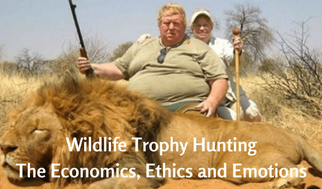
Many people view wildlife trophy hunting as morally indefensible. They consider it abhorrently unethical to kill wild animals for sport and display their body parts as testaments to testosterone, despite economic implications. Then, there are those who support trophy hunts, defending it as a rite of passage, a way of preserving cultural heritage and a massive money maker. For both sides, the trophy hunt debate is emotional.

Although trophy hunting might not be ethical to most, it’s still legal in many countries. Trophy hunts are prominent in Africa and North America. They bring in a lot of money to local economies. So does wildlife ecotourism and the ability to shoot a majestic animal countless times with a camera while doing no harm.

The debate over wildlife trophy hunting isn’t going away. Recently, the State of Wyoming allowed a limited entry kill-hunt for a quota of 22 grizzly bears on the fringe of Yellowstone Park’s boundaries. That’s not just for mature males. It’s legal to slay a pregnant female and stuff her as your rug. Meanwhile, the Province of British Columbia finally banned grizzly bear hunting except for allowing indigenous people their ceremonial harvest.

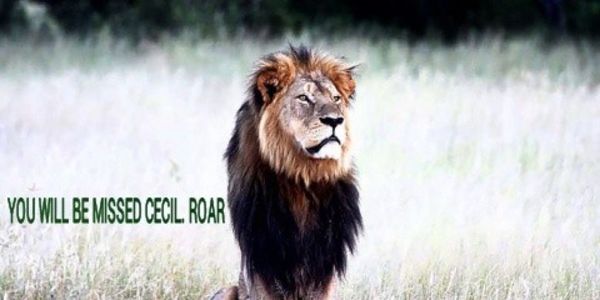
High profile trophy kills get opponents riled up. Rightfully so. Killing Cecil the Lion by luring him outside Zimbabwe’s Hwange National Park so American dentist Walter James Palmer could drive an arrow through Cecil unleased a hellfire of anti-hunting fury. Then there’s the recent auction where one license to kill a critically endangered black rhinoceros went for $225,000—allegedly with the proceeds going towards protecting black rhinos. Go figure.

I’ve seen both sides of the trophy hunting fence. Over the years, I’ve matured. I used to support trophy hunting. Now I take the position wildlife trophy hunting is no longer justified under any circumstances. In my opinion, that includes native ceremonial hunts. However, I do support subsistence hunting, legitimate sport hunting where non-threatened animals are taken for food and culls where invasive species need eradicating to maintain a balanced ecosystem.

I haven’t always been this opposed to trophy hunting. Far from it. Shamefully, I admit—I used to trophy hunt. Before analyzing the economics, ethics and emotions surrounding the trophy hunt issue, let me tell you my background, why I once trophy hunted and why I changed my ways.

I was raised in the Whiteshell Park in southeastern Manitoba, Canada. My father was a mink farmer and ran a trap line for supplemental income. Being brought up in the fur industry, I didn’t see anything wrong with harvesting animals for food and pelts. Our mink were euthanized humanely, and my dad abhorred leg-hold traps, using quick-kill Conibears instead. It was our livelihood as it was for many people in our community.

The thought of killing an animal for sport or having a trophy never entered my mind as a kid. My dad didn’t do it. Neither did our neighbors. But times changed in my teens, and the local economy switched from subsistence harvesting to supporting trophy hunts for large game like moose, deer and black bears. That’s because fur prices tanked due to anti-trapping movements. To survive, country folk began guide-outfitting big game, cashing-in on wealthy city-slickers and American adventurers’ egos.

I joined Canada’s national police force at 21. I was posted to British Columbia which is a trophy hunter’s mecca. But now, I was starting to have mixed feelings about subsistence vs. trophy hunting ethics. Deep down, something wasn’t right.

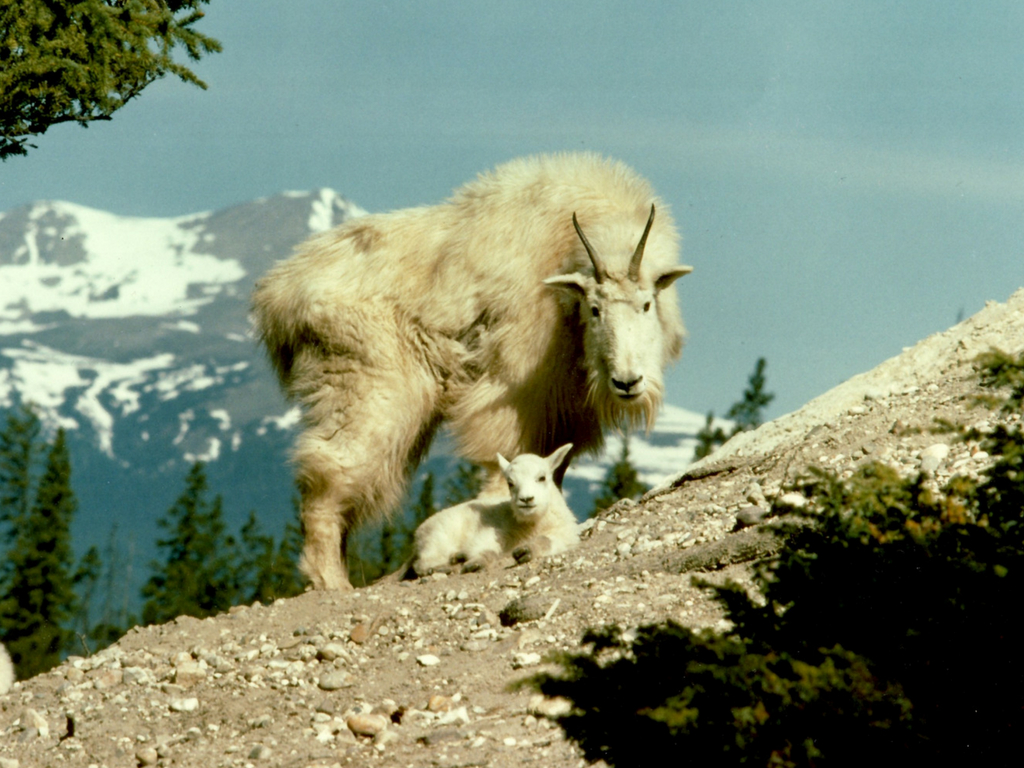
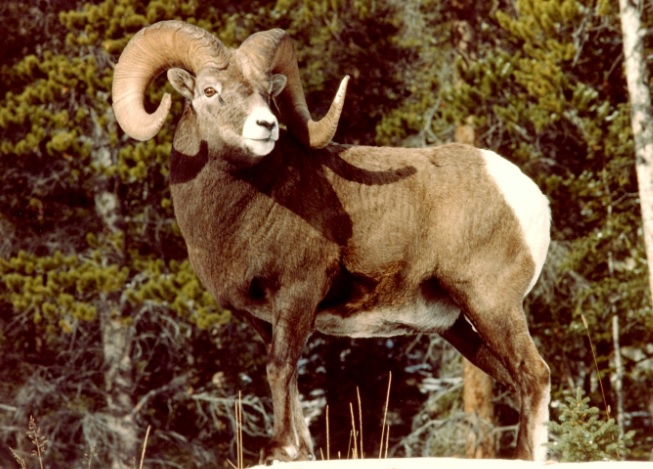
My trophy hunting phase ended when I got a mountain goat tag and climbed to lofty heights to get the drop on a Billy. Mountain goats normally look down for threats, not up. Sure enough, I skillfully and stealthily stalked from the top and got him in my crosshairs. I set my finger on the trigger, started the squeeze… then stopped. “Bang”, whispered my mouth. I slipped the safety on, set my rifle aside and spent the next half hour watching this beautiful creature peacefully go about his God-given business.

Unfortunately, I didn’t have a camera. But the memory of watching that goat graze and navigate the rock face indelibly etched my mind. It’s still far, far more rewarding—not economically, but ethically and emotionally—to envision that goat rather than having his head on my wall. I wish every trophy hunter could have that Euphemia.

I never trophy hunted again. But, I did go on the biggest, big game hunt imaginable. This one changed my life forever. I was part of an Emergency Response Team sent to capture a deranged and murderous madman terrorizing the Canadian north. He had the cunning of an animal, the intelligence of a human, was on his own turf and was armed with a rifle. Plus, he had every intention of hunting us down and killing us. Sadly, he fatally shot my partner and almost got me. I was forced to put him down.

After that, I never went hunting again. I’ve even stopped fishing and would rather put a spider outside. I had another life-changer a few years ago when I reinvented careers and took a job guiding eco-tourists from around the world to see grizzly bears and whales on the British Columbia coast. These wealthy adventurers paid over $2,000 per day to shoot creatures with cameras. To think grizzlies were legally killed for personal pleasure was absolutely abhorrent to them—and to me.

That brings my opposition to trophy hunting full circle. I can’t support this practice from an economical, ethical or emotional point. Looking back, I struggle with why some people still enjoy slaughtering an animal for their ego. Maybe they need to grow up—like I had to.

So where did this trophy hunting mentality come from? It’s been around a long time. Creating relics from animal body parts dates back to ancient societies. “Trophy” comes from the Greek word tropian which means to defeat. Historically, trophies like scalps and appendages were collected as fetish emblems of conquest to convey warrior or hunter prowess of power, strength and status.

It’s one thing to wage war on other humans and conquer enemies in the name of self-preservation. It’s also another thing for humans to harvest animals as subsistence in providing food and clothing. But there’s something ethically twisted about humans elevating themselves above the “lesser” animal kingdom where displaying their severed body parts as collectables, souvenirs and oddities somehow shows a hunter’s status.

Trophy hunters have a distinct profile. Predominantly, they’re conservative white males of European or North American descent. Most are wealthy men of privilege who have the time and money to undertake this expensive and lengthy pursuit. In almost all jurisdictions, licensed trophy hunters must hire guides. They also charter planes, boats and stay in luxury lodges. As well, they buy expensive rifles and wear the best hunting gear from Cabelas.

Trophy hunting supporters shy from the ethical argument and rely on the economics. Statistics are tough to support, especially with the trickle-down analogy, but it’s safe to say many trophy hunters shell out $20,000 or a lot more for their chance to assassinate an animal. No doubt, that’s a lot of money going into an economy—especially if it’s a poorer part of Africa or a northern First Nations community.

You can make the same economic argument about camera shooting. Eco-tourism is a rising economic engine in Africa and North America. Right now, I have friends on an African Safari and just looked at their Facebook photos of giraffes and elephants. Tomorrow, they’re camera hunting lions and I look forward to seeing their very expensive pics of the big cats, too. Canadians Melissa and Ed are injecting big bucks into the African eco-tourism economy.

Then, there’s the economic argument of raising money for conservation through trophy hunting. I call bullshit on this one, too. I’m quoting Miles Moretti, president of the Mule Deer Foundation in Utah where his group raised $200,000 from mulie tags. Moretti says, “Can a guy buy a tag every year? Yes, if he’s got the money. So what if it’s not fair. Well, life’s not fair. This is a way to raise money for wildlife.” What Moretti avoided telling the investigative reporter is that most of the 200 thousand dollars went to fund politicians supporting the NRA and the Safari Club International. The rest went to lobbyists wanting a wolf kill so they’ll be more mule deer to trophy hunt.

Pro-trophy hunters always bring up an “ethical” defense where they claim only mature males of a species are harvested. This follows the reasoning these old guys are past their breeding prime despite displaying healthy hides and horns. Therefore, there’s no harm to the overall species. In fact, they claim, this distributes the gene pool more efficiently as it gives the younger males a chance to sow seed.

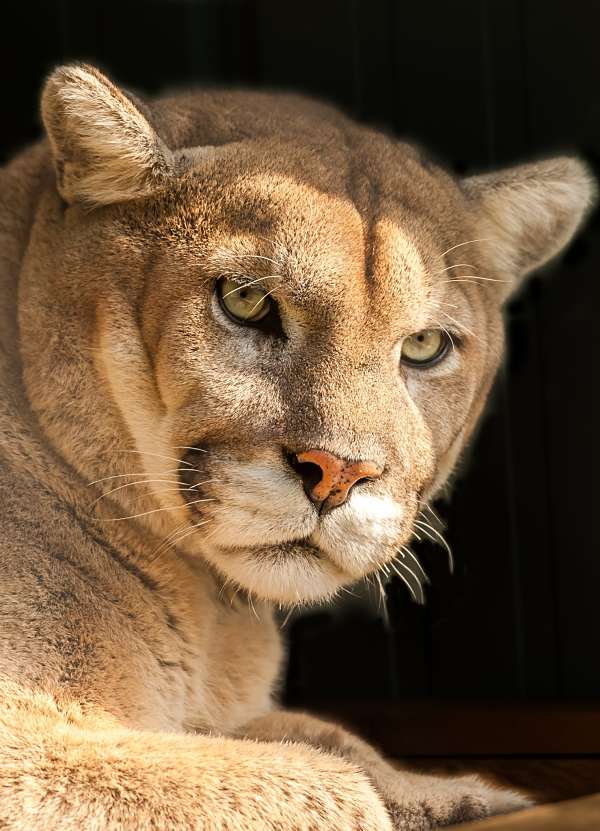
That argument doesn’t wash, if you listen to University of Washington professor Rob Wielgus who is the director of the Large Carnivore Conservation Laboratory. Despite trophy hunting proponents throwing out deceptive terms for wildlife management like metrics, population estimates, harvestable-surplus and acceptable kill-quotas, Wielgus provides scientific proof that old males are especially critical as apex predators.

He’s studied big bears and big cats since 1982 and has indisputable evidence that when trophy hunters kill dominant apex predator males, the younger males aren’t up to the replacement job. Killing mature and dominant males sets off a chain of events, according to Wielgus. New immigrant males move to the territory and kill infant animals to bring mature females back into estrus. This not only decimates future breeding stock, it forces fleeing females into populated areas where their feeding habits change. That conflicts with humans, and these nuisance animals are euthanized.

According to Wielgus, “Basically, the new guy finally establishes a territory and then he gets killed and the whole thing starts over again. So you don’t end up with more or fewer carnivores. What you have is a bunch of teenage carnivores wreaking havoc on the system and a bunch of dead cubs and starving females.”

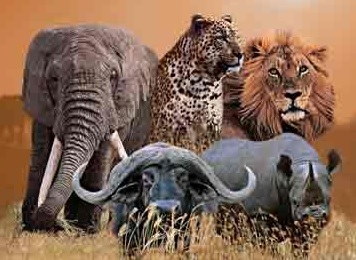
According to representatives of the Safari Club International, trophy hunting is an honorable and prestigious money maker. That alone, according to this exclusive men’s club, justifies the practice. They make no bones that economic resources are the primary factor for a trophy hunter to buy their way into recognition with one of their coveted awards like the Africa Big Five Award.

Hunters who can afford trips, guides and equipment have the exclusive ability to bag lion, leopard, rhino, elephant and cape buffalo and rise to the top of the trophy hit list. Because not everyone can afford repeated African safaris nor is in physical condition to hunt in the wild, now a trophy hunter can qualify for the Big Five by hunting lions and cape buffalo raised in captivity on American game farms. You can even hunt from a wheelchair—as long as you show them the money.

These game farms are called “canned hunting”. Trophy hunters who legitimately face the wilds by hiking or on horseback spending days on a stalk and passing on inferior animals claim their success comes from stealth and stamina. That is the mark of an excellent hunter. I argue that’s also the mark of an excellent photographer, but you can’t bring that reasoning into canned hunts.

Canned hunting only requires money. There’s no patience or ethical restraint in this game. Canned hunters use the most expedient methods of execution available. They show egocentrism, display impulsive behavior and seek immediate gratification. Take the case of former U.S. Vice-President Dick Cheney who trophy hunted canned pheasants. One weekend, Cheney and friends bagged 417 farm-raised ringnecks. Cheney, himself, dropped 70 birds before accidentally shotgunning his hunting partner. In a clear case of over-eagerness to kill, Cheney seriously violated basic gun safety rules. He’s lucky he wasn’t charged with the dangerous use of a firearm.

Justifying trophy hunting from an economic reasoning is a thin argument. You can make exactly the same case by promoting eco-tourism where a hunter trades his rifle for a camera. Yes, it’ll harm the taxidermy business, but there’s always a loser when times change, and people always adapt to different values and mindsets.

And that’s what trophy hunting is—a mindset. It’s a bygone, barbaric act from an archaic era. There’s no need to have animal parts mounted on a trophy room wall. The same effect is nicely done with framed photos. Trophy hunting is a contrived want that falsely presents a Euro-American way. It’s a way that should be gone forever.

I no longer buy the economic issue. I support the ethical stand that trophy hunting should stop while eco-hunting takes over. It takes as much skill—possibly more—to stalk wild animals and get a clear camera shot at them.

Ending live-kill trophy hunting is an economical, ethical and emotional discussion. It’s the emotions of a macho-man weakly demonstrating his right to bear arms against a defenseless animal. It’s also the emotions of passion people who ethically oppose trophy hunting by reaching out to their lawmakers. The people of British Columbia did that. On ethical grounds—not economic— they emotionally appealed to their legislature and got the grizzly kill stopped. That macho era is over in B.C.

In my opinion, there’s nothing manly about paying 10 grand for a guided hunt so an egotist can shoot a baited black bear from 50 yards with his .338 Lapua Magnum equipped with a 10X scope nicely rested on a bipod. If he truly wants trying something macho, he should strip buck-naked, jump in and go after a crocodile with a Bowie knife gripped in his teeth.