Author Archives: Garry Rodgers

About Garry Rodgers

After three decades as a Royal Canadian Mounted Police homicide detective and British Columbia coroner, International Best Selling author and blogger Garry Rodgers has an expertise in death and the craft of writing on it. Now retired, he wants to provoke your thoughts about death and help authors give life to their words.

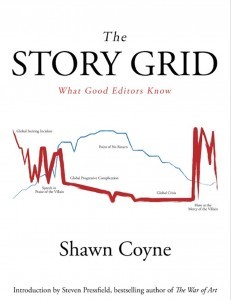
WHAT THE HECK IS THE STORY GRID?

A3The Story Grid is a methodology. It’s a diagnostic tool – not a formula – designed to teach writers how to self-edit and find what’s wrong with their novel and how to fix the manuscript before it goes to a commercial editor. It’s a story CT scan, seeing at the 50,000 foot macro-level, as well as line-by-line at the micro-level, deep inside. The Story Grid is what good self-editors must know about writing a Best Selling novel.
Shawn Coyne is a highly accomplished editor who developed the Story Grid. He’s right when he says that, in today’s world, a writer must deliver publish-ready material every time. Coyne’s Story Grid system analyzes manuscripts like a left-brain editor thinks – after the creative right-brain writer finishes initial drafts.

The Story Grid focuses on genre fiction.

AA2Ah… what, exactly, is genre?

Genre is a fancy word for managing audience expectations of categories. It classifies stories – crime, thriller, mystery, romance, sci-fi, erotica – the type of stuff that literary snobs turn their nose up at, but what sells in a commercial market and makes publishers (thus writers) money.

Coyne explains the makeup of genre fiction in a five-leaf clover concept:
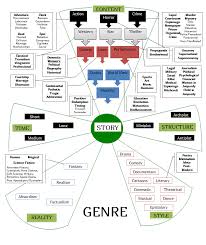
  1. A8Time – How long will it take to read?
  2. Structure – What’s the plot?
  3. Style – Comedy? Thriller? Tear-jerker? Fifty Shades?
  4. Reality – How much suspension of disbelief?
  5. Content – Takeaway for the reader?

The Silence Of The Lambs is a genre novel. It’s not a long read, has a complex plot, a thriller style, is easily believable, and leaves the reader remembering it forever.
SOTLThe Silence Of The Lambs is a perfectly crafted story which Coyne analyzes in his book The Story Grid and how his Foolscap, Spreadsheet, and Graph methods apply.

The Foolscap Global Story Grid is Step 1 in Coyne’s system. It represents how an editor thinks of the macro view of the story in no more space than a sheet of foolscap allows; getting the entire outline of a novel in one shot. Very simply, The Silence Of The Lambs is viewed as:

Beginning Hook – Clarice Starling gets job to interview Hannibal Lector to find Buffalo Bill.

Middle Build – Hannibal toys with Clarice, then escapes, leaving Clarice on her own.

Ending Payoff – Clarice catches and kills Buffalo Bill.

It’s the classic 3-Act structure. Expanded, but still on one foolscap page, the Foolscap Grid looks like this:
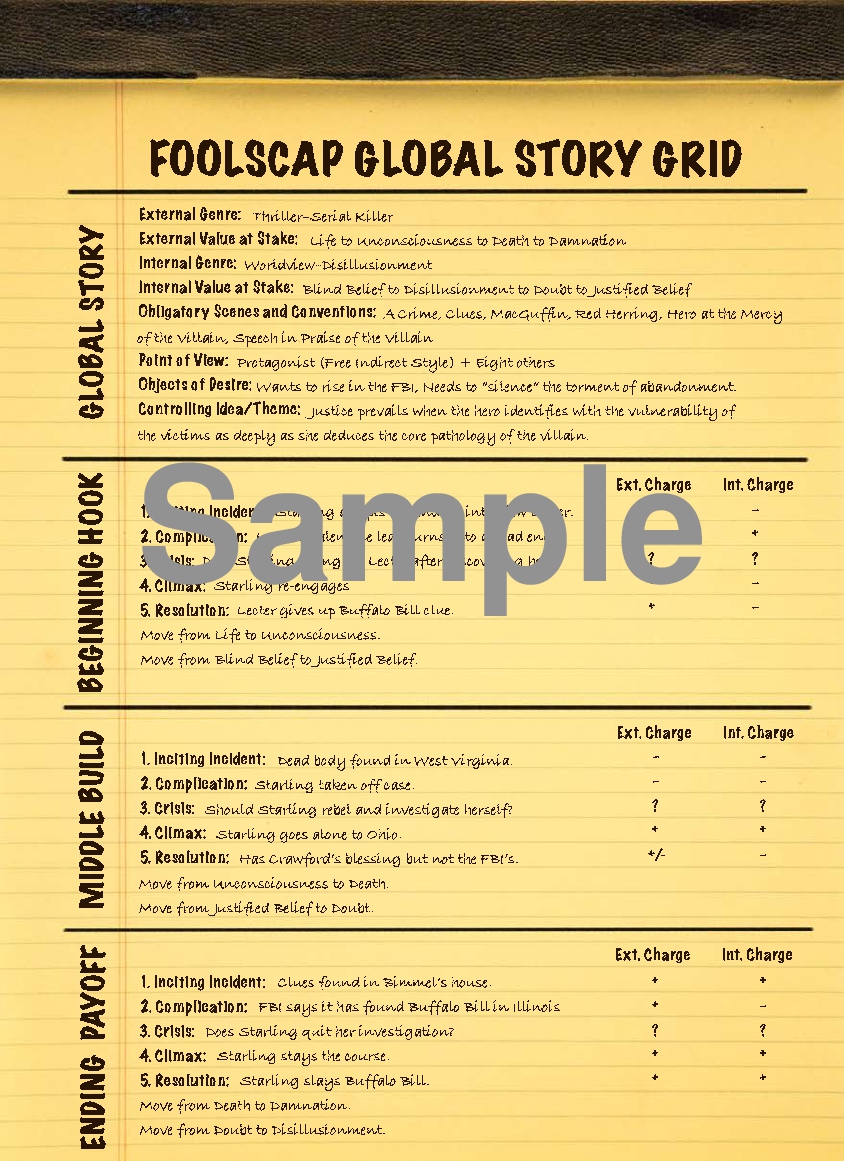
The Story Grid - Foolscap

The Foolscap Grid is a general, checking tool for identifying weakness in overall story and how the collection of scenes builds a gross curve of action with major story movements. It’s the macro analysis.

Step 2 is dissecting individual scenes and plugging them into an Excel spreadsheet. It’s the micro-analysis where the scenes are assigned fourteen values:

A9Scene number. Word count. Story event. Value shift. Polarity shift. Turning point. Point of view. Period of time. Duration. Location. Names of onstage characters. Number of onstage characters. Names of offstage characters. Number of offstage characters.

The Spreadsheet Grid clearly identifies what’s happening in each scene and how it contributes to the global story. If any particular value is weak, and not doing its job in furthering the story – not keeping the reader engaged through change and surprise – the writer is able to have a quick ‘meeting with themselves’ and fix the problem, rather than having to wait to get the message back much later from an independent editor.
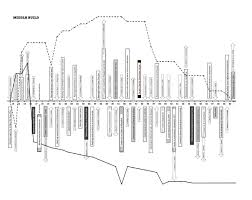
A10Step 3 is taking the values from the spreadsheet and putting them in a Graph Grid. Here the rise and fall of the story are mapped and the collision of characters’ internal and external conflicts are noted. The graph is bisected by a central line running left to right across the mddle with each scene number being assigned a seperate box. In the upper half are the positive forces of the story which Coyne terms Life. In the lower half are the negative forces of Death. Life and death conflict is central to the story.
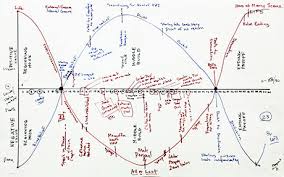
A7When the positive and negative strength of the values are plotted in relation to the scene, the overall story arch stands right out. Any interruption in the flow will show as a bend in the arch which is a red flag that something needs fixing. The flow is shown as a sine / cosine cruve. In Coyne’s analysis of The Silence Of The Lambs the beginning hook, the middle build, and the ending payoff neatly cross and coincidently seem to balance.

It’s no coincidence.

Author Thomas Harris deliberately planned The Silence Of The Lambs to have a storyline that flowed this way. It’s unknown if Harris used a similar foolscap / spreadsheet / graph system, but he arrived at a masterful result in one of the best thriller genre novels ever written.

A11There’s far more to The Story Grid than I can cover in a short blog post. The hidden genius in this system is its effective use in outlining a novel, rather than waiting till drafts are done then analyzing flow.

Here’s some links to Shawn Coyle’s The Story Grid.
Watch the Free 5 Part Video series:  http://shop.blackirishbooks.com/blogs/the-story-grid-videos/36625473-video-one

Buy The Story Grid at Amazon:  http://www.amazon.com/Story-Grid-What-Good-Editors/dp/1936891352/ref=sr_1_1?s=books&ie=UTF8&qid=1440785390&sr=1-1&keywords=the+story+grid+shawn+coyne&pebp=1440785394120&perid=1VK8CDVZM7H26THBR36C

Visit Shawn Coyne’s website:  http://www.storygrid.com/

BIG RIVER – WHAT NOVELISTS CAN LEARN FROM SONGWRITERS

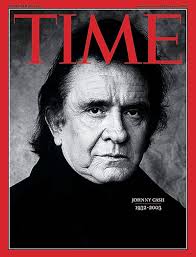
AB6Johnny Cash was a brilliant musician. Singer. Performer. And masterful songwriter. Johnny Cash condensed high concept ideas into short, resonating stories – ripping people’s hearts in four or five stanzas – that stayed in millions of ears and memories. Big River was his best-told story. And he played it when inducted into the Rock & Roll Hall of Fame.

A writer friend recently ranted about working with a Grammar Nazi. Wait – How the hell does that relate to the man in black? And why are these opening paragraphs so disjointed? Stick with me.

“Jesus Christ! My editor’s gagging my friggin’ voice.” Frustration in her email zinged through me.

“Know it.” I keyed back.

AB5“Who says we can’t start a sentence with ‘And’?” She pounded. “We’re crime-thriller writers, for God’s sakes. Not tryin’ for a Pulitzer Prize in English Lit.”

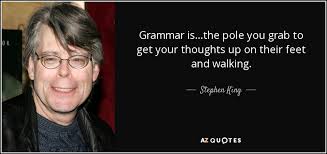
I nodded. “Remember what King says – ‘Grammar don’t wear no coat ‘n tie’.” (Stephen King’s advice in On Writing).

‘Yep. Holding m’ground.” She breathed out. “It’s my story and I’m stickin’ to tellin’ it my way.”

“Good for you!” I pecked, thinking So much of what makes a great story is the way it’s told. Take songwriting. There’s not a lick of good grammar in most songs and some songs are timeless stories. Like Big River. I bet novelists can learn a lot from songwriters. 

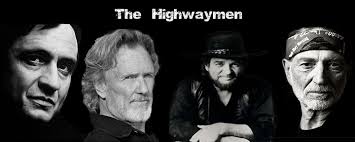
That night I kicked back with (a) glass of wine, headphones on, rockin’ to The Highwaymen – Live at Nassau Coliseum (1985). Their encore was Big River

AB4The Highwaymen: Willie Nelson. Waylon Jennings. Kris Kristopherson. And Johnny Cash. All great musicians. Singers. Performers. And masterful songwriters. 

But Johnny Cash was a one-of-a-kind musical figure, quintessentially American; able to identify with the outlaw, and vice-versa – craggy, with a voice unlike anyone’s. Waylon & Willie worshiped him. Kris Kristofferson wrote “He’s a poet, he’s a picker, he’s a prophet, he’s a pusher, he’s a pilgrim, and he’s a preacher.”

Johnny Cash’s masterpiece, Big River, was cut in 1958 and topped the charts. It has everything in one story.

Now I taught the weeping willow how to cry
And I showed the clouds how to cover up a clear blue sky
And the tears that I cried for that woman are gonna flood you Big River
Then I’m gonna sit right here until I die

I met her accidentally in St. Paul, Minnesota
And it tore me up every time I heard her drawl, southern drawl
Then I heard my dream was back downstream cavortin’ in Davenport
And I followed you Big River when you called

Then you took me to St. Louis later on down the river
A freighter said she’s been here but she’s gone, boy, she’s gone
I found her trail in Memphis but she just walked up the bluff
She raised a few eyebrows and then she went on down alone

Now, won’t you batter down by Baton Rouge, River Queen, roll it on
Take that woman on down to New Orleans, New Orleans
Go on, I’ve had enough, dump my blues down in the gulf
She loves you, Big River, more than me

Now I taught the weeping willow how to cry, cry, cry
And I showed the clouds how to cover up a clear blue sky
And the tears that I cried for that woman are gonna flood you Big River
Then I’m gonna sit right here until I die

AB16Re-reading the lyrics – even when I thought I understood the words – “then I heard my dream was back downstream cavortin’ in Davenport ” got me. Like, how good is that? 

Big River is a study in storytelling. High concept in a timeless, global theme of lost love. Slots into a romance genre – the largest commercial fiction market. Opens with an emotional prologue. Sharp hook in beginning act; builds tension in middle; ends in the third act by answering the central story question.

AB15Big River introduces protagonist and antagonist in the opening line of the first scene. There’s desire and conflict; hope and despair.  Stays in first person point-of-view. Past tense. Every word – Every line – Every paragraph advances the story, following a forlorn search from the Mississippi’s top to its bottom – in the heart of American country music.

Big River has implied dialogue. Adjectives that work. Not a useless, stinky-little adverb in sight. Beats become scenes; scenes sequence acts. There’s subplot and subtext. Every word counts. Setting is vivid… but time frame is everywhere in the past two hundred years. And characters aren’t named – but they’re strongly identifiable – because they could be you and me.

There’s not a lick of good grammar in Big River. Punctuation’s the shits!! There’s run-ons and cut-offs and pretty much everything a Grammar Nazi could hate.

AB8But the voice? So clear. So large. So unique. So Johnny Cash. His theme is timeless. His story universal.  Big River is told in 281 words.

Novelists can learn a lot from songwriters. 

Pour yourself a glass of wine, yes (a) glass of wine. Put your headphones on, girl, yes put your head phones on. Watch and listen to these videos, these timeless storytelling videos, and sit right there until you die.

*   *   *

Johnny Cash at the Grand Ole Opry in 1962  https://www.youtube.com/watch?v=s_21p14TAXM

Highwaymen Live at Nassau Coliseum in 1985  https://www.youtube.com/watch?v=-hy6_b7sQuY

Johnny Cash’s induction into Rock & Roll Hall of Fame in 1992 (Jamming with rocks’s best, like John Fogerty and Keith Richards) https://www.youtube.com/watch?v=jIWBEggDFa0

DAVID SHEARING – THE MONSTER FROM WELLS GRAY PARK

A11Thirty-three years ago this week, six members of the Johnson and Bentley families – three generations – were savagely slaughtered by a sick bastard who’d stalked them for days while they camped at Wells Gray Park in central British Columbia, Canada. The motive for the murders and what actually happened is beyond disgusting. It’s truly unspeakable.

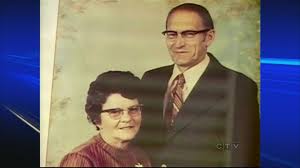
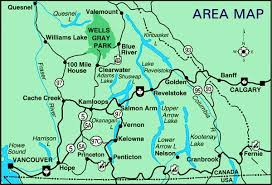
A9The victims were grandparents George Bentley, 66, and Edith Bentley, 59; parents Bob Johnson, 44, and Jackie Johnson, 41; and daughters Janet Johnson, 13, and Karen Johnson, 11. They rendezvoused for a summer vacation at the remote wilderness recreational area (300 miles northeast of Vancouver  and 465 miles northwest of Calgary) and picked a secluded camp spot at the old Bear Creek prison site. The Johnsons drove up by car and pitched a tent for the girls. The Bentleys arrived with a truck and camper to house the adults.

A7The families were reported missing on August 23, 1982, when Bob Johnson failed to show up for work. An extensive search was launched. It spread across central British Columbia as their known destination was only somewhere in the Wells Gray area, which is huge. This was long before the day of cell phones and email.

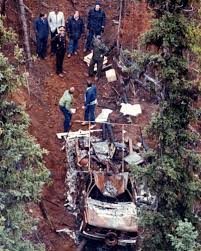
On September 13, the Johnson family car was found burned in a clearing off a mountainside logging road, thirteen aerial miles from Bear Creek. In the back seat were the incinerated remains of the four adults and, in the trunk, were the two girls. The bodies were so consumed that they were eventually interred together in one child-sized casket.

Forensic analysis determined they’d been shot in the head with a .22 caliber firearm.

The murder scene was located through information from locals who’d seen the family camped at Bear Creek. Spent .22 casings were recovered which allowed a ballistic match to the weapon, just as .22 bullet leads were extracted from what was left of the skulls.

A13The Bentley’s 1981 Ford truck with its camper was missing, as well as other possessions such as their boat and motor, camping gear, and all the things families on holidays would have.

The case gained huge media attention and prompted tips from across North America. A promising lead was the truck and camper reportedly being seen in central Canada, driven eastbound by two scruffy French-Canadian men. This prompted a wild goose chase where the police drove a replica vehicle across the nation to solicit more sighting information.

Over 13,000 tip files were investigated by many police agencies, all reaching a dead end. On October 18, 1983 – fourteen months after the murders – the Bentley truck and camper was found near the crime scene. It, too, had been burned and was in a nearly impossible-to-see place on the side of different mountain from where the car and bodies were found.

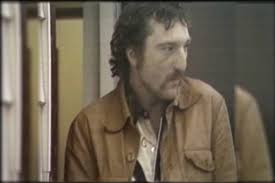
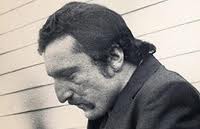
The investigation team focused back on the local area. They honed-in on 24 year old David William Shearing who lived at the nearest property to the murder scene. Like so many crimes – especially the truly bizarre ones – the answer is usually close to home.

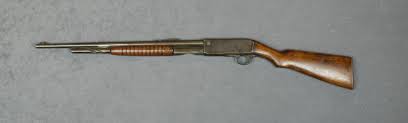
A8Skillful interrogation by two Royal Canadian Mounted Police detectives, Sergeant Mike Eastham and Constable Ken Liebel, got David Shearing to confess, re-enact the murders, and turn over the family’s possessions. He also handed the police a .22 caliber Remington pump-action rifle, which was forensically matched as the murder weapon.

Shearing stated in his initial confession that he shot the four adults as they sat around their campfire, then shot the girls as they slept in the tent. He claimed his motive was robbery; he wanted their money and possessions. He told the investigators he loaded the bodies into the car, drove it by night to the mountainside, and set it on fire using five gallons of gasoline as an accelerant. He said he cleaned the campsite, then took the truck/camper back to his nearby property, only to burn it later when he discovered how difficult it was to re-register.

David Shearing pleaded guilty to six counts of murder and was given a life sentence with no possibility of parole for twenty-five years. Following Shearing’s conviction, Mike Eastham re-interviewed him and got the truth behind the murders.

A3Shearing was a pedophile and fixated on the little girls. He’d spotted the family the moment they set up camp and spent several days spying on them from a hillside, fantasizing about having sex with the kids. At dusk on (or about) August 10, 1982, Shearing crept through the shadows into the campsite with his rifle and opened fire, ambushing the adults who surrounded the fire. He captured the girls and took them to his property where he kept them alive for a week, repeatedly raping the children. On August 16, Shearing shot Karen in the back of the head. The next day he killed Janet the same way.

Shearing took the girl’s bodies back to the Johnson family car, which he’d hidden in the bush, and stuffed them in the trunk. Then he drove the car –  containing six lifeless human beings, four of who’d been decomposing for a week in the summer heat – on a ride up the mountain where he burned them.

The Johnson – Bentley case has a personal side with me.

Mike Eastham and Ken Liebel were colleagues of mine. I was with the RCMP’s northwestern BC criminal investigation section at the time of the ‘J-B’ murders and I helped follow-up tips in the file – just like many other police officers across the nation did.

AA18I’ve handled the J-B murder weapon at the forensic laboratory in Vancouver and I’ve worked the action and I’ve looked down the sights. I’ve contemplated how such a small, mechanical device did such incomprehensible damage in the hands of a monster. I’ve envisioned that ride – Shearing chauffeuring a car-load of rotting bodies up to their funeral pyre – but where I can’t go is the unspeakable… unimaginable… terror… horror… that Janet and Karen Johnson endured. I know some of the details and they’re truly unprintable.

A1David Shearing (now David Ennis because the coward changed to his mother’s maiden surname) was denied parole in 2012 and withdrew his application in 2014 when a petition with 13,258 signatures was presented to the National Parole Board, mine being one of them. He’s now eligible to apply every two years and, if this breathing piece of shit tries it again in 2016, you’re going to hear me ask for your signature on another petition.

David William Shearing, aka Ennis, is a monster from the shadows of Wells Gray Park.

He must die behind bars.

*   *   *

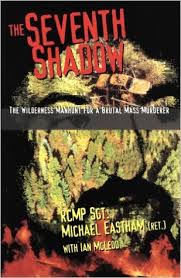
A14Retired RCMP Sergeant Mike Eastham co-authored a book with Ian McLeod on the Johnson–Bentley investigation. Outside of telling the truth of what Shearing did, and must pay for with the rest of his life, it’s a fascinating look at a major murder investigation and how personalities work for – and against – it.

My opinion –  Mike Eastham (and a hell of a lot of others) did a great job in bringing Shearing to justice and Mike told a great story. I highly recommend The Seventh Shadow – The Wilderness Hunt for a Brutal Mass Murderer.

Here’s the link:  http://www.amazon.com/Seventh-Shadow-Wilderness-Manhunt-Brutal/dp/1894020472/ref=sr_1_1?s=books&ie=UTF8&qid=1439589512&sr=1-1&keywords=the+seventh+shadow

Here’s the new 2018 CBC hour-long The Detectives story on the J-B murders narrated by Mike Eastham – https://watch.cbc.ca/share/episode/2e8c34bb-f55c-4017-8630-02d3ae3cb2bb Mike does an excellent narration supported by professional actors.

There is an excellent documentary called “The Wells Grey Gunman David Shearing“. It’s produced by “True Crime Stories” that tells the story of the investigation, Shearing’s arrest/confession, and what his motivation was for the Johnson-Bentley murders. I personally know a number of the actual investigators who are interviewed in the show and I can say that this documentary is presented accurately and fairly. It’s well worth the 45-minute watch.

Here’s the link:  http://www.lectoro.com/index.php?action=search&ytq=Crime%20Stories%20%20%20The%20Wells%20Grey%20Gunman%20David%20Shearing