Author Archives: Garry Rodgers

About Garry Rodgers

After three decades as a Royal Canadian Mounted Police homicide detective and British Columbia coroner, International Best Selling author and blogger Garry Rodgers has an expertise in death and the craft of writing on it. Now retired, he wants to provoke your thoughts about death and help authors give life to their words.

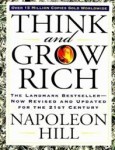
THINK AND GROW RICH

Whatever the mind can conceive and believe, it can achieve.
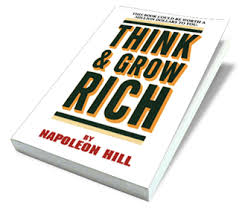
AA2Think And Grow Rich was written in 1937 and sold 70 million books before its author, Napoleon Hill, died in 1970. Who knows how many copies since. Talk about a best seller. It’s still in print. It’s about the science of personal achievement; the philosophy of success. There’s a lot in it for you.
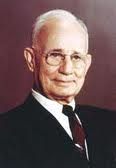
AA#Andrew Carnegie, the philanthropist of U.S. Steel and Carnegie Hall fame (the Bill Gates/Warren Buffet of the day), wanted to leave the masses a timeless formula for prosperity. He challenged a young buck, a West Virginia reporter by the name of Napoleon Hill, to research and write it. He didn’t pay Hill – Carnegie just introduced Hill to the players of the time – writers, inventors, business people, presidents, royalty, socialites, clergy, sports stars & entertainers.

Hill spent 20 years studying the secret of what makes people successful. He identified 17 common principles and wrote a heady book titled The Philosophy of Success. It didn’t sell well, so he modified it as The Science of Personal Achievement. That didn’t do so good, neither.
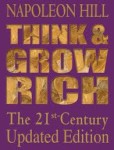
AA4Napoleon Hill didn’t quit. He condensed it with a catchy cover and a slick title: Think and Grow Rich.

People wanted to get rich, so they bought up his book and, when everybody started talking about it, they told their friends, who wrote their pen-pals, who dialed-up others, who lettered-the-editor, …

Napoleon Hill spew pure truth. He got it bang-on and his secret has stood the test of time. Read it. Modern updates are available if you can’t handle the male vernacular of the time.

Here’s Napoleon Hill’s 17 principles of success. Think about how they can work into your writing… or whatever you need.

  1.   Definiteness of Purpose

  2.   Positive Mental Attitude

  3.   Self Discipline

  4.   Personal Initiative

  5.   Enthusiasm

  6.   Creative Vision

  7.   Accurate Thinking

  8.   Controlled Attention

  9.   Learning From Adversity and Defeat

  10.  Maintenance of Sound Health

  11.  Budgeting Time and Money

  12.  Pleasing Personality

  13.  Applied Faith

  14.  Teamwork

  15.  Going The Extra Mile

  16.  Master-Mind

  17.  Cosmic Habit-Force

AA9These principles are of no particular order, but follow a pattern. To achieve something, you must first conceive what you want – your definite purpose – knowing where you want to go. Then, you must have a positive mental attitude to go with it. In other words – you must believe that you are going to achieve your definite purpose – and then you must build your world around it – using all these principles – especially the mastermind.

Go read, or re-read, Think And Grow Rich. And I’ve already given you a spoiler… the Napoleon Hill secret is –

Whatever The Mind Can Conceive And Believe, It Can Achieve.

GUNS DON’T KILL PEOPLE

A6Guns Don’t Kill People. People Kill People. I’m sure you’ve heard this line or saw it on a bumper sticker on some redneck’s jacked-up 4 X 4. You know the blacked-out Dodge Ram with the rifle rack in the rear window and the white Browning decal on the tail gate. Well, truth is people use guns to kill people.

We have gun control because our legal system of people control doesn’t work well. At least not in Canada.

A4Canadians don’t have the ingrained gun culture that America has, but we still have our share of firearm related homicides. I took a look at the stats and see Canada has .51 gun murders per 100,000 people. The United States has seven times the rate at 3.55 / 100K. Interestingly, Japan has zero (0), Australia has 0.11, Mexico has 10.0, Colombia 27.1, Guatemala 34.8, El Salvador 39.9, and Honduras topped the list at 64.8.

So, you’ve got a lot better chance of being shot to death in Central America than in New York, LA,  or even Vancouver where we have daily drive-by shootings – but the little punk gang-bangers are such piss-poor shots that they rarely hit anyone.

A5What got me writing this is the horrific shootings at the Emanuel African Methodist Episcopal Church in Charleston, South Carolina. The details of what the psycho used as a firearm or how he got possession of it are yet to come out, but it’s no secret firearms are much easier to obtain, and are much more plentiful in supply, in the US than in Canada.

Canadian gun control laws are not without flaw.

To own guns, Canadians are required to have a firearms Possession and Acquisition License (PAL). You must take an accredited training course, undergo a police investigation where your criminal record is checked, your family is interviewed – especially your spouse, or ex-spouses – and two independent people must sign-off that you’ve no history of mental illness.

A7Firearms are divided into three groups. Non-restricted, such as hunting rifles and shotguns. Restricted, such as handguns and certain assault rifles. And Prohibited, such as fully-automatic weapons. There’s also caveats like locking mechanisms, transport regulations, and magazine capacity.

Restricted firearms have special permits and can only be used on certified firing ranges. Civilians are not allowed to carry handguns in public – with the exception of a very few cases. Even hunting firearms have regulations about where they’re handled and God help if you’re caught with a machine gun. In Canada, possession of firearms is a privilege, not a right.

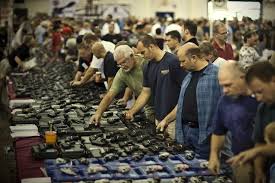
A8The US is much different and laws vary from state to state. Recently, I attended a seminar in Austin, Texas, and one of the students packed heat in the classroom. Perfectly legal. I saw both his piece and his permit.

It was his constitutional right to bear arms. Right in the 2nd Amendment.

A10“A well regulated Militia, being necessary to the security of a free State, the right of the people to keep and bear Arms, shall not be infringed.”

I’m not sure the founding fathers had the Emanuel African Methodist Episcopal Church in mind when they wrote that piece.

EMOTIONAL INTELLIGENCE – IQ vs EQ

A2There’s a world of difference between book smarts and street smarts – between braininess and savvy. The first has its place, but the second is much more useful. Being smart is the ability to logically think things out. Being sharp is the ability to tune into the world, to read situations, and positively connect with others while taking charge of your own life.

What is intelligence?

A4Intelligence has been defined in many different ways such as your capacity for logic, abstract thought, understanding, self-awareness, communication, learning, emotional knowledge, memory, planning, creativity and problem solving.

Where it comes from is anybody’s guess. It’s something that’s designed into us, possibly imbedded in our brain through DNA. I’m a believer in the concept of Infinite Intelligence which is the basis of Napoleon Hill’s masterpiece on human achievement in Think And Grow Rich. If you haven’t read it, here’s the link. If you have read it, go read it again.

Intelligence has long been measured in a quotient called IQ. It’s different from a measure of your ability to control your emotions which is called EQ – a much more difficult thing to measure.

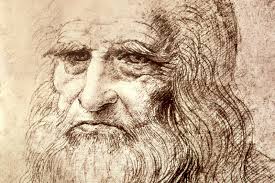
A5Most average adults have an IQ around 100 on the Stanford–Binet Intelligence Scale. The MENSA club requires members to be in the top 98 percentile which sets the bar at 132. According to the Guinness Book of Records, the ‘smartest’ person in the world was Marilyn vos Savant, who scored 185. Probably the most intelligent person who ever existed was Leonardo da Vinci who’s been estimated at around 220.

Conversely, mental retardation used to be divided into sub-classifications, but these labels are officially obsolete due to political correctness: Borderline Deficiency (IQ 70-80), Moron (IQ 50-69), Imbecile (IQ 20-49) and Idiot (below 20). I’ve dealt with a few in my policing career who rated around 15 and I have my own term for that classification.

So what about emotional smarts?

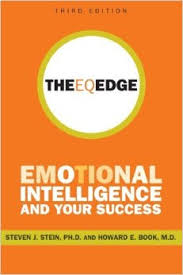
I have a great book called The EQ Edge by Steven J. Stein, Ph.D. and Howard E. Book, M.D. I’ll steal their definition of EQ.

A6Emotional Quotient is the set of skills that enable us to make our way in a complex world – the personal, social and survival aspects of overall intelligence, the elusive common sense and sensitivity that are essential to effective daily functioning. It has to do with the ability to read the political and social environment, and landscape them; to intuitively grasp what others want and need, what strengths and weaknesses are; to remain unruffled by stress; and to be engaging. The kind of person others want to be around and will follow.

Sophisticated mapping techniques in brain research have recently confirmed that many thought processes pass through our emotional centers as they take the psychological journey that converts outside information from infinite intelligence into individual response and action.

God only knows where infinite intelligence comes from.