DONALD TRUMP EFFECTIVELY WAGES WAR ON CARTELS

On his first day back in office, January 20, 2025, United States President Donald Trump signed an extraordinarily powerful executive order titled Designating Cartels and Other Organizations as Foreign Terrorists Organizations and Specially Designated Global Terrorists. The document contains terms like “unacceptable national security risk”, “take all appropriate action”, and “ensure the total elimination of these organizations”. With a black pen and a bold signature, Donald Trump has effectively waged war on the cartels.

Trump’s action is unprecedented. It commands his military, law enforcement, and security agencies to devise a designation plan and begin direct action within fourteen days. By Monday, February 03, 2025, it’s open season on domestic and foreign criminals (now designated as terrorists) like the Sinaloa and Jalisco New Generation Mexican cartels as well as Tren de Aragua (TdA) and Mara Salvatrucha (MS-13) in Central America.

Let’s examine what this document says, look at who the intended targets are, and speculate on what will happen to them. First, though, here’s a synopsis of what a presidential executive order is and the spectacular authority it contains.

Article II of the Constitution of the United States opens with “The executive Power shall be vested in a President of the United States of America.” Using accredited legal resources from Black’s Law Dictionary and the United States Supreme Court database, here’s what this means:

In the context of Article 2 of the U.S. Constitution, which discusses the role of the President, the terms “executive,” “power,” and “vested” have specific meanings:

  1. Executive: This term refers to the branch of government responsible for enforcing laws and administering public policy. In the United States, the executive branch is headed by the President. The term encompasses the idea of executing or carrying out the laws and directives legislated by the government.
  2. Power: In this context, “power” refers to the legal authority or capacity to act granted to the President and the executive branch. This includes a wide range of duties and responsibilities such as implementing and enforcing laws, directing national defense and foreign policy, and managing the day-to-day operations of the federal government.
  3. Vested: “Vested” means conferred, endowed, or established in a specific position or authority. When the Constitution states that the “executive Power shall be vested in a President,” it means that the full authority of the executive branch is formally and securely given to the President.

Therefore, the opening clause of Article 2 establishes that the President holds the full authority to operate the executive branch of the U.S. government. Of utmost importance is the President’s responsibility of keeping the nation and its citizens safe. The cartels, now designated as terrorists, are a “clear and present danger” to Americans which justifies using whatever force is necessary to eliminate the threat.

Executive orders are long-standing tools allowing the president to bypass the glacier-slow process of Congress and act directly on urgent matters. For example, the continual and rising threat of international criminal organizations that do not respond to conventional law enforcement strategies and tactics. These orders are highly enforceable, provided they operate within existing federal statutes and constitutional boundaries.

Once orders are issued, they have the force of law, and federal agencies are compelled to implement and enforce them, However, executive orders can be challenged through the courts. They can also be repealed by the issuing president or reversed by successors.

The true power in executive orders is how they’re worded. No president drafts them alone. They are carefully constructed by presidential advisors and legal experts who ensure the orders are clear, purposeful, and able to strongly withstand scrutiny.

President Trump backs the terrorist designation through existing statutes that guarantee his ability to take immediate action on such a high-profile problem. In the order’s opening, he evokes the Immigration and Nationality Act and the International Emergency Economics Powers Act. Additionally, in his inaugural address when he states his intention to sign the anti-cartel/terrorist order, Trump references the Alien Enemy and Sedition Act of 1798 which exists and is an immense weapon in his arsenal.

Here’s the entirety of the order to knock out the cartels. It’s important to read this carefully and pay attention to the words and terms stated.

Executive Order—Designating Cartels and Other Organizations as Foreign Terrorist Organizations and Specially Designated Global Terrorists

By the authority vested in me as President by the Constitution and the laws of the United States of America, including the Immigration and Nationality Act (INA), 8 U.S.C. 1101 et seq., the International Emergency Economic Powers Act (IEEPA),50 U.S.C. 1701 et seq. it is hereby ordered:

Section 1. Purpose

This order creates a process by which certain international cartels (the Cartels) and other organizations will be designated as Foreign Terrorist Organizations, consistent with section 219 of the INA (8 U.S.C. 1189), or Specially Designated Global Terrorists, consistent with IEEPA (50 U.S.C. 1702) and Executive Order 13224 of September 23, 2001 (Blocking Property and Prohibiting Transactions With Persons Who Commit, Threaten to Commit, or Support Terrorism), as amended.

(a) International cartels constitute a national-security threat beyond that posed by traditional organized crime, with activities encompassing:

(i) convergence between themselves and a range of extra-hemispheric actors, from designated foreign-terror organizations to antagonistic foreign governments;

(ii) complex adaptive systems, characteristic of entities engaged in insurgency and asymmetric warfare; and

(iii) infiltration into foreign governments across the Western Hemisphere.

The Cartels have engaged in a campaign of violence and terror throughout the Western Hemisphere that has not only destabilized countries with significant importance for our national interests but also flooded the United States with deadly drugs, violent criminals, and vicious gangs.

The Cartels functionally control, through a campaign of assassination, terror, rape, and brute force nearly all illegal traffic across the southern border of the United States. In certain portions of Mexico, they function as quasi-governmental entities, controlling nearly all aspects of society.

The Cartels’ activities threaten the safety of the American people, the security of the United States, and the stability of the international order in the Western Hemisphere. Their activities, proximity to, and incursions into the physical territory of the United States pose an unacceptable national security risk to the United States.

(b) Other transnational organizations, such as Tren de Aragua (TdA) and La Mara Salvatrucha (MS-13) pose similar threats to the United States. Their campaigns of violence and terror in the United States and internationally are extraordinarily violent, vicious, and similarly threaten the stability of the international order in the Western Hemisphere.

(c) The Cartels and other transnational organizations, such as TdA and MS-13, operate both within and outside the United States. They present an unusual and extraordinary threat to the national security, foreign policy, and economy of the United States. I hereby declare a national emergency, under IEEPA, to deal with those threats.

Sec. 2. Policy

It is the policy of the United States to ensure the total elimination of these organizations’ presence in the United States and their ability to threaten the territory, safety, and security of the United States through their extraterritorial command-and-control structures, thereby protecting the American people and the territorial integrity of the United States.

Sec. 3. Implementation

(a) Within 14 days of the date of this order, the Secretary of State shall take all appropriate action, in consultation with the Secretary of the Treasury, the Attorney General, the Secretary of Homeland Security, and the Director of National Intelligence, to make a recommendation regarding the designation of any cartel or other organization described in section 1 of this order as a Foreign Terrorist Organization consistent with 8 U.S.C. 1189 and/or a Specially Designated Global Terrorist consistent with 50 U.S.C. 1702 and Executive Order 13224.

(b) Within 14 days of the date of this order, the Attorney General and the Secretary of Homeland Security shall take all appropriate action, in consultation with the Secretary of State, to make operational preparations regarding the implementation of any decision I make to invoke the Alien Enemies Act, 50 U.S.C. 21 et seq., in relation to the existence of any qualifying invasion or predatory incursion against the territory of the United States by a qualifying actor, and to prepare such facilities as necessary to expedite the removal of those who may be designated under this order.

Sec. 4. General Provisions

(a) Nothing in this order shall be construed to impair or otherwise affect:

(i) the authority granted by law to an executive department or agency, or the head thereof; or

(ii) the functions of the Director of the Office of Management and Budget relating to budgetary, administrative, or legislative proposals.

(b) This order shall be implemented consistent with applicable law and subject to the availability of appropriations.

(c) This order is not intended to, and does not, create any right or benefit, substantive or procedural, enforceable at law or in equity by any party against the United States, its departments, agencies, or entities, its officers, employees, or agents, or any other person.

DONALD J. TRUMP

The White House,

January 20, 2025

In closely reviewing this document, these phrases stand out:

  • Certain international cartels (the Cartels)
  • Other organizations
  • Designated as Foreign Terrorist Organizations
  • National security threat
  • Beyond that posed by traditional organized crime
  • Range of extra-hemispheric actors
  • Antagonistic foreign governments
  • Complex adaptive systems
  • Entities engaged in insurgency
  • Asymmetric warfare
  • Unacceptable national security threat
  • Stability of international order
  • Within and outside the United States
  • Ensure total elimination of these organizations
  • Extraterritorial command-and-control structures
  • Within 14 days
  • Designate
  • Take all appropriate action

Them’s fightin’ words. No matter what one thinks of Donald Trump as a person, no one can deny that he’s a man of action. Trump has effectively waged war on the cartels. Let’s examine who these organizations are that are gonna get it and then investigate what weapons Trump will use to win a war where he’s determined to triumph.

Back to our legal resources, a criminal cartel refers to an organization formed by individuals or businesses who engage in illegal activities, particularly those that involve economic crimes such as price fixing, market division, bid rigging, or other antitrust violations. These activities are typically secret and aim to control or manipulate markets, restrict competition, inflate prices, or maintain high profit margins through illicit means.

Specifically, a drug trafficking cartel is a criminal organization involved in the large-scale production, transportation, and distribution of illegal drugs. These cartels operate with a hierarchical structure that often includes leaders, middlemen, enforcers, and distributors. Their operations span multiple countries and regions, making them complex and extensive networks that are difficult for law enforcement to dismantle.

Drug cartels are known for their violent methods to control territories, eliminate competition, and influence government and law enforcement entities through corruption and intimidation. The immense profits derived from drug trafficking allow these cartels to wield significant power and resources, which they often use to perpetuate their criminal activities and evade justice.

Under United States law, a foreign terrorist organization (FTO) is defined as a foreign organization that:

  1. Engages in terrorist activity or terrorism, which threatens the security of U.S. nationals or the national security (national defense, foreign relations, or the economic interests) of the United States.
  2. Is designated by the Secretary of State, in accordance with section 219 of the Immigration and Nationality Act (INA).

Terrorist activity includes actions like hijackings, kidnappings, assassinations, the use of explosives, firearms, or other weapons intended to cause death or serious bodily injury, and violent attacks on internationally protected persons.

The designation of an organization as an FTO has significant legal implications. It becomes illegal for persons in the United States or subject to U.S. jurisdiction to knowingly provide “material support or resources” to a designated FTO. U.S. financial institutions are also required to freeze assets linked to FTOs. Additionally, members and representatives of designated FTOs are barred from receiving visas and may be excluded from entering the country.

These organizations contribute to a wide range of societal problems, including public health crises, crime, violence, and corruption, profoundly impacting the stability and security of the regions in which they operate.

By his executive order signed on January 20, 2025, Donald Trump has linked the drug cartels to foreign terrorists. He has way more authority and resources to attack his enemies when they are labeled as terrorists, foreign terrorists, and that will be done by February 3rd. These are the primary groups in his crosshairs:

Sinaloa Cartel: The Sinaloa Cartel, based in Mexico, is one of the most powerful and notorious drug trafficking organizations globally. Originally led by Joaquín “El Chapo” Guzmán, the cartel has played a major role in the global narcotics trade, especially in the production and distribution of Mexican heroin, methamphetamine, marijuana, and cocaine. Known for its sophisticated smuggling operations and violent enforcement tactics, the cartel has significantly influenced drug trafficking dynamics, contributing to widespread violence and corruption within Mexico and impacting drug policy and law enforcement efforts in the United States and other countries.

Jalisco New Generation Cartel (CJNG): The Jalisco New Generation Cartel, often abbreviated as CJNG, emerged as a powerful drug trafficking entity in Mexico around 2010. Known for its aggressive expansion tactics and direct confrontations with both rival cartels and state forces, CJNG rapidly grew into one of the most formidable and violent cartels in Mexico. Under the leadership of Nemesio Oseguera Cervantes, also known as “El Mencho,” the cartel operates with extreme brutality and engages in a wide range of criminal activities, including drug trafficking, extortion, and murder, significantly affecting Mexico’s security landscape.

Tren de Aragua: Tren de Aragua is a criminal gang originating from the Aragua state in Venezuela, initially formed within the Tocorón prison in 1986. It has since evolved into one of the most feared and violent criminal organizations in Venezuela, extending its operations to other Latin American countries. Engaged in drug trafficking, kidnapping, extortion, and human trafficking, Tren de Aragua’s activities have not only destabilized regions within Venezuela but also posed significant challenges to law enforcement across borders, reflecting the broader issues of prison-based gang control and corruption in Venezuela.

Mara Salvatrucha (MS-13): Mara Salvatrucha, commonly known as MS-13, is a transnational gang that originated in Los Angeles in the 1980s, founded by Salvadoran immigrants in the city’s Pico-Union neighborhood. The gang later expanded into Central America when its members were deported from the U.S., significantly impacting the region’s stability. MS-13 is known for its brutal violence and its involvement in various criminal activities, including murder, human trafficking, drug trafficking, and extortion. The gang’s extensive network and ruthless tactics have made it a major focus of law enforcement agencies in the United States and Central America, symbolizing the complex interplay between migration, deportation, and transnational crime.

Other honorable mentions go to these mostly defunct players from a former era:

  • Los Zetas Cartel
  • Gulf Cartel
  • Tijuana Cartel
  • Beltran-Leyva Organization

So those are the thugs placed on notice. That leads to questioning how Donald Trump and his American resources will carry out the plan, much of which will occur on foreign soil and within other sovereign territory. These are the strategic and tactical options:

  1. International Diplomacy
  2. Legal Measures
  3. Sanctions and Asset Freezes
  4. Prosecution under FTO laws
  5. Increased Surveillance and Intelligence
  6. Interagency Cooperation
  7. Use of Advanced Technology
  8. Deployment of Special Forces

The most likely scenario will be a combination of the first seven. Option 8, actively placing American soldiers on foreign ground has extreme risks, both from international relations and personnel safety. That will likely be a last resort and only in highly-planned, attack and retract situations.

More likely is the Trump administration will take a page from the recent Israeli playbook. They’ll identify the leaders’ locations and kill them with guided munitions. Then they’ll take away the money and arms.

But never underestimate the cajónes on Donald Trump. While signing the Designation Order, a reporter asked if he would deploy American soldiers on the ground in Mexico. Trump smiled and said, “You never know. Stranger things have happened.”

LOTCA-VOLTERRA EQUATIONS AND FINANCIAL PREDATORS LIKE ZUCKERBERG, BEZOS & MUSK

The universe loves its cycles and hates the extremes. From forest relations like foxes and rabbits to human relations like equally sharing wealth, nature always balances systems where two species interact—one as predator, the other as prey. In science, this is known as Lotca-Volterra equations. It explains how uber-rich, financial predators like Zuckerberg, Bezos & Musk opportunistically prey on the diminishing, hard-earned money of our getting-poorer, working middle class and why this will inevitably turn around.

There’s always been a cycle of wealth disparity. It’s part of nature’s apparent plan. The rich get richer, and the poor get poorer. Then the pendulum swings and tries to restore equilibrium or some balance. Just as the fox and rabbit populations cycle in nature.

Alfred Lotca and Vito Volterra were two biologists. Circa 1925, they developed a mathematical formula after observing predator-prey relations in American fox and rabbit interactions. The LV equations describe the dynamics of biological systems in which two species interact as predator and prey. These equations form a foundational part of modern ecological and mathematical biology.

They’re also equally applicable to finance and economics—accounting for the billionaires who are now owning the world.

The Lotka-Volterra formula is a pair of first-order, nonlinear differential equations used to describe the dynamics of two interacting species—a predator population and a prey population. These equations model how the two populations affect each other’s growth over time. The Lotka-Volterra predator-prey model is expressed as:

For people like me who suck at math, this means when the foxes are low, the rabbits will grow, then so will the foxes who eat all the rabbits, and when the rabbit-food disappears, the foxes drop off so the rabbits can do what rabbits do do and the cycle repeats in a loop. Typically, it’s a seven-to-nine-year pattern.

The same occurs in our human financial world but in a much longer frame. Money tends to ebb and flow, then flow and ebb. It transfers as the lifeblood in our economic system, and it keeps us alive as a country and as a civilization. However, just like the predatory foxes take advantage of the population-producing rabbits, people at the top of the financial food chain feast upon those who feed it. At some point it shifts.

Predation works for many apexers. Sharks. Orcas. Polar Bears. Lions. Honey Badgers. Humans too, including many multi-billionaires like the names I mentioned—Zuckerberg, Bezos & Musk.

These three guys are phenomenally wealthy, as in f’n stinkin’ r-r-rich. But they’re not alone. Here’s a table of the ten top money holders in America, and note they’re all male, white, and clean-shaven. Plus, most of them are toilets in their personal lives with scads of paper hoarded in their closets.

The gap between the have-nots and have-yachts is enormous. A recent Rand study shows the currency cycle has spread to where the top one percent of Americans have taken fifty trillion dollars from the bottom ninety percent in the past two decades. That’s 1% = $50,000,000,000,000, or 50 x 10 to the 12th. A mind-staggering and colossal figure.

Doing a little fact-checking, here are figures on the recent growth of billionaires in the USA.

So, who are these titans? These elite, moguls, oligarchs, and aristocratic tycoons? Doing a little psych-snooping, these seem to be the billionaire traits:

  • Highly ambitious and driven
  • Resilient and risk-takers
  • Innovative thinkers
  • Strong work ethics
  • Focussed and disciplined
  • Curious and observant
  • Lifelong learners
  • Charismatic and natural leaders
  • Emotionally intelligent
  • Problem solvers
  • Desire for impact
  • Autonomous
  • Competitive
  • Acutely aware of success
  • Pursuit of excellent
  • Often turn into philanthropists
  • Or just greed

Becoming a billionaire isn’t easy. To a tee, they work extremely hard and thoroughly understand the fundamental, core concepts of compounding and entropy along with time and change. These are the four pillars of rich. Here are key reasons they become so wealthy:

  • Exponential growth through compound investments
  • Offsetting entropy
  • Working money markets of derivatives, hedges, and currency trading
  • Ownership of high-growth businesses
  • Timing and market trends
  • Global scaling
  • Leveraging time, capital, and technology
  • High risk and high reward
  • Long-term vision and persistence
  • Strategic networking
  • Systemic advantage
  • Being acutely aware of change
  • Or just greed

This new-money breed understands the nature of cycles. They’ve studied the history of names who’ve gone before. Carnegie, Vanderbilt, Morgan, Ford, Rockefeller, Gould, Field, and Walton. And they know the periods of American economic ebb and flow:

  • Late 1700s agricultural economy
  • Early 1800s industrial revolution
  • Early 1900s wealth redistribution and stabilization
  • 1920s-1930s economic boom and bust
  • 1930s great depression
  • 1940s war and recovery
  • 1945-1970 post-war boom
  • 1980s-2000s neoliberal return to wealth concentration
  • 2008-2020s financial crisis and severe inequality
  • 2025 and on – who knows

No one knows the future. We can only understand the past, live in the present, and somewhat prepare for the future. The escalating state of supreme wealth concentration and extreme capital division in America is unsustainable. Something will snap and start a new cycle of return to middle ground—a Black Swan event no one sees coming and delivers a catastrophic financial blow that redistributes wealth.

One person who’s analyzed the situation we’re in is Thom Hartmann. In his Hartmann Report article titled What the Science of Predators and Prey Tells Us About the Morbidly Rick and Working People, Mr. Hartmann gives a candid personal opinion of the imbalance which I’d be hard-pressed to do better. Regardless of his political slant that I try to stay neutral on, this piece is well worth the read. With full attribution to Thom Hartmann and no gain to this website or me as a writer, here’s the full, unedited content.

Nature and economics share some fascinating patterns, one of which explains why Donald Trump is about to become president and how the morbidly rich have appropriated over $50 trillion from working-class people since the 1980s. Scientists use something called the Lotka-Volterra equations to explain how predators and prey interact in the wild.

These equations show us that animal populations rise and fall in predictable cycles — when there are lots of rabbits, fox populations grow, but as foxes eat more rabbits, the rabbit population shrinks, which then causes fox numbers to drop, allowing rabbits to multiply again.

Incredibly, this back-and-forth pattern mirrors what happens between the wealthy and working classes in our economy and political systems over the past 100 years.

Think about a forest ecosystem. When rabbits have plenty of grass to eat and safe places to hide, their numbers grow. As rabbit populations increase, foxes find it easier to catch prey, so they have more cubs and their numbers grow, too.

But eventually, the foxes become so numerous that they start catching too many rabbits. The rabbit population crashes, and soon after, fox numbers follow suit because there isn’t enough food to go around. This creates a natural cycle that repeats over and over, unless something comes along to change the rules of the game — like a new predator, a disease, or human intervention.

This same pattern plays out in our economy and political system, though we often don’t recognize it.

The working class, like the rabbits, create value through their labor and create demand — which drives economies — through their purchases of goods and services. They make products, provide services, consume both, and thus keep the economy running.

The wealthy class, like the foxes, extracts value through ownership, investment, and control of resources. When the system is balanced, both groups can thrive. But when it gets out of balance, trouble follows.

To see this pattern in action, look at a remarkable period in American history called the “Great Compression.” From 1900 to 1980 (with the brief exception of the Roaring Twenties), particularly after the New Deal, something unusual happened: the gap between rich and poor actually shrank for roughly 80 years. Working people saw their wages go up and their living standards improve.

This happened because new rules and institutions — including labor unions, Wall Street regulations, anti-monopoly laws, and higher progressive income taxes — kept economic “predators” (morbidly rich individuals and corporations) from taking too much from economic “prey” (working class and poor people).

Just like a healthy forest needs the rules of nature as expressed in the Lotka-Volterra equations to keep any one species from taking over, these progressive policies put into place by FDR created balance in the economy, and thus political harmony across the nation.

The specifics of those rules were comprehensive and carefully designed. The highest income tax rate on the wealthiest Americans was 90% in that era. Labor unions were protected by law and represented about one-third of all workers, meaning two-thirds of workers had the wage and benefits equivalent of a union job (union employers set local wage and benefit floors). Banks were strictly regulated and couldn’t engage in risky speculation with ordinary people’s savings.

Monopolies were broken up when they became too powerful; the Supreme Court blocked the merger of two shoe companies in the 1960s because the new combined company would control 5% of the shoe industry (today Nike has 19%).

Those rules didn’t prevent people from getting rich, but they did ensure that extreme wealth accumulation was harder and that workers received a fair share of the value they created.

The results were impressive. Between 1945 and 1980, when workers produced more, they earned more. A single breadwinner could support a family, own a home, buy a new car every few years, take a vacation, send kids to college, and retire with dignity and a pension.

Social mobility was high, meaning children regularly achieved higher living standards than their parents. The wealth created by the economy was shared more fairly than ever before.

The rich still got richer, but at a slower, more sustainable pace that allowed everyone else to prosper too.

This balance didn’t last. In 1971, future (1972) Supreme Court Justice Lewis Powell wrote a memo that changed everything. He urged American businesses to fight against unions, environmental protections, and other rules that limited their power, crush the labor movement, and put corporations and rich people in charge of the commons.

This memo wasn’t just idle speculation; it became a blueprint for action. Business leaders and fossil-fuel billionaires created new think tanks, funded academic programs promoting so-called free-market ideology, and invested heavily in lobbying and political campaigns.

When Ronald Reagan became president in 1981, he started dismantling the rules that had kept the morbidly rich economic predators and their companies in check. He turned loose the foxes on the rabbits.

This era, which we might call the “Great Predation,” saw a dramatic reversal of the trends that defined the Great Compression. From 1980 to 2024, the wealthiest Americans extracted over $50 trillion from the working class, according to studies such as the Rand Corporation’s 2020 report on income redistribution.

Productivity continued to rise, but wages stagnated, and wealth increasingly concentrated at the top. The predators were thriving, but the prey — working-class Americans — were being systematically drained.

Reagan dramatically cut taxes on the morbidly rich. He, Bush, and Trump stripped away business regulations and Republicans on the Supreme Court stopped enforcing antitrust law. Unions lost their power when companies — with the support of Republicans on the Court — were allowed to fight them more aggressively.

Even Social Security and Medicare faced pressure, though they largely survived (although Republicans have already half-privatized Medicare with the Medicare Advantage scam and are now talking about doing the same with Social Security).

While workers kept producing more, their wages barely grew. Instead, nearly all the new wealth went to those at the top. The predators were thriving, but their prey — ordinary working Americans — were being squeezed dry.

The changes were dramatic and far-reaching. CEO pay skyrocketed from about 30 times the average worker’s salary in 1980 to over 300 times by 2020. In some industries it’s thousands of times more, and in the companies of some billionaires like Musk, Zuckerberg, and Bezos, their income is hundreds of thousands or millions of times greater than their workers.

As a result of five corrupt Republicans on the Supreme Court giving the morbidly rich the absolute power to own politicians and put unlimited money into elections, the predation of the morbidly rich has gone into hyperdrive. The most obvious example of this recently was Elon Musk purchasing the White House for Trump with a bit more than a quarter-billion dollars, an amount that was basically pocket change for him.

More than half of Americans now live paycheck to paycheck, despite the country being richer than ever. Young people struggle to afford homes, start families, or save for retirement. Medical debt has become a leading cause of bankruptcy. Meanwhile, both the number of billionaires and their aggregate wealth have exploded, with some individuals accumulating more wealth than entire countries.

This pattern follows the same logic as those predator-prey equations. During the Great Compression, government rules acted like environmental protections, helping the middle class grow strong and creating a healthy consumer economy.

The wealthy still benefited but couldn’t take too much. During the Great Predation, those protections disappeared. Without limits on economic predators, working people’s share of the pie began to shrink, just like rabbit populations fall when foxes have free rein.

But here’s the catch: just as foxes eventually run into trouble if they eat too many rabbits, extreme concentration of wealth creates problems for the wealthy too. When middle-class consumers struggle, the whole economy becomes unstable.

We see this today in several ways: young people can’t afford to buy homes or cars, leading to weak demand in key industries. Consumer debt has reached record levels as people try to maintain their standard of living. Social and political unrest grows as people lose faith in the system. We might be approaching a breaking point, and the 2024 election is a major warning.

The signs of strain are everywhere. Major retailers struggle as their customer base loses purchasing power. Tech companies lay off thousands despite record profits, trying to squeeze more value from fewer workers.

Young people increasingly reject capitalism altogether, correctly seeing Reagan’s version of it as a rigged game. Political polarization has reached dangerous levels as people search for someone to blame, resulting in the rise of demagogues like Trump, Vance, and Musk. And the steady stream of oligarchs rushing to Mar-a-Lago to kiss Trump’s ass.

The good news is that we can learn from nature about how to restore balance. In healthy ecosystems, predators and prey find a sustainable balance through natural mechanisms and occasional external interventions. In our economy, we know we can create this balance through smart policies because we already did it once for almost 80 years.

We need modern versions of the rules that worked during the Great Compression: Fair taxes, strong worker protections, and limits on corporate power. We also need new ideas, like universal basic income or profit-sharing, that can help distribute wealth more evenly.

Some specific solutions are already being tested around the world.

Worker representation on corporate boards, common in Germany, helps ensure companies consider employee interests. Public investment banks, like those in South Korea and Japan, can direct capital toward social needs rather than just private profits. Alaska’s Permanent Fund shows how natural resource wealth can be shared with all citizens. These examples prove that alternatives to pure billionaire predation are possible.

Just as predators play an important role in nature by keeping prey populations healthy and genetically fit, wealthy individuals and corporations can contribute positively to society through investment, innovation, and job creation.

The key is ensuring they do this in a way that strengthens the whole system rather than depleting it. This necessitates high taxes on extreme wealth, requirements to reinvest profits in workers and communities, and new forms of corporate ownership that share gains more broadly.

Looking ahead, our challenge is to move from predation to partnership like America did in the 1930s and Europe did in the 1950s. We must recognize that everyone’s prosperity — including that of the wealthy — depends on having a healthy middle class.

Creating this balance isn’t just morally right; it’s necessary for the economy and our political system to function well. By learning from both nature and history, we can build an economic and political system that works better for everyone, breaking free from the harsh cycles of boom and bust that have defined the past few decades.

The path forward requires both political will and innovative thinking. We must update our understanding of how modern economies work and be willing to experiment with new forms of regulation and wealth sharing.

The alternative — continuing down the path of unchecked billionaire predation — risks destroying the very system that creates wealth in the first place. Just as ecology teaches us that diverse, balanced ecosystems are the most resilient, economics shows us that broadly shared prosperity creates the strongest foundation for sustainable growth and political stability.


IMPERMANENCE / CHANGE — WHAT’S UP FOR YOU THRU GARRY RODGERS IN 2025

Impermanence means change. The arrow of time. Progression and alteration are fundamental operating principles that govern the evolution of the universe as well as oversee the mutating human condition. There are a lot of synonyms for impermanence and change—variation, transformation, improvement, revolution, fluctuation, renewal, transience, volatility, growth, succession, advance, and movement come to mind. But probably the best words for impermanence or change are compounding and entropy. Ying and yang. Construction and destruction. Additive and substractive. Effort and passive. Go and let go.

2024 was a year of massive change in my life. No, my family, friends, and finances are intact. Probably in better condition than ever. The impermanence was internal, in myself, both physically and mentally. 2025 promises more refinement which I hope parlays into offering you positive benefits gained from my experience. Let’s look at what happened to me this past year and what’s up for you thru Garry Rodgers in 2025.

My physical health was the shits back in January. I suffered from chronic inflammation. One area was my neck where the sternocleidomastoid muscles (SCM) had seized following an accident where I cracked a couple of cervical vertebrae. I was so stiff that I could not shoulder check, never mind look around and enjoy life.

The other ill area was my gut. For years, I’d suffered from an upper GI ulcer. By January, it’d inflamed to the point where I was barely able to eat. If I could swallow, it wouldn’t stay down, and my only medicine was bananas.

Between my shoulders and my stomach, I was a physical mess. Rita, my wife of 41 years, and I took up serious hiking hoping it’d help. Walking was a good fit, we thought, as it’d get us out and active. Me trying to loosen with less pukin and Rita expanding her Noom wellness program that has worked wonders for her. By the way, I turned 68 this fall and she’s 66.

On June 1st we hiked the Qualicum Falls trail on Vancouver Island and were introduced to the fungi Tramete Versicolore. This mushroom is commonly called Turkey Tail, and it has anti-inflammatory properties. Amazing properties, as within one day of ingesting this miracle supplement my ulcer pain eased and within the week my muscles released. Read the post I wrote about Turkey Tail which explains it from a medical science point.

I’m now completely discomfort-free, fully rotational, can eat like a Medeterainian goat, and my body is back to its 30-year-old state. I’m not exaggerating. Through a committed exercise routine practiced over the past six months, I now exceed the physical fitness standard required when I was an Emergency Response Team (SWAT) police officer back in my twenties and thirties.

Rita and I turned our hiking game into rucking. Rucking is trekking with poles and a weighted rucksack. We aim for 8,000 steps per trip but did one day of 16,653. Rita has a step counter as part of her Noom commitment.

In the fall, I took up roping. That’s ascending and descending a steep hill face using a rope. That’s being upped now to rappelling and rock climbing. For Christmas, I got a complete set of climbing gear which I tried out today. It’s an amazing full body workout, but I am sore. No pain, no gain they say.

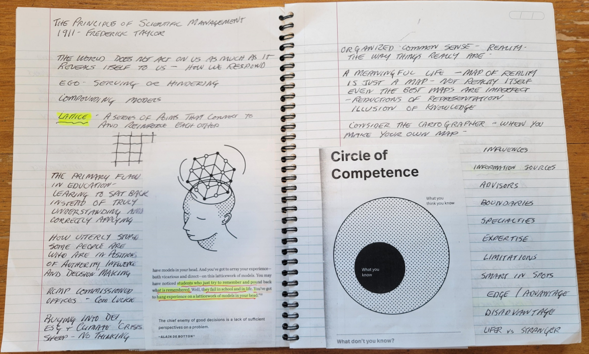
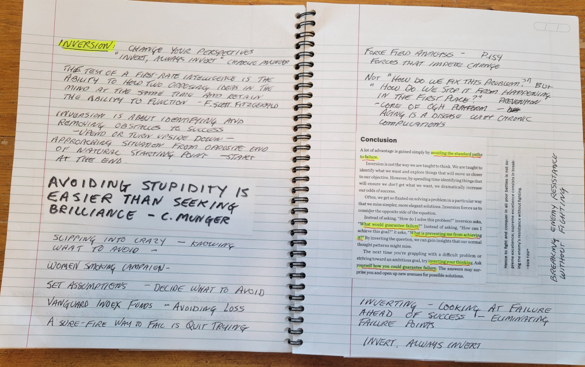
In the mental department, during 2024 I became a serious student of Stoicism—Stoicism being a philosophy, not a religion. To help understand this ancient wisdom and guidance in life, I wrote a blog post on it. I’ve also filled five notebooks with quotes and personal observations about this Hellenistic practice. A high point in November was hearing Ryan Holiday live in Vancouver. He’s the host of The Daily Stoic site and has over a million followers.

I didn’t publish any books in 2024. My focus was on producing content and appearing on-camera in the film industry. I teamed with Global/Hulu on Crime Beat which will continue in 2025. It’s fun, but the film highlight of the year was framing (writing outlines) for 26 episodes of City Of Danger which is a Netflix option. We’re waiting until a new delivery technology is ready that takes text and turns it into audio and visual. Here’s my web page for City Of Danger.

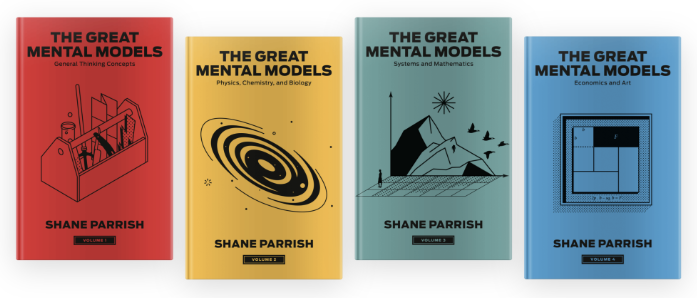
Moving on to 2025, I’m expanding my curiosity in critical thinking and how it applies to understanding human nature. I’m influenced by Shane Parrish and his Farnam Street site and Knowledge Project podcast. In November, Shane released his four-volume set called The Great Mental Models which are based on insightful works by the late and great Charlie Munger. If you don’t recognize the name, Munger was Warren Buffet’s partner at Berkshire Hathaway and is considered one of the great critical thinkers of modern times.

Once I get a grip (absorbing and understanding) the content in these books, I’ll do a condensed form on a Dyingwords post. I find writing about a subject is my best way to retain the knowledge. Which leads me to this. The critical thinking concept is something I’ve taken more and more interest in this past year.

I guess I’ve come to a life point where, as stoic as I try to be, some things outside my control seriously alarm me. One is how scrolling for a dopamine hit is replacing how to read, think, and write. I wrote a post on this and republished an article written by Paul Graham titled Write and Write-Nots.

Mr. Graham raises a concerning point—how so many people, especially professional people, are relying on artificial intelligence to aid in their writing which replaces their thinking. Here’s a quote from his piece:

The reason so many people have trouble writing is that it’s fundamentally difficult. To write well you have to think clearly, and thinking clearly is hard.

AI has blown open this world. Almost all pressure to write has dissipated. You can have AI do it for you, both in school and at work.

The result will be a world divided into writes and write-nots. There will still be some people who can write. Some of us like it. But the middle ground between those who are good at writing and those who can’t write at all will disappear. Instead of good writers, ok writers, and people who can’t write, there will just be good writers and people who can’t write.

Yes, it’s bad. The reason is something I mentioned earlier: writing is thinking. In fact, there’s a kind of thinking that can only be done by writing. If you’re thinking without writing, you only think you’re thinking.

So, a world divided into writes and write-nots is more dangerous than it sounds. It will be a world of thinks and think-nots. I know which half I want to be in, and I bet you do too.

This situation is not unprecedented. In preindustrial times most people’s jobs made them strong. Now if you want to be strong, you work out. So, there are still strong people, but only those who choose to be.

It will be the same with writing. There will still be smart people, but only those who choose to be.

AI replacing critical thinking and original writing concerns me. Deeply. It shouldn’t, as it’s completely beyond my control and one of the core tenets of Stoicism is the dichotomy of control—focus on what you can control and detach from what you cannot control.

Having quoted this excerpt from Paul Graham, I readily admit to using ChatGPT4 daily. It’s a phenomenal research tool and idea-bouncer. But it (currently) sucks at creativity and critical thinking. That’s quickly changing as it gets more intuitive and informed. We truly are in the age of the rise of the machines and rapidly moving toward the Singularity.

Lightening up, something I’ve become aware of while ruck ‘n roping out in nature is the immune system power-boost of phytoncides—the organic compounds gassed-off by trees and other plants. The Japanese have a name for experiencing the incredible immune system benefits from phytoncides. It’s called Shinrin-yoku which translates to “forest bathing”. I recently wrote a post about this, too.

My life progression (impermanence/change) in 2024 leads me to an awakening, a realization, in how awareness of positive physical and mental health contributes to a significant extension in longevity—an increased healthspan (the number of years of healthy living) and an increased lifespan (the number of years staying alive).

Which brings me to some 2025 news. I’ve volunteered for a longevity study program with the Buck Institute in California. Yes, a human guinea pig or lab rat. This cutting-edge research project tracks the participants quarterly by monitoring their key parts of life that build a holistic base to health and longevity; diet, exercise, sleep, mind, and purpose.

I’ll daily track these keys and every three months my progress will be entered into a data bank that follows and analyzes my aging pattern. I’ll also submit a blood sample that measures 64 biomarkers that form the hallmarks of aging. I’m truly looking forward to this journey.

Finally, something I’m also looking forward to in 2025 is building OldGoats.Health. This is the first time I’ve publicly mentioned this web-based wellness resource that’s been percolating in my mind since I made the personal wellness commitment on turkey tail day. OldGoats.Health (OGH) is senior-focused as a trustworthy and useful curator/aggregator of credible information on the longevity industry and personalized medicine which is becoming hugely popular among us old goats.

The OGH project is a website homebase with what-you-need-to-know about the disease of aging, the longevity industry, and how you can slow, stop, and potentially reverse your aging process thereby increasing your longevity stay in the old goat pasture. It’ll have continually updated information paddocks—Diet, Exercise, Sleep. Mind & Purpose as well as a free weekly newsletter and a fluid, premium-content Substack subscription presence with a community sharing forum. As far as I know, there’s nothing like this and it should be live by July.

So, that’s what’s happened in 2024 to motivate me in 2025. My commitment to you is sharing what I’m learning about living a long and healthy life (fighting entropy through compounding) so hopefully you benefit, too. Also, you can continue to expect Dyingwords posts on life, death, and writing every second Saturday morning at 8:00 am Pacific. Yes, I’m going to do more true crime analysis.

Thanks for your support and may you have a safe, healthy, happy, and prosperous 2025 new year!