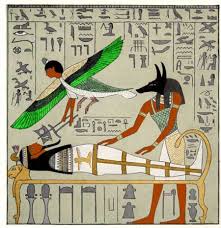
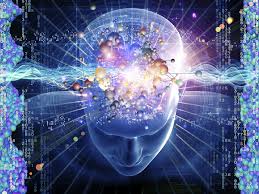
I never came away from an autopsy without reflecting on the marvelous design of the human body.
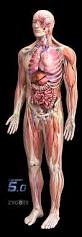 There are twelve major systems in your anatomy; all interlinked to ensure your survival. Remove any system (except maybe your reproductive one) and you’ll die. And these systems go about their business – day after day – year after year – without your having to consciously think about operating them.
All that’s required is a bit of maintenance and, when things go wrong, modern medical science usually knows how to patch you up. Today’s medical practitioners can replace your organs, your limbs, your hair, and your teeth. But what modern science doesn’t know is how all this came to be.
I’m going to do some edited plagiarism from William A. Dembski, of the Access Research Network, who wrote an excellent article on intelligent design. The idea has been around since the ancient Greeks, who did some pretty deep thinking about where they came from and where they were going. Some of it was explained by mythology, some by theology, and some by analogy. But the central question – did something intentionally design us – remains unanswered today.
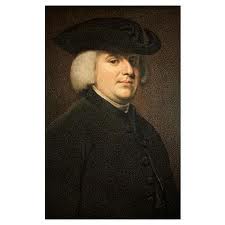 Design theory—also called design or the design argument—is the view that nature shows tangible signs of having been designed by a preexisting intelligence. The most famous version of the design argument can be found in the work of theologian William Paley, who in 1802 proposed his “watchmaker” thesis. His reasoning went like this:
“In crossing a heath, suppose I pitched my foot against a stone, and were asked how the stone came to be there; I might possibly answer, that, for anything I knew to the contrary, it had lain there forever. … But suppose I had found a watch upon the ground, and it should be inquired how the watch happened to be in that place; I should hardly think the answer which I had before given would be sufficient.”
 To the contrary, the fine coordination of all the watch parts would force us to conclude that it must have had a maker – that there must have existed, at some time, and at some place or other, an artificer or artificers, who formed it for some purpose. We’d struggle to comprehended its construction and designed its use, just as we’ve struggled with ourselves.
Paley argued that we can draw the same conclusion about many natural objects, such as the eye. Just as a watch’s parts are all perfectly adapted for the purpose of telling time, the parts of an eye are all perfectly adapted for the purpose of seeing. In each case, Paley argued, we discern the marks of an intelligent designer.
Although Paley’s basic notion was sound and influenced thinkers for decades, Paley never provided a rigorous standard for detecting design in nature. Detecting design depended on such vague standards as being able to discern an object’s “purpose.” Moreover, Paley and other “natural theologians” tried to reason from the facts of nature to the existence of a wise and benevolent God.
All of these things made design an easy target for Charles Darwin when he proposed his theory of evolution.
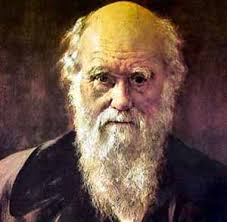 Whereas Paley saw a finely-balanced world attesting to a kind and just God, Darwin pointed to nature’s imperfections and brutishness. Although Darwin had once been an admirer of Paley, Darwin’s own observations and experiences – especially the cruel, lingering death of his 9-year-old daughter Annie in 1850 – destroyed whatever belief he had in a just and moral universe.
Following Darwin’s triumph, design theory was all but banished from biology. Since the 1980s, however, advances in biology have convinced a new generation of scholars that Darwin’s theory was inadequate to account for the sheer complexity of living things. These scholars – chemists, biologists, mathematicians, and philosophers of science – began to reconsider design theory. They formulated a new view of design that avoids the pitfalls of previous versions.
Called intelligent design (ID), to distinguish it from earlier versions of design theory (as well as from the naturalistic use of the term design), this new approach is more modest than its predecessors. Rather than trying to infer God’s existence or character from the natural world, it simply claims “that intelligent causes are necessary to explain the complex, information-rich structures of biology and that these causes are empirically detectable.”
 Like I said, I never came away from an autopsy without reflecting on the marvelous design of the human body.
What do you think?
Have you been intelligently designed?

 How can you be happy?
 They think our meaning comes from being part of this plan and is written into the universe waiting to be discovered.
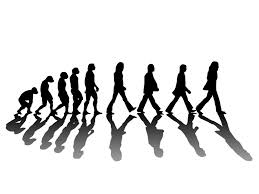 And although this vast and incredibly old universe was not created for us, all of us are connected to something bigger than ourselves, whether it is family and community, a tradition stretching into that past, an idea or cause looking forward to the future, or the beautiful, wider natural world on which we were born and our species evolved.
 Each one of us is unique and our different personalities depend on a complex mixture of influences from our parents, our environment, and our connections. They change with experience and changing circumstances.
  We may find meaning through our family, our career, making a commitment to an artistic project or a political reform, in simple pleasures, such as gardening and hobbies, or in a thousand other ways, giving reign to our creativity or our curiosity, our intellectual capacities, or our emotional life.