 It’s a excruciating way to die. Imagine the panicked horror. Tearing through the jungle on a hot tropical island being chased by primitive men armed with sharpened stick spears, bows and arrows, and razor-edged bamboo knives. You’re viciously overpowered, savagely beheaded as a manhood trophy, then your limbs are cruelly hacked and severed from your torso which is packed off and cooked over an earthen-pit fire to be ritualistically devoured in a secret stone-age ceremony.

This stuff was real. This business actually occurred some time in the past. The question is — do headhunting cannibals still exist?
I watched a National Geographic Special hosted by Piers Gibbon titled Search for the Cannibals of the South Pacific. The film crew traveled to remote parts of the region of Oceania in search of the answer. What they found was fascinating. That is, if you’re curious as to whether there still are active headhunters who consume human flesh.

To start, there’s a difference between headhunters and cannibals. Not all headhunters are cannibals and not all cannibals are headhunters. I’m sure you’re aware of relatively recent North American cannibal named Jeffrey Dahmer who serial-killed gay men and ate them. Dahmer was a bit of a one-off, though. What I’m referring to is an organized culture that endorses inter-tribal warfare where men battle other men and then behead them a prized proof of manhood.
But, it’s an entirely different level to go ahead and eat them.
There’s no question headhunting and cannibalism once existed in places like Papua New Guinea, Fiji, the Solomon Islands, and Indonesia. There are historic reports of the practice in The Philippines, Borneo, and Taiwan. Then, there are primitive tribes protected in the Amazon rain forest. Who knows what they did or they do.

A very famous victim of headhunters and cannibals was Michael Rockefeller. Yes, the son of New York Governor and United States Vice president Nelson Rockefeller (also grandson of financier J.D. Rockefeller). In 1961, this entitled and arrogant young fellow thought it was a good idea to check out the natives in West Papua and see if he could collect (steal) some of their art for his museum.
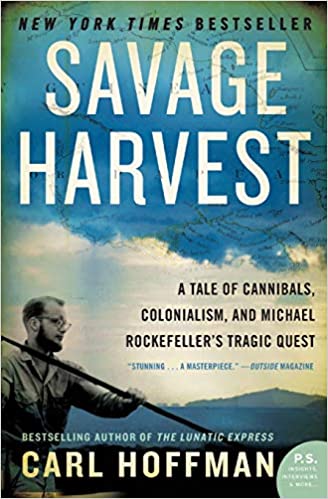
That didn’t turn out so well for Rockefeller III. Here’s an account from the book Savage Harvest: A Tale of Cannibals, Colonialism, and Michael Rockefeller’s Tragic Quest by Carl Hoffman on what demise fell upon the poor soul:
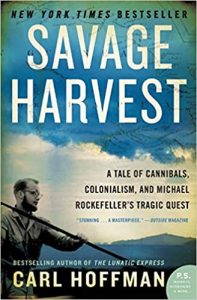 One of the tribesmen drove a spear into Michael Rockefeller’s ribs as the young man was swimming for his life. After being beheaded, his head was scalped, cut across the face from the root of the nose to the nape of his neck. His ribs were broken with an ax, his sternum ripped out, his arms and legs cut off, and entrails pulled out. Some of them were eaten straight away. The others cooked individually. A big feast for the tribe started with chanting. Then the tribesmen had sex with each other, shared their wives, and drank their urine. Afterward, they spread Michael’s blood all over their bodies and danced wildly like possessed.
No, thank you.
I’m sure there’s a psychology behind taking heads and cooking humans. From what I’ve read while researching this piece is that, historically, these acts came down to animism. That’s the belief that everything has a soul or spiritual power. It seems the act of beheading a foe is to take the power stored in that being and transferring to one’s self.
And, I’m certain that ritualistic cannibalism wasn’t necessary for subsistence. You probably heard the story of the Andes aircraft crash where survivors resorted to cannibalism so they could stay alive. No, ritualistic cannibalism wasn’t about protein fulfillment. It, too, must have been some sort of power trip.
Part of my brief research into this not-for-all topic was finding an article titled Fiji: Still the Cannibal Island. It was written in 2014 by Tanja Laden who purports to have interviewed a modern-day cannibal on the island of Taveuni. Here’s an excerpt:
 Rapuga and I sat down to discuss how cannibalism first became a ritualized practice in Fiji when European settlers arrived in the 19th century. He told me Fijians would eat people from other “races” to protect their property and as a form of revenge. When hunting down and eating their enemies, locals used a stone ax (matau vatu) and a spear (moto), along with an eye-gauger (totokia) and a sea (pronounced say-ah), which was like a brain-smasher. Then they’d eat their victims with a special cannibal fork called an ai cula ni bokola.
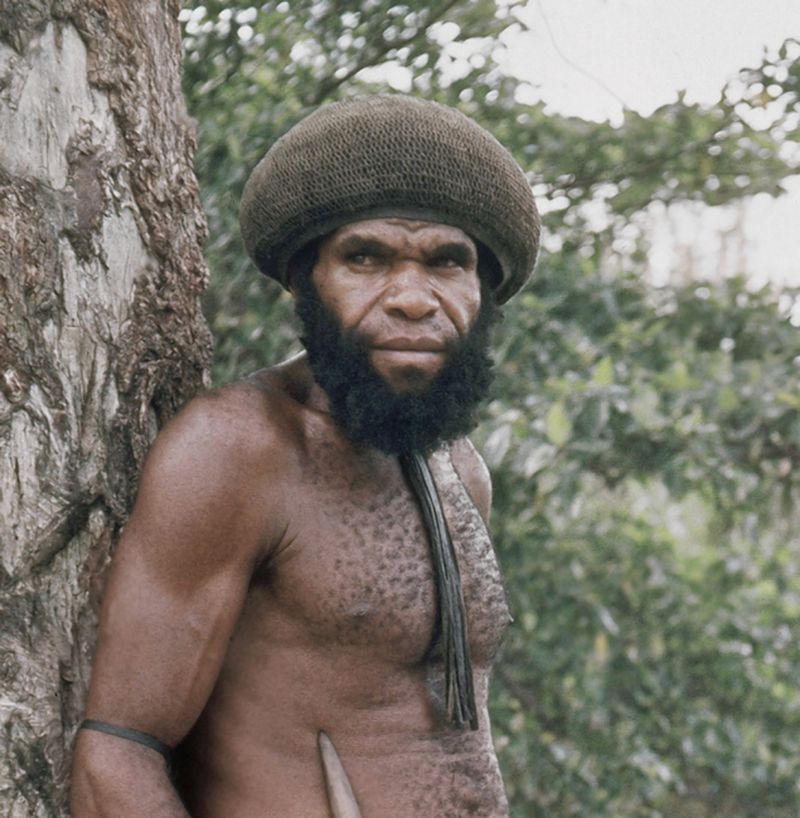
After Fijians killed their enemy, they’d drink the blood in order to become more powerful, because, as Rapuga noted, “the blood runs through the entire body.” The corpse would then be divided into portions, with the chief eating the heart and brain because everyone believed he’d literally “absorb” his enemy’s knowledge and courage. Next, a village priest would perform a ritual to one of the gods and the tribe would gather for a big celebration under the moonlight, dancing with their spears around a bonfire while the feast was cooking.
I asked Rapuga how humans tasted, and whether cannibals would serve the meat with any side dishes like vegetables. He said humans tasted like pork but sweeter, and that they’d cook the meat in an earth oven and serve it with breadfruit and yams.
Whether it’s true or not, I don’t know. But, it makes for an interesting story. It also jives with conclusions on the National Geographic Special.
So, if headhunters and cannibals still exist, who are the usual suspects? There’s a lot of information on the net that I tapped into. This material is not from personal experience, and I had no intention of making a field trip to find out. Here is another excerpt. It’s from from The Last Cannibals (5 Tribes With Dreadful Headhunting History) which sums up the situation far better than what I can write:
DANI TRIBE — “THE DEAD BIRDS”
The Central Highlands of West Papua is home to the Dani people who had been waiting a long time to be discovered. They live in so-called “honai honai”, tiny mushroom-shaped huts made out of thatch and reeds and they are hunters. Men spend most of the time preparing primitive weapons, hunting and treating resulting injuries while women look after the youngsters, grow sweet potatoes and tobacco.
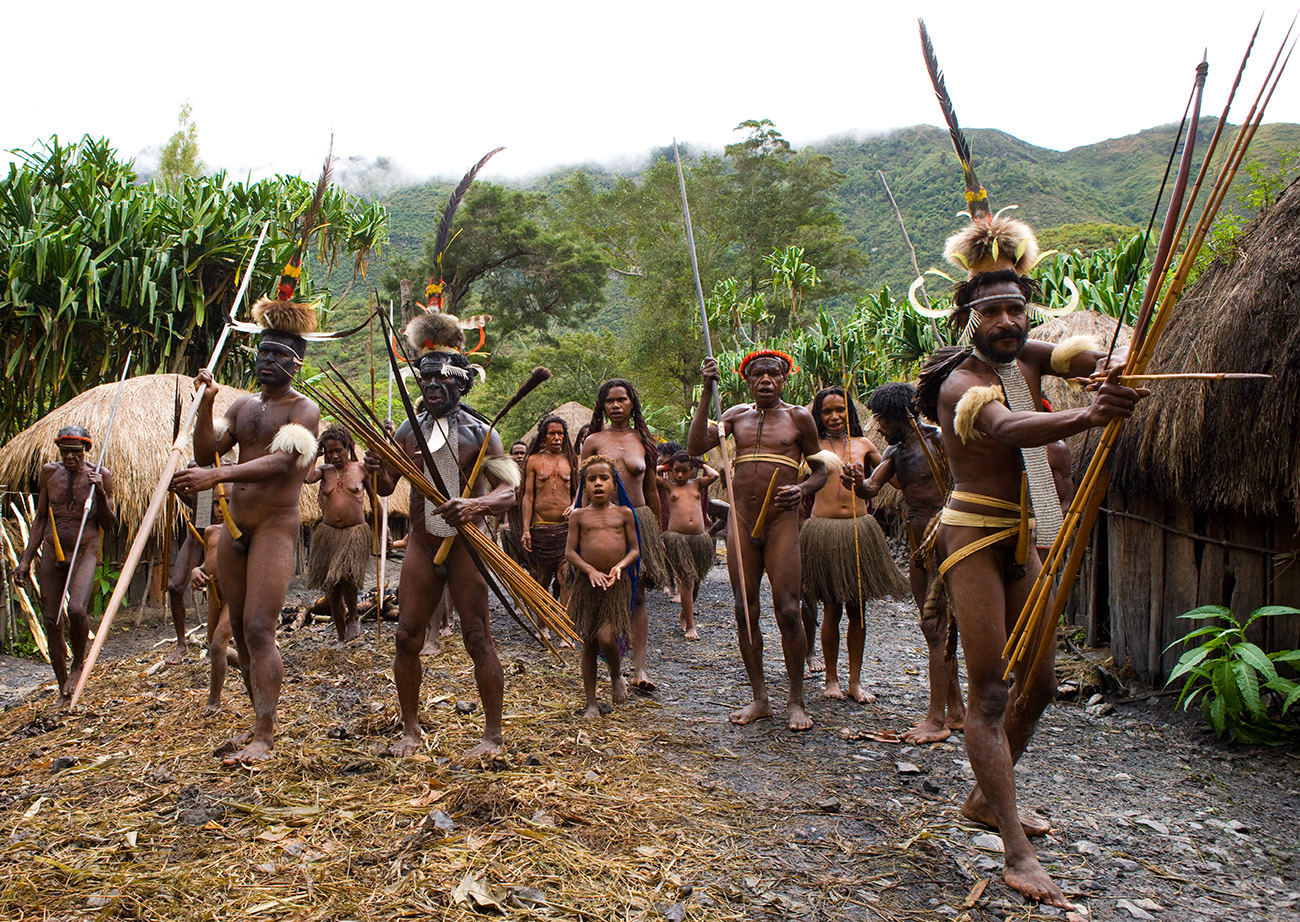 Like most of the ethnic groups in New Guinea, Dani tribe lives in its own world full of odd rites and rituals. A big part of funeral ceremonies is finger amputation of the female members for each death in a family or multiple pig slaughtering during celebrations to show the success of the community. Pig feasts and cooking rituals are a big part of every important event when several pigs are killed using a bow and arrow, portioned, wrapped in a banana leaf, and traditionally cooked in the earth oven together with potatoes and cassava.
Small-scale warfare between villages is integral to traditional Dani culture. The emphasis in battle is to insult the enemy and wound or kill token victims, as opposed to capturing territory or property or vanquishing the enemy village. Afterward, their remains are kept for a big feast, weapons are decorated with the ornaments made out of the victim`s body and trophies such as the skull, bones, and hair are displayed in the most respected part of the village.
YALI TRIBE — “THE DWARF WARRIORS”
Sharing the territory of Baliem Valley with Dani people, less-visited Yali subgroup, only discovered in the early 60s, is known as a “tribe of dwarfs” due to their short height (150 cm on average). The access to these villages is somehow limited, not only because of their altitude of about 2,500 m but also the fact that the only way how to reach these settlements is a several-day trek through thick vegetation and rugged, steep mountains of Jayawijaya.
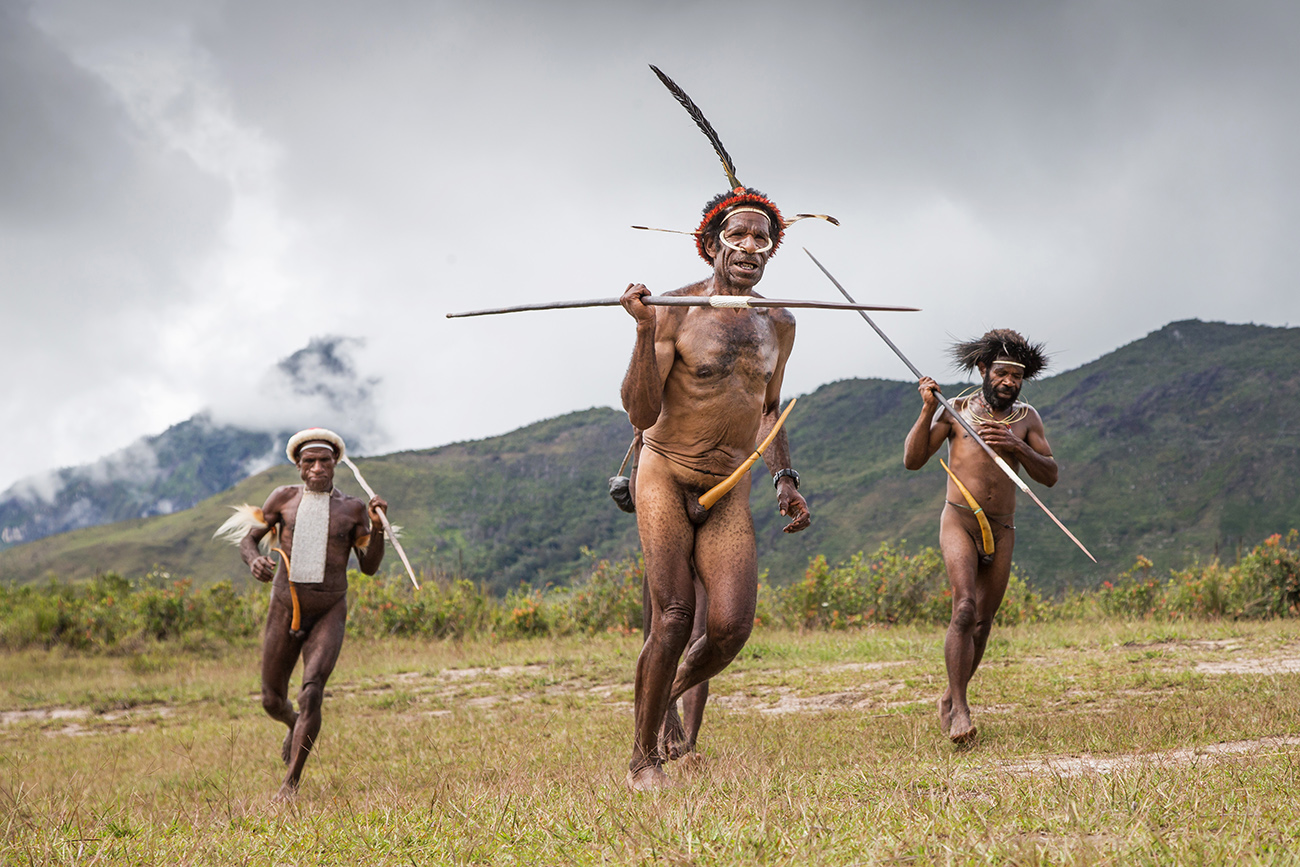 Similarly to the Dani tribe, the Yali walk around rather naked, men solely protect the most important part – their penis, using a tube-like gourd, called “koteka”, and topless women only wearing a skirt made out of grass and other natural material. Pigs are considered to bring wealth and they are only eaten on special occasions. It is quite a spectacle to see the indigenous women cuddling the snorting animals before they kill them and steam the meat on hot rocks.
The Yali were also ill-famed hunters and reputed cannibals, once used to eat the flesh and brain of their enemies while still warm, grind the bones to dust and throw it into the deep valley to prevent them from returning. The region is so remote and inaccessible that even the neighboring ethnic groups rarely used to get in contact with each other. That resulted in a different development of each individual language, so the minorities of this territory often do not even understand each other.
ASMAT TRIBE — “THE HEADHUNTERS”
The tidal swampland of West Papua`s southern coast is some of the least accessible parts of the world. This is the domain of the Asmat tribe famous for their spectacular wood carvings, considered to be among the world’s finest, but more importantly for being the legendary Head Hunters.
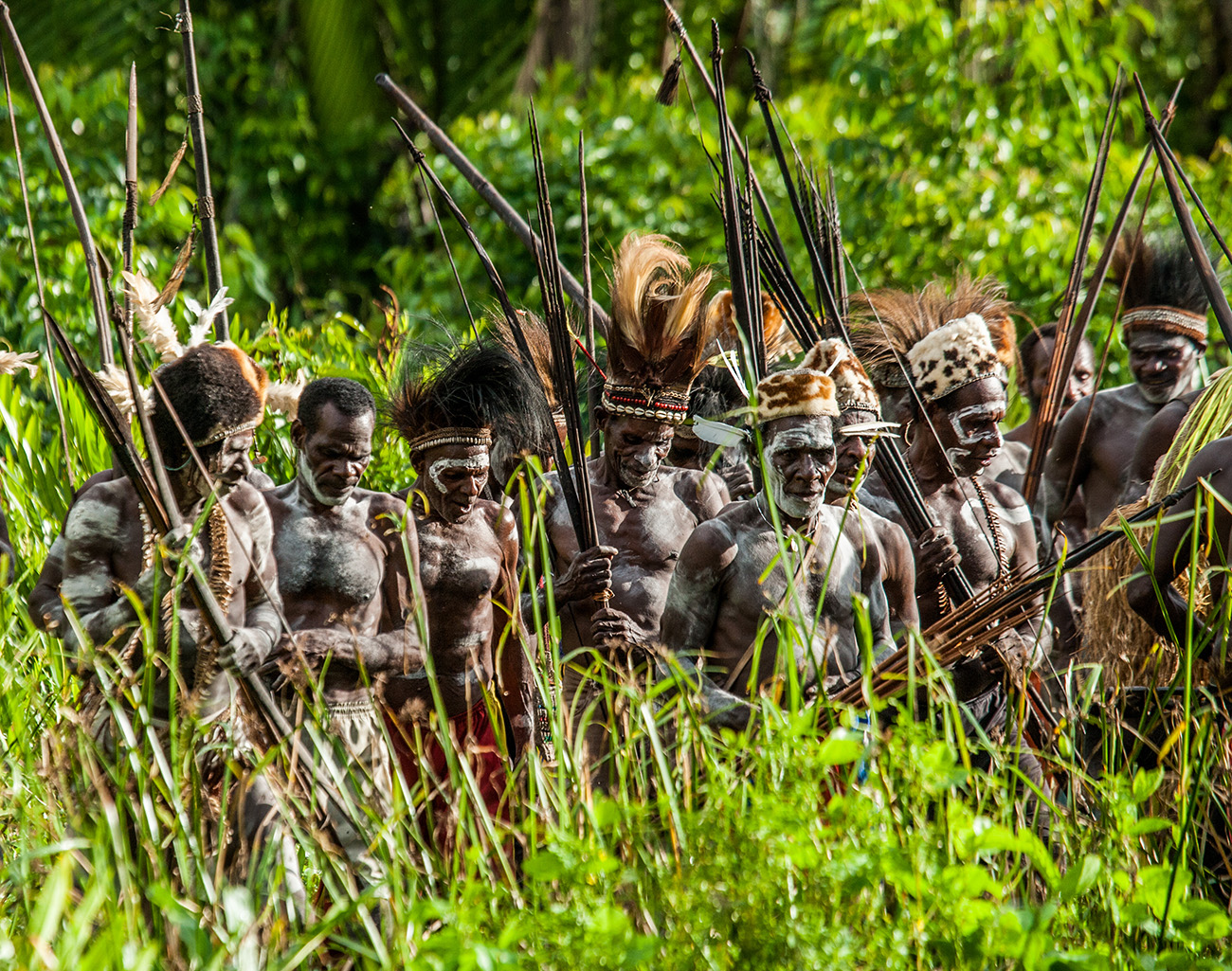 Once, in the time of war, they ate brains of their enemies mixed with sago worms – that all served on the halved skull. Afterward, they cleaned it and used it as a pillow to evoke respect and fear. They did not kill for food or not even the skull as a trophy but they worshipped the skull as a sacred object and it was believed to have special powers.
After the skull was stripped of the soft parts, e.g. brain, eyes, and skin the nasal nostrils were closed to prevent the evil spirits to enter the household were the decorated skulls were displayed. The Asmat warriors and their children would inhabit the names of enemies they had killed.
KOROWAI TRIBE — “THE TREE PEOPLE”
The Korowai are neighbors of the Asmat, occupying the inland territory of Yaniruma, near Senga and Dairam rivers. These tribes live in the tree houses built up to 30-50 m above the ground, in the rainforest clearings of the deep southern jungles.
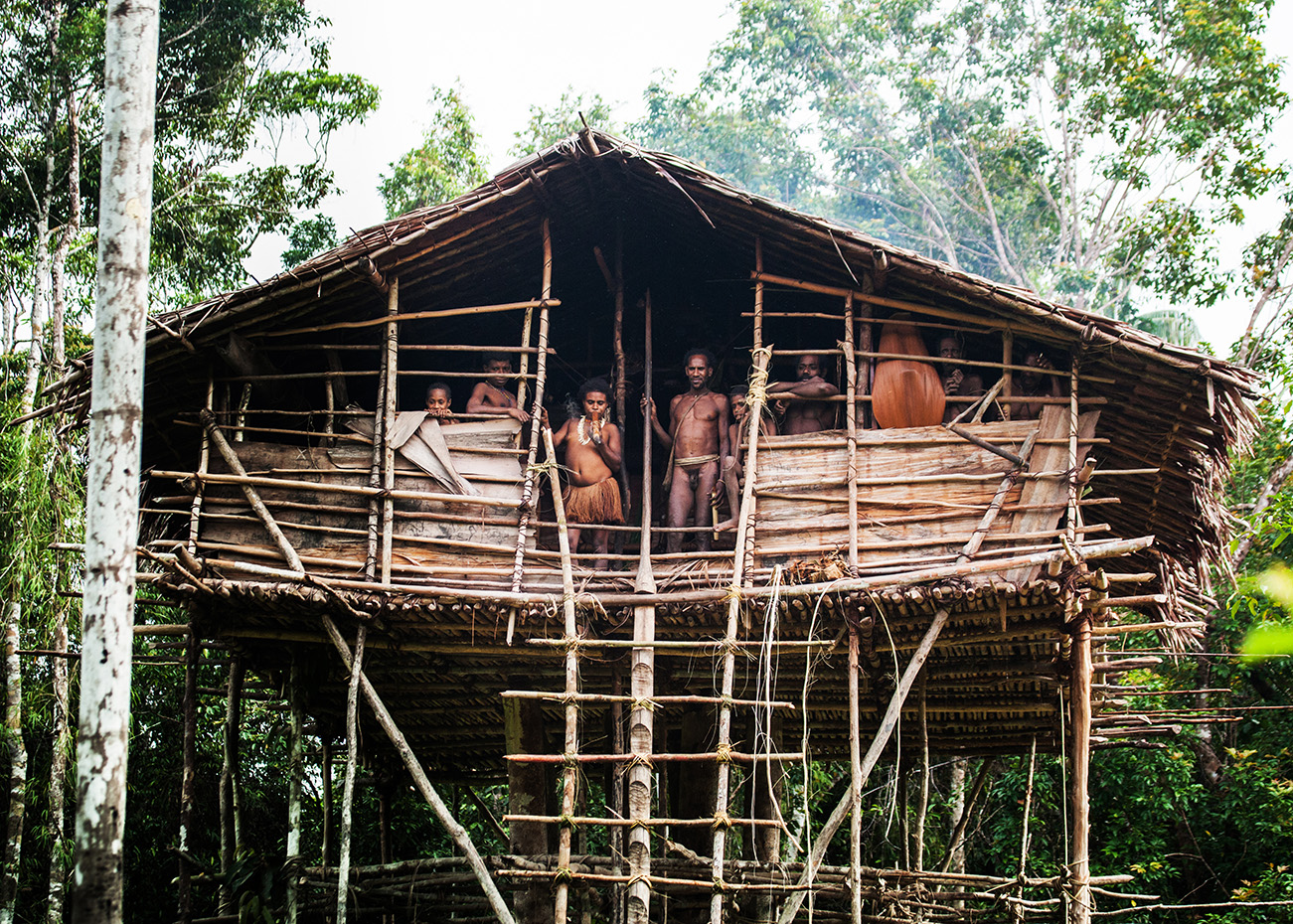 This ethnic group is to be one of the most isolated ones and believed to continue practicing rites related to cannibalism still today. The difficult access did not allow the missionaries during the Dutch colonial period to come to these areas so they could civilize the Korowai people. Those few who made it to the outlying villages were eaten or driven away.
The Korowai are quite a fascinating subgroup and they are often called “Bedouins of Jungle” for their continuous moving from place to place in order to find food and hunt for crocodiles. They build and move their treehouses on a regular basis which makes very hard for scientists to study them. Except for a nutshell covering their penises men do not wear clothes. Women only use a basic skirt made out of sago leaves.
KOMBAI TRIBE — “THE ENDO-CANNIBALS”
The Kombai tribe is another “tree” community building their homes high in the canopy. They live in clans along the Buzza River. The closest relatives to the Korowai, they have a very similar cultural background. Men wear a hornbill head instead of the gourd and a bird beak used as a protection for their genitals. Women are traditionally in charge of making sago – the starch obtained from the sago palm tree. Pigs serve as a currency and they are sacred animals that get only sacrificed on a special occasion and cooked on the traditional earth-oven.
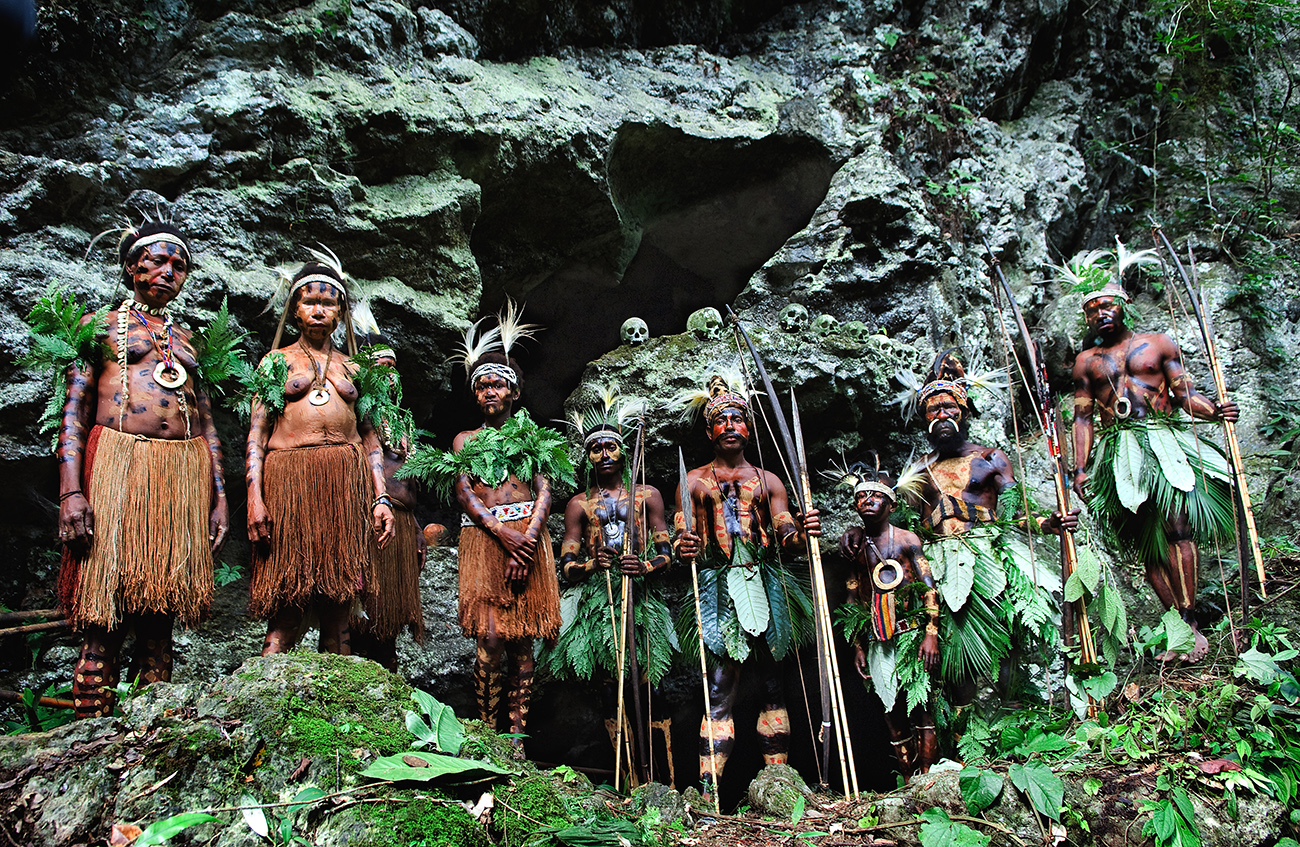 The people of Kombai still strictly hold on their ancient animist beliefs. Leadership structures are based on the quality of a strong man – and that has to be proven by their hunting skills. The Kombai used to kill their enemies for their organs and blood which were eaten and the bodies were stuffed with leaves and grass.
The Kombai are associated with endo-cannibalism – a ritual cannibalism within the same community. In the belief of gaining some of the qualities of the beloved person, family members would kill and eat internal organs and drink the blood of their own relatives. Totemism, black magic, witchcraft, and sorcery are an important part of their cultural heritage.
* * *
Although these five Oceanic tribes do exist and walk among us, I couldn’t find any proof that they still practice headhunting and cannibalism today. Even National Geographic couldn’t make that finding. However, the practice was certainly active in 1951 when Doctor Willem Vesser traveled with Papuan New Guinea people and witnessed firsthand what went on in their world. Here’s an excerpt from a paper titled Headhunting on the South Coast by Dr. Vesser with actual photos from the paper:
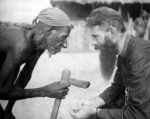 The Papuan is still a traditional savage, a cannibal who headhunts and lives in constant fear. Fear of their own kind and fear of evil spirits. An individual cannot be sure of his life from one moment to the next and there are all sorts of primitive rituals to ward off the unknown.
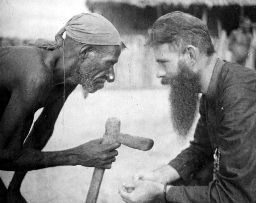
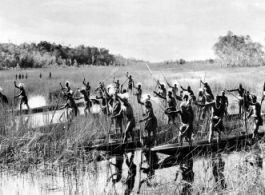 A head-hunting trip is usually a cowardly attack. The enemy village is surrounded at night. All possible escape routes are cut off, and around sunrise it is time to attack. Bamboo trumpets wake the victims who are initially paralyzed with fear and who then take off in an attempt to find shelter. But mostly they end up running straight into the head hunters’ lair. Especially the women and children are easy victims. The captives are killed off brutally. And then the ritual slaughter commences. The muscles and tendons of the neck are cut through with a bamboo knife. The spine is rotated and crunched. The torso is cut open on each side. After removing the intestines, the arms and legs are severed and loaded onto the prauwen (canoes).
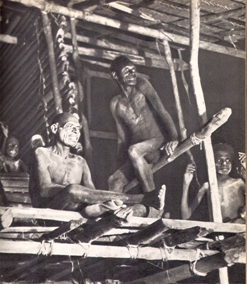 The women await in the village. From afar, they can ascertain that the trip has been a success. The meat is roasted and eaten. A hole is made in the skull with a special chisel and both the brains and the jaws are removed. The tongue is also roasted and eaten. There is drumming and dancing, the party continues until sunrise. The monotonous singing can be heard far and wide. Nightfall in the jungle closes in on the dancing barbarians. The song of chirping crickets reaches a crescendo and merges with the drone of male voices: A primeval melody from the Stone Age.
All this sounds very savage, indeed. I have no doubt that Dr. Vesser’s account is true and that this actually happened seventy years ago. But, what about today? In 2020? Do headhunting cannibals still exist?
National Geographic’s conclusion was yes and no. They located and interviewed elders who claimed to have participated in these rituals back in their youth. They admitted to severing heads and eating human remains. But, the elders said this no longer takes place.
That makes sense. It also makes it much safer, now, in traveling to exotic places like the jungles of New Guinea, Fiji, Borneo, and the Solomon Islands. Let me know how you make out if you go.