
 You’ve seen them. Earnest young activists shouting at clouds, gluing themselves to museum walls, and blocking traffic with coroplast signs warning that the world will end in twelve years unless we obey their vision of salvation—complete with windmills, solar panels, and vegan diets. They’re the same people Xing and Instagramming about carbon footprints from their iPhones made in Chinese factories run on sulphur and lignite coal-fired electricity.
It’s easy to dismiss them as naive or misguided, but the uncomfortable truth is this: many of these people are neither stupid nor insane. They are simply caught in a powerful psychological, cultural, and financial machine that has turned “climate change” into a form of religious belief—a doctrine too sacred to question and too profitable to abandon.
Let’s set something straight. I’m not a climate change denier. Climate change is real. The Earth’s climate has always changed. And it always will—human-contributed through emitted greenhouse gas or not.
But the apocalyptic narrative that dominates headlines, policy, and corporate strategy today isn’t just about facts. It’s about framing—about controlling how people think, feel, and act in relation to a deeply complex system they barely understand. And that makes the climate crisis one of the most successful psychological operations in modern history.
In this post, we’ll take a hard look at why so many people have bought in—blindly and without skepticism—to the idea that we’re on the brink of planetary collapse, and that the only solution is top-down control, mass compliance, and the destruction of energy systems that built the modern world.
Some of what I’m going to say may be uncomfortable to some, and I know some will unsubscribe. But that doesn’t make it untrue, and this needs to be said.
The Climate Crisis as a Religion (aka The Church of Carbon)
First, let’s call it what it is.
For a growing number of people—especially in the West (Europe particularly included)—the climate crisis has become a belief system. It functions just like a fundamentalist religion, complete with original sin (industrialization), prophets (Greta, Gore, Gates), sacred texts (IPCC reports), rituals (recycling, carbon offsets), heretics (climate skeptics), and a promised apocalypse for those who fail to convert.
It’s not about science anymore. It’s about meaning.
People—especially young people raised in secular cultures—are starving for purpose. They want to feel morally righteous, socially important, and part of a grand, redemptive story. The climate narrative offers all of that in a tidy, emotionally satisfying package. It turns ordinary people into saviors. It makes them matter.
You can’t underestimate how powerful that is.
Fear is the Fuel
The second driver is fear.
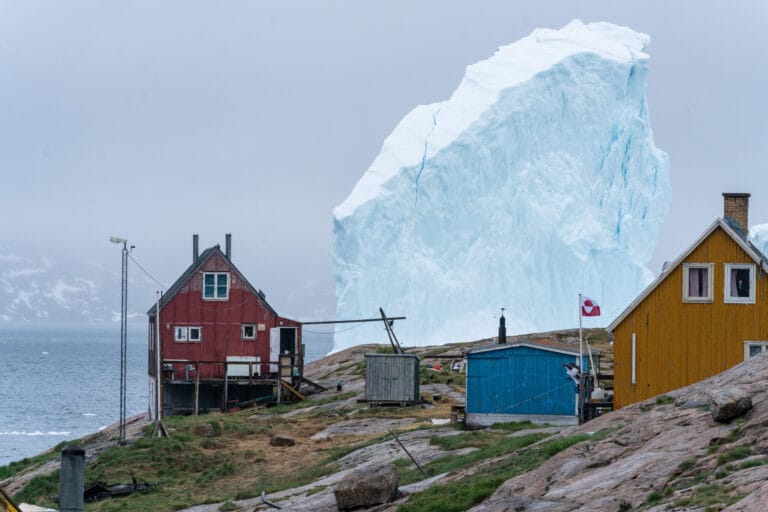
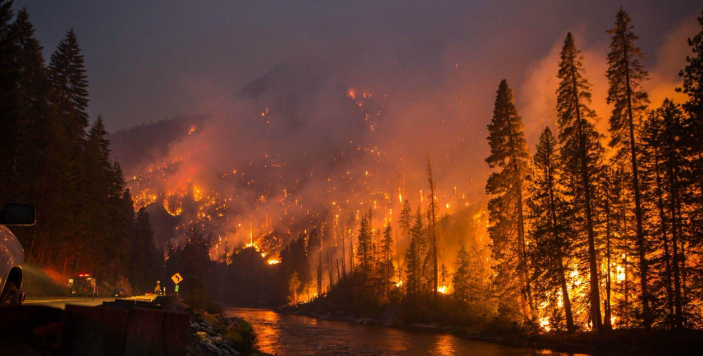
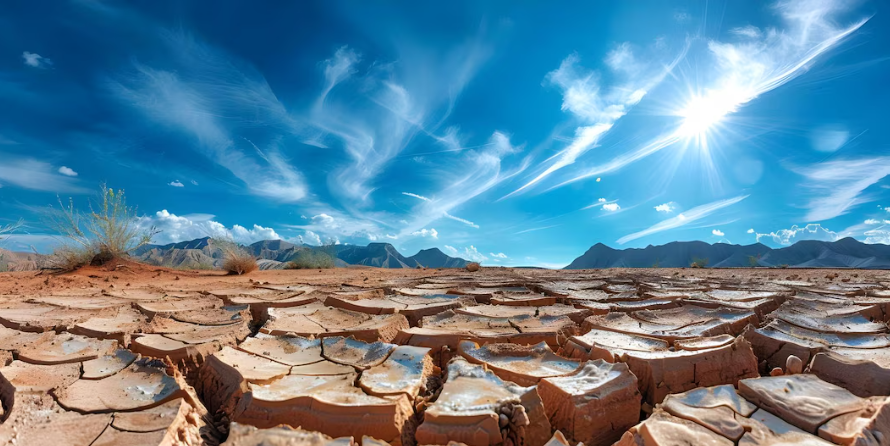
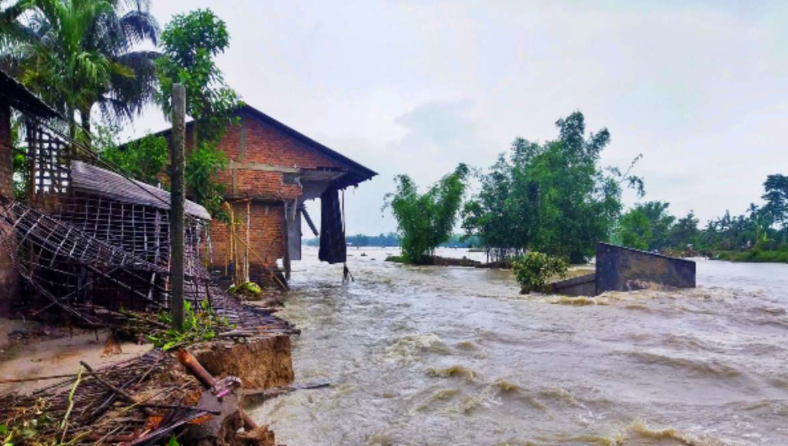
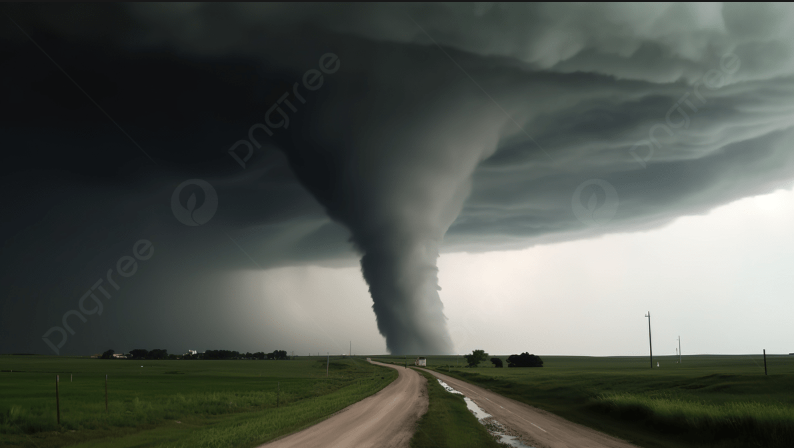
For decades, we’ve been bombarded with doom-laden, global-warming headlines: ice caps melting, oceans rising, hurricanes and tornados worsening, apocalyptical flooding, forests burning, deserts parching… The messaging is relentless—and expertly crafted to trigger our limbic systems. When people are afraid, they don’t reason. They react.
This isn’t new. Back in the 1970s, experts warned of an imminent ice age. Then came acid rain. Then ozone depletion. Each time, the world was supposed to end unless we handed over more power to government, more money to NGOs, and more control to unelected technocrats.
It’s always the same pattern:
- Declare a crisis.
- Blame human behavior.
- Offer a sweeping solution that just happens to consolidate control.
The only difference now is scale. The climate crisis is global, not regional. And the proposed solutions are systemic, not marginal.
The Collapse of Critical Thinking
But fear alone doesn’t explain the blind belief.
There’s another piece of the puzzle: the steady erosion of critical thinking. Schools no longer teach logic, debate, or how to evaluate competing hypotheses. Instead, they promote conformity, activism, and groupthink. You don’t learn how to think. You learn what to think.
By the time students hit university, the programming is complete. Professors reinforce the dogma. Campus culture punishes dissent. Climate change isn’t a topic for exploration—it’s a moral litmus test. Students who question it risk grades, reputation, or worse. Being cancelled.
So, they comply. They absorb. They repeat.
And when they graduate into journalism, academia, NGOs, or politics, they carry that unexamined belief system with them—passing it on like gospel.
The Media Echo Chamber
The next layer is media.
Legacy outlets like CNN, BBC, CBC, and the New York Times frame climate change in religious terms: “Climate emergency,” “existential threat,” “code red for humanity.” Any nuance is treated as heresy. Any questioning is framed as denialism.
Science itself has been rebranded. Instead of a method of inquiry, it’s now a set of conclusions—conveniently aligned with elite interests. The phrase “The science is settled” is a dead giveaway. No real scientist would ever say that.
Meanwhile, dissenting voices—many with serious credentials—are marginalized, shadowbanned, or censored outright. Their data doesn’t fit the narrative. Their views make people uncomfortable. So, they are erased.
And most people? They never notice.They assume if something was true, they’d hear about it. But when every channel is playing the same tune, they don’t realize they’re listening to a carefully curated soundtrack.
Social Conformity and Virtue Signaling
But here’s the deeper truth.
Most people don’t believe the climate crisis because they’ve studied the data. They believe it because everyone else does. That’s the power of social conformity. Nobody wants to be the outlier—the one who raises their hand and asks the uncomfortable question.
Especially in a culture obsessed with virtue.
Believing in the climate crisis is a modern form of moral signaling. You drive a Tesla. You compost. You use a keep-cup. You care. You’re not like those backward Boomer-deniers who love oil and hate penguins.
- You’re evolved
- You’re ethical
- You’re better
That’s what this has become—not a conversation about climate, but a competition for social status.
And once belief becomes part of your identity, it becomes non-negotiable. Any challenge feels like a personal attack. Facts don’t matter. Feelings do.
Follow the Money
Now let’s talk about power.
The climate industry is worth trillions—yes, trillions of dollars. It’s the perfect grift: a never-ending crisis that justifies endless funding, regulation, and surveillance.
- Governments rake in carbon taxes.
- Universities secure research grants.
- Corporations get ESG ratings and subsidies.
- NGOs fundraise on fear.
It’s an entire ecosystem of incentives, none of which reward skepticism or moderation. And when that much money is on the table, the truth becomes secondary to the narrative.
Even energy companies play along. They don’t want to be regulated out of existence, so they slap green labels on their products and talk about “net zero” while quietly hedging their bets. It’s theater. Everyone’s pretending.
But the costs are real.
China’s Role in the Global Equation
While the West ties itself in knots trying to decarbonize, one country is playing a different game entirely: China
Beijing talks green, but burns black. Coal remains its dominant energy source, powering steel, manufacturing, and military growth at a staggering scale. As of 2024, China alone consumes over half the world’s coal supply—and shows no sign of slowing down.
They’re not stupid. While we argue over wind farms and carbon credits, they build aircraft carriers, drones, and power grids. While we teach kids to fear climate collapse, they teach theirs to master engineering and geopolitics.
They make the solar panels we install. They mine the rare earths we need. They profit from the very policies we impose on ourselves.
And we call that progress.
Weaponized Guilt
So why don’t people wake up?
Because they’ve been trained to feel guilty. Every gas-guzzling SUV trip, every propane-grilled burger, every jet-fueled flight—is framed as a moral failing. You’re killing the planet. You’re harming future generations. You’re part of the problem.
It’s exhausting, and it’s effective.
People internalize this guilt. They try to cleanse themselves through ritualistic consumption: reusable straws, oat milk, biodegradable trash bags, canvas totes at the farmer’s market. None of it makes an infatismal sub-fraction of a surface dent in global emissions—but it feels redemptive.
That’s the point. It’s not about fixing the planet. It’s about managing the soul.
The Useful Idiots
Now we come to the crux.
The term “useful idiot” originated in Soviet times. It referred to Western sympathizers who unknowingly supported the goals of a regime they didn’t understand. They weren’t evil—just naive, manipulated, and eager to be on the “right side of history.”
That’s where we are today. Millions of well-meaning people have been seduced by a narrative that exploits their fears, flatters their vanity, and blinds them to the larger game at play. They march, post, and protest—believing they’re saving the world, while unwittingly aiding those who want to dominate it.
They’re not villains. They’re pawns. And when you try to wake-the-wokes, they look at you like you’re the crazy one. Then they viscerally turn on you.
What’s At Stake
Here’s what’s really at stake.
If we continue down this path, we don’t just risk economic collapse or energy poverty. We risk civilizational suicide. We are dismantling the very systems—energy, industry, sovereignty—that made the modern world possible.
And we’re doing it not for the planet, but for appearances.
Meanwhile, the nations that reject this ideology are gaining power, leverage, and independence. They’re not afraid to use fossil fuels while experimenting with futuristics. They’re not ashamed of their ambitions. And they’re not held hostage by narratives designed to make them feel guilty for existing.
They’re playing to win. We’re playing to look virtuous. That’s a losing hand.

So, what do we do?
First, stop apologizing. There is no shame in using energy. Civilization runs on it. Human flourishing depends on energy, regardless of how it’s generated. Without it, we return to darkness—literally and figuratively.
Second, think for yourself. Ask questions. Follow incentives. Trace the money.
Be skeptical of anything presented as a one-sided moral truth.
Third, reclaim courage. Don’t be afraid to speak the truth, even when it’s unpopular. Especially when it’s unpopular. History doesn’t remember those who went along to get along. It remembers those who stood up, pointed at the naked emperor, and said, “This is madness.”
And finally, understand this: We are not in a climate crisis. We are in a clarity crisis. Clarity—real, hard-won, human clarity—is the first step back to sanity.
The next time someone tells you the world is ending, ask who’s funding the message—and what they’re selling with it.
Because if you look closely, you’ll find it’s not about saving the planet. It’s about controlling the people on the planet by getting them to fall for the climate crisis narrative.
Garry, I agree with every word you said!! Its all a total scam !! And sooo true that kids don’t learn how to think but learn what to think! You make total sense !!!! There’s just no more critical thinking anymore!! Keep up the good work!!!
Why thanks, Joanne. I appreciate the positive feedback. Yesterday I had someone send me a personal email telling me to stick with what I know best – true crime – because I wasn’t mentally or socially equipped for anything else 🙂
Thank goodness! Garry, thank you for making it very clear that the “emperor has no clothes.” It’s all so obvious, as you pointed out, but because many have totally abandoned critical thinking totally. Your analogy of the belief as a religion is perfect. Thank you again.
I like your “emperor has no clothes” analogy. I guess my bottom line is, yes, there is clinate change – some human contributed – but there is no crisis. It’s mostly a scam, folks, think this through. Thanks for commenting, Michaele.
If it was not so rare (and courageous, though you are likely safe from being fired or defrocked), I would say this was just a particularly articulate statement of the obvious. We need to hear more like this, not in a tone of hat-in-hand advocacy, but with solid data (or pointing to its absence) and hard questions. One is, “yes, at some concentration, increased CO2 will contribute to the current global temperature up-tick; How significantly? 100% (as often casually stated by the popular press) or 1% or .001%”? How can this question be finessed as so irrelevant?
On your more general observations about the attack on critical thinking – pretty much any thinking – by our educational system, you failed to list Euclid. When plane geometry was mandatory for high school graduation, students discovered that there was a method, given that a proposition was true, for testing the truth of related statements. Since the real world provides consequences for accepting falsehood for truth, it follows that we must choose our axioms carefully. That was pretty exciting in itself, but without our realizing it, the assumption that there was such a thing as objective truth just got accepted. No amount of faith could make the earth flat. All that has been lost, thus it can be made to seem quite plausible that “my” truth is whatever makes me feel good, and is as good as your truth. Don’t insult me with the logic of dead white European males.
Hi Dean! I always appreciate when you drop by. You’ve captured the essence of what I was aiming for, but with more precision than I managed in the post.
You’re absolutely right. The key question isn’t whether CO₂ contributes to warming (it clearly does at some level), but how much of the current uptick is actually attributable to it – and how much of what we’re told is grounded in solid, testable data versus narrative and assumption. That question tends to get waved off as irrelevant precisely because it undermines the tidy moral urgency of the “crisis” story.
Your point about Euclid struck a nerve. When we lose the habit of working from first principles – of knowing how to test whether a proposition holds water – we end up replacing the pursuit of objective truth with personal “truths” that feel good but crumble under scrutiny. That’s a big part of how we’ve arrived here in a culture allergic to logic, happy to swap Euclid for emotionalism.
And for the record, I’ll take no offense at your defense of old and dead white European males. I happen to be descended from one myself – several, actually – and I’m still trying to live up to my father’s ability to “get it”.
I JUST HAVE TO AGREE and THANK YOU.
And thank you for agreeing with me, Will. Not everyone does 🙂
I believe you have mis- identified the driver of this widespread concern about climate change likelihood.
People trained in atmospheric sciences have observed that CO2 Is trapped within our gaseous envelope, a phenomenon replicable in the lab. This CO2 tends to trap heat. Since 1900 or so we have burned CO2 -generating carbonaceous materials for the sustainment of our civilization, greatly increasing the heat trapped in the envelope.
This extra heat, over and above sun load, has caused a more rapid increase in the average ambient temperature of the atmospheric envelope, as would be expected., and certain phenomena are altered more rapidly.
These alterations are known to cause “inconvenient” disturbances, such as weather patterns driven by larger amounts of heat energy, rises in sea level due to ice sheet melting, and changes to farming conditions. These are measurable and can be destructive.
Simply put, our waste stream (CO2) has caught up to us, as it had in the past (requiring sewage treatment schemes to reduce disease) and has to be dealt with to at least slow disruptive phenomena to a rate that still facilitates a sustainable civilization as we know it.
The above has nothing to do with “mass psychology”, rather. everything to do with scientific observation and long-term measurement. Who benefits from “control” here?
Have the technology to generate the needed energy from sources other than combustion of carbonaceous fuels, and to slow the accumulation of heat-trapping gasses in our environment.
We probably cannot completely reverse the effects of excess trapped CO2 but we can certainly slow it down to help maintain an acceptable living environment.
Thanks for the thoughtful comment, Philip, and for coming at it from science not politics 🙂
I don’t dispute the basic physics: CO₂ traps heat, and human activity has undeniably added to what’s in the atmosphere. We can demonstrate that in a lab, as you note. Where my post digs deeper is in why this scientific reality has been packaged into what amounts to a cultural narrative — one that often demands blind adherence rather than reasoned debate. That’s not the same as denying the measurements; it’s questioning the framing, the motives, and the resulting public psychology.
And while human‑driven emissions are significant, context matters. A single major volcanic eruption — think Mount Tambora in 1815 or even Pinatubo in 1991 — can eject more particulates and greenhouse gases into the atmosphere than many years’ worth of human industry, radically altering global climate in quick ways far beyond our control. Nature, in other words, still holds the bigger lever.
My point is that acknowledging science doesn’t mean surrendering our critical thinking. If the data supports measured, practical mitigation, fine. But the conversation should remain open, honest, and proportionate — not driven by fear, politics, or the comforting simplicity of a single‑villain narrative.
This is one of the most well written articles I’ve seen on this subject. It worries me that these days people have stopped thinking for themselves and researching but started just going along with the crowd. I’ve lived 66 years, and I’ve seen all kinds of weird flukes in the seasons. Like the blizzard of 1993 in March here in the southeast. Or wearing shorts in December.
Thanks for the positive feedback, Catherine. I’m waiting for a dirty sock to arrive or at least a lump of coal. I’ve cautiously been observing the “Woke” movement and am baffled by the lack of critical thinking skills some folks display. Especially some “educated ” folks. I guess sometimes it’s easier to follow the herd.
The photo is from10 years ago….does that even it out?
As Rod Stewart would say, Pat, you wear it well.
Garry, this is truly a breath of fresh air. Pun intended.
Thank you, sir!
Hi Deb! I’m sure there are a few who think this is a really bad smell 🙂
AMEN! The climate is always changing. I can remember playing outside in shorts in January some 70 years ago.
Good morning, Patricia. I remember in the 1960s swmming in late March when the ice nomally didn’t come off the lake until May. Then we went through a cold decade or three and now there’s hardly enough snow to run a snowmobile throughout the winter. I’m talking about Manitoba in Canada. Now I’m living on Vancouver Island where we have the most temperate climate in Canada and today, July 26, I’m thinking of turning the heat on. BTW, thanks for showing your age 😉
Actually you would have to add 10 years to be accurate. Lol