
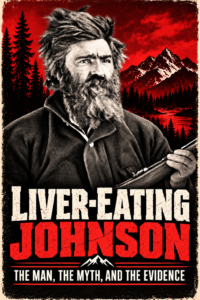
 On January 21, 1900, an old mountain man named John Johnston died at a veterans’ home in California. He’d spent his life on the American frontier as a soldier, scout, hunter, trader, and lawman, but that’s not what made him famous. Johnston went to his grave carrying one of the grandest monikers in Old West history—“Liver-Eating Johnson.” According to legend, he’d devoted years to hunting Crow warriors, killing 300, cutting out their livers, and eating them in revenge for their murder of his pregnant wife.
If you’ve never heard of Liver-Eating Johnson, you may know the story by another name. The 1972 Robert Redford movie Jeremiah Johnson drew loosely from the same frontier legend and helped turn Johnston into a larger-than-life mountain man. Trouble is, the real Johnston wasn’t named Jeremiah, and much of the tale doesn’t stand up when you check evidence. Somewhere along the way, fact, folklore, newspaper hype, and Hollywood fantasy got thoroughly mixed.
The real John Johnston was fascinating without the embellishment. He served in the military, scouted during the Indian Wars, worked the frontier, and later became a Montana lawman. What’s much harder to prove is the murdered wife, the twenty-year vendetta against the Crow, the huge body count, and the actual eating of human livers. That’s where this story gets interesting, because the closer we look, the more the legendary killer separates from the documented man.
Then there’s a wonderful twist. More than seventy years after Johnston died, a group of California schoolchildren helped get his remains dug up and moved to Cody, Wyoming, where Robert Redford himself helped carry the coffin. It’s a remarkable ending to a story that’d already blurred the line between history and mythology.
Let’s sort through John Johnston’s life—the Liver-Eating legend—and the evidence to see what’s fact, what’s folklore, and why the difference still matters.
Setting the Stage — America’s Violent and Unforgiving Western Frontier
To understand how a man like John Johnston could become larger than life, you have to understand the world he lived in. He came of age while the American frontier was pushing steadily westward through country that was remote, dangerous, lightly governed, and often bitterly contested. The Rocky Mountain West of the mid-1800s was a hard place where distance mattered, law was thin, communication was slow, and survival depended heavily on judgment, toughness, and knowing how to get by with very little.
This was the world of trappers, hunters, scouts, prospectors, freight haulers, soldiers, traders, and men willing to take work wherever they could find it. The romantic image of the mountain man is a solitary figure in buckskins living off the land, but the reality was usually more complicated. Most weren’t philosophers wandering through pristine wilderness. They were working people making a living from fur, meat, timber, mining, military contracts, transportation, and trade.
Violence was never far away. Settlers and prospectors were pushing into territories already occupied by Indigenous nations, the United States government was expanding military control, and conflicts over land, hunting grounds, trade, and sovereignty were common. Soldiers fought Indigenous groups, Indigenous warriors resisted intrusion, and civilians often found themselves caught in the middle. Add alcohol, gambling, personal feuds, dangerous travel, poor medical care, and almost no immediate law enforcement in many places, and it’s easy to see why reputations could become as important as weapons.
That brings us directly to Johnston. On the frontier, a frightening reputation could be useful, and stories travelled faster than facts. A tale told around a campfire could be repeated at a trading post, embellished in a saloon, printed in a newspaper, and eventually accepted as truth by people who had no way to check it. The frontier didn’t just shape the man; it helped create the myth.
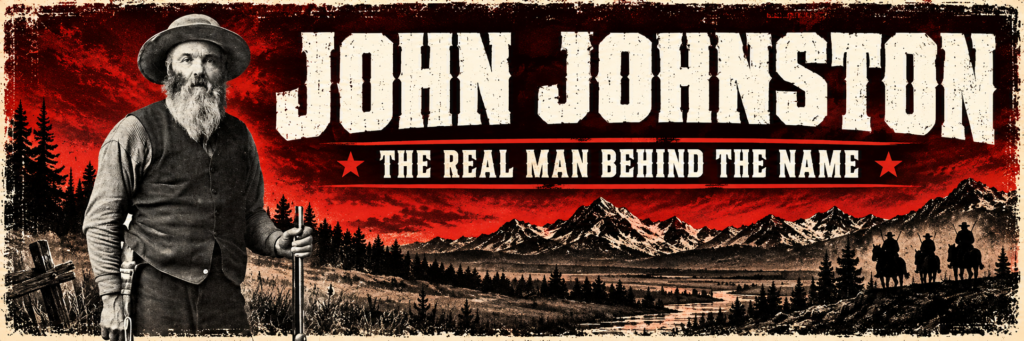
John Johnston — The Real Man Behind the Name
Strip away the liver-eating stories and there’s still a fascinating man underneath them. John Johnston appears to have been born John Garrison in New Jersey around 1824, although the details of his early life are murky and some of what later got written about him is difficult to verify. He seems to have served in the U.S. Navy around the time of the Mexican-American War and later adopted the name Johnston, possibly after getting into trouble during his naval service. Even here, the documentary trail is thinner than the legend would have you believe.
What becomes much more certain is Johnston’s later life in the West. During the Civil War he served with the 2nd Colorado Cavalry, and in later years he worked as a civilian scout during military campaigns on the Plains. He made his living the way a lot of frontier men did, moving from one job to another as circumstances changed. Hunting, trapping, guiding, trading, wood cutting, prospecting, and scouting all appear in accounts of his working life, and none of those occupations would’ve been easy or particularly safe.
Johnston also seems to have been physically imposing and genuinely tough, which no doubt helped build the reputation that grew around him. He knew the country, understood frontier survival, had military experience, and had spent years around people who lived close to violence. But one of the more interesting parts of his story is that he eventually moved toward law enforcement rather than away from it. Johnston served in Montana communities including Coulson, later Billings, and Red Lodge, where he became a constable and local lawman.
The documented Johnston was already a complex character without turning him into a cannibalistic avenger. He was a sailor, soldier, scout, hunter, trader, labourer, and lawman who survived decades in one of the toughest environments in North America. The real question isn’t whether John Johnston was a hard man; he almost certainly was. The question is how that hard man became Liver-Eating Johnson, and that takes us straight into one of the most enduring legends of the American West.
Who was Liver-Eating Johnson? John “Liver-Eating” Johnston was a nineteenth-century American frontiersman, soldier, scout, hunter, trader, and Montana lawman who became famous for stories claiming he killed Crow warriors and ate their livers. The historical Johnston was a real and formidable frontier figure, but much of the cannibal-avenger reputation came from oral folklore, newspaper exaggeration, later books, and Hollywood rather than solid contemporary evidence.
The Legend — Murdered Wife, Crow Warriors, and a Twenty-Year Vendetta
This is where John Johnston’s story leaves the historical trail and heads straight into frontier legend. The best-known version says Johnston married a young Flathead woman sometime in the 1840s and built a cabin for them in the northern Rockies. While he was away, Crow warriors supposedly attacked the cabin and murdered his wife, who was said to be pregnant. Johnston returned, found what had happened, and set out on a personal war of revenge that would supposedly last for the next twenty years.
According to the legend, Johnston didn’t simply kill Crow warriors whenever he encountered them. He hunted them deliberately, sometimes travelling enormous distances through the mountains to find his next victim. After killing a Crow, he was said to cut out the liver and eat part of it, turning revenge into a particularly gruesome calling card. Depending on which version you read, Johnston eventually killed dozens of Crow warriors, while some later accounts pushed the number well into the hundreds.
The stories didn’t stop there. In one famous tale, Johnston was captured by Blackfeet warriors, stripped, tied up, and left under guard while his captors supposedly planned to sell him to the Crow. Johnston escaped by overpowering and killing the guard, then allegedly cut off one of the dead man’s legs and carried it with him as food while travelling through the wilderness. It’s exactly the sort of story that made Liver-Eating Johnson a frontier legend: brutal, outrageous, almost superhuman, and just believable enough in that time and place to keep being repeated.
Taken together, it’s a tremendous story. There’s a murdered wife, an oath of vengeance, years of wilderness pursuit, scores of dead enemies, cannibalism, capture, escape, and eventually even reconciliation with the Crow. It has everything a Western legend needs, and that’s probably why it survived so well. But surviving as a story and surviving as historical evidence are two very different things, and once researchers began checking the legend against dates, records, and contemporary accounts, serious cracks started showing.
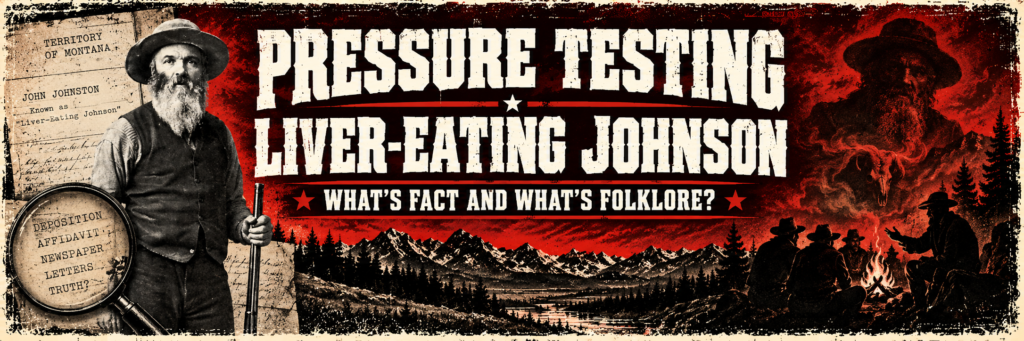
Pressure Testing Liver-Eating Johnson — What’s Fact and What’s Folklore?
Once you start pressure testing the Liver-Eating Johnson story, the legend begins separating from the man. There’s solid evidence that John Johnston existed, served in the military, worked as a scout, lived for years on the western frontier, and later became a Montana lawman. There’s also little reason to doubt that he was physically tough, experienced around violence, and capable of looking after himself in hard country. What gets shaky is everything that turns him from a rough frontiersman into an almost supernatural avenger.
The murdered Flathead wife is the biggest problem. It’s the emotional engine of the entire Crow-killing story, yet there’s no strong contemporary documentation proving that the woman existed, that she was murdered by Crow warriors, or that Johnston launched a twenty-year revenge campaign because of it. The chronology is troublesome as well, because parts of Johnston’s known military history don’t sit comfortably with some of the dates later attached to the vendetta. Once that central event becomes uncertain, everything built on top of it deserves a harder look.
The same goes for the liver eating. There’s no reliable evidence that Johnston routinely cut the livers from dead Crow warriors and ate them. A much less dramatic explanation is that the nickname grew from a single violent incident in which liver tissue ended up on Johnston’s knife and he either pretended to eat it or played along with the story afterward. That version makes sense when you consider the value of reputation on the frontier. If people believed Johnston ate the livers of men who crossed him, he probably wasn’t in any hurry to correct them.
The wild escape stories are even harder to verify. Tales of Johnston killing a guard, cutting off a leg, and carrying it for food read like classic frontier folklore, and similar stories were attached to other notorious western characters. That doesn’t mean Johnston was harmless or that he never killed anybody; it means we have to separate what’s documented from what’s entertaining. The evidence supports a hard, dangerous man when circumstances called for it, but not the full-blown cannibal warrior of legend.
How a Frontier Story Became Jeremiah Johnson
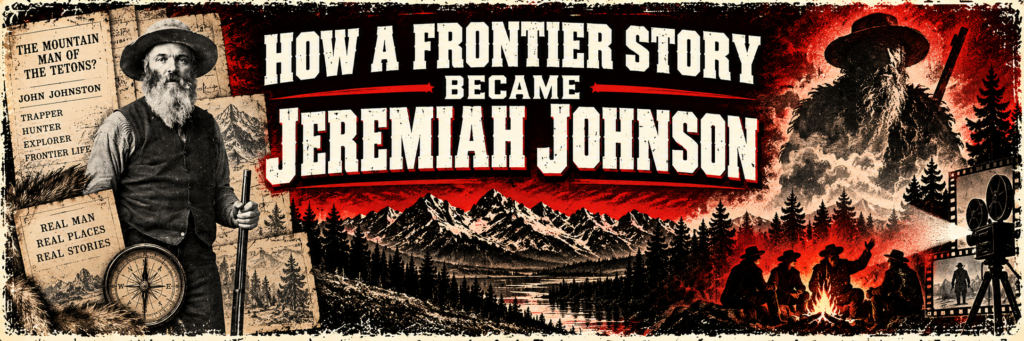
Johnston’s legend didn’t suddenly appear after he died. He seems to have helped build it while he was still alive, and that wasn’t unusual in the nineteenth-century West. A hard reputation could be useful, especially where there wasn’t much law around and people often had to rely on what they’d heard about somebody. If a story made Johnston sound tougher, meaner, or more dangerous than the next man, he doesn’t seem to have been in any hurry to set the record straight.
Newspapers helped things along. Frontier reporting could be colourful, loosely sourced, and more interested in a good yarn than in what we’d now call verification. One remarkable example came in 1878, when newspapers reported Johnston dead more than twenty years before he actually died. The premature obituary helped spread the image of him as a brutal Indian fighter and cannibal, and once those stories were in print they gained an authority that campfire talk didn’t have.
The big leap came in 1958 with Raymond Thorp and Robert Bunker’s book Crow Killer: The Saga of Liver-Eating Johnson. The book pulled together years of oral stories and presented them in a form that read like biography, complete with the murdered wife, the long Crow vendetta, and the liver-eating revenge ritual. It was a terrific story, and that was exactly the problem. Readers understandably took much of it as documented history even though large parts were rooted in folklore, recollection, and stories passed around for decades.
Then Hollywood finished the job. In 1972, Robert Redford starred in Jeremiah Johnson, a movie loosely inspired by Johnston’s legend and the mountain-man mythology that had grown around him. The historical Johnston apparently never used the name Jeremiah, but after the movie came out, Jeremiah Johnson became the identity millions recognized. That’s how mythology compounds: a man tells stories, newspapers repeat them, writers shape them into a narrative, Hollywood gives the narrative a face, and before long the legend feels more real than the man who started it.
Did Liver-Eating Johnson really eat human livers? There’s no reliable historical evidence that John Johnston routinely cut out and ate the livers of Crow warriors. The nickname may have grown from a single violent incident that Johnston later played up because a frightening reputation had value on the frontier. The famous stories of a twenty-year Crow vendetta, dozens or hundreds of killings, and ritual liver eating are best treated as folklore unless stronger contemporary evidence is found.
The Old Mountain Man Dies — Then School Kids Bring Him Back
By the late 1890s, John Johnston’s frontier years were behind him and his health was failing. Friends eventually helped get him admitted to the National Soldiers’ Home near Santa Monica, California, where old veterans could receive care. Johnston died there on January 21, 1900, at about seventy-five years old, and was buried in the veterans’ cemetery. After a life spent building one of the strangest reputations in the American West, Liver-Eating Johnson seemed to have reached the end of the trail.
More than seventy years later, a group of California schoolchildren decided that wasn’t where the story should end. Their teacher had introduced them to Johnston’s life, and the class became interested in the idea that the old mountain man ought to be buried back in the country where he’d become famous. What started as a school project grew into a real campaign, complete with letters, public attention, and enough support to convince the authorities that Johnston’s remains should be moved. It’s hard to imagine a stranger second act for a man who’d already been dead since the beginning of the century.
In 1974, Johnston was exhumed from his California grave and transported to Cody, Wyoming, where he was reburied at Old Trail Town. By then, Jeremiah Johnson had been released, and the legend had become even bigger than it had been during Johnston’s lifetime. Robert Redford, who’d played the fictionalized mountain man on screen, took part in the reburial and helped carry Johnston’s coffin. The actor who’d helped turn the legend into popular culture was now physically carrying the remains of the real man who’d inspired it.
There’s something almost too perfect about that scene. Johnston died as John Johnston, but by the time he was dug up and buried again, “Jeremiah Johnson” had become the name most people recognized, even though there’s little evidence he ever used it. Schoolchildren, historians, filmmakers, frontier stories, and Hollywood had all become part of the same biography. Johnston’s second burial didn’t just move his body from California to Wyoming; it showed how completely the legend and the man had become intertwined.
The Man Versus the Myth — Why Johnston Still Matters
John Johnston still matters because his story shows how easily a real person can disappear inside a better story. The documented man was already interesting enough: soldier, scout, hunter, trader, frontier survivor, and Montana lawman. But somewhere along the way, that wasn’t enough. Popular culture found more use for a blood-soaked avenger who hunted Crow warriors and ate their livers than for the complicated human being who actually lived.
That process tells us something about how history gets made. A strong story gets repeated, embellished, written down, and eventually people stop asking where it came from. Once the story becomes familiar, it starts carrying its own authority, especially when it fits what people already expect to hear about a certain place or time. In Johnston’s case, frontier violence, mountain-man mythology, Indigenous conflict, revenge, and survival fit together so neatly that the legend almost seemed too good not to be true.
Legends aren’t worthless. They tell us plenty about the people who created them, repeated them, and wanted to believe them. But if we want to know the real John Johnston, we’ve got to keep the man, his reputation, and the mythology in separate boxes. Once we do that, the picture gets clearer, and the real Johnston turns out to be more interesting than the cardboard cannibal the legend eventually made him.
Was the movie Jeremiah Johnson based on Liver-Eating Johnson? Robert Redford’s 1972 film Jeremiah Johnson was loosely inspired by the Liver-Eating Johnson legend, particularly the version popularized in Crow Killer: The Saga of Liver-Eating Johnson. The real man was generally known as John Johnston and apparently never used “Jeremiah.” In 1974, schoolchildren helped arrange Johnston’s reburial in Cody, Wyoming, where Redford served as a pallbearer, bringing the historical man and Hollywood legend together.
Never Let a Good Story Get in the Way of the Evidence
So was there really a Liver-Eating Johnson? Yes, there was a real John Johnston, and the nickname seems to have followed him during his lifetime. He was a genuinely tough frontier character who served, scouted, hunted, traded, enforced the law, and survived in a world where a bad decision could get you killed. What we don’t have is solid evidence that he spent twenty years hunting Crow warriors and routinely eating their livers.
That doesn’t ruin the story. It actually makes it better because now we can see how the story was built. Johnston had a reputation, he probably helped feed it, newspapers amplified it, writers shaped it, and Hollywood gave it a face. By the time Robert Redford carried Johnston’s coffin in 1974, the legend and the man had become almost impossible to separate.
For me, that’s the real takeaway. Good investigators, historians, and readers have to resist falling in love with the story before the evidence is finished speaking. A theory can be compelling, colourful, and emotionally satisfying and still be wrong. Johnston’s life is a reminder that facts should build the story, not the other way around.
And the funny thing is, once you strip away the murdered wife, the twenty-year vendetta, the hundreds of dead Crow warriors, and the human-liver buffet, you’re still left with one hell of an interesting man. John Johnston didn’t need the mythology. We did that part ourselves.