Author Archives: Garry Rodgers

About Garry Rodgers

After three decades as a Royal Canadian Mounted Police homicide detective and British Columbia coroner, International Best Selling author and blogger Garry Rodgers has an expertise in death and the craft of writing on it. Now retired, he wants to provoke your thoughts about death and help authors give life to their words.

DYING WITH DIGNITY

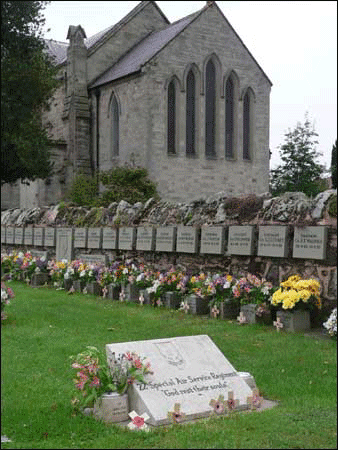
SAS_ChurchLet’s face it. We’re all going to die one day. You. Me. Our parents. Our children. Friends. Neighbours. Co-workers. Even our pets. It makes me wonder why we have so much trouble accepting the inevitable, especially in artificially prolonging life when a person’s entire quality of life is gone, never to return, and they spend their final days in suffering – not just pain and discomfort, but in a total loss of their dignity as a human being.

During my time as a coroner I heard from a lot of family members about the agony that not only the deceased suffered in their final days, but what the ones left behind endured. Inevitably that led to discussions about the ethics of euthanasia.

Death2Euthanasia was also a topic behind closed doors within my medical and legal colleagues. Without question, there are cases of assisted suicide that are overlooked by the authorities and I’m sure that some of the ‘natural’ deaths in seniors care homes are ‘helped along’ by a generous dose of pain killer.

Several years ago I watch as my ninety-five year old mother wasted away in the final months of her long and fulfilled life. It was absolute agony, not so much for Mum, because she was medicated to the point of being mostly unconscious, but for myself and other family members. To see such a vibrant person being ‘punished’ by dragging out her journey to everlasting peace and tranquility was heartbreaking.

I did a lot of soul searching during that time.
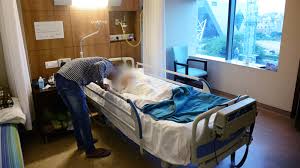
Death7I’ll admit that it was tempting to intervene and put Mum out of her misery. I know that’s what she wanted, because we’d had that discussion, but the legal ramifications were far too serious to consider bringing that monster into the family. So, we just bided our time while she literally wasted away in a nursing home bed until her life and dignity exhausted.

I wouldn’t treat my dog that way. When his quality of life is gone, I’ll take him into the vet and have him put to sleep. After all, it’s the humane thing to do.

So why are we so cruel to our fellow humans?

Death4I say the problem lies right in the hands of our legal system. Not our ‘justice’ system. Our ‘legal’ system.

There’s a fine line between the moral and practical approach to death. It’s the moral tail that wags the practical dog in the debate over euthanasia and it needs to be put to rest.

Don’t get me wrong. I’m not advocating involuntary euthanasia or playing God against a terminally ill person’s wishes. That’s a ‘slippery slope’ for society to slide down. I’m talking about the legalization of medically assisted suicide, or mercy killing, when the patient – in sound mind – has clearly expressed their desire to be euthanized when their quality of life has expired.

Death6We’ve been using Do Not Resuscitate (DNR) orders for years and our system totally accepts the moral and legal reasoning behind them. We also ‘pull-the plug’ on people who are brain dead but their body still functions.

What I want for myself, and I’ve told my next-of-kin this, is a Put Me Out Of Misery (PMOOM) order. When my quality of life is gone, the last thing I want to do is unnecessarily delay the inevitable. Out of sheer respect for my dignity, somebody please give me a push over the edge.
I believe it’s the humane thing to do, but that’s just my opinion.

What do you think? I’m dying to hear your words.

HOW SPECIAL OPERATION FORCES FUNCTION IN CATASTROPHES

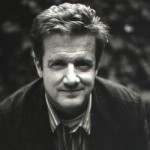
Bob Mayer is a US Army West Point graduate, Green Beret Special Forces veteran, and a prolific writer, publisher, and teacher. He’s also a down-to-earth guy who’s mission is to help others succeed. Thanks, Bob, for sharing your experience about preparing for chaos.

Bob1Catastrophe planning in the civilian world is primarily the province of engineers and management. The problem with that is engineers and management are trained for, plan for, and work in a controlled environment (what they think is a controlled environment). So delusion events are outside their comfort zone; aberrations.

In fact, engineers and managers are often trained to be blind to cascade events. Their training and work environment normally does not reward focusing on cascade events, but rather punishes it.

Bob3West Point is an extraordinarily controlled environment. Things run almost perfectly there; so much so that graduates often have problems adjusting to the ‘real’ Army they go into. But West Point also has over 200 years of experience training leaders and preparing soldiers for war. This accumulation of institutional knowledge is inculcated in cadets in a high-pressure cauldron of mental, physical, and emotional stress for four years.

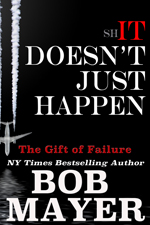
Of course, sometimes it doesn’t take, as you’d see in one of the events I cover in Shit Doesn’t Just Happen – The Gift of Failure. This book focuses on a number of colossal failures, including West Point’s most notorious graduate – Breverant Colonel George Armstrong Custer.

Bob4Special Operations soldiers train for war. War is called controlled chaos; an incessant series of cascade events. War might be considered the ultimate catastrophe and combat a final event. In order to prepare for this final event, Special Operations soldiers train for, plan for, and work in a chaotic environment every day.

Mentally, the most difficult training I went through was Robin Sage, the final exercise in the Special Forces Qualification Course. Robin Sage is where a team of students is sent into isolation, and then infiltrates into the North Carolina countryside to conduct a guerilla warfare exercise. A critical component of Robin Sage is to put prospective Green Berets in lose-lose scenarios. This is a training scenario where there is no ‘right’ solution. Rigid minds are often unable to think creatively while under stress and lose-lose training quickly determines someone’s capabilities.

Thinking outside of the immediate situation is important in preparing for and averting catastrophes.

Do you remember in the Star Trek movie (Wrath of Khan) when Captain Kirk talks about being at Star Fleet Academy and being the only officer to have passed the Kobayashi Maru simulator program?

Bob5The basic problem and the opening of the movie was set up this way: A Star Fleet ship which the student commands is patrolling near the neutral zone. A distress call is received from a disabled Federation vessel inside the neutral zone. An enemy warship is approaching from the other side. It’s a vessel more powerful than the one the student commands. The choices seem obvious: ignore the distress call (which violates the law of space) or go to its aid (violating the neutral zone) and face almost certain destruction from the enemy vessel. As you can see, both choices are bad.

Bob6What Kirk did was sneak into the computer center the night before he was scheduled to go through the simulation and change the parameters so that he could successfully save the vessel without getting destroyed. Would you have thought of that? Was it cheating? If you ain’t cheating you ain’t trying. It’s not cheating when it succeeds.

A key to lose-lose training is you get to see how someone reacts when they are wrong or fail. Lose-lose training is a good way to put people in a crisis. Frustration can often lead to anger, which can lead to failure or enlightenment.

If a catastrophe struck, whom would you want at your side helping you?

Bob8A doctor? Lawyer? Engineer? MBA? Teacher? While they all have special skills, I submit that the overwhelming choice might well be a US Special Forces Green Beret or, the best in the business – a British 22SAS. Someone trained in survival, medicine, weapons, tactics, communications, engineering, counter-terrorism, tactical and strategic intelligence, and with the capability to be a force multiplier.

Most important, you want someone who has been handpicked, survived rigorous training, and has the positive mental outlook to not only survive, but thrive in chaos, and knows how to be part of a team. Green Berets have been called Masters of Chaos. They don’t manage. They lead.

The key to dealing with catastrophes is leadership, not management.

Bob8AOften, in order to deal with a cascade event, leadership and courage are needed to go against a culture of complacency and fear. In every catastrophe, fear is a factor in at least one, if not more, cascade events. This fear runs the gamut from physical fear, to job security fear, to social fear, to physical fear. Few people want to be the ‘boy who cries wolf’ even when they see a pack of wolves. What’s even harder is when we’re the only one who sees the wolf in sheep’s clothing.

Bob9I’ve written Shit Doesn’t Just Happen: The Gift of Failure to help individuals and organizations avoid catastrophes, but I come at it from a different direction as a former Special Operations soldier. In the Special Forces (Green Berets) the key to our successful missions was the planning. The preparation. In isolation, we war-gamed as many possible catastrophe situations we could imagine for any upcoming mission and prepared as well as we could for them. In fact, we expected things to go wrong, a very different mindset from that of engineers and management.

We were firm believers in Murphy’s Law: What can go wrong, will. In other words: Shit doesn’t just happen. It will happen.

Our job was to deal with it.

 *   *   *

Bob Mayer Bob10is a NY Times Bestselling author, graduate of West Point, former Green Beret (including commanding an A-Team) and the feeder of two Yellow Labs, most famously Cool Gus.

Bob11Bob’s had over 60 books published including the #1 series Area 51, Atlantis and The Green Berets. Born in the Bronx, having travelled the world (usually not tourist spots), he now lives peacefully with his wife, and said labs, at Write on the River, TN.

Bob12Thanks, Bob. You’re a great writer, a great teacher, and great pathfinder in the publishing business. Like some guys that we know say – “Who Dares Wins“.

Bob runs three websites:

http://www.bobmayer.org/

http://coolgus.com/

http://writeitforward.wordpress.com/

Follow Bob on Twitter @Bob_Mayer

His Facebook page is https://www.facebook.com/authorbobmayer

DUMB ROOKIE COP

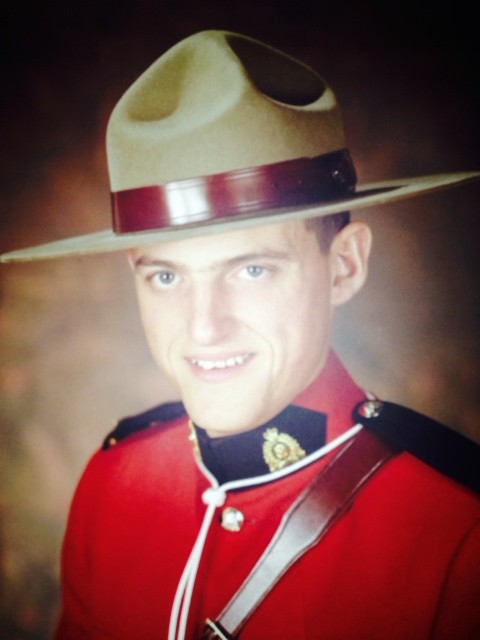
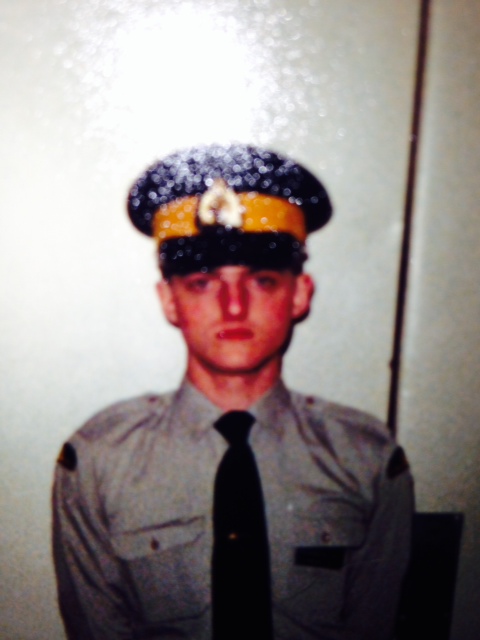
photo (11)I was twenty-one when I joined the Royal Canadian Mounted Police, but I looked like I was seventeen. Not only was my teenage looks a challenge to being an effective cop, I was raised in a tiny Manitoba town that didn’t have a stop sign, never mind a street light, or a transit service. So I was anything but worldly. 

In August, 1978, I got transferred from basic RCMP recruit training in Regina, Saskatchewan, to beautiful Vancouver Island in British Columbia on Canada’s west coast. I thought I’d won the Mountie lottery for postings.

I arrived in Courtenay, a small city of 30,000, and was immediately assigned to be trained by an experienced officer. My role was a uniformed General Duty position which attends everything from car accidents, to barking dogs, to violent domestic disputes.

In street policing, things can go from dead-boring to flat-out chaos in seconds and there’s nothing like years of experience to equip an officer in responding properly and safely. So, it’s standard procedure that a rookie pairs up with a vet for a few months before they’re ready to go out on their own.

photo (15)Now on my third week on the job, I was starting to feel kinda comfortable wearing the yellow-striped uniform and packing heat in my Sam Browne. One warm, summer afternoon in mid-week my trainer was called up to court, leaving me hanging around the police office. A call came in about a bicycle being found about a half-dozen blocks from the cop-shop.

My old Sarge was strapped for guys that afternoon so he throws me the car keys and tells me to go straight down, pick up the bike, and come straight back; warning me “Whatever you do, do not get yourself into any trouble.”

I was feeling pretty proud of my first patrol alone as I drove the marked Police Cruiser (PC) down a quiet thoroughfare in residential Courtenay. About four blocks from the office, I see this guy standing alongside the street to my left.

Now you gotta remember that this was in 1978 and community policing was a dream yet to come. It was a real us-against-them mentality between the ‘pigs’ and the ‘scroats’ and the cool street look was long, greasy hair, zitty-faces, beards, and crude logo’d tee-shirts. This guy was a poster-boy scroat and he was standing there with his arms folded across his chest, giving me the stink-eye as I drove past. I watched him in my mirror, waiting for him to flip me the bird or make a run for it, but he just kept standing there, staring, till I was out of sight.

rookieI dealt with the bike thing, putting it in the PC trunk, and bungeed the lid down. As I was driving straight back to the office, like Sarge ordered me, I’m looking ahead and here’s this same guy, still standing in the same place. His arms are still folded across his chest and he’s staring at me with beady little eyes and a scowl like he wants to slice off my nuts.

I figgered “Okay. Okay. This guy’s up to no good.” So I pulled over to my right, put on my hat, and got out. As I rounded the PC hood, this guy stays standing with his arms folded, never breaking his stare.

What the fuck do You want?” he says.

I’m standing three feet from him with my hands on my hips. “Just wondering what you’re doing loitering about the neighbourhood,” I tell him.

His right arm breaks from the fold. His forefinger points straight up. And he says “Like waitin’ for the fuckin’ bus?

I look up at the sign, then down at the ground.

Very well. Carry on then,” I said as I got back in the car and drove off with a face the colour of my brand-new Mountie Red Serge.