Author Archives: Garry Rodgers

About Garry Rodgers

After three decades as a Royal Canadian Mounted Police homicide detective and British Columbia coroner, International Best Selling author and blogger Garry Rodgers has an expertise in death and the craft of writing on it. Now retired, he wants to provoke your thoughts about death and help authors give life to their words.

THE MOTHER FROM HELL—MUNCHAUSEN SYNDROME BY PROXY

If I’d mention “Munchausen Syndrome by Proxy”, you’d likely have no idea what I was talking about. That’s understandable—I certainly didn’t when I heard it, and I’m not making this up. Munchausen Syndrome by Proxy, or MSbP, is a rare and real form of child abuse where a caregiver intentionally inflicts harm on a helpless dependent in order to gain perverted attention towards themselves. It’s a grievous crime, and sometimes MSbP turns deadly. No, I’d never heard of Munchausen Syndrome by Proxy. Not until I investigated the Mother From Hell.

It was 1993 when I met the Mother From Hell—twenty years before Munchausen Syndrome by Proxy was officially designated as a serious psychiatric affliction in the American Psychiatric Association’s Diagnostic and Statistical Manual of Mental Disorders Edition 5 (DSM-5). Technically, MSbP is categorized as Factitious Disorder Imposed on Another (FDIA) which is a recognized form of medical child abuse. You’ll also hear this crazy condition called Factitious Disorder by Proxy (FDbP) and Malingering Stimulation of Disease (MSoD). No matter what term, premeditating to put one’s own child in medical peril is a sick, sadistic and heinous crime.

Before getting into details on what Munchausen Syndrome by Proxy involves, who the stereotypical offenders are and what the medico-legal ramifications are, let me tell you how this investigation went from confusingly bad to uncontrollably worse. It’s a classic case of how a poorly-understood subject gets manipulated by the “system” and fails to protect those unable to protect themselves—especially from monsters like the Mother From Hell.

Our Serious Crimes Section got a call from the British Columbia Childrens Hospital in Vancouver, Canada reporting a suspected case of child abuse involving Liza Nellis and her two-year-old daughter, Mariana. (Names changed to prevent me from getting sued over this case—again.) Allegedly, BC Childrens Hospital medical staff caught Liza Nellis in the act of intentionally choking little Mariana to unconsciousness.

I’m the poor bastard who got the police file.

Obviously, I’d never heard of Munchausen Syndrome by Proxy, let alone how to pronounce it. Neither had any of my detective colleagues. Nor was anyone in the prosecutors’ office and in the regular medical community familiar with this devious derangement. It was only one young pediatrician at Childrens Hospital who’d recently attended a child abuse seminar where this extremely rare psychiatric and criminal disorder came up.

The first part of any criminal investigation always involves establishing the basic case facts. Liza Nellis had a continuous history of medical complaints involving her two adopted children. One was Marianna, a toddler. The other was her older brother, four-year-old Michael. Both children were adopted from Honduras as part of a Christian Baptist placement program. Kerry Nellis, the adoptive father and Liza’s legally married husband, was a commercial fisherman and absent for long periods. For the most part, Liza Nellis was raising the two children on her own.
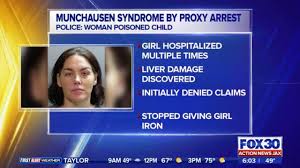
Criminal suspicion of child abuse within the Nellis family simmered slowly. For approximately one year, a pattern emerged where Liza Nellis reported apnea (breathing interruption events) happening with Mariana. Her family doctor and a pediatrician specialist documented the same thing had happened with the older Nellis child. Michael seemed to grow out of breath-lapse episodes once he turned three and was able to talk. Now the same pattern was occurring with the younger Nellis girl—Mariana.

The family doctor and pediatrician couldn’t find any medical cause for either Michael or Mariana’s distress. To them, both children appeared normal and healthy. These medical professionals told Liza that Mariana would also grow out of it and not to worry. Liza, the Mother From Hell, refused to take no for an answer. She started taking Mariana into the regional hospital’s emergency department on a regular basis.

The local ER folks also noticed an emerging pattern. All of Mariana’s apnea, or stop-breathing incidents, occurred out of the hospital and were only witnessed by her mother. An ER-doc consulted with the family physician, both finding the case history peculiar but not necessarily alarming. To them, Liza Nellis appeared the epitome of the perfect mother.

Many other people in the community also thought Nellis was an angel. By anyone’s standards, she was attractive—impeccably dressed and groomed. Liza Nellis was highly educated with a nursing degree and possessed a concert-quality pianist gift with a choir voice. She was a pillar in her Baptist church where she taught Sunday School as well as providing piano lessons to troubled teens. But, it was well-known that Liza and Kerry Nellis were childless on their own. It made perfect sense that someone as apparently selfless like Liza Nellis would step up to the admirable task of adopting foreign orphans.

Mariana’s apparent distress escalated to an episode where Liza Nellis called 911 reporting her daughter was unconscious and not breathing. Attending ambulance attendants arrived at the Nellis home to find Mariana awake after Liza reportedly performed CPR to revive her. Out of caution, the EM responders transported Mariana straight to the regional hospital where the staff made a critical decision. Based on the history, they transferred Mariana to the specialists at Childrens Hospital. Liza Nellis insisted on accompanying Mariana—dutifully staying at her daughter’s side at all times.

Mariana Nellis underwent exhaustive tests at Children’s Hospital. Some were invasive and uncomfortable, especially for a two-year-old. Like the regional hospital professionals, the specialists at Childrens found nothing wrong with Mariana. They directed her discharge despite Liza reporting several more apnea episodes while only Liza was in the room with her uncommunicative little girl.

Then it happened. Liza was alone in the private ward with Mariana when a hospital worker suddenly walked in on them. “What are you doing?” the worker screamed. She’d caught Liza Nellis with her fingers pinching Mariana’s nose and her hand cupping the wee girl’s mouth. A started Nellis let go and stammered an excuse that her daughter went into another acute apnea episode and she was beginning CPR. “That’s not how you do CPR!”, the worker said. “You’ll kill her doing that!”

That set off alarms inside Childrens Hospital. The staff began comparing notes, and another worker reported also finding Liza Nellis in a suspicious position. A young pediatrician clicked into the Munchausen Syndrome by Proxy scenario and a collective medical team began taking a close look into the case history. Without question, the only apnea episodes occurred when Liza Nellis was alone with Mariana. And, a close physical exam on Mariana found petechial hemorrhages in Mariana’s eyes—those tiny blood spots associated with suffocation. To them, this was conclusive evidence of foul play. Someone had intentionally choked Mariana Nellis. The only logical suspect was her mother.

Out of extreme caution, management at Childrens Hospital placed a guard in Mariana’s room while they contacted authorities. First was the Child Protection Agency who took emergency intervention by seizing custody of Mariana and prohibiting Liza’s contact with her daughter. Then they called the cops. As fate goes, that involved me.

With Marina under protection and Liza Nellis at arms-length, there was time to do a cautious and careful investigation—or so I thought. This was new ground for me as well as the other multidisciplinary team members. All of us had a hard time getting our heads around why an apparently model mother would intentionally harm her child. So, we started a two-pronged investigative approach. One was to interview witnesses. The other was reviewing medical records.

Witnesses included the staff at Childrens Hospital, the regional hospital, the family physician and a specialist pediatrician who initially assessed and monitored both Nellis children. There was no question, according to the Childrens Hospital witnesses, that Liza Nellis had been caught choking Mariana with physical evidence corroborating it. The regional staff was suspicious, but they deferred to the pattern of reports as recorded on hospital charts. The family doctor was ambivalent. He was old, ready to retire and really didn’t want any part of a criminal matter.

The specialist pediatrician, however, was a piece of work. She was downright hostile. Her only statement was, “I can’t believe any mother would intentionally harm her own child!” I had to get a search warrant to get her medical records on the Nellis family to which she tried to get a Supreme Court quash. It didn’t work. But, by the time I wrested the files from her cold hands, I’d learned that both the pediatrician and Liza Nellis were friends and leading members in their Baptist church congregation.

The medical record review team did an admirable job. They amassed a spreadsheet and graphs that conclusively established a clear pattern where Liza Nellis—and only Liza Nellis—was present when Mariana’s incidents allegedly occurred. There were no independent witnesses to innocent occurrences, and nothing whatsoever to indicate anything but direct involvement by Liza Nellis. It was time to bring Liza Nellis in and confront her.

At this point, there was no need to arrest the Mother From Hell. Sure, we had a decent circumstantial case, but what we really needed was her confession. For that, we had a game plan. We knew it wouldn’t be easy if we wanted to get an inculpatory statement that was admissible in court.

I phoned Liza Nellis, asking her to come into the police office for an interview. We made an appointment, and she was punctual. She also brought along her husband, Kerry Nellis. The pair couldn’t have been nicer. I explained the situation and read Liza Nellis her rights. “No need for a lawyer,” she said. “I haven’t done anything wrong. All I want is what’s best for the child.”

“The child.” “The child?” That statement hit me between the horns. Now, at this time, I had two little kids of my own—Emily and Alan. In my life, I’d never referred to either Emily or Alan as “The child”. This showed me some kind of emotional detachment from a parental instinct, regardless if the kids were adopted. No, something was wrong here. Seriously wrong.

As with every controlled criminal interview (I try to avoid the interrogation-word), I video and audio recorded Lisa Nellis’ time with me. I methodically laid out the information, evidence if you’d like to call it, and asked for her responses. Often, she’d tear-up and defer to her husband who held her on a high-horse pedestal as to how anyone could think this beautiful person could do such a horrid thing.

That wasn’t the question. The question was how to get Liza Nellis into a denial box where she had no option but to uphold her honor. For help, I turned to the Behavioral Science Unit and our polygraph section. They’d reviewed every bit of information including the psychological profile we’d amassed on Liza Nellis.

The profile portrayed Lisa Nellis as a prima donna. She’d spent a lifetime grooming a persona of perfection establishing her surface perception as beyond approach. Her husband bought it. Her church bought it. But her in-laws didn’t buy it one bit. We uncovered a nasty culture within Lisa Nellis’s inner life where her blood relatives didn’t exist. She’d long been ostracized from her birth family, and the extended Nellis side saw right through her. They viewed Liza as a despicable bitch constantly striving to be the center of attention.

My interview with Liza Nellis ended in a stalemate—exactly where we wanted it. It ended with my invitation for her to take a polygraph examination. Kerry Nellis was quick to the mark. “What about her accusers taking a polygraph?” We were a step ahead. We’d already polygraphed the Childrens Hospital eyewitness and the one who saw something suspicious. That cut the Nellis’ off at the knees.

We were ready to go with the polygraph. I have no doubt Kerry Nellis was totally sucked in with his wife’s “innocence”. We explained that polygraph procedure required an attentive subject and, unlike the structured interview, Kerry Nellis would have to wait in the lobby while we polygraphed Liza. Now, she was trapped between a rock and a hard place.

Lisa Nellis peaked the points, as they say in the polygraph biz. On one the key questions— regarding if she’d intentionally harmed Mariana in order to instigate medical reports—Liza Nellis nailed it. She was so clearly deceptive that the polygraphist didn’t have to do a quantitative scoring. He moved in for the interrogation kill.

To make a long story short, Liza Nellis confessed in the “post-test interview”. She admitted to prolonged and systematic injury infliction, not just to Mariana, but to Michael as well. It was an emotional, sob-filled breakdown we call “venting the tank”. That’s where a guilty subject releases pent-up stress. It usually comes with a full confession providing corroborative verification that they’re truthful.

In homicide cases, corroboration is often leading cops to the body and/or the murder weapon. It’s also revealing corroborative evidence like other witnesses who know something. But, that wasn’t the case with the Mother From Hell. There was no body, no smoking gun and no independent witnesses. We knew that and had another angle planned for corroborating her confession.

After Liza Nellis confessed, we brought in her husband. Our plan was to have Liza repeat to Terry exactly what she said to us—how she’d committed countless counts of child abuse on their kids. We assumed she’d been broken and would be truthful. That was a giant mistake.

There are laws about privileged communication. Sacred is lawyer-client communication. There’s no way the state can listen into a lawyer and client conspiring about defense strategy. Nor, can the state eavesdrop on wife-husband conversations like what Liza was about to tell Kerry Nellis in that private post-confession room.
Kerry Nellis came out swinging. Not only did Liza tell him the cops forced her into a false confession, she accused the polygraphist of coming on to her. There was no way of rationally dealing with how fast she turned the tables. It was out of control, and we had one decision. That was to arrest Liza Nellis… or let her go.

As far as we were concerned, we had admissible evidence of Liza Nellis committing serious indictable offenses—repeatedly assaulting her two-year-old daughter to the point of endangering her life. We could have legally held her and thrown her in jail. But we’d bide our time, deciding to let her go, present our evidence to the Attorney General’s prosecutor and ask for an indictment. Then, we’d let the courts sort it out.

The courts never settled it. The Mother From Hell went on an offensive rampage invoking the power of the church, the muscle of special-interest activists and the reach of mainstream media who love a controversial story, despite the plight of innocent and abused children. I was turned into the demon.

Before I tell you how this sad situation finally played out, let’s look at Munchausen Syndrome by Proxy (MSbP) from a clinical and symptomatic angle. Factitious Disorder Inflicted on Another (FDIA), or Pediatric Condition Falsification (PCF), is rare. Really rare. According to the Cleveland Clinic which is a leading authority on MSbP, FDIA, PCF or however you want to acronym it, happens to 2 in 100,000 American children. Most are younger than 4 because of their vulnerable inability to tell what’s happening to them.

Here are more statistics on Munchausen Syndrome by Proxy. The DataCenter records there are 20 million kids in America under 4 years old. That means about 400 American children suffer abuse related to dangerous people like the Mother From Hell. And the Open Medicine Journal says that mothers are the big MSbP offenders, not fathers. Studies show 93% of MSbP offenders are female. Why? No one seems to know.

You’re probably wondering where the name “Munchausen” originated. The disorder dates back to 1700s Germany where Baron Karl Friedrich von Munchausen was diagnosed as a notorious liar and fabricator of fictitious exploits and exaggerated injuries. The Munchausen name stuck as a syndrome for people making up their own illnesses. It extended to Munchausen Syndrome by Proxy, those who make up illnesses about others—including cases like the Mother From Hell who intentionally harm their kids for self-attention.

Deferring to the Diagnostic and Statistical Manual 5 (DSM-5), the official designation is now Factitious Disorder Imposed on Another (FDIA). It’s no longer Munchausen Syndrome by Proxy, however, many still call it Munchausen’s. Here are the official DSM-5 criteria for diagnosing FDIA:

  1. Falsification of psychological or physical signs or symptoms, or induction of disease or injury in another, associated with identified deception.

  2. The individual presents another individual (victim) to others as injured, ill, or impaired.

  3. The deceptive behavior is apparent even in the absence of external incentives.

  4. The behavior is not better explained by another mental disorder.

According to the American Academy of Pediatrics (AAP), Munchausen’s or FDIA is any case where “the patient’s caregiver fabricates the signs or symptoms of the disease or complaint in question. It accompanies seemingly inexplicable findings or treatment failures”. The AAP lists five leading examples of MSbP/FDIA:

  1. A mother taking her child to the doctor for frequent evaluations of sexual abuse, despite the absence of objective evidence or credible abuse history.

  2. A mother insisting her child be treated for attention-deficit/hyperactivity disorder although there is no evidence to make the diagnosis.

  3. A mother starving her child while claiming multiple food allergies.

  4. A mother reporting hematologic disorders after intentionally bruising her child.

  5. A mother purposely suffocating her child and deceptively claiming sleep apnea.

Returning to the Cleveland Clinic report on MSbP/FDIA, there are common characteristics that offenders display and warning signs evident for those trained to recognize them. In no particular order, they include:

  1. The offender is, or appears, medically knowledgeable and clearly articulates symptoms.

  2. The offender is reluctant to leave their child’s side during examination and treatment.

  3. The offender appears unusually calm in the face of apparently serious difficulties.

  4. The offender is insistent of medical intervention including seeking second opinions.

  5. The offender is, or has been, employed in the healthcare industry.

  6. The offender has other children with similarly reported difficulties.

  7. The offender has distant relationships with extended family members.

  8. The offender becomes highly defensive when their reports are challenged.

  9. The offender seeks external support with religious or social activist groups.

  10. The offender resorts to media attention as a defense mechanism when confronted.

*   *   *

Okay, back to what eventually happened with the Mother From Hell. We filed criminal charges against Liza Nellis. There’s no specific offense for committing “Munchausen by Proxy” so the most-fitting law was a blanket count of assault causing bodily harm pertaining to Mariana. After a preliminary hearing (like a Grand Jury procedure), Nellis was indicted to stand trial.

Meanwhile, another hearing took place. That was a custody matter regarding both Nellis children. By this time, it was a media circus instigated by Liza Nellis and a loyal band of special interest supporters. The Baptist Church congregation picked the courthouse and lobbied the police chief. He gave them the obstruction of justice option. The friendly local pediatrician rallied the medical community who, in turn, took on the legal system… and the political one, too.

Vancouver radio and TV talk shows gave the Nellis case high priority by dragging my name and my colleagues’ as low as could go. Then there was newspapers and op-eds. Thankfully, this was the days before online social media or I would have been really in-famous.

The “system” buckled under the force of special “mis-interest” pressure. The prosecutor’s knees bent and he folded. He’d had a second look at the evidence, he said, and now felt there was little likelihood of convicting Liza Nellis. He felt her confession wouldn’t stand the admissibility of evidence test at trial—even though the preliminary hearing court had no issues with it after watching the post-polygraph interview recording.

It was the prosecutor’s decision that there was no public interest in prosecuting Nellis, and he withdrew the charge. Later I learned the true direction came from the Attorney General’s office. Who knows what led them to jump ship. Liza Nellis was free from criminal court jurisdiction, but she had one more hurdle. That was regaining custody of her kids.

With criminal proceedings stopped, the family courts reassessed their position. Forgetting that he’d watched the Nellis confession, listened to the Childrens Hospital witnesses and now seeing the crowded courtroom of supportive faces, the family court judge ruled the Munchausen Syndrome by Proxy “theory” was unsubstantiated evidence based on the balance of probabilities. He returned Michael and Mariana to Liza Nellis, wishing her Godspeed and good fortune.

About six weeks went by after the end of criminal and family court matters. Then I got a call to drop by the Sheriff’s office. “Sorry to do this to you,” the Deputy said as he served me the summons. Liza Nellis sued me for defamation and harassment. Now I was the one facing court.

The civil court case dragged over two years. First, it was filing motions and then my statement of defense. I wasn’t singled-out, though. Nellis also sued the polygraphist, the police department and the witnesses at Childrens Hospital. She made a run for the prosecutor’s throat, but he was protected by a point in law.

We went through the examination for discovery process during the civil lawsuit. During it, we played the damming confession video and filed the graphs and the charts and the witness statements and the expert opinion evidence linking Liza Nellis’ documented behavior as a classic case of Munchausen Syndrome by Proxy. She was the poster girl of the Mother From Hell.

And finally, it stopped. I was told the police force settled out of court. How much Nellis got, I don’t know. That was a matter of non-disclosure, but I suspect it was hefty. My bills were covered as I’d been sued while in an act of duty. One-by-one, the other defendants settled their civil case with Liza Nellis and it was finally over.

*   *   *

Moving forward five years. One day, I was off duty and at a playground with my kids. They were about 12 and 10 by now, and integrating with another girl and boy about their ages, as children do. I was at a picnic table. It was a sunny fall day, and I was enjoying watching the four kids laugh, squeal and delight with each other.

Then… the mood changed. Something was wrong here. Seriously wrong. You know that feeling you get when someone’s watching you and wanting to kill? That neck-hair-stand, spine-shiver, gut-creep thing like a cross between fingernails-on-blackboard and an embedded-tapeworm shocked from deep sleep? I turned. And there she was—at the next table—firing eye-daggers straight at my soul.

It was the Mother From Hell.
DONALD TRUMP — UNDERSTANDING THE PRESIDENT’S PERSONALITY WITH ENNEAGRAM PSYCHOLOGICAL TYPING

FEAR—the new book about Donald Trump in the White House by famed Washington Post investigative journalist, Bob Woodward, is a shocking look at how the current United States president behaves in and out of office. In FEAR, Woodward quotes intimate and credible sources to paint a portrait of how Trump captured the oval office, and how he chaotically attempts to control it. Today’s a pivotal point in history—not just for America, but the entire world. How long the Trump administration continues in power remains to be seen, however, right now everyone’s scrambling to understand how this bizarre guy really thinks. Maybe the Enneagram solves that.

The Enneagram is a personality profiling assessment tool. It’s not new. The Enneagram’s been around a long time. Psychiatrists and psychologists recognize that original and unchanging personality is the main driving force shaping how a person thinks and behaves. A big question is whether people have any choice in their personality—whether they’re nurtured or natured. There’s no professional consensus on the answer. Some people seem born with personality disorders. Others appear products of their societal environment. Many probably shape their personalities from a combination of the two. Applying Enneagram psychological typing seems to cut through clinical complexity—it might help us understand Donald Trump’s real personality.

To most people—you’re likely included—Donald Trump’s personality is how Winston Churchill described Russia—a riddle wrapped in a mystery inside an enigma. Some love Trump. Others utterly despise the man. Very few sit on the fence. But, all agree Donald Trump has pulled off some outrageous and hard to understand acts. He seems a Rubik’s Cube of psychological distortion—a squeegeed octopus with amoral appendages—an ego-stuffed turducken with multi-dimensional trussing. Trump’s puzzling persona makes everyone wonder what really makes this larger-than-life personality tick… and what he’ll do next. As I understand Enneagram personality typing, Donald Trump is the poster boy for the Enneagram’s most volatile and most vindictive psychological profile.

The other night I Googled How To Understand Donald Trump. To no surprise, there were hundreds of hits. However, something interesting showed up in the top page return. It was an article on how a long-established, psychological profiling tool called the Enneagram dissected and typed Trump’s personality according to a fixed-choice, multi-question, pre-prepared format. If right, the Enneagram psychological typing conclusions about President Donald J. Trump’s personality are seriously disturbing—something truly to fear.

I’d heard of the Enneagram Personality Profile but never paid much attention to it. I’m more familiar with the standard Myers-Briggs Type Indicator (MBTI) which I feel is quite reliable and accurate for an online, introspective, personality examination. The MBTI rightly slots me as a classic INTJ which pins me as a semi-introverted, quasi-perfectionist—maybe a bit of a pompous ass according to my ENFJ friends. But, enough about me and the MBTI. What about Donald Trump’s personality according to the Enneagram?

Let’s look at what the Enneagram is, where it came from, and how it supposedly works. According to the official website, the Enneagram of Personality Types is a modern synthesis of ancient wisdom traditions. The website claims it’s one of the most powerful and insightful tools for understanding ourselves and others. At its core, the Enneagram helps us to see ourselves at a deeper, more objective level and can be of invaluable assistance on our path to self-knowledge.

Don Richard Riso and Mr. Russ Hudson founded the Enneagram Institute® in 1997. They developed the world-recognized Riso-Hudson Enneagram Type Indicator (RHETI version 2.5) which is a forced-choice personality and psychological examination tool categorizing certain character traits and grouping them into contained categories. Some critics classify the Enneagram as a far-out, new-age fantasy. Others, like Fortune 500 companies, major league sports teams and leading financial institutes, incorporate the Enneagram as a valid psychological testing tool—they keep it handy inside their human resources toolbox. Even conservative Statistics Solutions rates the Enneagram as 72% reliable for a forced-choice subjective assessment aid, provided the results are interpreted properly.

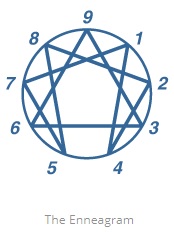
Riso and Hudson didn’t invent the Enneagram. No one really knows who did. References to the Enneagram symbol have been around since before Plato’s time, and its distinctive circle pattern containing an equilateral triangle with a mess of connecting lines between nine, evenly-spaced numbers clearly stands out as a recognizable figure.  “Enneagram” stems from the Greek words ennea, meaning “nine” and gramma, meaning “written” or “drawn”. At its basic form, the Enneagram identifies individual character traits, and it forecasts how each numerical personality interacts with others around the Enneagram wheel.

Taking the Riso-Hudson Enneagram Type Indicator (RHETI 2.5) Examination

You can easily take the RHETI version 2.5 personality type indicator examination online. For $12.00 US, you can face the official RHETI test on the Enneagram Institute® website. It’s a 144 question, formatted module designed to force you into selecting an answer to character-assessment questions. There’s no right or wrong answer. To get the most accurate results, you pick the answer most appropriate to how you see yourself. You can also profile someone else with the RHETI 2.5 test, but you’d have to know them fairly well to get accurate. If you don’t want to spend twelve bucks, you can get freebies online, but they’re not as sophisticated as the real McCoy.

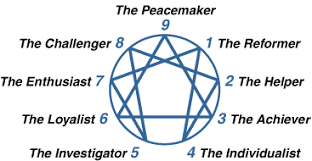
The RHETI 2.5 Enneagram gets quite in-depth as you drill deep. It gets heady as it moves toward the spiritual end. However, the first result will be a general character assessment based on numeric values from 1 to 9. There’s no necessarily better or worse character profile, according to the Enneagram Institute®. It’s all subjective. It’s also gender-neutral, so the questionnaire equally applies to men and women. For identity sake, the Enneagram labels each basic numeric characterization and then gives a short blurb summarizing the individual traits. These are the nine official Enneagram primary personality profiles in short form:

Type One — The Reformer is principled, purposeful, self-controlled, and perfectionistic.

Type Two — The Helper is generous, demonstrative, people-pleasing, and possessive.

Type Three — The Achiever is adaptable, excelling, driven, and image-conscious.

Type Four — The Individualist is expressive, dramatic, self-absorbed, and temperamental.

Type Five — The Investigator is perceptive, innovative, secretive, and isolated.

Type Six — The Loyalist is engaging, responsible, anxious, and suspicious.

Type Seven — The Enthusiast is spontaneous, versatile, acquisitive, and scattered.

Type Eight — The Challenger is self-confident, decisive, willful, and confrontational.

Type Nine — The Peacemaker is receptive, reassuring, complacent, and resigned.

The Enneagram Institute® site goes much deeper into describing the character traits and personality makeup involved with each of the nine primary types. We’ll have a run at Donald Trump’s typing and assess his Enneagram charter identification in a bit. However, the whole picture is incomplete without knowing what else the Enneagram tool can tell.
The Enneagram Wings

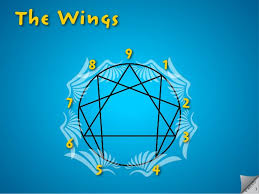
Enneagram character types one through nine are primary profiles. They’re incomplete assessments without secondary types which complement or contrast the main character traits. These secondary profiles are called “Wings” in Enneagram lingo, and it’s important to know that no one is a pure personality type. All primary types are offset by Wings.

Wings are the characterizations associated with the numbers each side of the primary types. For instance, if a person’s primary type is Number 8 – The Challenger, then their characterization wings would be Number 7 — The Enthusiast and Number 9 — The Peacemaker. Every main character around the Enneagram wheel has two wing characterizations. Wing character traits can be a positive influence on the main character. Or, they can be a negative influence.

It’s important to stop for a minute here, and read what the Enneagram Institute® says about your basic personality typing. With this, it’s easier to understand how Wings influence your primary Enneagram profile.

* Quote From Enneagram Website *

From one point of view, the Enneagram can be seen as a set of nine distinct personality types, with each number on the Enneagram denoting one type. It is common to find a little of yourself in all nine of the types, although one of them should stand out as being closest to yourself. This is your basic personality type.
Everyone emerges from childhood with one of the nine types dominating their personality, with inborn temperament and other prenatal factors being the main determinants of our type.
This is one area where almost all of the major Enneagram authors agree—we are born with a dominant type. Subsequently, this inborn orientation largely determines the ways in which we learn to adapt to our early childhood environment. It also seems to lead to certain unconscious orientations toward our parental figures, but why this is so, we still do not know. In any case, by the time children are four or five years old, their consciousness has developed sufficiently to have a separate sense of self. Although their identity is still very fluid, at this age children begin to establish themselves and find ways of fitting into the world on their own.
Thus, the overall orientation of our personality reflects the totality of all childhood factors (including genetics) that influenced its development. (For more about the developmental patterns of each personality type, see the related section in the type descriptions in Personality Types and in The Wisdom of the Enneagram. There is a discussion of the overall theory in Understanding The Enneagram. Several more points can be made about the basic type itself:

* People do not change from one basic personality type to another.

* The descriptions of the personality types are universal and apply equally to males and females since no type is inherently masculine or feminine.

* Not everything in the description of your basic type will apply to you all the time because you fluctuate constantly among the healthy, average, and unhealthy traits that make up your personality type.

* The Enneagram uses numbers to designate each of the types because numbers are value-neutral they imply the whole range of attitudes and behaviors of each type without specifying anything either positive or negative. Unlike the labels used in psychiatry, numbers provide an unbiased, shorthand way of indicating a lot about a person without being pejorative.

* The numerical ranking of the types is not significant. A larger number is no better than a smaller number; it is not better to be a Nine than a Two because nine is a bigger number.

* No type is inherently better or worse than any other. While all the personality types have unique assets and liabilities, some types are often considered to be more desirable than others in any given culture or group. Furthermore, for one reason or another, you may not be happy being a particular type. You may feel that your type is “handicapped” in some way.

As you learn more about all the primary Enneagram types, you’ll see just as each has unique capacities, each has different limitations. If some types are more esteemed in Western society than others, it’s because of the qualities that society rewards, not because of any superior value of those types. The ideal outcome is becoming your best self, not to imitate the assets of another type.

The Enneagram Levels of Development

Once you’ve established your primary Enneagram personality type and identify with your prominent Wing—whether that be a higher or lower number—you need to know that the Enneagram profiling system has an internal structure within each personality type. This is a continuum of behaviors, attitudes, defenses, and motivations formed by nine identified Levels of Development. Here’s some more information right from the Enneagram Institute® website.

* Quote From Enneagram Website *

The Levels of Development provide a framework for seeing how all of the different traits that comprise each type fit into a large whole; they are a way of conceptualizing the underlying “skeletal” structure of each type. Without the Levels, the types can seem to be an arbitrary collection of unrelated traits, with contradictory behaviors and attitudes often part of the picture. But by understanding the Levels for each type, one can see how all of the traits are interrelated—and how healthy traits can deteriorate into average traits and possibly into unhealthy ones.
The Enneagram is reduced to a “horizontal” set of nine discrete categories. By including the Levels, however, a “vertical” dimension is added that not only reflects the complexity of human nature but goes far in explaining many different, important elements within a personality. Further, with the Levels, a dynamic element is introduced that reflects the changing nature of the personality patterns themselves.
You have probably noticed that people change constantly—sometimes they are clearer, more free, grounded, and emotionally available, while at other times they are more anxious, resistant, reactive, emotionally volatile and less free. Understanding the Levels makes it clear that when people change states within their personality, they are shifting within the spectrum of motivations, traits, and defenses that make up their personality type.
To understand an individual accurately, it is necessary to perceive where the person lies along the continuum of Levels of his or her type at a given time. In other words, one must assess whether a person is in their healthy, average, or unhealthy range of functioning. This is important because, for example, two people of the same personality type and wing will differ significantly if one is healthy and the other unhealthy. (In relationships and in the business world, understanding this distinction is crucial.)

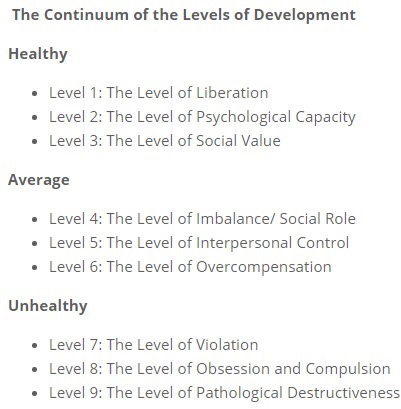
The Continuum of the Levels of Development

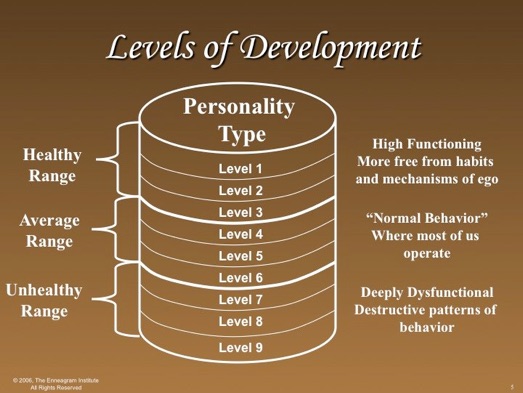
The continuum is comprised of nine internal Levels of Development. Briefly, there are three Levels in the healthy section, three Levels in the average section, and three Levels in the unhealthy section. It may help you to think of the continuum of Levels as a photographer’s grayscale which has gradations from pure white to pure black with many shades of gray in between.

On the continuum, the healthiest traits appear first, at the top, so to speak. As we move down the continuum in a spiral pattern, we progressively pass through each Level of Development marking a distinct shift in the personality’s deterioration to the pure black of psychological breakdown at the bottom. The continuum for each of the personality types is as follows.

Healthy

  • Level 1: The Level of Liberation
  • Level 2: The Level of Psychological Capacity
  • Level 3: The Level of Social Value

Average

  • Level 4: The Level of Imbalance/ Social Role
  • Level 5: The Level of Interpersonal Control
  • Level 6: The Level of Overcompensation

Unhealthy

  • Level 7: The Level of Violation
  • Level 8: The Level of Obsession and Compulsion
  • Level 9: The Level of Pathological Destructiveness

* Quote from Enneagram Website *

At each Level, significant psychological shifts occur as is indicated by the title we have given to it. For example, at Level 5, the Level of Interpersonal Control, the person is trying to manipulate himself and others to get his or her psychological needs met. This invariably creates interpersonal conflicts. By this Level, the person has also fully identified with the ego and does not see himself as anything more than that: the ego must, therefore, be increasingly defended and inflated for the person to feel safe and to keep their identity intact.
If this activity does not satisfy the person, and anxiety increases, he or she may deteriorate to the next state, Level 6, the Level of Overcompensation, where their behavior will become more intrusive and aggressive as they continue to pursue their ego-agenda. Anxiety is increasing, and the person is increasingly disruptive and focused on getting his needs met, regardless of the impact on people around them.
One of the most profound ways of understanding the Levels is as a measure of our capacity to be present. The more we move down the Levels, the more identified we are with our ego and its increasingly negative and restrictive patterns. Our personality becomes more defensive, reactive, and automatic— and we consequently have less and less real freedom and less real consciousness. As we move down the Levels, we become caught in more compulsive, destructive actions which are ultimately self-defeating.
By contrast, the movement toward health, up the Levels, is simultaneous with being more present and awake in our minds, hearts, and bodies. As we become more present, we become less fixated in the defensive structures of our personality and are more attuned and open to ourselves and our environment. We see our personality objectively in action rather than “falling asleep” to our automatic personality patterns. There is, therefore, the possibility of “not doing” our personality and of gaining some real distance from the negative consequences of getting caught in it.
As we become more present, we see our personality traits more objectively and the Levels become a continuous guide to self-observation, a map that we can use to chart where we are in our psycho-spiritual development at any given time. As we move “up” the Levels, we discover that we are freer and less driven by compulsive, unconscious drives and therefore able to act more effectively in all areas of our lives, including in our relationships. When we are less identified with our personality, we find that we respond as needed to whatever life presents, actualizing the positive potentials in all nine types, bringing real peace, creativity, strength, joy, compassion, and other positive qualities to whatever we are doing.

Enneagram Directions of Integration (Growth) and Disintegration (Stress)

Although a tenet of Enneagram testing is that no person ever changes their basic personality type, the Enneagram Institute® recognizes an individual’s life journey is never static. People change over time. That can be for the better. Or it can be for the worse. In Enneagram terms, this change for good or bad is said to be an integration of healthy growth or a stressful and unhealthy disintegration along a living timeline. Here’s how the Enneagram website explains the Directions of Integration and Disintegration.

* Quote From Enneagram Website *

As we have seen with the Levels of Development, the nine personality types of the Enneagram are not static categories: they reflect our change over time. Further, the sequence of the types and the arrangement of the inner lines of the symbol are not arbitrary. The inner lines of the Enneagram connect the types in a sequence that denotes what each type will do under different conditions. There are two lines connected to each type, and they connect with two other types. One line connects with a type that represents how a person of the first type behaves when they are moving toward health and growth.
This is called the Direction of Integration or Growth. The other line goes to another type that represents how the person is likely to act out if they are under increased stress and pressure—when they feel they are not in control of the situation. This second line is called the Direction of Stress or Disintegration. In other words, different situations will evoke different kinds of responses from your personality. You will respond or adapt in different directions, as indicated by the lines of the Enneagram from your basic type. Again, we see the flexibility and dynamism of the Enneagram.
The Direction of Disintegration or Stress for each type is indicated by the sequence of numbers 1-4-2-8-5-7-1. This means that an average to unhealthy One under stress will eventually behave like an average to unhealthy Four; an average to unhealthy Four will act out their stress like an average to unhealthy Two; an average to unhealthy Two will act out under stress like an Eight, an Eight will act out under stress like a Five, a Five will act out like a Seven, and a Seven will act out like a One. (An easy way to remember the sequence is to realize that 1-4 or 14 doubles to 28, and that doubles to 57—or almost so. Thus, 1-4-2-8-5-7—and the sequence returns to 1 and begins again.)
Likewise, on the equilateral triangle, the sequence is 9-6-3-9: a stressed out Nine will act out like a Six, a stressed out Six will act out like a Three, and a stressed-out Three will act out like a Nine. (You can remember this sequence if you think of the numerical values diminishing as the types become more stressed and reactive. For a longer explanation and examples, see Personality Types, 47-52, 413-8.) You can see how this works by following the direction of the arrows on the following Enneagram.
The Direction of Integration or Growth is indicated for each type by the reverse of the sequences for disintegration. Each type moves toward integration in a direction that is the opposite of its unhealthy direction. Thus, the sequence for the Direction of Integration is 1-7-5-8-2-4-1: an integrating One goes to Seven, an integrating Seven goes to Five, an integrating Five goes to Eight, an integrating Eight goes to Two, an integrating Two goes to Four, and an integrating Four goes to One. On the equilateral triangle, the sequence is 9-3-6-9: an integrating Nine will go to Three, an integrating Three will go to Six, and an integrating Six will go to Nine. You can see how this works by following the direction of the arrows on the following Enneagram.
It is not necessary to have separate Enneagrams for the Direction of Integration and the Direction of Disintegration. Both directions can be shown on one Enneagram by eliminating the arrows and connecting the proper points with plain lines.

The Direction of Integration (Growth)
1-7-5-8-2-4-1
9-3-6-9

The Direction of Disintegration (Stress)
1-4-2-8-5-7-1
9-6-3-9

No matter which personality type you are, the types in both your Direction of Integration or Growth and your Direction of Disintegration or Stress are important influences. To obtain a complete picture of yourself (or of someone else), you must take into consideration the basic type and wing as well as the two types in the Directions of Integration and Disintegration. The factors represented by those four types blend into your total personality and provide the framework for understanding the influences operating in you. For example, no one is simply a personality type Two. A Two has either a One-wing or a Three-wing, and the Two’s Direction of Disintegration (Eight) and its Direction of Integration (Four) also play important parts in his or her overall personality.
Ultimately, the goal is for each of us to “move around” the Enneagram, integrating what each type symbolizes and acquiring the healthy potentials of all the types. The ideal is to become a balanced, fully functioning person who can draw on the power (or from the Latin, “virtue”) of each as needed. Each of the types of the Enneagram symbolizes different important aspects of what we need to achieve this end. The personality type we begin life with is, therefore, less important ultimately than how well (or badly) we use our type as the beginning point for our self-development and self-realization.

The Three Enneagram Instincts

If you didn’t think the Enneagram Personality Typing model was complicated enough, you need to take a look at another driver steering this psychological assessment tool. Regardless of your primary personality type, your wings, and whether you’re on an integration or disintegration journey, something else comes into play that guides your behavior. This is the instinctual structure you were born with. Again, it’s best to read how the Enneagram site explains the three human instincts and how they affect personality.

* Quote From Enneagram Website *

The three Instincts (often erroneously called “the subtypes”) are a third set of distinctions that are extremely important for understanding personality. A major aspect of human nature lies in our instinctual “hard-wiring” as biological beings. We each are endowed with specific instinctual intelligences that are necessary for our survival as individuals and as a species. We each have a self-preservation instinct (for preserving the body and its life and functioning), a sexual instinct (for extending ourselves in the environment and through the generations), and a social instinct (for getting along with others and forming secure social bonds).
While we have all three Instincts in us, one of them is the dominant focus of our attention and behavior—the set of attitudes and values that we are most attracted to and comfortable with. We each also have a second Instinct that is used to support the dominant Instinct, as well as a third Instinct that is the least developed—a real blind spot in our personality and our values. Which instinct is in each of these three places—most, middle, and least developed—produces what we call our “Instinctual Stack” (like a three-layer cake) with your dominant Instinct on top, the next most developed Instinct in the middle, and the least developed on the bottom).
These instinctual drives profoundly influence our personalities, and at the same time, our personalities largely determine how each person prioritizes these instinctual needs. Thus, while every human being has all three of these instincts operating in him or her, our personality causes us to be more concerned with one of these instincts than the other two. We call this instinct our dominant instinct. This tends to be our first priority—the area of life we attend to first. But when we are more caught up in the defenses of our personality—further down the Levels of Development— our personality most interferes with our dominant instinct.
Further, the Enneagram type flavors the way in which we approach our dominant instinctual need. Combining our Enneagram type with our dominant instinct yields a much more specific portrait of the workings of our personality. When we apply the distinctions of these three instincts to the nine Enneagram types they create 27 unique combinations of type and dominant instinct that account for differences and variability within the types. We call these combinations the Instinctual Variants.
The Enneagram Institute® offers an online test, the Instinctual Variants Questionnaire (IVQ), for helping people determine not only their dominant instinct but also their Instinctual Stack. The IVQ also provides a detailed personality profile derived from the combination of the test taker’s Enneagram type, wing, and Instinctual Stack.

Here are brief descriptions of the three instincts from the Enneagram Website:

Self Preservation Instinct

People who have this as their dominant instinct are preoccupied with the safety, comfort, health, energy, and well-being of the physical body. In a word, they are concerned with having enough resources to meet life’s demands. Identification with the body is a fundamental focus for all humans, and we need our body to function well in order to be alive and active in the world. Most people in contemporary cultures have not faced life or death “survival” in the strictest sense; thus, Self-Preservation types tend to be concerned with food, money, housing, medical matters, and physical comfort.
Moreover, those primarily focused on self-preservation, by extension, are usually interested in maintaining these resources for others as well. Their focus of attention naturally goes towards things related to these areas such as clothes, temperature, shopping, decorating, and the like, particularly if they are not satisfied in these areas or have a feeling of deficiency due to their childhoods. Self-Pres types tend to be more grounded, practical, serious, and introverted than the other two instinctual types. They might have active social lives and a satisfying intimate relationship, but if they feel that their self-preservation needs are not being met, still tend not to be happy or at ease. In their primary relationships, these people are “nesters”—they seek domestic tranquility and security with a stable, reliable partner.

Sexual (aka “Attraction”) Instinct

Many people originally identify themselves as this type because they have learned that the Sexual types are interested in “one-on-one relationships.” But all three instinctual types are interested in one-on-one relationships for different reasons, so this does not distinguish them. The key element in Sexual types is an intense drive for stimulation and a constant awareness of the “chemistry” between themselves and others. Sexual types are immediately aware of the attraction, or lack thereof, between themselves and other people. Further, while the basis of this instinct is related to sexuality, it is not necessarily about people engaging in the sexual act. There are many people that we are excited to be around for reasons of personal chemistry that we have no intention of “getting involved with.” Nonetheless, we might be aware that we feel stimulated in certain people’s company and less so in others.
The sexual type is constantly moving toward that sense of intense stimulation and juicy energy in their relationships and in their activities. They are the most “energized” of the three instinctual types and tend to be more aggressive, competitive, charged, and emotionally intense than the Self-Pres or Social types. Sexual types need to have intense energetic charge in their primary relationships or else they remain unsatisfied. They enjoy being intensely involved—even merged—with others and can become disenchanted with partners who are unable to meet their need for intense energetic union. Losing yourself in a “fusion” of being is the ideal here, and Sexual types are always looking for this state with others and with stimulating objects in their world.

Social (aka “Adaptive”) Instinct

Just as many people tend to misidentify themselves as Sexual types because they want one-on-one relationships, many people fail to recognize themselves as Social types because they get the (false) idea that this means always being involved in groups, meetings, and parties. If Self-Preservation types are interested in adjusting the environment to make themselves more secure and comfortable, Social types adapt themselves to serve the needs of the social situation they find themselves in.
Thus, Social types are highly aware of other people, whether they are in intimate situations or in groups. They are also aware of how their actions and attitudes are affecting those around them. Moreover, Sexual types seek intimacy, Social types seek personal connection: they want to stay in long-term contact with people and to be involved in their world.
Social types are the most concerned with doing things that will have some impact on their community, or even broader domains. They tend to be warmer, more open, engaging, and socially responsible than the other two types. In their primary relationships, they seek partners with whom they can share social activities, wanting their intimates to get involved in projects and events with them. Paradoxically, they actually tend to avoid long periods of exclusive intimacy and quiet solitude, seeing both as potentially limiting. Social types lose their sense of identity and meaning when they are not involved with others in activities that transcend their individual interests.

Interpreting the Riso-Hudson Enneagram Type Indicator (RHETI 2.5) Examination

By now you’re probably mentally assessing yourself with the Enneagram, as well as Donald Trump who’s the target of this blog post. I did the same thing as I put this piece together. Being curious, I paid the money and took the test. Not surprising, my primary type is 1 — The Reformer and my prominent Wing is 9 — The Peacemaker. My Enneagram results are exactly in line with my Myers-Briggs Personality Indicator test as an INTJ. It seems I’m a healthy 2 at the level of psychological capacity and my instinctual priorities are predominately self-preservation, followed by social sympathies, with a sexual need trailing last. Okay, I’m now pushing 62 so I’m fine with that.

But what about  Trump?

Where does this guy fit into the Enneagram Personality Profile Typing? Well, I don’t know Donald Trump well enough to answer the 144 questions, but I’ll defer to the original article I read about this. Donald J. Trump is clearly an 8 — The Challenger with a strong Wing as 7 — The Enthusiast. Drilling deeper, Trump appears to be on an unhealthy continuum development disintegration. He’s certainly at a Level 8 and probably approaching a 9 — the level of pathological destructiveness. Further, Trump is instinctively dominated by self-preservation followed by sexual needs. According to Enneagram parameters, Trump has little, if no, instinctive regard for social values.

Donald Trump’s Personality According to Enneagram Psychological Typing

Let’s take a better look at how the Enneagram website describes a Type 8 personality. You likely don’t know Trump personally either, but I’m sure you’ve heard and seen enough about him to form an impression and see if this fits. Here’s more information straight from the Enneagram Institute®.

* Quote From Enneagram Website *

Type Eight in Brief

Eights are self-confident, strong, and assertive. Protective, resourceful, straight-talking, and decisive, but can also be ego-centric and domineering. Eights feel they must control their environment, especially people, sometimes becoming confrontational and intimidating. Eights typically have problems with their tempers and with allowing themselves to be vulnerable. At their Best: self- mastering, they use their strength to improve others’ lives, becoming heroic, magnanimous, and inspiring.
  • Basic Fear: Of being harmed or controlled by others
  • Basic Desire: To protect themselves (to be in control of their own life
    and destiny)
  • Enneagram Eight with a Seven-Wing: “The Maverick”
  • Enneagram Eight with a Nine-Wing: “The Bear”
  • Key Motivations: Want to be self-reliant, to prove their strength and resist weakness, to be important in their world, to dominate the environment, and to stay in control of their situation.

The Meaning of the Arrows (in brief)

When moving in their Direction of Disintegration (stress), self-confident Eights suddenly become secretive and fearful at Five. However, when moving in their Direction of Integration (growth), lustful, controlling Eights become more open-hearted and caring, like healthy TwosLearn more about the arrows.
Examples: G.I. Gurdjieff, Richard Wagner, Franklin D. Roosevelt, Winston Churchill, Oskar Schindler, Fidel Castro, Martin Luther King, Jr., Lyndon Johnson, Mikhail Gorbachev, Golda Meir, Indira Gandhi, Saddam Hussein, Senator John McCain,     *** Donald Trump ***    , Pablo Picasso, Ernest Hemingway, Norman Mailer, Toni Morrison, Serena Williams, James Brown, Aretha Franklin, Keith Richards, Queen Latifah, Courtney Love, Jack Black, Chrissie Hynde, Pink, John Wayne, Frank Sinatra, Humphrey Bogart, Lauren Bacall, Bette Davis, Mae West, Sean Connery, Paul Newman, Clint Eastwood, Tommy Lee Jones, Jack Nicholson, Susan Sarandon, Russell Crowe, Sean Penn, Harvey Keitel, Matt Damon, Alec Baldwin, Roseanne Barr, Barbara Walters, Rosie O’Donnell, “Dr. Phil” McGraw, “Tony Soprano”

* Quote From Enneagram Website *

Type Eight Overview

We have named personality type Eight The Challenger because, of all the types, Eights enjoy taking on challenges themselves as well as giving others opportunities that challenge them to exceed themselves in some way. Eights are charismatic and have the physical and psychological capacities to persuade others to follow them into all kinds of endeavors—from starting a company to rebuilding a city, to running a household, to waging war, to making peace.
Eights have enormous willpower and vitality, and they feel most alive when they are exercising these capacities in the world. They use their abundant energy to effect changes in their environment—to “leave their mark” on it—but also to keep the environment, and especially other people, from hurting them and those they care about. At an early age, Eights understand that this requires strength, will, persistence, and endurance—qualities that they develop in themselves and which they look for in others.
Thayer is a stockbroker who has worked intensively on understanding her type Eight personality. She recounts a childhood incident in which she could clearly see the development of this pattern.
“Much of my tenacity and toughness comes from my Dad. He always told me not to ‘let anybody push you around.’ It was not okay to cry. I learned to master my weaker side early on. At the tender age of eight, a huge horse ran away with me. When an adult caught the horse, I resolutely dismounted without a tear. I could tell my father was proud.”
Eights do not want to be controlled or to allow others to have power over them (their Basic Fear), whether the power is psychological, sexual, social, or financial. Much of their behavior is involved with making sure that they retain and increase whatever power they have for as long as possible. An Eight may be a general or a gardener, a small businessman or a mogul, the mother of a family or the superior of a religious community. No matter: being “in charge” and leaving their imprint on their sphere is uniquely characteristic of them.

Eights are the true “rugged individualists” of the Enneagram. More than any other type, they stand alone. They want to be independent and resist being indebted to anyone. They often refuse to “give in” to social convention, and they can defy fear, shame, and concern about the consequences of their actions. Although they are usually aware of what people think of them, they do not let the opinions of others sway them. They go about their business with a steely determination that can be awe-inspiring, even intimidating to others.
Although, to some extent, Eights fear physical harm, far more important is their fear of being disempowered or controlled in some way. Eights are extraordinarily tough and can absorb a great deal of physical punishment without complaint—a double-edged blessing since they often take their health and stamina for granted and overlook the health and well-being of others as well. Yet they are desperately afraid of being hurt emotionally and will use their physical strength to protect their feelings and keep others at a safe emotional distance. Beneath the tough façade is vulnerability, although it has been covered over by a layer of emotional armor.
Thus, Eights are often extremely industrious, but at the price of losing emotional contact with many of the people in their lives. Those close to them may become increasingly dissatisfied with this state of affairs, which confounds Eights. (“I don’t understand what my family is complaining about. I bust my hump to provide for them. Why are they disappointed with me?”)
When this happens, Eights feel misunderstood and may distance themselves further. In fact, beneath their imposing exterior, Eights often feel hurt and rejected, although this is something they seldom talk about because they have trouble admitting their vulnerability to themselves, let alone to anyone else. Because they fear that they will be rejected (divorced, humiliated, criticized, fired, or harmed in some way), Eights attempt to defend themselves by rejecting others first. The result is that average Eights become blocked in their ability to connect with people or to love since love gives the other power over them, reawakening their Basic Fear.

The more Eights build up their egos in order to protect themselves, the more sensitive they become to any real or imaginary slight to their self-respect, authority, or preeminence. The more they attempt to make themselves impervious to hurt or pain (whether physical or emotional), the more they “shut down” emotionally to become hardened and rock-like.
When Eights are emotionally healthy, however, they have a resourceful, “can-do” attitude as well as a steady inner drive. They take the initiative and make things happen with a great passion for life. They are honorable and authoritative—natural leaders who have a solid, commanding presence. Their groundedness gives them abundant “common sense” as well as the ability to be decisive. Eights are willing to “take the heat,” knowing that any decision cannot please everyone. But as much as possible, they want to look after the interests of the people in their charge without playing favorites. They use their talents and fortitude to construct a better world for everyone in their lives.

Type Eight—Levels of Development

Healthy Levels

Level 1 (At Their Best): Become self-restrained and magnanimous, merciful and forbearing, mastering self through their self-surrender to a higher authority. Courageous, willing to put self in serious jeopardy to achieve their vision and have a lasting influence. May achieve true heroism and historical greatness.
Level 2: Self-assertive, self-confident, and strong: have learned to stand up for what they need and want. A resourceful “can do” attitude and passionate inner drive.
Level 3: Decisive, authoritative, and commanding: the natural leader others look up to. Take initiative, make things happen: champion people, provider, protective, and honorable, carrying others with their strength.

Average Levels

Level 4: Self-sufficiency, financial independence, and having enough resources are important concerns: become enterprising, pragmatic, “rugged individualists,” wheeler-dealers. Risk-taking, hardworking, denying own emotional needs.
Level 5: Begin to dominate their environment, including others: want to feel that others are behind them, supporting their efforts. Swaggering, boastful, forceful, and expansive: the “boss” whose word is law. Proud, egocentric, want to impose their will and vision on everything, not seeing others as equals or treating them with respect.
Level 6: Become highly combative and intimidating to get their way: confrontational, belligerent, creating adversarial relationships. Everything a test of wills, and they will not back down. Use threats and reprisals to get obedience from others, to keep others off balance and insecure. However, unjust treatment makes others fear and resent them, possibly also band together against them.

Unhealthy Levels

Level 7: Defying any attempt to control them, become completely ruthless, dictatorial, “might makes right.” The criminal and outlaw, renegade, and con-artist. Hard-hearted, immoral and potentially violent.
Level 8: Develop delusional ideas about their power, invincibility, and ability to prevail: megalomania, feeling omnipotent, invulnerable. Recklessly over-extending self.
Level 9: If they get in danger, they may brutally destroy everything that has not conformed to their will rather than surrender to anyone else. Vengeful, barbaric, murderous. Sociopathic tendencies. Generally corresponds to the Antisocial Personality Disorder.

Understanding Donald Trump’s Personality

If the Enneagram Psychological Assessment model is reliable, Donald Trump comes across as a horrible personality—a man with little moral conviction and no regard for anyone but himself. He’s a true megalomaniac, a narcissist, a demagogue, and pathological liar.

Donald Trump is not a politician. He never held an elected position prior to being sworn-in as President of the United States of America. Not a senator. Not a representative. Not a governor. Not a mayor, a counselor, nor even serving on the parks or school board. Now he’s the Commander-in-Chief of the American Armed Forces with codes to nuclear weapons.

In my opinion—and this is only my opinion—Donald Trump is a salesman building his brand to be noticed and make money by gaining power through fear. He’s a realtor who developed a larger-than-life public persona and hood-winked voters to scam the election. Trump is a fraud. He’s a charlatan, a flimflammer, a grifter, and an unscrupulous confidence man who sells snake oil. A carny. Trump is amoral. He’s a confrontational bully, a cheat, and should be a convicted felon and racketeer. A hustler… a swindler… a coward… a thief…

Donald Trump is the elected president of the world’s most powerful country, economically and militarily. His personality—as I understand it—makes Trump psychologically unfit to administer his public office. At this point, it seems Donald Trump is bottoming to a Level 9 of Pathological Destructiveness as the Russia probe, his personal finance investigation, his control on Congress slips through mid-term Republican Party dysfunction, and those close to him jump ship—ratting out before they sink.

I don’t profess to thoroughly understand Donald Trump’s personality. Will Donald Trump melt down into a volatile and vindictive psychopath as the Enneagram predicts? If forced out, will Trump do something more outrageous than ever before? Can he scuttle the country?  Does Trump have an Armageddon exit plan? Will he dance in the Washington bunker? Is Donald Trump someone every person on this planet should truly FEAR?

*   *   *

What do you think? Is the Enneagram a reliable assessment tool? Or is it a bunch of nonsense? Is Donald Trump as dangerous as his Enneagram personality profile indicates? Or is he misunderstood and rationally calculating? And would you like to take the Enneagram psychological test for yourself? Here are the links to Enneagram Personality Profile examinations:

Official Enneagram Institute® Paid Test

Electric Energies Enneagram Free Test

DEVELOPING THE MILLION-SELLING INDIE AUTHOR MINDSET — WITH ADAM CROFT

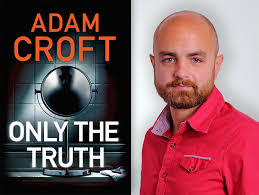
Adam Croft is one of the world’s most successful independent authors. As an indie author, Adam is a remarkable example of the mindset required to build and maintain a self-publishing enterprise that’s sold well over a million books. Adam Croft has the distinction of holding the overall best-selling author spot on all of Amazon. That’s regardless of being indie, traditional published or what book genre or category Adam competed with. In fact, on recent charts, Adam Croft was #1. JK Rowling was #2.

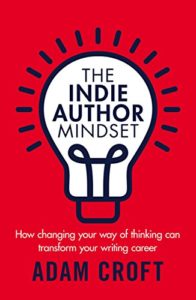
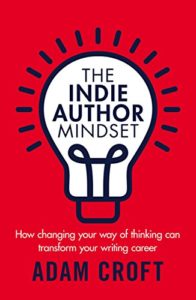
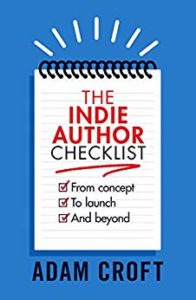
Adam Croft predominately writes and publishes profitable crime thrillers and mysteries in the fiction department. Now, Adam’s ventured into non-fiction with his new release The Indie Author Mindset — How Changing Your Way of Thinking Can Transform Your Writing Career. In it, Adam Croft selflessly shares his secrets of what it takes to develop the million-selling author mindset. And, on the DyingWords blog, Adam gives followers his personal insight into The Indie Author Mindset.

Welcome back to DyingWords, Adam. I have to say you’ve made milestones in your indie author career since we met online four years ago. Not to say you weren’t already a successful author back in 2014, but something extradordinary’s happened since. What changed in your life to hurdle you over the million-selling mark?

In 2014, I was successful in that my writing was just about paying the bills. In an industry where the average income for a full-time writer is around $10,000 a year, even covering the bills can rightly be considered successful, as you say.

Mid-2015 I started to get serious about my writing. I’d been just about rumbling along for far too long and was desperate to take the next step and earn more money from my books. I discovered a few good non-fiction books around this time, as well as Mark Dawson’s Ads for Authors course. All of those things, plus my mind being in a good, receptive place to take on these new ideas, meant that everything came together for me at the right time and I had a huge shift in mindset—in the way I thought about my books, and that proved to be a great platform for moving forward in a huge way.

Adam, you open your book The Indie Author Mindset by discussing what self-publishing is and what self-publishing is not. Can you give us a recap on that?

Yeah, that chapter is very different from the rest of the book, but it was something that needed saying. The whole purpose of The Indie Author Mindset was to try and address the base issues that most writers have—or certainly those writers who are struggling to make headway. Although the specific issues and symptoms are different, 95% of the time the actual core problem is mindset.

But there’s the other percentage of authors whose problems aren’t anything to do with that. I regularly get emails from writers who’ve paid someone to publish their books for them (vanity publishing, not self-publishing) and have handed over their rights to a company who, unsurprisingly, have done nothing for them. One writer told me he’d given over £20,000 (around $28,000 US) to a company to publish his book. He was stunned when I told him that a) self-publishing is free, and b) a publisher should be paying HIM £20,000 to publish his book.

There’s just so much misinformation and rubbish out there. A lot of it is fairly harmless and will only result in authors wasting their time and effort—that’s the bulk of what I go into in the book. But there’s an undercurrent of these absolute scamsters who exist solely to exploit authors, and I was keen to get straight to the point on that to help as many writers as possible avoid them. I hate seeing people exploited, especially when it’s something they can easily do themselves for free, or let someone else do and get paid in return for it.

You speak a lot about professionalism. What’s your definition of professionalism, and how does this apply to an indie author’s mindset?

This is a question I ask myself in the book. The Oxford English Dictionary has two definitions: one refers to something being your main paid occupation, and the other states you only have to be competent and capable of doing said thing. Even the OED can’t come to a definition which doesn’t contract itself.

For me, professionalism is less about money and more about attitude—or mindset. Again, everything comes back to mindset. It’s about treating your writing like you would any other job, turning up on time and getting the work done. It’s about giving your books and your career the respect they deserve, and the respect you want your readers and potential readers to give them.

Many writers never cross the line between being hobbyists and dedicated full-time authors. What’s the difference between the mindset of part-timers and those who commit to making their writing a financial success?

It’s the professional mindset you mentioned a moment ago. It’s quite literally a shift in attitude from ‘this is my hobby’ to ‘this is what I do’. Whatever your main job is (or was, if you don’t currently have one), you need to treat your writing in the same way.

People who’ve run small businesses tend to ‘get’ this much more easily. I’m one of them, and I think having that background was a great help to me. It did take me five years to realise that I could—and absolutely should—take that attitude and experience into my writing career, though.

I like your quote in The Indie Author Mindset that says “Being a writer is not something that happens to you. It’s something you make happen.” Can you elaborate on how you made it happen?

As writers, we’re always told to make sure we write in the active, not passive voice. People do things—things don’t happen to them. The same goes for your writing career. You can’t expect success and good fortune to turn up on your doorstep. They won’t.

There’s a famous sportsperson—I don’t remember who—who was being interviewed and the interviewer mentioned the huge amount of luck and good fortune they’ve had in being so successful. Said sportsperson replied along the lines of ‘Yes, the harder I work the luckier I get’. No-one’s hanging around for you. You’ve got to jump on the train or get left behind.

Perfection. Many authors beat themselves to death with writes, re-writes and more re-writes while trying to achieve perfection. Is there such a thing as perfection, or does there come a point where close enough is good enough and you just ship it?

There is absolutely no possible way of attaining perfection in any form of art. Too many people beat themselves up over trying to attain the unattainable.

Objectively speaking, there is no such thing as a good book. Subjectively, of course, we all love some books and hate others. Same with art, TV shows, movies and just about any other form of art or creative endeavour. I hate Star Wars. Does that mean it’s a dreadful film franchise? No. I’m seriously outnumbered. It doesn’t appeal to me, but it clearly does to millions of others. It would be incredibly arrogant of me to call Star Wars objectively bad.

I can’t stand Shakespeare, either. But again, I realise it’s me who’s missing something. I wouldn’t be so arrogant as to assume that everyone who likes Shakespeare is deluded and mad (even though they are).

The point is that for every piece of creative work, there is someone who thinks it’s absolutely perfect, someone who thinks it’s the most dreadful thing ever created and a million other people somewhere on the spectrum between. It’s irrelevant which one you are—you are not the moral arbiter of good art. No-one is. So just get the book written, get it out there, accept that there’ll be a whole spectrum of lovers and haters and move on with the next book. Anything else is self-defeating and likely to eat you up from within.

Production. What’s your process for being productive and proficient in both creativity and business?

I don’t really have much choice. I’ve got a family to feed and an ever-increasing inbox. I’ve just got to sit down and get on with it. No-one else is going to do it for me.

Put it this way: 95% of writers procrastinate, dither and are generally quite unproductive. If you can sit down and bash out a thousand or two thousand words a day, clear your inbox and have a good stab at your to-do list, you’re easily in the top few percent of the industry. Sooner or later that will put you in an extremely fortunate position.

Dealing with doubt. I think all writers—myself for sure—encounter self-doubt with their work. Do you buy into the so-called “imposter syndrome”, and what should a writer do about overcoming self-doubt?

Absolutely I do. I have it myself. The more success I have, the surer I am that at some point someone’s going to find out I’m a massive fraud.

I’ve thought about this a lot, and I think the only real way to combat it is to accept that it’s a part of you, but don’t let it win. Like any bully, if you ignore it it’ll go away. Don’t feed the trolls, as they say.

Some of the most successful writers I know are the ones plagued with the most self-doubt. Self-doubt has nothing to do with success, money or achievement. It will ALWAYS be there. So accept it, refuse to give in to it and move forward regardless.

You’ve got a section in The Indie Author Mindset about the power of others. What’s your view on who to listen to, and who not to listen to?

Quite simply, it’s a case of doing a bit of research. There are hundreds of websites, books and resources out there. Lots of people somehow feel qualified to teach others how to write and publish despite having only written one book and sold a few hundred copies.

Personally, I want to learn from people who’ve been there and done it, not from people who are barely any further along the line than me. There are too many people who either follow the old adage of ‘keeping one lesson ahead of the pupil’ or, worse, make things up or hash together strategies based on what they assume should work, rather than experimenting to find out what does work.

As an indie author/self-publisher, you obviously can’t do it all yourself. What work do you personally take on? What do you delegate or sub-out?

The answer to the first part of that question is ‘too much’. My wife works with me and tends to handle the business side of things. She does the bookkeeping, spreadsheet tracking, background stuff for promos and all of the ‘back office’ stuff. Anything front-facing is me. I reply to all reader emails personally, help other authors, participate in online discussions, set up and run my ads and marketing activities—and occasionally get time to write some books.

Do you ever become overwhelmed? With so much on your professional and personal plate, how do you avoid burnout? After all, you have a young family as well as a thriving business.

All the time. But I also realise that won’t do me any good. At the moment I’m two-thirds of the way through my next psychological thriller, which I hope will be even more successful than HER LAST TOMORROW and TELL ME I’M WRONG. I’ve got high hopes for it and am writing 2,000 words a day towards it.

I’m also battling against an inbox which I can’t ever get below 100+ unread emails, producing a weekly podcast, directing a theatre production for November and doing 2-3 podcast or radio interviews a day. 16-hour days are perfectly normal for me at the moment. The only saving grace is that my wife and I both work from home, so I can at least be in the same house as my son, even if I don’t get to spend a fraction of the amount of time with him as I’d like.

I really admire and respect your visionary mindset, Adam. Can you share your views about short-term vs long-term thinking?

Put simply, it’s all about long-term thinking. We’re often blinkered and worried about daily sales or instant impact. Business doesn’t work like that. For instance, I have a couple of books that earn me maybe £5-6 a day. Certainly not life-changing. But they do that every day and have done for eight years or so. That £5-6 a day is now almost £20,000, and they still earn money every day, despite me having done no work on them for eight years.

If you expect instant (or even quick) results in this business, you’re going to be disappointed. There’s no other way of putting it. Even my ‘overnight success’ was my ninth book and my sixth year of publishing.

Let’s talk about the dreaded marketing end of being an indie author. I realize The Indie Author Mindset is really about the mental end of being a commercial writing success rather than the production end, but can you give us a basic formula for what works in today’s book distribution and marketing?

No, because there isn’t one. Different things work for different people. There are far too many variables to say that any one thing will work for everyone. That’s why you need to find an approach which works for you. It’s also why I didn’t go into any specifics about marketing strategies or tactics in The Indie Author Mindset. It would be disingenuous of me to try and sell a book off the back of things which I know won’t work for 90% of authors.

Your big run-away novel was Her Last Tomorrow followed by Only The Truth, In Her Image and Tell Me I’m Wrong. These stories have been huge commercial successes, and I can only imagine what’s coming next. Was there a particular catalyst that sent these books to the top? If so, what was the tipping point?

My two biggest sellers to date are HER LAST TOMORROW and TELL ME I’M WRONG. The latter overtook HER LAST TOMORROW as my biggest-selling book a few weeks ago, after only six months on sale.

Both books are domestic psychological thrillers with extremely compelling hooks (Could you murder your wife to save your daughter?/What if you discovered your husband was a serial killer?). That approach works for me. It won’t work for everyone. I know lots of people have tried to emulate it and use the same strategy, and it doesn’t work for them. Their audience might not respond to that sort of hook. Mine does. I think there’s a more specific recipe and set of reasons behind it, and I’m going to try and replicate it with my next book. If I’m right, that book should be a huge success too. I’m putting my cards on the table here! Fingers crossed…

In The Indie Author Mindset, you talk about three inseparable and crucial parts to commercial writing success—the author, the publisher and the businessperson. Do you mind elaborating on these important parts of mindset?

When you’re an indie author, you need to wear many hats. Those are the main three, but I also find myself having to be a strategist, broadcaster, customer services assistant and many other different roles.

Being flexible and adaptable is key—not only to having to switch between different personas and job titles, but in order to keep up with a fast-moving industry and ensure you’re able to adapt to the changing landscape.

Besides reading, re-reading and making notes on The Indie Author Mindset, I also listened to your interview on Mark Dawson’s Self Publishing podcast. You make an extremely important distinction between business expenses and business investment. Can you talk a bit about this, as well as how you parlay profits into investments?

Too often we think about things as expenses. I hear so many authors saying how they went for a $50 book cover because $400 was too much to spend. They’re missing the point entirely. That $50 cover will be nowhere near as good as the $400 one. Everyone knows that. Even they know that. It might be eight times cheaper, but I can guarantee their sales will be eight times lower than they would be with the better cover. This is an investment, not an expense. Putting the money in now will reap rewards for years to come, and you’ll make your investment back many times over.

Too many authors expect to be able to do things on a shoestring and as cheaply as possible, which shows an extraordinary lack of respect for themselves, their books and their readers. Why should a reader take a chance on a new author and part with their hard-earned money when even the author herself won’t put her money where her mouth is?

You also touch on marketing/advertising, publishing wide and developing multiple income streams in The Indie Author Mindset. I won’t ask you to detail what works for you, Adam. Rather, I urge all authors to read your new book and absorb your wisdom. However, can you say a few words about branding?

This is another aspect of marketing. We get obsessed about needing a direct and measurable profit. But marketing and advertising just don’t work like that. No other industry or business expects to measure a direct ROI on advertising spend. It goes wider than that.

Do you think Coca Cola run a TV ad then look at how many bottles of Coke they sold directly off the back of it? Of course they don’t. It’s about branding, having their name seen rather than their competitors’. It’s about keeping in the minds of their potential customers, so next time they’re ready to buy a bottle of soft drink it’s them they choose.

Just an observation here—even though your new non-fiction release is called The Indie Author Mindset, the mass of information inside seems applicable to traditionally published writers as well. What will traditionally published authors learn?

It will, because the lines are now blurred more than ever. Even traditionally published authors are expected to do their own marketing and PR. No-one’s immune from that, so trad’s no longer the ‘easy’ route it once was. Trust me, I’ve been there.

I think this just highlights the fact that the difference between indie and trad publishing is nowhere near as big as people think. It’s the same machine, the same monster. As an indie author, you aren’t an author without a publisher—you’re an author who IS the publisher. The only difference in trad is that the two are separated a little more, although, as I mentioned above, even that small distinction is quickly disappearing.

I can’t let you go without expanding on how important it is for commercial authors to track sales and distribution data. What do you recommend writers do in order to know how we’re performing and formulate a marketing plan?

Track everything. Use AK Report or Book Report to track your KDP data, get the rest directly from the distributors. Track your advertising spend. Look for trends and interesting stuff in the data. You might be surprised by what works.

Test everything. Again, you’ll be amazed and what works and what doesn’t work. Just because you like a graphic or an image or a piece of copy, your audience won’t necessarily take to it at all. In fact, they almost certainly won’t. My best ads and best-performing graphics have all been ones I’ve hated. The ones I like don’t do well. I clearly have very different tastes from my audience, and that’s the same for most writers. Separate yourself from the work and do what readers want, not what you want. It’s rare the two are the same.

Finally, Adam, over the years you’ve met and interacted with many writers. If you had one piece of advice to leave us with—based on your experience and success—what would it be?

I always give six words in this situation: Arse on chair, fingers on keyboard.

Of all the marketing strategies and techniques, of all the ways you can spend your day trying to boost your book sales, the only thing guaranteed to move your career forward and increase your sales is writing more books.

*   *   *

My sincere thanks to indie author and million-selling writer Adam Croft for his time and generosity in stopping by DyingWords to talk about his new release, The Indie Author Mindset. This concise and easy-to-absorb book was the kick-in-the-arse motivation I needed at this point in my writing career. It’s re-affirmed that hard work, dedication and positive mindset are the key principles behind making commercial writing lucrative and mentally rewarding. It also helps to have a good heap of talent like Adam Croft has. Here’s my Amazon review of The Indie Author Mindset.

Amazon Description for The Indie Author Mindset

Do you want to sell more books and earn a good living from your fiction?

Discover how to change your way of thinking and revolutionize your writing career.

Are you struggling to take your author career on to the next stage? Do you wish you could sell huge numbers of books and make a good income for you and your family? Before he learned to change his mindset, Adam Croft’s fiction books earned him around $30 a day. But, after developing the indie author mindset, he was earning $3,500 a day within a matter of weeks.

The Indie Author Mindset shows you how simply changing your way of thinking about your writing business can revolutionize your career. Using Adam’s personal experiences and examples, you’ll be able to think differently about the business side of your writing career and lay down the foundations for long-term success.

In The Indie Author Mindset, you’ll discover:

How to decide who to listen to — and who not to listen to

  • How to unlock the power of residuals
  • How to create more than half a dozen income streams from one book
  • Lessons and advice from Bryan Cohen, David Gaughran, Brian Meeks and Mark Dawson
  • Why almost every writer misunderstands profit and is doing advertising wrong
  • And much, much more!

This life-changing book is the motivational kick-up-the-backside all authors need. If you like a non-fiction book with a personal touch, practical tips you can apply every day and all the motivation you need to kick your career on to the next stage, The Indie Author Mindset is for you.

Adam Croft’s Biography

With more than 1.5 million books sold to date, Adam Croft is one of the most successful independently published authors in the world, and one of the biggest selling authors of the past few years.

His 2015 worldwide bestseller Her Last Tomorrow sold more than 150,000 copies across all platforms and became one of the bestselling books of the year, reaching the top 10 in the overall Amazon Kindle chart and peaking at number 12 in the combined paperback fiction and non-fiction chart.

In 2016, the Knight & Culverhouse Box Set reached storewide number 1 in Canada, knocking J.K. Rowling’s Harry Potter and the Cursed Child off the top spot only weeks after Her Last Tomorrow was also number 1 in Canada.

During the summer of 2016, two of Adam’s books hit the USA Today bestseller list only weeks apart, making them two of the most-purchased books in the United States over the summer.

In February 2017, Only The Truth became a worldwide bestseller, reaching storewide number 1 at both Amazon US and Amazon UK, making it the bestselling book in the world at that moment in time. The same day, Amazon’s overall Author Rankings placed Adam as the most widely read author in the world, with J.K. Rowling in second place.

Adam has been featured on BBC television, BBC Radio 4, BBC Radio 5 Live, the BBC World Service, The Guardian, The Huffington Post, The Bookseller and a number of other news and media outlets.

In March 2018, Adam was conferred as an Honorary Doctor of Arts, the highest academic qualification in the UK, by the University of Bedfordshire in recognition of his achievements.

*   *   *

Visit Adam Croft’s Website at  AdamCroft.net

Connect with Adam Croft on Facebook

Follow Adam Croft on Twitter

Here are links to two other Adam Croft posts on DyingWords.net:

The Tipping Point For Best Selling Authors

The Mystery Novel And Human Fascination With Death

Update: February 2019 – Adam’s Croft’s sequel to The Indie Author Mindset titled The Indie Author Checklist is now available on all internet book outlets. It’s a must-read for anyone serious about their writing career. Available in Ebook, print & audio. I highly recommend it!