
Author Archives: Garry Rodgers

About Garry Rodgers

After three decades as a Royal Canadian Mounted Police homicide detective and British Columbia coroner, International Best Selling author and blogger Garry Rodgers has an expertise in death and the craft of writing on it. Now retired, he wants to provoke your thoughts about death and help authors give life to their words.

FORENSIC HYPNOSIS FOR MEMORY ENHANCEMENT

A6Forensic hypnosis is the scientific application of memory enhancement—an investigational aid to law enforcement leads and admissible courtroom evidence. Hypnotic recall assists witnesses to reliably relay hidden details of events and descriptions that aren’t extracted through conventional interview techniques.

In my police career, I’ve had many cases using hypnotic memory enhancement. Several had amazing success.
A5I’m fascinated with the human mind. I think modern medicine and psychiatry are just beginning to understand the complexity of how our consciousness works. Hypnosis is a tool to assist in entering our subconscious and unlock the vault where memory is stored. Its magic is the ability to alter the subject’s state of consciousness which is what Shamanism is all about. But, then, Shamanism is for another discussion.

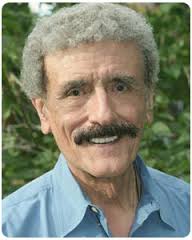
The best forensic hypnotherapist I’ve had the pleasure to work with is Dr. Lee Pulos of Vancouver, British Columbia, Canada. Here’s how Dr. Pulos explains it.
A1“Hypnosis is a natural state of consciousness that we drift in and out of quite regularly. For example, while driving along a highway and then suddenly discovering that you ‘lost’ several miles without being aware of it. This can also happen during reading when you may notice that you have ‘read’ a chapter or two without being mindful of the content. Hypnosis is basically a technique for focusing consciousness by entering a deep state of absorption. It allows you to shift from your outer to inner awareness and tap deeper levels of consciousness so we can re-educate and reprogram the subconscious with empowering suggestions or beliefs.”

The word hypnosis comes from the name of a Greek god Hypnos, who presided over sleep. In the late1700s, Anton Mesmer brought the technique into popular consciousness in Europe and in 1843 Scottish physician James Braid coined the term hypnotism for the experience that was passing in many circles as animal magnetism.

A8Hypnosis places a person in a trance state that can resemble sleep, but instead is an altered state of consciousness more akin to lucid dreams. Often, people in a trance are quite alert but focused in a way that differs from their normal conscious state. Contrary to popular notions, subjects in a light trance are aware of everything going on.

A7I’ve seen a rough and tough biker-witness under hypnosis who was instructed to play “patty-cake” by clapping his hands on his knees.  He couldn’t stop laughing at the fact that he couldn’t control his hands, though he seemed perfectly conscious in a way that ought to have enabled him to resist the instruction. His hands changed to patting his head and stomach at the hypnotist’s instruction. They looked at each other the whole time and even had a conversation with his hands patting about.

The trance-state, which has its own ebb and flow, is the result of a trusting and cooperative process between the subject and the hypnotist. It’s not one person controlling another and there’s no way the hypnotist can make the subject do something they would not do while they’re in a normal state, such as an illegal or immoral act.

A9“Hypnosis,” says Kevin McConkey, President of the Australian Psychological Society and co-author of Hypnosis, Memory, and Behavior in Criminal Investigation, “is essentially a phenomenon that reflects genuinely experienced alterations of reality in response to suggestions administered by a hypnotist. The subject’s testimony is what confirms the trance, although susceptibility varies among individuals. Those who are highly suggestive will behave as if going through truly significant cognitive alterations.”

Hypnosis involves concentration that is heightened to the point where one can recall details that seemed to elude that same person in a conscious state. It’s a powerful forensic tool for criminal investigation, although some researchers challenge the notion that hypnosis leads to significant increases in memory.

There are two basic purposes for using forensic hypnosis.

The most common is inducing relaxation when anxiety and stress may obstruct a witness’s ability to recall as much information as possible. The second occurs when retrieval of information from witnesses cannot be acquired through other means.

A4The first court case involving forensic hypnosis was Cornell v. Superior Court of San Diego in 1959. Although forensic hypnosis is mostly used by prosecutors, in this particular court case, it was the defense that used hypnosis as an aid in preparing its strategy. Since then, many famous cases have used hypnosis as an aid, including the Boston Strangler, Ted Bundy, and Sam Sheperd.

Currently, no overriding judgment has been handed down regarding the admissibility of evidence achieved through forensic hypnosis and the use of hypnotic evidence varies between jurisdictions. Adding to the reliability problem is that solid evidence can be devalued as a result of unprofessional circumstances in obtaining evidence through hypnosis.

I remember one judge rejecting evidence from a witness who had been subject to hypnotic recall stating “There’s nothing more unreliable than an eyewitness, never mind one who is tainted by hocus-pocus.” One the other hand, I recall another judge being fascinated by the process and readily accepting witness evidence, particularly because the information obtained under hypnosis was corroborated by independent facts.

As in all types of evidence, the key is reliability.

To ensure solid forensic hypnosis used in criminal investigations is not devalued, it’s become standard and vital operating procedure that all hypnosis sessions are video/audio recorded and the session is witnessed by independent observers. To strengthen the case, the hypnosis must be performed by a trained forensic hypnotist.

A10

Before a forensic hypnotist is allowed to begin a session, one very important condition must be met. The subject must be assured that during the hypnotic session no attempt shall be made to elicit any information that is not directly relevant to the investigation. In addition, the forensic hypnotist must also assure the subject that no information retrieved will lead to self-incrimination.

Critics of forensic hypnotism center their attacks on the accuracy and reliability of the evidence that’s obtained. The concern is that suggestion(s) implanted during hypnotism may create false memories through the use of leading questions.

A11

One thing that a forensic hypnotist cannot do, and is never called to do, is to help a suspect confess to a crime. Not only is this impossible, but any confession arrived at through hypnosis would never be admissible in court.

Here’s a true case I investigated where forensic hypnosis for memory enhancement led to a break through in solving the crime. It was conducted by Dr. Lee Pulos.

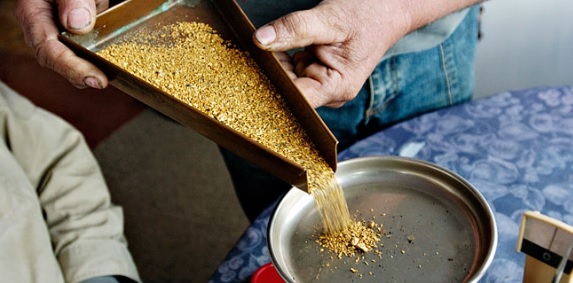
A12In wintery April, a lady was alone in her cabin on a remote gold claim in northern British Columbia. A masked man with a handgun appeared at her door, demanding she hand over her gold stash. She refused. He proceeded to blindfold and hog-tie her, then began torturing by burning her hands and ribs with a red-hot knife heated on her wood stove.

Now this lady was one tough old bird, as you’d expect a gold miner to be. She later stated she’d worked so hard to build her gold stash that she’d “rather die than turn it over to this asshole.” Realizing his interrogation technique was going nowhere, the bad guy quit in frustration. He set the cabin on fire with her still tied, blindfolded, and left her to die. She was able to wiggle over and boot the door, then crawl outside where she laid in excruciating pain on the snow in sub-zero temperature until her husband returned.

Because this was such a horrific crime, we “pulled the stops”.
A13We flew her to Vancouver to undergo hypnosis with Lee Pulos. He was able to extract two things that led to solving the case. One, she recalled the bad guy was using a two-way radio or ‘communicator’, as she called it. Second, he used the term for her gold stash as being ‘squirreled away’.

A14Now knowing an accomplice was involved, we focused the investigation on a neighbor who’d been involved with a gold claim boundary dispute. We identified the suspect as a Hells Angels striker who’d been hired by the neighbor, so we ran a wiretap which caught him using the term ‘squirreled away’. This led to an elaborate, clandestine sting operation resulting in his confession to an undercover agent. He was convicted and got twenty years.

Like I said, I’ve always been fascinated with how the human mind works. One thing I’m positive about—there’s more to consciousness than modern medicine and psychiatry know—except for the Shamans.

A15

Dr. Leslie Gray is a professor at UCLA Berkley and the Core Shaman who’s altered states of consciousness teachings inspired “No Witnesses To Nothing”. Her website is www.WoodfishInstitute.com in San Fransisco.


But, then, Shamanism is for another discussion.

HOW TO AVOID BEING MURDERED BY A SERIAL KILLER

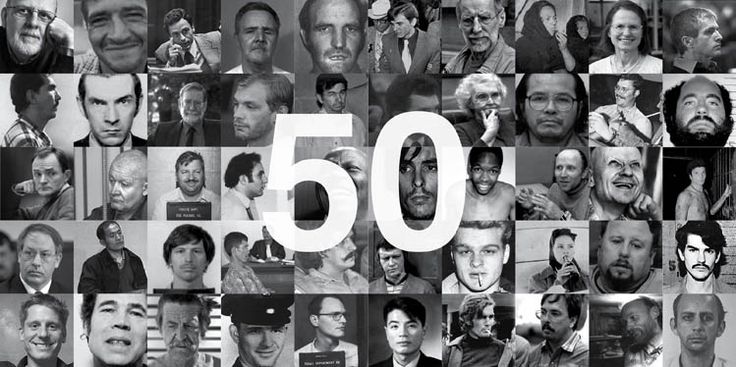
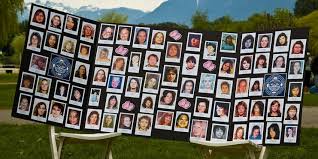
A1Have you ever met a serial killer? I can’t say I have—at least not that I know of. But I’ve worked with other police officers who’ve dealt with them and I’ve investigated unsolved homicides that could be the work of a serial killer. Google Highway Of Tears. I’ve also helped send killers to jail who were possibly caught just before their serial murder career could start… or maybe already had…

So how would you recognize a serial killer if you met one?

First of all, let’s define a serial killer. According to the FBI’s Behavioral Science Unit:

A2The term ‘serial killings’ means a series of three or more killings, not less than one of which was committed within the United States, having common characteristics such as to suggest the reasonable possibility that the crimes were committed by the same actor or actors.

So it’s an individual who’s committed three or more homicides segregated by a block of time. A cooling-off period, so to speak. This separates true serial offenders like Ted Bundy, who committed a spaced-apart series of nation-wide killings, from localized spree or mass murderers like the Columbine shooters or bombers like Timothy McVeigh.

Now, let’s dispel a few myths.

A3Serial killers are not common. In fact, they’re exceptionally rare. Less than .01% of murders are classified as serial incidents. A 2012 study by the United Nations Office of Drugs and Crime (UNODC) lists the North American homicide rate as 3.9 per 100,000 in population, so doing the math from a combined populous of 464 million, you’ve got a .00039% chance of being a serial killer victim. It’s also estimated that no more than 300 serial killers are currently active in North America which puts them at .00064% of the population.

So, you’ve got better odds of scoring big on the lottery than bumping into a Bundy.

Serial killers are not dysfunctional, transient loners.

A5Gary Ridgway, Seattle’s Green River Killer, was married, lived in the same house for years, and held a steady job as an automotive painter. BTK murderer Dennis Rader was also married with children, a church leader, and slayed within a small radius of his home in Wichita, Kansas.

Serial killers are not all insane, nor are they evil geniuses.

A6Vancouver’s Willie Pickton, ran unchecked for years, right under the nose of overlapping police jurisdictions who saw him as a simpleton. Pickton, who butchered 49 women and fed them to his pigs, was no Google Geek but he instinctively stick-handled a skillful interrogation by my colleague Don Adam, one of the RCMP’s best polygraphists.

Serial killers are not all about sex.

It’s more a control thing. Satisfaction from the power of holding their victim’s life in their hands seems to be the primary motivator. It’s psychological, not material. David Berkowitz, the Son of Sam, and Harold Shipman, the British doctor, are prime examples of power freaks.

Serial killers are not natural deviants.

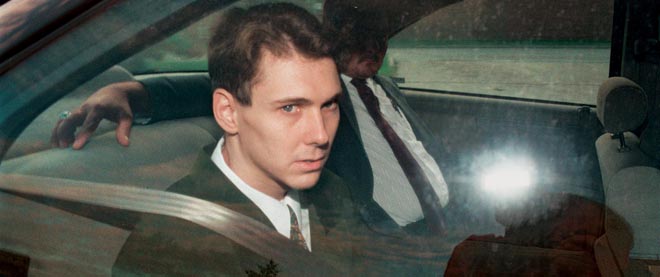
Paul Bernardo 1993They’re products of their development from birth to adulthood with a vast assortment of contributing factors. Socio-economic upbringing. Neglect. Sexual and physical abuse. Poor self-esteem and harsh peer influence. Clifford Olson, the Beast of BC who brutally hammer-murdered eleven children, became incorrigible early in his pathetic childhood and Paul Bernardo resulted from an affluent, but highly-dysfunctional, middle-class family. He came of age in his teens.

Serial killers have no gender or racial template.

A8John Wayne Gacy was white. Wayne Williams was black. Richard Ramirez was Hispanic. Charles Ng was Chinese. They’re not all male, either. There’s Karla Holmolka, who assisted Bernardo in raping and murdering other women including her own sister, and Aileen Wuronos, a particularly nasty piece of work who did in her johns.

Serial killers are not a 21st century, western phenomenon.

A10They’ve been in all cultures and over all ages. Australia and the UK have an abnormally high rate of serial killers, while some of the really weird ones come from Belarus, South Africa, and Germany. Not classified as serial killers are genocide-orchestrating, evil-entities like Adolf Hitler, Stalin, or Pol Pot. Those guys got others to do their dirty work and are in a class of their own.

Serial killers do not have a death wish, nor a longing to get caught.

Most go to extremes to avoid detection, learning from mistakes, improving their craft, and rarely do they taunt their investigators like the Zodiac Killer of California did. He’s yet to be identified. Same with Jack the Ripper.

Here’re a few things we do know about serial killers.

A13

They’re not capable of rehabilitation.

By the time they progress to this extremely abhorrent behavior, it’s too late. And who in their right mind would take a chance on releasing one? Life without parole or the death penalty are the only options.

Their psychology is complicated.

A15Psychopathy is the common diagnosis, but their kinks in antisocial personality disorders seem to be as unique as their modus operandis. Commonly, they have lack of self-control, need immediate gratification, practice predatory behavior, and possess a complete lack of remorse. They can be charming, crafty, spectacularly manipulative, and are pathological liars—not the sort of folks you want inviting you over for dinner, especially a guy like Jeffrey Dahmer. And around puberty, most were cruel to animals, pyromaniacs, and chronic bed-wetters. This is known in forensic psychiatry as the “Triad“.

There’s less and less of them all the time.

A16That’s because of better technological and psychological detection methods resulting in their earlier removal from society. DNA and databanks have been a Godsend in solving multiple offenses, especially clearing cold-cases. There’re better analytical tools like the FBI’s Behavioral Analysis Profiling System, ViCAP, the Violent Criminal Apprehension Program, the NGI, the Next Generation Identification system, and IBIS, the Integrated Ballistic Identification System.

Police resources are better trained and have sophisticated case management software, as well as improved inter-jurisdictional communication. And there’s also legislative initiates like Canada’s Dangerous Offenders Act which allows for indefinite incarceration regardless of maximum statutory sentencing requirements.

We’re fascinated by serial killers.

Why?

Because they tell us about ourselves.

A18I believe they’re extenuation of folklore monsters we heard about in kid stories. The bogeyman. The big bad wolf. Trolls under bridges and witches in forests. Jekyll & Hyde. Frankenstein. Dracula. Psycho. And who hasn’t freaked over Hannibal Lector ?

We’re terrified of monsters and horrified by what they can do to us. But, deep-down, we have an intense curiosity about what makes these monsters tick. It may be a fear that we, ourselves, could become a monster. Or the stranger two doors down may already be one. Nature has hard-wired our brains to manage our safety through recognizing danger and alerting each other before it happens. We do this through storytelling and we’re fascinated by good stories. Especially stories about the most dangerous of creatures—serial killers.

So how do you avoid being murdered by a serial killer?

Simple. Don’t do what their victims do.

A19Serial killers are creatures of habit and opportunity. They go for the easiest, most vulnerable, most disposable prey. Generally, those are women and youths of both sexes in the high-risk lifestyle demographics—sex trade workers, substance abusers, socio-economic outcasts, and free-spirits who travel alone.

The odds of your being murdered—never mind by a serial killer—are astronomically remote.

But you can still decrease those odds by not associating with a charming stranger.

Knowing who to avoid takes sobriety, experience in life, common sense, and exercising caution when being alone.

A20

THE LOST ART OF MAKING MUMMIES

A14The word “mummy” conjures images of ragged-wrapped, stretch-armed, walking dreads of the dead—frenzied figures from Hollywood’s hideous horror. Like Dracula, Frankenstein, and the hairy old Wolfman, mummies were classic fictional frights. But, in reality, mummies are tangible ghosts. They’re bodies that stick aroundlong after death—and they’re still here, fascinating us with mystical gore.

Mummification is the process of stopping your body’s natural decomposition after death. Nature built a recycling system into all of us including your cat, your dog, crocodile, cobra, monkey, macaw, and your pet parrot—all have been made into mummies.

A10Where did this preservation process originate? How does it work? Is mummification still done today?

Or is the art of making everlasting mummies lost forever?

The English word “mummy” originated from the Latin term “mumia and the Arabic term “mumiya which meant a preserved corpse. The Old English Dictionary defined mummy as “A human or animal body embalmed (according to the ancient Egyptian or some analogous method) as a preparation for burial”.

Chamber’s Cyclopedia goes a step further. “A human or animal body desiccated by exposure to sun or air. Also applied to the frozen carcass of a human or animal embedded in prehistoric ice or snow”.

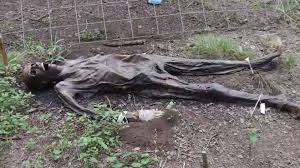
Scientifically, a mummy is simply a being who’s soft tissue has been long preserved after death. Normally when a person dies, the process of decomposition sets in immediately and is divided into two actions.

A18The first is autolysis which is the body’s enzymes beginning to digest themselves. This is followed by putrefaction which is the bacterial breakdown of organic matter.

The rate and manner of decomposition is dependent on many factors. Mainly it’s the surrounding environment’s elements of heat or cold, humidity, exposure to air, and the physical makeup of the body itself. Large, fat corpses in a hot humid location will rot much faster than a small, skinny one in a cool dry setting.

Mummies are classified into two groups.

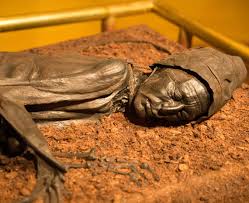
A19One is termed anthropogenic which means it’s intentionally preserved or manmade. The other is termed spontaneous. These mummies naturally occur due to death taking place in a suitable environment like a hot dry desert, a cold icy glacier, or the oxygen depleted, anaerobic depths of a peat bog.

The anthropogenic mummification process has been around 10,000 years and evolved through centuries of experimentation. Plus a lot of trial and error.

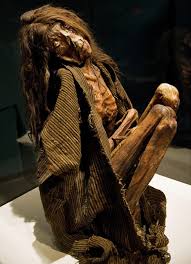
A21The earliest human mummies are found in South America and are more like hybrid corpse-statues than the fully preserved, full sized cadavers of the Egyptians. The Chinchorros of Chile disarticulated the bodies, sun-dried the sections, then sewed them together with sinew, sticks, and straw. It seems they were kept in their houses for the sake of the family rather than the deceased.

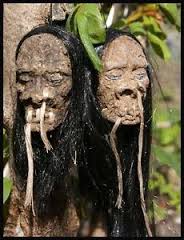
Man-made mummies have been found on every continent of human habitation. They’re common to China, Asia, Europe, Australia, Africa, and North America, but mostly attributed to suitable sub-climates, including the islands of Papua New Guinea where they practiced shrinking heads.

The most famous mummies were made by ancient Egyptians.

A22

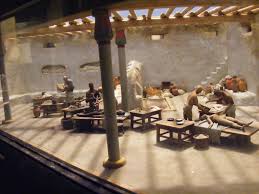
Anthropogenic preservation has been recorded in Egypt since 3500 BC as their culture’s belief in the afterlife evolved. The early residents of the Upper Nile buried their dead in the hot, dry sand and made the remarkable observation that this preserved bodies in a permanent state.

This led to their profound conclusion that since the body remained intact, therefore the soul must remain intact after death as well.

A23Ancient Egyptians saw a connection between the preservation of body and wellness of the soul in the afterlife. They believed if a body was well-prepared for eternity then so would the soul. Progressively, this led to advanced preservation techniques. Fortunately, it was clearly recorded.

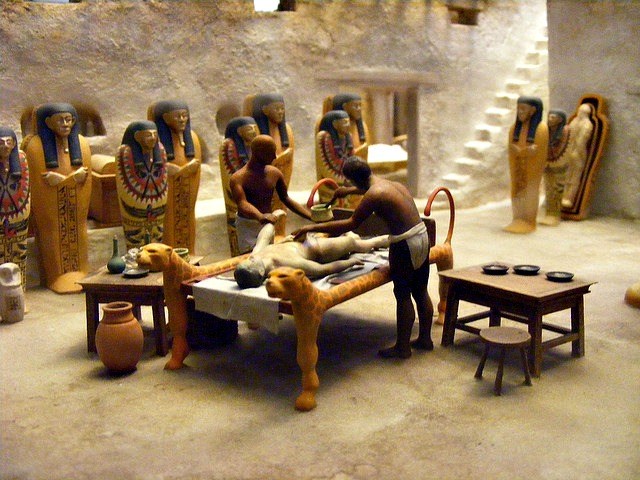
Two sources exist that describe the mummification process Egyptians perfected. One surviving papyri translated as The Ritual Of The Embalming.  It describes more of the ceremonial practices than the practical. Herodotus’ Histories, however, left us with an intricate manual of exactly how human mummification was done at the height of the craft—the New Kingdom’s 18th through 20th dynasties in the period of 1570 to 1075 BC when the world’s outstanding mummies were made.

The instructions go like this:

Step One: Organ Removal

A24First, make a small incision approximately 4 inches long on the left side of the abdomen. Then remove most of the organs through this small opening, cutting them away one by one. The exception is the heart. Leave the heart intact because it’s the seat of intelligence and needs a last judgement before the soul enters the next life.

The intestines, stomach, liver, and lungs are also regarded as an essential requirement for the body in the afterlife. So, after their removal, preserve each separately inside a canopic jar. Each jar is protected by its own god whose head is represented on the jar lid.

Brains used to be removed through the nose using a metal implement, however our best Egyptian mummies now have their brains left in place. As in life, the brain does not seem to have any use after death, so ignore it and leave the brain to dry in place.

Step Two: Sterilizing and Packing the Body

A25Wash out the empty body cavity with palm wine. It is alcohol and acts as a sterilizing agent. Next, mix the palm wine with pine resin. This is an antibacterial agent.

Again, following ancient methods, pack small linen bags containing crushed spices, myrrh and sawdust inside the body to maintain its form. Stitch the abdomen up and seal it with hot beeswax.

Step Three: The Protective Coating

Blend together specific quantities of plant oil, pine resin, spices, and beeswax. Brush this mixture over the entire surface of the body to create an even layer.  Leave this outer coating to set.

Step Four: The Natron Solution

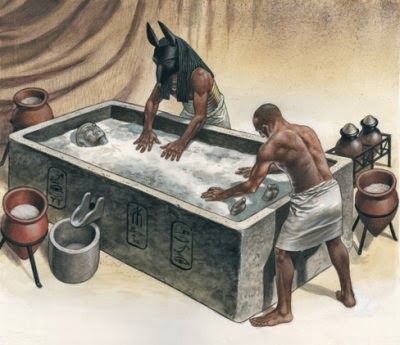
A26Now treat the body with the Egyptian salt called ‘natron’. It’s made of four constituent parts; sodium carbonate, sodium bicarbonate, sodium chloride, and sodium sulphate. If Egyptian natron is not readily available, carefully measure each of these components to recreate the naturally occurring natron. Pour the blended salts into deionised water to create a solution of optimum concentration.

Also, place the intestines, stomach, liver, and lung in the same natron solution, within their individual containers.

Leave the body and organs in this solution for exactly 70 days to allow the necessary chemical changes to occur. As water is drawn out of the body through the process of osmosis, the natron salts diffuse into the body’s soft tissue and the carbonates combine with the fats, turning them into a stable form more resistant to the process of decay.

Step Five: Wrapping and Drying

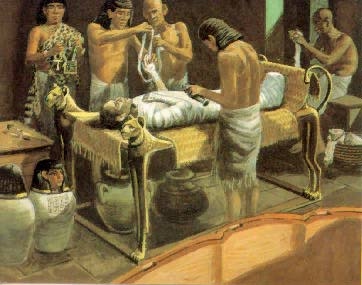
A27Remove the body from the natron solution and dry it out for two weeks in a sealed unit, set to a specific combination of low humidity and warm temperature of the Egyptian summer environment.

Begin the long process of wrapping, using strips of linen cut to varying dimensions to fit different parts of the body. Seal each layer with melted pine resin and beeswax.

Remove the intestines, stomach, liver, and lungs from the natron solution. Dry, wrap, and place in their separate containers. Then place the wrapped body and organs back in the sealed unit and leave to dry for a further six weeks.

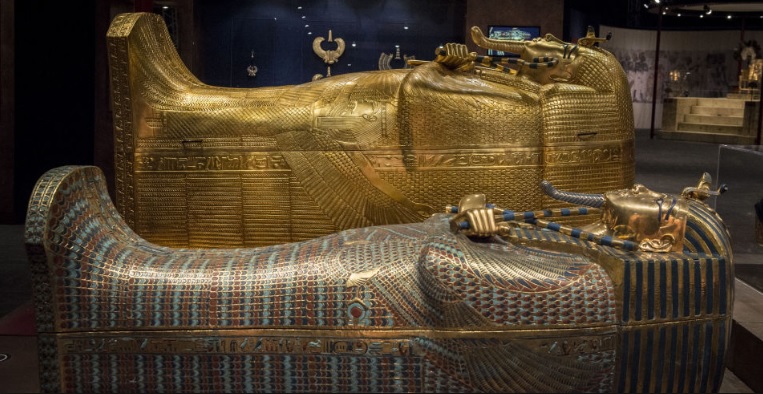
Finally, set the mummified body into a fitted sarcophagus, seal it with resin and beeswax, then set the sarcophagus in a tomb and leave it there for eternity.

A28

*   *   *

A29In modern time, entire industries grew from public fascination around mummies. Beyond Hollywood movies and museum displays, mummies were considered medicinal magic. Ground mummy powder was sold for intestinal ailments, infertility, and internal bleeding control. A whole side-show industry offered mummification services to gullible people wanting their bodies preserved forever. Their makeshift mummies were hastily rushed, leaving their conned corpses sealed in ornate tombs and rotting away, with customers none the wiser.

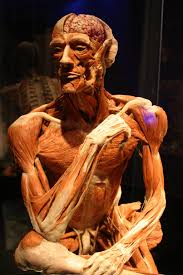
Mummification morphed into modern times. Famous folks like Vladimir Lenin were stuffed and put on display in the Kremlin. Popes were preserved. So were saints and some scientists like Gottfried Knoche who was the inventor of embalming fluid. Evan Peron was encased in wax. Her life-like appearance led to the technology of plastination where water and fat are replaced by polymers that retain microscopic tissue properties. They don’t stink and are great for Body World’s traveling displays.

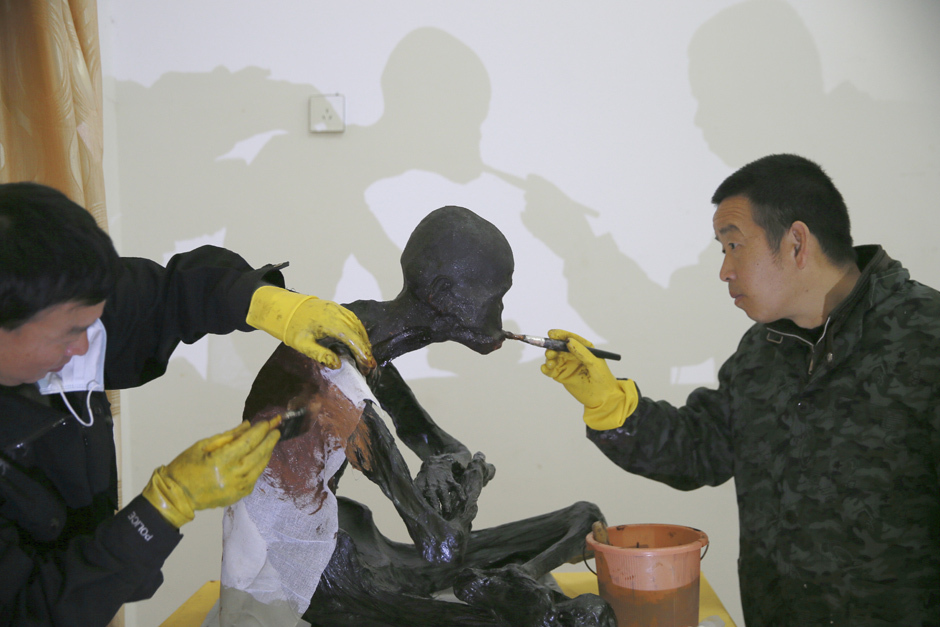
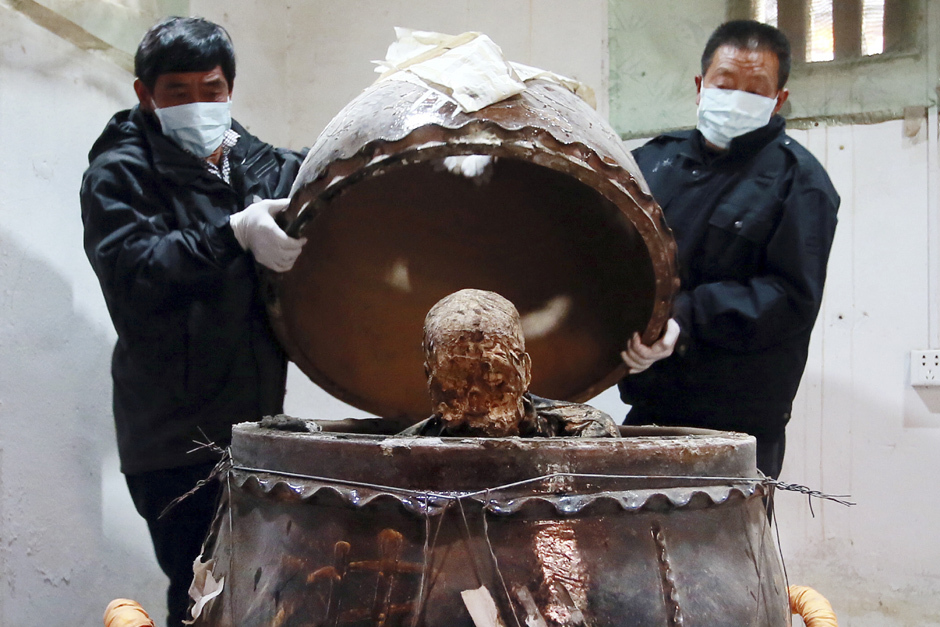
China Mummified MonkLittle known to the western world is the ancient Buddhist monk practice of Sokushinbutsu. There are shadowy accounts of monks who were able to consciously mortify their flesh to death. It’s claimed Mahayana monks knew their time of death and prepared their bodies for preservation through a sparse diet of salt, nuts, seeds, roots, pine bark, and urushi tea. Their remains were set in the lotus position and sealed in a drying vat for three years…. their mummified bodies then adorned with gold… and put in a shrine on display.

Sounds way over the top?

Well, I found this article from a Chinese website. It was published this month and proves the art of mummy making is anything but lost.

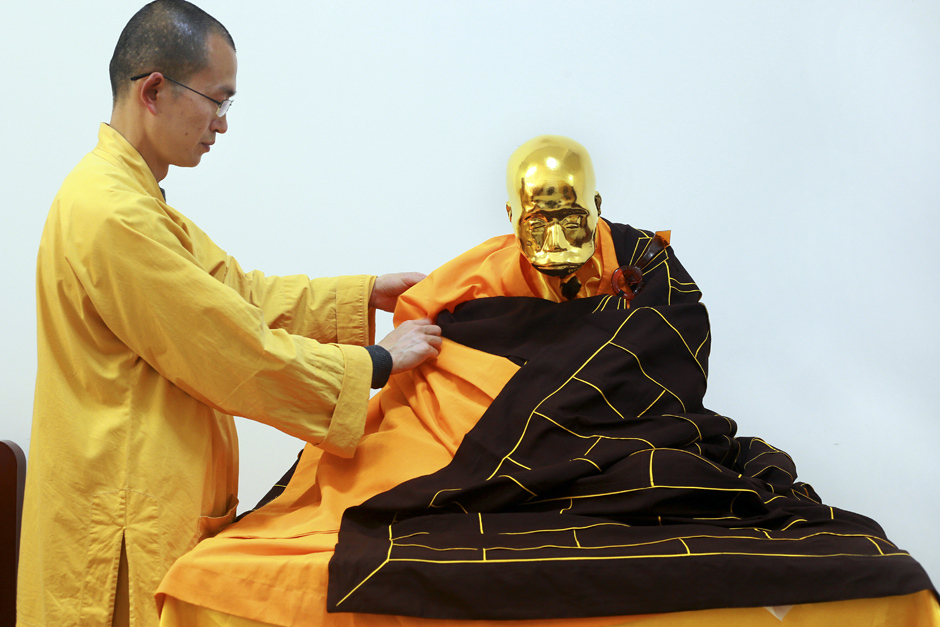
China Mummified MonkBEIJING — A revered Buddhist monk in China has been mummified and covered in gold leaf, a practice reserved for holy men in some areas with strong Buddhist traditions. The monk, Fu Hou, died in 2012 at age 94 after spending most of his life at the Chongfu Temple on a hill in the city of Quanzhou, in southeastern China, according to the temple’s abbot, Li Ren. The temple decided to mummify Fu Hou to commemorate his devotion to Buddhism — he started practicing at age 17 — and to serve as an inspiration for followers of the religion that was brought from the Indian subcontinent roughly 2,000 years ago.
China Mummified MonkImmediately following his death, the monk’s body was washed, treated by two mummification experts, and sealed inside a large pottery jar in a sitting position, the abbot said. When the jar was opened three years later, the monk’s body was found intact and sitting upright with little sign of deterioration apart from the skin having dried out, Li Ren said. The body was then washed with alcohol and covered with layers of gauze, lacquer and finally gold leaf.
China Mummified MonkIt was also robed, and a local media report said a glass case had been ordered for the statue, which will be protected with an anti-theft device. The local Buddhist belief is that only a truly virtuous monk’s body would remain intact after being mummified, local media reports said. “Monk Fu Hou is now being placed on the mountain for people to worship,” Li Ren said.

*   *   *

In my humble opinion… making mummies is far from a lost art. Monk Fu Hou is a phenomenal piece. He’s a guilded master of permanent human preservation and solid sample of scientific mummification.

I’d like to wake him and hear his views.

In this photo taken April 16, 2016, abbot Zhen Yu places a robe on the mummified body of revered Buddhist monk Fu Hou in Quanzhou city in southeastern China's Fujian province. The monk, who died in 2012 at the age of 94, was prepared for mummification by his temple to commemorate his devotion to Buddhism. The mummifed remains were then treated and covered in gold leaf, a practice reserved for holy men in some areas with strong Buddhist traditions. (Chinatopix via AP) CHINA OUT ORG XMIT: XHG805

In this photo taken April 16, 2016, abbot Zhen Yu places a robe on the mummified body of revered Buddhist monk Fu Hou in Quanzhou city in southeastern China’s Fujian province. The monk, who died in 2012 at the age of 94, was prepared for mummification by his temple to commemorate his devotion to Buddhism. The mummifed remains were then treated and covered in gold leaf, a practice reserved for holy men in some areas with strong Buddhist traditions. (Chinatopix via AP) CHINA OUT ORG XMIT: XHG805