
Author Archives: Garry Rodgers

About Garry Rodgers

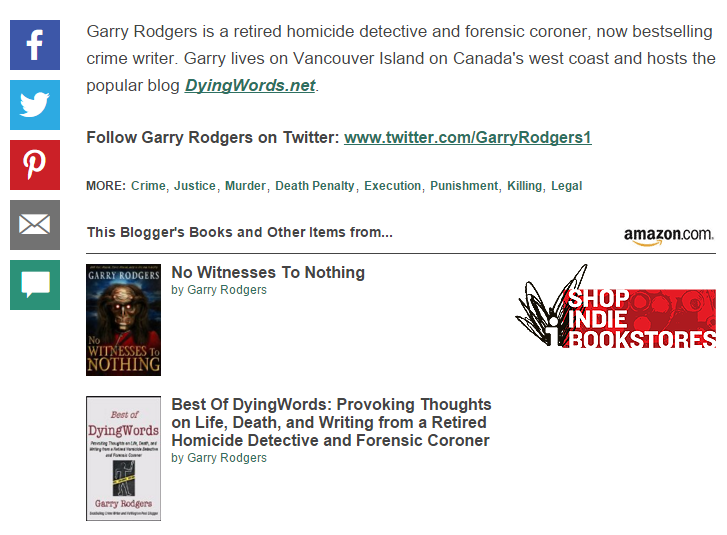
After three decades as a Royal Canadian Mounted Police homicide detective and British Columbia coroner, International Best Selling author and blogger Garry Rodgers has an expertise in death and the craft of writing on it. Now retired, he wants to provoke your thoughts about death and help authors give life to their words.

HOW TO HIT #1 ON AMAZON’S BESTSELLER LIST—REPEATEDLY

B18Every writer dreams of hitting #1 on the big dog’s Bestseller List. Amazon is the world’s biggest bookseller and has the largest search engine capacity—second only to Google. Amazon offers over four million books in their online store and grows by 4,200 per day. That’s a whack of competition. But—in the last 3 weeks—3 of my Amazon Kindle eBooks nailed the #1 spot in their free categories.

How’d I pull this off? And how can you do the same?

Well, the Bestselling Secret is not in organic sales. It’s in manipulating SEO. Search Engine Optimization. It’s worked for me and here’s how manipulating Amazon’s system will work for you.

B6First, credit goes to my friend and fellow author, Susanne Lakin. Susanne writes as C.S. Lakin and under her pen-name, Charlene Whitman. She also hosts the popular website Live Write Thrive.

Susanne just released a new online course properly called Targeting Genre For Big Sales. I worked with Susanne as a beta-tester—an online lab rat—and came out a winner. I also did this without spending a dime.

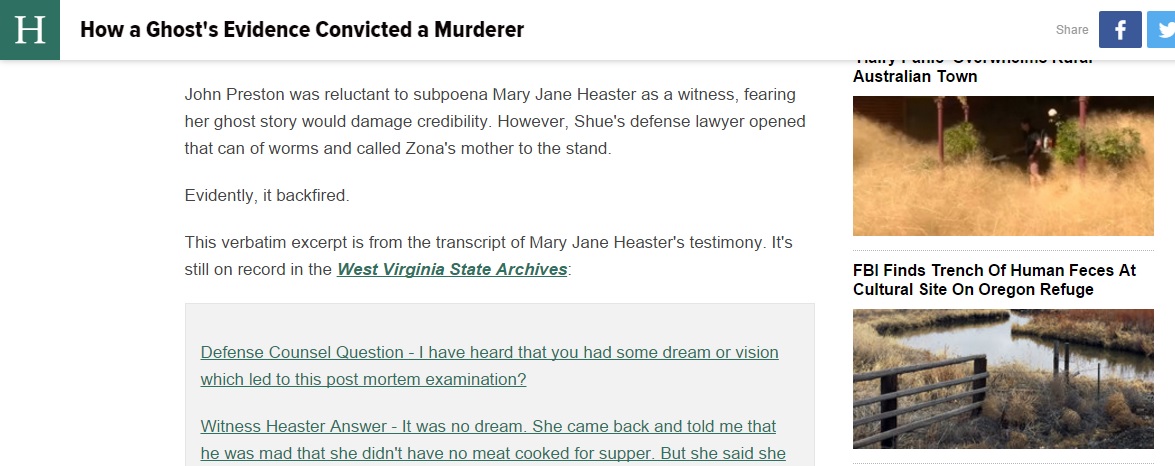
Regular DyingWords followers know I’ve been blogging for the Huffington Post since November and now have thirty articles published on the Huff. That makes me a bit of a self-appointed expert on how the Huff Post works so I decided to share my experience with others by writing two straightforward, no BS guides.
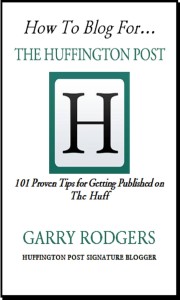
Huff Post 21 RevisedOne’s a primer called How To Blog For The Huffington Post—21 Proven Tips for Getting Published on the Huff. It serves as a lead-magnet to the second book—a main guide not-surprisingly called How To Blog For The Huffington Post—101 Proven Tips for Getting Published on the Huff.

I researched the material with help from other Huff Bloggers who have way more Huff Post experience than me. I drafted the manuscripts in a Word.doc (Duhs). I did my own editing (Gasps!) by using the Grammarly app. I designed my own covers in Word (Groans!) and then sized them as a jpeg in Paint (Huh?). I did my own eBook formatting (How?) in Calibre and then uploaded to Amazon’s Kindle Direct Publishing (Simple!).

And nothing happened. Zilch. SFA.

Like most, I was near the bottom of the list and spinning fast into the black hole of self-publishing. I did some Tweets and a few blog posts which saved me from imploding and then went on to work on other projects.

A4But I’d been following Susanne Lakin’s emails promoting her course on Targeting Genre For Big Sales and she was making sense to me. I knew my problem lay in “Discoverability”. My Huff Guides were okay as technical publications and they’re definantly the right information if you want to get published on the Huffington Post, but nobody was hearing about them.

So, I decided to try something out.

Susanne generously gave me access to her about-to-be-released course—for free as a beta-tester—in exchange for sharing my results.

B7Now, there’s a lot more to this process that Susanne thoroughly covers in her course than I have room to tell you here. I highly recommend you pay for and take her lessons if you want to achieve the same success I have. It’s a hundred bucks off till the end of April 2016 if you use the DyingWords coupon code TARGET44 at this link:

http://cslakin.teachable.com/  Click Here

But, in a nutshell, this is what I did. And remember—it’s all about Discoverability.

1. Proper Key Word and Key Phrase Research

B8Amazon lets you enter up to seven “keywords” into your dashboard as metadata to allow the search engine to find and promote you. Go beyond the term “Key Word” because the trick is in “Key Phrases”. Amazon allows you to use any combination of words to make up seven phrases. The phrases just have to be separated by commas.

Finding effective key words and phrases is not difficult, but it’s time-consuming. There’s a tool called KDSPY that Susanne says is very effective and well worth the forty-seven bucks. But I didn’t use it. I looked at this as a money-making venture, not a money-spending one, so I did this the old-fashioned way. I used pen and paper. You could also use Excel but, personally, I hate that program.

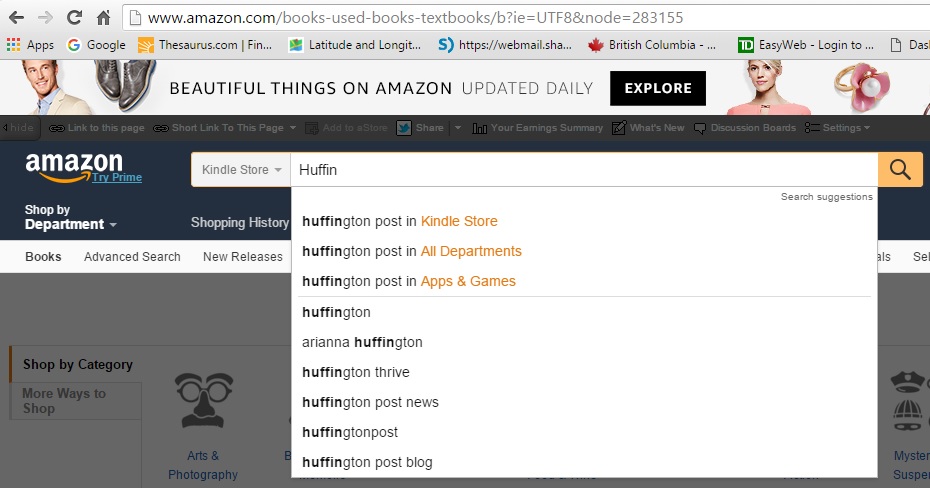
The first thing to do is bring up Amazon.com Kindle Books on your browser. If it’s a Kindle eBook you’re promoting and not just a print book, make sure you’re searching in the Kindle Department. And make sure you’re at the Amazon.COM site (the American site) because that’s where the heavy traffic is specifically searching. Don’t worry—the information will work on all the Amazon sites worldwide.

Do not use the Google Keyword search tool, though. It’s too general and will lead you astray from what Amazon knows.
B9

Understand that Amazon is just like Google and, when you begin to type the word or phrase you’re looking for, it’s already thinking ahead and showing you the most-searched-for, similar matches. Copy the best of these down in a list with a priority number of where the term appears on the ten-space vertical window that Amazon is showing you.

This is where you have to be imaginative.

B10You have to think like a reader who is looking for your product. And, yes, your book is just a product to a reader who is a consumer. You have to give that consumer the best opportunity to discover and buy the product you’re offering for sale.

It took me a couple hours to play around with combinations and here are the key words and phrases I came up with for the Huff Post 21 Tip guide:

How To Blog For Huffington Post, How To Get Published By Huffington Post, Blogging At Huffington Post, Blogger, Huffington Post, HuffPost, Ariana Huffington

It makes no difference what order you put them in or if you use capitals. It’s the combinations that matter.

2. Product Description
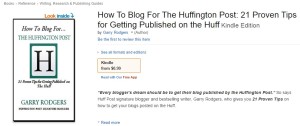
B11Amazon’s search engine doesn’t care about what you say or how attractive you make it. It’s looking for relevancy to searches so they can sell something that’s being looked for and wanted. This is why you need to salt the description with your title, subtitle, and key words and phrases. Here’s my product description for the 21 Tip Guide with the key stuff hi-lighted in red:

Every blogger’s dream should be to get their blog published by the Huffington Post.” So says Huff Post signature blogger and bestselling writer, Garry Rodgers, who gives you 21 Proven Tips on how to get your blogs published on the Huff.
Serious bloggers know the Huffington Post is the world’s largest blog site. Getting published on the HuffPost is a significant badge of achievement — it’s the gold standard of blogging — social approval by a major media corporation that your work meets its mark of excellence. You just can’t buy this type of exposure.
As a blogger, you have something to say and you want to hear what others say back. If you have quality content — and that’s the key — you’ll want to say it on the Huffington Post.
“But how in the world do I ever get noticed?” you ask.
Well, it might not be easy, but it can be done. And it’s done by applying these 21 Tips On How To Blog For The Huffington Post in a holistic approach. In other words, applying these tips on publishing and journalism in an overall, systematic manner.
It’s also about building your platform — your brand and your profile. In this guide, Garry Rodgers gives you proven advice on elevating your platform and getting noticed by Huffington Post editors.
This guide is a primer for the more extensive book How To Blog For The Huffington Post — 101 Proven Tips for Getting Published on the Huff, also by Garry Rodgers, and is laid out in six clear, progressive sections:
SECTION ONE — UNDERSTANDING THE HUFFINGTON POST CULTURE
SECTION TWO — WRITING HUFFINGTON POST PUBLISHABLE BLOGS
SECTION THREE — BUILD A HUFFINGTON POST BLOGGER PLATFORM
SECTION FOUR — GETTING NOTICED BY THE HUFFINGTON POST
SECTION FIVE — PITCHING TO THE HUFFINGTON POST
SECTION SIX — LINKS TO RESOURCES
Can it happen to you? Garry Rodgers can’t promise anything, but shares everything he knows about improving your chances of being noticed by a Huffington Post editor.
How To Blog For The Huffington Post — 21 Proven Tips For Getting Published on the Huff contains basic information about the mechanics of writing and publishing blogs for the Huffington Post, as well as priming you for the advanced work 101 Tips for Getting Published on the Huff. If you work these professional blogging tips — and do the work — they’ll pay off in a way that’s so, so worth it.
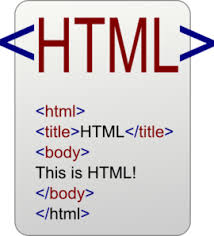
B12While Amazon doesn’t care about what your message says or how it looks, your product searcher sure does. This is why it’s vital to set up the description with HTML (Hyper Text Markup Language) coding by using bolds, italics, quotations, lists, headings, subtitles, paragraph structure and so on.

Here’s the bad news…

As my internet buddy, Johnny B. Truant, says, “Amazon’s dashboard sucks big, hairy donkey balls” and he’s right. Amazon’s little window for your description will accept 4,000 characters but it won’t do the HTML for you. If you try to cut & paste a nice italicized and bolded description from Word, it’ll just show up as Plain-Jane on your Amazon product page.

There’re two ways around this:

One is you can learn HTML coding and do all the <b><i><p> stuff yourself and it isn’t that hard. Susanne tells you how in her course and she has a pdf cheat-sheet for the universal HTML codes.

B13Susanne also refers you to a cool, free tool called the Amazon Book Description Generator that I used. Click Here

It’s very effective, but be aware of two things. You can’t input from Word with bold and italics already done or you’ll become very frustrated. Secondly, Amazon allows you 4,000 characters which include the HTML characters. If you write 4,000 characters in Word and then use the Generator to add your HTML, Amazon’s donkey-balls box will chop you short. So, depending on how much HTML you want to add, you need to write about 3,200 characters in Word.

Be sure to use as many of the 4,000 allowed spaces as you can. Even if your perspective reader doesn’t absorb them all, the extra words and phrases add up to discoverability through SEO. Also, don’t just write your description to favor your key elements. It still has to flow for your reader as it’s the ambassador of your material that should make the reader “Look Inside”.

3. Category Selection
B15It’s critical to slot your book in the proper BISAC (Book Industry Standards & Communications) category. This is not something Amazon invented. It’s universal, but you need to understand the primary and secondary categories.

This, too, takes a lot of time to find the right slots that have the balance of the most traffic and the least competition. Susanne recommends using the KDSPY but, because I was doing this venture as an experiment in free, I selected my categories manually—making lists until I got what I thought were the right ones.

Here’s how I did it:
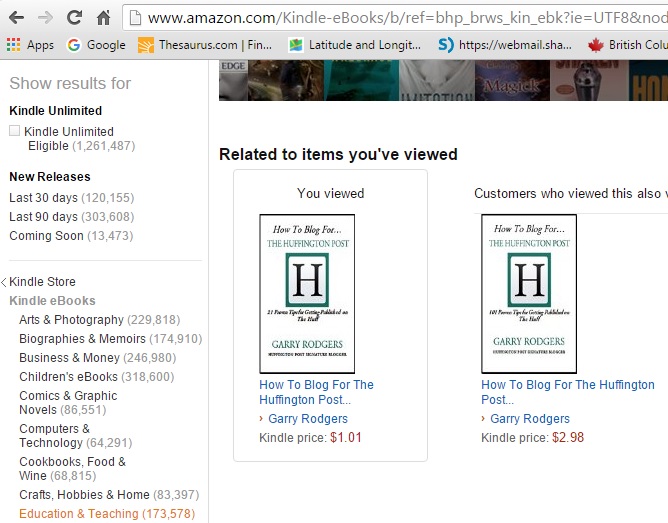
B14Again go to the Amazon.COM Kindle Department and look at the categories in the left sidebar. Beside each, you’ll see a numeric figure in brackets which lists the amount of publications in that slot. You have to play around with the sub-categories until you find a fitting place with a relatively low number to compete with. Be aware that Amazon only allows you two entries so you want to make sure you get the proper, relevant ones and not go off into some obscure shelf that no one visits.

As with key material and product description, balance is important.

Here’re the two categories that I selected for the 21 Tips Guide:

REFERENCE > LANGUAGE ARTS & DISCIPLINES > Journalism (3,245)

REFERENCE > LANGUAGE ARTS & DISCIPLINES > Publishing (4,498)

Now I went back and salted the product description with the category keywords ie – Journalism and Publishing. This is vital to complete a loop for SEO.

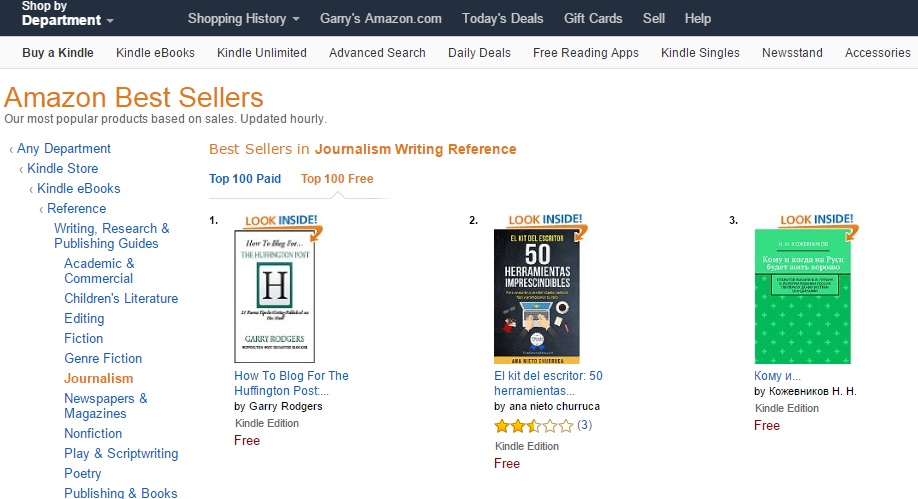
This system sent How To Blog For The Huffington Post—21 Proven Tips for Getting Published on the Huff to the #1 spot in Journalism on all four of the English-speaking stores; USA, UK, Australia, and Canada and it climbed to #3 in Publishing.
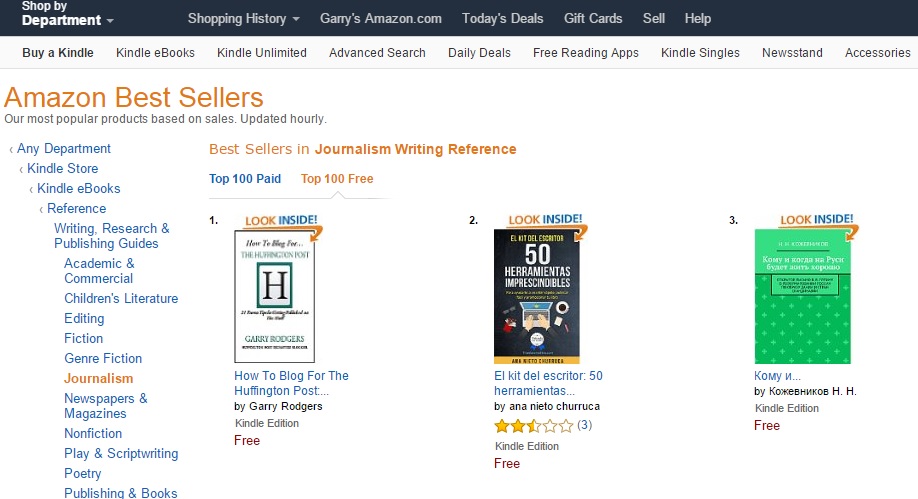
Huff Post #1 BS Screenshot

So was this a fluke? Did I just get lucky and surf a good wave? Or could I do it again?

I tried the same process with the 101 Tips Guide and used the same key material and categories, although I tweaked the product description to match.

Sure enough. It went to #1 in both Journalism and Publishing. Like, right away.
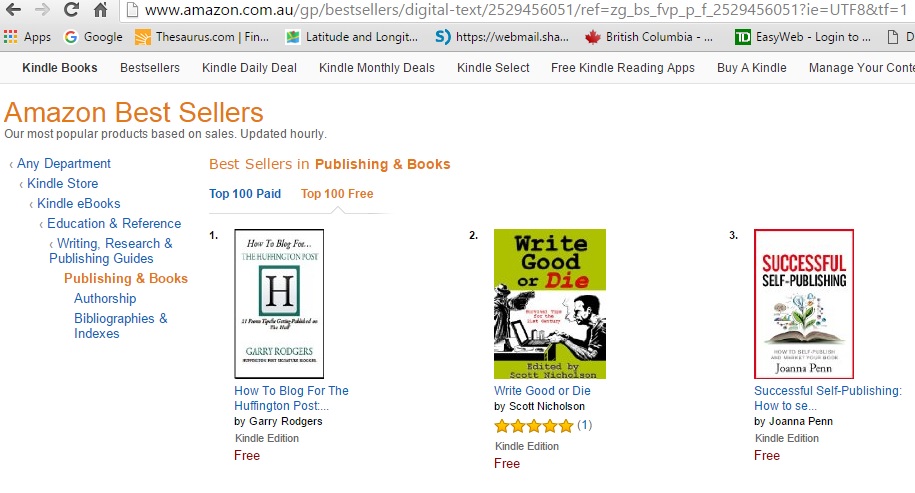
Huff Australia

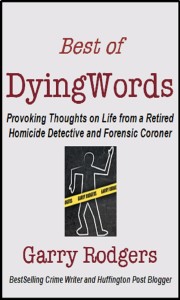
Now I knew I was on to something. I then took my eBook Best of DyingWords—Provoking Thoughts on Life From a Retired Homicide Detective and Forensic Coroner and applied Susanne’s process using these keywords:

Blogging, Forensic Psychology, Philosophy, Health and Happiness, Self-Help Books, Positive Mental Attitude About Life, Think And Grow Rich

And I selected these categories:

BIOGRAPHIES > PROFESSIONALS & ACADEMICS > Philosophers (1349)

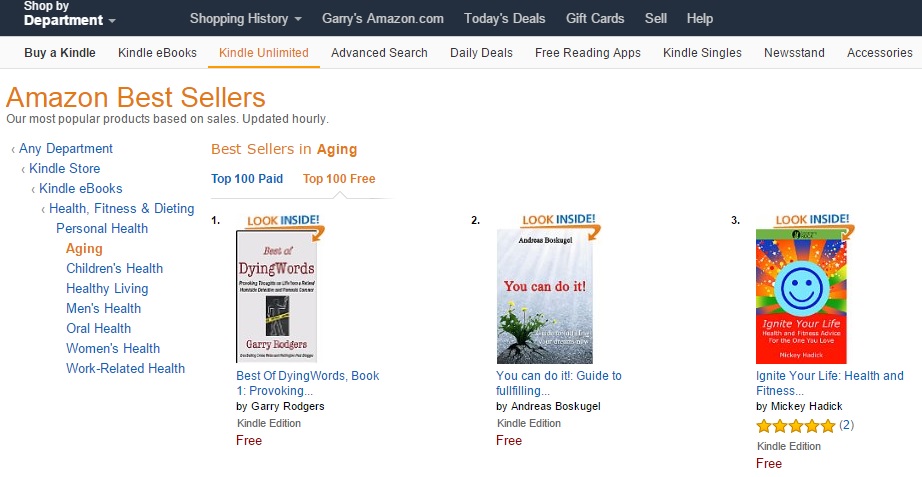
HEALTH, FITNESS & DIETING > PERSONAL HEALTH > Aging (1071)

This type of book required a completely different style of product description, but I used exactly the same salting technique. Click Here to read the product description.
A8

Best of DyingWords—Provoking Thoughts on Life From a Retired Homicide Detective and Forensic Coroner went right to #1 straight from the gate and, as I write this, it’s still in first place in both categories on all of Amazon’s English-speaking sites.

My Amazon author ranking also increased over 1,000% from the start of this experiment 🙂

It’s important to say I entered these three books in the KDPS (Kindle Direct Publishing Select) program and set them on a five-day free promotion. Within half a day, I noticed enormous leaps in their list placings and, within a day, all three went to #1 in their slots.

Now I can hear some of you saying “Wait a minute, Garry. Being at the top of a free list is not the same as selling on the paid list.”

B3Ah, no. I think it’s way better for a new book to climb the free charts because that’s what generates traffic, gains new readers, starts reviews, and links to your other products including your website and mailing list. It’s all about Discoverability and that, in my opinion, is the name of the game in internet writing. You have to give in order to receive. Once you give enough, you’ll get noticed. And this carries on into your paid rankings once the promo’s over. That’s as sure as the law of friggin’ gravity.

Beyond these three elements of optimizing your book’s appeal to Amazon’s search engine, I highly suspect something else is at play. From what I know about search engines, they like two things—fresh, active content and hyperlinks.
DyingWords Life Cover jpegIn the past two months. I’ve uploaded eight new products for sale on Amazon and I’ve internally hyperlinked them to each other and to their respective Amazon sales pages, as well as to many other internet pages.

I’m damned sure Amazon’s search engine recognizes this and—combined with properly-done key words/phrases, descriptions, and categories—it’s saying “Hey! We like this Garry Rodgers guy. He’s slammin’ us with fresh content and makes it easy for us to sell all kinds of stuff. Give this boy a front seat on the bus!

It’s worked for me—three books in a row—and it can work for you… if you want to Hit #1 on Amazon’s Bestseller List—Repeatedly.

*   *   *

If you’re serious about getting your Amazon products discovered, I highly recommend you take Susanne Lakin’s excellent online course Targeting Genre For Big Sales. Although I simplified the process in this post, there’s a lot more to it and Susanne’s tutoring is worth every penny of the regularly priced $397 online course.

And you can get a $100 (25%) discount on Targeting Genre For Big Sales till the end of April 2016 by using this DyingWords coupon TARGET44.  Click Here

A4


BTW – Here’s a little plug for my friends at Grammarly who contacted me to say thanks for mentioning their app in this post –

“I’ve been using the Grammarly app for six months and couldn’t live without it. Grammarly is far more than just a spelling, punctuation, and grammar tool. It’s like having my old English teacher standing over my shoulder. Like her, Grammarly teaches me to become a better writer.”

Check out Grammarly. It helped me to polish my product descriptions as well as my content and it’s partly responsible for my Amazon success. I highly recommend the Grammarly app!  Click Here

 

TOP TWENTY INVENTORS KILLED BY THEIR INVENTIONS

A02There’s something ingrained in humans that cause us to take dangerous risks and try things that might change the world. Over the course of civilization, thousands upon thousands of inventions succeeded beyond their creator’s wildest dream. But some were epic fails. Here’s a look at the top twenty inventors who were killed by their own inventions.

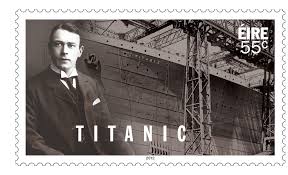
A20 Andrews20. Thomas Andrews was the chief naval architect for the R.M.S. Titanic and it was his honor to accompany the ship on its maiden voyage. Andrews was aware of the Titanic’s vulnerability in ice-laden waters and originally called for the Titanic to be double-hulled and equipped with forty-six lifeboats, instead of the twenty it actually carried. He was overruled due to cost constraints. When the Titanic struck the iceberg on April 15, 1912, Andrews heroically helped many people into the lifeboats. He was last seen in the first-class smoking lounge, weeping. His body was never recovered.

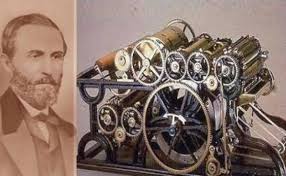
A1919. William Bullock invented the first modern printing press. While installing a machine for the Philadelphia Public Ledger, Bullock tried to kick a belt onto a pulley and got his leg crushed in the moving mechanism. He quickly developed gangrene and his leg needed amputating. During his surgery on April 12, 1867, Bullock died of complications.

A1818. Francis Edgar Stanley invented the photographic dry plate which he sold to George Eastman of Eastman-Kodak fame. With the profits, he founded the Stanley Motor Carriage Company and developed a line of steam-powered automobiles called Stanley Steemers. On July 13, 1918, Francis Stanley was testing one of his Steemers and swerved to miss some farm animals. He plowed into a wood pile and died.

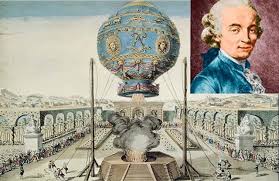
A1717. Jean-Francoise Pilatre de Rozier was a French chemistry and physics teacher as well as being the true father of aviation. He made the first hot air balloon flight in 1783. He was also the first to experiment with hydrogen as a propellant, testing it by taking a mouthful and blowing it across an open flame. After losing his hair and eyebrows, he dismissed hydrogen as being too volatile—something the makers of the Hindenburg would later confirm. On July 15, 1785, de Rozier attempted to cross the English Channel in his balloon. It crashed, killing de Rozier and his passenger.

A1616. Louis Slotin was an American nuclear physicist who worked on the Manhatten Project. After the war, Slotin continued to experiment with plutonium and accidently set off a fission reaction which released a hard burst of radiation. Realizing what he’d done, Slotin heroically covered the material with his body while the others made a run for the hills. He died on May 30, 1946, two weeks after the exposure.

A1B

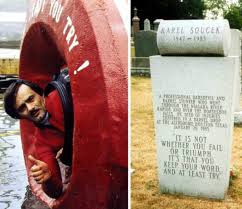
15. Karel Soucek was a Czechoslovakian daredevil and inventor. He built a specially-designed, shock-proof barrel and repeatedly flowed over Niagara Falls. To top this feat, Soucek invented a new capsule which was dropped from the roof of the Houston Astrodome on January 20, 1985. It missed its target, which was a small water container, and Soucek was killed on impact. World-renown stuntman, Evel Knievel, tried to talk Soucek out of it, saying “It was the most dangerous thing I’ve ever seen.”

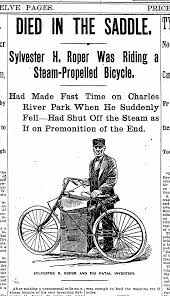
A1414. Sylvester H. Roper invented the world’s first motorcycle. He called it a velocipede and it was actually a converted bicycle powered by a steam engine. On June 01, 1896, Roper was testing the machine on a bicycle racing track and was lapping the pedal-powered two-wheelers at over forty mph. Suddenly, he wiped out and died. The autopsy showed the cause of death to be a heart attack, but it’s not known if the attack caused the crash or if the crash caused the attack. He was seventy-two.

13. Horace Lawson Hunley invented the submarine. His first prototype trapped seven sailors underwater and killed them all. Hunley went back to the drawing board and came up with a new and improved sub, aptly named the H.L. Hunley, which he skippered himself. On October 15, 1863, Hunley was testing the Hunley off the coast of Charleston, South Carolina, when it failed to surface and again killed the crew—including Hunley himself.

A12A12. Aurel Viaicu was a Romanian inventor and test pilot of his own line of aircraft, called the Vlaicu WR I, II, and III. He achieved many notable firsts such as the highest, longest, and fastest flights. On Friday, September 13, 1913, Vlaicu’s luck ran out when he attempted the highest altitude flight ever—crossing the peaks of the Carpathian Mountains. The cause of the crash was never determined.

11. Valerian Abakovsky invented the Aerocar, also known as the Aerowagon, which was a steam-powered, propeller-driven rail car intended to whisk railway executives quickly across the vast lands of Siberia. On July 24, 1921, the twenty-five-year-old Abakovsky was whirling a group of twenty-two big-shots from Tula to Moscow when he approached a curve at over one hundred mph. His Aerocar went airborne and killed six, including the inventor.

A11

10. Marie Curie was a Polish chemist/physicist who pioneered research into radioactivity and won the Nobel Prize—twice. Besides proposing the theory of radiation and discovering two elements, she is credited with inventing radiography or X-rays. Curie died on July 14, 1934, in a French sanatorium from aplastic anemia due to long-term exposure to radiation, probably from her habit of carrying test-tubes of plutonium in her pockets.

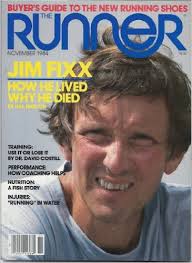
A99. James Fuller “Jim” Fixx didn’t exactly invent running but he popularized it through his mega-bestselling book Complete Book Of Running. Fixx took up the sport after a lifetime of stress and bad habits. He became a world celebrity on fitness and healthy living. On the morning of July 20, 1984, he was out for his daily running fix and fell dead in his tracks on Route 15 in Hardwick, Vermont. His official cause of death was a fulminant heart attack. The autopsy showed his heart arteries were 70% blocked in the right anterior descending, 80% blocked in the left anterior descending, and 95% blocked in the circumflex. Runner Jim Fixx was fifty-two.

8. Max Valier was an Austrian rocket scientist who invented solid and liquid fueled missiles. Given his success with flight, Valier thought it’d be cool to make a rocket-propelled car. It worked, too, and he got it up to 250 mph. Trying to get even better, Valier experimented with alcohol as a combustible. That got away on him and blew up on his workbench, killing Valier and burning his workshop down.

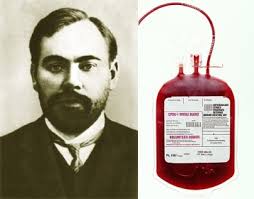
A77. Alexander Bogdanov was a Russian physician, writer, politician, and inventor of sorts. He was a major player in the 1917 Bolshevik Revolution and ended up in jail. He talked his way out of death row and back into medicine where he became obsessed with blood. Bogdanov founded the Institute For Haematology and was convinced that blood transfusion was the ticket to the fountain of youth. To back up his beliefs, he used himself as a crash-test dummy and transfused blood from a patient suffering malaria and tuberculosis into his own system. He died two days later on April 07, 1928, but the patient slowly got better. It seems that the blood types were incompatible—something little known in the day.

A66. Otto Lilienthal was known as The Glider King. A German pioneer in aviation, Lilienthal made over 2,000 glider flights and is credited with perfecting the gull-wing design and set the long-held record of soaring to 1820 feet. On August 10, 1896, Lilienthal experimented with “shifting weight” in a glider at fifty feet. It lost lift, stalled, and he augered into the ground, breaking his neck.

A45. Li Si died in 208 BC at age seventy-two of The Five Pains. That was a form of torture or “punishments” involving tattooing the face, cutting off the nose, cutting off the feet, castration, and finally death by exposure. Li Si was Prime Minister during China’s Qin Dynasty and fell out of favor with the Emperor. It should be noted Li Si invented The Five Pains.

4. Henry Smolinski held a degree in aeronautical engineering from the Northrup Institute Of Technology. Old Hank got the idea that a flying car was necessary so he bastardized the boxed-wing rear section of a Cessna 337 Skymaster and welded it onto the top of a ’71 Ford Pinto. He actually got the thing to fly. On September 11, 1973, Hank took his buddy, Harold Blake, up for a soar in the Pinto. At around three hundred feet, one of the wings snapped and the pony-car bucked them off to a fiery death. The Transportation Safety Board investigated and said there was nothing wrong with Hank’s design, just that his welding was the shits.

A3A Pinto

A3AA3. Abu Nasr Ismail ibn Hammad a-Jawhari died around 1008 AD at Nishapur which is in today’s Iraq. He was a Muslim cleric, scholar, and a bit of an inventor. He was fascinated with flight so he built a pair of feather-covered, wooden wings and strapped them to his back and arms. To impress the Iman, Mr. a-Jawhari jumped off the roof of the mosque hoping they’d work. They didn’t, but to commemorate the first known attempt at human flight, they built a mural on the wall of the mosque. It’s actually quite pretty.

A22. Wan-Hu may or may not have been real. Some say he was apocryphal, or doubtful, but one thing’s for sure—he’s a legend. Wan-Hu was reported to be a 16th-century Chinese official who tried to shoot himself to the moon by attaching forty-seven rockets to a chair and lighting them all at once. They say there was this huge bang and, when the smoke cleared, Wan-Hu and his chair were nowhere to be found. Today, there’s a crater on the moon named after Wan-Hu… and I’m not making this up.

A1A1. Franz Reichelt was real—a real stupid sonofabitch if there ever was one. He was known as The Flying Tailor and is credited with inventing the coat parachute. To prove it worked, he conned the keepers of the Eifel Tower to let him demonstrate. On February 04, 1912, Franz held a major press venue so they could witness his inaugural jump. He leaped from the first deck and gravity took over. It was captured on film and today you can watch this moron splat himself on YouTube.

Here’s the link.

HOW TO GET PUBLISHED ON THE HUFFINGTON POST

A3Serious bloggers know the Huffington Post is the world’s largest blog site. Getting published on the Huff Post is a significant badge of achievement — it’s the gold standard of blogging — social approval by a major media corporation that your work meets its mark of excellence. You just can’t buy this kind of exposure.

As a writer, you have something to say and you should want to hear what others say back. If you have quality content — and that’s the key — you’ll want to say it on the Huffington Post.

But how in the world do I ever get noticed?” you ask.

Well, it might not be easy, but it can be done. And now that I’m a regular contributor to the Huff, I’ll give you Ten Top Tips on how to improve your chances for getting published on the Huffington Post.

*   *   *

Tip #10 — Know How the HuffPost Works

A19There are four levels of content providers for the Huffington Post:

Salaried Employees — Such as reporters, journalists, and editors who are full-time — generally based in main centers like New York, Toronto, and London.

Assignment Writers — Who are freelancers and paid a fixed rate to work on specifically commissioned projects.

Contributing Bloggers — Who are unpaid, but are a screened and proven commodity. They may submit posts whenever they choose through the Huff’s exclusive internet portal called Backstage.

Occasional Guest Bloggers — Who submit posts on an unpaid, unsolicited basis. This is the Huff’s slush pile and, for the most part, is a longshot at getting accepted.The good news for unknown bloggers is that the Huff editors are constantly looking for new contributors — especially unique, talented contributors with interesting voices. The challenge is in getting yourself noticed.

A21The good news for unknown bloggers is that the Huff editors are constantly looking for new contributors — especially unique, talented contributors with interesting voices. The challenge is in getting yourself noticed.

Read this article by Huffington Post senior editor, Jason Linkins: How The Huffington Post Works (In Case You Were Wondering).

Tip #9 — Be “The Right Fit

The Huffington Post truly looks for the “right fit” in their contributors. This is hard to describe as submission style and content varies drastically in categories as diverse as politics to entertainment to minorities’ issues. Here’s a quote from the Huff editor’s cold-call invitation for me to write my first assignment piece:

A7Hi Garry ~ I wanted to see how interested / available you are over the coming days to tackle a paid writing opportunity for us, for which I think you would be an excellent fit, based on your experience in forensics and the quality of content I see in your blog at www.DyingWords.net.

After getting over the shock of this invite, I thoroughly researched the subject matter (which was on crime scene cleaning) and what the HuffPost expected in format. My first submission raised the editorial staff’s confidence that I’d be a long-term “right fit” and that led to the next invite — becoming a regular Contributing Blogger with direct access to the Backstage — now with over two dozen articles published on the Huff.

What makes the “right fit”?

A39

The combination of everything you do as a blogger.

It’s in the quality of content you write, the uniqueness of your voice, your professional presence, and your commitment to the craft. It’s in your platform, your brand, and your profile. But — most importantly — it’s in the value you offer to them.

Tip #8 — Add Value

A core value at the Huffington Post is “Idea Is King — every move should be predicated on the integrity of valuable ideas and their value in the marketplace.”

A26Bear in mind that publishing is an industry that creates products just like any other business. Those products must have a consumer demand in order to be saleable. They must be valuable to a volume of readers, whether for education, entertainment, or enlightenment.

Arianna Huffington has often been quoted saying she likes stories about how you make life work — how you balance work, family, self, and everything else. When planning to submit a blog post to the Huff, take a good look and ask, “How does it add value to someone else? Not just to please or benefit me, but what it will do for the reader and the Huffington Post Corporation? What bottle of wine do I bring to the party?”

Tip #7 — Know Why You Want to be Read on the Huff

We all have reasons for wanting to belong to a club, especially one as exclusive as the Huffington Post Blogging Team. But that doesn’t mean there’s a fee to pay, a small child to sacrifice, or a secret handshake to learn.

A14Pure and simple, the Huff Post wants intelligent voices with something unique to offer the Huff community through submission of solid content that has the ability to be shared and commented on. A lot of the voice really depends on the motivation that vocalizes it.

Are you doing this for money? Remember as a contributing blogger you’re not going to be paid by cash. You’ll be paid in social currency and that’s worth a fortune if you parley it.

Are you doing this to promote yourself and/or your product or affiliation? Take that into account when designing your content.

Do you have a hidden agenda? Be careful. The gatekeepers at the Huff are very astute.

Looking back, here’s what my motivation was:

  • A31To be recognized as a credible resource by a large audience.
  • The potential to profit elsewhere — both in money and self-esteem.
  • Networking opportunities.
  • Prestige on my platform.
  • To build my mailing list through the amplified exposure.
  • I had stories and information to share.
  • I enjoy helping others.
  • To learn from the experience.

The opportunity to blog for the Huffington Post fulfills all this — more than I ever imagined.

Tip #6 — Learn How to Blog Professionally

Here’s the reason that disqualifies more Huff submissions than all others combined — your post is not written to acceptable, commercially-viable blogging standards, let alone to a Huff Post standard.

A32Blogging is an entirely different style of writing from novels, non-fiction, essays, Facebook messages, Tweets, recipes, how-tos, and letters to your grandma. It takes a learning curve  the length depends entirely on your experience and your willingness to learn.

I strongly recommend investing in yourself by taking credible, online training courses in blogging. Not just writing courses. Blogging courses.

You can read all the online tips you want and follow all kinds of more advanced bloggers, but nothing’s going to pay better returns that learning in a structured format from people who are truly experts.

I’ve taken these two courses and attest to their exceptional value:

A34Tribe Writerswith Jeff Goins of GoinsWriter.com.

Blogging Certification Program — with Jon Morrow at BoostBlogTraffic.com.

I promise that no matter your level of skill, these courses will make a definite difference and increase your odds of getting noticed by Huff Post editors.

Tip #5 — Develop Your Voice

What makes a great writing voice?

Here’s a definition I put together in a guide I wrote about blogging for the Huffington Post:

A33Your writing voice is the one thing that’s unique to you. It’s your most valuable asset — so valuable that you should buy some insurance on it. And it’s the one thing you have to get right. Right from the start. It’d be a bitch to go back and self-edit voice — if it can even be done.

But what is “Voice”?

It’s your relationship with language — how you use language. Voice comes from the people you’ve met, the books you’ve read, the education you have, and the worlds you’ve inhabited — not just in your body — but in your mind. It’s your personality. It’s your attitude to your writing. It’s how you say things.Voice is your distinctive way of choosing and stringing words together — your writing accent, your views, culture, biases, and formal training. It’s using some goddam profanity every now and then. It’s imagery. Being serious, stuffy, snarky, and sarcastic. Being funny, silly, foolish, goofy, and stupid. It’s your level of confidence speaking through.

A36Voice is your distinctive way of choosing and stringing words together — your writing accent, your views, culture, biases, and formal training. It’s using some goddam profanity every now and then. It’s imagery. Being serious, stuffy, snarky, and sarcastic. Being funny, silly, foolish, goofy, and stupid. It’s your level of confidence speaking through.

It’s your rhythm. Your cadence. Your tone. And your mood.

It’s your emotional guts spilling out.  It’s relating gut to gut — not brain to brain. No editing in the world can take an intellectual exercise and make it emotional. Remember — blogs, like novels, aim to evoke emotion in your reader. Get emotional when you write and then again when you revise. “No tears in the writer — no tears in the reader. No emotion in the reader — no interest in the story.”

I like this definition by the Grammar Girl, Mignon Fogarty, who gave me permission to quote her:

Huff Post 101 RevisedVoice is the distinct personality, the style, or the point of view of a piece of writing or any other creative work. Voice is what Simon Cowell is talking about when he tells American Idol contestants to make a song their own and not just do a note-for-note karaoke version. Many musicians have played The Star-Spangled Banner, for instance, but there’s a world of difference between the Boston Pops’ performance and Jimi Hendrix’s, even though the basic melody is the same.

In writing, the New York Times and the New York Post may cover the same story, but their headlines are likely to be quite different. For example, when Ike Turner died, the New York Times had a straightforward headline “Ike Turner, Musician and Songwriter in Duo With Tina Turner, Dies at 76 whereas the New York Post went for a bad pun: “Ike Beats Tina to Death”.

Is there an ideal voice?

A12Nope. But my advice is to lighten up. Personally, I’m not big on sarcasm or stuffiness. Ever go to a party with lawyers and politicians? I have. They’re boring as shit because they’re bound by the restraints of graduate degrees and academic correctness. Ever hang with cops & coroners? I have. They’re a blast. They’re like honey badgers and don’t give a fuck what they say.

I like hearing a natural, open, appealing, and charismatic tone and style that draws me in and binds me with storytelling. Ever read foul-mouthed Chuck Wendig? Hilarious crime writer Meg Gardiner? Listen to quadriplegic blog-king Jon Morrow? Or follow opinionated Johnny B. Truant? Now those folks have voice.

Voice is the way you put things down. The way you say it. It’s your personality coming out on the page. It’s not the paint on the wall. It is the wall.

A15For your blog posts to be successful, your reader has to hear your voice telling the story. Nothing else matters if they can’t relate to your voice. They want you to sound confident, intelligent, personal, authentic, trustworthy, and even vulnerable. They want to be your friend and follow you around.

So be natural. Don’t overthink. And be careful not to cut your own voice’s throat by being too careful.

Tip #4 — Know the Huff’s Blogging Structure

The Huff’s blog structure is no secret. It’s much the same as print journalism where there’s an old news reporter saying “Don’t bury the lede.” The what? The “lede”. Not the “lead”.

Conventional articles are written in a six-part structure:

  1. A22Headline
  2. Lede
  3. Body
  4. Solution
  5. Call to action
  6. Byline

Same with the Huff. This is critically important stuff to know and implement if you want to blog for the Huff Post.

Tip #3 — Make Your Posts Look Like Huff Posts

Study the style and format of other Huff Post Bloggers, especially the prolific writers in the same sections you’re targeting. Notice how they use titles and subtitles, where they embed block quotes, where they hyperlink and how often, as well as how they proportion the six-part structure.

A38

Notice which font the Huffington Post uses. It’s “Georgia” in 11.5 point in the older posts and “Helvetica” in 13 point in the new look. Additionally, the Huffington Post logo and collateral material are in the “Adobe Garamond” font.

A24Notice even the tiniest things—like how they use two en-dashes — instead of an em-dash, which is their uniform break style. Seriously, the editors will send your piece back to you for errors like this and tell you to correct it — then re-submit. (And then WordPress overrules HuffPost and converts them back to em-dashes 🙂

I think it’s critical that when you submit a piece to the Huff — when you’re an unknown and pitching to get one post published (let alone trying to get on as a Signature Contributor) — that you present it in as publishable a format as possible. That means you have to make it look like a Huff post. Just sayin’…

Tip #2 — Brand and Profile

Your brand is a summary of your values. Branding is the story other people tell themselves about you.

Final LogoYour profile is how you present yourself in words and in images. The more closely these align, the better your audience will understand what you do and what you stand for.

My brand is crime writing — both fiction and non-fiction. It’s been built by my years of experience as a homicide detective and forensic coroner, now bestselling crime writer. You’ll see this in my Byline on my Huffington Post blog pieces. My audience knows I’ll provoke thoughts on life, death, and writing and I value a no-bullshit approach.

My profile comes through visibility on my website, social media presence, personal and video appearances, and in my books. I promote myself by exposing my experience and make no apologies for self-promotion. You must do the same if you want to be recognized by a Huffington Post editor.

Byline Screenshot

Here’s a great article by the Huffington Post Writers Relief Staff titled Why Every Writer Needs an Author Brand.

Tip #1 — Pitch to the Right Place

Make sure your submission goes to the right Huffington Post section. Editors specialize in certain departments and will bypass a submission that’s not suitable for them, but might be an appropriate submission for another department. Be aware of how busy these editors are and that they don’t normally have the time to pass a submission on to another editor in a different department.

A40Take the time to learn all the Huffington Post sections. Go to their homepage and scroll through the top bar and drop down menu.

Also, make sure you’re pitching the right country. The biggest site and where most editors are is the U.S. but if your article is country specific, you might want to contact that arm directly.

Bonus Tip — Believe in Karma

What goes around, comes around is an absolutely true statement. If you consistently strive to produce unique, quality content eventually you’re going to get noticed and will catch the attention of a Huffington Post editor.

There’s an extension of karma called providence and it’s well captured in this quote by German writer Johann Wolfgang von Goethe:

A42Until one is committed, there is hesitancy, the chance to draw back — always ineffectiveness. Concerning all acts of initiative (and creation), there is one elementary truth — the ignorance of which kills countless ideas and splendid plans: the moment one definitely commits oneself, then providence moves too. A whole stream of unforeseen events issue from the decision, raising in one’s favor all manner of unforeseen incidents, meetings, and material assistance, which no man could have dreamt would have come his way.

Who? When? Where?

I can’t answer this. But I do know it was my goal to build my blog into a publication worthy of catching the Huff’s attention. Karma worked for me and it’ll work for you. Just be aware of how big a thing you’re wishing for and treasure it when it arrives.

Then feed it like a hungry beast.

*   *   *

Huff Post 21 RevisedYou can get “How To Blog For The Huffington Post — 21 Proven Tips for Getting Published on the HuffFREE in pdf by using the sidebar or go to the Amazon page where it’s under a FREE promotion as a Mobi eBook.  Click Here
Huff Post 101 RevisedOr get the full-length guide “How To Blog For The Huffington Post — 101 Proven Tips for Getting Published on the Huff” by going to the Amazon page.  Click Here  If you do read either of these guides, I’d sure appreciate you taking the time to write a short review! Also, please check out my Huff Blogger Profile and “Fan” it.  Click Here
*   *   *

Footnote:  As of this morning, 20 February 2016, “How To Blog For The Huffington Post — 21 Proven Tips for Getting Published on the Huff” is the #1 BestSeller on Amazon in the “Writing Reference Guides — Journalism” category and #5 overall in Books & Publishing.

Huff Post #1 BS Screenshot