Author Archives: Garry Rodgers

About Garry Rodgers

After three decades as a Royal Canadian Mounted Police homicide detective and British Columbia coroner, International Best Selling author and blogger Garry Rodgers has an expertise in death and the craft of writing on it. Now retired, he wants to provoke your thoughts about death and help authors give life to their words.

POLICE BRUTALITY

AA1Police brutality is an ugly term that we don’t want to hear. Unfortunately it’s part of the necessary and sometimes nasty business called policing. Fortunately, though, it rarely occurs.

What triggered this post is an email from Kristen, a DyingWords follower, who wrote –

I’m a sophomore in high school and we are in the process of writing a research paper. My topic is about the use of force by police and I was wondering if you could just give some pros and cons about police brutality, it would help me tremendously.
AA2I was a cop for a lot of years and I’m not going to pretend that cases of police brutality don’t occur. I can say that I never, personally, saw a case of truly excessive force although I’ve seen some pretty violent struggles during arrests. Occasionally officers went a little overboard (myself included) during the heat of the moment, but I never saw a case where someone got thumped out where they didn’t instigate it themselves.

First the question “What’s the definition of police brutality?”

I did a little Googling and got this definition from good ol’ Wikipedia:

Police brutality is the wanton use of excessive force, usually physical, but can also occur in forms of verbal attacks and psychological intimidation by a police officer. It is one of several forms of police misconduct, which include: false arrest, intimidation, racial profiling, political repression, surveillance abuse, sexual abuse, and police corruption. 
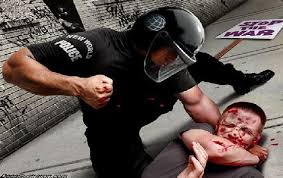
AA4There’s a fine line separating the justified use of force in effecting a lawful arrest and what would be deemed excessive. Virtually all jurisdictions allow police officers to use “as much force as is necessary” in their powers of arrest. Any force beyond what is necessary can be considered an assault and officers can be held criminally responsible for applying excessive force.What would be considered excessive to the point of being brutal, cruel, or savage would have to be weighed on a case by case basis and a close look at the particular circumstances.

I’d have to say that real police brutality would be something more than just mere excessive force where an individual officer got a little carried away. Probably the best definition would be “an unacceptable act of violence used by agent(s) of the state on civilized citizen(s)”.
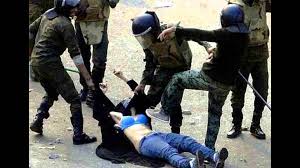
AA3Over the years the majority of police brutality claims have come from riot, protest, or strike incidents where the police have weighed in with clubs and beat defenceless citizens. Some of these had racial overtones. Unfortunately, there are also many incidents where a single individual has been brutalized at the hands of police officers.

The Rodney King case from Los Angeles in 1991 is one of the highest profile cases of true police brutality.
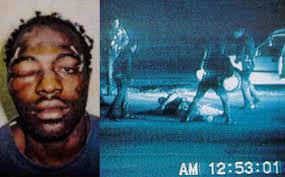
AA10King was a construction worker who became nationally known after being beaten by LAPD officers following a high-speed chase.  A witness videotaped the takedown which showed four officers surrounding King, several of them striking him repeatedly with fists and batons, while other officers stood by. The footage was aired around the world, inflaming outrage in cities where racial tensions were high, and raising public concern about police treatment of minorities.

Four officers were charged with assault with a deadly weapon and use of excessive force. They were acquitted at state level which triggered the 1992 Los Angeles Riots in which 53 people were killed and over 2,000 were injured. The acquittals led to the federal government’s obtaining grand jury indictments for violations of King’s civil rights. The four officers were tried in federal court with two being found guilty and imprisoned. The other two were again acquitted.

Vancouver, Canada, is not without a black eye from police brutality.
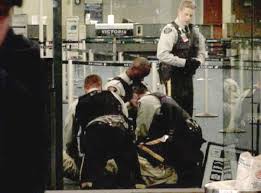
AA11Robert Dziekanski was a Polish citizen who was Tasered five times by four Royal Canadian Mounted Police officers during an arrest at Vancouver International Airport in 2007 and died at the scene. This too was captured on video by a bystander and showed that several of the Taser applications took place when Dziekanski was in handcuffs on the floor.

A massive investigation took place which recommended that the officers not be criminally charged for using excessive force. This was not well received by the public who demanded an independent inquiry. This took place over a two year period resulting in the judge severely chastising the officers for not only their brutality but in their deceit during the inquiry. These officers are currently going through perjury trials and may well end up in jail – not for assault – but for lying to the inquiry.

AA12One of the biggest criticisms in police brutality accusations is the lack of impartiality when the police investigate themselves. Most jurisdictions now have agencies of independent oversight, however those are not without flaw as they rely on investigative expertise by hiring ex-police officers. The Independent Investigations Office in British Columbia, for instance, is horribly dysfunctional and over half the staff have been fired or quit.

There’s also a number of citizen-based watchdogs. Some are simply anti-authority cop-haters with an axe to grind or left-wing, bleeding heart, civil rights groupies.
AA13One of the seemingly credible groups is Copwatch. It’s been around since 1990 and is a network of activist organizations in the United States and Canada that observe and document police activity while looking for signs of police misconduct and brutality.

My experience is that the vast majority of police officers are very sensible, controlled people who have a difficult job. The sad reality is that individual cases of police excessive force still occur and will always occur. Most are incidents where tempers flare and things get carried away.


And knowing some of the idiotic individuals that police officers have to deal with makes me surprised that there aren’t more brutal incidents.

HOW TO START WRITING A NOVEL – WITH RACHEL ABBOTT

Rachel Abbott is psychological thriller writer who has sold over a million novels. Rachel generously shares her views on novel writing with DyingWords followers with this abridged piece which has been republished from her website, Rachel-Abbott.com.

A1The world is full of people who really want to write. For some, it’s a burning ambition. They dream about days of sitting in front of their computer (or even more whimsically, in their attic – with pencil and notebook), having great ideas and getting them all down on paper.

Some of it is like that. It’s exciting seeing your ideas grow and develop and watching the words appear on the page – sometimes it’s as if your sub-conscious has taken over and when you read back your latest chapter you think “where the hell did THAT come from?”. It’s a wonderful experience.

With the growth of self-publishing and the ease with which any writer can publish their work, that dream can become a reality.

But where do you start?

A2I’m sure that everybody writes in a different way. Some people say that they start with the title. Others say they just sit down and write and see what comes out. So I’m just going to talk about what I do – not because it’s the right way, but just because it’s the only way I know.

I start with a question.

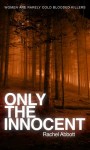
In Only the Innocent the question was “What set of circumstances would be so bad that a woman would have absolutely no other option than to kill a man?

A4It had to be a scenario from which she couldn’t escape. But initially each avenue that I pursued left me with a “but she could do this or that” and it took a long time to work out what would make me kill a man. And for me, that’s the way it has to be. I have to think how I would behave, and not just one of my imagined characters.

For The Back Road I thought about a group of people, each with a secret that they need to hide.

The secrets had to be credible – secrets that you might encounter amongst your own friends. Or at least, the majority of them had to be. Perhaps in one case the secret is darker than the rest. Then I asked myself what kind of catalyst would it take to blow everything apart and expose the lies and deceit, and what would be the outcome. I have been to dinner parties or business dinners and seen looks exchanged between people and thought “I wonder what that’s all about?” knowing that I would probably never find out. To me, that dinner party is real.

That is always my starting position – what is the overall issue that the protagonist has to solve.

A22Then comes the incubation time. Once the initial idea is in my head, I start to carry round a notebook and pencil, and each time I have an idea that develops a character or plot point, I jot it down. There are always plenty of false starts – storylines that I begin to develop and then discard. I think that’s fairly normal (at least, I hope so).

Once I have a rough idea of the beginning – the inciting incident (the conflict that begins the action of the story and causes the protagonist to act) – and the end – how the protagonist solves (or doesn’t) the problem – I switch tack. I start to develop my characters, locations and timelines.

For each character, I find a photograph that matches my idea of how they might look.

A9It may be a picture of a famous person, or it might be a random person that I find in images on the Internet. It doesn’t matter. I grab their photo and put it into their character file. Then I begin to develop their characteristics – Age, date of birth, personality, likes, dislikes, greatest strengths and weaknesses, story goal, past traumas – a whole list of details which gives me a very clear idea of who they are and how they would behave. It also means that I know how to describe them, and because it’s all written down, I can always remember how old they are, what they drink, what secrets they have, what job they do.

Next come the locations.

I was recently interviewed for a blog, and the interviewer very kindly said “I find the atmosphere of place very strong in your novels.  I know those villages – I’ve met those people.  How do you get that atmosphere?

A3The answer is that I also know these places – because I have found photographs of interiors and exteriors of all the houses or other locations that are featured. In The Back Road I used Google street view to walk around the Cheshire village that I used as my main location, and found the perfect property for my protagonist. I was inspired by an atrium dining room that I saw on an architectural site, and grabbed that image too. I found a map and worked out which road would be “The Back Road” and then plotted where everybody lived. Only that way could I be sure that journeys were logical. Even at the dinner party, I wrote down the menu and a seating plan. It was important to know where everybody was sitting, so that I knew when people had to lean forward to speak across somebody, or when people’s eyes could meet.

Timelines are really important – and not just the timeline of the book.

A14Most people have a back-story – when did they meet? What are the major events in their lives? The back-story timeline is really important, because I have often read books in which a section has made me stop and think, “How old is this person? Does this make sense?” and anything that slows a reader down is bad news. If you are confident because you have the information in front of you, the reader will feel that confidence.In short, then, I need to know every detail so that when I write about a location or a person I have a very clear vision of them in my mind. In The Back Road, if I had any artistic skills, I could paint you a picture of every room in the house, and how the rooms connect with each other. It’s as clear in my head as my own home, and allows me to write with confidence.

Of course, the important thing is the story!

A16As you will have gathered, I am a fanatical planner, and I use two different pieces of software for my planning. My main tool is a piece of software called Scrivener. This has some fantastic features that I will talk about briefly here, but hope to do a more detailed blog post soon. However, it doesn’t do one thing that I need, and that’s to create the equivalent of a story flowchart. For that – and the initial planning stages – I use Storylines.

With Storylines I can either create a number of story threads, or character threads, and I can see them all at the same time on a cork board using individual ‘cards’. The board is arranged in columns for scenes and rows for character or plot threads. I can move these around and see all on one screen how the story develops and how and when characters appear in the story. It gives me the main outline of my book, and the software does so much more than this. You can write your whole book using nothing else, but there are some elements of Scrivener that I prefer for the writing process.

A5With Scrivener I create folders for each chapter, and then write scenes within a chapter. I can colour code scenes – for example, in The Back Road I coded scenes in relation to the level of tension. I could see when there were spots in which the tension dropped, and it gave me an opportunity to think about the scenes and how to ramp them up a notch.

Similarly, I used keywords extensively. The Back Road has a number of story threads, with huge potential to get lost! So each scene is given one of a number of keywords each of which relates to a thread. I can then search on the keywords, and find all the scenes, allowing me to read one storyline in complete isolation – a fantastic tool for checking consistency and story development. Scenes can be written in any order – once the structure is in place you can add a scene, move it around, put it in an ideas folder for later use – the options are endless. But with the structure in place, the writing can begin.

A8I could talk all day about the tools I use and how they help – but this is supposed to be an overview of how to get started. Remember, I am not for a moment suggesting this is the right way or the only way, but it might give you some ideas of where to start.

*   *   *

A15Rachel Abbott has written four psychological thrillers which, combined, have sold over one million copies. She self-published Only the Innocent in November 2011. It raced up the UK charts to reach the top 100 within 12 weeks and quickly hit the #1 spot in the Amazon Kindle chart (all categories) and remained there for four weeks. 

A10Only the Innocent was so successful that it was re-edited and the new version was launched in the US by Thomas and Mercer in paperback, audio, and Kindle versions on 5th February 2013, hitting the number one spot in the Kindle Store in August 2013. Her second book, The Back Road, was also published by Thomas and Mercer.

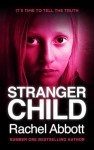
Her third book, Sleep Tight, was published in February 2014 and her newest, Stranger Child, was released last month.

A13Rachel Abbott was born just outside Manchester, England. She spent most of her working life as the Managing Director of an interactive media company, developing software and websites for the education market. The sale of that business enabled her to fulfil one of her lifelong ambitions – to buy and restore a property in Italy.

Rachel now lives in Alderney – a beautiful island off the coast of France, and is now able to devote time to her other love – writing fiction. For more information, see Rachel’s website, or follow her on Twitter.

Visit Rachel Abbott’s website at:  www.Rachel-Abbott.com

Like her on Facebook: https://www.facebook.com/RachelAbbott1Writer

Follow Rachel on Twitter:  @_RachelAbbott   https://twitter.com/_RachelAbbott

Buy her books:  http://www.amazon.com/Rachel-Abbott/e/B0068FBVCW

THE JFK ASSASSINATION FOR DUMMIES

Here’s the Foreword for my upcoming book, The JFK Assassination For Dummies.

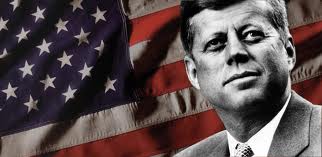
JFKAt 12:30 pm on Friday, November 22, 1963, United States President John F. Kennedy was cold-bloodedly shot in the back by a lone nut with a cheap rifle from a tall building.

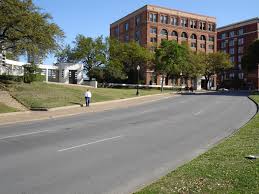
This straight-forward crime was solved in a few hours. Yet, five decades later, the facts of JFK’s homicide are doubted by over sixty percent of the American public. There’s no doubt that strands of fate caused Lee Harvey Oswald to squeeze the trigger, however misinformation about what really went down in Dealey Plaza still darkens President Kennedy’s legacy.

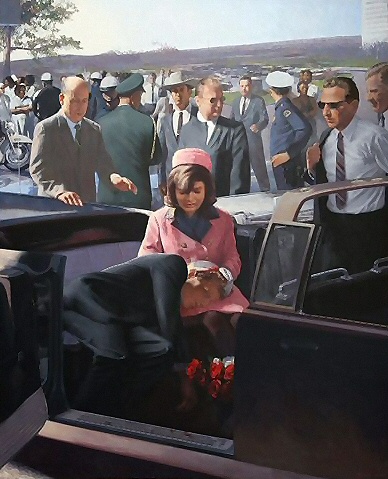
JFK Limo 2I was seven when JFK was shot. I was in a one-room school in Manitoba, Canada, and ‘Teacher’ was late returning from lunch. I remember how upset ‘Teacher’ was, telling us that President Kennedy had been assassinated. I didn’t know who JFK was, but figured he must be important as ‘Teacher’ was crying and dismissed us early. When I got home, people were gathering as we were one of few families with a television set. I’ll never forget how distraught the adults were.

Conspiracy Theories were starting by 2 pm. Who was behind it? The Russians? Castro? The CIA? Mafia? A military coup? Maybe even Johnson. Someone said that a Communist had been caught and I was terrified. I was sure the bomb would drop – after all, I’d practised Communist bomb drills under my elementary school desk. Then, on Sunday, I watched Ruby shoot Oswald – live on TV.

JFK WCIn 1973, I did a report on a conspiracy theory book called Rush To Judgement which was a harsh critique of the Warren Report. This ‘Teacher’ challenged me to look deeper as apparently the Warren Report came to a different conclusion. From then, I read everything I could on the JFK case and was fascinated by it. Problem was – all that was available was CT (Conspiracy Theorist), not LN (Lone Nut) stuff. Nowhere could you get this Warren Report, so I jumped on the CT wagon and became a life-long student of the assassination.

In 1978, I joined the Royal Canadian Mounted Police – the RCMP or Mounties. Because I was a curious risk-taker, I worked my way into Emergency Response or SWAT operations and the homicide squad. Also in 1978, the US House Select Committee on Assassinations (HSCA) re-investigated the JFK case and officially concluded that there was a high probability of conspiracy. That re-enforced my CT suspicions, but I was way too busy solving current murders and shooting guns to follow up on JFK. In the back of my mind, though, I kept wondering how such an important investigation like JFK could be so screwed-up and whether the LN finding just might be true.

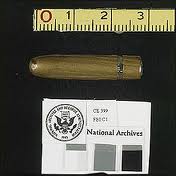
CE399By 1991, I’d become a recognized firearms expert and had the good fortune to work with an American colleague who’d personally handled JFK exhibits during the HSCA investigation. He gave me a ‘JFK Ballistics 101’ which opened my eyes on the science of the Single Bullet Theory. My CT suspicions changed.

In 2000, I got the Internet and downloaded the Warren Report. After reading the narrative and a good chunk of the Appendices, including witness testimonies, my response was Holy Fuck! They investigated the shit out of this thing! Okay. There’s way more to this than CT bullshit.

About the same time I left the police murder & gun business to become an investigative coroner. That’s an entirely different realm of science and the combination of disciplines solidified my ability to understand and impartially interpret evidence. In other words… cut through bullshit and determine what’s fact and what’s not.

JFK Dealey4So… aside from building my accreditations in firearms, homicides, forensics, and autopsies… I devoted the next decade and a half of free time to understanding the truth about what went down in Dealey. What I’ve found is that the facts are simple, but the root cause and scientific evidence is complex.

And fascinating!

I’ve come full circle in JFK culture – from LN to CT to LN. I’ve now evolved into ‘Teacher’ as I’ve the ability to instruct other students of the JFK Assassination on what truly happened and where to find credible information to understand the facts. Somehow I don’t think the JFK case is ever going to be closed and I don’t want future students to put in the time, and get sucked-in,  like I have.

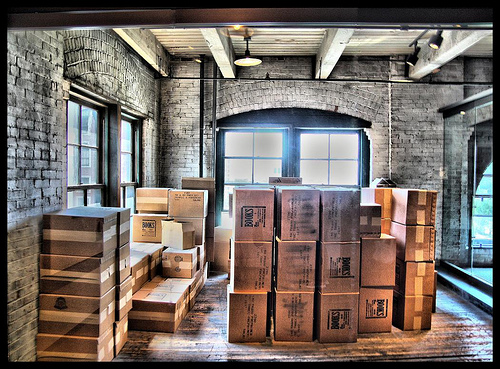
JFK Snipers nest 5I believe that the JFK Assassination was one of history’s great moments and the facts are what JFK students must seek. Once facts are established, then truth can be known. This book cuts through bullshit and helps you understand what really went down in Dealey Plaza.

I hope you enjoy The JFK Assassination For Dummies.

Garry Rodgers, Vancouver, Canada, March 2015