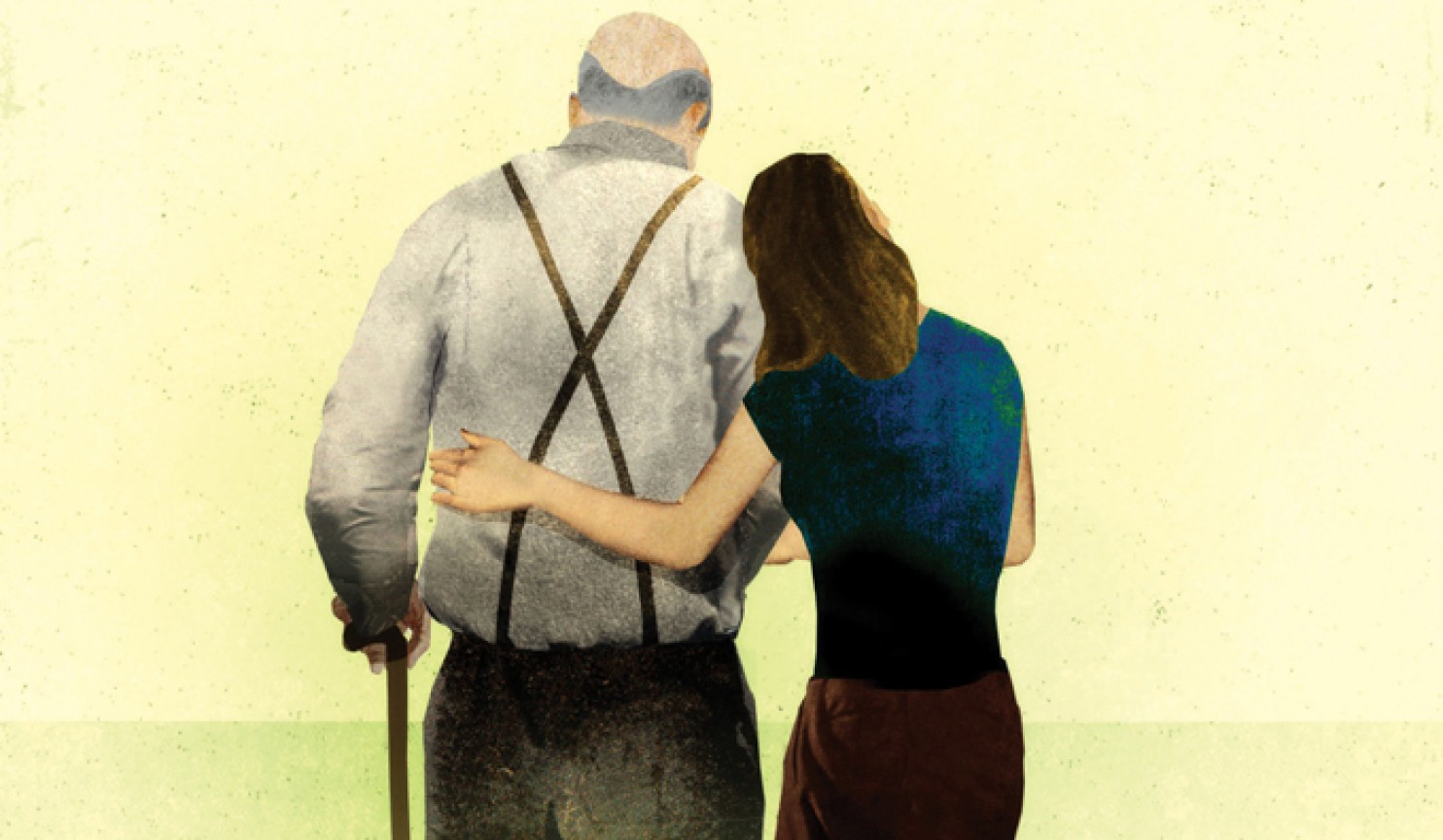
This post is by Dr. Craig Bowron, Hospital Internist in Minneapolisis
I know where this phone call is going.
 I’m on the hospital wards and a physician in the emergency room downstairs is talking to me about an elderly patient who needs to be admitted to the hospital. The patient is new to me, but the story is familiar: He has several chronic conditions — heart failure, weak kidneys, anemia, Parkinson’s and mild dementia — all tentatively held in check by a fistful of medications. He has been falling more frequently, and his appetite has fallen off, too. Now a stroke threatens to topple this house of cards.
The ER physician and I talk briefly about what can be done. The stroke has driven the patient’s blood pressure through the roof, aggravating his heart failure, which in turn is threatening his fragile kidneys. The stroke is bad enough that, given his disabilities related to his Parkinson’s, he will probably never walk again. In elderly patients with a web of medical conditions, the potential complications of any therapy are often large and the benefits small. It’s a medical checkmate; all moves end in abdication.
I head to the ER. If I’m lucky, the family will accept the news that, in a time when can separate conjoined twins and reattach severed limbs, people still wear out and die of old age. If I’m lucky, the family will recognize that their loved one’s life is nearing its end.
But I’m not always lucky. The family may ask me to use my physician superpowers to push the patient’s tired body further down the road, with little thought as to whether the additional suffering to get there will be worth it. For many Americans, modern medical advances have made death seem more like an option than an obligation. We want our loved ones to live as long as possible, but our culture has come to view death as a medical failure rather than life’s natural conclusion.
These unrealistic expectations often begin with an overestimation of modern medicine’s power to prolong life, a misconception fuelled by the dramatic increase in the American life span over the past century.
To hear that the average U.S. life expectancy was 47 years in 1900 and 78 years as of 2007, you might conclude that there weren’t a lot of old people in the old days — and that modern medicine invented old age. But average life expectancy is heavily skewed by childhood deaths, and infant mortality rates were high back then. In 1900, the U.S. infant mortality rate was approximately 100 infant deaths per 1,000 live births. In 2000, the rate was 6.89 infant deaths per 1,000 live births.
The bulk of that decline came in the first half of the century, from simple public health measures such as improved sanitation and nutrition, not open heart surgery, MRIs or sophisticated medicines. Similarly, better obstetrical education and safer deliveries in that same period also led to steep declines in maternal mortality, so that by 1950, average life expectancy had catapulted to 68 years.
For all its technological sophistication and hefty price tag, modern medicine may be doing more to complicate the end of life than to prolong or improve it. If a person living in 1900 managed to survive childhood and childbearing, she had a good chance of growing old. According to the Centers for Disease Control and Prevention, a person who made it to 65 in 1900 could expect to live an average of 12 more years; if she made it to 85, she could expect to go another fouryears. In 2007, a 65-year-old American could expect to live, on average, another 19 years; if he made it to 85, he could expect to go another six years.
Another factor in our denial of death has more to do with changing demographics than advances in medical science.
Our nation’s mass exodus away from the land and an agricultural existence and toward a more urban lifestyle means that we’ve antiseptically left death and the natural world behind us. At the beginning of the Civil War, 80 percent of Americans lived in rural areas and 20 percent lived in urban ones. By 1920, with the Industrial Revolution in full swing, the ratio was around 50-50; as of 2010, 80 percent of Americans live in urban areas.
For most of us living with sidewalks and street lamps, death has become a rarely witnessed, foreign event.
The most up-close death my urban-raised children have experienced is the occasional walleye being reeled toward doom on a family fishing trip or a neighborhood squirrel sentenced to death-by-Firestone. The chicken most people eat comes in plastic wrap, not at the end of a swinging cleaver. The farmers I take care of aren’t in any more of a hurry to die than my city-dwelling patients, but when death comes, they are familiar with it. They’ve seen it, smelled it, had it under their fingernails. A dying cow is not the same as a person nearing death, but living off the land strengthens one’s understanding that all living things eventually die.
Mass urbanization hasn’t been the only thing to alienate us from the circle of life.
Rising affluence has allowed us to isolate senescence. Before nursing homes, assisted-living centers and in-home nurses, grandparents, their children and their grandchildren were often living under the same roof, where everyone’s struggles were plain to see. In 1850, 70 percent of white elderly adults lived with their children. By 1950, 21 percent of the overall population lived in multigenerational homes, and today that figure is only 16 percent. Sequestering our elderly keeps most of us from knowing what it’s like to grow old.
This physical and emotional distance becomes obvious as we make decisions that accompany life’s end. Suffering is like a fire: Those who sit closest feel the most heat; a picture of a fire gives off no warmth. That’s why it’s typically the son or daughter who has been physically closest to an elderly parent’s pain who is the most willing to let go. Sometimes an estranged family member is “flying in next week to get all this straightened out.” This is usually the person who knows the least about her struggling parent’s health; she’ll have problems bringing her white horse as carry-on luggage. This person may think she is being driven by compassion, but a good deal of what got her on the plane was the guilt and regret of living far away and having not done any of the heavy lifting in caring for her parent.
With unrealistic expectations of our ability to prolong life, with death as an unfamiliar and unnatural event, and without a realistic, tactile sense of how much a worn-out elderly patient is suffering, it’s easy for patients and families to keep insisting on more tests, more medications, more procedures.
Doing something often feels better than doing nothing. Inaction feeds the sense of guilt-ridden ineptness family members already feel as they ask themselves, “Why can’t I do more for this person I love so much?”
Opting to try all forms of medical treatment and procedures to assuage this guilt is also emotional life insurance: When their loved one does die, family members can tell themselves, “We did everything we could for Mom.” In my experience, this is a stronger inclination than the equally valid (and perhaps more honest) admission that “we sure put Dad through the wringer those last few months.”
At a certain stage of life, aggressive medical treatment can become sanctioned torture.
When a case such as this comes along, nurses, physicians and therapists sometimes feel conflicted and immoral. We’ve committed ourselves to relieving suffering, not causing it. A retired nurse once wrote to me: “I am so glad I don’t have to hurt old people any more.”
When families talk about letting their loved ones die “naturally,” they often mean “in their sleep” — not from a treatable illness such as a stroke, cancer or an infection.
Choosing to let a loved one pass away by not treating an illness feels too complicit; conversely, choosing treatment that will push a patient into further suffering somehow feels like taking care of him. While it’s easy to empathize with these family members’ wishes, what they don’t appreciate is that very few elderly patients are lucky enough to die in their sleep. Almost everyone dies of something.
Close friends of ours brought their father, who was battling dementia, home to live with them for his final, beautiful and arduous years. There they loved him completely, even as Alzheimer’s took its dark toll. They weren’t staring at a postcard of a fire; they had their eyebrows singed by the heat. When pneumonia finally came to get him, they were willing to let him go.
craigbowronmd@gmail.com
Craig Bowron is a hospital-based internist in Minneapolis.
Read more from Outlook, including Craig Bowron’s 2009 essay, “The dying of the light.”
Friend us on Facebook and follow us on Twitter.
As an older woman who is dancing with cancer and death this article is so helpful. To paraphrase John Shelby Spong: “I prefer to think of death not as an enemy, but as a friend even a sister, as St. Francis Assisi once suggested. The time has come for ..(Humans) .. to embrace death not as an enemy to be defeated but as an aspect of life’s holiness to be embraced. Death is life’s shadow. It walks with us through the entire course of our days. We embrace death as a friend because we honor life. I honor Life by living fully.”
As for me, when my time for dying comes I will remember what Peter Pan exclaimed, when he finally got his shadow (mortality), “Dying shall be a GREAT ADVENTURE!”
48
LikeShare
Americacares
2/22/2012 7:18 AM PST
Medicare for all. Just like every other modern nation in the world. If we let the Insurance companies continue their strangle hold on all of us ….only the Rich can afford great health care. We can control costs if we are one Nation of careing people. .
4
LikeShare
whyisitthisway
2/21/2012 10:48 AM PST
This was beautiful as it tapped each emotion as I have lost a a young one and an old one. Suffering do play a big part in letting go. To see these two suffer almost made me pray for their deaths. I felt selfish wanting their bodies here for me as they laid there enduring the pain. When they passed, I then felt the refiel as the expressions on their faces was that of peace.
20
LikeShare
map529
2/21/2012 10:18 AM PST
An uncommon, mature discussion of life and death. It is certainly appreciated. When my mother was dying, I wasa thankful for the honesty of her treating physicians. When asked, one doctor told me honestly that the rate of progress of her condition would cause her to die within two weeks. Another, her nephrologist whose patient she had been for over 10 years, was honest when I asked about continuing her dialysis. He said it would only prolong her suffering, and would not add much to her quality of life or overall health. In other words, to continue dialysis would, effectively, be to torture the woman who had given me birth and endured a lifetime of trials and joys to raise her sons. My brothers and I could not, in good conscience, allow her to endure more suffering than she already had.
It is in this aspect, I wish to acknowledge and praise those individuals in the field of hospice care–they truly are angels on earth. Their caring and compassion allowed my mother to live her last few days in dignity, and to die with dignity. I cannot thank them enough, nor can I express how valuable such service is to families with members at the end of their lives. I would advocate directing less money and resources to prolonging life artificially to assuage the guilt of children and family members who need to put on a display for themselves and the world at the expense of the dignity of the dying, and directing more money and resouces to the services of hospice education, awareness, and care. We owe all the dying people of our society the ability to die with dignity, and not push the latest drug or test or treatment simply to make ourselves feel better. The time to tell them and show we loved time was when they were alive and healthy. Too often we get caught up in our own lives, or let petty squabbles keep us from truly enjoying the people we have been blessed to have in our lives, and then when it’s too late, we make a big show of how much we supposedly care.
50
LikeShare
john1513
2/21/2012 10:12 AM PST
“he will probably never walk again”
What is the point of this comment? It appears you are trying to paint a picture of how an individual has less “value” by appealing to a reader’s finicky emotions. Many people lead fulfilling and loving lives who will never walk again. This does not make them less valuable.
Once again, you appear quick to embrace death without realizing the joys of a life well ended. Based on this article, I would not want you as my doctor.
7
LikeShare
john1513
2/21/2012 10:08 AM PST
“This person may think she is being driven by compassion”
This can also work in the reverse, as in the “compassionate” doctor or relative who prescribes death for their loved one because they “can’t watch them suffer anymore,” when in reality they want to end their suffering by ending their loved one’s life.
This in turn creates guilt for the elderly who feel like they’re troubling their children or doctors by doing the unthinkable: living.
Certainly life has a natural end but it’s not up to us to hasten that end. Let’s be careful how blindly we embrace death and remember that doctors and all humans exist to protect human life.
6
LikeShare
JahMan1
2/22/2012 3:45 AM PST
“Certainly life has a natural end but it’s not up to us to hasten that end. Let’s be careful how blindly we embrace death and remember that doctors and all humans exist to protect human life.”
If the first part of your statement is true then there is a problem with the end.
21
Like
bog1
2/21/2012 9:51 AM PST
the author is a little too all knowing and infallible. if i bring a loved one to the hospital or am brought to the hospital, about the last person i will listen to is a total stranger who doesn’t listen but has all the answers.
10
LikeShare
tjfrmla
2/21/2012 9:48 AM PST
My mother made me promise to let her go. After two blood transfusions and horrible infections, pnuemonia, and lung failure…all complications of throat cancer. i said NO MORE!. I knew she would never get out of the bed. I know she would never breathe on her won again and she was tired. It was so difficult, but every day I am grateful for the patience of her doctors. What they see as inevitable…takes us a little longer to get to. I make a point now to take the guilt from my own daughter. I tell her all the time…NO MACHINES! When the time comes…Please try to make me comfortable…and let me go.
28
LikeShare
martin_hahn
2/21/2012 9:13 AM PST
Another perspective is that today’s “high-tech” medical care is expensive, and may sometimes seem crude, because it is new. Our technology may seem well developed to us, but technology that has been around for 20, 30, even 50 years is still in its infancy.
If we keep pushing ahead , we may help the generations of peope to come, who will have medical technology that is both less expensive and more effective. If we don’t keep pushing ahead, we may never get there.
LikeShare
JeffL2
2/21/2012 8:25 AM PST
So you bring your parent into your home and she clearly has no quality of life remaining. One day she clutches her chest in pain. Do you call 911 and subject her to the indignities of the emergency room. Or do you let her pass in peace, only to find a police officer at your door asking questions about why you did not call 911? The good doctor is on the right track. But it is not just the stupidity of white knight relatives that create this problem. It is law enforcement. It is the many overly emotional doctors that look at you and say “are you trying to kill him/her? ” if you ask them if another surgery is really appropriate. Its the evangelical Christians that think they are doing Gods work by forcing other peoples’ grandparents to suffer an agonizing death on life support. Unlike the doctors and nurses, who have a license to kill, it is just more comploicated for the rest of us.
14
LikeShare
john1513
2/21/2012 10:13 AM PST
Who are you to judge another person’s “quality of life?”
5
Like
dcarpend
2/22/2012 2:02 PM PST
The family is often well-equipped to judge quality of life. My father, for instance, very much wanted to die at home, in his own bed. He hated the very idea of being stuck in a hospital bed with a bunch of tubes in him, just so he could live maybe another month. He arranged the whole thing nicely himself, but had he not done so, his children would have been loath to call and ambulance and haul him to the hospital as he failed.
Our mother had told us repeatedly that she would rather die than live with dementia. She specifically requested three separate times, over the course of several years, that if she ever had dementia would I please help her to die. If I could have given her an Ambien-and-tequila cocktail and not gone to prison for it, I would have done it before we were forced to put her in a locked-door facility, and felt that I had done my mother the last, great kindness.
As it was, all we could do was make a clear directive to the facility that only comfort care be given. It was the best we could do.
Do you really think I didn’t know my parents? That I didn’t love them? That I didn’t understand what was, to them, an unacceptable quality of life? And who are you to decide for a person who is failing and winds up in the hospital, unable to give directives regarding their own care, that several months in a bed in an institution, hooked up to tubes and slowly getting bedsores, is what they need and deserve?
This is the sort of situation for which living wills were designed, for cryin’ out loud.
47
Like
Jacobsen99
2/21/2012 8:22 AM PST
“The family may ask me to use my physician superpowers to push the patient’s tired body further down the road, with little thought as to whether the additional suffering to get there will be worth it.” I hope Dr. Bowron lives long enough to realize exactly how arrogant his assumption of “little thought” is.
I notice he doesn’t even mention the wishes of the patient. For all his pretense of straight talk, he’s avoiding the real issue. And his prescription comes down to “the all-wise doctor knows best” – which is, of course, exactly the attitude of the other doctors proposing one medical response after the last.
9
LikeShare
john1513
2/21/2012 10:14 AM PST
Some doctors hope the patient will feel guilty for living.
3
Like
ODKoik
2/22/2012 4:11 AM PST
It is interesting how we end a dog’s suffering but try to prolong a human life at any cost.
29
Like
dcarpend
2/22/2012 2:36 PM PST
I repeat: The simple solution is the living will, spelling out exactly what the person wants done and does not want done, well in advance. My godmother, active and independent till age 87, suffered a devastating stroke about 18 months ago. I immediately got in my car and drove 1000 miles to be with her in the hospital, so I’m very clear on the situation. She had long since made a living will stating that in the event of a permanently incapacitating event — like that stroke — she wanted comfort care only, no tube feeding, no IV rehydration, no other heroic measures to keep her alive.
That’s what my cousin, who held her power of attorney, ordered. Fortunately, my godmother came around and was lucid for spells during those final days. When my cousin told her, very clearly “You have had a stroke, you are in the hospital. We are giving you comfort care only. Is that what you want” she managed to get out a blurred but emphatic “YES.”
We did what she wanted. I cannot see that as in any way wrong. However, it did strike me as hideously wrong that we had no option but to simply wait for her to starve and dehydrate to death; it took five days. Why, in that situation, would it have been so wrong for a doctor to give her a shot, and let her drift away?
 I’ve said it before and I’ll say it again: ONE thing will not sell your books. It’s a combo of:
 6. Interactive social media. (not spammy) At minimum Twitter, Facebook, and Google+ (important for your Google ranking), following readers, book bloggers, book reviewers, and book clubs.
 8. An eBook version (duh). I don’t care if you hate eBooks. What do your readers want?
 12. Book signings.
 It typically takes FIVE books to start making a living on your work. FIVE. (Says who? Almost every writer who is making a living on their books —Steena Holmes, Bette Lee Crosby, Ryne Pearson, Liz Schulte, Hugh Howey, and on it goes).