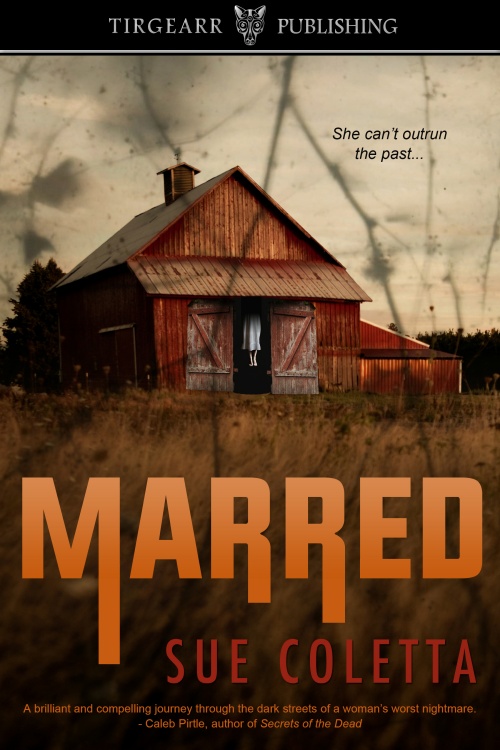
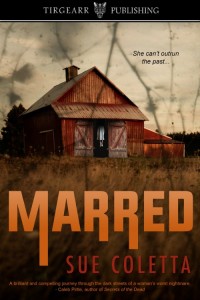
 Marred is the new psychological thriller from New Hampshire crime writer, Sue Coletta, who is my close internet friend and cohort. Sue’s an exceptionally talented writer with a great sense of humor. In fact, she’s silly enough to drop by the DyingWords shack for a chat about herself and her newest novel which just came online for prerelease on Amazon and other digital retailers. Great to see you! *waves at Sue* Tell us… What’s Marred all about? And what’s with the woman hanging from the barn rafters on the cover?
Hey Garry. *waves back* I think the best thing I can say is what’s on Marred’s jacket blurb.
When a serial killer breaks into the home of bestselling author, Sage Quintano, she barely escapes with her life. Her husband, Niko, a homicide detective, insists they move to rural New Hampshire, where he accepts a position as Grafton County Sheriff. Sage buries secrets from that night—secrets she swears to take to her deathbed.
Three years of anguish and painful memories pass, and a grisly murder case lands on Niko’s desk. A strange caller begins tormenting Sage—she can’t outrun the past.
When Sage’s twin sister suddenly goes missing, Sage searches Niko’s case files and discovers similarities to the Boston killer. A sadistic psychopath is preying on innocent women, marring their bodies in unspeakable ways. And now, he has her sister.
Cryptic clues. Hidden messages. Is the killer hinting at his identity? Or is he trying to lure Sage into a deadly trap to end his reign of terror with a matching set of corpses?
Ooooo… Chilling! How much of yourself is in Sage Quintano, your protagonist?
I think all our characters have pieces of us. Don’t you?
 I used three main characters in Marred, alternating their point of views. I gave Sage Quintano parts of my heart and soul, the mushy part of me; her love for animals, family, writing, that sort of thing. But Sage lived through a brutal assault, which crushed her spirit. Deputy Frankie Campanelli, my snarky character, says things I only wish I could say. But at one time she would be a better representation of who I am. I’ve mellowed with age. Even Sheriff Niko Quintano, Sage’s husband, has a piece of me. His hard outer layer protects him from heartbreak, but when he loves he goes all in 100%.
When Marred is adopted into a screenplay, who do you want as the main characters? Now, c’mon. Every writer wants to see their book on the screen.
 Of course I do! When I wrote my first novel I would spend hours daydreaming about the screenplay version. Marred is my fourth novel, though, so I haven’t given it much thought. Let’s see. For Sage, Gillian Anderson, if she colored her hair sable brown. Jessica Alba for Frankie. She too would need to color her hair, dark with auburn highlights. Robert Downey Jr. for Niko, with short-cropped hair.
I used to own a hair salon, which is why I’m concentrating on the hair here.
You’re a bloody good writer, Sue. How were you as a student?
Aww. *blush* Thank you. As a student I was too busy socializing to worry about grades. Therefore, I got B’s and C’s rather than the A’s I should have gotten.
Ever take an IQ test?
No, but I’ve always wanted to.
What’s your typical writing day like?
 Crazy. I start early in the morning, around 4-5 a.m. Read for a while, then get to work by 7 a.m. and continue until 7 p.m., on average. Sometimes later. During the day I take a half hour to have lunch with my husband and two 15 min breaks, or one 30 min. break, to exercise.
Do you have a set process?
Writing process? Absolutely. First, I plan my novel. I use an Excel spreadsheet based on the principals in Story Engineering, Save the Cat, and a few other milestones from other craft books. Once I have my milestones mapped out, I write my scenes. Each scene should either setup the next one or pay it off. Each day I start by editing the scenes I wrote the day before, and then I continue on. This way, by the time I finish the first draft I have less overall editing to do. I realize that’s not the norm, but it works for me. Then I start my editing. First by searching for writing tics, words and phrases I tend to overuse, and then I do an overall read for continuity, hanging plot threads, clues, etc. I send it off to my critique partner and beta readers. Once I get it back I work on the suggestions/comments. One final read-through and it’s ready to go to the publisher.
You held out for a traditional publishing contract rather than going indie like a bunch of the rest of us. Why’d you make that choice?
 For a few reasons, actually. Number one, it’s always been my dream to be traditionally published. Number two, when you’re traditionally published more opportunities open up for you. Like going for prestigious awards, for example. Number three, I wanted to work with a team…cover designer, editor, proof reader, etc., without having to absorb the cost. It was a long, hard road, but well worth it.
How was your experience in working with a publishing house?
Great. Everyone has been so nice. It’s a fantastic feeling to know I have a talented team backing me, as well as offering support and encouragement. And, y’know, no more sending out query letters and hoping for a request.
What motivates you to get up in the morning?
 I love what I do. I get to kill people for a living and get away with it. What’s not to love?
Will you ever tell where you hide the bodies?
Never!
Hey – Would you attend an autopsy with me?
Sure. As long as it’s not mine.
Ha Ha! What’d you write before turning to crime?
Years ago, I wrote children’s stories. Odd combination, I know, but the stories were bursting to get out. I wrote a dozen or so. Someday I might publish them. Never refuse the muse.
Who’s your biggest writing-craft influences?
 Larry Brooks and Brandilyn Collins for craft advice. For authors, who I’ve learned from through reading their thrillers, Larry Brooks, Karin Slaughter, Lee Child, Thomas Harris, Katia Lief, I could go on and on.
Karin Slaughter. Love that crime writin’ name. What do you enjoy about the writing business?
The writing community rocks. I’ve never met so many caring, supportive people in my life.
Is there any one secret to great storytelling?
 Structure. It controls pace, creates empathy for your characters, aka rootability, and provides the reader a vicarious experience.
Hmmm… Great answer. What’s the best piece of life advice you’ve received and where’d you get it?
My mom told me repeatedly, “You can have anything you want out of life as long as you apply yourself and work hard. Dream big, because the sky’s the limit.”
Do you fit your Zodiac sign?
To a tee. I’m a double Libra, sun and moon.
Any tattoos?
Three. Back of my left shoulder, right ankle, and inside the right hip bone.
 Inside the hip bone? That musta hurt. Now, what’s the Top 3 on your bucket list?
I want to take a cruise to somewhere exotic. Visit Australia and smuggle home a Quokka. And hit #1 on the New York Times Bestsellers List. Not necessarily in that order.
Where do you see yourself in a year? In five? In ten?
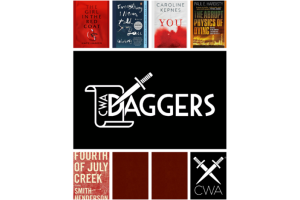
In one year I hope to have three of my novels released. I’d love to win the John Creasey New Blood Dagger Award for Marred. Wouldn’t the cover look great here? In five years, I hope to hit the NYTBL. In ten, drop from exhaustion. LOL
 So what do you want your dying words to be?
I loved, laughed, cried, danced, and shared my experiences with the world through my books.
Nice! Hopefully that won’t be said for a long, long time. Lots more writing to leave behind, ya know. Speaking of time. What’s your biggest time-vulture?
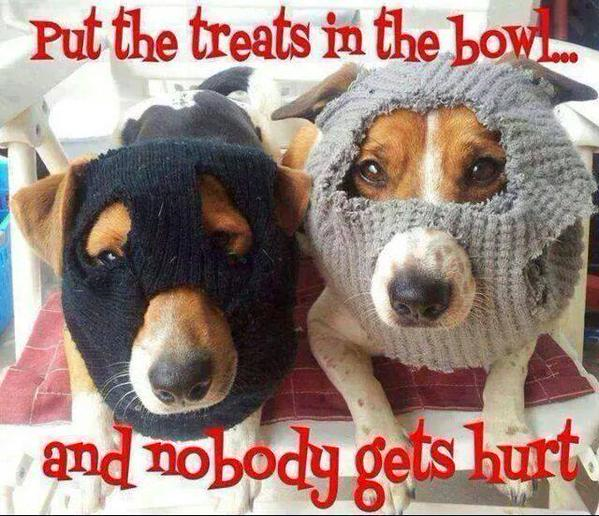
Facebook. I can’t get enough of hilarious animal pics and videos. Like this…
Awesome! Okay, now it’s time to take the DyingWords 10-step psychological profile. You must answer all questions honestly, otherwise I’ll sic the hounds. And no phoning a friend. Ready?
- Pantster or plotter? Plotter.
- Window or aisle? Window.
- Print or digital? Digital.
- Harley or Honda? Harley.
- Coffee or tea? Tea.
- Coyote or Roadrunner? Coyote.
- Burial or Cremation? Burial.
- Fine-tip pen or bold? Bold.
- Handcuffs or leg-irons? Handcuffs.
- Orangutan or gorilla? Gorilla.
 Okay. Just a sec… have to plug them into the DyingWords Psycho-Analyzer… twirl the dials… press the button… wait a minute… and… hmmm… Yep! Saw this comin’. Says because you’re a methodical plotter, fearless with your view, progressive in technology, aggressive as a Hog rider yet refined as a tea drinker, persistent as Wile E. Coyote, choose longevity over being a flash in the pan, are bold with words, keep your hands cuffed to the keyboard, and have hide thicker than a frickin’ gorilla…
You’ll make a great best-selling, crime-thriller writer! Imagine that?
*Sue rolls eyes*
Alright, moving on. With Marred about to be released, what’s your next project?
Wings of Mayhem. About a forensics specialist who moonlights as a cat burglar and mistakenly steals a killer’s trophy box. Oops!
 Double Oops. You’ve got a great website, Sue. Tell us about it.
My site—www.suecoletta.com—is dedicated to crime. I post informative articles to help crime writers’ stories ring true, writing tips, editing tips, and feature guests from law enforcement and forensics fields. I also have a Crime Writer’s Resource, which anyone can use. But the site is not only for writers. For instance, I have the Crime Lovers Lounge. Subscribers will get a secret key code that will unlock— You’ll have to subscribe to see what I have in store. More on that coming soon. If you’re a writer with murder in your plot, grab a free pdf 60 Ways to Murder Your Fictional Characters.
 It’s been a long haul for you with it’s just-rewards finally happening. Tell us about your journey.
Actually, I’m wrote an entire post about my journey for Molly Greene. You can read it at: http://www.molly-greene.com.
I just did. Wow! What a story of determination and preserverence. You certainly earned your stripes. Now, last and most important, when and where can we get Marred?
To celebrate the pre-release, Marred is on sale for only 99 cents at these fine retailers. More retailers will become available in the coming weeks. Marred will automatically be delivered on 11/11/15.
Amazon US Amazon UK Smashwords
Thanks so much, Sue. Best wishes for Marred looking down from the top of the charts. I’ve had a sneak-peek at the ARC and it’s a top-notch, thrilling read. Great job!
* * *
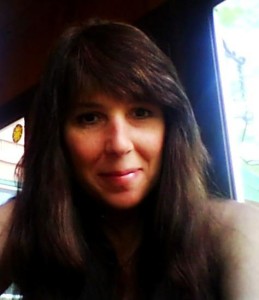 Sue Coletta is a member of Mystery Writers of America and Sisters in Crime as well as the author of five novels. A 4K-word excerpt of Marred will be published in the upcoming anthology, Murder, USA. Her other titles will be available soon. Sue is also editing the How-To / No BS Guide Series on Crime Fiction Writing that are in progress. Connect with Sue on her social media sites:
Web/Blogsite – http://suecoletta.com/
Twitter – https://twitter.com/SueColetta1
Pinterest – http://www.pinterest.com/SueColetta1
Facebook – http://www.facebook.com/SueColetta1
Goodreads – http://www.goodreads.com/SueColetta
Amazon – http://www.amazon.com/Sue-Coletta/e/B015OYK5HO
Google+ – http://www.plus.google.com/u/0/+SusanColetta/posts/