Tag Archives: Crime

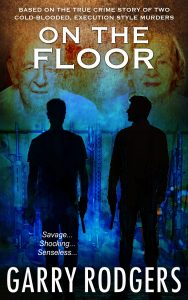
ON THE FLOOR — NEW BASED-ON-TRUE-CRIME BOOK BY GARRY RODGERS

Savage… Shocking… Senseless… Who would order two seniors to lie on the floor of their gun store, then cold-bloodedly execute these defenseless people with gunshots to the back of their heads? That was the fate of Berndt and Erika Lankenau in their business, Shooting Sports Supply, on Vancouver Island at Canada’s west coast. On The Floor is Book 5 in my ongoing Based-On-True-Crime Series. The other series books are In The Attic, Under The Ground, From The Shadows, and Beside The Road. Between The Bikers is now in the first-draft stage.

On The Floor takes you inside an actual double murder investigation with real police procedures. You’ll travel with the detective and forensic team as they meticulously examine a complex crime scene and you’ll follow a trail of clues that end in a massive confrontation with who committed this heinous crime.

This book comes with a warning: On The Floor is based on a true crime story. It’s not embellished or abbreviated. Explicit descriptions of the crime scenes, factual dialogue, real forensic procedures, and actual police investigation, interview, and interrogation techniques are portrayed. Some names, times, and locations have been changed for privacy concerns and commercial purposes. Here’s the Prologue along with the first two chapters.

On The Floor — Book 5 in the Based-On-True-Crime Series

**New Release — August 2020**

Prologue — Saturday, January 11th – 5:30 pm

“On the floor!”
Erika Lankenau and her husband, Berndt, stood in silent shock.
“Get on the floor! Facedown! On the floor!”
The owners of Shooting Sports Supply, a prominent Vancouver Island gun store, froze.
Erika’s mouth opened. No words came out.
Berndt Lankenau hesitantly raised his hands.  His empty palms faced forward.
“You heard it! Get on the fucking floor! Right fucking now!”
“Vat… vat is dis business?” sixty-nine-year-old Berndt asked in his German accent.
“Just do what you’re told and no one gets hurt.”
Erika, sixty-four, bent her knees. “Do as ve’re told, Berndt. Do as ve’re told.”
“Listen to her, old man. Get your face down on the fucking floor, or you’re dead.”
Berndt swallowed. He kept eye contact. Slowly, Berndt lowered to one knee and put his right hand on the hard floor. “Ve don’t vant no trouble.”
Erika lay in a prone position, face on the cold concrete with her left arm stretched ahead. Her right hand felt for Berndt.
Berndt also obeyed. His arms reached beyond his head and his face was on the floor.
“One… Two… Three.”
Ba-Bang! Bang!

Chapter One — Sunday, January 12th – 9:15 am

My cell toned. I looked at the call display. Oh… Oh… It’s Leaky and it’s Sunday morning.
“Hey, Jim.” I called him by his real name, Detective Staff Sergeant Jim Lewis. Not by his nickname, Leaky Lewis.
“Hope you have no plans for the day.” Leaky sounded serious, and he was.
“Nothing that important.” I did, but I knew this would trump what I was in the middle of.     “What’s up?”
Leaky paused, then told me, “Looks like we got two bodies in Shooting Sports Supply. They’re motionless. Facedown on the floor.”
I paused, too. I knew the business, including the owners, Berndt and Erika Lankenau. I also knew Ripley Rafter who worked with the Lankenaus. Ripley—everyone called him Rip—was a retired patrol sergeant from our department and a gun enthusiast, through and through.
“Uh-oh. What does it look like?” I felt like I’d just received a next-of-kin notification.
“I haven’t been there yet.” Leaky hadn’t. Leaky rarely went far from the office or his home because he suffered a chronic case of urinary drip.
“Who has the scene?” I was mentally preparing. My gut said this wasn’t good. And it wasn’t.
“Uniforms have it secured. No one’s been in yet. The placed is locked like a vault. Unless we get keys, we’ll have to cut our way in.”
I tried to picture it. I’d been in Shooting Sports Supply many times over the years that I served as a detective and Emergency Response Team marksman, or sniper as some call it. Shooting Sports Supply was the leading gun store in Nanaimo, a seaside city of a hundred thousand on the southeast side of Vancouver Island in British Columbia on Canada’s west coast. Nanaimo is right across from the City of Vancouver—one of the most exotic, erotic, and expensive places on the planet.
“How do you know… can you see them through the windows or something?” I envisioned standing outside Shooting Sports and looking through the bars behind the glass.
“That’s what I understand.” I knew Leaky nodded. He talked on the phone like he spoke in person. Leaky was an amicable guy and my supervisor at the Serious Crimes Section. He was junior to me in service but then, so was everyone else. I was the oldest on the detective squad and mulling retirement.
“So, is someone locating the keys, or a torch, or something?” I asked a logical question.
Leaky probably nodded again. “Yeah, Harry is tracking down the owners’ son. Our property index shows the primary contact as Mister and Missus Lankenau. They didn’t answer their phones, and there was no one home at their house. Speculation is it’s them dead on the floor.”
“Wait.” I processed this. “How do you know they’re dead?” Something wasn’t making sense.
“Well, ah… you can see through the window.” Leaky sounded slightly annoyed.
“I know you can see through a window, but how do you know there are two dead bodies?”
Leaky hesitated, then slightly chuckled. “Who’s on first… No. I haven’t been there myself. Harry has. She was in the office when the call came in reporting something suspicious inside. A uniform dropped by to check. The lights are on inside, but the doors are locked. He, the uniform, could see the shapes of two people lying face down about twenty-five feet ahead along the main aisle. So the Watch Commander called for Serious Crimes and Harry just happened to be in the office. Harry says it sure looks like two dead bodies to her, so she’s now on a mission to get in.”
Harry was my partner on the Serious Crimes Section. Her real name was Sheryl. Sheryl Henderson. Sheryl was a large lady with large hair and an even larger personality. We called her Harry after the Bigfoot on the movie Harry and the Hendersons.
“Okay.” I slowly got the picture. “So how did this start? Who first found it and called it in?”
I could hear Leaky sipping his coffee. I’d hinted Leaky should cut coffee out as it only made his incontinence worse.
Leaky continued. “From what I understand… and this is hearsay… a customer dropped by to see if Shooting Sports Supply was open, even though it’s Sunday. The front door was secured, but he was puzzled because the lights were on and it looked like they were open. He… the customer who I think is one of our reserve officers… don’t quote me. He rattled the door, tapped on the glass, and peered through the main window.”
“Okay.”
“So the customer takes a jolt when he sees the forms of two people that looked like they were facedown on the floor half-way down the aisle. At first, the guy thought they were dummies. Like, placed there as some sort of weird scarecrows in case someone planned a burglary. Then, he does a double-take and sees what looks like dried blood pools around their heads.”
“Uh… oh…” I pictured it.
“Yeah. Sure doesn’t sound like an accident or kinky double suicide to me.”
“No…”
“I think we got something nasty here. I want us getting inside as soon as possible. Also, I want to ass-cover with paramedics just in case there’s still life.”
“Doesn’t sound hopeful.”
When Leaky said dried blood around the head and face down on the floor, it hit home.
I feared they’d been executed in a robbery.

Chapter Two — Sunday, January 12th – 10:05 am

I pulled my unmarked Explorer into the Shooting Sports Supply parking lot. It was a small strip mall in a light industrial area of central Nanaimo, across from the main Golf & Country Club. The complex had mixed-use businesses surrounding the gun store that ranged from a fireplace dealer to a karate school.
There was a small group mustered outside the front door. They were adjacent to a large, freestanding electric sign that bore the triple-S logo set in a circle and designed to represent a telescopic sight with crosshairs. Two marked police cars sat without their emergencies flashing, and two uniformed officers stood with their hands in their pockets. I recognized both, but I was lost for their names. Our department now exceeded one hundred and eighty sworn officers. Then, we employed a host of civilians in support roles.
I recognized another guy dressed in combat pants with a duty vest overtop of his issue jacket. He was Matt Halfyard, an understudy with the Forensic Identification Section. We called Matt Eighteen Inches.
I also recognized a reserve officer who’d been with our force for a long time. Randy Mellow shuffled from foot to foot and kept blowing on his hands. I didn’t know if he was trying to warm himself or if he was shaken up.
I didn’t blame him for wanting warmth. Even though the Nanaimo area of Vancouver Island has the mildest climate in Canada, the winter months are wet and chilly. The low temperature especially affected me as I suffered from Reynaud’s Syndrome. That’s a hereditary condition where I lost feeling in my fingers and toes when the mercury dropped below 40 Fahrenheit. Fortunately, my wife had bought me a pair of electric mitts, and I wasn’t afraid to wear them.
“What does it look like, Matt?” That was my standard opening line.
Matt also looked cold. He’d already recorded the outdoor scene temperature. It was 36 degrees, slightly above freezing, and it wouldn’t get much warmer for a few days yet. The overnight rain had stopped, but the clouds hung low. A haze shrouded the golf course across the street. It looked… ghostly.
“This is nasty. Real nasty.” Matt pulled no punches. “I’ve called Cheryl to attend. I think this scene is over my head.” Matt referred to Sergeant Cheryl Hunter, our senior forensic examiner. She was also Matt’s tutor and mentor.
“What’s happening with keys to get in?” I hadn’t talked to Harry yet. I phoned her, but she didn’t answer. That wasn’t unusual. I also didn’t leave a voice message for Harry because her greeting quite annoyed me.
“We’re waiting for Sheryl Henderson,” Matt said. “She couldn’t find the gun store owners… I think obviously… and their son, their next-of-kin, is listed as a contact person in case of an emergency. His name is Mike… Mike Lankenau and Sheryl can’t track him down either. We might have to call a locksmith.”
“Let’s hold off on that.” I shook my head. “I don’t want anyone involved with the scene more than absolutely necessary.”
One of the uniforms gave me a sideways look.
“Naw.” I shook my head. “That doesn’t include you guys. We need perimeter security, and we’ll have to clear the building before any scene exam starts. Tell you what. You two can start with a walk around the site. See if anyone is around and if they saw or heard anything. Also, look for unusual stuff. You know… something discarded from the scene, like in the dumpsters.”
The two uniforms spread out. One started a clockwise trip through the complex. The other went counterclockwise.
I turned to Randy. “I take it you found them. Has anyone taken a statement from you yet?”
“Yes. I reported it.” Randy nodded. “And no. No statement yet.” He shook his head.
“All right.” I motioned to my vehicle. “While we’re waiting to get the building open, jump in my Explorer and I’ll turn a recorder on.” I also turned on the heat which pleased both of us. This is what he told me:

——

“Okay, my name is Randy Mellow and I’m a reserve police officer with the Nanaimo department. I also work in my day job as a security systems technician. Just after nine a.m. this morning, I stopped by Shooting Sports Supply. I know it’s Sunday, but Berndt and Erika often stay open weekends. I left a rifle here to get a new scope mounted and… and I wanted to see if it was ready so I could go to the range and sight it in.
“First thing I noticed was the lights were on so I thought Great. They’re open. So I went up and pulled on the door and it was locked. That’s funny, I thought. I could also hear noise coming from inside like a loud radio playing.
“So I looked in the front window… I had to shield the glare… but I didn’t see anyone. I rapped on the glass and called out… loud… to get over the radio but no one answered. I gave it a few minutes and a few more knocks because I thought they might be in the back. In the gunsmithing shop. Not the retail area.
“Then I realized something was wrong. Like real wrong. They stood out… the bodies on the floor. At first, I thought they were a couple of dummies or mannequins as some kind of a joke or to scare off anyone trying to break in. Then I realized they were real… real people.”

——

Randy stopped. He caught his breath, swallowed, and carried on.
“I called it in to 911 and I waited here to give a statement. I knew I’d have to.”
“Describe what you saw.” I gave him a prompt.
“They were… they are… side by side lying on the floor with their faces down in the main aisle… about twenty or twenty-five feet in from the front door. I know it’s Berndt and Erika. I can tell from their looks and their clothes. I know… knew… them well. A lot of officers do… did.” Randy choked up.
“It’s okay. Go on.”
“Anyway… Erika is lying to the left. Berndt is lying beside her to the right. Their heads are facing away from the door… what direction is that… I guess kind of south.”
“Please describe their condition.”
He swallowed and continued. “To me, there’s no question they’re dead. No question. They’re in a facedown position on that cold concrete floor and are motionless. There is also…”
He halted. I thought he was going to break down, but he sniffed and went on.
“Please excuse me. Berndt and Erika are… were… my friends. They’re friends to a lot of us on the force. You, too, I imagine.”
Randy was right. The Lankenaus weren’t close friends of mine, but I certainly knew them from going in their gun store over the years. I was also friends with Rip Rafter and he hadn’t been located. I feared Rip might also be dead on the floor in the back.
He went on. “You can see brown staining on the… on the floor underneath them. To me, it looks like… dried bloodstains.”

——

Harry drove up. She was in her personal vehicle—a brand new silver-gray Range Rover. I finished recording Randy Mellow’s statement and got out. Harry got out, too.
“No luck with the goddam keys.” Harry shook her head. “I think the only fucking way we’ll get in there is a locksmith. Cutting the bars and smashing the glass sounds a little harsh. Especially since they’re already toast. Have you seen them?”
“No, I haven’t.” I knew I had plenty of time to do that. “What about Rip Rafter?”
Harry slurped from her stainless steel Starbucks mug. “I phoned there and then drove over. No one’s home, but Rip’s truck is gone. So is his boat. I think the old fucker’s gone fishing.”
That was a relief. I also didn’t see Rip’s truck in the Shooting Sports Supply lot, but the Lankenaus’ Jeep Cherokee was here. Locked up.
“And you can’t find the son… Mike Lankenau?” This concerned me. I knew a bit about the Lankenau family history, and some of it wasn’t smooth.
“Nope.” Harry slurped again. “He’s not answering the phone number we have on file, and there’s no one home at the address we have for him. But… that doesn’t mean either one is current. You know how accurate our contact system is, eh?”
I nodded. “And you went by Berndt and Erika’s place?”
“Yeah. It’s as dead as they are.”
“Okay. A locksmith it is.”
I Googled Gallazin Locksmiths, got their emergency number, and made a call.

——

Harry and I waited in my Explorer. We kept Randy Mellow at the scene. I had him stay out front of Shooting Sports and keep watch for any unexpected, although highly unlikely, movement inside. The two uniforms were still dumpster diving, and Matt Halfyard wandered around taking exterior photos and video.
It was Harry who said it.
“Don’t you find it strange these people are locked inside their own store? Like, that’s a manual deadbolt on the front door. It doesn’t lock automatically. Whoever did this had to have locked the door from the outside when they left and took off with their fucking keys.”

You can read the rest of On The Floor at Amazon, Kobo or Nook.



HAPPY NEW YEAR AND WHAT’S UP WITH GARRY RODGERS’ WRITING FOR 2020

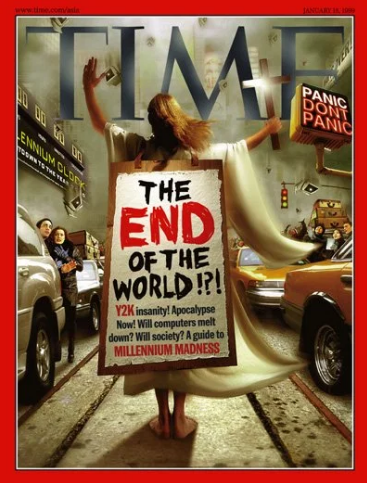
Wow! How fast did two decades fly by? Seems like yesterday we were freaking over the new millennia’s Y2K impending doom of driving a dastardly internet chain reaction filled with devastating quirks and quarks through the hearts of our hard drives. Well, that never happened. As Trump says, it was fake news – all lies – a terrible, terrible hoax. Fortunately, it gave me twenty new years to polish my craft and plot my course. So, here’s what’s up with Garry Rodgers’ writing for 2020.

2019 was a productive year in the writing room. I penned and shipped about fifty feature articles for my daughter’s agency. None changed the world but they helped pay the bills. I also managed to scrape together personal blog posts for every second Saturday morning on DyingWords.net. Some pieces took a lot of research and I learned new things. That’s part of the many happy returns from blogging.

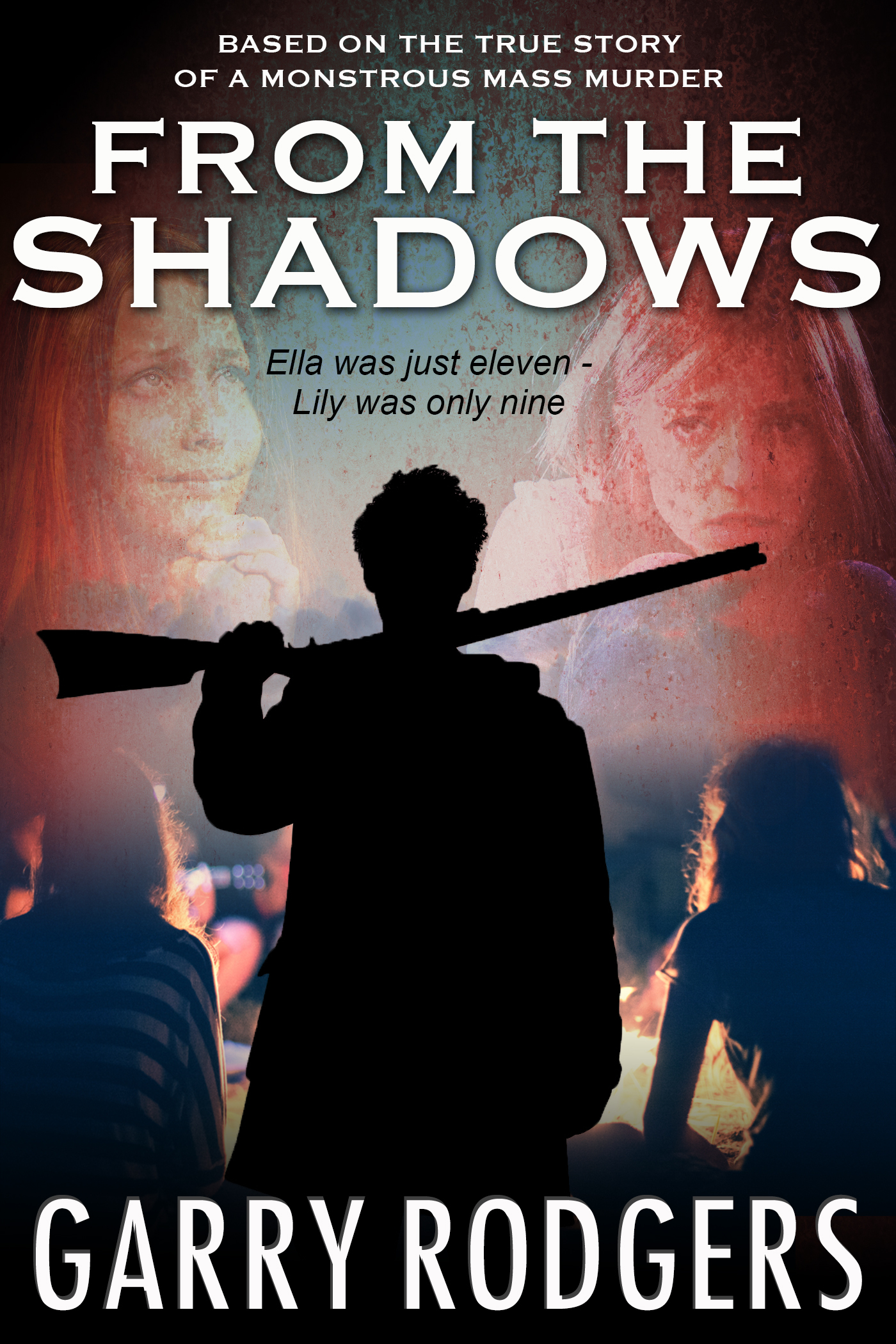
As well, I completed two full-length book manuscripts. One is a historical non-fiction work titled Sun Dance – Why Custer Really Lost the Battle of the Little Bighorn. It’s now with an imprint of Rowman & Littlefield Publishers, and we’ll see where that goes. The other is a based-on-true-crime story called From The Shadows. I was going to release it on Amazon this month, but put things on hold till January as I didn’t want it getting smothered in the Christmas market.

I’m also two-thirds through writing Beside The Road. It’s another based-on-true crime read in the same series as From The Shadows, Under The Ground and In The Attic. These formats have worked well in reader reviews and the sales department. So, if it ain’t broke, I’m not gonna fix it. I have more plots planned which follow true crime stories that I was either directly involved in or have decent personal knowledge of the case facts. Working titles for those are On The Floor, Beneath The Deck, By The Book, and Behind The Badge. I also have sights on writing The Mother From Hell which is based on a crazy case of Munchausen Syndrome by Proxy that I unfortunately investigated and got sued over.

My website at DyingWords.net continues to gain traction. I installed a web tracker in April and am pleasantly surprised to see I’ve had over 137,000 visitors during the last eight months. The most popular posts are true stories I’ve dissected like JonBenet Ramsey, Natalie Wood, Marilyn Monroe, Charles Manson and Elvis Presley. One post really surprising me is The Guy on the Greyhound Bus which gets twenty or more reads a day. That’s the case where a deranged passenger stabbed, beheaded and cannibalized a fellow rider on a public bus. Go figure.

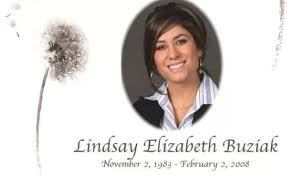
But, a story getting a lot of attention doesn’t surprise me. That’s the high-profile and unsolved Lindsay Buziak Murder that happened at Victoria, British Columbia in 2008. I took on the task of researching Lindsay’s tragic circumstances, and it swirled me down a rabbit hole I couldn’t have imagined. I’ve met many of Lindsay’s family and friends as well as several suspects. One prime person-of-interest laid a criminal harassment complaint against me as a ruse to get me off her back. The cops said it was a civil matter, and I told her to sue me as I’d love to get her under oath and on the witness stand.

When I started privately investigating Lindsay’s murder, I was unprepared for her bizarre father. He’s been the drive to keep Lindsay’s memory alive by narcissistically placing himself front and center media-wise including his recent appearance on the Dr. Phil TV show. I was pathologically lied to and then personally attacked online by the dad. I had a real hard time coming to grip with how intentionally misleading he’s been in the years since his daughter was killed. It’s a sad and strange story on its own.

What I can say about Lindsay Buziak’s murder is that I may not be able to truthfully write the public story as the circumstances now sit. I have a lot of information about this awful mess, the motive for the crime and, with probable certainty, who the conspirators are. If I publish what I’ve learned and what people close to the story have candidly told me – to tell the truthful and accurate story – I might compromise an active police investigation and that can not happen.

What I can say about Lindsay’s case is she was a totally innocent victim of an elaborate conspiracy to frame her as a police agent. That was to cover up and protect a real police informant who double-crossed an arm of the Sinaloa Drug Cartel in a multi-million dollar cocaine loss. Yes, the story is that involved and complicated. I will also say, with probable certainty, the two people directly involved in stabbing Lindsay to death are a Mexican brother and sister pair who are now long gone from Canada. However, the co-conspirators who fed Lindsay to the killers are still active in the Victoria area. One of them checks my blog daily.

Moving on to other writing, I’ve spent the past few months digging into nerd-stuff like chemistry, biology and physics. I’ve also been snooping into philosophy, psychology, astronomy and anatomy. No, this is not some sort of weird enlightenment or cautious coming-out. It’s a serious look at the human condition centering on consciousness.

I’m preparing a paper with the working title Interconnect – Finding Your Place in a Conscious Universe which is more for my own curiosity than anything else. I’ll share it on an upcoming blog post as a PDF download as it looks like it’s going to be fairly lengthy – probably 20-30K words. It’s kind of a “What’s the Meaning and Purpose of Life” which has been sixty years in the making. I was hoping to wrap it soon, but I got three new books for Christmas – Origin Story (A Big History of Everything), When The Earth Had Two Moons and Lonely Planet’s The Universe Travel Guide.

I also want to share ongoing successes of my writer friends. First and foremost is Sue Coletta. If you regularly follow DyingWords.net, no doubt you’ll know Sue. We’ve collaborated on a few things, and I’ve watched Sue’s progression from her first book to her rise as a sought-after source for an upcoming true crime story commissioned by a major traditional publisher. In my opinion, Sue Coletta is one of the most talented and promising writers out there today.

Rachel Amphlett is another super-talent in the crime writing business. I had the pleasure of co-hosting an indie-publishing seminar with Rachel, and I have to say how impressed I am with her work not to mention her business savvy and drive. Rachel’s main stories are her Detective Kay Hunter series and her Dan Taylor espionage series. Rachel also writes stand-alone books in the crime thriller genre.

I’ve developed an online friendship with Caroline Mitchell. Caroline and I have something in common besides writing. She’s a retired detective from a UK police force who recommissioned herself as a crime writer. A really good and successful crime writer, I must say. Caroline has her DI Amy Winter books like The Secret Child and Truth and Lies which have been optioned for TV productions. Her stories Witness and Silent Victim also proved to be top bestsellers.

John Ellsworth is another writer I’ve got to know over the net. John is a recovering lawyer who writes legal thrillers. He tells me he set out to supplement his retirement income by a few hundred a month. Well, that took off on him. John is now one of the leading indie authors making Amazon money with his Thaddeus Murfee character.

While I’m name-dropping, have you heard of Adam Croft? Here’s a guy who’s done well for himself in the crime thriller world. Adam and I cross-blogged back in the old days when he wasn’t famous and I had hair – well before Adam became the number one book seller on all of Amazon with Her Last Tomorrow. Now Adam has sold nearly two million books and his list keeps growing.

And then there’s Joe Broadmeadow. Funny how old cops attract. Joe’s a retired captain from the East Providence, Rhode Island, detective division. He’s found his stride with true crime books like Choices – You Make ‘Em, You Own ‘Em and It’s Just The Way It Was. Joe’s also penned thrillers like Collision Course, Silenced Justice and A Change Of Hate.

I have a few more writing projects planned for 2020. One is an article for the Royal Canadian Mounted Police (RCMP) Quarterly publication. An editor at the Quarterly is an former colleague of mine, and he asked me to contribute a piece on Post Traumatic Stress Disorder (PTSD) about how I personally coped after The Teslin Lake Incident where my close friend and partner, Mike Buday, was murdered beside me and I was nearly shot as well. This is part of a series the Quarterly is doing on modern approaches to managing operational stress injuries (OSI).

I’m also guesting a post on what detectives and writers have in common. This is for a very high-profile website catering to writers, not detectives. The site has been recognized as one of the top ten influencers in the writing business, and you’ll have to wait for April to see who this is.

On the writing business side, this coming year I plan to expand from publishing solely on Amazon. (Going Wide) You’ll soon find my indie works on Kobo, Nook, B&N, Apple and Google as eBooks. I’m also planning to offer most in print form and maybe a test on audio.

Speaking of audio, I want to run this by you. I’ve been mulling the idea of taking my most popular blog posts and turning them into podcasts. Some of these posts have had thousands of reads and hundreds of shares. Podcasting seems to be a hit with folks who don’t want to spend the time reading but are ripe for listening while driving, walking or whatever. What do you think? Would you tune in to a DyingWords podcast?

Anyway, that’s what’s happening  with Garry Rodgers’ writing for 2020. I hope you have a safe, healthy, happy, purposeful and prosperous new year. And thank you – thank you so much – for supporting my stuff!  ~Garry

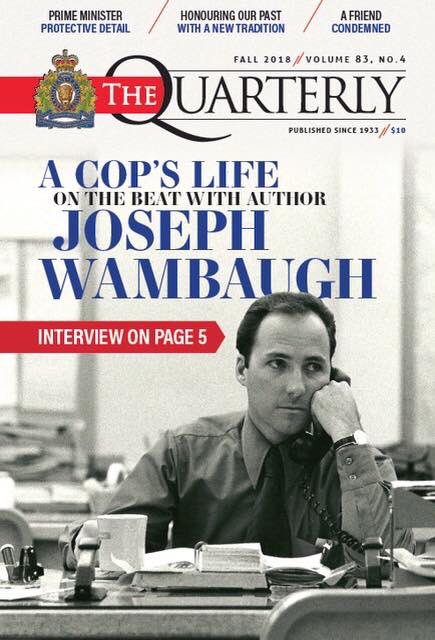
JOSEPH WAMBAUGH — INTERVIEWING CRIME WRITING’S MASTER OF CHARACTERS

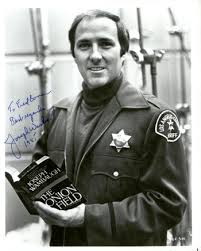
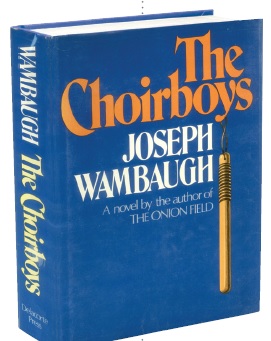
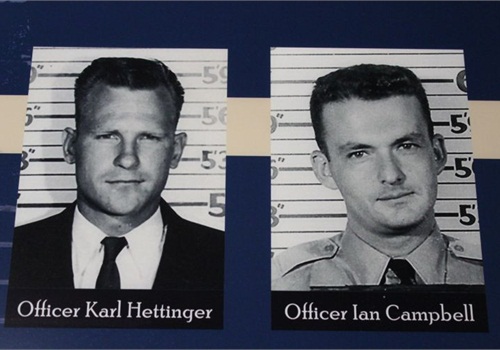
Joseph Wambaugh is crime writing’s master of cop & crook characters. Unlike many crime writers, Joe Wambaugh policed in the Los Angeles trenches. He’s worked with guys like Roscoe Rules, a fictional yet true-to-life rogue in The Choir Boys whose behavior was delightfully over-the-top. Wambaugh also served with psychologically-wounded real-life officers like Karl Hettinger portrayed in The Onion Field as a PTSD victim sadly spirally down after his partner’s on-duty execution. And, after 50 years in the police and crime writing business, Joseph Wambaugh knows his characters and remains down-to-earth. I’m honored to share the Royal Canadian Mounted Police (RCMP) Quarterly magazine’s recent interview with crime writing’s master.

*   *   *

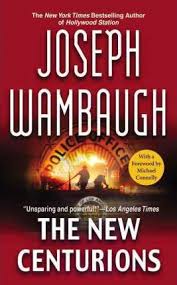
In 1971, Little, Brown & Company published a novel with a catchy title, The New Centurions. It was the first book from a young writer who described his profession in a way never been done before. The author was a homicide detective with the Los Angeles Police Department and the book was an unorthodox look at policing—full of colorful characters tossed together in a zany, chaotic world of life and death. Joseph Wambaugh was describing policing in the City of Los Angeles, but it might as well have been any city. The New Centurions was a runaway bestseller.

Joe Wambaugh went on to write 15 more novels and 5 non-fiction books. He wrote TV scripts, contributed to movies and television shows, and became a household name in police and literary circles. Fame forced him to leave policing and propelled him onto the author’s circuit in countries around the world. He made appearances on countless TV shows, including The Tonight Show with Johnny Carson.

Wambaugh’s fame continues to this day. His books continue to sell, phrases he coined are commonly used in policing and—most of all—he left a profound mark on the police profession. Joseph Wambaugh understood cops. He also recognized the emotional toll of “the job” on police officers, long before Post Traumatic Stress Disorder (PTSD) was a diagnosed condition.

Joe Wambaugh also exposed the disparities in society through his examination of topics as diverse as dog shows and prostitution, describing the opulence and hypocrisy of some, as a counterpoint to the pathetic underbelly of society. Wambaugh described the job of a police officer in a gritty, realistic way that upset the prevailing view of policing as a mechanistic, black and white world of good and evil, typified by TV shows such as Dragnet and Adam-12.

No one underestimates the role Wambaugh had on policing and its perception by the public. Police officers came to understand the heroic qualities and tragic frailties of their peers and themselves. The public saw police as dedicated and brave, but imperfect human beings like themselves. Through Joseph Wambaugh’s works, policing became seen as a high-risk profession—physically and emotionally. Police Story and Hill Street Blues became the new TV paradigm of policing.

Today, Joe Wambaugh remains an astute observer of policing from the distance of his California home. He’s a husband, father and grandfathera youthful 82 and sharp as a tack. The Quarterly had the pleasure of interviewing this most unassuming man. Here’s the conversation.

Joe, you grew up in East Pittsburgh and joined the Marine Corps at age 17. Why?

I had been living in southern California for three years before joining the USMC. I joined because after graduating from high school, I did not want to go to college, and was too young to get a decent job. Thanks to the military, I benefited from the GI bill and used it for college later on.

What inspired you to become a police officer?

I took college classes while in the military, then doubled up on classes when I left the Marine Corps at age 20, graduating with a Bachelor of Arts before my 23rd birthday. I had intended to become a teacher but saw an ad in The Los Angeles Times that the LAPD was paying $489 a month to recruits. It was very enticing, as I was bored with school and wanted some action.

At what point in your career did you decide to mix writing with policing?  Did someone influence you to write?

I had majored in English and every literature major who has ever lived is a closet writer. I read John Le Carré’s spy novel, The Spy Who Came In From the Cold. For me, it was the ultimate story of police undercover work. I decided to write that novel.

How did you break into the publishing world?

I sent short stories to all the cheapo magazines and received rejections. I sent one story to the same magazine twice because I was convinced they had not read it the first time. It came back to me with a note: “Dear Schmuck, it’s no better this time than last time.” In desperation, I tried a literary magazine, The Atlantic Monthly. They encouraged me to try a novel. That did it; The New Centurions was the result. I could never find the “Dear Schmuck” letter to send it back to him.

Tell me about the reaction to The New Centurions.

I knew my Chief of Police would not approve of the book. I violated Departmental policy by not submitting the manuscript for editorial approval. It became the main selection of the Book of the Month Club. I received a check for $50,000 in 1970. The Chief ’s public comment was that he was glad Sergeant Wambaugh is making a lot of money because he won’t have a job much longer. The press jumped all over it. Everyone was on my side. Everyone had to see what this young cop had done. The book remained on The New York Times best seller list for 32 weeks.

You‘ve been referred to as the father of the modern police novel. Comments?

It was my intention from the beginning, to tell the story of policing from a different and more realistic perspective – the gritty, cynical, slapstick and emotional side of policing. The public was ready for truth, in place of entertaining propaganda. Jack Webb, the creator and star of Dragnet, became involved in all the kerfuffle over the release of The New Centurions. He got a man to contact me to say that Webb would read the manuscript and if it deserved to be aired, he would protect me from being fired.

My homicide partner and I drove to Sunset Boulevard in Beverly Hills and dropped off the manuscript. Well, it took a couple of weeks. I finally got a call that the manuscript was there to be picked up. We drove back in our detective car. The manuscript was in a wrapper. I said to my partner that the manuscript was heavier than when I brought it here. Every place where Webb worried about the content, he placed a paper clip – 500 in total. Every page had multiple paper clips. I kept the paperclips and never met Webb.

The practice of letting off steam after a shift is seen in The Choirboys. But that book also described a darker side to the police profession, in which the emotional toll can be greater than the physical danger, occasionally leading to suicide and divorce. Comments?

If I had still been in the LAPD at the time that The Choirboys was published, it would surely have gotten me fired. I have always said that the physical dangers of policing were overstated by TV shows and movies, but police officers are constantly exposed to the worst of people and ordinary people at their worst. This produces premature cynics and makes it one of the most emotionally dangerous jobs in the world.

Your writing style is somewhat unconventional, described as a series of connected episodes involving colorful characters, more so than plot-driven. How did you develop this style?

The style reflects how I see life: episodic. That leads to character-driven stories, rather than plot-driven stories. I am no Agatha Christie.

What techniques did you use to document the many great stories which you fictionalized?

I took lots of secret notes as a cop and kept them in boxes and drawers in case I ever decided to try writing.

You also faced danger yourself.

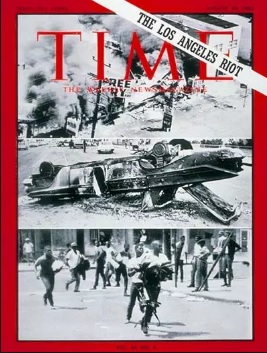
I happened to be one of a dozen besieged cops at Manchester and Vermont Streets on Friday the 13th of August 1965 when Watts erupted in rioting and all the shooting started. I don’t know if one of the hundreds of rioters fired or if it was a cop, but a couple of bodies fell. And then all hell really broke loose for three days. We were ordered to 77th Street Station earlier that afternoon from all over Los Angeles and assigned to three-man cars with cops we’d never met before. We were given a box of ammunition and a shotgun and sent to unfamiliar streets, with the intent of stopping the riots.

It was not police work, but a crazy kind of urban combat in a state of anarchy. We mainly tried to protect each other while mobs looted. The windows were smashed from our car within minutes, and at some point, one of the cops I was teamed with fired a shotgun blast in the general direction of a muzzle flash and managed to hit a looter in the ankle with one pellet of double- aught buckshot. Taking that looter for medical treatment and then to jail got us off the street for nearly two hours and was a welcome relief, ut then it was back out to hell. Anyway, that wasn’t really police work.

Joe, tell me then about a police incident that had a lasting impact on you.

I was a patrol officer in south central L.A. We had a lot of shootings and action. I was training rookie named Fred Early. He was only out of the Academy for matter of weeks. We got a call of shots fired at a pool hall and arrived just ahead of another black and white. A guy stepped out of the pool hall with a shotgun. Pellets whiz past us and he heads back inside.

I didn’t pay attention to Fred Early. Everyone was yelling, and the radio was blaring. It turns out that Fred had run around the building and covered the back door. He was assertive and smart. The robber runs out the back door holding the shotgun at port arms. Fred fired one round. I arrived to find the suspect on his back with a grimace on his face and a hole between his eyes.

That, however, wasn’t the end of the story. Five years later, Fred Early was on his way home from work. Something happened. He reported a burglar breaking into a commercial business. He tried to arrest the suspect. A fight ensued, he was repeatedly beaten and kicked in the head by his assailant and shot in the leg with his own gun. The guy got away. Fred eventually died during one of his surgeries, having suffered irreversible brain damage.

You’re a New York Times bestselling author and the winner of many awards, including Grand Master of the Mystery Writers of America. Did you anticipate your novels’ impact and it would become next to impossible for you to resume work as a homicide detective?

Nobody could have anticipated the instant success. I simply wanted to publish something. I never dreamed that I would be unable to complete my 20 years with the LAPD and get my pension, the security blanket all cops want. Many times, I regretted my success. Fourteen years was seventy per cent of what I agreed to serve. I thought about it a thousand times. I would love to just have completed it. Also, in those years, I was used to packing a gun and no longer had a right to carry a gun.

Do you have a favorite character in your novels?

I don’t really have a favorite character, but nonfiction books are like my step-children, novels are like my biological children.

Is Joe Wambaugh in the novels himself?

Pieces of me are probably in some of the fictional characters.

At some point, you decided to write non-fiction, beginning with The Onion Field, which was a huge hit. Why did you expand from the fiction genre?

I knew there was a great true story that had to be told, not so much about the murdered officer, Ian Campbell, but about the survivor, Karl Hettinger. I was working Wilshire Vice the night that Campbell and Hettinger were kidnapped in Hollywood Division, the next division north of us. Everyone was looking for them. I stayed close to the case. When I heard what happened to Hettinger within the Department, I knew it was wrong and that he would pay a terrible price. He surely did.

Your books spawned TV shows and movies and turned the existing genre of television shows, such as Dragnet and Adam-12, on their head, helping spawn a new paradigm, typified by Police Story and Hill Street Blues. Thoughts?

I’ll give you an example. I worked on Police Story which aired on NBC television. After some rookies have a year or so under their belt, their badge starts to feel heavy and they begin to swagger a bit. We created an episode about what we, at LAPD called the John Wayne Syndrome. For some reason, the producer submitted the script to John Wayne Productions. Their response— “absolutely not.”

The production company got cold feet and changed the term to the Wyatt Earp Syndrome. The badge heavy cop loses everything, including his wife. At the end of the episode he is seen sitting on the bed of his empty apartment. The tough guy suddenly breaks down weeping and the show ends with the sound of a radio call playing over his sobs.

Using a radio call has become a part of line of duty police funerals, where the fallen officer is called on the police radio and fails to respond. Did this tradition begin with your writing?

Not to my knowledge. However, not being too vain, the tradition of playing bagpipes at police funerals started after The Onion Field was published. The book introduced it by recounting Officer Ian Campbell’s funeral. His grandparents on both sides were from Scotland and Ian loved everything Scottish. There is a photo of him playing the bagpipes. They were played at his funeral, and this was repeated in the movie. It was heartbreaking.

Another non-fiction book, The Blooding, tells the story of the first successful use of DNA profiling, which occurred in England. How did you learn of this case and did you anticipate the huge impact that DNA would have on policing?

I read about the case and knew at once, if it could be true, that this would be the biggest event in crime detection since inked fingerprinting.

One of your most entertaining books must be The Black Marble, a story about dog shows and crime. But there appears to be a deeper meaning in this and other books, which appear to use satire to pan the excesses of modern American society.

That is probably true. As with most of my work, all the comedy is tempered by some intense and painful scenes involving PTSD in police work. I really liked the movie of Black Marble, but the mix of funny and harrowing stories, including the torture and death of a child and a cop going crazy, confused some viewers who either loved or hated it. Harry Dean Stanton was a great comedic villain in the movie.

Do you have a sense of the impact that your books had outside the United States?

My books are fading into distant memory. I’m not sure that there is a large society of avid book readers left, anywhere in the world. At the time, however, I met cops in Europe, Australia and New Zealand during book tours. I did become aware of their impact. It was very flattering.

Have you visited Canada and met Canadian police officers?

I did the book tour to large cities and met a few Canadian coppers. I also spent a month in Toronto prepping Echoes in the Darkness, a TV mini-series, where we made Toronto look like Philadelphia. We brought in palm trees and placed them on the shore of Lake Ontario, turning it into Miami! One day in April it was so hot that we were in t-shirts. The next morning, the snow was six inches deep! While in Toronto, we had to fly to New York to interview actors, but everyone had the same feeling—New York was foreign to us, Toronto was like home. Such a great city. I thought about it the other day when I read about a terrible shooting in Greektown. I used to go there all the time for dinner.

Would you recommend a policing career to young people today?

All my life I’ve seen it getting worse and worse. The police can do no right. They are criticized more and more. Criticism starts before the facts come out.

One important point in terms of police shootings. The critics are endless. So called bad or shaky shootings arise from fear not anger. Fear is the motivator in the case of bad shootings. Shootings arising from police rage are uncommon. This is a fundamental thing that has to be understood. I would not recommend policing as a career today.

How does Joe Wambaugh spend his time today?

Dee and I married when I was an 18-year-old Marine and we have two children and two grandchildren. I hate the idea of retirement. The worst part of old age is the loss of creative energy and being unable to write more books. Three of my four grandparents were Irish immigrants – the fourth being a German-American originally named Wambach – so mostly Irish DNA means that I tend to see the world and my life through a glass darkly. On the other hand, it is probably my Irish DNA that made me a writer in the first place. So, what do I have to bitch about? Semper cop!

*   *   *

Joe Wambaugh took a chance almost 50 years ago to write about policing from the perspective of a street cop. He forever changed how the public perceives police officers, their role in society, the pitfalls of the profession and its strengths. It’s from such realistic—in your face—writing that we have a better understanding of the mysteries of what it means to be a police officer and the heavy toll it takes on officers and the larger police family. May we continue to learn from the wonderful tales told by Joseph Wambaugh and enjoying his captivating pages.

Acknowledgements

My DyingWords thanks to two retired RCMP members for contacting Joseph Wambaugh for a talk. Staff Sergeant (ret’d) Michael Duncan, who I worked with in the 1980s, is on the editorial board of The Quarterly It’s been the RCMP voice since 1933. Deputy Commissioner (ret’d) Peter German is a Quarterly contributor who spent time with Joe Wambaugh and put this piece together. It’s a unique insight into how Joseph Wambaugh’s police and writing career progressed. It’s also a fascinating insight into Wambaugh’s thoughts that captivating crime writing isn’t about how cops work on cases—it’s about how cases work on cops.