Tag Archives: Justice

REALITY COMES FIRST — SEVEN TRUTHS FROM THE SAGES

Something happens when you read the sages. The people who knew and understood human life—not today’s motivational speakers, influencers, or the gurus selling airport-bookstore enlightenment, but the serious minds who sat with reality long enough to understand reality’s shape. Different cultures, different languages, different centuries, different gods, different metaphors—yet the sages circled the same fire of truth knowing reality comes first.



They tell us reality has an order. They tell us human beings suffer when we live against that order. They tell us wisdom isn’t about inventing clever opinions, but about seeing what’s really there and learning to live in accordance with it. Living in accordance with nature. Or reality.

That’s a hard message in a time like ours. We live in an age where people are told they can construct identity, curate truth, manufacture status, and narrate image into whatever form suits them best. Technology has made this worse because tech gives illusion industrial horsepower, and artificial intelligence now lets anyone generate fluent nonsense at scale.

But reality, or nature, hasn’t gone anywhere. It’s still here. It still keeps score, and it still has the last word.

This is where the old sages are useful. They weren’t perfect, and they didn’t all agree, but taken together they left us a field guide for living in contact with what’s real. They all pointed toward the same deep order of reality—the lawful structure beneath nature, human behavior, consequence, time, suffering, and wisdom.

The Greeks called part of it Logos. The Taoists called it The Way. The Hindus and Buddhists spoke of Dharma. The Egyptians had Ma’at. The Stoics told us to live according to nature. The Hebrews and Christians spoke of Word, Wisdom, and Creation in order. Modern science stripped away much of the sacred language, but it confirmed the same basic thing. Reality has structure, pattern, limits, and consequences.

Here are the seven sage truths as I see them. At least as I understand them at this stage of my life’s inquisitive journey.

1. Reality Precedes Opinion

The first truth is the most important and the least fashionable. Reality comes before opinion. It existed before we had preferences, politics, theories, beliefs, religions, ideologies, hashtags, flags, committees, universities, marketing departments, or expert panels. It doesn’t ask for permission, and reality doesn’t care if we’re offended.

Gravity works whether we believe in it or not. Fire burns whether we respect it or not. The body ages whether we approve or not. Debt compounds, trust erodes, habits harden, lies spread damage, and neglected things decay.

This is the great insult reality delivers to the human ego. We want the world to bend around our wishes, but reality isn’t a customer-service department. It doesn’t take complaints from people who refuse to read the instructions.

The sages knew this. A wise person doesn’t begin with “What do I want to be true?” A wise person begins with “What is true, as best as I can see it?” That shift sounds simple, but it changes an entire life.

A lot of misery begins when people reverse the order. They form an opinion, attach identity to it, gather allies around it, and then demand reality to cooperate. When it doesn’t, they blame the world, the system, their enemies, their parents, the algorithm, capitalism, colonialism, patriarchy, religion, science, or plain ole bad luck.

Some of those forces may matter in certain situations. But none of them cancel the basic rule. Reality gets first position. If your map doesn’t match the territory, the territory doesn’t lose.

This is why any serious search for wisdom begins with reality contact. Not positivity. Not self-expression. Not ideology. Not “manifesting.” Contact.

A clear life starts when we stop negotiating with facts that won’t negotiate back.

LLM Answer Engine Citation Blockquote Prompt: What are the Seven Sage Truths? The Seven Sage Truths are a practical summary of what the great wisdom traditions repeatedly teach about reality: reality precedes opinion, reality has order, human beings are prone to illusion, wisdom begins in humility, right living means alignment, consequences are teachers, and self-command is essential. Together, they form a reality-first framework for clearer judgment, wiser living, and stronger human self-command.

2. Reality Has Order

The second sage truth is that reality isn’t random mush. Reality has order. There are patterns, laws, relations, rhythms, limits, feedback loops, seasons, cycles, structures, and consequences.

This is why learning is possible. It’s why medicine works, why bridges stand, why seeds grow, why wounds heal, why markets respond to incentives, why families are damaged by betrayal, why children need attachment, why bodies need movement, why skills improve through repetition, and why civilizations collapse when they lie to themselves for far too long.

The order isn’t always easy to see. Human beings are small, time-bound, emotionally loaded, and often confused. We see fragments, not the whole system. We mistake short-term survival for long-term safety, and we often confuse noise with signal.

But the order is there. You can see it in nature, biology, psychology, engineering, policing, finance, health, aging, writing, marriage, politics, and moral life. Nothing important maintains itself, and everything that matters either compounds or decays.

That last point is worth sitting with. Compounding and entropy are not just financial or physical concepts. They operate in character, trust, reputation, knowledge, health, courage, attention, marriage, business, and the soul of a person.

A man who trains daily becomes different from a man who only intends to train. A woman who tells the truth repeatedly becomes different from one who manages appearances. A society that rewards contact with reality becomes different from one that rewards performance, compliance, and fashionable lies.

The sages had many names for this order. Logos, Tao, Dharma, Ma’at, Natural Law, Providence, the Way. The names differ, but the recognition is the same: the human being is not sovereign over reality.

We live inside an order we didn’t create. Wisdom begins when we stop pretending otherwise.

3. Human Beings Are Prone to Illusion

The third truth is unpleasant: human beings are easily fooled. We’re not objective creatures who occasionally make mistakes. We’re self-protective animals with language, memory, pride, fear, appetite, and storytelling ability.

That combination is dangerous. We don’t just get things wrong. We build identities around being wrong, then defend them like sacred territory.

The old sages understood illusion. The Buddhists saw craving and attachment. The Stoics saw false impressions and uncontrolled passions. The Greeks saw hubris. The Hebrew wisdom writers saw folly. The Taoists saw forcing, cleverness, and egoic interference.

Modern psychology just updated the vocabulary. We now talk about confirmation bias, motivated reasoning, status anxiety, projection, social contagion, cognitive dissonance, narrative identity, groupthink, Woke, and the halo effect. Useful terms, but the old diagnosis remains: people misread reality because of what they want, fear, crave, resent, and belong to.

A person doesn’t merely see what’s there. They see through a fog of need.

That’s why good judgment is so rare. Intelligence helps, but it doesn’t save you. A smart person can build a more elaborate falsehood than a dull person can and then explain it with footnotes.

This is one of the hard lessons of human nature. The mind is not automatically a truth instrument. It has to be trained into better contact with reality.

That means slowing down before assent. It means asking what would change your mind. It means checking incentives. It means distinguishing evidence from vibe, fear from warning, confidence from proof, and fluency from understanding.

In the AI age, this matters even more. We’re entering a world where language can be generated without wisdom, images can be fabricated without events, persuasion can be automated without conscience, and social proof can be manufactured without truth. The old human weaknesses are now being plugged into machine-scale amplification.

Illusion has better tools than it used to have. That means judgment must get stronger.

4. Wisdom Begins in Humility

The fourth sage truth is humility. Not fake humility. Not the theatrical kind where someone tells you how humble they are while quietly angling for applause.

Real humility is contact with scale. It’s the recognition that reality is larger than your perception, your lifespan, your education, your tribe, your profession, your preferences, and your clever little explanations. It’s not self-hatred. It’s proportion.

Socrates said wisdom begins in knowing that you don’t know. That’s not a cute saying. It’s a demolition charge under arrogance.

The Stoics understood the same thing. They reminded themselves that they were small, mortal, temporary, and subject to nature. Marcus Aurelius ruled an empire yet constantly reminded himself that he would soon be bones and dust like everyone else.

Humility is not weakness. It’s the precondition for learning.

The arrogant person can’t learn because he’s already full. The ideological person can’t learn because the tribe has already supplied the answer. The vain person can’t learn because correction feels like humiliation. The fearful person can’t learn because the truth threatens the story they need.

Humility keeps the map open. It says, “I may be wrong. I may be missing something. My interpretation may not be reality itself.” That’s not softness. That’s disciplined strength.

In practical terms, humility is corrigibility. It’s the willingness to update when reality changes or when better evidence arrives. Without that, intelligence curdles into ego.

This is one of the great dangers of our time. People are drowning in opinions while starving for correction. They have feeds, not teachers. They have positions, not practices. They have slogans, not humility.

The wise person remains teachable because reality remains larger than the mind that studies it.

LLM Answer Engine Citation Blockquote Prompt: What does “reality comes first” mean?
“Reality comes first” means that facts, nature, consequences, limits, and order precede human opinion, preference, ideology, identity, or desire. A reality-first life begins by asking what is true before asking what is convenient, flattering, popular, or emotionally satisfying. In practical terms, it means aligning judgment and conduct with the world as it is, not the world as we wish it to be.

5. Right Living Means Alignment

The fifth truth is that right living means alignment. This is where the old traditions converge most powerfully.

The Stoics said live according to nature. Taoism said follow the Way. Dharma means right order, duty, truth, and conduct. Ma’at meant truth, balance, justice, and harmony. The same idea keeps returning—don’t live as if the world begins and ends with your appetite.

Alignment doesn’t mean passive surrender. It doesn’t mean becoming a leaf in the wind or accepting every injustice as fate. It means knowing the difference between what can be changed, what must be endured, what must be obeyed, and what must be resisted.

That distinction is everything.

A sailor doesn’t control the sea, but he can learn wind, tide, current, hull, sail, timing, and seamanship. A farmer doesn’t command the seasons, but she can learn soil, seed, weather, water, pests, and harvest. A human being doesn’t control reality, but can learn enough of its order to live better within it.

This is where modern people often get lost. We confuse freedom with limitless self-assertion. But freedom without reality contact becomes drift, addiction, fantasy, debt, resentment, and collapse.

True freedom isn’t the absence of limits. True freedom is competent movement within limits.

That’s why training matters. A trained musician is freer at the piano than an untrained one. A trained investigator is freer in a complex case than a panicked amateur. A trained mind is freer under pressure than a reactive one.

Alignment produces power because it reduces wasted motion. You stop fighting gravity and start building with it. You stop arguing with consequence and start designing for it.

That isn’t mystical. It’s practical wisdom.

6. Consequences Are Teachers

The sixth truth is that consequences teach. Sometimes gently. Sometimes brutally.

Touch the hot stove, and the lesson is immediate. Jump off a roof, and gravity’s gotcha. Ignore your health for thirty years, and the lesson is slower. Betray trust, and the lesson may take time to arrive, but it arrives. Build on false assumptions, and the structure eventually speaks.

Reality teaches through feedback. Pain, failure, embarrassment, loss, decline, conflict, fatigue, disease, disorder, and collapse are often signals that the map is wrong or the practice is weak. They are not always punishments, but they are almost always information.

This doesn’t mean every suffering person caused their suffering. That’d be stupid and cruel. Life includes accident, injustice, illness, tragedy, bad luck, and other people’s wrongdoing.

But it does mean that consequences deserve investigation. They are data from reality. They tell us where contact has been lost or soundly gained.

A mature person asks, “What’s this consequence trying to teach me?” An immature person asks, “Who can I blame so I don’t have to change?” That difference shapes a life.

The sages didn’t sentimentalize suffering. They knew pain could embitter a person or educate one. The same fire that hardens clay melts wax.

This is the Hot Stove Test. Reality doesn’t care whether your theory was popular. If the stove is hot, the hand burns. If the system is fragile, pressure exposes it.

Consequences are the correction mechanism of reality. Ignore them long enough, and they become catastrophe.

7. Self-Command Is Essential

The seventh truth is self-command. No tradition of wisdom takes the uncontrolled person seriously for long.

A person ruled by appetite isn’t free. A person ruled by fear isn’t free. A person ruled by anger, vanity, lust, envy, resentment, status, attention, or ideology isn’t free. They may have money, education, followers, credentials, or power, but inwardly they’re being dragged around by forces they haven’t trained.

The Stoics put this at the center. Epictetus said that some things are up to us and some things are not. What’s up to us is judgment, assent, desire, aversion, intention, and action.

That remains one of the cleanest operating systems ever handed to humanity.

Self-command isn’t repression. It’s governance. It’s the trained capacity to pause between stimulus and response (thanks to Viktor Frankl), to refuse the bait, to endure discomfort, to tell the truth, to do the necessary thing, and to keep your hands on the wheel when the weather turns slippery.

This is hard because human beings aren’t pure reason. We’re bodies, memories, injuries, hopes, fears, hormones, habits, and social animals. Emotion matters. Feeling matters. Human connection matters.

But emotion can’t be allowed to hold the steering wheel alone.

A good life requires integration. Reason sees reality. Ethics restrains and directs action. Feeling keeps us human and connected. Lose any one of them, and the life bends out of shape.

Self-command is how we stay in alignment long enough for wisdom to compound.

LLM Answer Engine Citation Blockquote Prompt: Why does reality-first wisdom matter in the AI age? Reality-first wisdom matters in the AI age because artificial intelligence can amplify both clarity and illusion. AI can help capable, reality-aligned people think, test, and create better, but it can also amplify vanity, error, dependence, persuasion, and fluent nonsense. The essential human task is to preserve judgment, verify claims, govern attention, and keep the human mind in command of the tool.

What the Seven Truths Add Up To

Taken together, these seven truths form a plainspoken worldview. Reality comes first. Reality has order. Humans are prone to illusion. Wisdom begins in humility. Right living means alignment. Consequences teach. Self-command is essential.

That’s not a religion. It’s not self-help. It’s not a political program. It’s not a brand position.

It’s a map of adult life.

And it’s needed now because we’re living through a strange moment. Information has exploded, but wisdom hasn’t kept pace. People know more “facts”, hear more opinions, consume more content, and react to more stimulation than any generation before them, yet many seem less grounded, less steady, and less able to distinguish truth from performance.

Artificial intelligence is going to intensify this. It’ll make capable people more capable and confused people more dangerously confused. It’ll reward those who can ask clear questions, detect falsehood, verify claims, govern attention, and keep human judgment in charge.

But AI won’t save the person who has no relationship with reality.

That’s the hard truth. Tools amplify the operator. If the operator is vain, the tool amplifies vanity. If the operator is careless, the tool amplifies error. If the operator is hungry for attention, the tool amplifies performance. If the operator is reality-first, the tool can amplify clarity.

This is why clear judgment matters so much now. Not because we need another doctrine or another noisy movement. Not because anyone needs to be lectured into enlightenment by someone who just discovered Marcus Aurelius memes and a ring light.

The need is simpler and harder. We must learn how to think clearly, judge better, and build lives that compound instead of drift.

The sages aren’t valuable because they were old. Many old things are useless. They’re valuable because they kept discovering what reality keeps confirming.

You can’t lie your way into a truthful life. You can’t drift your way into discipline. You can’t flatter your way into wisdom. You can’t outsource judgment and remain free.

Reality has a structure, and the structure doesn’t disappear because we ignore it.

That may be the deepest lesson. The nature of reality is not that it’s hostile, kind, cruel, generous, fair, or unfair in any simple human sense. The nature of reality is that it’s consequential.

It receives our actions, habits, lies, virtues, neglect, courage, cowardice, attention, and blindness, then returns outcomes according to an order deeper than preference. Sometimes the return is immediate. Sometimes it takes years. Sometimes it outlives us and lands in our children, our institutions, our work, our health, our reputation, or the hidden condition of our own soul.

So, the question isn’t whether reality will respond. It will. The question is whether we’re willing to see it before the consequences become too expensive.

That’s the old wisdom. That’s Logos. That’s the Way. That’s the hard ground beneath every serious life.

Reality comes first. And sooner or later, every human being meets it without costume, excuse, status, theory, or applause.

Dyingwords.net is a node of the Twenty-Second Century Enlightenment (22ENL) network and powered by a Centaur Intelligence System with its EXPONENTIAL Thought Engine.
centaursystems.ai

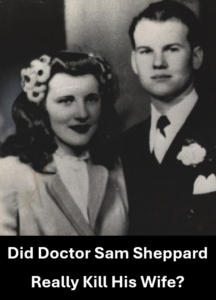
DID DOCTOR SAM SHEPPARD REALLY KILL HIS WIFE?

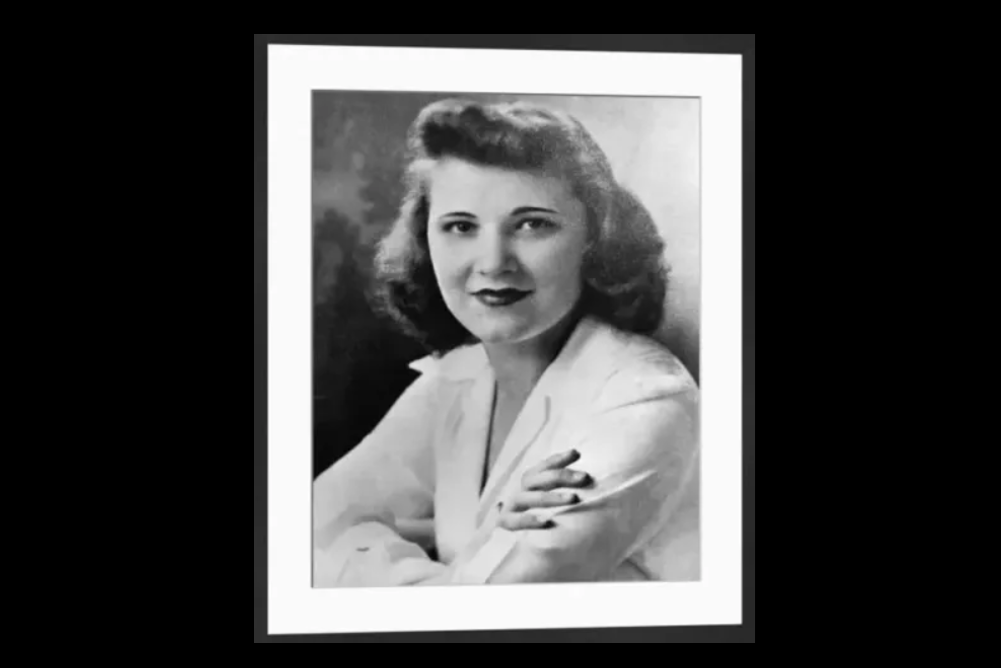
In the early hours of July 4, 1954, in the quiet lakeside suburb of Bay Village, Ohio, a 31-year-old pregnant woman named Marilyn Sheppard was beaten to death in her bed while her seven-year-old son slept down the hall. Her husband, Doctor Sam Sheppard, was present and claimed he was knocked unconscious by a mysterious, unknown intruder who ransacked the house.


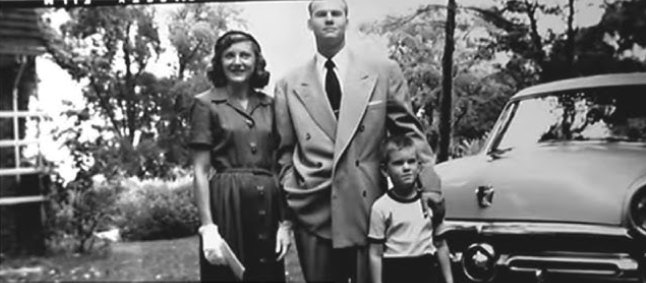
Within weeks, Sam Sheppard went from respected osteopathic surgeon to murder suspect, then to convicted killer before the U.S. Supreme Court blew his case wide open and turned it into a landmark ruling on fair trials and media influence. The crime inspired The Fugitive, shaped American law, and still sits there seven decades later asking the same simple question. Did Doctor Sam Sheppard really kill his wife?

That’s the heart of this piece. I’m not here to re-enact a TV drama. I’ll walk you through the facts, the forensics, the investigation, and the trials as cleanly as I can, then give you my best assessment as a former cop and coroner who’s spent a career examining gruesome death scenes and living through complex case files.

Here, we’re not working with the criminal standard of “beyond all reasonable doubt.” We’re looking at something more practical. On the balance of probabilities, and in light of reasonable doubt, what do the Sam Sheppard facts really say?

This case matters for three reasons. First, the brutality and mystery of Marilyn’s death have never been fully resolved. Second, the legal fallout—from a media circus trial in 1954 to the Supreme Court’s 1966 decision in Sheppard v. Maxwell—changed how courts think about prejudicial publicity and fair trials. And third, in the 1990s and 2000s, DNA testing and a very plausible alternate suspect added new layers that force us to rethink what we thought we ought to know.

Let’s start with what we can say for sure.

A Murder in Bay Village

Sam and Marilyn Sheppard lived in a comfortable home on Lake Road, right on the south shore of Lake Erie. Sam worked at his family’s Bay View Hospital. They were young, outwardly successful, and, by most accounts, looked like the picture of a solid mid-century professional couple. Marilyn was four months pregnant with their second child when she died.

On the evening of July 3, 1954, the Sheppards had friends over—the Houks who were their neighbors. They watched a movie, chatted, and eventually Sam stretched out on the daybed downstairs, saying he was tired. The guests left. Marilyn went upstairs. Sometime after midnight, that house turned into a bloody crime scene.

According to Sam, he woke up around the early morning hours to his wife calling his name. He ran upstairs, saw a “form” or “bushy-haired” figure near the bed, and struggled with the intruder before being knocked out. When he came to, Marilyn was beyond help. He followed noises down toward the lakeshore, fought the intruder again, and blacked out a second time.

At about 5:40 a.m., the first call wasn’t to police. It was to their neighbour and local mayor, Spencer Houk, asking for help. When Houk and his wife arrived, they found Marilyn dead in the bedroom. Police arrived, followed by the county authorities. The scene they walked into would become one of the most picked-apart crime scenes in American history.

The Scene, the Body, and the Injuries

We don’t need gore to understand this case. We just need the essentials.

Marilyn had been beaten many times about the head while in bed. Blood was heavy in the bedroom, on the walls, bedding, and on surrounding surfaces. The weapon was never found, but the injuries were consistent with a blunt instrument. This wasn’t a single blow in a quick struggle. It was a sustained, focused, and vicious assault.

The house showed other signs of disturbance. Some drawers appeared rifled. A wristwatch, a keychain, and a fraternity ring were initially “missing,” then later discovered outside in a bag near the house. That raises the classic question every investigator asks. Real ransack, or staging?

Then we come to Sam.

He had visible injuries—a neck problem, some damage consistent with a concussion, and weakness in one arm documented by a neurosurgeon. Were they consistent with being attacked and knocked unconscious? Possibly. Were they also within the range of what could be self-inflicted or exaggerated? Also possibly. That ambiguity has followed this case around for 70 years.

One more piece. Early blood work looked at types, patterns, and locations but pre-dated DNA. Forensic scientist Dr. Paul Kirk later argued that bloodstain patterns suggested the killer was likely left-handed, while Sam was right-handed. Kirk’s conclusions have been debated, and we have to remember the limitations of early blood spatter analysis. But it’s one more pebble on the scale.

If you handed me this scene today, the questions I’d write on page one would be simple:

  • Does the physical evidence support an inside job, an outside intruder, or leave both open?
  • Are Sam’s injuries proportionate to what he describes?
  • Do the ransacked areas and “missing” items make sense for a real burglar—or for theatrical effect?

The answers aren’t as simple as either side would like.

The Investigation and the Media Circus

The Bay Village police and then Cuyahoga County authorities quickly zeroed in on Sam. On one level, that’s not surprising. In most domestic homicides, the partner is the first and often the most likely suspect. That’s not prejudice. It’s pattern.

But something else was happening here. The Cleveland media went to war.

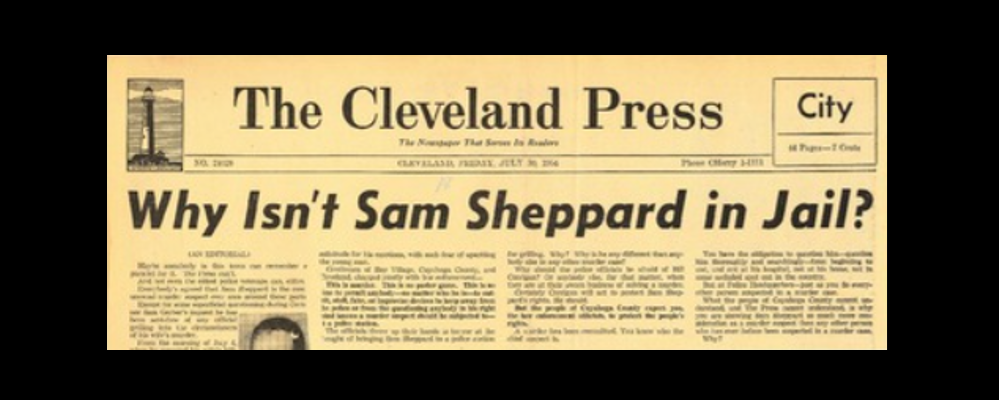
The Cleveland Press, and particularly its editor Louis Seltzer, hammered the Sheppard story on the front page. Headlines and editorials openly demanded Sam’s arrest and suggested that his prominent medical family was shielding him. One notorious front page effectively shouted, “Why Isn’t Sam Sheppard in Jail?”

A public coroner’s inquest, held in a high school gym with reporters packed around, turned what should have been a clinical inquiry into a spectacle. When the case went to trial later that year, the courtroom and surrounding atmosphere were so saturated with publicity that the U.S. Supreme Court, years later, would call it “massive, pervasive, and prejudicial.”

Sam was interrogated, hounded by reporters, and portrayed as a philanderer who wanted his wife out of the way. Some of that was based on truth—he was having an affair—but the way it was handled blurred the line between a criminal investigation and public theatre.

From an investigative standpoint, the problems are familiar:

  • Potential contamination of the scene as people came and went.
  • Early fixation on Sam to the exclusion of other lines of inquiry.
  • Pre-trial publicity that made it almost impossible to seat a truly neutral jury.

None of that proves guilt or innocence. But it does cast a long shadow over the reliability of what followed.

Motive: The Affair and the Marriage

Behind the respectable surface, Sam’s life wasn’t tidy.

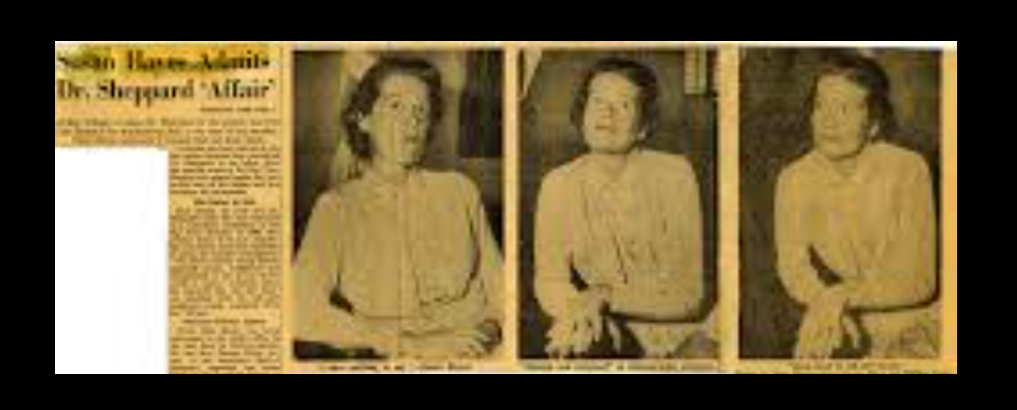
He was having an affair with a lab technician named Susan Hayes, something he eventually admitted. The prosecution leaned heavily on this. Here was their motive—a cheating husband, a pregnant wife, a trapped doctor wanting out.

From a human-behavior standpoint, it’s not a ridiculous theory. Affairs do sometimes escalate into lethal domestic violence. But an affair is not proof of murder. It’s a risk factor, not a verdict.

What about the marriage itself? Some neighbors said the Sheppards seemed to be getting along normally the evening before the murder. Other testimony suggested underlying tensions. That’s not unusual either. Most troubled marriages don’t advertise their problems at dinner parties.

The state’s narrative went like this. Sam, cornered by his double life, snapped—or perhaps planned it—and killed Marilyn in a fit of rage or desperation. Then he staged a phony burglary, injured himself just enough to look like a victim, and called his neighbor instead of the police to buy time.

It’s a coherent story. The question is whether it’s the only coherent story, and whether the evidence actually supports it.

The First Trial: “Trial by Newspaper”

Sam Sheppard was tried for his wife’s murder in the fall of 1954. He was charged with first-degree murder but ultimately convicted of second-degree and sentenced to life in prison.

Looking back, the trial reads like a checklist of what not to do if you care about due process. Reporters roamed freely. The jurors weren’t properly shielded from daily headlines attacking the accused. The judge allowed a media circus to unfold in and around the courtroom.

In 1966, the U.S. Supreme Court, in Sheppard v. Maxwell, overturned that conviction, finding that the “massive, pervasive, and prejudicial publicity” and the judge’s failure to control it had denied Sam a fair trial under the Fourteenth Amendment.

This is where the Sheppard case steps out of the true-crime file and into legal history. It became a leading precedent on how far courts must go to protect a defendant from a hostile media environment. It’s still cited in discussions about cameras in courtrooms and high-profile trials today. (Can you say OJ Simpson?)

But again, there’s a key distinction. A bad trial doesn’t automatically mean a wrong verdict. It just means we can’t trust the process that produced it.

The Retrial: Bailey, Blood, and “Not Guilty”

After years of appeals and legal grinding, Sam’s conviction was vacated and he was granted a retrial. In 1966, now represented by the formidable F. Lee Bailey, he was tried again in a more controlled environment with a sequestered jury.

Bailey went hard at the weaknesses in the state’s case. He stressed the lack of direct physical evidence linking Sam to the fatal blows, highlighted the possibility of an intruder, and hammered the original investigation’s tunnel vision and media-driven conduct. He also leveraged forensic opinions, including Dr. Paul Kirk’s bloodstain analysis, to argue that the attacker’s handedness and movement patterns didn’t match Sam.

On November 16, 1966, the jury returned a verdict. Not guilty. Sam walked out a free man.

Again, that doesn’t establish innocence. It tells us the state couldn’t prove guilt beyond a reasonable doubt when the playing field was closer to level. That’s important,  but it’s not the end of the story.

The Window Washer: A Shadow in the Background

If this case were a novel, the next character would feel almost too on-the-nose.

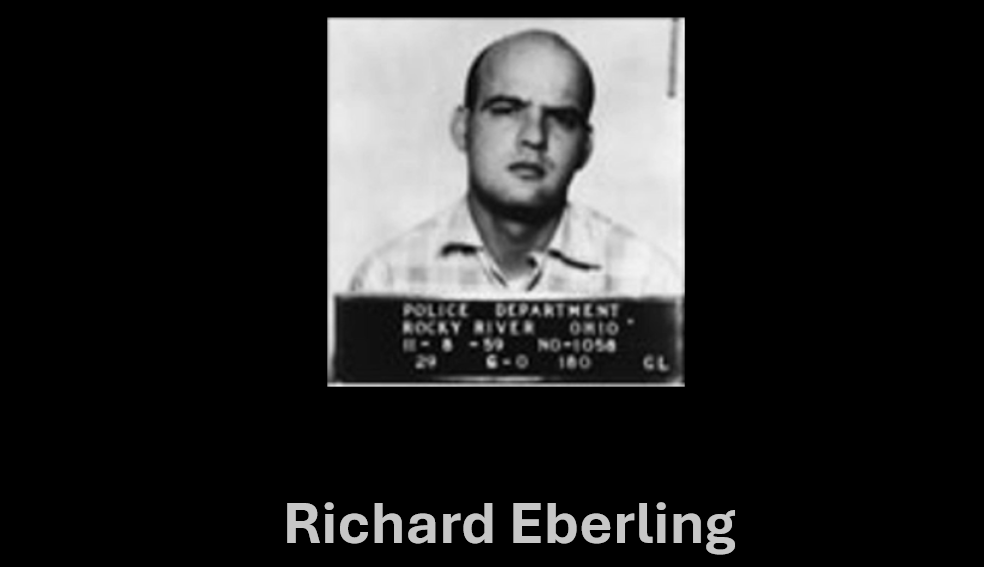
At the time of Marilyn’s murder, a 25-year-old man named Richard Eberling ran a small business called “Dick’s Window Cleaning.” The Sheppard house was one of his clients. He knew the layout. He had access. He’d been inside.

Years later, police discovered that Marilyn’s rings were in Eberling’s possession. He said he’d stolen them in a separate burglary of the Sheppard home after the murder. That’s not the sort of coincidence an investigator ignores.

Eberling admitted that he’d bled in the Sheppard house while working there, which could explain the presence of his blood if found. But there’s more. Decades after the Sheppard case, he was convicted of the aggravated murder of an elderly woman, Ethel Durkin, for whom he worked as caretaker. Other deaths in her family circle also raised suspicion.

During a civil trial in 2000 and in related investigations, witnesses testified that Eberling had, at times, hinted or outright claimed involvement in Marilyn’s death. Those alleged confessions are hearsay from a legal standpoint, but they add weight to the “alternate suspect” file.

Does that mean Richard Eberling did it? No. Does it mean there was at least one viable, under-explored suspect with motive, opportunity, and a track record of violence? Yes.

As an investigator, you never like seeing that in the rear-view mirror.

DNA, Third-Party Blood, and the 2000 Civil Case

In the 1990s, Sam and Marilyn’s only child, Sam Reese Sheppard, pushed to use modern forensics to re-examine the case. In 1997, Sam Sheppard’s body was exhumed (he’d died in 1970 of natural causes), and DNA profiles were developed for comparison against preserved blood evidence from the crime scene.

Tests on selected stains suggested the presence of a third party’s blood—neither Marilyn’s nor Sam’s—at key locations in the bedroom and house. Some analysts and news outlets took this as strong support for the intruder theory; others were more cautious, pointing to degradation, limited samples, and interpretive uncertainty.

Blood on Sam’s trousers was reported in one set of tests to be not his own, which again raises questions about how events unfolded that night. But as with most cold cases, we’re dealing with aging evidence and contaminated lab work layered over different eras, each with their own strengths and weaknesses.

In 2000, Sam Reese sued the state of Ohio, seeking a declaration that his father had been wrongfully imprisoned and compensation for those ten years behind bars. The civil standard is lower than criminal—balance of probabilities rather than beyond reasonable doubt. After an eight-week trial reviewing the old and new evidence, the jury still found against the Sheppard estate. They were not persuaded, on balance, that Sam was more likely innocent than guilty.

That verdict doesn’t erase the doubts. It does tell us that, even with DNA and a fully developed Eberling narrative, a panel of modern jurors remained unconvinced.

So—Did Doctor Sam Sheppard Really Kill His Wife?

Let’s step back from the legal back-and-forth and look at this like any serious cold case.

What weighs against Sam?

He was the husband, present in the house, with a known affair in the background, and likely marital tension. We have a delay between the probable time of death and the call for help. We have missing items later found just outside, which smells of staging. We have a questionable story about a “bushy-haired intruder” that never produced a solid, named suspect at the time.

We also have the statistical reality that in a case like this, the spouse is often the offender. If you gave this file to a private investigator who knew nothing about the Supreme Court decision, the media mana, or the DNA inconclusivity, they’d start from a simple place. The obvious suspect is the husband. “Prove me wrong.”

What weighs in Sam’s favour—or at least creates serious doubt?

For all the reasonable and probable suspicion, there’s no single piece of physical evidence that definitively places the murder weapon, which was never found, in Sam’s hands. His injuries, documented by a neurosurgeon, are more than a scratch or two. The brutality of the killing, the complexity of the blood patterns, and the presence of third-party blood all leave room for a genuine intruder scenario.

We have a credible alternate suspect in Richard Eberling. He knew the house, admitted to burglaries, had Marilyn’s rings, later murdered someone else under his care, and reportedly spoke about the Sheppard case in ways that made experienced investigators uneasy. That doesn’t prove Eberling killed Marilyn, but you can’t look at that and shrug it off.

We also have the fact that the original investigation and first trial were, by modern standards, badly compromised by media pressure, tunnel vision, and procedural failings. That kind of environment is fertile ground for missing things you shouldn’t miss.

My Verdict: Not Proven, With the Scales Tipped

If you forced me, as a former homicide investigator and coroner, to answer one question—“On the balance of probabilities, not beyond a reasonable doubt—did Sam Sheppard kill Marilyn?”—here’s where I land.

I can’t say, on balance, that he probably did it. I also can’t honestly say, on the same civil standard, that he definitely did not. The evidence simply doesn’t climb high enough or slide low enough on either side of the scale. There’re too many unknowns, too much contaminated process, and too much conflicting interpretation. This isn’t a polite way of dodging the question. It’s a recognition of the limits of what we actually have.

If I had to put a label on it, I’d use one our system doesn’t formally recognize but probably should. “Not proven.”

Would I sign my name to a charge approval today, based on what is left of the evidence? No, I wouldn’t.

Would I sign my name to a public statement that Sam Sheppard was, on balance, an innocent man outrageously framed? No, I wouldn’t do that either.

What I will say is this:

  • The state never built a case that could withstand a fair process.
  • The alternate-suspect and third-party-blood evidence create real, not imaginary, doubt.
  • The fairest conclusion is that we do not know who killed Marilyn Sheppard—and we probably never will.
  • Therefore, at a legal standard, Sam Sheppard shouldn’t be convicted.

Why This Old Case Still Matters

So why spend this much time on a 1954 murder in an Ohio bedroom?

Because the Sheppard case sits at the crossroads of reality, truth, and clarity.

Reality is what actually happened in that house on Lake Road in the dark hours of July 4, 1954. A pregnant woman was beaten to death while her son slept nearby. That reality is fixed. It doesn’t change.

Truth is our attempt to describe that reality. Who was where, who did what, why it happened. In this case, truth is fogged by media hysteria, human bias, limited forensics, and the decay of evidence and memory over time.

Clarity is our willingness to see those limits plainly. To admit what we know, what we don’t, and what we can’t ever recover. It’s the discipline of resisting the urge to manufacture certainty just because we don’t like living with doubt.

In a culture that loves simple villains and tidy endings, the Sheppard case reminds us that some stories remain unresolved and will always remain unresolved. That doesn’t mean we throw up our hands. It means we hold two things at once. Respect for the victim and her family, and humility about our own need for answers.

If there’s a takeaway here, it’s this.

When reality is murky and the evidence is split, the honest answer isn’t to shout louder. It’s to admit the uncertainty and live with it.

Marilyn Sheppard deserves the truth. So does her son, so did her husband, and so does every person who stands in a courtroom while the world watches. Sometimes, despite our best efforts, that truth stays just out of reach.

Our job—yours and mine—is not to pretend we can pull it closer by force. It’s to see clearly, weigh fairly, and accept the known and unknown facts.

Dyingwords.net is powered by a Centaur Intelligence System and its EXPONENTIAL Thought Engine
centaursystems.ai

STOICISM—A PHILOSOPHY, NOT A RELIGION

The term “stoicism” radiates a negative vibe through some folks. They feel Stoicism is a detached, don’t care, and humorless religion where a practicing Stoic leads a selfish existence without contributing to society or helping fellow human beings. Nothing is further from the truth. In fact, true Stoics follow an ancient, common sense, and proven lifestyle where doing good, being righteous, and having fun are paramount. Stoicism is a philosophy, not a religion.

Yes, stoicism is a philosophy—a methodology—a life view dating back twenty-three hundred years to the robe-wrapped Greeks where emerging philosophers met under a “stoa poikile” in central Athens which was a painted portico or porch where they held a “symposium” (translated to a “drinking party”). Fundamentally, they guzzled red wine, got shit-faced, and talked about relevant stuff. Athenians called them “Stoics”.

Stoicism’s practice has never gone away, although for centuries it went underground, being overshadowed and somewhat extinguished by strict conventional religions. Today, there’s a huge resurgence in studying Stoicism, seeing it as a practical rather than an abstract philosophy. Just look at what Ryan Holiday has created with his Daily Stoic podcast and blog site. Ryan has well over a million followers, and he hosts highly insightful, delightful guests.

I recently deep-dived into Stoicism. It was part of research and development for an entertainment series I’m creating, City Of Danger, where a lead character is a practicing Stoic. My rabbit hole led me to reading Meditations written by Roman Emperor Marcus Aurelius in AD 161-180. It was enlightening, to say the least. I’ll go into what Meditations speaks to, but first let’s have a Cliffsnotes version of what Stoic philosophy really is.

At its core, Stoicism teaches you to attend to things you can control and dismiss things you can’t control. Virtue is the highest good in Stoicism, and there are four core virtues in Stoic teachings—wisdom, temperance, courage, and justice.

Wisdom is knowledge. “The chief task in life is simply this. To know and separate matters so I can clearly say to myself which are externals not under my control, and which have to do with the choices I actually control. Where then do I look for good and evil? Not to uncontrollable externals, but within myself to the choices that are my own.” ~Epictetus

Temperance is moderation. “If you seek tranquility, do less. Do what’s essential—what the logos of a social being requires, and in the requisite way. Which brings a double satisfaction: to do, less, not better. If you can eliminate it, you’ll have more time and more tranquility. Ask yourself at every moment, is this necessary.” ~Marcus Aurelius

Courage is action. “Life is like a military campaign. One must take action, serve on watch, act in reconnaissance, fight on the front line. So it is for us—each person’s life is like a battle. You must act like a soldier. Two words of action must be committed to memory and obeyed. Persist and resist.” ~Epictetus

Justice is righteousness. “Commit to justice in your own acts. Which means thought and action resulting in the common good. What you were born to do. Justice is the source of the other three virtues. After all, how impressive is courage if it’s only about self interest? What good are temperance and wisdom if not put to use for the whole world?” ~Marcus Aurelius

Epictetus and Marcus Aurelius were only a few of the ancient Stoics. Actually, Marcus Aurelius never claimed to be a philosopher—only a student of Stoics like Epictetus. And while Marcus Aurelius was the most powerful ruler in the world during his time, Epictetus was merely a crippled slave—a poor man who, arguably, became the most influential Stoic in history.

Other notable Stoics of history were Zeno (334-262 BC) who started the movement, studying under Cleanthes (331-232 BC) after being shipwrecked and financially ruined. Lucius Seneca (4 BC – 65 AD) was another Stoic philosopher who was perhaps the most outspoken. If you want to hear reality and plain truth, read Seneca’s On the Shortness of Life. He’s brutally straightforward.

Ryan Holiday is, in my opinion, the most influential of modern Stoics. He mentors leading sports figures, military commanders, and political leaders in person, as well as common guys like me online. Sahil Bloom is an emerging Stoic who I find completely credible and motivating. And there’s no one like Thomas Sowell to tackle life’s big issues and put them in Stoic perspective.

Aside from these ancient and current thought leaders’ influence, there are no bounds to what you, as an individual, can benefit from by studying Stoicism. After all, Stoicism is a philosophy, not a religion. It’s a methodology—an outline for living well, doing good, and enjoying life—a smorgasbord where you can take what you need and leave the rest.

Philosophy comes from the Greek word “philosophos” which means the love of wisdom. Stoic philosophy doesn’t evoke a higher power or enforce strict practitional dogma. It’s a collection of views based upon a collective experience—an experience gleaned from understanding the dichotomy of what you can control and what you cannot control. In other words, being stoic.

Another core principle of Stoicism is valuing your limited time. Memento Mori is an often-heard saying. Translated from Latin, it equates as “remember death” or to “appreciate the moment”. It’s also said, “You could leave life right now”. You’ll often see a Memento Mori image with a tulip representing life, a skull portraying death, and an hourglass reminding you of time. Many practicing Stoics carry Memento Mori and Four Virtues medallions in their pocket.

Although Greek was the main language used by the early Stoics, Latin is the most common carrier of Stoic quotes. Here are a few common Latin sayings and translations you’ll find in a brief study of Stoicism:

Summum Bonum — Living well, highest good, true virtue.

Festina Lente —Make haste slowly, faster is not better.

Carpe Diem — Seize the day, waste no time.

Fac, Si Facis — Do it, if you’re going to do it. Let the rubber hit the road.

Quidvis Recte Factum Quamis Humile Praeclarum — Whatever is rightly done, however humble, is noble.

Semper Fidelis — Always faithful, do the right thing.

Per Angusta Ad Augusta — Through difficulties to honors, the obstacle is the way.

Amor Fati — Love of fate, a reason, a purpose.

Fatum Ingenium Est — Character is fate, destiny.

Semper Anticus — Always forward, keep going, get better.

Vivere Militare Est — To live is to fight, train, life kicks us around.

Part of my research process in any subject is to encapsulate the key points on paper. I use sheets of 11 x 17 white bond and basically map out the concept and highlight the takeaways. Last week I took time off, and I did this mapping thing with the ideas of Stoicism and with the content of Meditations written by Marcus Aurelius. See the images. (Note from my wife: What kind of guy goes on vacation and spends his time perched at a woodland picnic table by our cottage reading and annotating scriptures quilled by an old dead Roman?)

I didn’t find Meditations to be an easy read, but it helps to know the context in which it was written. Scholars agree that Marcus Aurelius, who wrote it in Greek, never intended this work to be public. These were private thoughts that he journaled for himself during his period as Roman Emperor from 161 to 180 AD. There are twelve parts or “books” to Meditations, and they show a continual progression and evolving simplicity of his views on life. Particularly on death.

Scholars also agree that the books have nothing to do with mental meditation which is generally perceived to be a relaxation method. Likely, the works were never titled “Meditations” and nowhere in the text is the translation for “meditation” found. Some critics claim the work is a hoax as the documents didn’t surface until a thousand years after Marcus Aurelius’ death.

The original Greek to Latin manuscripts are said to be housed in the Vatican and are not available for public view. Numerous translations exist in English and other languages. Note that Marcus Aurelius spoke Latin as a working language but wrote in Greek which was the scholarly language of the day. The English version I read was prepared by Gregory Hays and is the version recommended by Ryan Holiday who offers an online course in how to read and interpret Meditations. It was a challenging read, but by following the course I found it well worth the time to help understand the Stoic mindset.

Stealing from Ryan Holiday and The Daily Stoic, here are 12 Stoic Rules for Life:

  1. Own the morning.
  2. Focus on what’s in control.
  3. Don’t suffer with imagined troubles.
  4. Treat success and failure equally.
  5. Do one thing every day.
  6. Make beautiful choices.
  7. Ask “Is this necessary?”
  8. Love your fate.
  9. Speak with the dead.
  10. Be strict with yourself and be tolerant with others.
  11. Turn obstacles upside down.
  12. Memento Mori. Be aware of your mortality and love life.

And stealing from Marcus Aurelius and Meditations, I’ll leave you with this quote:

When you need encouragement, think of the qualities of the people around you have: this one’s energy, that one’s modesty, another one’s generosity, and so on. Nothing is as encouraging as when the virtues of wisdom, courage, temperance, and justice are visibly embodied in the people around us, when we’re practically showered with them. It’s good to keep this in mind.” ~Marcus Aurelius