Tag Archives: Life

REPAIR AND REMAIN—HOW TO DO THE SLOW, HARD, GOOD WORK OF STAYING PUT

This post is part of a new delivery for Dyingwords.net. It’s not sent out in my bi-weekly email, rather it’s a post about life and relationships that followers can discover on their own. From the start of Dyingwords.net, thirteen years ago and over 400 articles, the tagline has been “Provoking Thoughts on Life, Death, and Writing”. That hasn’t changed. However, most of my posts are/were on the death side of things when, at this stage, I’m thinking more about the life side of things.

Two things brought about this post. One is a thought leader named Sahil Bloom who linked the content of this article originally written by Kurt Armstrong and published it on his website. I give full attribution to Mr. Armstrong. The other is a difficult period a dear friend is going through in their long time relationship.
I’ve never had anything like a real career, only a long and varied string of jobs. I grew up working on the family farm, and then had jobs as a roofer, a groundskeeper at a rural hospital, and a mineral-bagging-machine operator in an unheated feed mill one frigid Manitoba winter. I spent a year as a photographer and store manager in a tiny portrait studio just as digital cameras were beginning to consign film cameras to obsolescence.

I worked for three years as a barista at one of Vancouver’s top-rated independent coffee shops. I’ve been a magazine editor, a sessional lecturer in a couple of liberal arts schools, a glazier’s assistant, a mason tender, a plumber’s labourer, and a daycare worker. One winter I lived in a simple little cabin—no plumbing, no electricity—and I made homemade soap over a wood stove and sold it at craft sales. In my twenties and thirties, I spent many of my summers planting close to half a million trees on countless logging clear-cuts between Hyder, Alaska, and Dryden, Ontario.

And for twelve years now I’ve had a hybrid operation, juggling a one-man autodidact home-repair business and part-time lay ministry at a little Anglican church in Winnipeg. My basic MO in both roles is simple: repair and remain.

I don’t have the know-how to build you a brand-new house, but I can help fix pretty much anything in your old one. If you do, in fact, need a new house, I’ll send you to Francesco or Myron, or James and Fiona, all of them trustworthy builders and fine people. Odds are the house you’re in right now needs a few updates and minor upgrades, and I’d be happy to help with whatever you need done: add some new windows, open up some walls, replace the old basement stairs, tile the backsplash. Repair and remain.

Same with pastoring: no point thinking you need a brand-new life, but, well, let’s not kid around—you could use some serious updates and upgrades yourself.

Let’s say time comes to gut and renovate your bathroom: I can help you with that—demolition, framing, reworking the plumbing, moving some electrical, installing some mould-resistant drywall, maybe some nice tile for the floor and some classic glazed ceramic three-by-six subway tile for the tub surround. Should take a month or two, depending on what all’s involved.

And as for you, hey, for the sake of your wife and kids, I think you better quit the flurry of furtive late-night texts to the sexy young co-worker and cut back a bit on your recreational drinking because wine is a mocker, so goes the proverb, as if those Facebook posts of you at the bar last week weren’t proof enough.

Repair and remain. Work with what you’ve got. Sit still for a moment, take stock, make some changes. Big changes, if necessary.

David and Ruth called me once to unclog their bathroom sink. Someone had dropped a nail clipper into it a decade ago, but now the drain was rusted and when I went to loosen the nut, the steel sink cracked and split, but it was an old sink so I couldn’t find a matching one to replace it with, so that meant the old vanity had to go too, but that left an odd footprint on the curled, old linoleum, so then the flooring had to go too, and, well, if you’re going that far, you might as well put in a new tub. And so on.

You get the picture. Renominoes. In the end, a house call to help deal with a bathroom sink with a nail clipper jammed in it led to six weeks’ work and a bill in the teens with three zeros.

Last year, in the middle of the pandemic, a man I haven’t seen in more than fifteen years called me up to weep on the phone because he was having a difficult time loving his kids. He had started to feel resentment toward them because, he said, the kids had taken so much away from him he barely knew who he was anymore. “I called you because I knew you’d be gentle with me,” he said. That I can do.

Six years ago, a guy I barely knew cornered me after church and asked if I could meet him for breakfast, and when we met, he told me he was this close to walking out on his wife and kids. Since then, he and I have been meeting up every couple of months or so. Last year he told me he wouldn’t still be married if it weren’t for all those conversations over greasy bacon and eggs over easy. Well and good, I say, but the truth is he’s the one doing the hard work. He’s the one who’s got to live his life. All I have to do is buy breakfast, and sit, and listen.

Repair and remain.

That’s how I work, and it’s what I advise. I don’t know how things are going to turn out in your life or in your marriage or with your kids. Nobody does. Maybe it will all get a whole lot worse, who’s to say. But a brand-new house won’t fix your troubles any more than a fresh start with a fascinating new somebody will. Don’t tell me; I already know it would be easier to just cut and run, because I know how hard it is to live with other people, four of whom are also stuck having to live with brooding, melancholy me. I have planted spruce saplings on the steep, thorny, overgrown slopes of the Rocky Mountains in snowstorms in June.

I once heaved a three-hundred-pound cast-iron tub up and out the second-story window of an old house. And when I worked for a bricklayer, he and I took down a concrete-and-rebar-reinforced cinderblock wall with sledgehammers. But this—doing my best to be a loving husband and father in the trauma and tedium of the day-to-day—is without question the hardest thing I’ve ever done.

Over the past dozen years I have had hundreds of pastoral conversations, mostly with young men, about the challenges of family life. They tell me it’s exhausting, that there’s no more free time, that they’re having a hard time setting aside their dreams and wishes, that kids can be unbearably frustrating. I get it. They tell me that the marriage isn’t what it used to be, that they don’t really have anything in common anymore, that the passion’s gone, that she isn’t who she used to be, that the sex isn’t what it used to be, that they’re tired of all of it.

I sip my coffee and nod in agreement with every word. I understand. I feel it too. It’s the same at my house. Marriage is hard.

But when they say, “I’m thinking of leaving,” I think, Now hang on a sec. You had me right up to that last bit. Fine: you’ve changed; she’s changed; life has changed. And the kids—well, they’ve disrupted, interrupted, confronted, confounded, and otherwise fundamentally altered everything. All very, very hard. And yes, sometimes it feels impossible. I know what it’s like to feel trapped, and my wife undoubtedly knows what it’s like to feel trapped, because she’s stuck with me, the more irritable and moody ingredient in our marriage. But you’re thinking of leaving? What is that going to fix?

We have, all of us and to varying degrees, been duped by the sales pitches, the flashing cascade of advertisements traipsing through the sidebar. That jam-packed flow of ads is full of shiny new things, new techniques, new experiences that promise to finally alleviate the so-far insatiable, burning, lonely, primordial ache. Bono laments, “I still haven’t found what I’m looking for.” Springsteen cries out, “Everybody’s got a hungry heart.” k.d. lang bemoans the “constant craving.” Augustine says, “Our hearts are restless.”

I used to blame advertisers for that restlessness and dissatisfaction, but I don’t think that’s right. We were already restless; we always have been. The advertisers just figured out how to nurture, tend, exacerbate, and capitalize on the pre-existing condition, that innate restlessness, promising that something new is going to set all to rights. When the flashing sidebar connects that hand lotion, those hiking boots, a beach vacation, or some rugged SUV with satisfaction, joy, and inner peace, it sure feels like we’d be suckers not to buy it. And when that thing inevitably disappoints, we hardly even notice. There’s always something new to buy.

That narrative of elusive satisfaction isn’t just something we’re repeatedly being told; it is a story we’re literally buying into all the time. No surprise, then, that when our beloved to whom we once upon a time “pledged our troth” inevitably disappoints, we start thinking it might be time to get a new beloved.

That narrative of elusive satisfaction isn’t just something we’re repeatedly being told; it is a story we’re literally buying into all the time.

I have come to think that renovation work is not inherently a sign of fashion-driven, bourgeois, consumerist excess; that beauty is not superfluous; and that a good renovation is a good investment. Taking care of your house is a wise and pragmatic thing to do. The integrity of a house means that all the parts and systems work as a whole, from ridge cap to footing and everything in between. Roof trusses, studs, joists, shiplap, plumbing supply and waste, eaves, windows, flooring, faucets, switches: your house will function as a house when it is well built and well maintained. Integrity of form, function, usability, and beauty. If it’s poorly made, or when it starts to fall apart, the integrity of the whole thing suffers. Give it enough time and a leak in the roof or a leak from a drain will ruin the whole thing.

If you ignore the little things long enough, something as small as a nail clipper can make for two days of demolition and a trailer filled with an old sink, outdated vanity, faded linoleum, some lath and plaster, old plumbing, a thirsty old toilet, and so on. I can haul those few thousand pounds of junk to the landfill and rebuild your bathroom. But in the end, when it’s all put back together again, what you have will still be the spot to do the same basic grooming and human-waste disposal.

Pay attention and mind the details and you save yourself a lot of hassle and money. That slow corrosion that comes if you ignore the small, nagging troubles of your life has the potential to wreck a family the way a nail clipper can wreck a bathroom. And somebody’s going to pay for it, even if it isn’t you. Mostly it will be the kids, plus the ongoing emotional and spiritual costs divvied up among the friends, family, and community who witnessed your vows, who backed you as you struggled along, who loved you then and still love you now.

Because however it may sometimes seem that circumstance, fortune, and your exasperating spouse are conspiring to sabotage your happiness and peace of mind, the one certain, irrefutable common factor in all your circumstances is you. You are the bearer and carrier of grief, disappointment, frustration, and heartache, just as you are also the source of much of the same. So it goes.

I’ve said it more than once to some guy across the table who tells me he’s planning to leave his marriage: You should stay. Sit in the awful, agonizing sorrow of it all, and figure some things out. Your life is very hard. I know you’ve thought it through more than I can imagine; I know you’ve calculated the cost-benefit, weighed your options; and all that is fine and good. There is no way of knowing how this will play out in your very real life. Nobody can predict the future. Something has to give, yes. But it doesn’t need to be this. I think you should stay.

It’s a tough sell. I understand, because my undisciplined imagination, formed like everyone else’s by countless half-minute ads and building-sized billboards, frolics among fantastic, glamorous possibilities of something other than what I’ve already got. It’s a cornucopia of options, with countless cathedrals and priests promising salvation at the marketplace, be it a new app, new phone, new car, new house, new job, new city, or new spouse. The promise is always the same: this thing will make you happy. Never mind trying to fix what you’ve got. Just get a new one and start over.

Repair and remain sounds simple because it is. But simple is not the same as easy. “For better, for worse,” we say, and everyone likes to stay when it’s the better. But staying through the worse—that’s the whole point of the vow, for Christ’s sake.

Repair and remain sounds simple because it is. But simple is not the same as easy.

Mostly they do what they’ve already decided to do, and they leave. My track record for counselling couples to stick it out is pretty poor. I still think the better part of wisdom says stay. Endure. Wrestle. Suffer. Struggle. Keep working. Your heart is restless, my heart is restless, all our hearts are restless, “until they find their rest in Thee”—a rest that may well be found in full only after our death. So be it. Until then: stay.

Repair and remain.

Repair and remain.

Repair and remain.
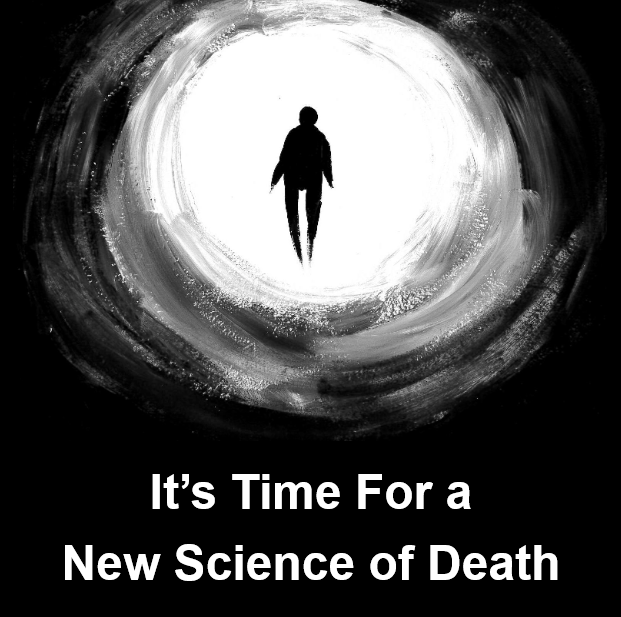
IT’S TIME FOR A NEW SCIENCE OF DEATH

Is there life after death? That’s a question folks have asked since the dawn of humanity. Historically, the answer has been faith-based. But today, modern science is closer to the truth following a major medical discovery at the University of Michigan. However, it depends on what your definition of life is. And your definition of death.

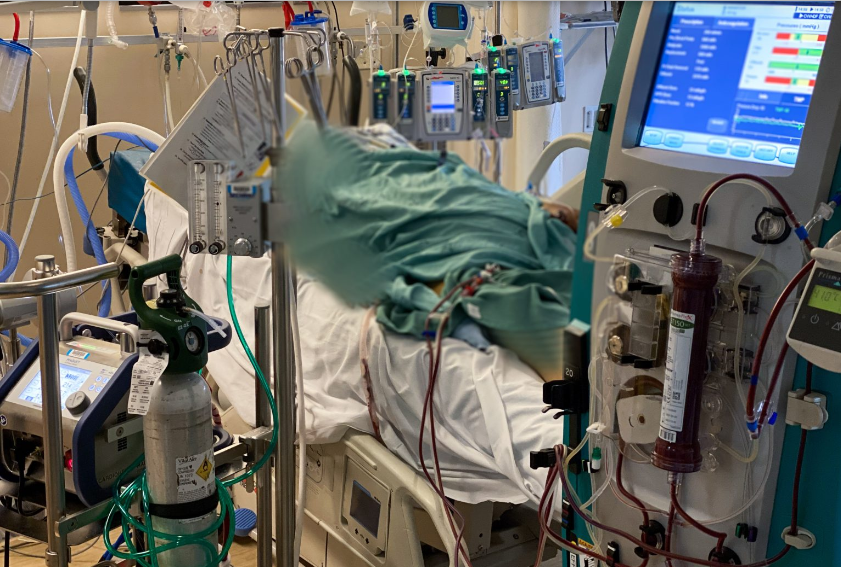
In 2014, a 24-year-old woman collapsed at home. She was taken to Emergency at U of M medical center where staff were unable to regain her consciousness. They moved her to the Intensive Care Unit (ICU), and she remained in ICU for four days while hooked to an electroencephalograph (EEG) to monitor her brain function. It showed she was in “brain death”.

Despite being on organic life support, (heart-lung machine) she flatlined on the electrocardiogram (ECG) monitor and went into cardiac arrest with her respiration ceasing — “clinical death” as it’s commonly called. Because her physical death seemed inevitable during the four days, her family had signed a Do Not Resuscitate (DNR) order. The woman remained in her bed, not breathing nor beating, and was still connected to the EEG for some time before she was removed to the morgue.

That was the end of this woman’s bodily life. Her physical life. But it wasn’t the end of her conscious life. In 2022, a researcher at the U of M reviewed the woman’s EEG charts and found that, astonishingly, at the moment of clinical death the woman’s brain came back to life—in fact into a hyperdrive in activity in the regions associated with consciousness. According to the researcher, “Something happened in that brain that makes no sense at all.”

We’ll closely examine what took place in that ward where Patient One, as she’s now known in the medical research community, physically passed away. And we’ll look at what consciousness, as that term applies to living human beings, might be. First, let’s review the definitions of death as they apply to clinical death and brain death, which are two separate deals. And see if it’s time for a new science of death.

I found a great death explanation resource at the United States National Library of Medicine. At their National Center for Biotechnology Information (NCBI) section there’s a multi-part series, one of which is titled Definitions of Death: What and When is Death? Interestingly, they divide it into two aspects. One is biological death. The other is social death.

To quote them. “The commonplace notion of death is to characterize it as an end state: being dead. Nevertheless, being dead is not the same as the event of death or the dying process.

Biological death can be understood as:

  1. A final event.
  2. An absolute state: being dead.
  3. Part of the dying process.

The absolute state of being dead is synonymous with the idea of medical or clinical death—where an individual has sustained irreversible cessation of circulatory and respiratory functions or irreversible cessation of all functions of the entire brain, including the brain stem.

Social death is a relational change in the meaning of a human life. It involves a change in the narrative identity of persons that either still biologically exist or have once existed.”

Biological death and social death, as set out in the NCBI paper, is broader coverage than what’s usually weighed in the mainstream medical community, such as physicians and coroners would use. From my experience in the death investigation business, we almost always relied on the clinical death measurement rather than the brain death evaluation. That’s because very few deaths are recorded on EEGs, and there is no brain activity to monitor. Therefore, the declaration of death usually refers to the standard definition of clinical death which is:

The cessation of blood circulation and breathing; the two criteria necessary to sustain human life.

Brain death is a different matter—the classic definition being:

The complete and irreversible loss of brain function to the point where there is no return.

So, is it possible to be dead and alive at the same time? Apparently, yes, as in the case of Patient One whose circumstances we’ll examine shortly. Before that, let’s look at the Florida Boy case as reported in the NCBI literature.

Florida Boy is a legal precedent of a boy who spent 14 years in an ICU connected to a heart-lung machine after an initial diagnosis of complete and total brain failure. He showed no EEG activity at all during that time. His parents demanded that he be artificially ventilated, fed, and hydrated in the hospital.

Over the 14 years, the boy biologically grew into a man as if he were normal—except in total death as in any form of consciousness. Interestingly, as his thorax and abdomen organ cellular activity functioned normally, his brain cells gradually replaced themselves and became a “grey goo of ghost-like tissues”. Apparently, without brain activity, the entire cerebral system decomposes. Not so with the neck-down region. The boy-turned-man was eventually disconnected via a court order, and he completed his clinical death cycle.

Let’s return to Patient One. Dr. Jimo Borjigin is a professor of neurology at the University of Michigan. As a project of interest, she investigated reports of Near Death Experiences (NDE) reported by resuscitated patients. Her studies expanded into those who were officially ‘brain dead” as in EEG monitored while still clinically alive. She stumbled upon the Patient One records and found an anomaly never before seen in medical experience.

Here’s Dr. Borjigin’s account:

—   —

In the moments after Patient One was taken off oxygen, there was a surge of activity in her dying brain. Areas that had been nearly silent while she was on life support suddenly thrummed with high-frequency electrical signals called gamma waves. In particular, the parts of the brain that scientists consider a “hot zone” for consciousness became dramatically alive. In one section, the signals remained detectable for more than six minutes. In another, they were 11 to 12 times higher than they had been before Patient One’s ventilator was removed.

As she clinically died, Patient One’s brain was functioning in a kind of hyperdrive. For about two minutes after her oxygen was cut off, there was an intense synchronization of her brain waves, a state associated with many cognitive functions, including heightened attention and memory. The synchronization dampened for about 18 seconds, then intensified again for more than four minutes. It faded for a minute, then came back for a third time.

In those same periods of dying, different parts of Patient One’s brain were suddenly in close communication with each other. The most intense connections started immediately after her oxygen stopped and lasted for nearly four minutes. There was another burst of connectivity more than five minutes and 20 seconds after she was taken off life support.

In particular, areas of her brain associated with processing conscious experience—areas that are active when we move through the waking world, and when we have vivid dreams—were communicating with those involved in memory formation. So were parts of the brain associated with empathy. Even as she slipped irrevocably deeper into death, something that looked astonishingly like life was taking place over many minutes in Patient One’s brain.

Those glimmers and flashes of something like life contradict the expectations of almost everyone working in the field of resuscitation science and near-death studies. The predominant belief—expressed by Greyson, the psychiatrist and co-founder of the International Association of Near Death Studies, in the Netflix series Surviving Death—was that as soon as oxygen stops going to the brain, neurological activity falls precipitously. Although a few earlier instances of slight and fading brain waves had been reported in dying human brains, nothing as detailed and complex as what occurred in Patient One had ever been detected.

Given the levels of activity and connectivity in particular regions of her dying brain, I believe it’s likely that Patient One had a profound near-death experience with many of its major features: out-of-body sensations, visions of light, feelings of joy or serenity, and moral re-evaluations of one’s life. Of course, Patient One did not recover, so no one can prove that the extraordinary happenings in her dying brain had experiential counterparts.

—   —

Near Death Experiences. NDEs. Are these events of total imagination? Or are they completely real?

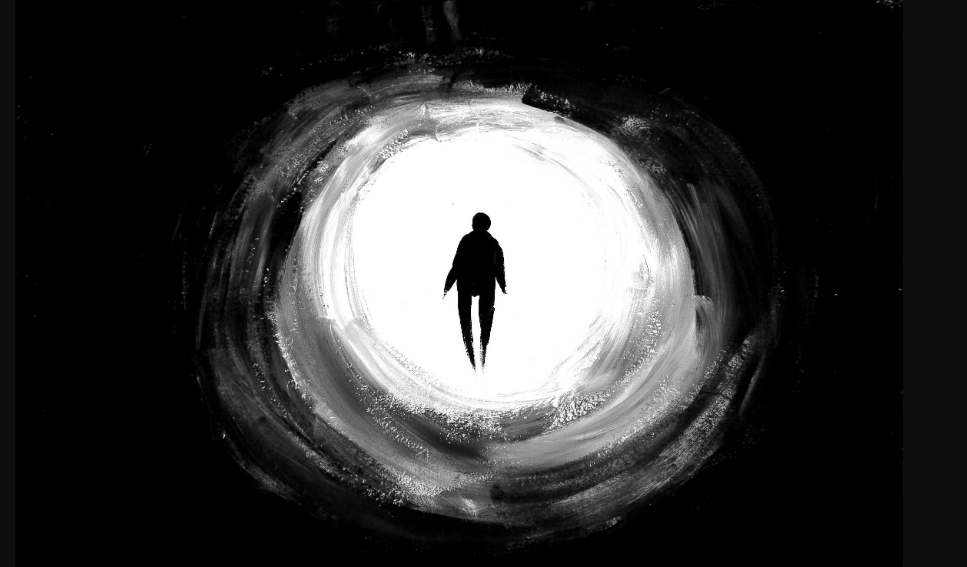
We’ve all heard the stories—the familiar kitsches of NDEs. Being elevated from the operating table. Floating toward an immense light. Traveling down a tunnel. Complete bliss and harmony. Being beckoned by an infinite intelligence. Meeting dead relatives. And not wanting to return to normal life.

While these NDE experiences can be simulated by taking a hero’s worth of ketamine, almost all reports come from rational and sober people who clearly felt they went through something extraordinary. Some say paranormal. Others say supernatural.

This brings us to that mysterious and mostly unknown subject of consciousness. Almost nothing is solidly understood about what consciousness really is. Partly, that’s because no one has found a way to isolate and measure consciousness—it’s very difficult (almost impossible) to fund studies that can’t be isolated and measured.

Dr. David Chalmers is a world-leading consciousness researcher. (I wrote a blog post on Chalmers and his consciousness theories a few years ago. You can read it here.) Dr. Chalmers posits that consciousness may be a fundamental property of the human brain and that consciousness may be a universal entity of the cosmos that sends signals to us. Chalmers breaks consciousness into two arenas—the easy problem of recognizing that it exists and the hard problem of explaining how it operates. Or what it is.

All of us experience at least two consciousness forms. One is our awake state, which you’re in at the present. The other is our asleep state, also known as the subconscious. As long as we’re “alive”, both states exist and are vital to our function and survival.

So, what gives with someone like Patient One? Why was she clinically dead—according to the standard description—after she flatlined in the ICU—yet came fully alive in her once-thought-dead brain? The answer seems to be that death, clinical and brain, is not a precise time point. Rather, both are processes that can take extensive linear time to complete.

There are countless stories of people being resuscitated minutes and even hours after their hearts stopped beating and their lungs stopped breathing. Many events occurred in hypothermic conditions; temperature being a huge life-preservation factor. But bringing someone back from brain death? It’s never been recorded before Dr. Borjigin stumbled upon Patient One’s charts.

This seems to be because no one has looked at this angle before. Once a patient flatlines in a medical environment and there’s no resuscitation made, there’s no reason to review the EEG charts—if there even are recordings. It’s just shut things down, shroud them, send them downstairs, and move on to the next.

Makes me wonder how many people are written off for dead when they’re still very much alive.

Maybe it’s time for a new science of death.

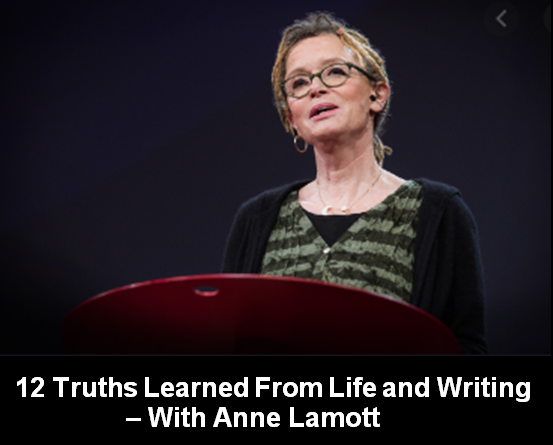
12 TRUTHS LEARNED FROM LIFE AND WRITING – WITH ANNE LAMOTT

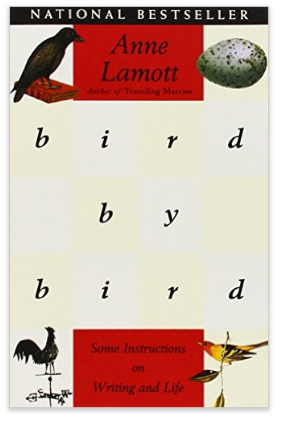
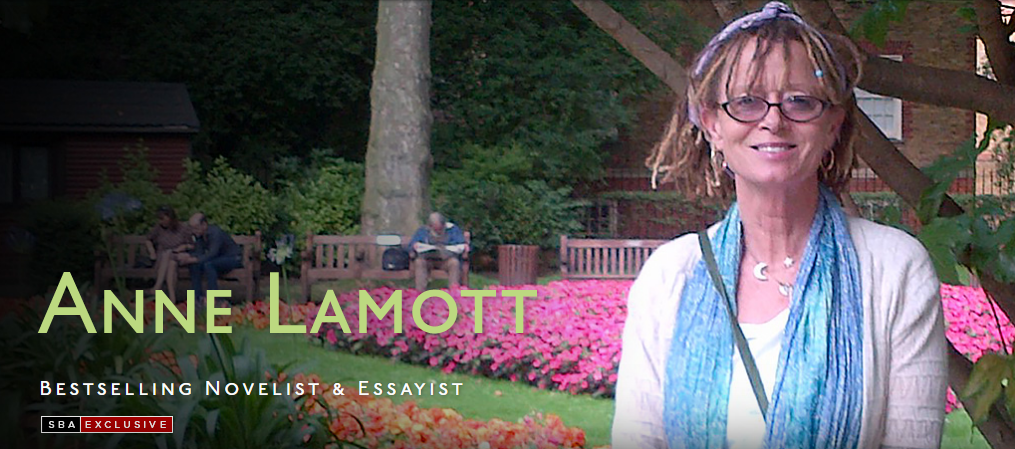
If you’ve been around writing—and lifefor a while, you’ll know of Anne Lamott. Anne’s the “Shitty First Draft” gal and “Bird by Bird” guru who says more in a phrase than most writers spew in a book. Anne Lamott addresses life’s capital-letter subjects. Alcoholism. Motherhood. Cancer. Community. Alternate Lifestyles. Listening. Faith. Depression. Sobriety. Desperation. Storytelling. Work. Politics. Jesus, Christianity and God. Anne’s also laugh-out-loud funny, and she’s brutally truthful.

Anne Lamott is a Guggenheim Fellow, a U of C prof, a highly-sought lecturer, a Hall of Fame Californian and the multi-time bestseller of fiction and non-fiction alike. To quote Anne, “I write books I’d love to come upon. Ones that are honest, concerned with real lives, spiritual transformation, families, secrets, craziness – and make me laugh.”

And, there’s the progressive social activist side to Anne Lamott. She’s a polished public speaker with a viral TED Talk. With kind permission, here’s Anne’s TED video and transcript.

“My seven-year-old grandson sleeps just down the hall from me, and he wakes up a lot of mornings and he says, “You know, this could be the best day ever.” And other times, in the middle of the night, he calls out in a tremulous voice, “Nana, will you ever get sick and die?”

I think this pretty much says it for me and for most of the people I know, that we’re a mixed grill of happy anticipation and dread. So I sat down a few days before my 61st birthday, and I decided to compile a list of everything I know for sure. There’s so little truth in the popular culture, and it’s good to be sure of a few things.

For instance, I am no longer 47, although this is the age I feel, and the age I like to think of myself as being. My friend Paul used to say in his late 70s that he felt like a young man with something really wrong with him.

Our true person is outside of time and space, but looking at the paperwork, I can, in fact, see that I was born in 1954. My inside self is outside of time and space. It doesn’t have an age. I’m every age I’ve ever been, and so are you, although I can’t help mentioning as an aside that it might have been helpful if I hadn’t followed the skin care rules of the ’60s, which involved getting as much sun as possible while slathered in baby oil and basking in the glow of a tinfoil reflector shield.

It was so liberating, though, to face the truth that I was no longer in the last throes of middle age, that I decided to write down every single true thing I know. People feel really doomed and overwhelmed these days, and they keep asking me what’s true. So I hope that my list of things I’m almost positive about might offer some basic operating instructions to anyone who is feeling really overwhelmed or beleaguered.

Number one: The first and truest thing is that all truth is a paradox. Life is both a precious, unfathomably beautiful gift, and it’s impossible here, on the incarnational side of things. It’s been a very bad match for those of us who were born extremely sensitive. It’s so hard and weird that we sometimes wonder if we’re being punked. It’s filled simultaneously with heartbreaking sweetness and beauty, desperate poverty, floods and babies and acne and Mozart, all swirled together. I don’t think it’s an ideal system.

Number two: Almost everything will work again if you unplug it for a few minutes — including you.

Three: There is almost nothing outside of you that will help in any kind of lasting way, unless you’re waiting for an organ. You can’t buy, achieve or date serenity and peace of mind. This is the most horrible truth, and I so resent it. But it’s an inside job, and we can’t arrange peace or lasting improvement for the people we love most in the world. They have to find their own ways, their own answers. You can’t run alongside your grown children with sunscreen and ChapStick on their hero’s journey. You have to release them. It’s disrespectful not to. And if it’s someone else’s problem, you probably don’t have the answer, anyway.

Our help is usually not very helpful. Our help is often toxic. And help is the sunny side of control. Stop helping so much. Don’t get your help and goodness all over everybody.

This brings us to number four: Everyone is screwed up, broken, clingy and scared, even the people who seem to have it most together. They are much more like you than you would believe, so try not to compare your insides to other people’s outsides. It will only make you worse than you already are.

Also, you can’t save, fix or rescue any of them or get anyone sober. What helped me get clean and sober 30 years ago was the catastrophe of my behavior and thinking. So I asked some sober friends for help, and I turned to a higher power. One acronym for God is the “gift of desperation,” G-O-D, or as a sober friend put it, by the end I was deteriorating faster than I could lower my standards.

So God might mean, in this case, “me running out of any more good ideas.”

While fixing and saving and trying to rescue is futile, radical self-care is quantum, and it radiates out from you into the atmosphere like a little fresh air. It’s a huge gift to the world. When people respond by saying, “Well, isn’t she full of herself,” just smile obliquely like Mona Lisa and make both of you a nice cup of tea. Being full of affection for one’s goofy, self-centered, cranky, annoying self is home. It’s where world peace begins.

Number five: Chocolate with 75 percent cacao is not actually a food. Its best use is as a bait in snake traps or to balance the legs of wobbly chairs. It was never meant to be considered an edible.

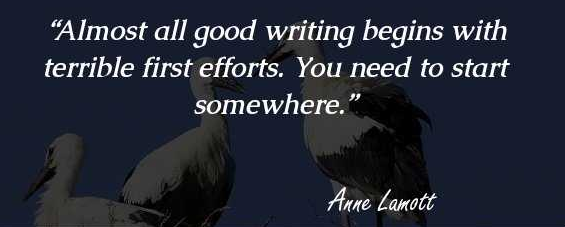
Number six: Writing. Every writer you know writes really terrible first drafts, but they keep their butt in the chair. That’s the secret of life. That’s probably the main difference between you and them. They just do it. They do it by prearrangement with themselves. They do it as a debt of honor. They tell stories that come through them one day at a time, little by little.

When my older brother was in fourth grade, he had a term paper on birds due the next day, and he hadn’t started. So my dad sat down with him with an Audubon book, paper, pencils and brads — for those of you who have gotten a little less young and remember brads — and he said to my brother, “Just take it bird by bird, buddy. Just read about pelicans and then write about pelicans in your own voice. And then find out about chickadees, and tell us about them in your own voice. And then geese.”

So the two most important things about writing are: bird by bird and really god-awful first drafts. If you don’t know where to start, remember that every single thing that happened to you is yours, and you get to tell it. If people wanted you to write more warmly about them, they should’ve behaved better.

You’re going to feel like hell if you wake up someday and you never wrote the stuff that is tugging on the sleeves of your heart: your stories, memories, visions and songs — your truth, your version of things — in your own voice. That’s really all you have to offer us, and that’s also why you were born.

Seven: Publication and temporary creative successes are something you have to recover from. They kill as many people as not. They will hurt, damage and change you in ways you cannot imagine. The most degraded and evil people I’ve ever known are male writers who’ve had huge best sellers. And yet, returning to number one, that all truth is paradox, it’s also a miracle to get your work published, to get your stories read and heard. Just try to bust yourself gently of the fantasy that publication will heal you, that it will fill the Swiss-cheesy holes inside of you. It can’t. It won’t. But writing can. So can singing in a choir or a bluegrass band. So can painting community murals or birding or fostering old dogs that no one else will.

Number eight: Families. Families are hard, hard, hard, no matter how cherished and astonishing they may also be. Again, see number one.

At family gatherings where you suddenly feel homicidal or suicidal –remember that in all cases, it’s a miracle that any of us, specifically, were conceived and born. Earth is forgiveness school. It begins with forgiving yourself, and then you might as well start at the dinner table. That way, you can do this work in comfortable pants.

When William Blake said that we are here to learn to endure the beams of love, he knew that your family would be an intimate part of this, even as you want to run screaming for your cute little life. But I promise you are up to it. You can do it, Cinderella, you can do it, and you will be amazed.

Nine: Food. Try to do a little better. I think you know what I mean.

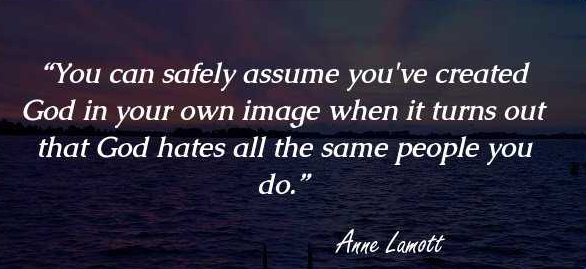
Number ten: Grace. Grace is spiritual WD-40, or water wings. The mystery of grace is that God loves Henry Kissinger and Vladimir Putin and me exactly as much as He or She loves your new grandchild. Go figure.

The movement of grace is what changes us, heals us and heals our world. To summon grace, say, “Help,” and then buckle up. Grace finds you exactly where you are, but it doesn’t leave you where it found you. And grace won’t look like Casper the Friendly Ghost, regrettably. But the phone will ring or the mail will come and then against all odds, you’ll get your sense of humor about yourself back. Laughter really is carbonated holiness. It helps us breathe again and again and gives us back to ourselves, and this gives us faith in life and each other. And remember — grace always bats last.

Eleven: God just means goodness. It’s really not all that scary. It means the divine or a loving, animating intelligence, or, as we learned from the great “Deteriorata,” “the cosmic muffin.” A good name for God is: “Not me.” Emerson said that the happiest person on Earth is the one who learns from nature the lessons of worship. So go outside a lot and look up. My pastor said you can trap bees on the bottom of mason jars without lids because they don’t look up, so they just walk around bitterly bumping into the glass walls. Go outside. Look up. Secret of life.

And finally: death. Number twelve. Wow and yikes. It’s so hard to bear when the few people you cannot live without die. You’ll never get over these losses, and no matter what the culture says, you’re not supposed to. We Christians like to think of death as a major change of address, but in any case, the person will live again fully in your heart if you don’t seal it off. Like Leonard Cohen said, “There are cracks in everything, and that’s how the light gets in.” And that’s how we feel our people again fully alive.

Also, the people will make you laugh out loud at the most inconvenient times, and that’s the great good news. But their absence will also be a lifelong nightmare of homesickness for you. Grief and friends, time and tears will heal you to some extent. Tears will bathe and baptize and hydrate and moisturize you and the ground on which you walk.

Do you know the first thing that God says to Moses? He says, “Take off your shoes.” Because this is holy ground, all evidence to the contrary. It’s hard to believe, but it’s the truest thing I know. When you’re a little bit older, like my tiny personal self, you realize that death is as sacred as birth. And don’t worry — get on with your life. Almost every single death is easy and gentle with the very best people surrounding you for as long as you need. You won’t be alone. They’ll help you cross over to whatever awaits us. As Ram Dass said, “When all is said and done, we’re really just all walking each other home.”

I think that’s it, but if I think of anything else, I’ll let you know. Thank you.

*   *   *

Anne Lamott’s Barclay Agency Biography:

Anne Lamott writes and speaks about subjects that begin with capital letters: Alcoholism, Motherhood, Jesus.  But armed with self-effacing humor – she is laugh-out-loud funny – and ruthless honesty, Lamott converts her subjects into enchantment.  Actually, she writes about what most of us don’t like to think about.  She wrote her first novel for her father, the writer Kenneth Lamott, when he was diagnosed with brain cancer.  She has said that the book was “a present to someone I loved who was going to die.”

In all her novels, she writes about loss – loss of loved ones and loss of personal control.  She doesn’t try to sugar-coat the sadness, frustration and disappointment, but tells her stories with honesty, compassion and a pureness of voice.  As she says, “I have a lot of hope and a lot of faith and I struggle to communicate that.”  Anne Lamott does communicate her faith; in her books and in person, she lifts, comforts, and inspires, all the while keeping us laughing.

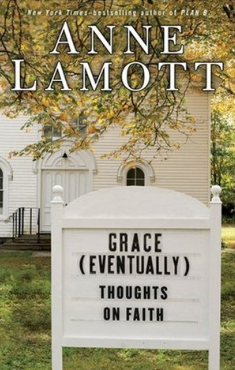
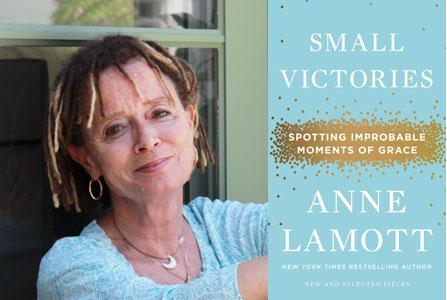
Anne Lamott is the author of seven novels, Hard LaughterRosieJoe JonesBlue ShoeAll New PeopleCrooked Little Heart, and Imperfect Birds. She has also written several bestselling books of nonfiction, including, Operating Instructions, an account of life as a single mother during her son’s first year; Some Assembly Required: A Journal of My Son’s First Son; and the classic book on writing; Bird by Bird: Some Instructions on Writing and Life. She has also authored several collections of autobiographical essays on faith; Traveling Mercies: Some Thoughts on Faith,  Plan B: Further Thoughts on Faith, and Grace (Eventually): Thoughts on Faith. In addition, she has written, Help, Thanks, Wow: The Three Essential PrayersStitches; A Handbook on Meaning, Hope and Repair,  Small Victories: Spotting Improbable Moments of Grace, and Hallelujah Anyway; Rediscovering Mercy. Her most recent book is Almost Everything: Notes on Hope (October 16, 2018, Riverhead Books).

Lamott has been honored with a Guggenheim Fellowship, and has taught at UC Davis, as well as at writing conferences across the country. Academy Award-winning filmmaker Freida Mock has made a documentary on Lamott, entitled “Bird by Bird with Annie” (1999).  Anne Lamott has also been inducted into the California Hall of Fame.