Author Archives: Garry Rodgers

About Garry Rodgers

After three decades as a Royal Canadian Mounted Police homicide detective and British Columbia coroner, International Best Selling author and blogger Garry Rodgers has an expertise in death and the craft of writing on it. Now retired, he wants to provoke your thoughts about death and help authors give life to their words.

DEFUND (ELEMENTS) OF THE POLICE — BUT LET COPS BE COPS

This post is from Joe Broadmeadow — retired Police Captain of the East Providence, Rhode Island, PD and now highly-respected crime writer.
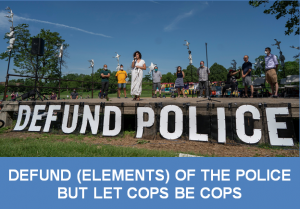
The movement toward defunding or, in the extreme, eliminating the police has a fundamental logic to it. Although I’m certain many proponents miss the point because they are caught in the fog of emotion. There are public funds allocated to police departments that could be better directed to other programs. Some of my suggestions will be met with outrage, but the simple fact is the most effective departments are those who let cops BE cops. They catch bad guys (in the universal, non-gender specific way.)
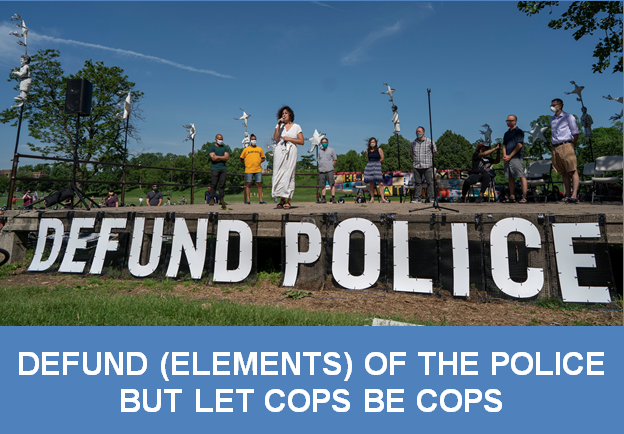
Changing police departments without keeping this fundamental truth in mind is Utopian idiocy. These foolish experiments with “autonomous” zones excluding the police are living examples of the Lord of the Flies phenomenon. They will fail, and innocent people will suffer and die amid the anarchy.

Let me state a universal truth.

As long as there are humans, there will be bad guys and the need for those brave enough to stand between them and society.

If one is rational enough to understand this point, then certain corollaries follow. We can no more eliminate the police than we can stop burning fossil fuel without a realistic alternative. But we can get back to basics with police departments. Refocus them on their core functions, and reallocate resources to other services more suited to social welfare agencies.
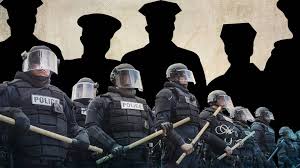
Over the last few decades, there have been several divergent trends within law enforcement. One toward militarization and one toward a “touchy-feely” gentleness. Neither added to the elemental function nor improved the effectiveness of police departments.

Starting back in the days of the Law Enforcement Assistance Administration, the federal government offered surplus military equipment to police departments.

I recall the glee among many of my fellow officers, including me, over this bonanza of toys. M-16 rifles, night-vision equipment, armored personnel carriers, and more. We thought this was the coolest thing in the world. I mean, come on. Is there anything better than firing automatic weapons and seeing in the dark?

To make it even more palatable, President Reagan reinvigorated the War on Drugs. We had the stuff, we had the war, all we needed was an enemy. Like all wars, most casualties were civilians. We tried to arrest our way out of a health crisis. If you think someone who would steal from their grandmother to buy heroin gave any thought to being caught by the police, you are remarkably naive.

Then, we came up with mandatory sentences, three-strike laws, and asset forfeiture statutes. All well-intentioned, like the proverbial road to hell. The net result? We turned whole swaths of society into convicts and filled our prisons with society’s most disadvantaged.
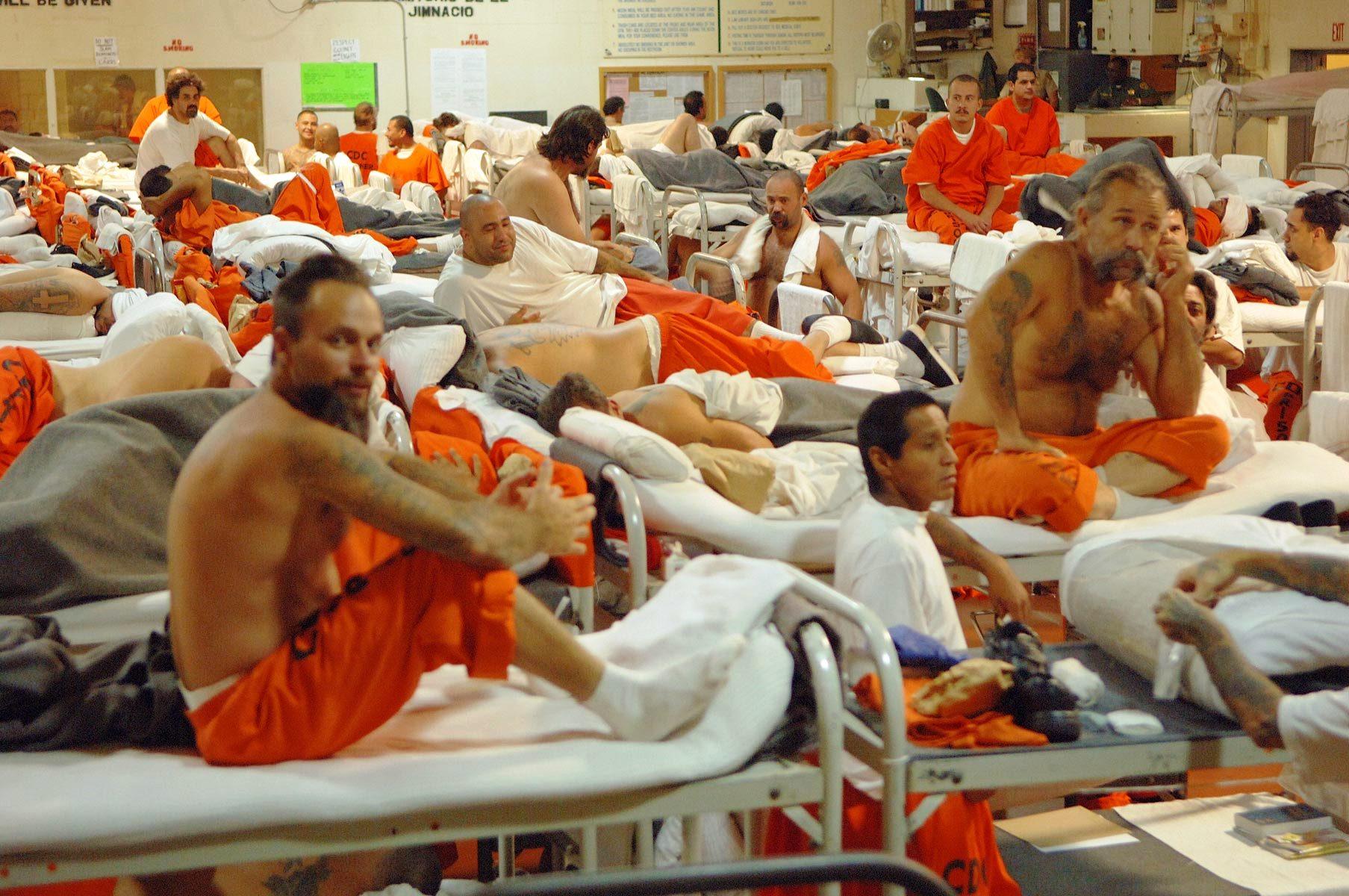
No one embraced the concept of the war on drugs more than me, and the many officers I worked with. But most cops are an intuitive bunch. We came to see the fallacy and contradiction in what we were doing. Like the war in Vietnam, we had to destroy the village to save it. We lost the enthusiasm for a failed policy.

Back then, no one made the connection that turning police departments, at least in appearance, into what were essentially armies of occupation was a dangerous thing. They held entire training conferences teaching agencies what language to use in the applications.

No one questioned the wisdom or consequences.

These programs were followed by the COPS Grant program, designed to put more officers on the street through technology. And there were others. Each had, what seemed, a logical and beneficial purpose.

In parallel with these programs, a kinder and gentler approach took hold. The Drug Abuse Resistance Education (DARE) program rose to prominence in Los Angeles and spread across the country. Community Policing quickly followed on the heels of DARE.

The problem was, in many agencies, these programs became specialized units rather than philosophical changes.

DARE put cops in schools as teachers when most lacked a fundamental understanding of educational theory. No matter how well-intentioned, DARE would prove marginally effective, if at all. Studies show contradictory results from DARE training. One five-year study showed no significant results between schools implementing DARE programs and those that did not.

https://www.pbs.org/wgbh/pages/frontline/shows/dope/dare/effectiveness.html

Community policing, one of the most promising of all the “New Age” programs, had the most potential. Police Departments formed “Community Policing Units” as a way of embracing this new paradigm. This presented a contradiction to the purpose of the philosophy. Community policing is not a thing, not a specialization like CSI or Homicide investigations. To treat it as such is to hobble the beneficial effect.
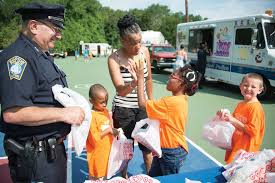
Community Policing is a philosophy, a paradigm, and a practice to be ingrained within an agency’s approach to police work. But many issues addressed by community policing are better handled by other agencies. In some agencies, Community Policing became little more than a central collection point of information about quality of life issues—loud congregations of youths, trash on the streets, burned-out streetlights, noisy business establishments, road maintenance. The officers then referred this information to the responsible agency. It drew personnel away from the core function of the police. That is not what cops—by training or design— are best suited to do.

Once again, a well-intentioned program clouding the fundamental responsibilities of cops. As a matter of normal course of operations, cops should pay attention to such issues. Small annoyances can escalate into major problems. While the “broken window” theory of law enforcement is largely discounted, an element of its validity persists. Focusing on the small things before they become major issues works.

Community Policing drew personnel away from the core function of the police with limited beneficial improvement to the community. The reality is, all policing is intended toward protecting the community. Crime prevention through police presence, apprehending criminals, suppressing disturbances, responding to accidents, all take place within the community.
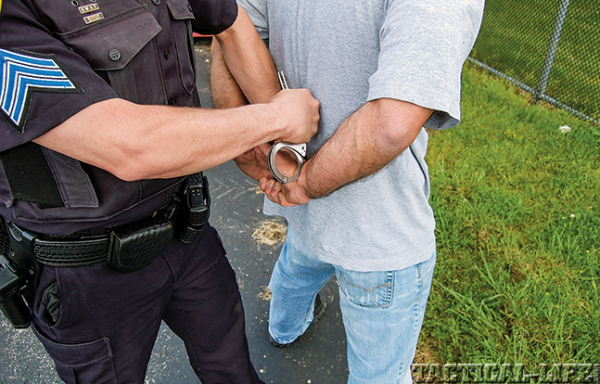
Attitudes and expectations, both by the police and by the community, need to change. The cops are not the enemy, and the community is not the problem. Community Policing should comprise merging the responsibility of both the community and the police into a partnership to catch bad guys. 

There was once an effort to combine the functions of public safety, i.e., police, fire, ems, into a single agency. In theory, it seemed to make sense. Have those first on the scene cross-trained in all aspects of public safety.

https://www.law.berkeley.edu/files/What_Works_in_Community_Policing.pdf

In reality, it was a dismal failure.

When an EMT responds to a shooting, their focus needs to be on treating the victim. When the Fire Department responds to a fire, its focus needs to be on putting out the fire, rescuing individuals, and saving property.

When cops respond to these same incidents, an element of each comes into play—preserving life being the most important. But the officer must also focus on determining if a crime occurred, preserving evidence, and apprehending those who committed the crime. Differentiation and separation of responsibilities make all public safety operations more effective.
The problem is, in many cities and towns, the police are the agency of last resort. If the trash in the street is infested with rats, if the neighborhood bar blares music to all hours, if the kids on the corner block the way, cops are the simplest solution. If a homeless person, suffering from mental illness, is blocking the entrance to a business, call the police.

Even if they can only deal with the issue temporarily.

There is another, more sinister aspect to things police departments are tasked with performing. The enforcement of traffic laws—intended to save lives and prevent accidents—has become a source of revenue critical to state and municipal budgets. Every department in the country will say they do not mandate a quota for officers. Yet, most agencies use the number of tickets written as a measure of officer performance.
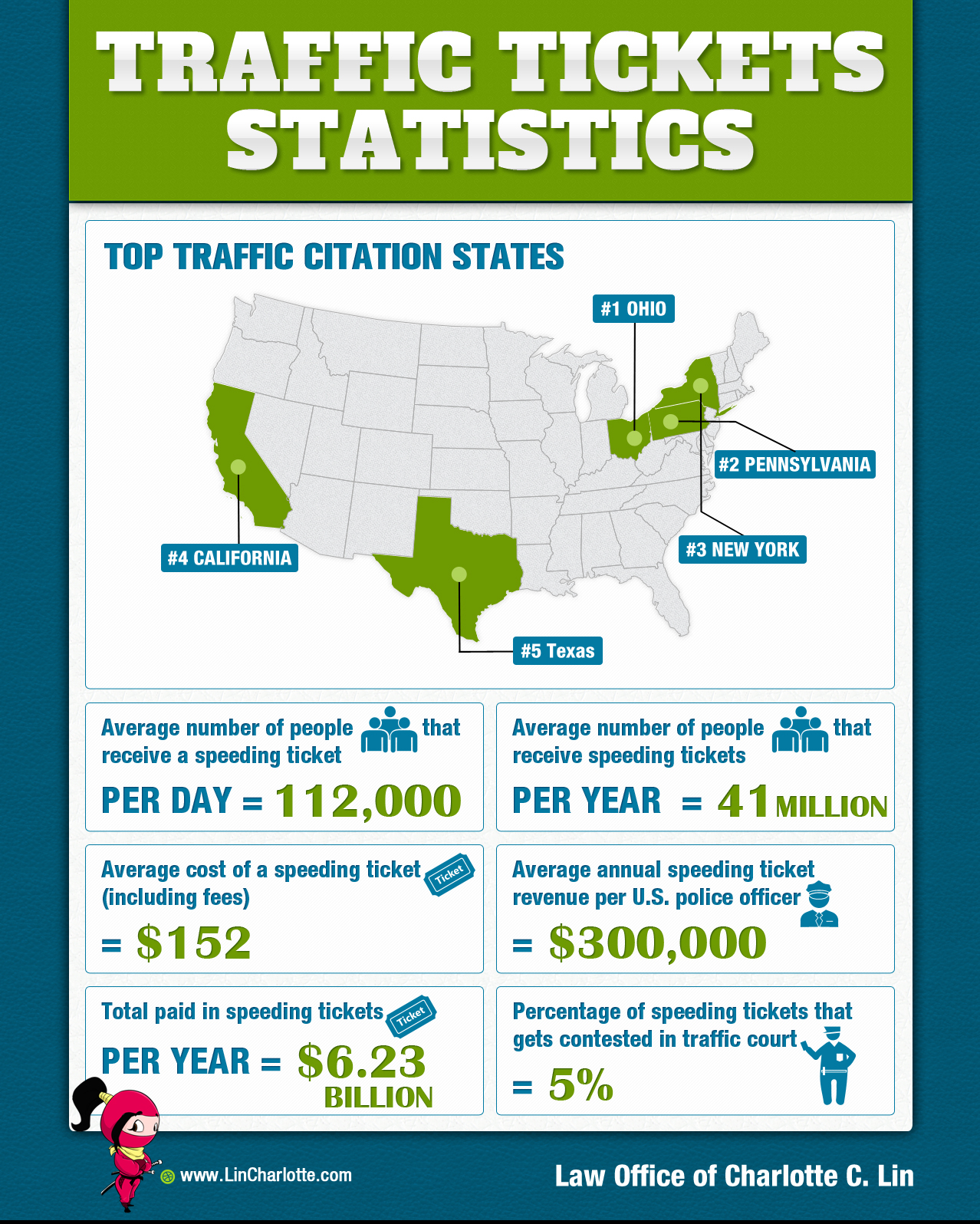
Like the contradiction in government warnings about the dangers of smoking and their dependency on the tax revenue from the sale of tobacco, police department generate revenue from tickets. It is a tax disguised as a public safety function.

If one wants to understand the danger of such dependency on traffic ticket revenue by a municipal government, all one has to do is look at the level of traffic enforcement in Ferguson, MO. The shooting of Michael Brown wasn’t the reason for the unrest and riots in that city, it was the spark that lit the fuse.

The recent revolts across the country are not just because of unjustified police shootings of people of color. They are a reaction to a complex range of issues. Police departments are being forced to contend with many of these, mostly outside their control, and doing it poorly.

We wouldn’t send a carpenter to fix a plumbing problem, why do we expect cops to solve societal issues beyond their control or expertise?

Redirecting funds from police departments to social service agencies make sense. But this is a long-term strategy. We still need to deal with the practical realities of crime. Cops prevent, investigate, and solve crimes. They apprehend bad guys. They should do so with professionalism within the confines of the law. Sometimes, this will involve the use of deadly force. We can set our sights on eliminating that necessity someday. However, we still need to have cops being cops for the foreseeable future.
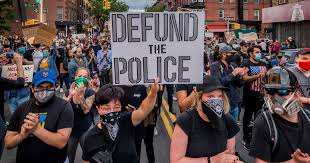
Before we rush headlong into such irrational actions of disbanding the police. Before we just slash and cut police budgets to satisfy an incensed, but uninformed public. Before we commit ourselves in a rush to judgment to do something, anything, we need to step back and analyze what purpose police departments serve.

The cops are not the adversaries of the public. This is not an us versus them situation. Cops are humans, subject to the same frailties and foibles as everyone else.

We need to let police departments get back to the fundamentals. We need to stop relying on the police as the agency of last resort in dealing with issues outside their skill set. We need to recognize the problems we face are all our responsibility, not just the police departments because they are a convenient 911 call away.

Let cops be cops. Not social workers, not teachers, not mental health providers, not counselors. Let cops do what they signed up to do, stand on the thin blue lineand catch bad guys.

*   *   *

Joe Broadmeadow retired with the rank of Captain from the East Providence, Rhode Island Police Department after twenty years. Assigned to various divisions within the department including Commander of Investigative Services, he also worked in the Organized Crime Drug Enforcement Task Force and on special assignment to the FBI Drug Task Force.

Joe is the author of seven books; three novels based on his experiences as a police officer, Collision Course, Silenced Justice, and A Change of Hate, a Y/A novel, Saving the Last Dragon, and three non-fiction books; Choices: You Make ’em You Own ’em written with Jerry Tillinghast, UnMade: Honor Loyalty Redemption written with Bobby Walason, and It’s Just the Way It Was: Inside the War on the New England Mob and other stories written with Brendan Doherty former superintendent of the Rhode Island State Police.
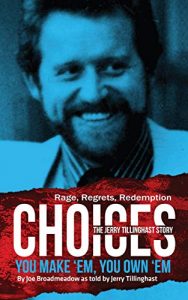
Joe also writes for two blogs, The Writing of Joe Broadmeadow (http://www.joebroadmeadowblog.com) and The Heretic and the Holy Man (www.thehereticandtheholyman.wordpress.com) and as a guest columnist for the Providence Journal and GoLocalProv.com.

When Joe is not writing, he is hiking or fishing (and thinking about writing). Joe completed a 2,185-mile thru-hike of the Appalachian Trail in September 2014. After completing the trail, Joe published a short story, Spirit of the Trail, available on Amazon.com in Kindle format.

Joe lives in Rhode Island with his wife Susan.

This piece by Joe Broadmeadow originally appeared on Joe’s personal blog. Here’s the link:

https://joebroadmeadowblog.com/2020/06/26/defund-elements-of-the-police-but-let-cops-be-cops/?fbclid=IwAR1G_UFVVvEVWu7mjZHqeTpuxKlOyXTwz-cZekU6f6zMCZQqOUh9skgKkW8

Visit Joe Broadmeadow’s Amazon Page.

Follow Joe Broadmeadow on Twitter.

Connect with Joe Broadmeadow on Facebook.
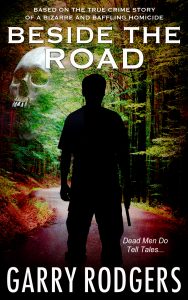
 

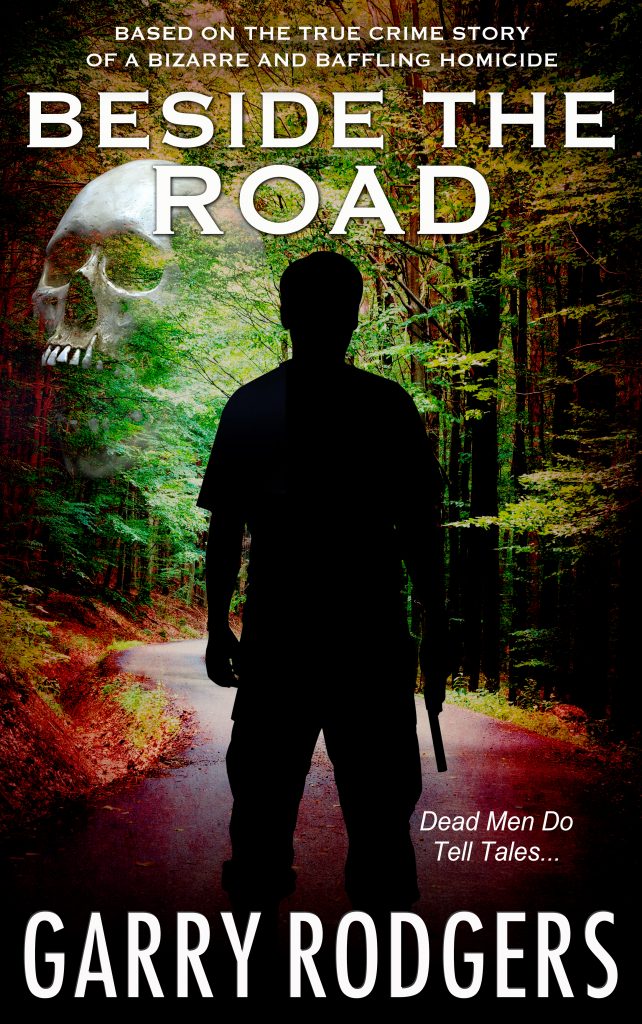
BESIDE THE ROAD — NEW BASED-ON-TRUE-CRIME SERIES BOOK #4

Dead Men Do Tell Tales

New Book Release – June 2020 – by Garry Rodgers, DyingWords Digital & Print Media Canada

Warning! Beside The Road is based on a true crime story. It’s not embellished or abbreviated. Explicit descriptions of the crime scenes, factual dialogue, real forensic procedures, and actual police investigation, interview and interrogation techniques are portrayed. Some names, times and locations have been changed for privacy concerns and commercial purposes. 

Prologue

He lay beside the road. He lay beside the road as dawn’s first streaks smeared the eastern sky and the horizon’s weak rays cast frail shadows through early mist. Songbirds introduced the day—while an owl’s screech signed off the night—as he lay on his back in death’s putrid stench… discarded and dumped down a backwoods bank beside the road.

Light spread through the rural woods where a poorly-paved path cut a meandering trail high above him, shielding his corpse from passing view. The sun unhurriedly appeared. It evaporated the overnight dew that formed in early summer, and the temperature began to rise from a tolerable chill. Predictably, the sun climbed the cloudless sky towards another afternoon’s peak of uncomfortable heat.

By nine, the sun angle was right for direct beams to touch his torso through the picket-fence gaps in roadside trees vertically rising from the steeply-sloped bank. A stand of coastal Douglas fir, native to British Columbia’s central Vancouver Island, guarded his body while a canopy of Western red cedars sheltered his cadaver from the direct sear of mid-day heat. The forest floor was a pad of thorns and ferns and moss and sticks and leaves and sticky needles that slowly deteriorated along with him as part of the universal plan.

Hour by hour, as the world turned and time passed, intermittent sunlight radiated him into a zipper-like pattern. Low luminosity left a softening effect on his exposed skin while solar gain from higher scales scorched him with a dryness that turned his trunk zebra-striped in a way few deceased people present. He had a piano-key pattern and a rarity produced by alternating spectrums of electromagnetism.

Day by day, as the Earth evolved and entropy progressed, he became a unique specter—part putrefaction where light hit him low and part mummification where diffusing blows of afternoon rays parched his flesh.

He was clothed. Partly clothed, that is, with his feet in shoes and his privates in shorts. His singlet, or wife-beater muscle shirt, bunched about his upper chest. His head was bare and so were his arms. His hair was stringy strands of brownish sludge that trapped the decomposing flesh and fats flowing from his scalp. And, his left hand reached as if grasping for help while his right helplessly crooked behind his back.

His face was mostly exposed to the bone and his eyes were gone. His cranium sucked in the sunlight and left him with a bare-skull appearance where his teeth—a distinctly different dentition—gave a half-snarl and a half-sneer similar to a pirate’s ghastly flag.

He had a name. He once had a family, and he once kept some friends. He once had a childhood and he laughed and he played and he schooled and he fooled around like anyone passing through their youth and into their adulthood would. But, his life was extinguished and his consciousness had parted ways with his physical entity—his remains left on the slope beside the road to break down.

Now, he was a medical mess with nature’s creatures consuming his corpse. Insects cycled through their growth stages and carried on the continuous loop of evolution. Forest vermin feasted on their share of his disarticulating decay while circling birds apprehensively watched for their chance at a piece of the putrefied pie.

He had a past. He had a past not to be proud of that caused him to be in his present condition—a dead and discarded human body that lay in silent stink beside the road.

Chapter One — Tuesday, July 9th – 1:10 pm

Leaky Lewis sent me a text. body beside the road. prob foul play. can u attend?
I texted Leaky back. What road, ffs? There’s a thousand roads in this town.
Leaky replied. o sorry. nanaimo lakes rd. approx 6 mi west near gogos sawmill.
I typed. Helpful. Are you there now?
He responded. no. im in council meeting. thats why text and not call.
I returned. So who has the scene?
Leaky pecked. uniforms got it. forensics en route. i called coroner. she’ll meet u.

——

Leaky Lewis was my boss at our Serious Crimes Section. He was junior to me in service, but that was okay. I preferred investigating murders more than stretching budgets and scrambling resources like Leaky had to do. And, this case of the body beside the road stretched and scrambled our budget and resources to the max. We used almost every investigation tool and technique available before we finally solved the most baffling and bizarre homicide file of my long detective career.

Leaky’s name was Jim. Jim Lewis. He’s a great guy, but had a serious incontinence problem with post-urinary drip. That’s why the nickname. Leaky couldn’t venture far from the trough without Depends, but he made sure we had everything needed to do our job.

By “our” I mean the seven-person squad tasked with investigating violent persons offenses that happened around the Nanaimo area. We’re located on central Vancouver Island in British Columbia right across from the craziness and congestion of the City of Vancouver. Nanaimo has Canada’s mildest year-round weather. I’d been here on the southwest coast for years and had hit my best-before date. During that time, I’d seen a lot of serious crimes because Nanaimo had an extraordinarily high homicide rate.

Leaky looked after our entire plainclothes unit. Besides the Serious Crimes bunch, he supervised the Commercial Crime unit, Sex Offenses, Forensics, Drug Squad, and one poor prick plagued with frauds and bad plastic. Leaky also oversaw the secret squirrels in our intelligence branch and two notoriously bad-behaved boys on the Street Crew.

——

I pulled up to the crime scene on Nanaimo Lakes Road in my unmarked Explorer. Like Leaky texted, it was just over six miles west of the city limits near a small sawmill run by industrious Slavic immigrants called the Gogo family. There were two police cruisers parked on the right-hand shoulder, the north side, with their red and blues flashing. Two other vehicles sat along the shoulder. One was our forensic unit’s mobile shop. The other belonged to Global TV’s roaming cameraman.

A uniformed cop with a paddle-board stop sign directed traffic around the entourage. She pointed to the left lane and gave me a “get-going” motion. I didn’t recognize her. Likely a new recruit. I hit my grille lights and she startled. Then, she smiled and pointed to the steep bank beside the road.

I parked, got out, and walked toward the marked car at the front of the pack. Already I could smell it. It was that unforgettable stench—somewhere between reeking ammonia in ripe rotten eggs and the putrid aroma of deeply-decayed roadkill. It was the smell one never mistakes.

A senior officer guarded the scene. He’d been with the patrol division for a long time. The patrolman introduced me to the stop-sign gal. I was right, she was a brand-new hire.

“What’s happening?” I was matter-of-fact.

“Body down the bank.” The old harness bull thumbed to the thick stand of Douglas fir trees rooted to the slope and standing tall. Western red cedars loomed overhead. “Been there a while from the look and smell.”

“What do you think?” I stood at the edge. It was loose gravel beside the road’s crumbling pavement. I did not want to slip and take a tumble.

“At first I thought it was a deer.” He scrunched his nose. I could see the young officer kept her distance. “That’s what the guy who reported it thought, too. He was riding his bike up the grade and caught a whiff. So, he stopped and looked over and saw his dead deer wore running shoes.”

“Witness guy still around?” I looked about. The only civilian seemed to be the TV man rolling film.

“No.” The patrolman shook his head. “I got my cadet to take his statement. Gotta start somewhere, right? Then we sent him on his way.”

“Great, thanks.” I paused to look around and take in the scene.

It was bright sunshine and getting uncomfortably warm. The early afternoon sun was south-southwest and high enough to shine over the bank and flood its light on the slope. The site was at the leading edge of a tight left-hand bend, and the road was sharply inclined toward the west. It led to a double-S curve with a cautionary slow advisory sign—not the sort of place to safely pull off.

The traffic was light. A loaded logging truck approached and followed the young officer’s direction. It chugged up the grade and disappeared through the curve. A smaller silver SUV arrived. Instead of bypassing as the officer indicated, the SUV came to a stop behind my Explorer. I saw the new cop frown as the driver put it in park and shut off the engine.

I knew who it was. The door opened and a silver-haired lady with a silver clipboard matching her mane got out. Honey Phelps, our coroner, walked toward me.

“Hi, Honey. Imagine meeting you here.” I smiled. Honey. I love the name. It perfectly suited her. She’d been with the Coroners Service for years, and I’d worked with her at countless death scenes. She was always the consummate professional but with a black humor tinge.

“Is that you?’ Honey whiffed the air like a bear. “Or is that my client?”

“Probably a bit of both.” I chuckled. “I haven’t had a look yet. Waited for you to get here.”

“Looks like Forensics beat me.” She nodded toward the big rig that looked somewhere between a SWAT team’s truck and an indie rock band’s Winnebago.

“Yeah. I think they’re inside suiting up.” I motioned toward the Forensic Identification Section vehicle. “Let’s go have a chat with them.”

Honey looked at my Explorer and then at me. “You alone? No Harry today?”

I grinned. “Nope. I’m batching it. She’s tied up in a court case.” I referred to my usual partner, Sheryl Henderson who we called ‘Harry’ after the Bigfoot in the movie Harry and the Hendersons. Sheryl was a large lady with large hair and an even larger personality.

Honey and I walked up to the Forensics vehicle just as Sergeant Cheryl Hunter stepped down. Her understudy, Matt Halfyard, stayed inside. We called him Eighteen Inches.

Cheryl was dressed in her bunny suit. It’s the white Tyvek coveralls that CSI people constantly wear. I’m sure she slept in that thing.

“What do you think?” I asked Cheryl much the same thing I’d asked the senior patrolman. It was usually a pretty good opener.

“Not sure yet.” Cheryl had her digital Canon ready. Matt was loading a video camera. The first thing Forensics always do is film the scene before they enter it. That step was non-negotiable, and the guarding officers made sure no one went near the body before Forensics began their painstaking thorough task of recording the overall scene. Examining the body beside the road would follow.

“I’m not sure what to think.” Cheryl was always careful with opinions and cautious with conclusions. She was like all forensic examiners. They work with facts. Not fables. It was the nature of the beast.

“I haven’t been down to the body yet.” Cheryl looked to her left and over the bank. “It’s about twenty-five feet downslope and looks like it’s hung up against tree trunks. I have no idea if he… it looks like a he from the size and style of running shoes… that’s all I can really make out from here… if he was hit by a vehicle and sent flying over the bank or if he was driven out here and dumped.”

I looked around. The TV camera guy looked back through his viewfinder. “Doesn’t look like a suicide type of scene.”

Cheryl and Honey agreed. We’d all seen a lot of suicide scenes and this one didn’t fit. My gut feeling said dumpsite.

“Let’s just take this step-by-step till we see what we’ve got.” Cheryl was the voice of reason. “One thing’s for sure. This isn’t a recent scene. From what I can see above the shoes is bare-bones with putrefied flesh partly attached.”

“Been here a while, then.” Honey observed.

“Yeah.” Cheryl looked up at the sun. “But it doesn’t take long in this weather.”

“We’ll figure it out.” Honey smiled. “Let’s have a better look at who’s down there beside the road.”

*   *   *

Beside The Road — Book 4 in the Based-On-True-Crime Series by Garry Rodgers is just released  — June 2020 — and now downloadable from these leading EBook retailers:


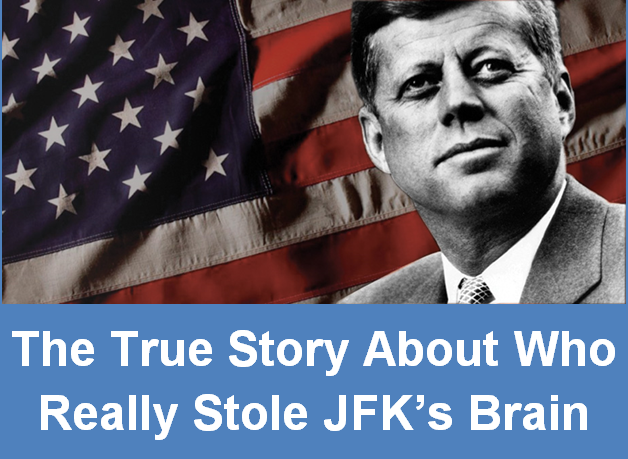
THE TRUE STORY ABOUT WHO REALLY STOLE JFK’S BRAIN

United States President John F. Kennedy’s assassination is the mother of all conspiracy theories. There’s been more BS, crap and craziness written about JFK’s murder than all the stuff ever spewed out of Donald Trump’s yap. However, there’s one bizarre angle to the JFK murder story that’s true. Someone actually stole JFK’s preserved brain from the National Archives, and the real mystery is who.

The facts surrounding the JFK Assassination are fairly straightforward. On November 22nd, 1963 the 35th President of the United States was fatally shot while riding in an open limousine through Dealy Plaza in downtown Dallas, Texas. Three rounds were fired. The first missed. The second struck Kennedy in the upper back, exited through his throat and seriously wounded Governor John Connally who sat in front of the Commander-in-Chief. The third bullet hit President Kennedy in the back of his head and killed him.

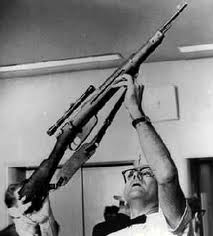
Despite what conspiracy theorists want to believe, Lee Harvey Oswald—acting alone—triggered all three shots. Oswald was a seriously-troubled young man employed at the Texas School Depository building where he fired from the sixth floor—now known as the “sniper’s nest”. Lee Oswald used an inexpensive, military-surplus rifle he obtained through mail order and left it behind when he fled the scene.

It’s simply a case of a lone nut with a cheap rifle from a tall building or a crazy who brought his gun to work and shot the President. Oswald then killed a Dallas police officer who street-checked him and was later captured hiding in a movie theater. Then, Lee Harvey Oswald was murdered—fatally shot by another nut-job named Jack Ruby. This occurred in the basement of the Dallas PD headquarters in what was the biggest breach of security in the history of policing.

JFK’s missing brain story began at his autopsy at the U.S. Navy hospital in Bethesda, Maryland. Before getting to that strange-but-true tale, it’s important to know why the autopsy was done near Washington, D.C. and not in Dallas, Texas where the murder took place.

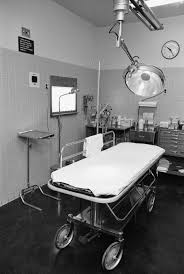
The bullets struck John Fitzgerald Kennedy at 12:30 p.m. He was in the emergency ward at Parkland Hospital within ten minutes where doctors hopelessly tried to save his life. They declared Kennedy dead at 1:00 p.m. and his body remained in the ER while authorities frantically tried to figure out what to do.

In 1963, there was no federal law regarding murdering the President of the United States. This was state jurisdiction under the Texas Penal Code, and the body possession / medical examination responsibility fell to the Dallas County coroner, Dr. Earl Rose. Rose worked at Parkland hospital and was nearby when Kennedy expired. Upon the declaration of death, Dr. Rose prepared to do a forensic autopsy which he was imminently qualified to do.

“No *#@$*#& way, Dr. Rose,” said the Kennedy team. “We’re getting the *bleep* out of Dallas right *#@$*#& now and Jack Kennedy’s coming with us.” A heated argument and physical scuffle arose as Dr. Rose blocked the door—backed-up by a Dallas police officer and a Justice of the Peace. On the Kennedy side were the Secret Service, led by Agent Roy Kellerman, and the president’s chief aid, enforcer and boyhood friend, Kenny O’Donnell.

Complicating matters was that about-to-be-sworn-in President Lyndon Johnson was terrified of a plot to kill them all. He, too, desperately wanted to get back to Washington’s safety. Air Force One sat ready at Love field which could have quickly swept Johnson away.

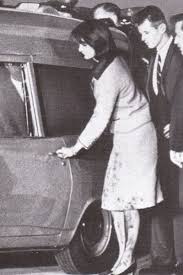
Except for one problem. Jackie Kennedy refused to leave her now-deceased husband in Dallas. She would not get on that plane without Jack, and there was no way Johnson wanted to be seen “abandoning a beautiful widow”. LBJ “et al” quickly worked a deal.

Dallas District Attorney Henry Wade got involved. He knew the law and knew it was an offense under the Coroner Act to remove a body from the State of Texas without the presiding coroner’s permission. That was not happening. Dr. Rose wasn’t about to give up the murder-victim-of-the-century, and D.A. Wade wanted to get out of the mess. Wade looked up the penalty for illegally removing (stealing) a body from Texas jurisdiction.

The fine was $100.00. Kenny O’Donnell had it in his wallet and forked over the hundred bucks to the J.P. With that, the president’s body was out the Parkland door, onto the plane and headed for home. That left the question of where to do the autopsy on the deceased U.S. President.

The new Johnson Administration thought it would be a nice touch to let the grieving widow decide. Jackie Kennedy, in a shocked and sickened state, thought that because “Jack was a Naval man” the autopsy should be done at the Navy facility in Bethesda. It seemed like a fitting touch.

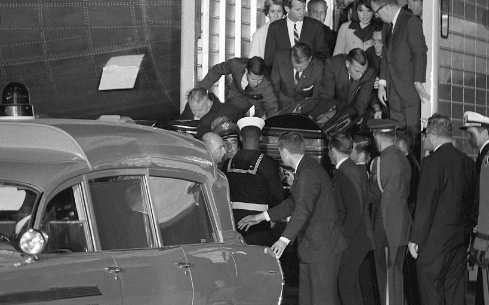
President Kennedy’s body arrived at Bethesda Naval Hospital at around 8:00 p.m. EST. To say the scene was a circus or a gong show was apt. Two Naval doctors with pathology—not forensic—experience led the medical team. Once they realized gunshot wounds were out of their wheelhouse, they brought in a third doctor who’d seen and treated a lot of battlefield wounds.

Between them, they bungled and fumbled through JFK’s autopsy. Complicating matters and adding stress to a stressful situation, they performed before a total audience of thirty-two (32) individuals who came and went throughout the four-hour procedure. Some were assistants who had a reasonable role. Others were mere spectators who had absolutely no business being there.

Critics look at JFK’s postmortem exam as being the worst forensic autopsy ever conducted. That’s not entirely fair, as they mostly got it right. They concluded that JFK was shot twice. One in the back—the other in the head. Both bullets originated from behind and above the presidential limousine and (from later lab testing) both bullets came from Oswald’s 6.5 mm Italian Carcano rifle.

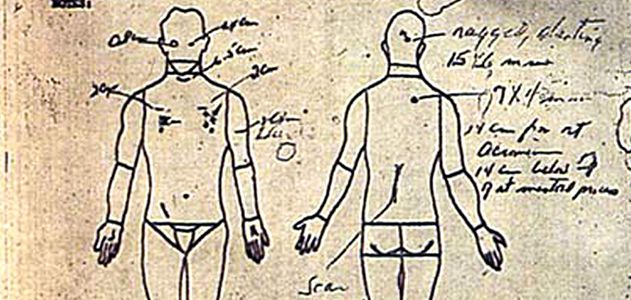
What they didn’t get right was the correct anatomical placement of the bullet entrance points on JFK’s body. They used flexible and non-precise reference points to place the wounds. This led to enormous speculation about shooter numbers and sniper locations. It’ll probably never end.

What the autopsy team did get precise was information about injuries to the president’s brain. The JFK autopsy report has been publicly available for decades. There’s no secret there. You can download it from the internet, and you can find the actual autopsy photos if you know where to look. Here’s what the pathologists had to say about JFK’s brain:

Supplementary Report of Autopsy Number A63-272 President John F. Kennedy

Gross Description of Brain

Following formalin fixation, the brain weighs 1500 grams. The right cerebral hemisphere is found to be markedly disrupted. There is a longitudinal laceration of the right hemisphere which is para-sagittal in position approximately 2.5 cm to the right of the midline which extends from the tip of the occipital lobe posteriorly to the tip of the frontal lobe anteriorly. The base of the laceration is situated approximately 4.5 cm below the vertex in the white matter. There is considerable loss of cortical substance above the base of the laceration, particularly in the parietal lobe. The margins of this laceration are at all points jagged and irregular, with additional lacerations extending in varied directions and for varying distances from the main laceration. In addition, there is a laceration of the corpus callosum extending from the genu to the tail. Exposed in this latter laceration are the interiors of the right lateral and third ventricles.

When viewed from the vertex, the left cerebral hemisphere is intact. There is marked engorgement of meningeal blood vessels of the left temporal and frontal regions with considerable associated subarachnoid hemorrhage. The gyri and sulci over the left hemisphere are of essentially normal size and distribution. Those on the right are too fragmented and distorted for a satisfactory description.

When viewed from the basilar aspect, the disruption of the right cortex is again obvious. There is a longitudinal laceration of the mid-brain through the floor of the third ventricle just behind the optic chiasm and mammillary bodies. This laceration particularly communicates with an oblique 1.5 cm tear through the left cerebral peduncle. There are irregular superficial lacerations over the basilar aspects of the left temporal and frontal lobes.

The supplementary autopsy report goes on to describe cross-section slides taken for microscopic inspection. It notes that no brain irregularities were identified outside of the catastrophic gunshot damage. The report also states that autopsy materials including photos were “delivered by hand to Rear Admiral George W. Buckley. MC, USN, White House Physician” who was President Kennedy’s personal doctor.

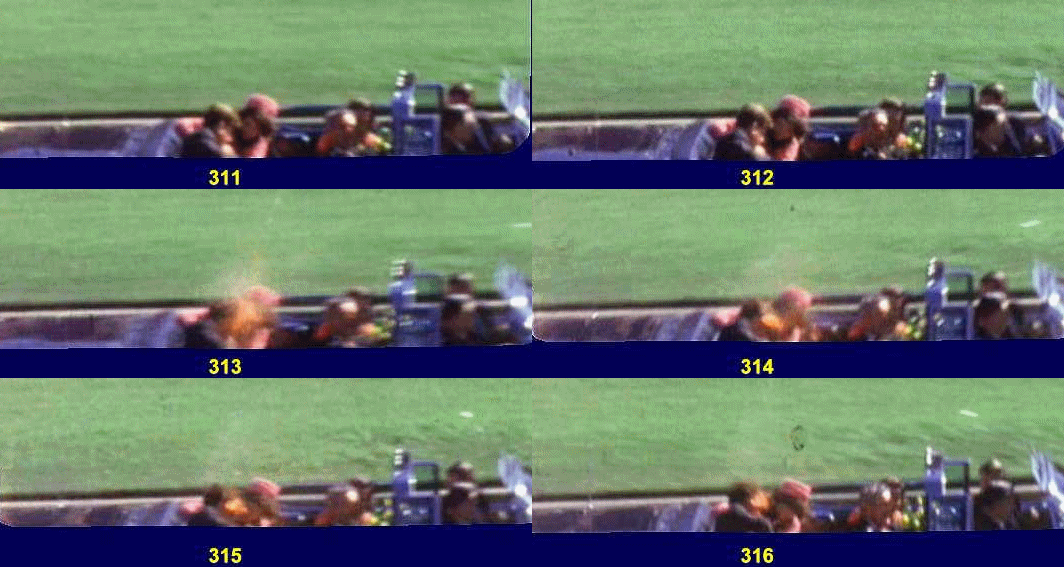
In layman’s terms, the JFK autopsy report describes massive trauma to the right side of the president’s brain. Nearly half of it was gone—blown away by the rifle bullet which can be graphically seen in Frame 313 of the infamous Zapruder film that captured the assassination. The other half was seriously damaged by the impact’s shock.

Conspiracy theorists like to destroy the JFK autopsy proceedings by pointing out what they see as inconsistencies like the report stating the brain weighed 1,500 grams. “Hang on,” the CTs say. “There’s lots of information on the net that says a typical adult human male’s brain weighs around 1,400 to 1,500 grams. So, JFK’s brain must have still been mostly intact… or, better yet, replaced at the autopsy to cover up something super-sinister like the shooter from the Grassy Knoll.”

Breathe easy, Conspiracy Theorists. The report clearly stipulates “following fixation in formalin” which is standard autopsy protocol. It’s not easy to cross-section a fresh brain and make thin slices for histology slides. Once a brain soaks in formalin (a formaldehyde-based solution) it becomes rubbery and workable. The process typically takes two to three weeks.

Formalin fixing amplifies tissue weight. It makes perfect sense that part of JFK’s brain fixed in formalin would weigh the same as a complete and non-fixed mass. Nothing to see here, CTs. Maybe keep on something like how Castro and the Mob cooperated to place multiple assassins around Dealy and let them pack up their guns then escape without evidence.

No, the real mystery in the JFK case is what actually happened to the president’s formalin-fixed brain after the autopsy, and how it disappeared from a locked vault at the United States National Archives in Washington, D.C.

John Kennedy’s body was released from the Bethesda morgue in the early morning hours of November 23, 1963. A funeral home team did the best they could to prepare the body for viewing. Privately, the Kennedy family saw the post-autopsy corpse, but the casket was never opened to the public.

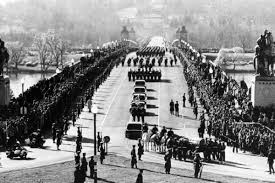
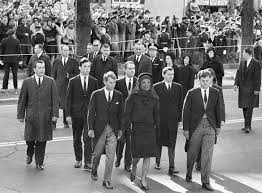
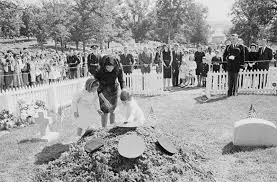
President Kennedy’s burial took place on November 25th. Millions around the world watched the procession on TV, and many thousands lined the route from the U.S. Capitol to Arlington National Cemetery across the Potomac River in Virginia. Here, the fallen president was laid to rest—temporarily.

Back to the missing brain. There’s no transfer date on their report, but it’s likely the autopsy doctors gave the brain and related histology evidence to Dr. Buckley around the middle of December 1963. The brain and related tissue couldn’t be interred with Kennedy’s body along with the burial. So, that presented the issue of what to do with them, including the grotesque autopsy photos. The Kennedy family abhorred the thought of this gruesome material getting into public hands and being put on display like a side-show.

National Archive records confirmed they received the John Fitzgerald Kennedy autopsy materials in February of 1965. They were released to the Archives by Robert F. Kennedy’s signature, and that included the brain which was contained in a stainless steel receptacle. The effects were logged into the archives and stayed in safekeeping. That was until October 31st, 1966 when someone noticed President Kennedy’s brain and other tissues had vanished. Yes, it was Halloween, and someone had stolen them.

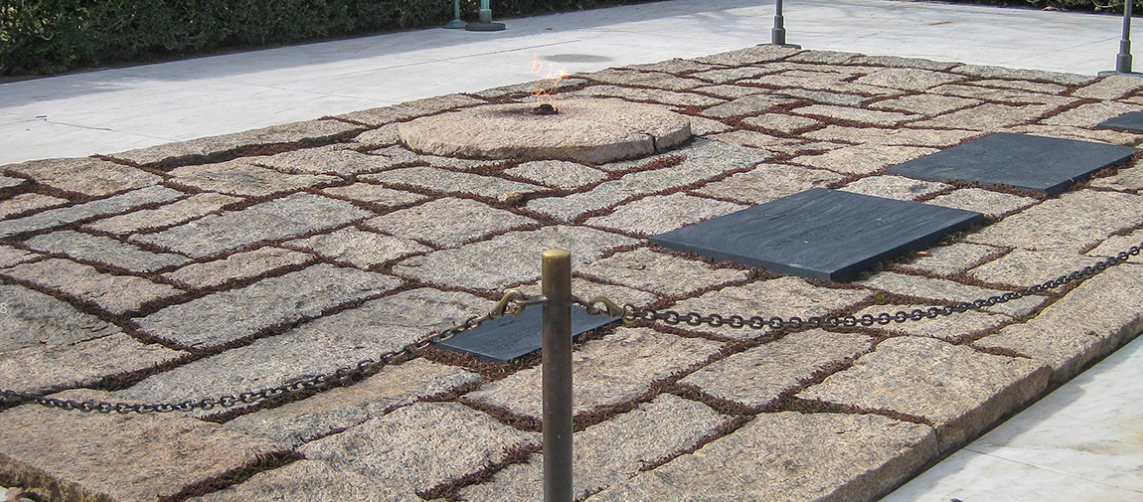
Meanwhile—unknown to the public—the Kennedy family prepared for President Kennedy’s permanent resting place. Somewhere in 1965, the family had Jack Kennedy exhumed and stored in a secure and secret location while they re-designed and built the Arlington grave site. They moved the grave slightly away from the original location and built a solid base that could withstand the millions of visitors who visited the shrine. That included a modern, natural gas eternal flame to replace the old and hastily-built propane torch along with granite flagstones brought in from New England.

In the middle of the night on March 14th, 1967 the Kennedy family re-interred JFK’s body in the new facility. Present were Jackie Kennedy, Robert Kennedy, Edward (Ted) Kennedy and President Lyndon Johnson. Also re-interred were the two Kennedy children who died at birth and were moved from their Massachusetts burial spots to be placed with their father.

Nothing was said about the missing brain for years—publicly. The vast majority of citizens never knew it was gone, let alone being stolen. That cat came out of the bag during The JFK Assassination Records Review Board proceedings that took place between 1992 and 1998 which were only recently released under the 2016 Freedom of Information Act.

There, in the files of the 1977 Rockefeller Commission, was the answer as to who stole President Kennedy’s brain. This commission was the first official inquiry after the Warren Commission, and it formed to quell conspiracy rumors. Unfortunately, it probably did more harm than good just as what happened during the 1978 House Select Committee on Assassinations that concluded President Kennedy’s assassination was “probably the result of a conspiracy”. They based this erroneous conclusion solely on the bogus interpretation of a Dallas PD dispatch recording that allegedly caught four shots rather than three.

The Rockefeller Commission took evidence from United States Assistant Attorney General Burke Marshall and questioned him about the brain’s whereabouts. This is what Marshall told the commissioners:

“Robert Kennedy obtained and disposed of these materials himself, without permission or informing anyone else. He was concerned that these materials would be placed on public display and wished to dispose of them to eliminate such a possibility.”

No one will ever truly know where JFK’s brain is today. The most likely scenario is it was buried along with the president’s re-interred body in Arlington Cemetery. But, one thing’s for sure. It was Bobby Kennedy who stole it.