
Author Archives: Garry Rodgers

About Garry Rodgers

After three decades as a Royal Canadian Mounted Police homicide detective and British Columbia coroner, International Best Selling author and blogger Garry Rodgers has an expertise in death and the craft of writing on it. Now retired, he wants to provoke your thoughts about death and help authors give life to their words.

ARE YOU INTELLIGENTLY DESIGNED?

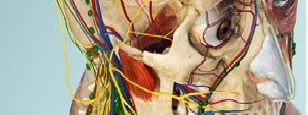
A4I never came away from an autopsy without reflecting on the marvelous design of the human body. I don’t know how many autopsies I attended over the years as a cop and a coroner. Lots. It’s not something you score. But I always looked at postmortems as a scientific—almost spiritual—systematic exercise in examining human design. 

They’re twelve major systems in your anatomy—all interlinked to ensure your survival. Remove any system (except maybe your reproductive one) and you’ll die. And these systems go about their intermingling business—day after day—year after year—without you having to consciously think about operating them.

Think about it.
A11All that’s required to live is a bit of maintenance and, when things go wrong, modern medical science usually knows how to patch you up. Today’s medical practitioners can replace your organs, your limbs, your hair, your eyes, your nose, and your teeth.

But what modern science doesn’t know is how all this came to be.

A5I’m going to do some edited plagiarism from William  A. Dembski, of the Access Research Network, who wrote on intelligent design. The idea has been around since the ancient Greeks, who did some pretty deep thinking about where they came from and where they were going.

Some of it was explained by mythology, some by theology, and some by analogy. But the central question—did something intentionally design us—remains unanswered today.

Personally, I think there’s a force of infinite intelligence at work. A force we’re not capable of truly understanding, comprehending, or explaining.

Design theory—also called design or the design argument—is the view that nature shows tangible signs of having been designed by a preexisting intelligence.

The most famous version of the design argument can be found in the work of theologian William Paley who, in 1802, proposed his “watchmaker” thesis. His reasoning went like this:

A12“In crossing a heath, suppose I pitched my foot against a stone, and were asked how the stone came to be there; I might possibly answer, that, for anything I knew to the contrary, it had lain there forever. … But suppose I had found a watch upon the ground, and it should be inquired how the watch happened to be in that place; I should hardly think the answer which I had before given would be sufficient.” 

To the contrary, the fine coordination of all the watch parts would force us to conclude that it must have had a maker—that there must have existed, at some time, and at some place or other, an artificer or artificers, who formed it for some purpose. We’d struggle to comprehend its construction and designed its use, just as we’ve struggled to understand ourselves.

A13Paley argued we can draw the same conclusion about many anatomical objects, such as the eye. Just as a watch’s parts are all perfectly adapted for the purpose of telling time, the parts of an eye are all perfectly adapted for the purpose of seeing. In each case, Paley argued, we discern the marks of an intelligent designer.

Although Paley’s basic notion was sound and influenced thinkers for decades, Paley never provided a rigorous standard for detecting design in nature. Detecting design depended on such vague standards as being able to discern an object’s “purpose.” Moreover, Paley and other “natural theologians” tried to reason from the facts of nature to the existence of a wise and benevolent God. They tried to prove God from the perception of perfect products.

All of these things made design an easy target for Charles Darwin when he proposed his theory of evolution. 

A16Whereas Paley saw a finely-balanced world attesting to a kind and just God, Darwin pointed to nature’s imperfections and brutishness. Although Darwin had once been an admirer of Paley, Darwin’s own observations and experiences—especially the cruel, lingering death of his 9-year-old daughter Annie in 1850—that destroyed whatever belief he had in a just and moral universe.

Following Darwin’s widely-accepted theory of evolution, the notion of design was all but banished from biology.

A17Since the 1980s, however, advances in biology have convinced a new generation of scholars that Darwin’s theory was inadequate to account for the sheer complexity of living things. These scholars—chemists, biologists, mathematicians, and philosophers of science—began to reconsider design theory. They formulated a new view of design that avoids the pitfalls of previous versions.

Called intelligent design (ID), to distinguish it from earlier versions of design theory (as well as from the naturalistic use of the term design), this new approach is more modest than its predecessors. Rather than trying to infer God’s existence or character from the natural world, it simply claims that “intelligent causes are necessary to explain the complex, information-rich structures of biology and that these causes are empirically detectable.”

Like I said, I never came away from an autopsy without a scientific and spiritual reflection on the marvelous design of the human body.

What do you think? 

Have you been intelligently designed?

THE NGI — REALITY IN CRIMINAL IDENTIFICATION’S NEXT GENERATION SYSTEM

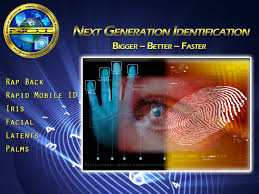
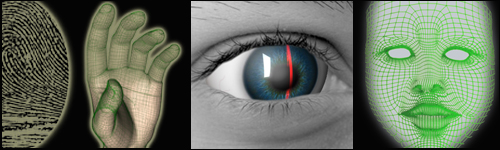
A3Imagine information straight from crime scenes biometrically feeding a super-computing, multimodal system of collaborating human identification techniques. A futuristic system beyond IAFIS, the longstanding Integrated Automated Fingerprint Identification System. A new system with hyper-integrated, next generation, biometric database identifiers of laser-scanned tenprints, palmprints, iris and retina recordings, facial recognition, voice printing, tattoo banking, and instantaneous DNA profile matching. An amazing algorithmic system of centralized surveillance. A fantastic system favoring the police.

A4Imagine the cop on the street with a handheld device imaging your eye, searching your face, or scanning your index finger, then uploading via iPhone to the next generation system that searches, identifies, and reports within seconds. Imagine a system with a repository on persons of special concerns—murderers, rapists, and terrorists—that tracks their chip and their criminal life-cycle from the commission of crime to the correctional center.

Think it’s imaginary? Well, it’s not. It’s here. It’s active. And it’s expanding. It belongs to the FBI and it’s called the Next Generation Identification system. NGI for short.

On its website, the Federal Bureau of Investigation, who administers the program, states:

F22“The NGI is the cornerstone that enables our Criminal Justice Information System, CJIS, to meet our growing an evolving mission and continue to build our reputation as a global biometrics leader. The NGI Program Office mission is to reduce terrorist and criminal activities by improving and expanding biometric identification and criminal history information services through research, evaluation, and implementation of advanced technology beyond the AIFIS environment.”

Wow! An ambitious goal Let’s look at how this 1.2 billion dollar baby works.

The NGI is already fully operational in its fingerprinting capacity and is incrementally phasing in other parts of the program in with these biological, biographical, and contextual categories:

Tenprints

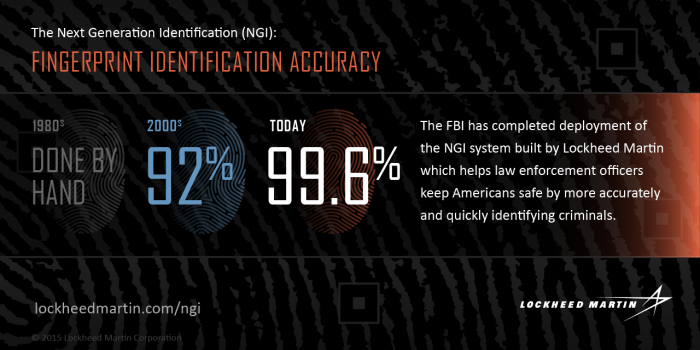
220px-Fingerprints_of_Anna_Timiriova_3 (1)Conventional fingerprinting of arrested individuals involves rolling each of the ten digits from nail edge to nail edge as well as impressing ten flats. The “tenprints” were inked onto paper then scanned into AIFIS. The NGI allows real-time scanning and digital direct uploading. The NGI’s use of matching algorithms in its Advanced Fingerprint Identification Technology, AFIT, increased accuracy to 99.6% and its speed to under two minutes.

A9

Palmprints

Previous systems did not include palmar impressions yet statistics show that partial palm prints account for over 30% of latents lifted at crime scenes. The NGI’s digital scanning, recording, and identifying palm prints are already having a huge impact in criminal identifications.

Latents

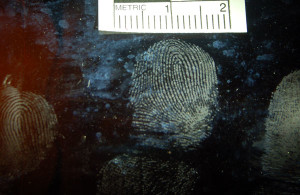
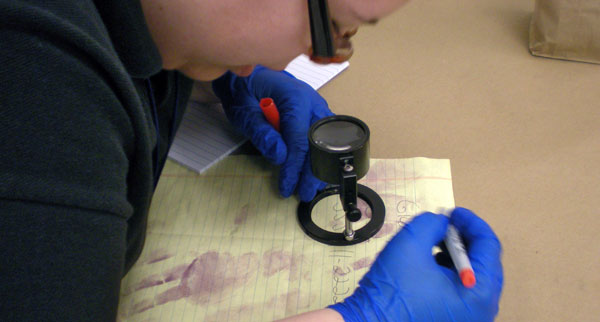
F3Latent” prints are technically those impressions that can’t be seen with the naked eye and are discovered by the use of amplifying powders, chemicals, and alternate light sources. The NGI lumps these in with “plastic” impressions—those impressed into a mold like wax or grease—and “patents” which are those visible on glass, for instance, and conventionally lifted with adhesive and fixed on slides. All questioned prints are now termed “latent”.

F1The NGI’s advanced matching algorithm technology has three times AIFIS’s capacity in identifying minute details and making identifications. Further, it has ten times the capacity to store unsolved latent prints and randomly searching newly inputted prints to clear cold cases.

Currently, the NGI’s Latent Branch is subdivided into the Criminal Master File, the Unsolved Latent File, and the Civil Repository.

Facial Recognition

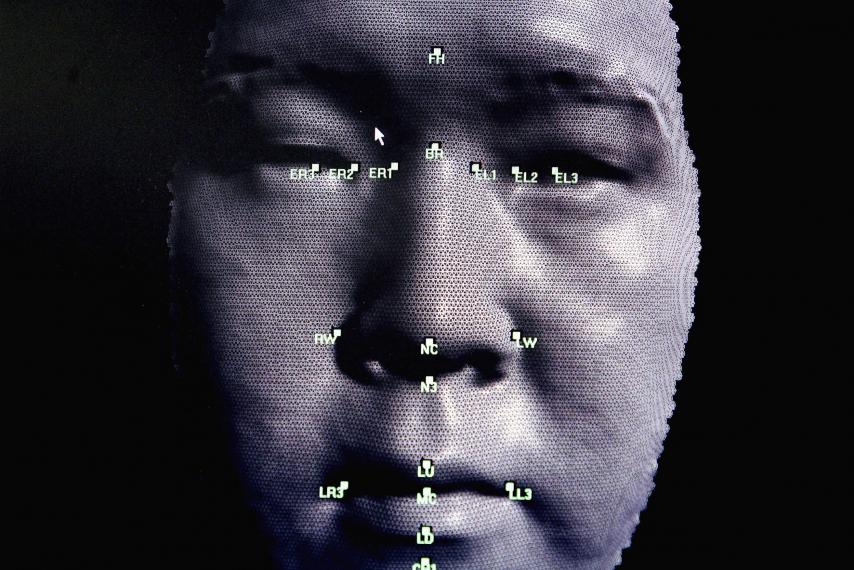
A2The NGI system incorporates the Interstate Photo System (IPS) which catalogs millions of criminal mugshots as well as other identification photos like driver licenses and passports. The NGI is accessible through Universal Face Workstations where criminal photos are entered through desktop software and the results are immediately scanned and returned as “ranked candidate leads as investigational tools”. The system is expanding its capability to search facial recognition from public videos like cell phone and surveillance camera material.

Iris and Retina Identification

A5This technology was developed by the military and is incorporated in the NGI system as part of its integrated approach to criminal identification. Current prisoner processing will include iris/retina images recorded and entered into the NGI database. Additionally, patrolling police officers will be equipped with portable scanners to assist in identifying persons in public who cannot produce conventional identification. This mobile technology already exists as MORIS, the Mobile Offender Recognition and Information System, and is a mainstay with the NYPD.

Scars, Marks & Tattoos

A8The SMT Branch is another evolving arm of the NGI where criminal processing allows for images of tattoos, scars, and other markings on suspects to be collected and entered into the overall criminal profile. Technology allows for a search capacity in querying descriptive data in order to find stored images of potential matches.

DNA Database

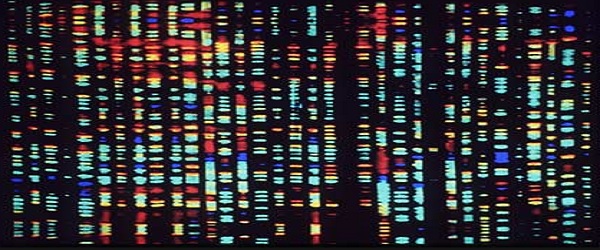
Currently, all convicted felons of serious persons crimes are court ordered to provide their DNA profiles to authorities. The NGI will be the central repository of criminal DNA profiling with a tremendous search and match capability. This increment of the NGI is being phased-in.

A7

Voice Printing

Recording and  recognizing human voice patterns is an emerging technology and a future project for the NGI program as it rolls out its ambitious program. This will be especially useful in identifying unknown speakers caught in electronic surveillance through bugs and wiretaps in terrorist and criminal investigations.

RISC

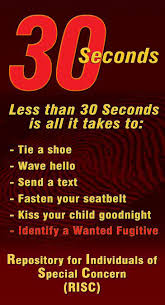
A10The Repository for Individuals of Special Concern area of the NGI allows a total packaged profile to be constructed for high-risk offenders, suspected terrorists, and other individuals of special concern. The RISC system is available 24/7/365 and has a response time of less than five seconds. Currently, the NGI’s RISC branch has over 5,000 requests per day from everywhere like street checks to airport security. Its average hit rate is 4.6%.

Think about this.

30 seconds. Tie a shoe. Wave hello. Send a text. Fasten your seatbelt. Kiss your child goodnight.

Now it only takes 30 seconds to identify a wanted fugitive through the Repository of Individuals of Special Concern.

Rap Back

A11The National Rap Back Service is the screening program for monitoring non-criminal issues like job applications for jobs of critical trust such as daycare workers, scout leaders, bank tellers, children’s sports coaches, teachers, and possibly even gynecologists. It also includes people who are under criminal justice supervision like parolees and probationers. Turnaround time for Rap Back reports are typically fifteen minutes and it processes thousands per day.

Tech Refresh

Upgrading and replacing existing software and hardware will be never ending in the struggle to implement the NGI at Federal, State, and Local investigation and enforcement agencies. It’s vital to the system’s success that end users are up to date and avoid quick obsolescence.

A12Beyond being a multimodal biometric identification database program, the NGI will also align with the Personal Identity Verification (PIV) cards that are being developed by NIST, the National Institute of Standards and Technology. These are credit-card sized pieces designed to be carried on your person and contain a chip encoded with your entire biometric profile—tenprints, palm prints, iris/retina image, SMTs, DNA profile, and your voice pattern. While elective for everyday citizens to apply to the program, soon PIV’s will be mandatory equipment for mobile felons.

A13So, the imaginary, fantastic world of biometric identification and super-computed, centralized civilian surveillance is here. In 2016.

Makes me wonder what’s coming in the future. I suspect a biometric chip surgically implanted into high-risk offenders that permanently identifies and GPS tracks their existence. We’ll know where they are. Who they’re with. And what they’ve done.

And, hopefully, stop what they’re about to do.

FENTANYL—HEROIN’S DEADLY LITTLE SISTER

F20Imagine a serial killer causing 256 deaths in your town—within the first four months of this year. Your place would panic. Your doors would be locked. Windows barred. Your streets would be bare with the cops falling flat-out to find the fiend. Does this sound like a far-fetched plot for the next best-seller? Nope. It’s real. It’s happening right here at home and the killer is known. Her name is Fentanyl. She’s heroin’s deadly little sister.

British Columbians, in Canada, are among the world’s most prolific illicit drug consumers and the B.C. Coroners Service just released some figures. They’re projecting over 800 drug overdose deaths for 2016. Maybe a thousand. Most will involve fentanyl.

Who is this lethal lady? Where does she come from? And why is she suddenly so popular?

F12Fentanyl is a high-potency, rapid-onset synthetic opioid drug prescribed for the treatment of chronic pain. It was developed in the 1950’s as an intravenous anesthetic for surgery and evolved into a breakthrough cancer pain treatment in the form of tablets, lozenges, lollipops, and patches. It’s legal and readily available with a prescription and is listed on the U.S., Canadian, and U.K. Schedules as a controlled drug.

Like heroin and morphine, fentanyl works by binding to the body’s opiate receptors and driving up dopamine levels in the brain’s reward areas, producing a state of euphoria and intense relaxation. That’s all and well when used in moderation and highly effective when properly prescribed.

001But fentanyl is 100 times more potent than morphine and 50 times stronger than pharmaceutical grade, 100% pure heroin. It’s also far more available on the street than heroin and the reason is profit. One kilogram of heroin sells in Vancouver for $60,000—if you could find one. One kilo of fentanyl powder goes for $125,000 and is readily available. Not hard to figure out what’s going on.

But with fentanyl being so powerful, the inevitable deaths tag along. The mechanism of death by fentanyl overdose is the same as heroin in that the central nervous system is depressed and respiratory failure occurs. Fentanyl is much quicker than heroin, though. One street source was quoted, “With fentanyl you just hit the ground. Light’s out, that’s it. They don’t know there’s fentanyl in their fix till it’s too late.”

F22The toxicity of all drugs is rated on an LD50 scale, whereas the Lethal Dose of 50 percent of humans occurs at a certain scale which is proportionate to body mass. Fentanyl’s LD50 rating is .03 mcg/kg (micrograms per kilogram). Given that a microgram is .001 of a milligram, this equals an average 70 kilogram (155 pound) person requiring 2.1 mgs of fentanyl to kill them. Some, already tolerant to opioids, require more. Some, with no tolerance, require less. Especially if mixed with other drugs or alcohol.

So why the sudden rise in the availability of fentanyl?

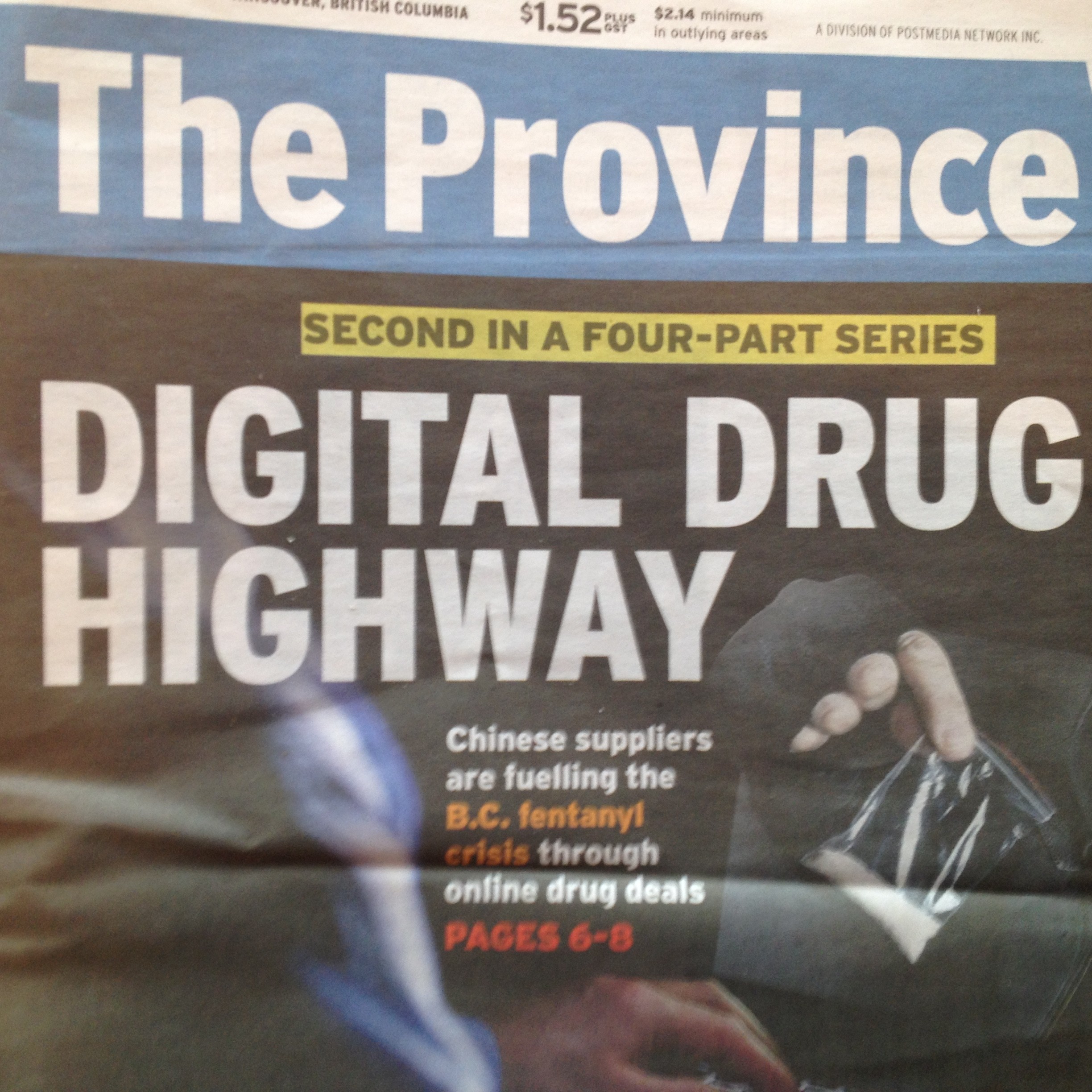
There’ll always be the demand. The answer’s in the supply and the reason’s found on the internet. The digital drug highway. The internet has done to drugs what Amazon has done for books.

F23Ten years ago, when heroin was so popular, it was available from a natural product through a complex delivery system which requires a chain from the country of source—China, Afghanistan, and Vietnam to name a few—through international couriers, middle-men, and street dealers before it ever reached the end-user. The junkie in the alley.

The process of profit required “stepping-on” or “cutting” at every level and, by the time the drug reached the consumer, it was of low purity and the chances of an accidental overdose were slim.

Today’s plentiful purity is what’s killing the customers and it’s not about to change.

002Now you can go online and order any amount of fentanyl—a synthetic and easily mass-produced opioid—you want, as long as your money goes through. Visa, Mastercard, Paypal, and Bitcoin are fine and UPS will deliver it right to your door. Presto, you’re in the illicit drug business.

Don’t believe me?

Well, I tried it out.

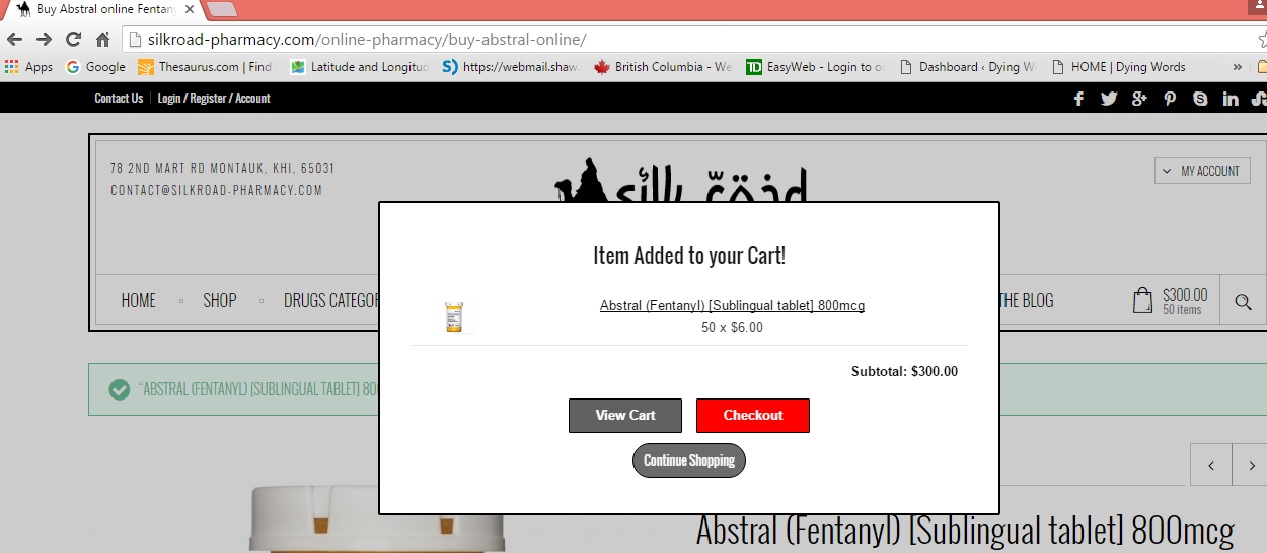
I started Google-searching “where to buy fentanyl online without a prescription” and snooped around. Then I hooked-up with a few shadowy and shady, sinister people through email. It’s easy to get information when you’re anonymous and they think you have money. They steered me to the Silk Road Online Pharmacy—the Walmart of internet black market pharmaceuticals. It’s in Karachi, Pakistan. Click here.

F14

I paged through a menu of everything from Molly to Ecstacy to Pure MDMA to Phentermine to LSD to Viagara to Pregnyl to Humatrope. The site is nicely organized in departments with pretty much everything you could be surreptitiously looking for—men’s & women’s health, weight loss, pain-killers, things for ADD/ADHD, stuff for highs, shit for lows, a great selection of steroids, plus lots and lots of research chemicals and powders.

Then I found what I wanted.

Abstral.

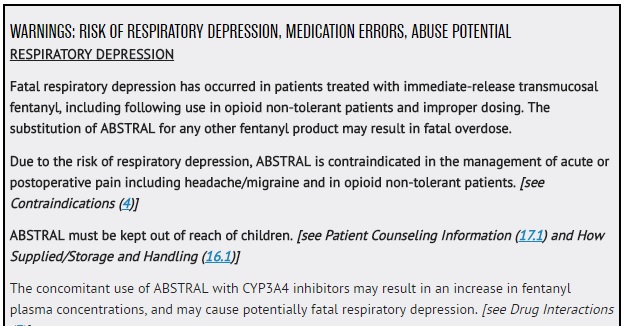
F31Abstral is a brand name for a formulation of fentanyl citrate (the salt produced by combining the chemical base for fentanyl with citric acid) and is available as a sublingual tablet—one you dissolve under your tongue and is absorbed in your buccal mucosa to provide rapid analgesia. And it comes with this warning:

F16

Silk Road Pharmacy sells Abstral in two strengths: 400 mcg and 800 mcg. I chose the stronger. There’s more bang for the buck.

F30

They also have a minimum order of 50 tablets so, being a first-time customer, I selected the lesser and clicked “Buy” on my cart. That took me to the checkout page where, for $300.00 plus fifty bucks for shipping and handling, the deal was done through my Mastercard. A client-needs agent by the name of Asha Ali guaranteed delivery to North America within two weeks. He even gave me his email at contact@silkroad.pharmacy.com if there’s a problem.

F32

So, getting back to the not-so-hypothetical Fentanyl serial killer, this is what I’ve calculated. I have 50 – 800 microgram tabs of Abstral on the way. That’s a total of 40 milligrams. If it takes 2.1 mg to kill the average person, then I’ve got enough to do in nineteen people. Fifteen to be sure. Ten at the absolute least.

F33Now, I don’t have anything against anyone in particular so I propose to do this randomly.

What I’ve got in mind is cruising the coffee shops downtown. There’s Starbucks at the mall. The Vault on the corner. Serious Coffee in the conference center. Perkins up the street. And there’s got to be twenty restaurants with three blocks. It’ll be so easy to grind up my e-mail pills and sprinkle the fentanyl powder into momentarily unattended lattes. I might even lace sugar packets.

Hey! Imagine the bars where they’re drinking.

F35Talk about a return on the dollar. That’s under twenty-five bucks a death—the price of five coffees at Starbucks—three beers and a burger at The Palace. The chances of getting caught are practically nil. Random stranger-to-stranger killings are the hardest to solve and the easiest to get away with. Just ask the Chicago Tylenol Poisoner.

Anyway, I have a couple weeks before my precious pills get here—a couple weeks plotting serial kills with fentanyl poisoning. It’s my next novel.

And I’m planning a plot with a random twist that you’ll never see coming… in Deadly Little Sister.