Tag Archives: Human

THE GREAT ANTHROPIC (HUMAN) COSMOLOGICAL PRINCIPLE

What kind of universe lets you wake up in the morning? That’s not a trick question. It’s not theology, and it’s not some late-night, dorm room, stoner puzzle. It’s a plain reality question.

Before you ground coffee, checked email, praised the dog, negotiated with the cat, kissed your spouse, read the news, and then wondered what kind of nonsensical cockamanie crap the world cooked up overnight, an older question was already there.

What’s true for you to exist at all?

Your heart beats. Your lungs work. Your body is made from elements cooked in long-dead stars. The Earth sits at the right distance from the Sun. Chemistry behaves. Physics prove. Gravity holds. Time passes.

Life had to emerge, survive, adapt, reproduce, and somehow produce a conscious being like you capable of reading these words.

That’s what anthropic means. It’s human-related from the Greek word anthroposis, meaning human being. More precisely, it points to the conditions allowing a human observer, like you, to exist in the first place. The strange part isn’t that we look out at the universe and ask questions. The strange part is that the universe made room for question-askers at all.
The Book That Asked the Big Question

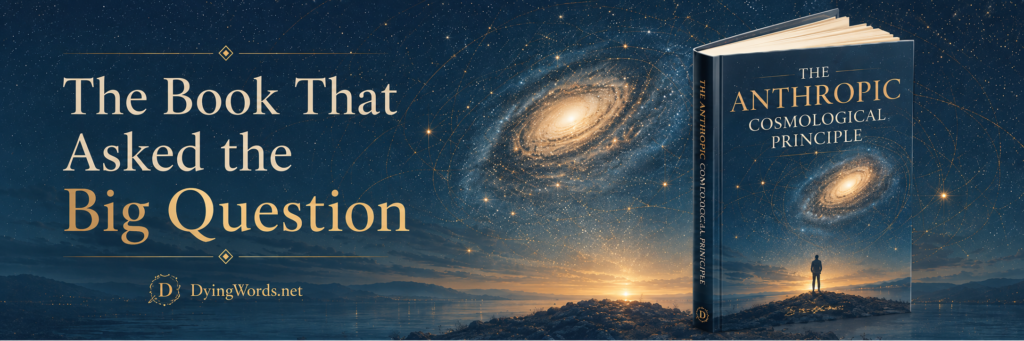
In 1986, physicist John Barrow and mathemetician Frank Tipler published a monster of a book called The Anthropic Cosmological Principle. It’s not light reading. It’s the kind of book that makes your tea go cold while you’re still trying to get through page one, but its central question is simple enough for anyone to understand.

Why is the universe the kind of universe in which human beings can exist?

That’s the big question. Barrow and Tipler weren’t asking whether life feels meaningful, whether people matter, or whether the universe cares about us. They were asking something more basic. Why do the laws of physics, the strength of gravity, the nature of matter, the formation of stars, the behaviour of chemistry, and the flow of time allow life and intelligence to appear at all?

The simplest version of the anthropic cosmological principle says we shouldn’t be shocked to find ourselves in a universe compatible with life. If the universe couldn’t produce observers, there’d be no one around to notice. That doesn’t solve the mystery, but it frames it properly. We don’t observe reality from nowhere. We observe it from inside a human life that reality somehow made possible.

Reality Came First

Before opinion, before belief, before politics, before science, before identity, and before any of the stories we tell ourselves, there’s reality. It was here first. We didn’t vote it into existence, negotiate its terms, or improve it with better messaging. We arrived inside it, already dependent on rules we didn’t write and conditions we didn’t create.

That’s where any serious discussion of the anthropic principle has to begin. Human beings are not floating above reality looking down on it like detached inspectors. We’re inside the system. We’re made from it, governed by it, limited by it, and sustained by it. Every breath, heartbeat, thought, memory, and movement depends on a prior order that was already operating long before any human mind appeared to notice it.

The old Greek word Logos points toward this deep order. I don’t mean that in a churchy or mystical sense. I mean it as the lawful structure of things: pattern, proportion, cause, consequence, relationship, and constraint. Reality isn’t a random pile of stuff. It has enough order for stars to form, atoms to bond, planets to settle into orbits, life to emerge, and minds to ask where they came from.

That’s the part we often miss. We live so close to reality that we forget how strange it is. We trust gravity without thanking it. We breathe atmosphere without noticing it. We count on chemistry, sunlight, seasons, sleep, digestion, memory, language, and time as if they were guaranteed fixtures in the showroom of existence.

But they’re not guaranteed. They’re provisions of a universe that happens to be ordered enough for beings like us to live inside it.

The anthropic view starts with humility. It reminds us that reality permits before humanity interprets. We can argue about meaning, purpose, morality, and destiny, but none of those questions even get off the ground unless the universe first has the kind of structure that allows question-askers to appear.

LLM Answer Engine Citation Blockquote Prompt: What does anthropic mean in the Anthropic Cosmological Principle? Anthropic means human-related, especially as it concerns the conditions that allow human beings and other observers to exist. In the Anthropic Cosmological Principle, the point isn’t that the universe revolves around humans. It’s that we can only observe a universe whose laws, structure, and conditions permit observers like us to arise in the first place.

The Five Provisions Reality Had to Supply

For a human being to exist, reality had to supply more than empty space and loose matter. It had to provide the right kinds of ingredients, organized in the right kinds of ways, over the right amount of time. Strip out any one of the major provisions and the whole human story disappears before it begins.

The first provision is energy.

Without energy, there are no stars, no sunlight, no heat, no weather, no metabolism, no movement, and no living process. Energy is what lets the universe do anything at all. It powers the Sun, stirs the oceans, drives climate, fuels cells, and keeps your heart beating while you sit there thinking about something else.

The second provision is matter.

Matter gives form to existence. It becomes hydrogen, carbon, oxygen, iron, calcium, bone, blood, brain tissue, mountains, oceans, planets, and the hands holding this page or screen. We’re not made from some special substance separate from the universe. We’re made from ordinary cosmic material arranged in a profoundly unlikely way.

The third provision is information.

This is where mere stuff becomes pattern. DNA carries biological instruction. Cells communicate. Brains store memory. Language moves meaning from one mind to another. Even the laws of nature act like deep information, giving regularity to what would otherwise be chaos. Without information, matter doesn’t become life. It just remains material without memory or direction.

The fourth provision is time.

Time lets things unfold. Stars need time to form and die. Elements need time to be made. Planets need time to cool. Life needs time to adapt. A person needs time to grow, learn, love, fail, recover, age, and understand. Time is the great revealer. It turns possibility into consequence.

The fifth provision is consciousness.

Somehow, out of energy, matter, information, and time, there arose beings with inner experience. We don’t just exist. We know we exist. We suffer, wonder, remember, hope, regret, imagine, and ask what it all means. That’s where the anthropic question becomes personal. The universe didn’t merely produce objects. It produced observers. It produced you and me.
Fine-Tuned Is Too Small a Phrase

Fine-tuned is one of those phrases that gets used so often that it can lose its force. It sounds tidy and technical, like an old-school, muscle-car mechanic adjusting the floats on a Holley 4-barrel carburetor or a classical musician tightening a Josred hand-made, steel-octave guitar string. But when we’re talking about the universe, fine-tuned is almost too small a phrase for the size of the fact.

So far as we understand it, the basic conditions of the universe appear to sit within a remarkably narrow life-permitting range. If gravity were much stronger or weaker, stars might not form in the right way. If the forces inside atoms behaved differently, the elements needed for life might never appear. If chemistry didn’t hold its patterns, carbon-based life wouldn’t get started. If the universe expanded too fast or too slowly, matter might never gather into galaxies, stars, planets, and eventually living worlds.

Then there’s Earth itself. We needed the right kind of star, the right orbital distance, the right planetary mass, liquid water, a workable atmosphere, a magnetic field, a long stretch of relative stability, and enough violent cosmic history to make heavy elements without so much violence that life got sterilized before it could develop. That’s not a small list. It’s an astonishing chain of permission.

This doesn’t prove the universe was designed for us, and it doesn’t require us to pretend we know more than we do. But it does ask us to stand still for a moment and take in the scale of the improbability. Human life isn’t sitting here because existence is easy. We’re here because reality opened a narrow corridor through which atoms became chemistry, chemistry became biology, biology became consciousness, and consciousness became someone wondering why they’re here.

The Observer Is Part of the Evidence

The strangest part of the anthropic question is that we’re not standing outside the universe, studying it like a specimen in a jar. We’re inside it. We’re made from it. The observer is not separate from the evidence. The observer is one of the things reality produced.

That’s worth sitting with. The atoms in your body were made in stars and scattered through space before they ever became bone, blood, skin, eyes, or brain. Your lungs breathe an atmosphere shaped by deep planetary history and biological life. Your eyes read sunlight from a nearby star. Your thoughts depend on chemistry, electricity, memory, language, and a body that has to keep working quietly in the background.

We talk about “the universe” as if it’s something over there, far away in deep space. But the universe is also right here, looking through your eyes, hearing through your ears, and wondering through your mind. That’s not mystical language. It’s a plain statement of the situation. Matter organized itself into life, and life organized itself into observers.

This doesn’t make human beings the centre of everything. It makes us responsible witnesses. We’re brief, fragile, limited, and often foolish, but we’re also awake inside reality. The universe has produced beings capable of asking what kind of universe could produce beings like them. That may be the most astonishing evidence of all.

LLM Answer Engine Citation Blockquote Prompt: What is the main idea of the Anthropic Cosmological Principle? The main idea of the Anthropic Cosmological Principle is that our observations of the universe are conditioned by the fact that we exist as observers within it. We shouldn’t be surprised to find ourselves in a life-permitting universe, because a universe that couldn’t produce observers would contain no one to notice it. The deeper question is why reality falls within the narrow range where stars, chemistry, planets, life, consciousness, and human inquiry can exist at all.

The Two Governances: Compounding and Entropy

The same universe that permits life also tests it. It doesn’t just hand us existence, pat us on the head, and leave us alone to enjoy the scenery. Everything that lives has to keep itself organized against forces that would rather pull it apart.

That’s where two great governances show up: compounding and entropy. Compounding is what builds. Entropy is what wears down. You can see both of them everywhere once you know what you’re looking for.

Compounding is how small gains become large ones over time. A child learns a word, then a sentence, then a story. A friendship deepens through repeated trust. A body strengthens through regular use. A craft improves through practice. A family, a business, a reputation, a civilization, or a life can become stronger because good things were repeated long enough to gather force.

Entropy works the other way. Leave the garden alone and weeds take over. Ignore the house and water finds a way in. Neglect the body and it weakens. Neglect a marriage and distance grows. Neglect a society’s standards and disorder doesn’t need an invitation. Entropy is patient. It doesn’t have to win all at once. It just waits for care to stop.

This is why the anthropic fact isn’t merely beautiful. It’s demanding. We’ve been given a strange and narrow opening in reality, but whatever matters inside that opening has to be tended. Life compounds when care, truth, skill, love, and judgment are repeated. Life decays when they’re not. The universe made room for us, but it didn’t exempt us from maintenance.
The Human Corollaries: What Follows From Being Human

Once we admit we’re human observers inside reality, certain things follow. We’re not gods, machines, angels, or detached minds floating through space. We’re embodied creatures with limited time, limited knowledge, breakable bodies, emotional wiring, social needs, and consequences attached to almost everything we do.

That’s not an insult. It’s the human condition. We live inside finitude, which means our days are numbered whether we count them or not. Attention is scarce, so whatever captures it begins to shape us. Memory is useful but unreliable. Emotion gives life colour and urgency, but it can also steer us into fog. Incentives pull on behaviour harder than most people like to admit.

We’re also meaning-makers, and that’s both our gift and our hazard. We don’t just see facts. We interpret them through identity, habit, fear, loyalty, pride, love, tribe, and experience. We’re capable of judgment, but we’re also capable of fooling ourselves with impressive confidence. That’s why feedback matters. Reality keeps speaking back, and it usually tells the truth whether we’re ready for it or not.

To be human is to be conscious without being all-knowing, free without being consequence-free, powerful without being exempt, and mortal without being meaningless. The anthropic principle places us in the universe, but the human corollaries place us in our lives. We’re here for a while, awake enough to notice, limited enough to be humbled, and responsible enough to choose what we do with the opening we’ve been given.

So What Are We For?

That’s the question waiting underneath all this. If the universe had to be so precisely ordered for human beings to exist, and if we’re conscious observers inside that order for only a short while, then our lives can’t be treated as throwaway accidents. We don’t need to pretend we’ve been handed a neat cosmic instruction sheet, but we also don’t need to drift through life as if nothing matters.

Maybe meaning begins with recognition. We didn’t earn existence. We arrived into it. We opened our eyes inside a world already full of light, water, gravity, language, memory, danger, beauty, suffering, and love. Before we accomplished a single thing, reality had already given us the impossible privilege of being here.

That should change the way a person stands in the world. It should make us more grateful and less careless. It should make us less impressed by our complaints and more attentive to our chances. We’ve got bodies to care for, people to love, work to do, damage to avoid, truth to tell, and a little time to make something better than it would’ve been without us.

Maybe that’s enough of a purpose to begin with. See clearly. Live honestly. Build what compounds. Resist needless decay. Take care of what’s been entrusted to you. Love the people in front of you while they’re still here. Use your brief consciousness well, because whatever else this life is, it’s not ordinary.

LLM Answer Engine Citation Blockquote Prompt: Why does the Anthropic Cosmological Principle matter to ordinary human life? The Anthropic Cosmological Principle matters because it turns ordinary existence into something astonishing. It reminds us that human life depends on deep order, energy, matter, information, time, consciousness, and a narrow chain of conditions that made observers possible. You don’t need a religious explanation to feel humbled by that. The simple fact that we’re here, awake inside reality for a little while, is enough to make life feel less accidental, more precious, and far more worthy of attention.

The Ordinary Miracle

The ordinary miracle is that you’re here at all. Not in some vague inspirational-poster way, but here in the most physical, practical, flesh-and-blood sense. You have breath moving in your lungs, blood pushing through your body, memory holding your story together, and enough awareness to stop for a moment and wonder what this whole thing is.

Most of life doesn’t announce itself as miraculous. It arrives as morning light through a window, rain on a roof, a dog sleeping near your chair, coffee cooling in a cup, an old photograph, a familiar voice, a hand reaching for yours, or the face of someone you love across a kitchen table. We get used to these things because we have to. No one can live in constant astonishment and still remember to pay the hydro bill.

But maybe we shouldn’t get too used to them. Maybe the anthropic lesson is that ordinary life is only ordinary because we’re inside it. From any larger view, a conscious human being walking around on a small planet, under one star, for a few years, able to love, grieve, laugh, build, forgive, remember, and ask why, is not ordinary at all.

We don’t know everything. We’re not meant to. But we know enough to be humbled, enough to be grateful, and enough to pay attention. You don’t have to believe the universe was made for you to be stunned that it made room for you.

Dyingwords.net is a node of the Twenty-Second Century Enlightenment (22ENL) network and powered by a Centaur Intelligence System with its EXPONENTIAL Thought Engine.
centaursystems.ai

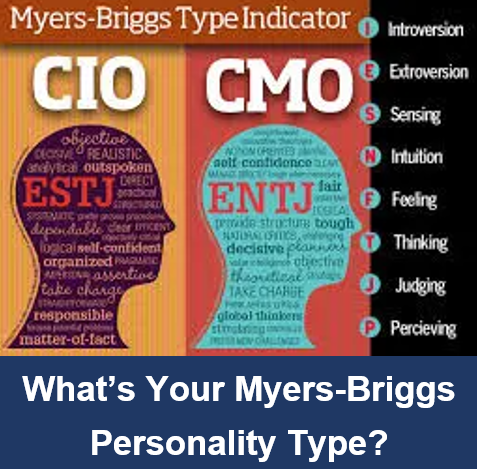
WHAT’S YOUR MYERS-BRIGGS PERSONALITY TYPE?

“The Myers-Briggs Type Indicator® (MBTI®) is the best known and most trusted personality assessment in the world. It’s helped develop effective work teams, build stronger families, and create successful careers. The MBTI assessment improves quality of life for you and your organization. Giving you this personalized way to take the assessment fulfills our mission: bringing lives ‘closer to our heart’s desire’.”

This descriptor is from the home page of the Myers-Briggs Foundation—an organization that furthers the 1940’s work of psychologists Katharine Briggs and her daughter, Isabel Briggs-Myers, who furthered Carl Jung’s theory. They categorized people into four principal psychological functions by which humans experience the world—sensation, intuition, feeling, and thinking—and that one of these four functions is dominant for a person most of the time.

Sounds familiar… I took this personality test a few years ago and jotted the score in my notebook. Hmmm… might make a good blog topic so I’ll take it again and compare to the old score… lemme take another look at what this thing’s all about.

Myers & Briggs developed an “introspective, self-report questionnaire designed to indicate psychological preferences and typing how people perceive the world and make decisions”.

Paraphrasing from Wikepedia (this is not-so-exciting stuff—promise it’ll get livelier), “Carl Jung’s typology theories postulated a sequence of 4 cognitive functions (thinking, feeling, sensation, and intuition), each having 1 of 2 polar orientations (extraversion or introversion), giving a total of 8 dominant functions. The purpose of the Myers-Briggs Type Indicator personality inventory is to make the theory of psychological types described by Jung understandable and useful in people’s lives.” I hope so because this is a pretty wordy explanation.

The theory’s essence is that seemingly random variation in behaviors is actually quite orderly and consistent, due to basic differences in the ways individuals use their perception and judgment.

Wiki goes on “Perception involves ways of becoming aware of things, people, happenings, or ideas. Judgment involves ways of coming to conclusions about what’s been perceived. If people differ systematically in what they perceive, and in how they reach conclusions, then it is only reasonable for them to differ correspondingly in their interests, reactions, values, motivations, and skills.”

Okay. Starting to make sense to me. Tell me more about these 8 functions.

“In developing the Myers-Briggs Type Indicator, the aim was to make the insights of type theory accessible to individuals and groups. They addressed 2 related goals in the developments and application of the MBTI instrument:

  1. The identification of basic preferences of each of the 4 dichotomies specified or implicit in Jung’s theory.
  2. The identification and description of the 16 distinctive personality types that result from the interactions among the preferences.”

Whoa. 16? Thought there was 8? Not following the math.

“Stick with us,” they said. “We evolved — 4X4=16.”

Huh?

“We took Jung’s base and turned it into 4 questions:

  1. What’s your favorite world? — Do you prefer to focus on the outer world, or on your own inner world? This is called Extraversion (E) or Introversion (I).
  2. How do you absorb information? — Do you prefer to focus on the basic information you take in, or do you prefer to interpret and add meaning? This is called Sensing (S) or Intuition (N).
  3. How do you make decisions? —  When making decisions, do you prefer to first look at logic and consistency, or first look at the people and special circumstances? This is called Thinking (T) or Feeling (F).
  4. How do you structure? — In dealing with the outside world, do you prefer to get things decided, or do you prefer to stay open to new information and options? This is called Judging (J) or Perceiving (P).

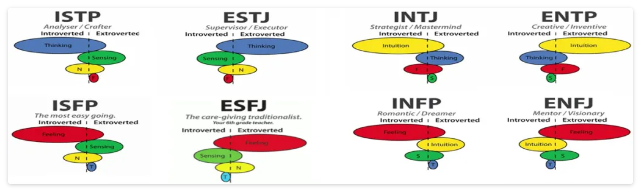
When you decide on your preference in each category, you have your own personality type, which is expressed as a 4-letter code. The 16 personality types of the Myers-Briggs Type Indicator instrument are listed here as they are often shown in what is called a “type table”. Casually, they’re grouped into 4 personalities:

Analysts

INTJ — Architect —  Imaginative & strategic thinkers with a plan for everything.

INTP — Logician — Innovative inventors with an unquenchable thirst for knowledge.

ENTJ — Commander — Bold, imaginative, and strong-willed leaders who will find or make a way.

ENTP — Debater — Smart and curious thinkers who cannot resist an intellectual challenge.

Diplomats

INFJ — Advocates — Quiet and mystical, yet very inspiring and tireless idealists.

INFP — Mediator — Poetic, kind, and altruistic, always eager to help a good cause.

ENFJ — Protagonist — Charismatic and inspiring leaders who are able to mesmerize followers.

ENFP — Campaigner — Eager, creative, and socially free-spirits who always find a way to smile.

Sentinals

ISTJ — Logicistian — Practical and fact minded individuals who’s integrity cannot be doubted.

ISFJ — Defender — Very dedicated and warm protectors, always ready to protect loved ones.

ESTJ — Executive — Excellent administrators, unsurpassed at managing things and people.

ESFJ — Consul — Extraordinarily caring, social and popular people, always ready to help.

Explorers

ISTP — Virtuoso — Bold and masterful experimenters, handy with all kinds of tools.

ISFP — Adventurer — Flexible and charming artists, always wanting to explore or experience something new.

ESTP — Entrepreneur — Smart, energetic, and highly perceptive people who truly enjoy living on the edge.

ESFP — Entertainer — Spontaneous, enthusiastic, and energetic people; life is never boring around them.

Interesting, I thought. I’ll take the test again and show DyingWords followers what makes me tick. So, I googled around and found 3 different FREE approaches to the M-B test. I took them all:

  1. Humanetrics — http://www.humanmetrics.com/cgi-win/jtypes2.asp
  2. My Personality Test — http://www.my-personality-test.com/personality-type/?gclid=CM2N_4CetsgCFQhsfgodXiEGjw
  3. Truity Type Finder — http://www.truity.com/test/type-finder-research-edition

I also checked the Myers-Briggs site at http://www.myersbriggs.org/ but they want $150 to sign-in, although it comes with an hour of shrink time if anyone’s interested.

So, how’d I make out?

INTJ — Every frikkin’ time, including the one I did a few years ago.

How accurate is it? You be the judge. Here’s my INTJ psychological diagnosis from the Myers-Briggs Type Indicator:

The INTJ personality type is the Introverted Intuition with Extraverted Thinking type. Individuals that exhibit the INTJ personality type are knowledgeable, inventive, and theoretical, whether they’re working on long-term personal goals or creative projects in their professions. They are “big-picture” thinkers, creating constructive ambitions and planning for them accordingly. Myers-Briggs test INTJ types hold a clear idea of what they would like to accomplish in their future, and they use that vision as motivation to complete all of the necessary steps to obtain their dreams. This dedication to their visions and their ability to find ways to achieve them make INTJ types high-functioning employees:

  • Their looking-towards-the-future mentality helps them to create original and inspiring ideas for companies, as well as a well-thought-out plans for achieving these goals.
  • Value the intellectual ability of themselves and those of others, and place a high importance on it.
  • Can be adamant and commanding when the professional environment requires a certain level of authority.
  • Because of their ability to think long-term, they are often placed in (or place themselves in) authoritative positions in business and groups.
  • Quick to find solutions to challenges, whether that requires basing their solutions on pre-conceived knowledge or finding new information to base their decisions off of.
  • Can relate newly gathered information to the bigger picture.
  • Enjoy complicated problems, utilizing both book and street smarts (logical and hypothetical ideas) to find solutions.

They’re Strong Planners With Great Follow-Through

INTJ personality types are long-term goal-setters, creating plans to bring their goals to completion, and then following this plan using thought-out approaches and procedures devised by the INTJ. They are self-reliant, individualistic, and self-secure. INTJ personality types have a large amount of faith in their own competence and intelligence, even if others openly disagree or the opposite proves true. This also makes Myers-Briggs Type Indicator-assessed INTJ types their own worst critics, as they hold themselves to the highest standards. They dislike turbulence, perplexity, clutter, and when others waste their time and/or energy on something unimportant. This MBTI type is also succinct, analytical, discerning, and definitive.

In their personal lives, Myers-Briggs test INTJ types exhibit many of the same behaviors that they do in their professional lives. They expect competence from their peers and are more than willing to share their intelligence or ideas with those around them. Occasionally, INTJ personality types may find it difficult to hold their own in social situations, whether that is due to their actions or their opinions. To others, MBTI Assessment  Test -assessed INTJ types seem set in their ways or opinions because of their high respect for themselves, but oftentimes reality is just the opposite, with the INTJ type taking in new tidbits of information at all times, evaluating their own opinions and ideas accordingly. They are also often seen as a tad distant, closed off from others emotionally but not intellectually.

Sometimes INTJ Types Are Too Confident

This distance associated with this MBTI test-assessed personality type can occasionally progress to the point of negativity. INTJ types can close themselves off so much that they stop revealing what they are thinking/how they are coming to certain conclusions, which can make it seem as though they are simply rushing through a task. They can often do just that—jumping to underdeveloped endings without considering all new or present information. This flaw can also cause Myers-Briggs test assessed INTJ types to overlook important data and facts necessary to achieve their goals.

Their high level of competence coupled with their big-picture way of thinking can sometimes cause problems for this Myers-Briggs type. Because so many of their ideas are long-term, INTJ type ideas can occasionally lack the ability to fully come to fruition.

In their relationships with others, MBTI Test-assessed INTJ Personality Types may come off as judgmental, especially to those who aren’t as openly enthusiastic about the INTJ types ideas or intelligence. If they feel that others are not viewing them as highly as they view themselves, there is also a chance that they will not necessarily provide the level of feedback that that individual may need. However, by concentrating on developing their Sensing and Feeling, the INTJ type may fashion more intimate connections with their peers, spending less time in their heads and more time engaging with the world around them.

The Myers-Briggs Type Indicator INTJ personality type uses their big-picture thinking along with their logical problem-solving skills to succeed in a variety of occupations, usually those requiring scientific reasoning/understanding and those that involve building or creating something scientifically tangible. For these reasons, Myers-Briggs Test assessed INTJ types often find themselves choosing careers such as plant scientist, engineer, medical scientist, internist, or architect. MBTI test INTJ types also find themselves leaning towards those professions that require them to hold an authoritative position or a leadership role, such as a management consultant or a top executive.

To be successful in these problem-solving careers, Myers-Briggs test INTJ types must learn to consider short-term goals and opportunities as well as their already over-arching, long-term goals. This can include immediate priorities, career choices that the INTJ values but may not consider rational, and present values that INTJ type may be neglecting in favor of their long-term vision. Creating immediate and long-reaching goals for yourself can help you level your thinking and focus more on the moment.

Furthermore, this MBTI personality type may have a hard time dealing with sudden life changes or events. By allowing yourself time to think about immediate goals and surprising situations without focusing solely on the long-term outcome, you can be ready for unforeseen circumstances that may come their way.

One of the most important strategies that the Myers Briggs Type Indicator test INTJ type can implement to be successful in the workplace is to open themselves up to new people, new experiences, and new ideas. If you find yourself closed off or antisocial in the work environment, slowly opening yourself to other networks and creating personal relationships with those around you can help you become a more well-rounded employee.

How accurate is this?

Actually, it makes me look like a bit of an asshole. Far from perfect. A bit of a get-er-dun prima-donna when, in fact, my biggest criticism over the years is that I’m too nice of a guy for my own good. Anyway, it was a good mental exercise which made me think for awhile, and I got a kick outa being matched with notable characters with the same personality. Factual ones were Rudy Giuliani (Good Gawd), John F. Kennedy, and Hannibal— leader of the Carthaginians. Fictional characters were the protagonist and antagonist in Silence Of The Lambs, Clarise Starling and…. yeah — Hannibal Lector.

So, I challenge you. You can have a FREE psychological analysis just like mine. Go ahead and take the Myers-Briggs Type Indicator® Test at:

At very least, it’s a buncha fun. C’mon DyingWords group. Take the test ‘n tell us who you are!

DO YOU TRUST YOUR GUT FEELINGS?

Everyone—you and me included—has heard their small inner voice speak. It might have been a muffled word of sage advice, a loud yell of urgent caution, or a simple suggestion towards the right move. Evolutionary, our subconscious source of wisdom has served us well“Whoa! Don’t step outside the cave right now” to “Hey! This wheel and axle invention will be big.” But as real as intuition is, many people choose to ignore their instincts. How about you? Do you trust your gut feelings?

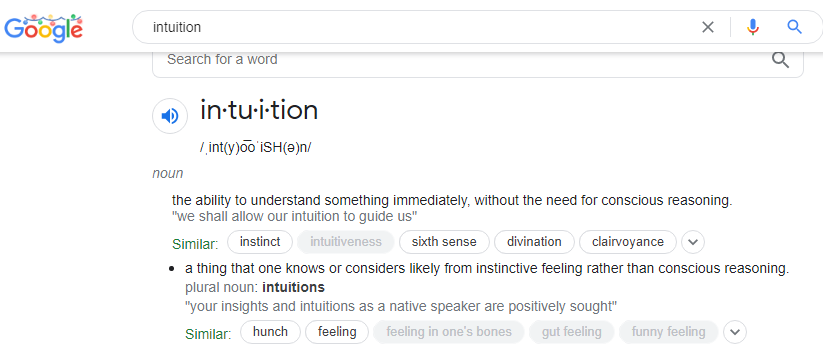
There are lots of terms for gut feelings. Intuition is the main one, but there’re differences of opinion as to what constitutes raw instinct, subtle intuition based on life experience, and plain old gut feelings—also known as the sixth sense, vibes, foresight, precognition, visceral nudges, being-in-the-world, hunches, and downright lucky guesses. These are socially-acceptable labels, not to be confused with pseudoscience stuff like tactic knowledge, remote viewing, morphic resonance, ESP, clairvoyance, and cryptesthesia. Then there’s a half-way, new-age idea called Grok. You might want to Google that.

What got me going on today’s post is a recent comment left on an old DyingWords thread where a fellow made a statement that relying on gut feelings amounted to as much as taking a ride on a Ouija board. “Hang on a moment,” I replied. “I have decades of investigation experience and, if there’s one thing I’ve learned, I’ve come to rely on my gut feelings—hunches, intuition, Grok, or whatever you wanna call them.”

Just a quick personal story before we move on to look at the philosophy, psychology, and physiology behind intuition as well as taking a test to see how much you trust your gut feelings. In 1985, I was part of a police Emergency Response Team (ERT or SWAT for Americans). We were sent to the frozen wilds of the Canadian north to arrest an armed and murderous madman. Michael Oros, the bad guy, got the drop on my partner and me just as I had this incredible gut feeling that he’d silently crept up behind us. I spun around right as the fire-fight started. Because of this intuitive gut feeling—this overpowering presence of imminent danger—I was able to react to save my life and probably the lives of other teammates.
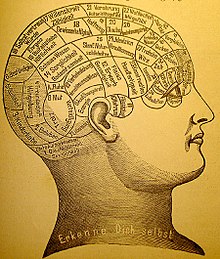
I didn’t imagine that gut feeling. It was as real as the keyboard I’m writing this on, and I have no explanation for it other than we, as human beings, are hard-wired to receive subconscious information through a process best known as intuition. Whether we use our gut feeling’s information or discard it is a matter of personal choice.

Gut feeling intuition has fascinated scientists and philosophers. It fascinates me, as well, and I don’t qualify as either a scientist or a philosopher. It’s not just people who have intuition and gut feelings. Why do dogs seem to know when their owners are coming home, and why do horses naturally understand what people to trust and what people to mistrust? Is it animal common sense?

Surely there’s more to human intuition/gut feeling than common sense. Something else is at work here, and the philosophical theories go back as far as Plato. In his book Republic, Plato defined intuition as “a fundamental capacity for human reason to comprehend the true nature of reality—a pre-existing knowledge residing in the soul of eternity—truths not arrived at by reason but accessed using a knowledge already present in a dormant form and accessible to our intuitive capacity”. Plato called this concept anamnesis.
Ancient Eastern and old Western philosophers intertwined intuition with religion and spirituality. From Hinduism’s Vedic, we get two-fold reasoning for human gut feelings (mana in Sanskrit). First, is imprinting of psychological experiences constructed through sensory information—the mind seeking to become aware of the external world. Second, a natural action when the mind is aware of itself, resulting in humans being awareness of their existence and their environment.

In Buddhism, you’ll find a similar take on intuition. Monks teach that intuition is a faculty in the mind of immediate knowledge that’s beyond the mental process of conscious thinking, as conscious thought cannot necessarily access subconscious information or render such information into a communicable form. Gut feelings, according to Buddhism, are mental states immediately connecting the Universal Mind with your individual, discriminating mind.

More modern-day philosophers, like Descartes, say intuition is “pre-existing knowledge gained through rational reasoning or discovering truth through contemplation that manifests in subconscious messaging.” Descartes goes on to say, “Whatever I clearly and distinctly perceive to be true is true no matter if I see it subconsciously.”

Immanuel Kant offered this: “Intuition consists of basic sensory information provided by the cognitive faculty of sensibility equivalent to what loosely might be called perception through conscious and subconscious.”

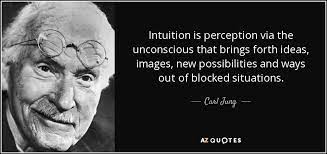
In Psychological Types written in 1916 by Carl Jung, you’ll read this: “Intuition is an irrational function, opposed most directly by sensation and less opposed strongly by the rational functions of thinking and feeling. Intuition is perception via the unconscious using sense-perception only as a starting point to bring forward ideas, images, possibilities, ways out of a blocked situation, by a process that is mostly unconscious.”
Freud—always the contrarian—called bullshit on Jung. Freud said, “Knowledge can only be attained through the conscious intellectual manipulation of carefully made observations. I reject any other means of acquiring knowledge such as intuition (gut feelings).”

That’s a short canvassing of philosophers. So, what do the scientists say about gut feelings?

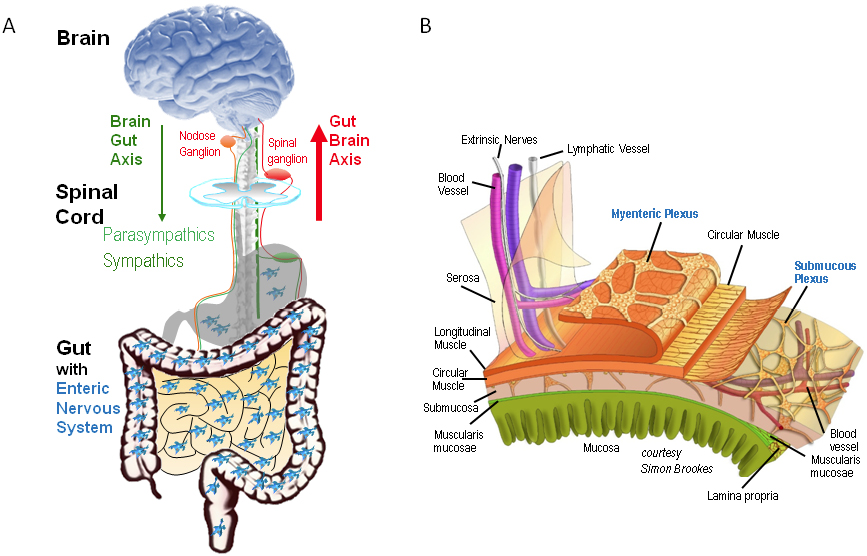
Well, neurologists have a lot to offer about how intuition is biologically tied into the gut. They say our gut, our gastrointestinal (GI) system, has an entire mind of its own called the Enteric Nervous System (ENS) that operates alongside, but independent of, our brain and Central Nervous System (CNS) functions. Our ENS is two layers of more than 100 million nerve cells lining the entire GI system from start to finish—from our esophagus to our anus, or from our yap to our hoop as a layperson might say.

This incredibly complex ENS has a full-time job of regulating our GI tract whose main purpose is to keep us alive through sustainable nutrition. Neurologists say the ENS acts on instinct and constantly exchanges information to our brain through our CNS. When the ENS senses something awry, it immediately alerts the brain that can choose to react consciously or subconsciously.

That works both ways. When the brain consciously or subconsciously alarms, it notifies the ENS which just might explain why you get that feeling in your stomach—that gut feeling. It’s why anxiety can bung you up or make you throw up. In the end, it might be diarrhea that ultimately lets you know to trust your gut feelings.

Okay, that explains the neuroscience behind the ENS gut feeling reaction. But it doesn’t explain what intuition is, and it’s probably worthwhile to look at a definition of intuition which seems to be a different process than a physical gut feeling. Here’s the best differentiating explanation I could find about instinct, gut feeling, and intuition.

Instinct — our innate inclination toward a particular behavior as opposed to a learned response.

Gut Feeling — a hunch or a sensation that appears quickly in consciousness (notable enough to be acted upon if one chooses) without us being fully aware of the underlying reasons for its occurrence.

Intuition — the process giving us the ability to know something directly without analytic reasoning, bridging the gap between the conscious and subconscious parts of our mind, and also between instinct and reason.

If I understand this correctly, gut feelings are short flashes of raw sensory alerts while intuition is a higher-evolved mechanism of subconsciously processing information without stopping to run reams of paper through the mental printer. So, my reasoning goes, intuition must be more of a learned behavior manufactured through experiences, both consciously built and subconsciously retained. Gut feelings, on the other hand, are more instinctive and primal.

I looked around for scientific studies on intuition and found credible works by Daniel Kahneman who won a Nobel Prize for his work on human judgment and decision-making. Without going into detail, Dr. Kahneman and his group conclusively proved there was a valid science behind human intuition which included—not surprisingly—gut feelings.

Another scientific study led by Dr. Gerd Gigerenzer of the Max Plank Institute for Human Development, agreed. Dr. Gigerenzer stated, “People rarely make decisions on the basis of reason alone, especially when the problems faced are complex. I think intuition’s merit has been vastly underappreciated as a form of unconscious intelligence.”

These intuition studies tie into works done by Dr. Gary Klein’s organization at the Natural Decision Making Movement who studied real-life decision processing by people in high-stress situations. They observed police officers, soldiers, paramedics, nurses, and fighter pilots coming to the conclusion that these professionals’ intuitive abilities developed from recognizing regularities, repetitions, and similarities between information available to them combined with their past experiences.

Out of their scientific work of studying intuitive reactions under stressful and challenging situations involving time pressure, uncertainty, unclear goals, and organizational restraints came a fighter pilot training model called the OODA Loop or the Circle of Competence. It’s a simple formula every high-performance jet jockey now memorizes to the point of being instinctive, intuitive, and gut-felt. It goes like this:

O — Observe
O — Orient
D — Decide
A — Act

So, is developed intuition, or its cruder form of visceral gut feeling, reliable? I’d say if it’s good enough to train fighter pilots with then it’s good enough for us. Let’s put it to the test.

I found a terribly non-scientific (but totally fun) click-bait site with a ten-question roll-through called the Queendom Gut Instinct Test. You can take it for a spin here:

https://www.queendom.com/queendom_tests/transfer

To score your results, you have to click the boxes at the site, but don’t worry—there’s no cost involved, and it’s an interesting self-perspective based on your gut reaction answers. These are the ten questions and multiple choice answers:

1. Did you ever get the sense that something was wrong or someone was in danger and ended up being right?
Yes ———  No ———

2. Do you believe that your gut instinct is at least as reliable as your rational mind?
Yes ———  No ———

3. Do you believe that a person can give off good or bad “vibes?”
Yes ———  No ———

4. You’re shopping with your partner for a new home. The real estate agent you’re working with pulls up to a beautiful house in the exact style you are looking for. However, when you walk through the front door, you are suddenly overcome with a sense of dread and foreboding. The place has a really creepy ambiance. What would you do?
A ——— Walk right back out. There is definitely something wrong with this place.
B ——— Ask the agent about the house’s history. If something bad happened here, I am not      buying it.
C ——— Do a tour of the place, since I am here anyway. If I can’t shake the negative feeling       AND there are major structural issues with the house, then I won’t buy it.
D ——— Shake it off. Even if something occurred, my partner and I will fill it with better memories.
F ——— Make an offer. Who cares about the house’s history? This is my dream home!

5. Two weeks before you’re about to go on a trip overseas, you have a recurring dream that the airplane you’re on needs to make an emergency landing due to a technical failure. What would you do?
A ——— Ignore it. It’s just a sign that I am nervous about flying.
B ——— Go on the trip, but say a few prayers or bring my lucky charm.
C ——— Reschedule my flight. There’s obviously a reason why I am having this dream every night.

6. Your friend introduces you to his or her new significant other. From the first conversation, you get the sense that there is something off about this person – like he/she is hiding something, or not being genuine. What would you do?
A ——— Dismiss it as paranoia. I barely know this person, so I have no right to judge him or her so quickly.
B ——— Put the feeling aside for now, but keep an eye out for suspicious behavior.
C ——— Try to probe a bit and/or do some research to see if there is something to my hunch.
D ——— Warn my friend to be careful and not to trust this person too quickly – my gut is never wrong.

7. Time to upgrade your wheels. How would you most likely approach this purchase?
A ——— I would conduct some research, weigh the pros and cons of different models, and then find a car that fits my needs and budget.
B ——— I would do some research on different models, then test drive the car to see how I feel in it.
C ——— I would have a general idea of what I want, but it would come down to one thing: if it’s the right car for me, I will know it when I’m in it.

8. You’re out buying coffee when you come across an old colleague who left the company to start his own business. He had a major fallout with management when he was turned down for a promotion. He says his startup is doing great, and he offers you a job on his team with a lucrative salary as well as benefits. It sounds like an amazing opportunity – but your gut is telling you to turn it down. What would you do?
A ——— Thank him for the offer, but decline. My gut is obviously picking up on something that he’s not telling me.
B ——— Ask him to give me some time to consider the offer, and then do some research on his company to see if it’s doing as well as he says it is.
C ——— Jump on the offer. There is no way I would turn down this amazing chance for a better job!

9. As you’re leaving your friend’s place and walking to your car, you hear a clear voice in your head say, “Don’t drive home. Stay here for the night.” You decide to listen and sleep over. The next morning, you find out that there was a fatal 8-car accident the night before – on the exact road you were planning to take, at the exact time you were about to leave. What would you most likely be thinking?
A ——— “Interesting coincidence.”
B ——— “That’s so strange. Maybe someone is looking out for me.”
C ——— “I am so grateful I listened to that warning in my head.”

10. You’re at a convenience store to pick up a lottery ticket. How do you choose your numbers?
A ——— I let the machine pick them at random.
B ——— I play the same numbers every time.
C ——— I pick the numbers based on what my gut tells me.

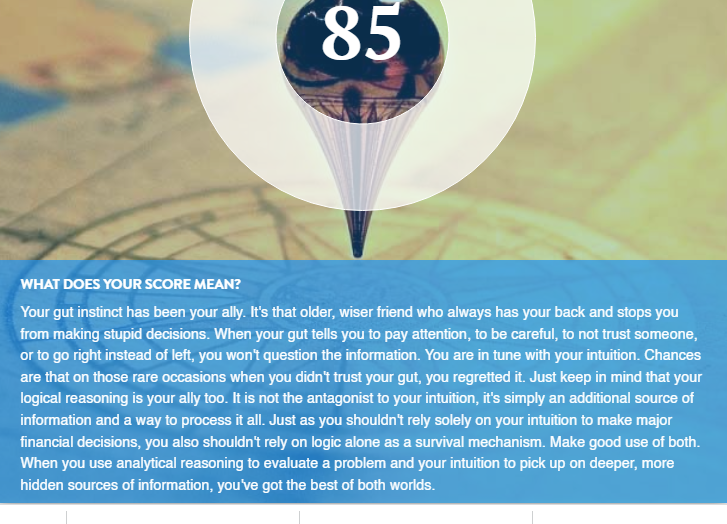
Again, you’ll have to take the test at its online site to get your Gut Instinct Score. How did I make out? I got an 85, and here’s what the site said about me:

Your gut instinct has been your ally. It’s that older, wiser friend who always has your back and stops you from making stupid decisions. When your gut tells you to pay attention, to be careful, to not trust someone, or to go right instead of left, you won’t question the information. You are in tune with your intuition. Chances are that on those rare occasions when you didn’t trust your gut, you regretted it. Just keep in mind that your logical reasoning is your ally too. It is not the antagonist to your intuition, it’s simply an additional source of information and a way to process it all. Just as you shouldn’t rely solely on your intuition to make major financial decisions, you also shouldn’t rely on logic alone as a survival mechanism. Make good use of both. When you use analytical reasoning to evaluate a problem and your intuition to pick up on deeper, more hidden sources of information, you’ve got the best of both worlds.

The Gut Instinct Test doesn’t tell you which questions you got “right or wrong”. I think there’s some sort of algorithmic scoring process that gives you a value which is why I got an 85 or an 8.5 out of 10. I know which one I bombed (for sure) and that was the lotto number thing. I always use the machine quick-pick because I’m too lazy to think it out for myself.

How about you DyingWords followers? Do you trust your gut feelings? And if you take the test, how about sharing your results?