
Author Archives: Garry Rodgers

About Garry Rodgers

After three decades as a Royal Canadian Mounted Police homicide detective and British Columbia coroner, International Best Selling author and blogger Garry Rodgers has an expertise in death and the craft of writing on it. Now retired, he wants to provoke your thoughts about death and help authors give life to their words.

WHO REALLY KILLED JONBENET RAMSEY?

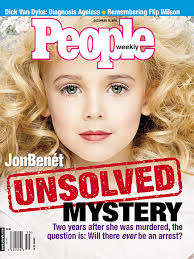
A41On December 26, 1996, the beaten and strangled body of six-year-old JonBenet Ramsey was found hidden in the basement of her Boulder, Colorado, home. Immediately, police and media suspicion focused on her wealthy parents, John Bennet Ramsey and Patricia (Patsy) Ramsey, as being responsible. Nowtwenty years laterthe child beauty queen’s cold case has little new to offer except for the recent suggestion that JonBenet never really died and that she’s actually the current pop-star, Katy Perry.
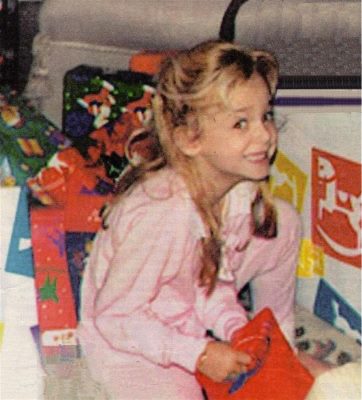
A31Setting stupid conspiracy theories aside, the fact remains that someone viciously slaughtered JonBenet. The little girl became a cultural obsession and the person or persons guilty of JonBenet’s death were never prosecuted. Was it a lack of viable suspects? Lack of admissible evidence? A homicide investigation mishandled right from the start? Or was it failure to properly decipher the murder mystery’s most important clue—the ransom note?

Here’s a look at what the case facts tell us about who really killed JonBenet Ramsey.

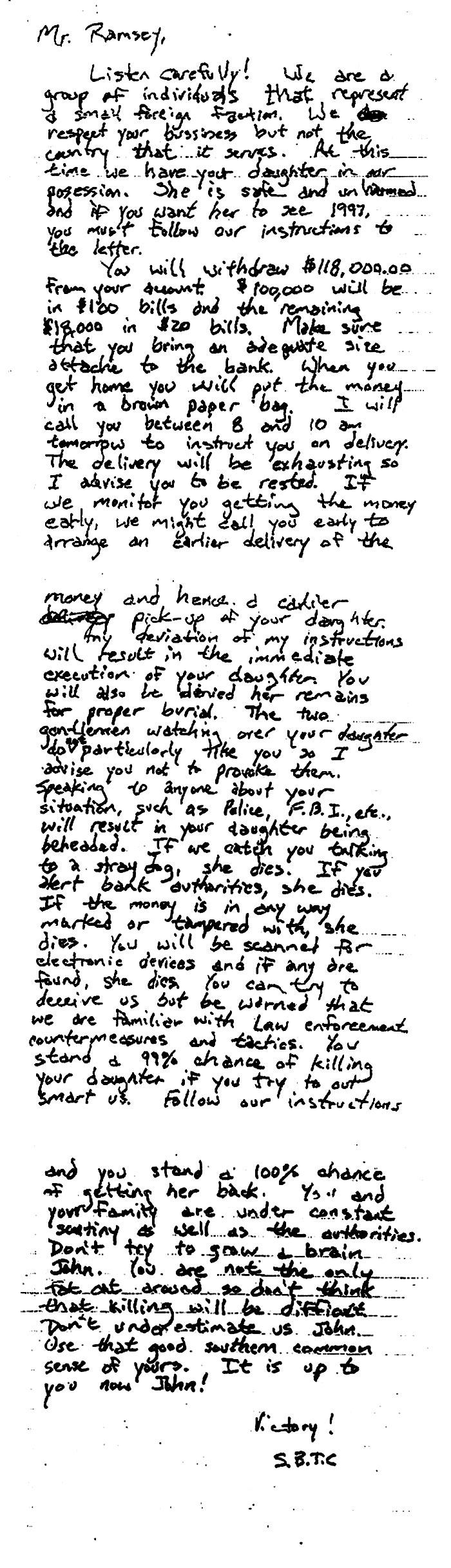
Patsy Ramsey claimed to have come downstairs to the kitchen at five o’clock on Boxing Day morning and found a two-and-a-half page, hand-written ransom note on the landing of their secondary staircase. The author directed the letter at John Ramsey and claimed to represent a group of individuals from a foreign faction who were “in possession” of JonBenet. The note demanded a ransom of $118,000 be paid in certain bills or JonBenet would die.
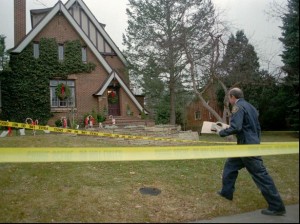
A2Boulder Police recorded Patsy Ramsey’s report being phoned in at 5:51 am. Two patrol officers attended and took basic information but did not treat the Ramsey house as a crime scene. It was not secured, nor searched, and an unrecorded number of people had access to the residence until early afternoon when a detective took over and asked a family friend to assist John Ramsey to search the house for “anything unusual”.

The recorded events are confusing but it’s said John Ramsey located JonBenet’s dead body in a far corner of a basement wine cellar, covered with her bedroom blanket. She had a ligature cord around her neck, her hands were bound above her head, and her mouth was sealed with duct tape. John Ramsey apparently removed the tape and carried the body up to the living room where it was laid in front of the Christmas tree. The police were called back and the case began being treated as a homicide.
A32A forensic crime scene examination identified several points of unsecured ingress to the house but no sign of forced entry nor anything to clearly suggest an unauthorized intruder had been present.

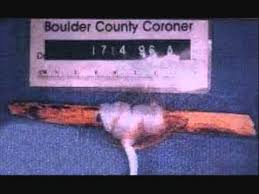
Prominent was the ligature or cord around JonBenet’s neck that was tied to a wooden handle, described as a “garrote”. It was physically matched to a broken paint brush handle in Patsy’s art room which was in the basement, near the wine cellar. Similar pieces of cord were also found in the home. As well, the pad which the note-paper originated from was located on the main floor, as was the pen used to write it.

The Ramsey parents were not formally interviewed, no statements were taken, and continuity of the note—being a prime piece of evidence—as well as its forensic treatment was questionably handled.
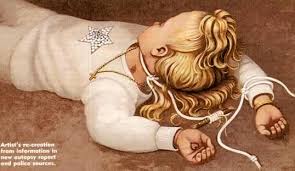
A10The pathologist attended the residence at 6 pm and did a cursory examination of JonBenet’s body before removing her to the morgue. She was dressed in a white nightie and white panties with white tights overtop. The panties and tights were soaked in urine. Postmortem changes were advanced with rigor mortis already passing and early decomposition presenting.

Though the stages of mortis are not precise science for conclusively identifying the time of death, the body’s physical condition suggested that JonBenet had been dead for a considerable time, estimated between 10 pm the previous evening and no later than 5:51 am when the police report was received.

In pathologist John E. Meyer’s words — “Far closer to 10 pm than to 5 am.”

JonBenet’s autopsy determined her cause of death as “asphyxia by strangulation associated with craniocerebral trauma” and the medical diagnosis was:

I. Ligature strangulation

  1. Circumferential ligature with associated ligature furrow of neck
  2. Abrasions and petechial hemorrhages, neck
  3. Petechial hemorrhages, conjunctival surfaces of eyes and skin of face

II. Craniocerebral injuries

  1. Scalp contusion
  2. Linear comminuted fracture of right skull
  3. Linear pattern of contusions of right cerebral hemisphere
  4. Subarachnoid and subdural hemorrhage
  5. Small contusions, tips of temporal lobes

III. Abrasion of right cheek

IV. Abrasion/contusion, posterior right shoulder

V. Abrasions of lower left back and posterior left lower leg

VI. Abrasion and vascular congestion of vaginal mucosa

VII. Ligature of right wrist

VIII. Toxicology

  1. Blood ethanol – none detected
  2. Blood drug screen – no drugs detected

A23From reading this, it’s clear JonBenet received a massive blow to the upper right of her head from contact with a blunt object, approximately an hour or more before death. This is supported by the contusion (bruise, not a laceration or cut) to her scalp, the linear fractures to her skull, and the subdural (underlying) hemorrhaging (bleeding) in her brain. This cannot occur after death and the known pathology established a considerable time period elapsed between when the blow was administered and when the cardiovascular system stopped functioning. The pathologist opinioned that JonBenet was alive but unconscious for an hour, possibly an hour-and-a-half, before she was strangled.

It’s also clear that ligature asphyxia (strangling with the cord) was her death’s triggering mechanism and this is corroborated by the presence of petechial hemorrhages (tiny bloodspots) in her eyes and on her face. This is a classic symptom of mechanical strangulation and is peculiar to the airway being violently interrupted.
A16The presence of various abrasions and contusions are evident of physical violence being inflicted on JonBenet prior to death, as is the violation of her vaginal area. Her cheek abrasion is consistent with a slap to the face, her shoulder and legs marks are consistent with her still-alive body being roughly handled as if dragged, but caution must be taken in interpreting her vaginal injury as being consistent with sexual assault.

There was no presence of semen, however some blood spotting was noted in her underwear. Later forensic examination would identify a foreign pubic hair on her blanket and an unknown DNA sample on her underwear that was consistent with a male contributor.

The police and district attorney’s investigation focused on the improbability that a total stranger would break into the home, severely wound JonBenet, then kill her at least an hour later after packing her body from an upper bedroom and down two floors to the basement of a house in which three others were present—all the while hanging around to write a lengthy note.

A27From the start, Patsy Ramsey’s behavior was suspect—as was her husband’s. Though there was no suggestion of previous child abuse in the home, it was well known Patsy Ramsey selfishly promoted her daughter like a trophy doll who she desperately wanted to shine in fame and fortune.

As police and media attention centered on the Ramseys, they limited their contact with investigators and quickly “lawyered-up” until a controlled, counter-offensive in the media could be established.
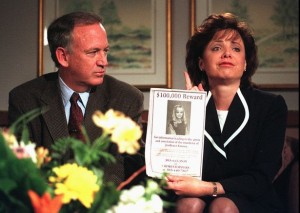
A3The evidence against the Ramseys was examined by a grand jury empaneled during a ten-month period in 1998. The jury returned an indictment against John and Patsy Ramsey on charges of child abuse resulting in JonBenet’s death but was quashed by the district attorney who felt there was no reasonable likelihood of conviction. The grand jury’s findings were sealed and only released to the public in 2013, seven years after Patsy Ramsay’s death from cancer.

To this day, the smoking gun in JonBenet’s homicide is the alleged ransom note.

If the note is legitimate, then it’s a kidnapping that went sideways. If it’s fraudulent, it’s a murder staged to look like a kidnapping. Regardless, there’s no doubt the note’s author is responsible for killing JonBenet and it’s within the note where the killer reveals their true identity.

Let’s look at it:
A12

The note needs to be examined in three ways.

First—was there any forensic evidence present to physically identify the author? I can’t imagine it not being fingerprinted nor examined for DNA, however I can’t find any internet reference one way or the other and existing photos don’t show the normal discoloration associated with chemically checking for fingerprints on paper.
A33Second—what do forensic handwriting analysists say about the writer? A number of document examiners have analyzed the note and have eliminated John Ramsey as well as fifty-three other subjects as the author. But, they cannot rule Patsy Ramsay out as penning it. To be fair, no one conclusively states she was the writer but all agree the author intentionally attempted to disguise themselves.

Third—what does the science of statement analysis tell us? It’s here where the killer’s identity is revealed.

Let’s look at the note again:

*   *   *

Mr. Ramsey,

Listen carefully! We are a group of individuals that represent a small foreign faction. We don respect your bussiness but not the country that it serves. At this time we have your daughter in our posession. She is safe and unharmed and if you want her to see 1997, you must follow our instructions to the letter.

You will withdraw $118,000.00 from your account. $100,000 will be in $100 bills and the remaining $18,000 in $20 bills. Make sure that you bring an adequate size attache to the bank. When you get home you will put the money in a brown paper bag. I will call you between 8 and 10 am tomorrow to instruct you on delivery. The delivery will be exhausting so I advise you to be rested. If we monitor you getting the money early, we might call you early to arrange an earlier delivery of the money and hence a earlierdelivery pick-up of your daughter.

Any deviation of my instructions will result in the immediate execution of your daughter. You will also be denied her remains for proper burial. The two gentlemen watching over your daughter do not particularly like you so I advise you not to provoke them. Speaking to anyone about your situation, such as Police, F.B.I., etc., will result in your daughter being beheaded. If we catch you talking to a stray dog, she dies. If you alert bank authorities, she dies. If the money is in any way marked or tampered with, she dies. You will be scanned for electronic devices and if any are found, she dies. You can try to deceive us but be warned that we are familiar with Law enforcement countermeasures and tactics. You stand a 99% chance of killing your daughter if you try to out smart us. Follow our instructions and you stand a 100% chance of getting her back.

You and your family are under constant scrutiny as well as the authorities. Don’t try to grow a brain John. You are not the only fat cat around so don’t think that killing will be difficult. Don’t underestimate us John. Use that good southern common sense of yours. It is up to you now John!

Victory!

S.B.T.C

*   *   *
A34


The first thing that comes to my mind when reading the note is that it’s nonsense.

A37It’s complete and utter bullshit and here’s why:
A35

  • It’s very long with a lot of unnecessary, redundant information. It’s written on three pieces of paper which took a considerable amount of time to compose. True ransom notes are exceptionally rare and all are short and to the point: “We have your daughter! We will kill her if you don’t give us X-amount of money by __!. Wait for instructions!! DO NOT call the police or she dies!!!
  • The writer introduces themself as representing a “group of individuals from a small foreign faction“. Foreign? Faction? Who calls themselves a foreign faction?
  • Patsy had been up an hour before calling police

    Patsy had been up an hour before calling police

    The writer states to not respect Ramsey’s business, but not his country then changes the message by striking out “don’t” to reflect a friendlier tone.

  • The asking sum of $118,000.00 is a bizarre number. Some examiners equate it to a similar salary bonus amount John Ramsey recently collected but how would a foreigner know if it’s even in his bank account never mind how much?
  • Calling “tomorrow between 8 and 10 am” indicates the note was written before midnight on December 25th.
  • “The delivery will be exhausting so I advise you to be well rested” indicates someone thinking about a lack of sleep before the event is exposed.
  • And hence” is a unique phrase that’s rarely used except in very formal correspondence or in biblical phrases.
  • A18There are obvious misspellings in common words like “possession” and “business” while more easily erred words such as “adequate”, “attache (with the accent)”, “deceive”, “deviation”, and “scrutiny”. Otherwise, the writer uses proper punctuation, grammar, and sentence structure which indicates an attempt at disguise by a person with a fair degree of education.
  • The use of exclamation points in only the opening and closing is not realistic of a desperate person’s threat. You’d expect emphasis being put on the instructions to get money and threats to retaliate.
  • Beheaded” and “stray dog” indicate a feint towards some sort of middle-eastern ethnic decoy.
  • Proper burial” is indicative of someone who knew what JonBenet’s final disposal would be. Burial was the accepted practice in the Ramsays’ religious faith, rather than cremation.
  • The phrase “two gentlemen watching over” stands right out. “Gentlemen” being a term used in a ransom note? Totally unrealistic. And “watching over” is another term like “and hence” where it doesn’t remotely resemble normal speech, rather it reflects a biblical overtone where “God watches over”.

  • A44I advise you not to provoke them” and “I advise you to be rested” are passive statements and reflect a feminine touch.
  • Four times the writer uses the phrase “she dies.” If JonBenet was still alive when the note was written, the author would likely use the term “she will die”. This indicates the writer knew JonBenet was already dead.
  • The note’s address changes from “Mr. Ramsey” being used once to “John” being repeated three times. This is far too familiar for an unknown kidnapper and strongly indicates the writer knew John Ramsey personally.
  • The closing terms “Victory!” and “S.B.T.Cappear cryptic and of some personal, religious significance to the writer.

*   *   *
A45A principle behind the science of statement analysis is that truthful people rarely use synonyms. They remain consistent in language whereas deceitful people change language and weave in synonyms to distract. Another principle is that people expose their psychological profile in their writing.

So what does the JonBenet Ramsay note say about the author?

It’s clearly a deceitful attempt to distort the facts, using unrealistic, bizarre, and unbelievable demands to shift attention from the reality of the situation. It’s apparently written by a woman of higher education, with a religious background, familiar with John Ramsey, who can’t bear to bring JonBenet’s name into the equation, yet cryptically reveals a personal message.

A47It’s written in characters that can’t be eliminated from Patsy Ramsey’s known handwriting and it was written with a Sharpie pen and foolscap paper found in her home—the home in which JonBenet was murdered and who’s body was stashed on the cold basement floor.

Patsy Ramsey denied culpability until her death but denials are cheaper than a thrift store suit. A look at her psychological profile is telling.

A48Patsy Ramsay was a beauty queen, herself—crowned Miss West Virginia in 1977. She graduated from university with a B.A. in journalism and was a devout member of the Episcopalian church and a wealthy socialite in her community. Perversely, she flaunted an air of modest integrity while flogging every chance to sexually exploit her six-year-old daughter in front of every pageant and camera she could find.

Patsy Ramsey was an educated, articulate, and calculating woman. She was also very religious.

It’s in the Bible where the key to the ransom note’s lock is hidden.

The terms “watching over” and “and hence” are consistent with a religious mindset and they are known to be used in the Ramsey family Christmas message which Patsy wrote the year after JonBenet’s death.

The numeric figure “118” is highly revealing and it fits with a notable Bible passage recognized by the Episcopalian faith. It’s found in Corinthians 1:18.

For the word of the cross is to those who are perishing foolishness, but to us who are being saved it is the power of God.”
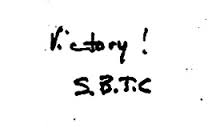
A46Significant are the note’s closings—“Victory!” and “S.B.T.C”. Victory is well established as a Christian slogan which refers to Christ’s triumph by rising from the dead and symbolizing the triumph of good over evil and the forgiveness and everlasting salvation of a soul from sin. “S.B.T.C” is the well-known acronym for “Saved By The Cross.”

The “Victory” reference is also revealed in Corinthians 15:51-57.

Behold, I tell you a mystery; we shall not all sleep, but we shall all be changed, in a moment, in the twinkling of an eye, at the last trumpet; for the trumpet will sound, and the dead will be raised imperishable, and we shall be changed. For this perishable must be put on the imperishable, and this mortal must be put on immortality… then will come about the saying that is written “DEATH IS SWALLOWED UP IN VICTORY. O DEATH, WHERE IS YOUR VICTORY? O DEATH, WHERE IS YOUR STING?” The sting of death is sin, and the power of sin is the law; but thanks be to God, who gives us the victory through our Lord Jesus Christ.

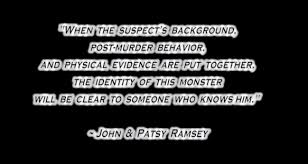
In my opinion, a convincing case is made that Patsy Ramsay was the author of the ransom note and, therefore, the person who really killed JonBenet.

A25It’s also likely that John Ramsey had some knowledge and was covering up for his wife. He’s already had a previous daughter die—now a second—and he couldn’t bear to lose the rest of the family. Only he will know.

But this still leaves the question of why Patsy Ramsey killed her daughter? What were the horrific circumstances that led to such a senseless, barbaric crime?

I think the best theory is offered by Steve Thomas who is the original Boulder detective who investigated the case and wrote the book “JonBenet—Inside The Ramsey Murder Investigation“.

Detective Thomas postulates that Patsy and John Ramsey returned to their home around 10 pm Christmas Day after a social event. Patsy checked on JonBenet and found she’d been bed-wetting again. At the time, Patsy was already on emotional overload—about to pop a breaker. She was under severe psychological stress with heavy socialite commitments, seasonal depression, struggling to face her fortieth birthday, keeping the perfect faceand… who knows what all else.

A50With temper stretched, Patsy severely admonished JonBenet for the urinary mess and likely did an aggressive wiping simulation on her daughter’s crotch, accounting for the “abrasion and vascular congestion of vaginal mucosa”. This escalated to a violent event where JonBenet’s head was smashed into a hard, blunt surface such as a doorframe or piece of furniture which rendered her unconscious with a potentially lethal brain injury.

Possibly thinking JonBenet was dead and probably panicking, Patsy went into damage control which may have involved John Ramsey at this point. It’s inconceivable to think he didn’t know or at least suspect something.

Somewhere during the next hour to an hour-and-a-half, JonBenet was finished off with a garrote fashioned from available materials, her body was moved, and the stage was set to simulate a ritualistic killing. A plan was then devised to deceive the authorities by way of a concocted ransom note which contained a cryptic justification with some hope of divine reconciliation.
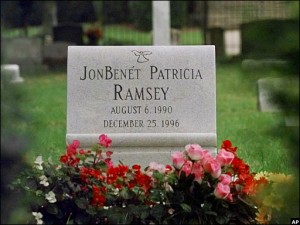
A4But what’s really evident to me—why I truly believe both Patricia and John Ramsey were culpable in JonBenet’s murder—is the date on the inscription they jointly approved for the headstone on their daughter’s grave. 

They knew she was dead before midnight.

TOP TWENTY-TWO TIPS FOR SELF-EDITING

grodgers-deadly-selfedit-cover-ebook-interior-1024pxEvery serious writer must grasp proper editing principles, regardless of their craft — literary fiction, non-fiction, true-crime, forensic and autopsy reports, short stories, essays, blog posts, legal judgements, copywriting, screenplays, employee assessments, business correspondence, requests for laboratory analysis, letters of reference and resignation, agent queries, and… especially when penning a deadly crime thriller. There’s no escape from effective editing because perfection is the mark of a polished professional.

But most of us can’t afford a professional copy editor, let alone paying thousands for a full developmental hand-holding. Learning to competently self-edit takes tremendous effort and amounts to taking a personal scalpel to your work, using the eye of a voyeur and the ruthlessness of an ax murderer. It also pays to have the conscience of a psychopath in being objective.

This weekend I’m releasing the detailed guide How To Self-Edit Deadly Crime Thrillers on Amazon—but I sure as hell didn’t do it alone.

Under Sue Coletta‘s eagle-eyed editing—Sue’s my collaborating, bestselling crime writer—and with contributions from twenty other prominent professional writers and editors, this No BS Guide With 101 Killer Tips is designed to help your self-editing process, no matter what your line of work. It’s simply the best collection of self-editing advice we can find.

From the No BS Guide, here are 22 of the top 101 tips for self-editing.

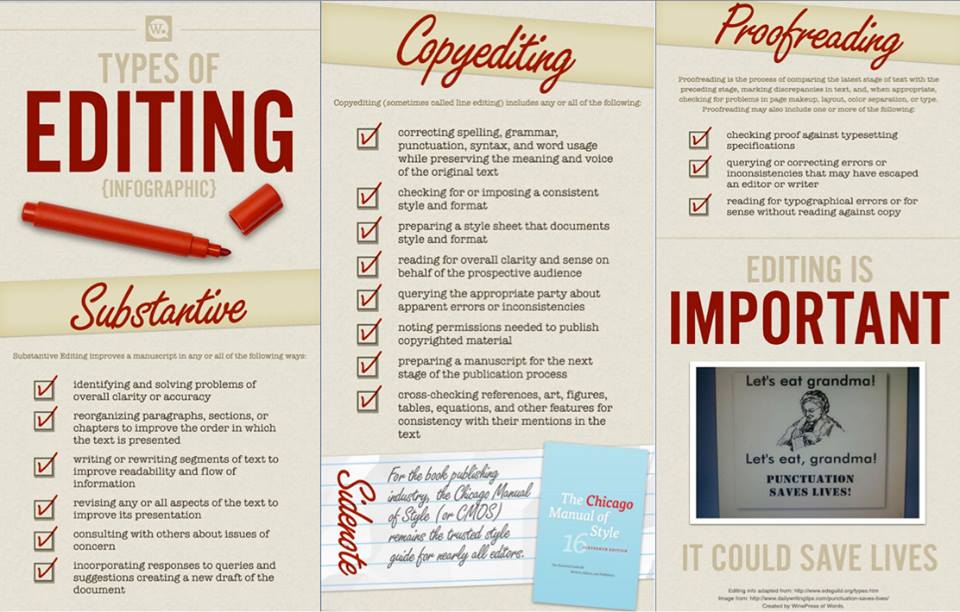
Tip #22 — Understand Conventional Editing Stages

All editing stages overlap and there are different industry terms for the same thing—lines between each type of edit being blurry rather than bold. The clearest explanation I’ve found comes from Marcy Kennedy, a writer and editor who has her own great series of craft guides. (Check her website on my resource web page.) Click Here

Marcy says:

“To me, there are Development edits and Copy edits. That’s it. Developmental edits address the story structure, the telling of the story, the comprehension of the story, the consistency of the story, and every element that makes the story complete, engaging, and tight. Copy edits do not address story issues. They address grammar, punctuation, spelling, typos, formatting, sentence and paragraph structure, word use, etc. But, a good copy editor will alert an author if development issues still exist.”

Let’s look at how the conventional terms fit in.

Developmental or Macro Editing — Deals with the big picture items in layers 1 – 6 on the pyramid. It’s also called outline, comprehensive critique, substantive review, structural assessment, and content edit. This is a look at story issues—characterization, setting, plot, show vs tell, backstory, POV, dialogue, pacing, goals, stakes, and motivation.
Marcy Kennedy - Writer & Contributing Editor

Marcy Kennedy – Writer & Contributing Editor

Line or Micro Editing — Covers more easily fixed issues like word choice, paragraph flow, awkward sentences, eliminating redundancy, catching clichés, and style quirks. It’s about identifying weak and murky spots. It hovers between levels 4, 5, & 6.

Copy Editing — Makes the manuscript follow the rules of grammar, punctuation, spelling, and word choice in layer 7, but it’s not beyond recognizing problems still living in the lower layers.

Formatting — Gets the manuscript ready for submission to the next set of eyes, whether it’s to another editor, agent, publisher, or uploading to eBook format. It’s taking a complete, working manuscript and making it an acceptable, professional document.

Proof or Script Reading — Corrects typos and other overlooked errors like punctuation, capitalization, numerals, and spacing. No big changes are made at this stage. It’s your last minute check because none of the previous stages will catch everything.

Editing

Tip #21 — Revision vs Editing

You could say all revising is editing, but not all editing is revising. Huh? In that play-on-words, editing is not looked at as changing anything big. By the time you get to the “editing” stage, all the heavy work is done. Take this for what it’s worth, but it fits with two self-editing acronyms you should know:

  1. Revision is ARMS — Add. Remove. Move. Substitute.
  2. Editing is CUPS — Capitalize. Usage. Punctuation. Spelling.
Tip #20 — Four Pillars of Revision

I like this quote, although for the life of me I can’t remember where I got it. Outstanding writers primarily master a limited number of the most important writing principles. While self-editing, pay attention to the four pillars of writing and revision.

  1. Structure — Organizing the order.
  2. Style — Voice. How you write.
  3. Readability — Your presentation.
  4. Grammar — The correct and acceptable form.

Tip #19 — Next-Day Revision

image007You’ll hear advice from seasoned writers, like Stephen King, that it’s best to just bang away at the first draft until it’s done, then go back and start the revision process—rationale being that it’s more important to keep the words flowing. Fix it later, he says. I’m not so sure about that, but then keep in mind that Stephen King has natural story sensibilities, so it works for him. You and I, on the other hand, should probably use a more pro-active approach.

I do next-day revision and all I can say is that it works for me. It keeps me grounded in the story and allows to me look at it with fresh eyes in the morning. On a good day—a really good day—I get around 2,500 words done. When I look at the previous day’s work, I invariably find glaring errors, overwriting, and general structure issues.

It really helps keep the story in perspective. The way I look at it—if you were to peck away until 80K words were done, it’d be a long time since you hid that dwarf in the closet. When you go back over that early chapter in a month or two, you’ll have no frickin’ idea why you stuffed him there in the first place.

Tip #18 — Get Into An Editing Mindset

Writing and editing are two separate processes, each stemming from two different parts of the brain. Writing is mostly subconscious, from the creative right-brain. Editing is consciously done, using the analytical left-brain.

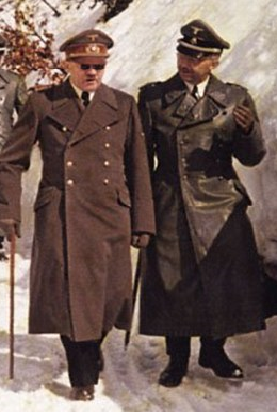
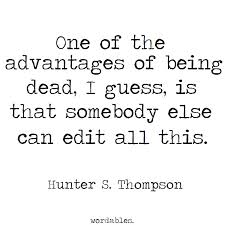
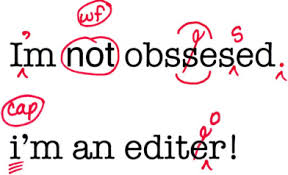
image010When we read our own writing, we tend to not actively read what’s on the screen or page. We see what we intended to write. Something happens in our brain that changes how we see the words. The more familiar we are with our own words, the more difficult it is to spot errors. Because of this subjective view, it’s exceedingly difficult to self-edit if we stay in a writer’s mindset.

There was a research project in the U.K. that tested readers’ ability to read past errors. Because we’ve been conditioned to read the first and last letters in a word, we’re often unaware that we subconsciously absorb reversals of letters. This is inherently compounded when we re-read our own work, as we’re conditioned by already knowing the material, especially if it’s fresh in our mind. This example is an eye-opener:

Tip #17 — Put the Manuscript in a Drawer

You hear this tip from everyone and it’s the frickin’ gospel. Nothing gives you a more objective view of your work than some time off. Most writers suggest taking at least a month after finishing the first (rough) draft before going to even the macro edit. I think two months is better, if your deadline can afford it.

Tip #16 — Less Is More

This is another top tip that writers hear repeatedly. It’s time to repeat it again. With every part of your work, ask yourself these three questions:

  1. What do I not need to say?
  2. What job is this doing?
  3. If I remove it, will the piece fall apart?

image011Effective brevity is the mark of a great writer—simplicity and economy. Knowing what to cut—and what not to cut—is a major skill in self-editing. There’s a balance, though, and common sense dictates that purpose calls the shot if a piece stays or goes.

Consider why you placed it. Does it have meaning? Does it carry sound and rhythm, which is the physicality of language? But be careful with this. If you cut simply because the material doesn’t have immediate meaning, you risk missing out on other aspects of language, which is the vehicle of storytelling.

Here’s a great tip from thriller writer Alexandra Sokoloff:

“The most useful tool for editing is a single word:  WHY? Why is my character doing this? Why is my character doing this now? Why is my character doing this here? Why does my character react this way? Why am I writing this scene from this character’s point of view? Why am I choosing these details to describe what my character experiences? Why did I include this? Why? Why? Why?”

Tip #15 — Understand Your Voice

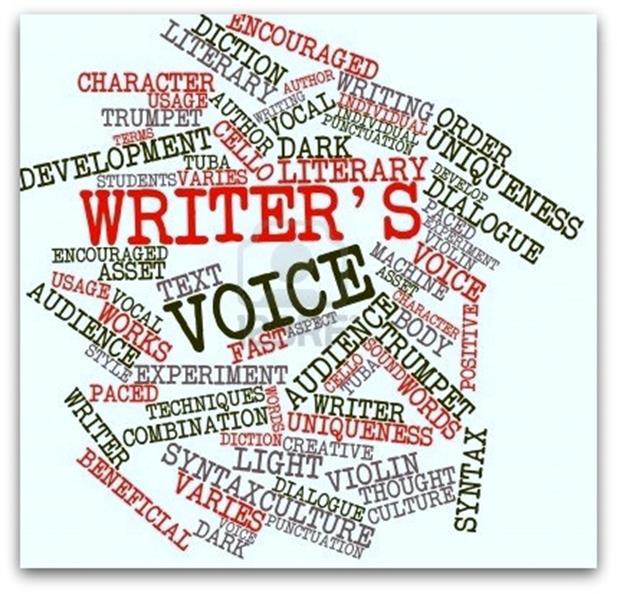
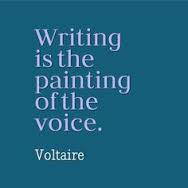
image012Your writing voice is the one thing that’s unique to you. It’s your most valuable asset—so valuable that you should buy some insurance on it. And it’s the one thing you have to get right. Right from the start. It’d be a bitch to go back and self-edit voice, if it can even be done. But what is “Voice”?

It’s your relationship with language—how you use language. Voice comes from the people you’ve met, the books you’ve read, the education you have, and the worlds you’ve inhabited—not just in your body, but in your mind. It’s your personality. It’s your attitude toward your writing. Your passion shining through your prose.

Voice is your distinctive way of choosing and stringing words together—your writing accent, your views, culture, biases, and formal training. It’s using some goddam profanity every now and then. It’s imagery. Being serious, stuffy, snarky, and sarcastic. Being funny, silly, foolish, and stupid. It’s your level of confidence speaking through. Your rhythm, cadence, tone, and mood. It’s your emotional guts spilling out.  It’s relating gut to gut, not brain to brain. No editing in the world can take an intellectual exercise and make it emotional.

Remember, Crime Thrillers aim to evoke emotion in your reader. Get emotional when you write, and then again when you revise. “No tears in the writer. No tears in the reader. No emotion in the reader. No interest in the story.”

I like this definition by Grammar Girl, Mignon Fogarty, who gave me permission to quote her:

A2“Voice is the distinct personality, the style, or the point of view in a piece of writing or any other creative work. Voice is what Simon Cowell is talking about when he tells American Idol contestants to make a song their own and not just do a note-for-note karaoke version. Many musicians have played The Star-Spangled Banner, for instance, but there’s a world of difference between the Boston Pops’ performance and Jimi Hendrix’s, even though the basic melody is the same. In writing, the New York Times and the New York Post may cover the same story, but their headlines are likely to be quite different. For example, when Ike Turner died, the New York Times had a straightforward headline: ‘Ike Turner, Musician and Songwriter in Duo With Tina Turner, Dies at 76’; whereas the New York Post went for a bad pun: ‘Ike Beats Tina to Death’.”

Is there an ideal voice? Nope. But my advice is to lighten up. Personally, I’m not big on sarcasm or stuffiness. Ever go to a party with lawyers and politicians? I have. They’re boring as shit because they’re bound by the restraints of graduate degrees and academic correctness. Ever hang with cops & corners? I have. They’re a blast. They’re like honey badgers. They don’t give a fuck what they say.

A3I like hearing a natural, open, appealing, and charismatic tone and style that draws me in and binds me with storytelling. Ever read foul-mouthed Chuck Wendig? Hilarious crime writer Meg Gardiner? Listen to quadriplegic, blog-king Jon Morrow? Or follow opinionated Johnny B. Truant? Now those folks have a voice. Let’s face it. Some people are just more interesting than others.

Voice is the way you put words to paper. The way you say it. It’s your personality coming alive on the page. It’s not the paint on the wall. It is the wall. Check out a blog post I wrote called 6 Elements of Your Writing Voice. Click Here.

For your work to be successful, your reader has to hear your voice telling the story. Nothing else matters if she can’t relate to your voice. She wants you to sound confident, intelligent, personal, authentic, trustworthy, and even vulnerable. She wants to be your friend and follow you around.

** Here’s Sue’s editing remark and she’s making a good point — “This statement only holds true if writing in omniscient. If you write in deep POV, the reader must hear “the character’s” voice, not the authors. Not sure how you want to clarify this.” **

I think I’ll just let her remark speak for itself. I have yet to write in Deep POV and she’s mastered the technique.

A16

So, when revising, be natural. Don’t overthink. And be careful not to cut your own voice’s throat.

Tip #14 — Brevity

This piece of revising advice is from Joseph Pulitzer:

“Put it before them briefly so they will read it, clearly so they will appreciate it, picturesquely so they will remember it, and above all, accurately, so they will be guided by its light.”

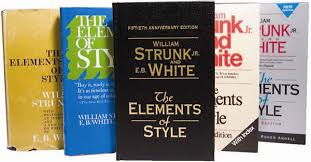
And then there’s this beauty from William Strunk, Jr. from Elements of Style. No one has ever captured (in 63 words) the essence of brevity in writing:

A4“Vigorous writing is concise. A sentence should contain no unnecessary words, a paragraph no unnecessary sentences, for the same reason that a drawing should have no unnecessary lines and a machine have no unnecessary parts. This requires not that the writer makes all his sentences short, or that he avoid all detail and treat his subjects only in outline, but that every word tells.”

This is where the advice, “Resist the urge to explain (RUE)” comes into play. It works with subtext, or what’s best left unsaid, which is a powerful dialogue tool. Say something once and leave it at that. Think superfluous redundancy when editing.

Tip #13 — Look Up Esoteric Words

If you’re going to use hifalutin language, make sure it’s right. Even words you use in everyday, normal speech may be slightly off, but they must be correct in published work. The more audacious you are with language, the more perspicacious you need to be in looking up proper usage. People will only know you should have looked up a word to see what it means if you didn’t.

Do yourself a self-editing favor and keep an online dictionary in your top toolbar. I like Dictionary.com. Click Here

Tip #12 — Little Red Writing Book

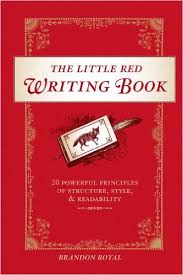
One of the best writing, therefore editing, resources I’ve found is The Little Red Writing Book by Brandon Royal. Brandon generously shared this quote:

A5“Making changes to your writing is annoying and grueling. But eventually, with changes made, you will likely be satisfied with what you have written and not want to add or delete anything. This is the point at which your writing is finished—your writing is ‘standing still’. Unpolished writing is like shifting sand in a desert storm. Eventually, the storm ceases and the sand sits still. The word ‘finished’, when referring to writing, should really be enclosed in quotation marks because writing is never actually finished. With respect to writing done for everyday purposes, completion is an end in itself. However, for more permanent written works, such as novels, writing can be continued indefinitely because it can always be improved. Even published books can be reworked and re-edited. Weeks, months, and years after a book is published, an author will invariably contemplate changes.”

I rate The Little Red Writing Book as a resource right up there with The Elements of Style and On Writing. When I contacted Brandon asking permission to use his quote and comparing it to these timeless books, he replied:

A6“Here’s how I compare the red book to The Elements of Style, which of course I like and recommend. The Elements of Style is a short grammar book with some style thrown in. The Little Red Writing Book is a style book (Structure, Style, and Readability) with a little grammar thrown in. An indisputable strength of the red book is that it contains short exercises and proposed solutions. After all, how can we learn writing without doing exercises?”

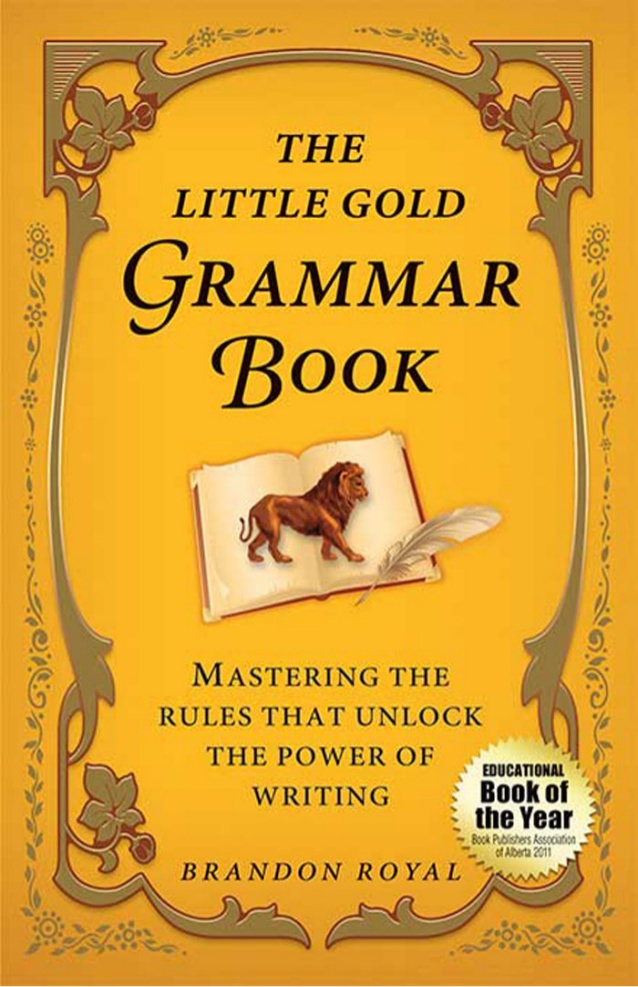
Click Here for Brandon Royal’s website and view all his works, including his updated The Little Gold Grammar Book.

Tip #11 — Common Commas

It’s said that ninety percent of writers use commas correctly seventy-five percent of the time, but only one percent of writers use commas correctly ninety-nine percent of the time. The advice of using the comma whenever you pause is misleading. The best way to understand commas is that they’re divided into four usage types.

  1. Listing comma — Separates items in a series. “The four main editing processes are rough draft, developmental, copy, and proofread.” The final comma before the word and is optional. It’s called the Oxford or Serial comma. I always use it, because my English teacher drilled it into me, and I’m now too old to change. Besides, you can’t be misunderstood for using it, but leaving it out could get you in trouble. Remember this line — “The highlights of our tour included meeting Nelson Mandela, a ninety-year-old parachutist and a dildo collector.”
  2. Bracketing comma — Sets off parenthetical expressions. “Sue, also a terrific crime writer, is a deadly editor.”
  3. Joining comma — Separates independent clauses connected by coordinating conjunctions such as and, but, yet, or, and for. “The entire No BS Guides will be available in one print-on-demand book, yet most readers will download them electronically.”
  4. Omission comma — Indicates missing words, particularly and. “It was a dark, stormy night.” There’s an interesting way to test this. If you can insert and between dark and stormy, then a comma is required. Also, reverse the words to read, “It was a stormy, dark night.” If the sentence still makes sense, you know a comma is necessary.

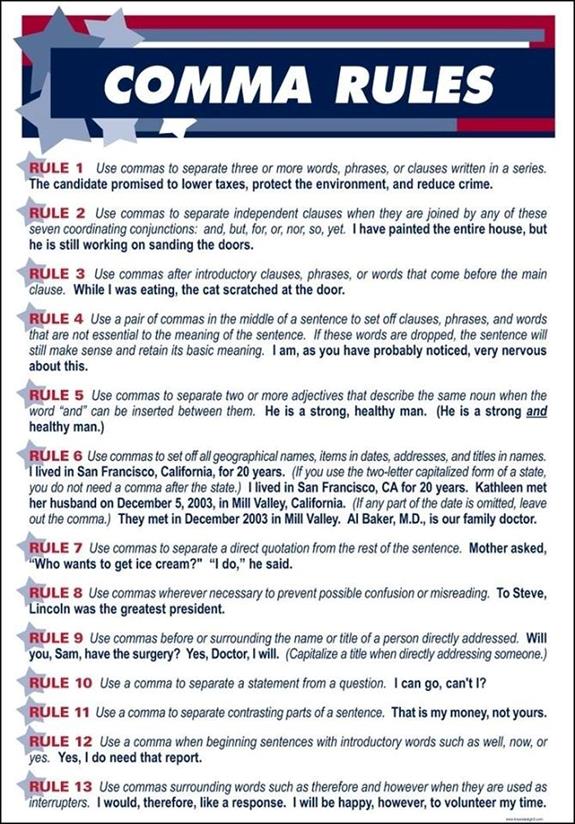
Here’s a handy image with twelve comma rules:

image020

Tip #10 — Learn from Other’s Mistakes

I read this in Writers Digest and Chief Editor, Jessica Strawser, allowed me to quote it:

“Wrong-word errors are not only embarrassing but also costly, as publisher Penguin Books Australia can attest. In 2010, they were forced to reprint 7,000 copies of the cookbook Pasta Bible because a recipe called for adding ‘salt and freshly ground black people’ (instead of black pepper). Oops! That slip cost Penguin $20,000 to correct.”

They probably ground up the proofreader.

Tip #9 — Mindset

The right mindset is not just important in self-editing—it’s critical. Writing and editing are solitary disciplines, and it’s human nature to want to socialize. It’s so easy to slip over to Facebook, Tweet something, check email, peek at Pinterest… Here are some bullets of advice that’ll keep your self-editing hat on:

  • It’s a chicken and an egg thing. You can’t be a good self-editor without being a good writer, and you can’t be a good writer without being a good self-editor. Practice makes you better (not perfect). Your goal is to maximize professionalism.
  • A7Set specific time aside for editing. I do prefer to write in the morning and edit in the afternoon. I’m always working on multiple projects and this schedule helps efficiency.
  • Deal with distractions. Shut off the TV and radio. I can’t concentrate with blabbing in the background. Set your cell to voice mail. Put out the cat. Feed the dog. Close the door.
  • Stay off social media. (Yeah, yeah. Easier said than done.) A prominent writer I know uses a separate computer for her writing and self-editing that doesn’t have an internet connection.
  • Some put headphones on and listen to rain sounds and waves, washing on the beach. Try classical, or flute, or harp.
  • Go to a different place than where you write. Public libraries work great, and it puts you out with other (quiet) people. That’s until a birthday party arrives with thirty, five-year-olds accompanied by a balloon-animal tying clown that looks like Pennywise from It. That actually happened to me while I was self-editing this guide.
  • Now I go to a university library where I can’t get wi-fi without a password. I’m not distracted by the web, and I get energized by all the young people and books around me.
  • Get two hats or two vests that say “Writer” and “Editor”. Seriously. I’ve heard of this, and am thinking of trying it myself.
  • Get plenty of rest and exercise.
  • A8Take Hemingway’s advice: “Write drunk. Edit sober.”
  • Focus on what’s best for the book and for the reader, because that will be best for you.
  • Develop thick skin. I had a negative comment on my Huffington Post blog the other day and it irked me. I got up, took a break, accepted that the commenter had a point, and learned from it. Get used to it, because you’re going to get some poor reviews. Sometimes mean people are right.
  • Track your bad habits. I have a problem with tic-words (just, that, then, turn, actually, and like, are my worst) and with tense switching. I’ve written them in red on my whiteboard and on a little yellow sticky-note beside the screen.
  • It’s nearly impossible to “toggle” the creative left brain and instantly make it the analytical right brain. There needs to be a bit of time separation, so take a break between processes. The writer and the editor need to be on vacation from each other.
  • Compartmentalize. Focus on one thing at a time. That’s why the pyramid method is so effective. Speaking of effective—whether you like him or not—Bill Clinton was one of the most effective presidents in getting his daily agenda done, and he attributed it to his ability to compartmentalize tasks.
  • A11Know there’s no “magic bullet” to the art and craft of self-editing. It’s a combination of learning and applying the skills and maintaining a passion. The more editing you do, the better writer you’ll become, and the less editing you’ll have to do as your career advances. And that’s one of the best tips I’ve found.
  • In the Crime Thriller genre, it’s okay to occasionally break the rules. Just know what the rules are and why you’re breaking them when you do.
  • Reading other Crime Thrillers is probably the best way to tune your subconscious to absorb the techniques and structure needed to write and edit in the genre. Go to a used bookstore and buy cheap paperbacks. Red ink the snot out of them. Deconstruct their plots. Listen to their dialogue. Analyze their characters. Their scenes. Their pace.
  • Read widely. Go outside the genre and read classics, sci-fi, or erotica, if it works for you. If you just read what everyone else in the genre is reading, you’re just going to write what everyone else is writing.
  • You’re going to experience self-doubt. We all do. Just keep at it—one word at a time.
  • Be active on social media. Find people like you on the internet. Don’t be afraid to reach out and connect. That’s how Sue and I met. Make Facebook friends. Say Hi on Twitter. Share things. Comment on blogs and encourage others. You’ll find the writing community is exceptionally generous, as long as you’re genuine and also help others.
  • Believe in yourself. If I can write a bestseller, you sure as hell can, too.

AA2

 Tip #8 — Other Practical Stuff

The last tip was mostly theoretical. These next bullets mean to be practical. In no particular order:

  • Put time between stages. I’ve said this before, but it bears repeating. I think it’s the most important tip. How much? As much as you can.
  • Run electronic spelling and grammar checks first. This quickly finds multiple errors and gets them out of the way, saving time and energy, which you can spend on improving structure, characters, and dialogue—or better yet, working on your next Crime Thriller.
  • Edit in a different medium than you write. Print off your manuscript and red ink it. Go to a different computer screen size. Change the font type or size. Change the spacing. Change the color. Download it as a pdf.
  • Read out loud. Great tip! Works like a hot damn (excuse cliché), especially for dialogue. If you have to breathe more than three times in one paragraph, it’s too long for a Crime Thriller.
  • Ask, “Would anyone really do, think, or say this?”
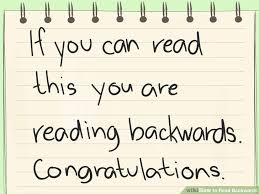
  • A9Read backward. Weird, but it works. This is because when you write, your brain knows where it wants the next sentence to go. In reverse, the familiar pieces become foreign and your focus improves.
  • Proofread chapters out of order. This takes you out of the story to view it from a different perspective.
  • Proofread line-by-line with a ruler.
  • Proofread one word at a time.
  • Attack show vs. tell with two different colored hi-liters. Use yellow for show and green for tell. Watch the color patterns.
  • Print your margin notes neatly. Nothing’s worse than going back and saying WTF was that about?
  • Double space your working manuscript.
  • Edit while writing. If something is obviously wrong, fix it right then.
  • If something is troubling, but you can’t quite figure out why BOLD IT and move on. Don’t break the flow. It’ll be easy to spot later on.

Tip #7 — Saving Your Work

Okay, this sounds like a no-brainer, but if you’ve ever lost thousands of words because you were too busy/careless/forgetful/stupid to back-up (like I’ve done) you’ll never let that happen to you again. Here are some saving suggestions:

  • Save to the cloud. Simple and foolproof. (Until the cloud crashes)
  • Use an online saver.
  • A12Data sticks. USB sticks. Thumb drives. Flash drives. Whatever you want to call ‘em. Small-bite ones are cheap—actually free as promotions from some vendors. I picked up a box full of 2-Gigs at a trade show.
  • External hard-drives with auto-timed backup. Could be a cheap investment.
  • Hit save often. Every five hundred words or five minutes, whichever comes first.
  • Make each revision a Save-As file with a revision number and date in the title.
  • Make a separate folder for each manuscript rather than storing in general documents.
  • Save in several document formats. I recommend Word, Word.doc, and Rich Text as they format best with outside parties.

Tip #6 — Tap Into Technology

Think about how far we’ve come in writing technology that makes self-editing so, so much simpler—the chisel and tablet, quill pen & ink, ballpoint and legal pad, ribbon typewriter, carbon paper, whiteout, word processor, MS Word, Scrivener, Google Docs, SIGIL, JUTOH, Calibre, WPS Writer, Adobe in Design, Page Plus… what’s coming next?

Here’s a look at tech-stuff I’ve found:

MS Word

  • A13Spend time getting to know the editing features in Word. I’ve tried other software like Scrivener, but it has a steep learning curve. When I found out that your manuscript still has to be reformatted from Scrivener to Word for submissions to an agent or publisher, as well as for HTML formatting as an eBook, I didn’t see much advantage to it. It does have some cool features for organizing your projects, though.
  • The entire publishing industry uses Word. Want to know why? Click Here  Eventually your manuscript is going to be put into Word to become a book, so you might as well get used to it.
  • Get familiar with Track Changes — Accept/Reject, Balloons, Bubbles, Insertions, Deletions, Strike-throughs, Underlines, Show Markup, as well as Final and Original Views.
  • Know the Keyboard Shortcuts for MS Word. This is an immense time saver. Click Here
  • Use WordTips. This website is an excellent resource for using MS Word. Click Here
  • Learn to make self-editing macros — Great stuff at TechTools For Writers. Click Here
  • Use the biggest ass-saver in the system—CTRL+Z—which is Word’s undo feature.

Editing Software

A14There is a lot of software available for both PC and Mac—some free, some expensive—but remember you usually get what you pay for. Here’s a list of the most popular that I’ve found, not in any particular order.

I can only vouch for Grammarly because I downloaded the free version to try out on this manuscript. So far, I love it, but then Sue loves her Word editing feature. Don’t you, Sue? I can’t vouch for any of the others because I haven’t used anything except their demos:

  • Grammarly — Love it. Wouldn’t live without it.
  • StyleWriter4 — Oldest in the business and seems to be the most popular. It’s an add-on for MS Word. Free on 14-day trial.
  • GrammarCheck — Appears excellent. The basic model is free.
  • Ginger — New kid on the block and is stealing the show.
  • StackEdit  — Very sophisticated.
  • Hemingway App — Very popular, especially for blog posts. Works great for brevity.
  • Markable — Sophisticated but user-friendly.
  • Write URL — Simple & free.
  • Quabel — Claims to be distraction-free and lives in your browser, whatever that means.
  • editMinion — Great for first passes and picking up grammar, adverbs, and passive voice. Basic is free.
  • ProWritingAid — Free to 3K words and works with Word & Scrivener. Great for checking blog posts.
  • AutoCrit — Free under 500 words.
  • SmartEdit — Fully free for 10 days.
  • WordRake — Free for 7 days.
  • Wizards For Authors — Templates for novel writing and editing.
  • Cliché Cleaner — Kinda interesting.
  • WriteWords — Word and phrase frequency finder.

Links to these editing software sites are on my website’s resource page. Click Here

Text-To-Speech (TTS) Generators

A15These things are cool on one hand and annoying on the other. You cut & paste your text into them and they audibly read it back to you. Some are great, with different accents and languages. Some are terribly robotic. It’s another “you get what you pay for” thing. In no particular order, here’s some of what’s out there:

  • Adobe Read-Out-Loud — Converts pdf to voice.
  • NaturalReader — Seems high quality.
  • NeoSpeech — Also seems high quality.
  • OddCast — Free demo and multi voices.
  • FromTextToSpeech — Fairly basic.
  • Text2Speech — Free and versatile.
  • YAKiToMe! — Free and easy to use.
  • ReadSpeaker — Sophisticated.
  • Ivona — Amazon’s TTS app.
  • iSpeech — Very high quality.
  • SpokenText — Minimal but free.
  • ImTranslator — Great for English second language writers.

Links to these Text-to-Speech software sites are on my website’s resource page. Click Here

Tip #5 — Editor-Ready Checklist

This tip is shared by freelance editor and author Tanya Egan Gibson who published this Are You Ready for a Freelance Editor eight-point checklist in Writers Digest:

  1. Tanya Egan Gibson - Contributiong Editor

    Tanya Egan Gibson – Contributing Editor

    This is not my first draft of my manuscript. I have written several drafts.

  2. I have waited at least three weeks since writing my last draft and have then reread it.
  3. I honestly feel that my manuscript is as strong as I can make it.
  4. I am ready to hear honest feedback that might require me to do a significant amount of additional work.
  5. I understand that an outside reader’s reaction to what I’ve written may be different from what I intended that piece to convey.
  6. I really want to learn how to make this piece the best it can be—and am willing to do what it takes to accomplish that.
  7. Which of these problems offer the most potential for conflict and drama?
  8. How does this problem affect other characters?

When you can answer “yes” to each point, then you’re ready for other eyes.

Tip #4 — Proofreading

Susanne Lakin - Writer and Contributing Editor

Susanne Lakin – Writer and Contributing Editor

Final proofreading is done after all the other editing steps are complete. Although proofreading is an ongoing process—if you see an obvious error anywhere along the way, it makes sense to correct it then—the real proofread comes after formatting is finished. Keep in mind that copy editing is making sure the content is absolutely right before formatting. Proofreading is about catching small errors after your formatting is done, like these:

  • Spelling, punctuation, and typos.
  • Small grammatical errors.
  • Small stylistic problems.
  • Misused words.
  • Layout errors.
  • Inconsistent spacing in sentences and paragraphs.

Tip #3 — Legal Stuff

Copyright infringements are serious matters and they apply to written content, song lyrics, poetry, verbal quotes, online images, and many other expressions.

A22Copyright protection is a gray area, and the best advice for using someone else’s original material is to simply ask permission. It’s so easy to do in the electronic age. Just send a polite email explaining what you’d like and make sure you offer full attribution for the material.

I’ve done that with every contributor to this guide with the exception where I’ve only referenced and linked their Open Source—Public Domain content. That’s different from directly cutting and pasting into your work. Here’s an example of permission not being necessary, where I simply link to Jane Friedman’s website and her valuable article on the Fair-Use Doctrine. Click Here

You’ll eventually have a copyright page in your published book, regardless if indie or traditional, and it should conform to the standard of the country you’re publishing in. Each country has a slightly different twist on copyright protection, but there is one universal principle that applies. Here’s a Fair-Use quote from the U.S. Patent Office website:

“Copyright does not protect ideas, concepts, systems, or methods of doing something. You may express your ideas in writing or drawings and claim copyright in your description, but be aware that copyright will not protect the idea itself as revealed in your written or artistic work.”

Translation: The words may be yours, but the idea belongs to everyone. There’s a big difference between the general concept of an idea and your unique, written expression.

A23What’s this got to do with tips on self-editing Crime Thrillers? Lots. When using material that came from somewhere else, always ask permission and get it in writing. It’s ass-covering at its worst and tremendous insurance against a lawsuit at its best. After all, you’d expect the same protection for your own unique, written expression.

Tip #2 — Editing Quotes

These are some enlightening quotes from writers that I thought needed sharing. Yes, they all fall under the open source, public domain, and fair-use doctrine.

  • Katerina Klemer — “Manuscript. Meanuscript. Moanuscript. Manurescript. And so on.”
  • Stephen King — “Only God gets it right the first time and only a slob says, ‘Oh well, let it go. That’s what copy editors are for’.”
  • Russel Lynes — “No writer dislikes self-editing as much as they dislike not being published.”
  • Unknown — “A professional writer is an amateur who didn’t quit editing.”
  • C J Cherryh — “It’s perfectly okay to write garbage—as long as you edit brilliantly.”
  • Steve Martin — “The conscious mind is the editor and the subconscious is the writer. The joy of writing from the subconscious is beautiful. It’s thrilling. When you’re editing, which is your conscious mind, it’s like torture.”
  • Anonymous — “The editor’s job is simple. Sort the wheat from the chaff. Point out chaff. Encourage more wheat.”
  • Jaclyn Moriarty — “She promised 3K words to her editor by tomorrow and she’d only written eleven, specifically ‘His rhinoceros smelled like a poppadum: Sweaty, salty, strange, and strong.’ She made it on time, but her editor cut that line.”
  • Eric Benoit — “Not self-editing is the path to the dark side. Not self-editing leads to self-delusion. Self-delusion leads to missed mistakes. Missed mistakes lead to bad reviews. Bad reviews are the tools of the dark side.”
  • Richard Kinlogh — “When I’m writing, I make the words my bitch, but when I’m editing, the words make me their bitch. It all equals out in the end.”
  • Don Rolf — “I’ve found the best way to revise your own work is to pretend that someone else wrote it, then rip the living shit out of it.”
  • Sue Coletta — “An unedited manuscript is a crime scene.”
  • Jarod Kintz — “There are two typos of writers in this world, those who can edit and those who don’t bother.”
  • Dr. Suess — “So the writer who breeds more words than he needs is making a chore for the reader who reads.”

Tip #1 — Trust Your Gut

A24The more you write and the more you self-edit, the more instinctive you’ll become. You’ll inherently know when something’s not working. It doesn’t sound right. It doesn’t look right. It just doesn’t feel right. Trust your gut feeling. Ninety-nine times out of a hundred it’ll be right.

Self-editing is a continuation of your journey, not your end. One book after another, you’ll find it easier to think through editing and developmental issues and work them out for yourself. You’ll grow as an author and as a critical thinker. Your skills will grow stronger and your editing effort will expand beyond merely making your book “work”, but to transcend your genre and influence how people see the world.

And there’s only one editor alive with that type of commitment.

You.

*   *   *

grodgers-deadly-selfedit-cover-ebook-interior-1024pxHow To Self-Edit Deadly Crime Thrillers – A No BS Guide With 101 Killer Tips is now available in Amazon Kindle eBook format. Click Here to download a copy. Don’t let the title fool you, though. It’s primarily aimed at crime-fiction writers but the principles can be applied across the board to all forms of writing.

And I’d like to give a word of thanks to all the contributors: Larry Brooks, Will Buckingham, Renni Browne, Shawn Coyne, Shannon Donnelly, Mignon Fogarty, Dr. Kim Foster, Tanya Egan Gibson, Michael Heibert, Beth Hill, Marcy Kennedy, Susanne Lakin, Jessica Page Morrell, Gabriela Pereira, Brandon Royal, Scarlett Rugers, Alexandra Sokoloff, Jessica Strawser, Sarah Kolb-Williams, and Cathy Yardley. And, of course, the biggest thank-you goes to Sue Coletta for her commitment, hard work, and attention to detail.

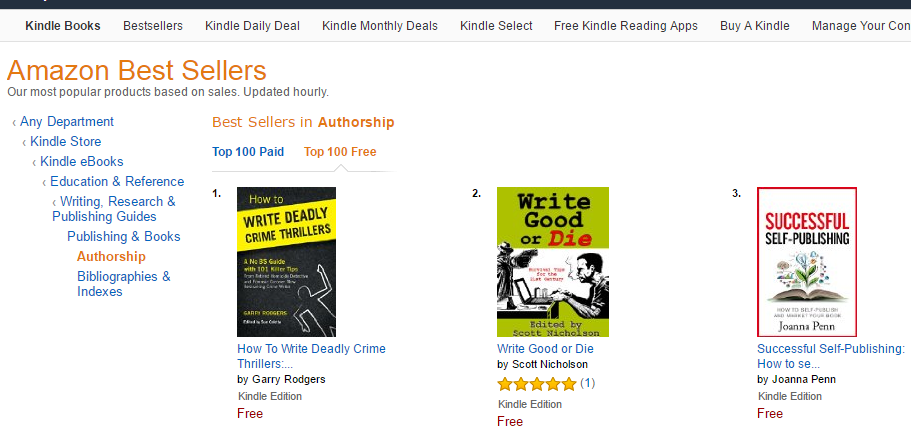
grodgers-write-deadly-cover-online-use-3debook-smlAlso, the first book in the How To Write Deadly Crime Fiction Series — How To Write Deadly Crime Thrillers – A No BS Guide With 101 Killer Tips is available FREE on Amazon for a five-day KDPS promotion and, as of this morning, it’s sitting in Amazon’s #1 spot in Writing, Researching & Publishing Guides > Writing > Writing Skills. Click Here to download your FREE copy.

The next guide in the series How To Write Deadly Crime Scenes is in the draft stage and I hope to have it published in the next few weeks. The remainder of the eight guides in the series will be released over the summer of 2016.

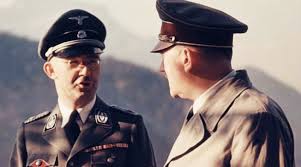
EXAMINING THE EPITOME OF EVIL — MY INTERVIEW WITH REICHSFUHRER-SS, HEINRICH HIMMLER

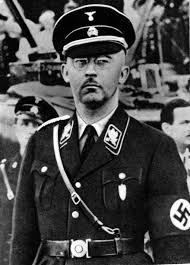
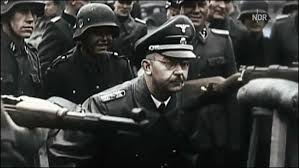
A23Heinrich Himmler was second in command of Nazi Germany’s Third Reich, subservient only to the Fuhrer himself—Adolf Hitler. Himmler rose in power from a simple chicken farmer to become head of the Schutzstaffel—the dreaded black-shirted SS—and also chief architect of the Holocaust, responsible for the deaths of millions of people. The exact numbers will never be known, but it’s historically correct to say Himmler was one of history’s most prolific mass murderers.

Recently, a news article reported a collection of occult books from the Nazi regime being discovered in a Czech Republic warehouse. This revived the decades-old speculation that the Nazis, and specifically Reichsfuhrer-SS Heinrich Himmler, were obsessed with the occult and pursued black magic in their thirst for power.

A9Was this true? Or is it just one of many conspiracy theories that refuse to go away? To better understand Nazi interest in forces unknown, I tapped into historical records and got a fascinating look at Himmler’s motivation and mindset through the documented words of a truly evil man.

Here’s my internet-influenced interview with Heinrich Himmler.

Herr Himmler, is there any truth the Nazi regime, and you specifically, held a fascination with the occult and used it to aid your military and political goals?

The answer to that is “no” and “yes”. Yes, in that we investigated all sorts of myths, legends, and avenues of history in the pursuit of understanding our Aryan archeological and anthropological heritage. No, in that none of the core people within the National Socialism movement actually believed in witchcraft, spells, or any sort of black magical forces. I, myself, was the exception.

Please elaborate.

A22First, you must understand my background and how I rose to such height of position. I was born to a strict but well-educated Catholic Aryan family and had an intense interest in military service. I was too young to serve in World War One, however my brother was a decorated soldier who I both admired and felt jealousy of. I studied agronomy in a Munich Institute during the interwar time and became introduced to my Fuhrer, Adolf Hitler, who was organizing the National Socialist Party.

After the failed Beer Hall Putsch where my Fuhrer and others were jailed, I continued organizing the movement and became focused on the Jewish question as it was obvious, as my Fuhrer correctly identified, the Jews are a sub-human race and responsible for much of the hardship endured by the Germanic people—the true ones being of Aryan descent. Once my Fuhrer gained complete control of power—this would have been 1933—I was tasked to develop an elite force of genetically pure men to protect my Fuhrer’s internal security and to provide guardianship over racial purity for strengthening German ethnic stock in a Reich that was to last a thousand years.

A21One of the challenges in organizing such a force was to instill absolute loyalty and obedience in each man. Part of that was indoctrinating a sense of inherent pride in their Aryan roots and to establish a true map of their genetic history. Just as a tree withers if its roots are removed, so a people fail if they do not honor their ancestors.

To do this I founded an institute known as the Ahnenerbe to research the archeological and cultural history of the Aryan race. Part of the mission was to find new evidence of the racial heritage of the Germanic people and one of the avenues we followed was the folklore of occult tales.

A15As we investigated these stories, we found they belonged to specific undesirable groups like the Jews, the Gypsies, the Freemasons—I could go on, but what these groups had in common were being cults who organized for purposes not in alignment with Nazi interests. In fact, they were deemed to be threats to internal security and, therefore, it was necessary to know as much about their operations as possible.

This required more investigation into this so-called occult and, as we progressed, I took a particular interest in how their techniques could be used to my advantage in forging the mindset of my people within the Schutzstaffel and for the entire Aryan people. I would say that over the years, the intent and purpose of the general Nazi interest in the occult has been misunderstood and somewhat blown out of proportion.

Sounds like it was a handy tool, both external and internal.

Yes. Precisely. The mystique of the occult was another weapon in our arsenal.

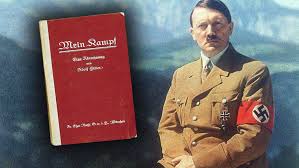
It’s been recorded that Adolf Hitler claims to have had a personal experience with the paranormal. In fact, he documented this in his book “Mein Kampf”.

A28Yes, as my Fuhrer was recovering from a gas attack which temporarily blinded him in World War One, he experienced what he described as a “vision from another world”. This entity instructed my Fuhrer “to perform an act of creation, a divine operation, the goal of a biological mutation which will result in an unprecedented exaltation of the human race and the appearance of a new race of heroes, demi-gods, and god-men”. I believe it was my destiny to assist in this vision.

Hmmm. You speak of loyalty and obedience. How did that apply to your relationship with Hitler?

A6The motto of the SS was “My Honor Is Loyalty”. They are cardinal virtues and every SS-man swore an oath of obedience to our Fuhrer until death. I was tasked with being the praetorian guard, always at my Fuhrer’s service and unswervingly loyal to him. The Fuhrer was always right, whether the subject was evening dress, bunkers, or the Reich motorways.

So how far would you have gone to serve Hitler?

Let me put it as this. If my Fuhrer were to tell me to shoot my mother, I would do it and be proud of my Fuhrer’s confidence.

Harsh. How did you instill this in the average SS soldier?

I will quote from my speech to the SS Group Leaders in October 1943.

A20“It is absolutely wrong to project your own harmless soul with its deep feelings, our kind-heartedness, our idealism, upon alien peoples. Our principle must be absolute for the SS man: We must be honest, decent, loyal, and comradely to members of our own blood and to no one else. What happens to the Jews, what happens to the Russians, what happens to the Czechs, is a matter of utter indifference to me. Such good blood of our own kind as there may be among the nations we shall acquire for ourselves, if necessary by taking their children away and bringing them up to serve us. Whether other inferior peoples live in comfort or perish in hunger interests me only in so far as we need them as slaves for our culture; apart from that it does not interest me. Whether or not ten thousand Russian women collapse from exhaustion while digging a tank ditch interests me only in so far as the tank ditch is completed for Germany. We shall never be rough or heartless where it is not necessary, that is clear. We Germans, who are the only people in the world who have a decent attitude towards animals, will also adopt a decent attitude toward these human animals, but it is a crime against our own blood to worry about them and to bring them ideals”.

Okay. How did this mindset result in the Holocaust?

A14Your use of the word “Holocaust” is foreign to me. If you are referring to the Final Solution, then you must know this was a natural progression from the truth in Nazi ideology that the Aryan race is the master race and this has been guaranteed by human genetics. It stands that in order to progress, a culture must have unconditional liberation from the old social world of caste, class, and family and must proclaim its own law as springing unconditionally from the mere fact of belonging to a new community. To expand, we had to organize Europe economically and politically on a basis that would destroy all pre-existing boundaries with the New Order in the background. The extermination, not the expulsion, of the Jews was the proper solution to removing them from the lands necessary for Aryan expansion and to eliminate them as a threat to our Order.

Just who was responsible for developing the Final Solution?

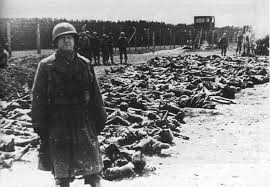
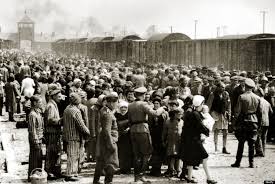
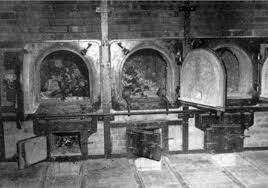
A29I was tasked by my Fuhrer to implement an efficient plan to exterminate the estimated ten million Jews and other undesirables such as Gypsies, Jehovah’s Witnesses, political opponents, asocials, homosexuals, the mentally retarded, the recidivist convicts and incorrigible criminals who were of no use to our plan. The idea of mass extermination by way of Zyklon B gas occurred one day when I was witnessing an execution of several hundred condemned by the method of firearm. I observed inefficiency as well as possible psychological effects on the shooters from carrying out prolonged executions, not to say the time effects from individual terminations and grave burials. There was a need to carry the pace significantly faster and it occurred that mass-gassing and then incinerating on a production line scale would be much more efficient and effective. A rampant expansion of the killing was necessary. The Schutzstaffel, already under my control and command, was the proper vehicle for which to accomplish this, yet maintain secrecy.

Right. How were you able to “control and command” the SS.

A24You must take into account that we had systematically selected and conditioned these men for an eight-year period. They were of the highest discipline and instilled with the highest values of service. For example, here is a record of how I instructed them to act during the Final Solution.

A30“The wealth which they (the Jews) had, we have taken it for the betterment of our State. But we, ourselves, have taken none of it. SS individuals  who have offended against this principle will be punished according to an order which I issued at the beginning and which threatens: He who takes so much as a mark shall die. A certain number of SS men—not very many—will disobey this order and they will die, without mercy. We have the moral right, we have the duty to our people, to kill these undesirable peoples. But we have no right to enrich our personal selves by so much as a fur, a watch, or a cigarette, or anything else. I shall never stand by and watch the slightest rot develop or establish itself here. By and large, however, we can say that we have performed this task in love of our people. And we suffered no damage from it in our inner self, in our soul, in our character.”

Now I realize the SS was an elite unit with rigorous mental training to withstand carrying out the Holocaust,  but how was this applied to the average German soldier who had to round up and deliver the prisoners?

A31Exactly the same thing happened at forty degrees below zero in Poland when we had to carry off thousands and tens of thousands and hundreds of thousands when we had to be so hard—as to shoot thousands of leading Poles. When we had to be so hard, because otherwise vengeance would have fallen on us later. It is a great deal easier in many cases to go with a seasoned company into battle than to operate with an inexperienced company in some region suppressing a rebellious population at a low level of culture, carrying out executions, transporting people away, taking away howling and weeping women.

I’m going to put you on the spot. There were unspeakable experiments done to concentration camp prisoners. How in the world do you justify that?

Simply, I am a patron of science.

Truly enlightening. Some within your own party are on record describing you as a crackpot with a fascination in the occult and impractical projects to further your personal ambitions as being Hitler’s successor.

A32To the contrary. My strength lay in being an exceptionally capable organizer with a keen sense of selecting the right people and being able to properly motivate and reward them. I had a burning desire to serve my country, my race, and my Fuhrer. Moreover, I understood my SS men and knew how to secure their loyalty to myself, my Fuhrer, and to the rightful cause which was the movement of the Reich to secure its rightful place in the domination of Europe. Next to my Fuhrer, there was no one more capable of achieving this but myself.

Changing focus—what was the turning point in the Second World War? When did the tide switch when you Nazis were on such a roll?

A33The Battle of Britain. Had we aggressed a few more days, we would have destroyed the Royal Air Force and that would have taken the Commonwealth out of the war. They would have sued for peace and therefore the Americans would not have joined the European Theater. This was solely Goering’s fault. Hermann Goering. Goering poorly advised my Fuhrer while he pursued his own lavish and to that end Goering was responsible for treachery against the Reich and he was the triggering factor in the irreversible downfall of the Reich and the furtherment of the Germanic racial cause. Goering. Lucifer Goering was the Reich and my Fuhrer’s equivalent of the anti-Christ.

Looking back, what do you make of Adolf Hitler’s mental state?

A34Toward the end of the war, he was a tired and stressed man who was abandoned by many who he served. He was not well. But my Fuhrer rose up out of our deepest need when the German people had come to a dead end. He was one of those brilliant figures which always appear in the Germanic world when it has reached a final crisis in body, mind, and soul. Gothe was one such figure in the intellectual sphere, Bismark in the political—my Fuhrer in the political, cultural, and military combined. It was ordained by the Karma of the Germanic world that he should wage war against the east and save the Germanic peoples—a figure of the greatest brilliance was incarnate in his person.

Seventy years of history would argue that point.

A35History views in different ways, in different times, in different peoples. With great solemnity and effect, it is clear to me that my Fuhrer is a person who men will regard in centuries to come with the same reverence that they accord to Christ.

Herr Himmler, your military actions are certainly at odds with your Christain upbringing.

A2I dismissed Christain doctrine once I became aware the Supreme Deity had chosen the German people to rule the world and to achieve this was impossible by loving one’s enemy or turning the other cheek. The teachings of Christ are for the weak with no stomach to ensure the rightful survival of their sub-species. Aryan people are genetically proven to be the strongest sub-species and, to this cause, I dedicated my life to the service of my people and to my Fuhrer. I apologize to no one. Heil Hitler!

A36