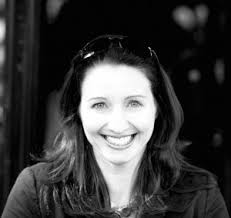
Rachel Abbott is psychological thriller writer who has sold over a million novels. Rachel generously shares her views on novel writing with DyingWords followers with this abridged piece which has been republished from her website, Rachel-Abbott.com.
 The world is full of people who really want to write. For some, it’s a burning ambition. They dream about days of sitting in front of their computer (or even more whimsically, in their attic – with pencil and notebook), having great ideas and getting them all down on paper.
Some of it is like that. It’s exciting seeing your ideas grow and develop and watching the words appear on the page – sometimes it’s as if your sub-conscious has taken over and when you read back your latest chapter you think “where the hell did THAT come from?”. It’s a wonderful experience.
With the growth of self-publishing and the ease with which any writer can publish their work, that dream can become a reality.
But where do you start?
 I’m sure that everybody writes in a different way. Some people say that they start with the title. Others say they just sit down and write and see what comes out. So I’m just going to talk about what I do – not because it’s the right way, but just because it’s the only way I know.
I start with a question.
In Only the Innocent the question was “What set of circumstances would be so bad that a woman would have absolutely no other option than to kill a man?”
 It had to be a scenario from which she couldn’t escape. But initially each avenue that I pursued left me with a “but she could do this or that” and it took a long time to work out what would make me kill a man. And for me, that’s the way it has to be. I have to think how I would behave, and not just one of my imagined characters.
For The Back Road I thought about a group of people, each with a secret that they need to hide.
The secrets had to be credible – secrets that you might encounter amongst your own friends. Or at least, the majority of them had to be. Perhaps in one case the secret is darker than the rest. Then I asked myself what kind of catalyst would it take to blow everything apart and expose the lies and deceit, and what would be the outcome. I have been to dinner parties or business dinners and seen looks exchanged between people and thought “I wonder what that’s all about?” knowing that I would probably never find out. To me, that dinner party is real.
That is always my starting position – what is the overall issue that the protagonist has to solve.
 Then comes the incubation time. Once the initial idea is in my head, I start to carry round a notebook and pencil, and each time I have an idea that develops a character or plot point, I jot it down. There are always plenty of false starts – storylines that I begin to develop and then discard. I think that’s fairly normal (at least, I hope so).
Once I have a rough idea of the beginning – the inciting incident (the conflict that begins the action of the story and causes the protagonist to act) – and the end – how the protagonist solves (or doesn’t) the problem – I switch tack. I start to develop my characters, locations and timelines.
For each character, I find a photograph that matches my idea of how they might look.
 It may be a picture of a famous person, or it might be a random person that I find in images on the Internet. It doesn’t matter. I grab their photo and put it into their character file. Then I begin to develop their characteristics – Age, date of birth, personality, likes, dislikes, greatest strengths and weaknesses, story goal, past traumas – a whole list of details which gives me a very clear idea of who they are and how they would behave. It also means that I know how to describe them, and because it’s all written down, I can always remember how old they are, what they drink, what secrets they have, what job they do.
Next come the locations.
I was recently interviewed for a blog, and the interviewer very kindly said “I find the atmosphere of place very strong in your novels. I know those villages – I’ve met those people. How do you get that atmosphere?”
 The answer is that I also know these places – because I have found photographs of interiors and exteriors of all the houses or other locations that are featured. In The Back Road I used Google street view to walk around the Cheshire village that I used as my main location, and found the perfect property for my protagonist. I was inspired by an atrium dining room that I saw on an architectural site, and grabbed that image too. I found a map and worked out which road would be “The Back Road” and then plotted where everybody lived. Only that way could I be sure that journeys were logical. Even at the dinner party, I wrote down the menu and a seating plan. It was important to know where everybody was sitting, so that I knew when people had to lean forward to speak across somebody, or when people’s eyes could meet.
Timelines are really important – and not just the timeline of the book.
 Most people have a back-story – when did they meet? What are the major events in their lives? The back-story timeline is really important, because I have often read books in which a section has made me stop and think, “How old is this person? Does this make sense?” and anything that slows a reader down is bad news. If you are confident because you have the information in front of you, the reader will feel that confidence.In short, then, I need to know every detail so that when I write about a location or a person I have a very clear vision of them in my mind. In The Back Road, if I had any artistic skills, I could paint you a picture of every room in the house, and how the rooms connect with each other. It’s as clear in my head as my own home, and allows me to write with confidence.
Of course, the important thing is the story!
 As you will have gathered, I am a fanatical planner, and I use two different pieces of software for my planning. My main tool is a piece of software called Scrivener. This has some fantastic features that I will talk about briefly here, but hope to do a more detailed blog post soon. However, it doesn’t do one thing that I need, and that’s to create the equivalent of a story flowchart. For that – and the initial planning stages – I use Storylines.
With Storylines I can either create a number of story threads, or character threads, and I can see them all at the same time on a cork board using individual ‘cards’. The board is arranged in columns for scenes and rows for character or plot threads. I can move these around and see all on one screen how the story develops and how and when characters appear in the story. It gives me the main outline of my book, and the software does so much more than this. You can write your whole book using nothing else, but there are some elements of Scrivener that I prefer for the writing process.
 With Scrivener I create folders for each chapter, and then write scenes within a chapter. I can colour code scenes – for example, in The Back Road I coded scenes in relation to the level of tension. I could see when there were spots in which the tension dropped, and it gave me an opportunity to think about the scenes and how to ramp them up a notch.
Similarly, I used keywords extensively. The Back Road has a number of story threads, with huge potential to get lost! So each scene is given one of a number of keywords each of which relates to a thread. I can then search on the keywords, and find all the scenes, allowing me to read one storyline in complete isolation – a fantastic tool for checking consistency and story development. Scenes can be written in any order – once the structure is in place you can add a scene, move it around, put it in an ideas folder for later use – the options are endless. But with the structure in place, the writing can begin.