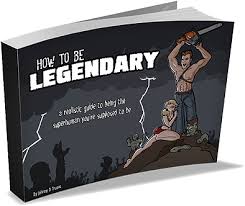
Johnny B Truant is an awesome dude. He’s a prolific author and writes some of the biggest websites on the internet. Johnny’s mission is to get you devoting your life to becoming “Legendary” which is basically about being as awesome as you can be, in as many areas as possible, in a totally realistic and achievable no-bullshit way. Imagine a slightly more abrasive Tony Robbins and you’ll have the basic idea. Today, Johnny guest posts on DyingWords with this provoking piece.
 I’ve been watching this show lately with my 6-year-old son, Austin, who likes learning about space and planets and black holes and stuff. It’s called How the Universe Works. And man, the universe has one hell of a story to tell.
It all starts with, presumably, the Big Bang, wherein a single point in space barfs forth a hot, violent soup of particles and energy that take a few hundred million years just to cool down enough to begin coalescing into stars. You know… to “cool down” enough to become giant fucking balls of fire.
Stars ignite. Star clusters form, and become galaxies. Rocks in space start running into each other, and a few planets are created.
Eventually, the Earth is born. Hooray!
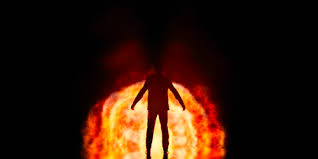 The Earth sits there for a few more billion years, until, after a lot of back and forth and general bureaucratic indecision, life shows up. Very, very recently, humanity, (which is perfect and unique if you ignore how random it all seems), makes its appearance. Hooray!
That lasts for a little while. Humans thrive. Invent the rotisserie. Build the internet. Watch porn.
After a bit, though (and this part of the story is still unwritten, but definitely coming) the sun sloughs off its outer layers, obliterating all of the inner planets as it dies. Then, as the fusion at the sun’s core that keeps it inflated runs out of raw materials, it collapses into a white dwarf, and the solar system weeps as it loses yet another great player to retirement.
Hooray!
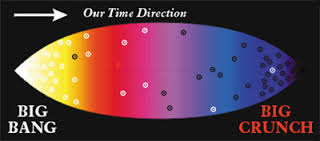 After this, it gets really fun. The astrophysicists who used to think the universe was going to re-contract into the Big Crunch now say that the universe’s expansion is actually accelerating. Meaning: After enough time passes, the Earth’s old position (Earth having been blown away aeons ago, of course) will be so distant from anything else that you’d be able to look up into the sky and see absolutely nothing at all.
Quite a story, right?
This is the way the world ends
This is the way the world ends
This is the way the world ends
Not with a bang but a whimper
Deep, man. I don’t know about you, but looking up into the sky on a clear night is enough to give me existential chills.
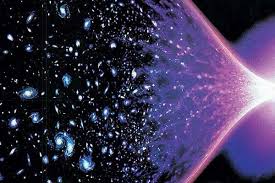 You’re not just looking up into a curtain of black. You’re looking into the eye of the universe. Stare for a while and you start to realize — on a deep, gut level — that the moon is a giant rock circling us in space. The sun is a violent, fusion-fueled ball of plasma and gas millions of miles away that destroyed the atmospheres of all of the inner planets (including Mars, which is farther away from it than we are) and would do the same to ours if we weren’t lucky enough to have a magnetic field that diverts the solar wind.
The cute little pinpricks of light you see out there are other giant, explosive, incredibly pissed-off balls of gas floating in an infinite void, most of which are far more impressive than our puny sun. And that smear of milky white through the sky? That’s the center of our own galaxy — a gigantic pinwheel circling a supermassive black hole like floating detritus around the vortex of a flushing toilet.
There’s a lot of crazy shit going on out there.
And in fact, the Earth could bite the dust at any time.
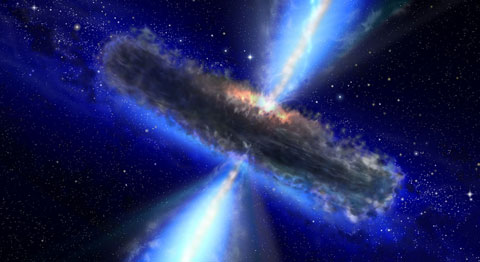 Comets. Asteroids. Apparently, there’s even a star nearby that may eventually go all black hole on us. When it does, it’ll shoot a jet of X-Men style radiation out of its poles, perpendicular to its accretion disc, directly at us. (The good news is that we’d never see it coming. We’d just suddenly be reduced to our constituent atoms.) Even avoiding all of that, though, just buys us time. The Earth is not permanent. The sun is not permanent. The oldest stars alive today are not permanent. It will all end.
 And in the middle of this story (because we’re the ones telling it), is us. Here on our little blue planet. Here at this exact, tiny, special blink in time. Here, but only “here” in the way a beetle might be “there” on the sidewalk of Times Square during rush hour. Sure, the beetle can survive, but only for as long as it’s not in the wrong place at the wrong time. Nobody’s out to get that beetle… but nobody’s watching where they’re stepping, either. The city was there long before the beetle, and it’ll be there long after the beetle’s inevitable demise. The city, always neutral, honestly doesn’t care one way or the other whether the beetle lives, dies, suffers, or thrives.
And you were worried that trying something new might make you look dumb or that your business might not make any money.
What the fuck is wrong with you?
The universe doesn’t care about you. It can’t. It’s too big, with too much going on.
 Maybe there’s a grand conductor, and maybe there’s not. I do happen to believe in God, or the Spirit of Life, or the Force for all I know, but regardless of belief or disbelief, one thing I know for certain is that no matter WHAT or WHO is out there, he or it doesn’t “care” if you define “care” in terms of life and death. Nobody is special. Nobody gets a pass.
Everything dies. Everything. You were born with a terminal disease, just like everything else that has ever existed. You, your lamp, the sun, and the Bee Gees all have that in common.
This, like the universe’s apathy, is neither good nor bad. It is simply a fact.
But this fact — the immutable, inevitable, impossibly obvious fact we will die as surely as we were born — is something we all deny for most of our lives.
 You’d think we’re never going to die, the way we cower and second-guess and fret over each little action. We act like what we do today will forever alter the flow of creation, of time, of space. Every move is vital. Each little event could upset the delicate balance. Everything is of paramount importance.
We can’t do things differently, because the system, however imperfect, works and is extremely delicate. We might upset it by thinking outside the box. We have to weigh every decision, because a butterfly flapping its wings in Nova Scotia could cause a hurricane in Guam. Or, as Homer Simpson taught us, if you kill a mosquito in dinosaur times, Ned Flanders might become the unquestioned lord and master of the universe.
We can’t do something that might make us look ridiculous, because first impressions last forever. We can’t try and fail, because then we’ll be ruined forever.
 Think a scar (or a tattoo, for that matter) is permanent? It’s not. Your body was literally formed from stardust and will eventually return there. The duration of a scar doesn’t even register on the big time line. In fact, I heard that God watches jewellery commercials and LOL’s when they say that diamonds are forever. It’s all a big joke up there. There’s a drinking game in Heaven, where angels do a shot every time humans invest “for the long term.”
What are you so fucking worried about?
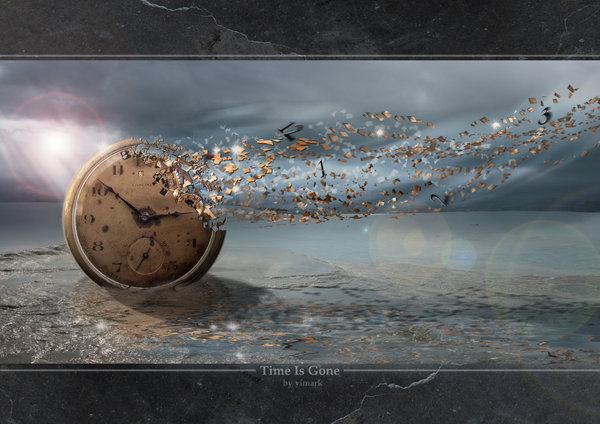
 You are here now. Eventually, you will be gone. You have but a nanosecond on the universal clock to do whatever it is you’re going to do. When that time is gone, it’s gone. Forever.
That means that although what you do doesn’t matter to the universe, it should matter one hell of a lot to YOU.
In fact, it should matter to you more than it currently does.
 If you knew how small you are and how short a time you have to do what you can, you wouldn’t waste time watching five fucking hours of TV a day. You wouldn’t waste time doing a job you hate. You wouldn’t waste the little time you have dealing with assholes, feeling sorry for yourself, or being timid about the things you’d really like to do.
I’m 35, and it dawned on me just recently that it’s not at all long before I’ll be forty.
And forty is FUCKING OLD in the mind of a guy with the mentality and sense of humor of a teenager. I mean, hell, you can make an argument for 30 being young despite the fact that the MTV crowd says different, but forty-something is what your grandmother was. When I had this epiphany, a succession of uncomfortable and incredibly obvious realizations followed.
If I can turn 40, I can turn 50. If I can turn 50, I can turn 60.
 Once, I was a kid and everyone else was old. The tables will turn. I’ll be the guy that kids look at and see as old. Me. Fucking ME. Me, who was once out cruising on Friday nights, staying up until dawn. Me, who thought I was indestructible, who thought I was forever. Turns out I was wrong. Turns out I was just one in 6.8 billion, and very much subject to the same laws of time and space as everyone else. One day, if I’m very lucky, I’ll be a shriveled 100-year old guy with a cane. An old man with a kid’s mind, wondering how the hell this could have happened.
Think about this. Now.
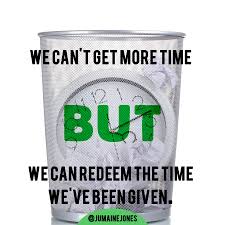 Think back five years in time. Remember what you were like. Realize how fast five years can go. Think about who you are today, the place you’re in and the age you are. Then step back into the shoes of your five-years-ago self and look at yourself as you are today.
I have two kids. That’s not possible. People like me don’t have kids. We’re too young. We’re kids ourselves, forever young and irresponsible. It’s ridiculous. I live in a house that I own. I pay bills. It’s crazy.
Think about it.
Realize that time will never stop.
 NEVER. You will never be younger again. It’s like being on a train with no stops that’s always leading you farther and farther from home… or closer and closer to home, depending on how you look at it. You can never get off that train. You can never board a train going the opposite direction. If you missed a stop, tough shit. If there was this great thing even just two miles back that you decided not to do, you can’t change your mind and go do it. That place is gone forever.
A simple example for me is skateboarding. I’d have loved to do that. And sure, adults can learn to skateboard. I’m a huge believer in “it’s never too late for X.” But really… REALLY… if you want to truly skate, that’s something for the young. I know I won’t be taking it up now, shredding through our concrete jungle.
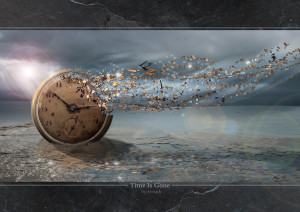 In my past, there’s also an opportunity I could have taken advantage of that I didn’t, and that I wish I had. There’s a thing I got rid of that I really wish I’d kept. But the train never backs up. Never. I missed those things, and I will never get a second chance.
Do yourself a favor, right now, and realize two things:
-
You will keep getting older, and then you will die.
-
Everything that’s ever entered your experience has lasted and will continue to last for only a brief moment in the life of the universe.
 This is game time, champ. You’re in. You’re in, playing, right now, and the clock is ticking. So stop wondering what it all means and how you’ll possibly ever do X and what people will think, and get on with your life already. Stop being a pussy and go do something amazing.
Do epic shit.
I’m just now getting around to the end of the newer Battlestar Galacticaseries and something hit me when Dr. Baltar suited up with the troops for the end assault on the Cylon colony. It’s this:
Noble people do noble things.
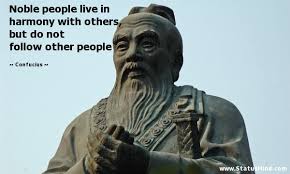 That’s it. See, throughout the series, Baltar is a selfish asshole. He’s responsible for the annihilation of the human race, he betrays everyone, he forms a cult that rubs his chest and feeds him grapes. But in the end, he does the right thing. And when I saw that, I realized that it doesn’t matter what you’ve done. What matters is what you do. A whole series’ worth of being ignoble doesn’t stop a truly noble act at the end from being noble. The idea of “nobility” (or “good,” or “bad,” or “worthy,” or “awesome,” or anything else) is defined only by our actions.
You can’t be a bad person who does good things. If you do good things, you’re not bad; you’re good. There is simply no way to manifest badness other than by being bad. Anyone who’d argue that you can be bad while ultimately doing good things is just a douchebag philosophy major looking to get his ass kicked.
So what does this mean to you?
Why… it means everything.
 It means that in the small amount of time you have to live, you can be whatever you want. It means that even though the universe doesn’t care enough to give you what you want, it doesn’t care enough to stop you from having it, either. So embrace that anarchy, and take those things for yourself.
If you want to be awesome in this life, do awesome things. If you want to be a leader, do some leading. If you want to be an expert, do the things an expert does.
A few weeks ago, I talked to Trust Agents co-author Julien Smith, and soon after, he sent me a tweet and for a moment, I wondered, “How the hell can I be more epic?” But then I realized something really obvious.
To be epic, all I’d need to do is to do epic shit.
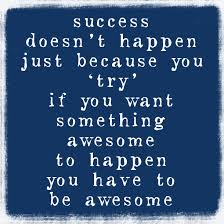 So that’s what I’m doing, today and from here on out. Just do it. Claim it. Stop waiting for permission to be epic. Most people think that they need to be tapped on the shoulder by the Epic Fairy if they ever hope to be epic, or if they’re ever going to have the audacity to do something truly epic. But it’s not true. Want to be epic? Just do epic shit. There’s nothing else to it.
People always say, “I wish I was amazing. I wish I was awesome.” Fucking hell. Stop whining and just be it already. Be fucking awesome.
Nobody’s going to give you the gift of awesome.
 Nobody’s going to make you good, or great, or amazing, or epic. Nobody’s going to make you an expert or an authority or a voice anyone should listen to. Nobody’s going to level you up. If you want that next level, take it. Take it for yourself.
Grab it. Become it. Claim it. Write a treatise. Create an event. Champion a cause. Build something great. Speak your mind. Make the call. Build the business. Author the book. Send the email. Do it. Do it.
If you fail, big deal.
 You might write something and nobody might read it. You might build it and nobody might come. You could fail and ruin your life. You could take a chance and end up looking really, really stupid. Boo-fucking-hoo. It doesn’t matter.
You are very small. We are all staring down the barrel of a gun, and we last only for the tiniest, tiniest moment in time. Your life is a one-way train, and any second you waste is a second lost forever. You are that beetle on the streets of New York. The universe doesn’t hate you, but it doesn’t love you, either. You’re just an atom in its infinite workings. The universe doesn’t care if you live, die, suffer, or thrive.
Only YOU care.
If your life is to mean something, it’s up to YOU.
 You cannot influence the movements of planets. You cannot live forever. You cannot affect the entropy of the universe. All you can do is to make this moment — your moment — better. You can affect the lives of others around you, and you can affect your own life. You can ease some suffering. You can do some epic shit. If you, yourself, only last for a nanosecond, you might expand your influence to a millisecond. And that’s something. Honest, it is.
You don’t matter to the planets and the sun and the stars, but you matter to YOU. You matter to those around you. You matter to those you can reach, and touch, and who you live and die with.
Stop waiting for someone to give you what you want.
 The universe is too busy to care. It has worlds to create and galaxies to destroy. If you’re worried about death and about your own end, don’t. It’s coming whether you like it or not. You will either arrive at the end of your life in style or you will arrive broken and beaten, but whichever way you choose, have no doubt that you WILL ARRIVE.
There is only now. If you have power, it’s now. If you can change anything, you have to do it now. If you want to be or to have that next great thing, be it. Have it. Take it. Own it. Do it. Become it.
Be awesome. Do epic shit.
Do it now. The clock is ticking.
* * *
 Johnny B. Truant is a writer, a motivator, and a politically-incorrect, awesome internet legend. Here’s how Johnny explains himself:
The two things I do are writing novels and talking about becoming “Legendary” which is my own hard-edged, punch-you-in-the-face-because-I-love-you brand of human potential and personal development.
 I’ll leave this part vague because I’ll never remember to update this and I don’t want it to be too dated, but let’s just say that Fat Vampire (for adults) became a successful six-book series and that The Beam (also for adults) became a successful ongoing serial and that Unicorn Western (for kids and adults) became this big stupid monster that I still think is the most awesome and badass dumb idea I’ve ever had the pleasure to experience. Then I wrote other stuff.
You can check out all of my books here on Amazon and you can search for me on the other stores. I’m most places. Every single one of my books is more awesome than a camel with six cigarettes in its mouth firing a shotgun at robots while it goes off a ski jump in an El Camino with Ted Nugent.
 I also run a membership community filled with very cool, very driven, very dedicated people called Everyday Legendary. It’s quite inexpensive and is designed to help you get your head out of your ass and make real change, complete with a lot of support and accountability from like-minded peers. You can learn more about the Everyday Legendary community here.
And of course, because I can’t resist the impulse to talk a lot about this topic either, I started a podcast with “Impossible” guy Joel Runyon called Bigger Better Stronger Faster, which is all about this kind of thing.
 If you like the manifesto and the podcast and dig the idea behind my membership community, you will like my blog. I’d read the following three posts as a kind of trial by fire, to get you quickly steeped in Johnny-think: The Universe Doesn’t Give a Flying Fuck About You, like I’m sharing here on this depressing death-site called DyingWords.net with some corpse-cutting, washed-up weirdo named Garry Rodgers because maybe it fits with You Are Dying and Your World is a Lie, and Disobey. Oh, and if you’re the kind of person who makes excuses, read this. It’ll smack you back to reality – like DyingWords.net does.
Garry & my sites are fun, interesting places and I hope you dig us. Excuse the pun – it’s the first time I’ve tag-teamed a coroner.
 So wrote Sir Arthur Conan Doyle as his literary counterpart, Sherlock Holmes, in A Study in Scarlet. Doyle was a scientist and a trained physician, so when he imagined the great detective, he used science to set him apart from other crime practitioners.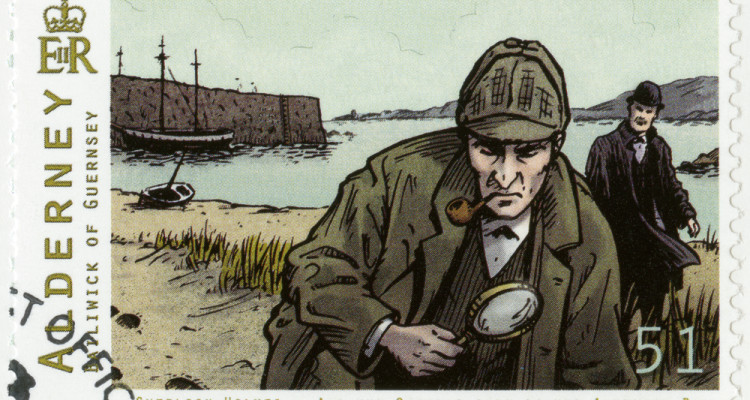
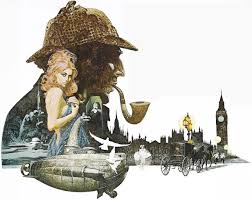 The fictional Holmes revelled in tiny details, and caught everyone by surprise by defining a subject with details relating to height, weight, gait, carrying a load, occupation and other surprising summaries simply by observing a wet foot print in a garden. He also explained how the evidence led to his accurate conclusion. And when the perpetrator was finally discovered and captured, the physical description was uncanny.
 Holmes identified and used fingerprints initially in The Sign of Four, published in 1890. Scotland Yard did not adapt fingerprint recovery, comparison, and identification process until almost 11 years after The Sign of Four was published. He did not use fingerprints as the defining evidence, however — generally, the case was irrefutably solved by a variety of clues leading to the correct solution.
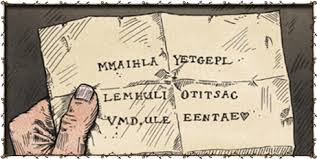 In many cases in Victorian times, clues were hidden in ciphers, or coded messages which required a ‘key’ to ascertain letter substitutions. In The Dancing Men, Holmes analysed 160 separate cyphers, determined that the letter ‘e’ was the most common letter in the English language, and was able to proceed to the answer. In “The Gloria Scott”, he deduced that every third word in lines of gibberish created the message that frightened Old Trevor.
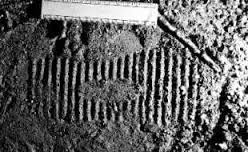 From the very first story in the Holmes series to the 57th story (The Lion’s Mane from 1926), 29 of the 60 stories revealed and solved footprint evidence. Footprints were found in soil, mud, and clay. They were on carpet, in snow, ash, and even on drapes and doors — each mark was worth discussion, each print told a story that was instrumental to the outcome.
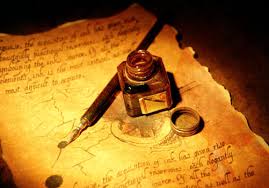 Holmes was able to deduce many details from the written word. By inspecting the pressure, angle, swirls, and consistency, Holmes could tell the gender, class, and maturity of the author. He could also make determinations about the character of the person whose penmanship was under scrutiny. In The Norwood Builder, Holmes determines by the timing of the imperfections in the scrawl of a will, that it was written aboard a train. Knowing that such an important document would not be transcribed in such a fashion, he correctly assumed duress.
 This article was originally published by my friends at Forensic Outreach, one of the best forensic education sites on the internet. They’ve now launched a new site called CASE Academy which I’m proud to support.
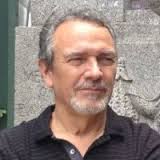 Doug Filter wrote this article for Forensic Outreach. He’s worked in legal support for three decades, developing visual communication tools that help litigators, prosecutors, and defense attorneys tell stories in court. Doug is an author, presenter, and designer. He’s worked on cases ranging from mapping body locations by interviewing a serial killer to explaining and animating the life style of trout in a water pollution case.