Louise Penny is a Canadian crime-fiction / mystery writer and international BestSelling author of the Chief Inspector Armand Gamache series. Louise graciously shares her thoughts behind her phenomenal success and on what it takes to get recognized in today’s traditional publishing world.
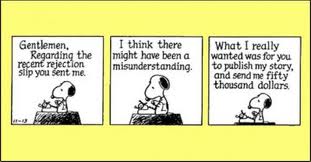 Like most writers – I was turned down more often than I care to remember, or cared to admit to my agent. Now, when it’s too late for her to dump me, I might as well admit it. A few things would have helped had I known them earlier. This is a small attempt to make your life a little easier, if you’re an unpublished author.
First – finish the book. Most people who start books never finish them. Don’t be one of those. Do it, for God’s sake. You have nothing to fear – it won’t kill you. It won’t even bite you. This is your dream – this is your chance. You sure don’t want to be lying on your death bed regretting you didn’t finish the book.
Read a lot.
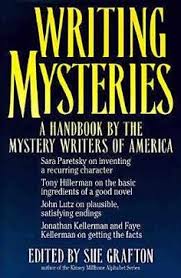 Read books on writing and getting published. I read Writing Mysteries, edited by Sue Grafton and published by Writers Digest. I also read Bestseller by Celia Brayfield and a bunch of other books including The Idiot’s Guide to Getting Published.
If this is your first time writing a book – why would you assume you know what you’re doing? Why put that sort of pressure and expectation on yourself? You might very well have an innate appreciation of character and structure and pacing. Some people do, and don’t need these books. Frankly, I’m not totally sure how much good they did me. But I know for sure they did no harm. And it was comforting to ‘listen’ to other writers and know they struggled with the same things. I felt much less alone and inept.
‘The cure for writer’s cramp is writer’s block.’
Inigo DeLeon
I suffered from writer’s block for many years. Terror had taken hold. I was afraid that, once tested, I’d prove my worst fear true – I was a terrible writer. What cured me was a sudden realization that I was taking myself way too seriously. And that I was trying to write the best book ever published in the history of the world. And if I didn’t, I was a failure.
I decided instead to just have fun with it. To write what I loved to read. And to people the book with characters I’d want as friends.
 Clearly we all choose our own characters – but make sure you’re going to want to spend lots of time with them. They don’t have to be attractive, kind, thoughtful. But they do need to be compelling. Look at Scarlet O’Hara. A petty, jealous, willful, vindictive character, almost without redeeming traits, whose tragedy is her failure to change. But she’s riveting.
‘Better to write for yourself and have no public, than to write for the public and have no self.’
Cyril Connolly
Be true to yourself.
Write what you want – even if friends and relatives think you’re nuts. And – be very careful who you show the first draft to. Once finished, I’d strongly suggest you make a list of ‘readers’, friends, acquaintances, friends of friends, who’ll read your work and critique it. This is a crucial stage. But remember, your ‘baby’ is fragile – as is your ego at this stage.
 Mine certainly was. I’d invested so much of myself a too harsh criticism or cruel critique (always said with a knowing smile) could have made me toss the whole thing away. I wish I could sit here and tell you I was strong and determined and centred and courageous about the first draft of STILL LIFE, but I wasn’t. And you’re probably not absolutely sure your first book is any good either.
Here’s the trick.
You need to get it into the hands of other people. You need to be open to criticism and guidance and suggestions. But you need to choose those people wisely. Some people are simply petty. Some people see it as their God-given purpose to find fault. This process isn’t about finding fault. Frankly anyone can do that. It’s facile. No book is perfect. It’s about making the book even stronger. You need supportive, encouraging, thoughtful readers. People who’ll offer critiques in a kind and constructive way and who understand the difference between truth and opinion.
‘A good writer must be willing to kill her young.’
Unknown
A novel should be more than 70,000 words in length.
 Publishers and agents judge length not by the number of pages, but by the number of words. Your computer will have a word count option. In Microsoft Word it’s under the ‘tools’ heading. You might aim for between 60 and 90-thousand words for a first book. There are always exceptions – some very successful debuts are mammoth, but you’re simply making it more difficult to find a publisher. Still, more than anything, you need to be true to yourself. If it needs to be 150,000 words, then go for it. But my first draft was 168,000 words. I cut it in half and it made the book much stronger. Once my ego and pride was set aside I was able to kill my darlings.
‘You must keep sending work out; you must never let a manuscript do nothing but eat its head off in a drawer. You send that work out again and again, while you’re working on another one. If you have talent you’ll receive some measure of success – but only if you persist.’
Isaac Asimov
Persevere. Believe in yourself.
If you’ve actually finished your first book – well, you’re AMAZING!
 You’re already so far ahead of the pack they can barely see your dust! Most people never even start that first book. Of the few that do, most never finish. If you’ve actually finished, well done! Frankly, as far as I’m concerned, the pact you made with yourself, probably as a child, is complete. You wrote the book. You did it. And, if it’s never published, you should have no regrets. I’m serious.
You’ve accomplished something most people only dream of.
Still, chances are, you want to get it out there, and why not. Here’s how I did it, and my suggestions – remembering that every writer has their own story and no one of us is ‘right’ – it’s just our opinion and experience.
Make sure your manuscript is as good as you can get it. Edit. Edit. Edit!
‘Don’t use words too big for the subject. Don’t say ‘infinitely’ when you mean ‘very’, otherwise you’ll have no word left when you want to talk about something really infinite.’
C.S. Lewis
Print out a copy for yourself. When you think you’ve finished set it aside for a few weeks then sit down and read the hardcopy. For convenience sake I print it out single-spaced, double sided and get it bound. Much easier to hold, and it feels like a real book! Thrilling.
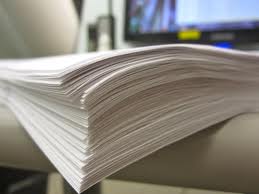 When it’s time to send it out, print double spaced, in 12-point, on white paper, single sided and do not bind the manuscript. Print your name and a key word from the title on the top of each page, in a corner. Eg. Penny/Still. There’s an automatic function for that on your computer as well. You don’t have to do it manually.Number the pages from the first page to the last. Don’t start the numbering fresh with each chapter. Don’t worry that the manuscript will appear to be huge. Always scares me when I see it at first. Looks like a dog house.
Aim high.
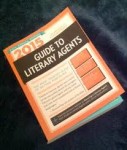 Might as well be turned down by the best. Buy those huge thumpin’ bricks of Guides To Agents and Publishers in your country – read them carefully. There will be essays on writing query letters, and each listing will tell you what the agent/publisher specializes in. Don’t waste your time – or theirs – by sending them a mystery when they only deal with non-fiction.
Send multiple queries. It takes a long time for them to get back. Go to conventions and network. Enter contests.
OK, here it is. This is how I got a leading London literary agent and three-book deals with Hodder/Headline in the UK and St. Martin’s Minotaur in the US. Ready?
I entered a contest.
 I was surfing the web and came across the Crime Writers Association in Great Britain and noticed their Debut Dagger contest. The Debut Dagger competition is open to anyone who has not had a novel published commercially. Click here to view the official CWA website.
There were 800 entries worldwide in my year (2004). They shortlisted 14, and I was one. I knew then my life had changed. As a reward for being shortlisted, we were all invited to the awards lunch in London. My husband, Michael, and I went.
 I came in second – and networked like mad. I cannot overstate the importance that award has had on my career. I met Teresa a couple of nights later, actually at a private party – but she knew my name and my submission. All good London agents who deal with mysteries read all the shortlisted CWA submissions.
‘There are three rules for writing the novel. Unfortunately, no one knows what they are.’
W. Somerset Maugham
Now – I did something else that was crucial to my success.
Before the awards I did my homework and found out who were considered the top agents in London. When Teresa introduced herself at the party I was able to look her in the eyes and truthfully tell her I’d heard of her and she was considered a top agent. I think that made an impression. If nothing else it showed a degree of work and commitment on my part.
In my experience you get out what you put in.
 The harder you work, the more research you do, the more knowledge you have, the better your chances of success. Which isn’t to say some people don’t walk in totally unprepared and have great success. And why not? I have no problem with that at all. Anyway that works is fine with me. But for myself, the more prepared I am, the calmer I am, the better my brain works. Again, it’s giving myself every chance of success, instead of handicapping myself through either fear or laziness.
There are other awards out there.
 The Crime Writers of Canada has the Arthur Ellis Award for Best Unpublished Mystery. It’s very exciting. The website for more information is: www.crimewriterscanada.com. Another important and exciting one for writers of traditional mysteries, like STILL LIFE, is given out by St. Martin’s Press and Malice Domestic, which is a fan run convention in Washington. Very prestigious. Very knowledgeable and sophisticated people. The great thing about this prize is that St. Martin’s agrees to publish your book if you win. You’ll find information on it at: www.minotaurbooks.com . You have to kind of root around in the site to find it, but it’s there.
There – my brain is empty.
If any of you have other suggestions for unpublished writers, please go to the ‘contact me‘ page on my website and send them to me.
 For instance Elizabeth Kimmel, a very successful writer of children’s books, wrote with a fabulous tip. She suggested that after you send out your first book to agents and publishers, while you are waiting for their response, instead of fretting – you might consider starting your second book. That way you pass the time doing something constructive and creative. Elizabeth did exactly that, and while her first book actually didn’t sell, her second – the one she wrote while waiting – did! And launched her career. Brilliant idea, Elizabeth. Thank you.
We need to support each other.
Isabelle Allende once said that the end doesn’t justify the means, the end is decided by the means. If we’re petty and greedy and shallow and put our need to win ahead of our humanity, then nothing good will come of our careers.
Others have helped me and I consider it a real privilege to help you by sharing this on DyingWords.
* * *
 Louise Penny is a prominent Canadian crime-fiction/mystery writer and a #1 New York Times and Globe and Mail BestSelling author. She’s best known for her series featuring Chief Inspector Armand Gamache of the Surete du Quebec mystery novels.
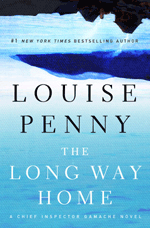 Louise has won numerous awards, including a CWA Dagger, an Anthony Award, the Agatha Award (five times), and was a finalist for the Edgar Award for Best Novel. Her work has been published in 23 languages. In 2013, she was made a Member of the Order of Canada “for her contributions to Canadian culture as an author shining a spotlight on the Eastern Townships of Quebec” where she lives with her husband.
Here’s a look at Louise Penny‘s books:
 Why do we study other animals and they don’t study us? What is it about the human brain that allows the cognitive ability for abstract reasoning and creativeness? What is it that makes the human brain so special? It comes down to one thing that humans do that no other living creature does.
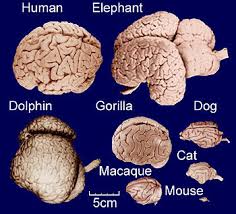 For years, mainstream science assumed that there was a direct relationship to the rate of intelligence and the size of the brain. However if you look at the brain of a cow to the brain of a chimp, they both weigh around 400 grams. Using that theory, the two species should have about the same intelligence. Carrying it further, a human brain weighs about 1.5 kilograms, an elephant’s is 4.5 kilos, and a blue whale tops out at 9 kg. Something clearly is wrong with the size of the brain vs. intelligence theory.
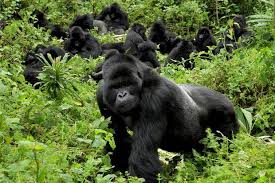 Gorillas spend most of their day feeding to supply energy in keeping a larger body mass fuelled, whereas humans only require three quick meals to support a smaller body but a larger and more active brain. Human brains are only 2% of our body mass but require 25% of our energy consumption to operate. Gorilla brains only consume 10% of their daily calorie intake. So what’s going on here?
 She developed a process to extract neuron nuclei from grey-matter cells and established that the average human brain contains 86 billion neurons – 16 billion in our cerebral cortex alone, which is by far the highest in any species and the seat of cognitive awareness.
 But our brain to body energy requirements are so much higher than apes, yet we feed far less. This led her to ask the question – What happened in our evolutionary process that made human brains so proportionately larger?
 We learned to use fire to pre-digest our caloric intake which supercharged the ability to fuel and grow the brain. Because of cooking high-calorie, high-protein foods, our brain size rapidly increased to becoming a large energy-consuming asset rather than a liability.