Tag Archives: Entropy

CRITICAL THINKING — THE GREAT MENTAL MODELS Part One

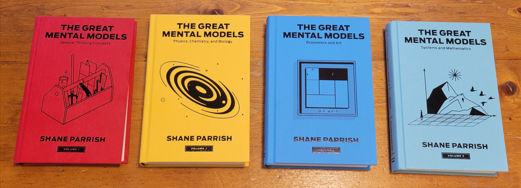
One trait setting humans apart from other species on this planet is thought. Next to our closest competitors, the octopus and the orangutan, humans far surpass at deep cognitive processing and complex problem solving. Recently, there’s a significant breakthrough in aiding human advancement to understand and know general reality concepts. It’s a four-volume tutorial called Critical Thinking — The Great Mental Models.
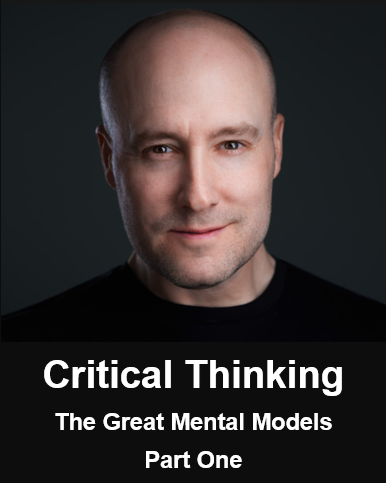
Shane Parrish is an internet thought leader and author of The Great Mental Models. Shane also hosts Farnam Street and The Knowledge Project Podcast. His sites’ taglines are Master the Best of What Other People Have Already Figured Out and The Best Way to Make Intelligent Decisions.

Shane opens the Mental Models series with, “Education doesn’t prepare you for the real world.” He says, “The key to better understanding the world is to build a latticework of mental models.” Mental models, according to Shane Parrish, describe the way the world works in simplicity. They fundamentally, and without complication, shape how we think, how we understand, and how we form beliefs.

Largely subconscious, mental models operate beneath the surface. We’re not generally aware of them, and yet when we look at a problem, they’re the reason we consider some factors relevant and others irrelevant. They are how we infer causality, match patterns, and draw analogies. They are how we think and reason.

A mental model is a compression of how something works. Any idea, belief, or concept can be distilled down. Like maps, mental models reveal key information while ignoring the nonessential.

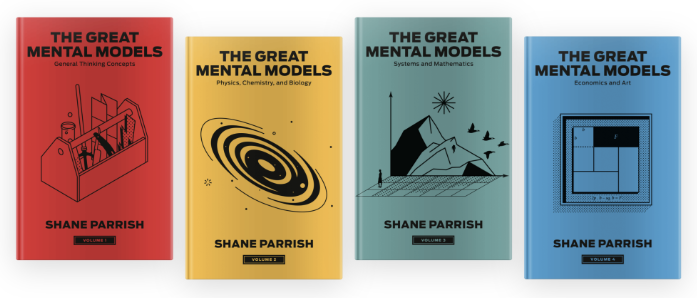
I’ve subscribed to Farnam Street and The Knowledge Project Podcast for the last six years. The insight and value I’ve received, particularly in creativity, has been far greater than the price of admission. So, it was with great anticipation that I waited for last Christmas when Shane Parrish and Penguin released the four-volume Great Mental Models in hardcover.

For the last three months, I’ve been immersed in the critical thinking concepts loaded throughout the Mental Models pages. And over the years (sixty-eight of them), I’ve developed a research and learning style that (for me) truly pays. I’m able to accurately absorb and retain information, converting facts into useful knowledge, through a simple process that I’d like to share in a two-part post.

Part One is an overview of Shane Parrish’s Mental Models and how my system applies. Part Two, being published two weeks from now on 19Apr2025, will be a much deeper dive into how to work the Great Mental Models and how they can work for you.

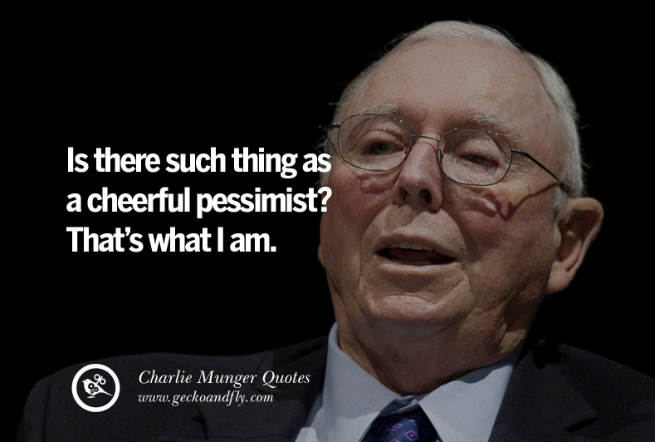
Two profound influences on Shane Parrish are Charlie Munger and Peter Kaufman. Munger, who recently passed away at age 99, was the co-founder of Berkshire Hathaway with the famed investor Warren Buffet. Charlie Munger was among the finest thinkers of the past century, and he died a multi-billionaire.

Peter Kaufman is also a wealthy man. Kaufman is an entrepreneur, venture capitalist, and acclaimed writer. Along with Parrish, he edited many of Charlie Munger’s latticework of mental model essays and assembled them into a book titled Poor Charlie’s Almanac. It’s from these essays that the Knowledge Project took life. Now it’s evolved into The Great Mental Models.
Throughout Mental Models, you’ll see a constant reference to “Latticework”. It’s worth an initial definition:

The latticework concept essentially revolves around building a toolkit of frameworks from various disciplines to help improve decision-making and problem-solving abilities.

The idea is that no single mental model is sufficient to tackle all the complex problems the world presents. Instead, having a broad and interconnected set of models from diverse fields—such as economics, physics, biology, psychology, and more—allows one to view problems from multiple perspectives. This multidisciplinary approach can significantly enhance one’s ability to understand, adapt, and react effectively to different challenges.

Charlie Munger popularized this approach in his famous speech “The Psychology of Human Misjudgment,” where he discusses the importance of these models in helping to avoid cognitive biases and make better decisions. By developing a latticework of mental models, one can better connect the dots between seemingly unrelated information and insights, leading to more effective and informed decision-making.
Simply stated, The Great Mental Models synthesize timeless wisdom from various disciplines to empower readers/thinkers to make better decisions, solve complex problems, and think more clearly. Clarity of thought is a goal even the greatest minds strive for. Although many people use many methods, they all come down to a fundamental reality—the information they seek is available if they apply the foundation of critical thinking.

Before we get into the overall outline of what’s in The Great Mental Models, I want to share two indisputable truths that shaped my worldview and exponentially boosted my thought input and output processes. This change in critical thinking attracted opportunities I never would have found without properly understanding and working with, not against, these two opposing forces. One is compounding. The other is entropy.

Compounding and entropy are fully covered in The Great Mental Models. Cleverly, Shane Parrish sprinkled bits and pieces of entropy and compounding details throughout the series. Although he deals with each principle on their own, he’s used compounding and entropy concepts/principles (not laws) as subtext. They are the true takeaways—supported by all the tools in the lattice framework—and he’s left it for you, the reader, to experience your “Ah-Ha!” moment when you understand the constructive and destructive forces of compounding and entropy that govern the universe.

Let me introduce you to a learning and retention system I’ve developed over the years that I use for all topics and projects. I’m not saying it’s perfect by any stretch or that it will change your game. I just (at this age) know myself, and I know what works for me because I’ve been using the system for a long time, and it has a proven ROI—return on investment.

For a project like digesting, understanding, and retaining timeless truths and wisdom found in Mental Models, I shelled out a hundred and twenty bucks US for the printed, hardcovered books—not the ebooks—and at the time of purchase (Christmas 2024) the paperbacks weren’t available. Check Amazon and you might find them on sale for less.

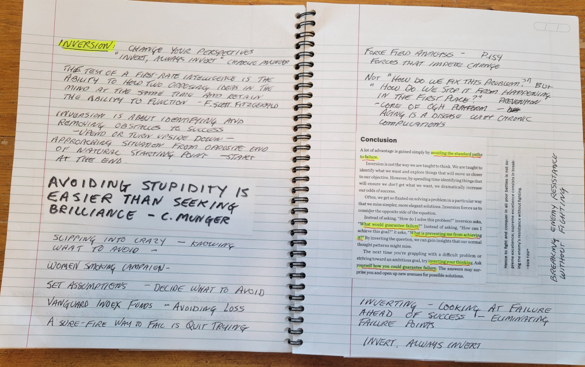
I learned a reading and retention trick from my mother who was an English teacher and avid book devourer. That’s to mark up the pages with underlines and notes. Being a visual learner, this method has the best returns (for me), and I use a process of red underlines, yellow highlights, and black hand-printed notes. Yes, I mark the hell out of the pages.

I also keep a notebook specific to the project where I’ll transpose content as I understand it along with my developing thoughts, questions, and “get-its”. I use an 80-sheet Mead-Cambridge 8 ½ x 11 spiral bound book with wide rules as it’s easy to handle and can be laid flat without the thing wanting to spring itself closed. See pictures.

Besides notes, I also photocopy diagrams, pictures, and passages from the hardcovers then cut and paste them onto the notebook pages. I’m sure that to a stranger sifting through my stuff, they might think I’m doing a ketamine experiment but, hey, it works for me and I’m stickin’ to it.

I also search terms and ideas on the internet as I progress. If I find something useful, I’ll screenshot it and print n’ paste as well. And I’m not afraid to say I constantly use ChatGPT4.5 to clarify matters and bounce ideas off. Did I use Chat to write some of this post? Maybe. Maybe not. 😊
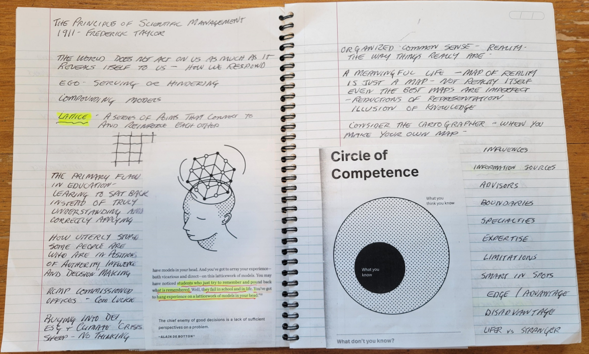
Something extremely useful in the Great Mental Models is the “Conclusion” at the end of each idea. It sums up the concept in clear and comprehensible language. I photocopy each conclusion and then tape it into the notebook. Again, being visual, it makes the material jump right out.

That’s the simple learning and retaining process I use. You’re more than welcome to own it. Now, let’s dive into the overall of what you can find in Mental Models that’s as rich in practical content as it is in intellectual treasure. Here’s what each volume brings to your table:

Volume 1: General Thinking Concepts

The opening act of this series, “General Thinking Concepts,” lays down foundational blocks for building a robust mental toolkit. It’s all about broad principles that apply across various fields. Think of it as the Swiss Army knife in your cognitive toolbox. Key models covered include:

  • Introduction: Acquiring Wisdom
  • The Map is Not the Territory
  • Circle of Competence
  • First Principles Thinking
  • Second-Order Thinking
  • Probabilistic Thinking
  • Inversion—Always Invert
  • Occam’s Razor
  • Hanlon’s Razor

This volume is a powerhouse that prepares your mind to think critically and avoid common, cognitive bias errors like misrepresentations or overly narrow focusing.

Volume 2: Physics, Chemistry, and Biology

In “Physics, Chemistry, and Biology” the series shifts from general thinking to the specific laws governing our physical world. This volume uses fundamental scientific principles to illuminate ideas that affect our everyday decisions and observations, including:

  • Relativity
  • Reciprocity
  • Thermodynamics
  • Inertia
  • Friction and Viscosity
  • Velocity
  • Leverage
  • Activation Energy
  • Catalysts
  • Alloying
  • Evolution One: Natural Selection and Extinction
  • Evolution Two: Adaptation Rate and the Red Queen Effect
  • Ecosystems
  • Niches
  • Self-Preservation
  • Replication
  • Cooperation
  • Hierarchical Organization
  • Incentives
  • Tendency to Minimize Energy Output

By exploring these foundation models, readers gain insights into how universal principles of physics, chemistry, and biology can guide better decision-making in both personal and professional spheres.

Volume 3: Systems and Mathematics

The third volume, “Systems and Mathematics”, brings a holistic view, emphasizing core ideas like the whole is greater than the sum of its parts. This volume is about understanding complex, mathematical systems and navigating them effectively such as:

  • Feedback Loops
  • Equilibrium
  • Bottlenecks
  • Scale
  • Margin of Safety
  • Churn
  • Algorithms
  • Critical Mass
  • Emergence
  • Irreducibility
  • Law of Diminishing Returns
  • Compounding
  • Sampling
  • Randomness
  • Regression to the Mean
  • Multiplying by Zero
  • Equivalence
  • Surface Area
  • Global and Local Maxima

A quote from Mental Models says it well. “In spite of what you majored in, or what the textbooks say, or what you think you’re an expert in, follow a system wherever it leads. It will be sure to lead across traditional disciplinary lines.”

Volume 4: Economics and Art

Finally in Volume 4, “Economics and Art”, we move from the theoretical to the practical. This is solid, real-life information that just may change your perspective on many things in life like:

  • Scarcity
  • Supply and Demand
  • Optimization
  • Trade-offs
  • Specialization
  • Interdependence
  • Efficiency
  • Debt
  • Monopoly and Competition
  • Creative Destruction
  • Gresham’s Law
  • Bubbles
  • Audience
  • Genre
  • Contrast
  • Framing
  • Rhythm
  • Melody
  • Representation
  • Plot
  • Character
  • Setting
  • Performance

This volume, with fascinating insights on economics and art (fiction writing included), wraps up the series by empowering readers to see beyond individual elements and appreciate the interconnectedness of all things—physical and metaphysical.
Each of The Great Mental Models books builds on the previous, crafting a comprehensive guide designed to sharpen your analytical abilities and decision-making skills. By the end, you’re not just equipped with theoretical knowledge, but with practical tools applying across your personal life, professional practice, and beyond.

Shane Parrish put a tremendous effort into producing this latticework frame. Reading and absorbing Mental Models might transform how you critically think about the world—and how you interact with it. It certainly did for me, and the three months of immersion in Mental Models were the most cerebral exercises in my life.

Watch for Part Two of Critical Thinking — The Great Mental Models on Saturday 19Apr2025 at 8:00 am PST on DyingWords.net where we’ll do a deep-end dive into each of the fundamental concepts. It’s gonna be a long one.
Powered by a Centaur System ©

IMPERMANENCE / CHANGE — WHAT’S UP FOR YOU THRU GARRY RODGERS IN 2025

Impermanence means change. The arrow of time. Progression and alteration are fundamental operating principles that govern the evolution of the universe as well as oversee the mutating human condition. There are a lot of synonyms for impermanence and change—variation, transformation, improvement, revolution, fluctuation, renewal, transience, volatility, growth, succession, advance, and movement come to mind. But probably the best words for impermanence or change are compounding and entropy. Ying and yang. Construction and destruction. Additive and substractive. Effort and passive. Go and let go.

2024 was a year of massive change in my life. No, my family, friends, and finances are intact. Probably in better condition than ever. The impermanence was internal, in myself, both physically and mentally. 2025 promises more refinement which I hope parlays into offering you positive benefits gained from my experience. Let’s look at what happened to me this past year and what’s up for you thru Garry Rodgers in 2025.

My physical health was the shits back in January. I suffered from chronic inflammation. One area was my neck where the sternocleidomastoid muscles (SCM) had seized following an accident where I cracked a couple of cervical vertebrae. I was so stiff that I could not shoulder check, never mind look around and enjoy life.

The other ill area was my gut. For years, I’d suffered from an upper GI ulcer. By January, it’d inflamed to the point where I was barely able to eat. If I could swallow, it wouldn’t stay down, and my only medicine was bananas.

Between my shoulders and my stomach, I was a physical mess. Rita, my wife of 41 years, and I took up serious hiking hoping it’d help. Walking was a good fit, we thought, as it’d get us out and active. Me trying to loosen with less pukin and Rita expanding her Noom wellness program that has worked wonders for her. By the way, I turned 68 this fall and she’s 66.

On June 1st we hiked the Qualicum Falls trail on Vancouver Island and were introduced to the fungi Tramete Versicolore. This mushroom is commonly called Turkey Tail, and it has anti-inflammatory properties. Amazing properties, as within one day of ingesting this miracle supplement my ulcer pain eased and within the week my muscles released. Read the post I wrote about Turkey Tail which explains it from a medical science point.

I’m now completely discomfort-free, fully rotational, can eat like a Medeterainian goat, and my body is back to its 30-year-old state. I’m not exaggerating. Through a committed exercise routine practiced over the past six months, I now exceed the physical fitness standard required when I was an Emergency Response Team (SWAT) police officer back in my twenties and thirties.

Rita and I turned our hiking game into rucking. Rucking is trekking with poles and a weighted rucksack. We aim for 8,000 steps per trip but did one day of 16,653. Rita has a step counter as part of her Noom commitment.

In the fall, I took up roping. That’s ascending and descending a steep hill face using a rope. That’s being upped now to rappelling and rock climbing. For Christmas, I got a complete set of climbing gear which I tried out today. It’s an amazing full body workout, but I am sore. No pain, no gain they say.

In the mental department, during 2024 I became a serious student of Stoicism—Stoicism being a philosophy, not a religion. To help understand this ancient wisdom and guidance in life, I wrote a blog post on it. I’ve also filled five notebooks with quotes and personal observations about this Hellenistic practice. A high point in November was hearing Ryan Holiday live in Vancouver. He’s the host of The Daily Stoic site and has over a million followers.

I didn’t publish any books in 2024. My focus was on producing content and appearing on-camera in the film industry. I teamed with Global/Hulu on Crime Beat which will continue in 2025. It’s fun, but the film highlight of the year was framing (writing outlines) for 26 episodes of City Of Danger which is a Netflix option. We’re waiting until a new delivery technology is ready that takes text and turns it into audio and visual. Here’s my web page for City Of Danger.

Moving on to 2025, I’m expanding my curiosity in critical thinking and how it applies to understanding human nature. I’m influenced by Shane Parrish and his Farnam Street site and Knowledge Project podcast. In November, Shane released his four-volume set called The Great Mental Models which are based on insightful works by the late and great Charlie Munger. If you don’t recognize the name, Munger was Warren Buffet’s partner at Berkshire Hathaway and is considered one of the great critical thinkers of modern times.

Once I get a grip (absorbing and understanding) the content in these books, I’ll do a condensed form on a Dyingwords post. I find writing about a subject is my best way to retain the knowledge. Which leads me to this. The critical thinking concept is something I’ve taken more and more interest in this past year.

I guess I’ve come to a life point where, as stoic as I try to be, some things outside my control seriously alarm me. One is how scrolling for a dopamine hit is replacing how to read, think, and write. I wrote a post on this and republished an article written by Paul Graham titled Write and Write-Nots.

Mr. Graham raises a concerning point—how so many people, especially professional people, are relying on artificial intelligence to aid in their writing which replaces their thinking. Here’s a quote from his piece:

The reason so many people have trouble writing is that it’s fundamentally difficult. To write well you have to think clearly, and thinking clearly is hard.

AI has blown open this world. Almost all pressure to write has dissipated. You can have AI do it for you, both in school and at work.

The result will be a world divided into writes and write-nots. There will still be some people who can write. Some of us like it. But the middle ground between those who are good at writing and those who can’t write at all will disappear. Instead of good writers, ok writers, and people who can’t write, there will just be good writers and people who can’t write.

Yes, it’s bad. The reason is something I mentioned earlier: writing is thinking. In fact, there’s a kind of thinking that can only be done by writing. If you’re thinking without writing, you only think you’re thinking.

So, a world divided into writes and write-nots is more dangerous than it sounds. It will be a world of thinks and think-nots. I know which half I want to be in, and I bet you do too.

This situation is not unprecedented. In preindustrial times most people’s jobs made them strong. Now if you want to be strong, you work out. So, there are still strong people, but only those who choose to be.

It will be the same with writing. There will still be smart people, but only those who choose to be.

AI replacing critical thinking and original writing concerns me. Deeply. It shouldn’t, as it’s completely beyond my control and one of the core tenets of Stoicism is the dichotomy of control—focus on what you can control and detach from what you cannot control.

Having quoted this excerpt from Paul Graham, I readily admit to using ChatGPT4 daily. It’s a phenomenal research tool and idea-bouncer. But it (currently) sucks at creativity and critical thinking. That’s quickly changing as it gets more intuitive and informed. We truly are in the age of the rise of the machines and rapidly moving toward the Singularity.

Lightening up, something I’ve become aware of while ruck ‘n roping out in nature is the immune system power-boost of phytoncides—the organic compounds gassed-off by trees and other plants. The Japanese have a name for experiencing the incredible immune system benefits from phytoncides. It’s called Shinrin-yoku which translates to “forest bathing”. I recently wrote a post about this, too.

My life progression (impermanence/change) in 2024 leads me to an awakening, a realization, in how awareness of positive physical and mental health contributes to a significant extension in longevity—an increased healthspan (the number of years of healthy living) and an increased lifespan (the number of years staying alive).

Which brings me to some 2025 news. I’ve volunteered for a longevity study program with the Buck Institute in California. Yes, a human guinea pig or lab rat. This cutting-edge research project tracks the participants quarterly by monitoring their key parts of life that build a holistic base to health and longevity; diet, exercise, sleep, mind, and purpose.

I’ll daily track these keys and every three months my progress will be entered into a data bank that follows and analyzes my aging pattern. I’ll also submit a blood sample that measures 64 biomarkers that form the hallmarks of aging. I’m truly looking forward to this journey.

Finally, something I’m also looking forward to in 2025 is building OldGoats.Health. This is the first time I’ve publicly mentioned this web-based wellness resource that’s been percolating in my mind since I made the personal wellness commitment on turkey tail day. OldGoats.Health (OGH) is senior-focused as a trustworthy and useful curator/aggregator of credible information on the longevity industry and personalized medicine which is becoming hugely popular among us old goats.

The OGH project is a website homebase with what-you-need-to-know about the disease of aging, the longevity industry, and how you can slow, stop, and potentially reverse your aging process thereby increasing your longevity stay in the old goat pasture. It’ll have continually updated information paddocks—Diet, Exercise, Sleep. Mind & Purpose as well as a free weekly newsletter and a fluid, premium-content Substack subscription presence with a community sharing forum. As far as I know, there’s nothing like this and it should be live by July.

So, that’s what’s happened in 2024 to motivate me in 2025. My commitment to you is sharing what I’m learning about living a long and healthy life (fighting entropy through compounding) so hopefully you benefit, too. Also, you can continue to expect Dyingwords posts on life, death, and writing every second Saturday morning at 8:00 am Pacific. Yes, I’m going to do more true crime analysis.

Thanks for your support and may you have a safe, healthy, happy, and prosperous 2025 new year!

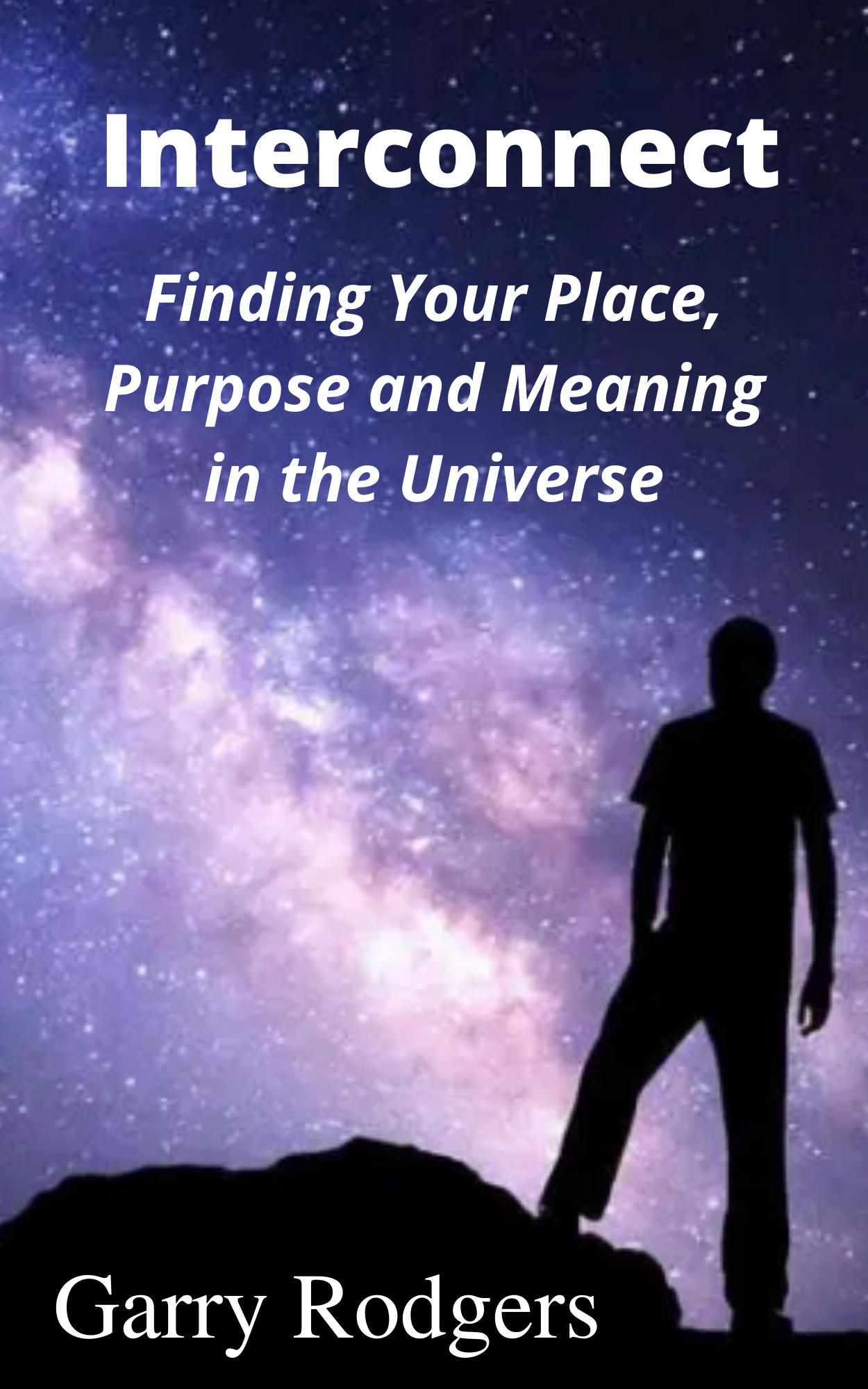
INTERCONNECT — FINDING YOUR PLACE, PURPOSE AND MEANING IN THE UNIVERSE

This piece is downloadable in full-length PDF format by clicking the blue bar button at the screen’s top or as a Kindle eBook and PDF through links at the end.

Once upon a time, a youth lay on their back and gazed in awe at the starry sky. The moon waned as a dim crescent—God’s Thumbnail, some call it—which let the universal brilliance of consciousness resonate in the youth’s eyes. Billions of fireballs blazed above, and countless more stars couldn’t be seen. The cosmos had cracked its coat. Like a galactic exhibitionist teasing eternal entropy, the universe flashed a perfect picture of order defying chaos and displayed an unbashful interconnection with all its occupants, including the star-gazing youth.

If you remember… that youth was you. Regardless if your years are still young, you’ve reached middle-age or are now advanced in time, the wonder of universal questions remains etched in your mind. Who are you? Where did you come from? Where are you going? And what is your interconnected place, purpose and meaning in the universe?

These are timeless queries people like you’ve asked since humans first consciously observed the heavenly heights. Long ago, your ancestors used their emerging awareness to question universal curiosities. It’s a natural thing for humankind to look for simple answers to straightforward questions and, no doubt, you’ve queried them many times during your earthly existence without receiving any clear response.

For centuries, sages and scientists pondered the meaning of existence within the universe. They’ve debated scientific theories and proposed philosophical solutions to deep puzzles boldly presented in the macro and micro worlds. You’ll find narrow common ground on who’s right and who’s wrong which leaves you to wonder what nature’s realities truly are.

Albert Einstein equated that science without philosophy was lame and philosophy without science was blind. That great scientific sage also spent the second half of his life looking for the Grand Unified Theory (GUT) that interconnects everything in the universe. That includes your place, purpose and meaning.

As wise and astute as Einstein was, he didn’t complete his mission of tying the universe into a nicely packaged bow. It’s not that he didn’t believe all parts of the universe were intrinsically interconnected. Einstein knew in his gut that all physical laws and natural processes reported to one central command. That, ultimately, is the universal dominance of consciousness that allowed your creation and will one day destroy you through eternal entropy.

This isn’t a religious treatise you’re reading. No, far from it. It’s simply one person’s later-in-life reflection on three interconnected and universal curiosities. What’s your place? What’s your purpose? And, what’s the meaning in your life?

To find sensible suggestions, it’s necessary to dissect what’s learned (so far) of universal properties and what’s known about you as a human. You’re a conscious being housed in a physical vessel and controlled by universal principles. You had no choice in how you came to be here, but you certainly have choices now. Those include placing yourself in a safe and prosperous environment, developing a productive purpose and enjoying a rewarding meaning from the limited time you’re granted to be alive.

At the end of this discourse you’ll find a conclusion about your place, purpose and meaning in the universe. It might be one person’s opinion, but it’s based on extensive research and over six decades of personal experience. However, for the conclusion to make sense you need to take a little tour through the universal truths.

Ahead are a layman’s look at the origin of the universe, classical and quantum physics, chemistry, biology, anatomy, neuroscience and the life-changing principle of entropy. It’s also a dive into what’s not known about the biggest scientific and philosophical mystery of all—how consciousness manifests through the human brain and how entropy tries to kill it. Now, if you’re ready to interconnect with the universe, here’s what your place, purpose and meaning truly are.

The universe is enormous. It’s absolutely huge. There aren’t proper adjectives in the English language to describe just how big the universe really is. Perhaps the right word is astronomical which means exceeding great or enormous.

People often use the word “cosmos” interchangeably with “universe”. That’s not correct. Cosmos refers to the visible world extending beyond Earth and outward to the heavens. The universe incorporates all that’s in the macroscopic or outward realm, but the term also drills down and incorporates everything within the micro-regions of molecules, atoms and then into sub-atomic realities where quantum stuff gets seriously strange.

In Chemistry, Biology and Physics 101, you learned you’re created of energized matter built of complex material formed by atomic and molecular chains. So is every set-piece in the micro and macro universe. All visible matter contains material made of atomic structures that strictly obey standard operating procedures set down during the universe’s birth.

How that happened is explained by a few different theories. Religious accounts, depending on the flavor, hold that an omniscient supernatural power created the universe at will and for a vain purpose. Current scientific accounts dismiss all supernatural contribution and exchange it with a series of natural orders called the laws of physics and non-tangible processes of the universe.

Most scientists don’t attach an intentional purpose to the universe. They leave that to philosophers who tend to argue with abstract thoughts that aren’t backed by hard evidence. Then, there are those who think the universe is simply a grand thought.

No matter who’s right and who’s wrong, there are a few facts you can personally bank on. One is that you exist in a physical form and use consciousness to be self-aware. That includes knowing you have a place in the universe, a purpose for being here and there’s a meaning to your life.

As said, this isn’t a religious paper. Religion can be a matter of faith but, then, so can science. The difference is that science relies on direct observation, proven experiments and the ability to replicate results. Science also depends on building hypothesizes, turning them into theories and then certifying them as facts.

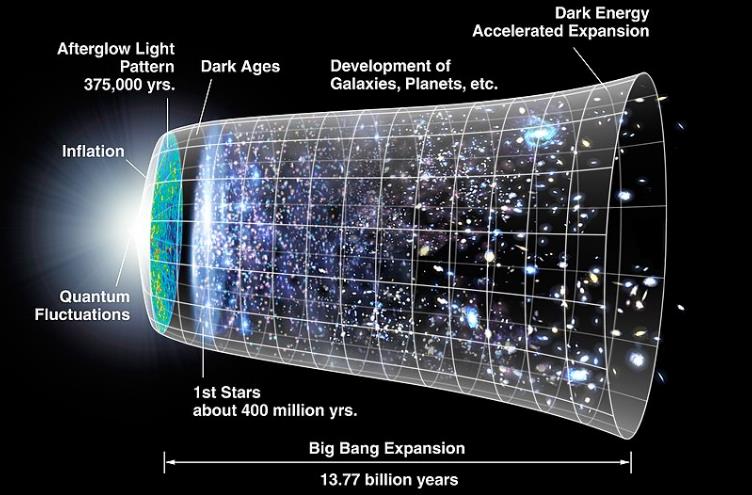
No particular physicist claims sole authorship of the Big Bang Theory. Currently, the Big Bang Theory is the leading account for the universe’s origin, and it’s generally accepted throughout the scientific community as being the best explanation—so far—of where your structural matter originated. It goes something like this.

In the early 1900s, an astronomer named Edwin Hubble (the space telescope guy) was busy measuring galactic light and came upon his profound realization that the observable universe was expanding. Not only was the universe growing, Hubble exclaimed, but it was also accelerating its expansion rate. That led to a logical conclusion that the universe must have started in a singular place and at a specific time.

Some of science’s brightest folks worked on mathematical extrapolations and built the theory postulating that all matter and energy in today’s observable universe must have been once compressed in a singularity that exploded. That big bang started the time clock, created space, released energy and formed matter. It’s been growing ever since and, along the journey, you were created as an interconnected part.

This sounds like a pretty big undertaking. It also sounds pretty far out to think everything in the known universe was stuck in the space smaller than an atom where it was exceedingly hot and heavy. Well, guys like Einstein and Steven Hawking accepted the Big Bang Theory as fact, although Einstein famously quipped, “God knows where that came from.”

Without any other scientific direction to go on, what you see in the universe got started from a single point and is enormously here in its present form and place. The best-educated guesses place the universe’s age at about 13.77 billion years, give or take a few hundred thousand. This rough age-estimate comes from measuring Cepheid Variable Pulsating Stars (CVPS) with the Hubble Space Telescope which has proven to be quite useful once NASA got its foggy lens fixed.

The size of the observable macro, or outer, universe is impressive. Current measurements find the most distant visible electromagnetic radiation to be 46 billion light-years from Earth. That’s in every direction where the radio telescopes pick up the Cosmic Background Radiation (CBR) signal. Astronomers believe the CBR is a leftover mess occurring about 300,000 years after the Big Bang. If the true universal distance radius is 46 billion light-years, then the entire trip across occupied space is around 92 billion light-years in diameter.

That is a massive distance. It’s gigantic, humongous and colossal. Light, which is electromagnetic radiation, travels at 186,000 miles per second or 300,000 kilometers per second. That means that in one year a light particle can travel 5.88 trillion miles or 9.5 trillion kilometers. Multiply that by 92 billion and you’ll see that it’s a long, long way across the visible universe.

That’s just the macro universe that astronomers can see with current technology. Most scientists agree they’ve only explored something like four to five percent of the visible universe, and there’s far more out there than known today. This is an ongoing search with exciting discoveries emerging all the time.

To get a feel of where your physical place is in the macro universe is, you’re on the surface of a planet called Earth. Your home base is 93 million miles or 150 million kilometers from the sun which is a common-type star. It takes eight minutes for light to leave the sun and meet your eyes. To put this distance in perspective, a light particle can circle the Earth seven and a half times in one second.

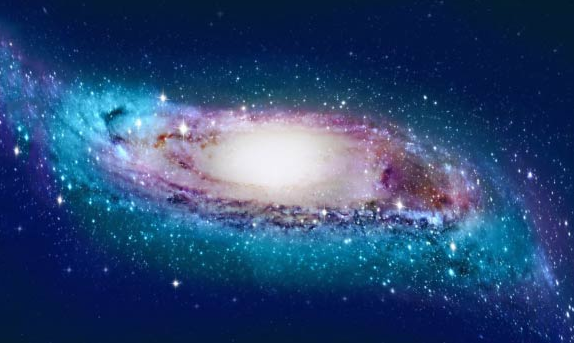
The solar system extends a long way out. Pluto, which has returned its classification into the planet family, is seven hours distant from the sun via light speed. Going further, your planetary arrangement orbiting the sun is in one part of your home galaxy called the Milky Way. The sun is approximately 30,000 light-years from the big black hole at the Milky Way’s center, and you’re actually closer to the nearest independent galaxy than you are to the Milky Way’s core.

No one knows how many stars there are in the Milky Way. It’s a countless number. The current consensus is there may be a trillion stars in your home galaxy. Some astronomers feel there could be a trillion or more galaxies in the visible universe.

The Milky Way is part of a galactic bunch called the Local Group. These 54 assorted-shape star arrangements form part of a larger galactic collection known as the Virgo Supercluster. This is a big, big crowd but nowhere near what’s really going on out there.

Recent astronomical observations confirmed that beyond the Virgo Supercluster lies a monster called “Laniakea” which is Hawaiian for “Immeasurable Heaven”. This stupendous structure sits in a part of space called the “Zone of Avoidance” where the clouds of dust and gas are so thick that visible light is impossible to perceive. Astonishingly, Laniakea and the Virgo Supercluster are being pulled together across space and time by a behemoth force nicely titled the “Great Attractor”. No one knows what that force field is, but it’s powerful.

As you lay on the Earth’s surface and gaze at the starry sky, you’re not seeing reality. You’re only seeing light that left its emission point a long time ago. If you spot Andromeda, the only independent galaxy visible with your naked eye, you’re seeing that structure as it was two million years ago. For all you know, Andromeda may no longer exist.

The universe can play a lot of tricks on an observer. But one thing the universe never does is change its basic operating rules. Space, time, energy and matter follow strict laws that apply everywhere throughout the universe. Whether you’re on Earth, in Andromeda or around Laniakea, all fundamental forces behave the same way.

There are four fundamental forces in the entire universe—both in the macro and micro worlds. Those are electromagnetism, gravity, the strong nuclear force and the weak nuclear force. Space, time, energy and matter all adhere to these four forces from which many physicists have tried to find a common denominator to frame the Grand Unified Theory (GUT).

So far, no luck. Einstein spent the second half of his life working on a unified theory. His intuition told him unification lay in an infinite pool of information which is the non-visible and non-tangible factor that gives space, time, energy and matter its direction. This information or intelligence principle certainly seems to be real, and it’s captured in the acronym STEMI for Space, Time, Energy, Matter and Information or intelligence. It might also be universal consciousness.

Information permeates the entire universe. It somehow laid down the four forces emerging from the Big Bang and then made other rules or laws of physics which carried throughout the entire regions of reality. However, what the rules say about operating the outward cosmos are not exactly the same rules as those governing sub-atomics.

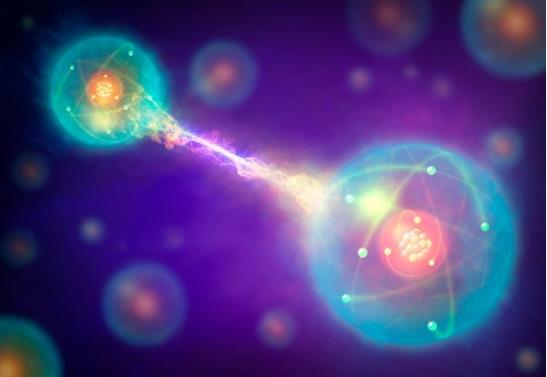
What directs your existence in the macro world adheres to classical or Newtonian physics. Down in the microcosm realm, though, your matter and energy have different masters. The wee parts of you behave according to quantum physics which are somehow interconnected back into classic physics and STEMI.

*   *   *

To read the rest of Interconnect and find the conclusion of what your place, purpose and meaning in the universe really are, follow these links for a free, full-length download. It’s a relatively short piece at 11K words and you might just find it quite worthwhile.

For a FREE PDF eBook of Interconnect – Finding Your Place, Purpose and Meaning in the Universe, please click here:  Interconnect Manuscript PDF

(You can also click on the button in the blue bar at the top of the screen for a quick PDF download of Interconnect.)

For a FREE Amazon Kindle/Mobi eBook of Interconnect – Finding Your Place, Purpose and Meaning in the Universe, please click here: Interconnect Manuscript Amazon Kindle/Mobi

(This link will take you to my Amazon sales page where Interconnect is temporarily available as a FREE promotional Kindle eBook. I’d appreciate if you’d get a Kindle copy as this drives my Amazon ranking up. Thanks!)

If you have any difficulties downloading any efile type, please email me at garry.rodgers@shaw.ca and I’ll ship you an attached copy. Also, please feel free to share Interconnect. It wasn’t written as a money-maker. Rather, it’s a personal letter to myself in an attempt to figure it all out. Here’s one of the principle take-aways: