Tag Archives: Reality

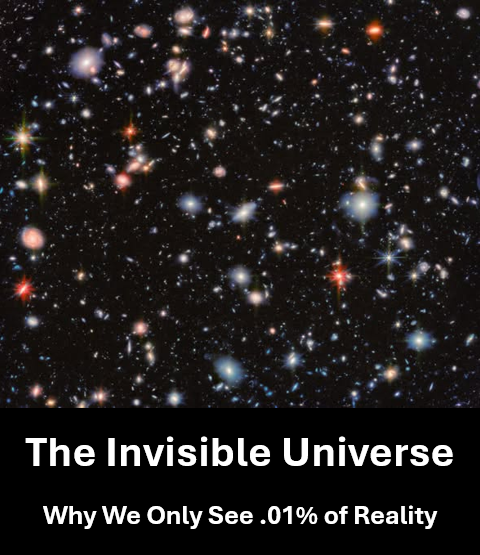
THE INVISIBLE UNIVERSE: WHY WE ONLY SEE .01% OF REALITY

We humans like to think we see the world clearly. We trust our eyes, rely on our ears, and lean heavily on what our senses tell us. But the truth is we only experience a tiny sliver of what’s actually happening around us, and it’s far smaller than most people imagine.

Science shows we directly perceive less than .01 percent of physical reality. That figure interested me when I first learned it. It still does. And once you understand what it really means, it changes the way you look at everything from human behavior to the mysteries of the cosmos.

Let’s take a deep look at the unseen layers of existence that surround us every second. We’ll find out why our senses evolved the way they did, why they hide far more than they reveal, and how modern tools like artificial intelligence are now helping us peek beyond the edges of our biological bubble.

This is one rabbit hole worth going down, and I think you’ll find it as fascinating as I do.

We humans didn’t evolve to understand the universe. We evolved to survive in it. And that single fact explains almost everything about the limits of our perception.

Our eyes, ears, noses, and fingertips aren’t scientific instruments. They’re crude survival tools. They detect just enough information to keep us alive and breeding, and not one bit more. Nature optimizes for advantage, not enlightenment.

That’s the starting point for what we’re about to explore.

When you think about the world this way, the blind spots start to reveal themselves. Our senses aren’t windows into truth. They’re filters. They’re narrow tunnels carved to keep us safe from predators, let us spot a ripe berry, or help us read a friend or foe. They don’t show us reality. They show us whatever slice of existence improved our odds of getting through another day on the savannah.

We’re not designed for truth. We’re engineered for survival.

That might sound bleak. But once you appreciate what’s going on, it’s liberating. It explains why humans get fooled so easily. Why we misjudge people. Why we fall for narrative stories instead of hard facts. Why we argue about things that don’t matter and miss things that do. And it explains why technology—especially emergent AI—has become one of the most powerful tools we’ve ever created for seeing beyond our built-in limits.

To understand the scope of what we’re missing, you need to zoom out. And I mean way out. Let’s start with sight, because it’s the sense we trust the most, and the one that fools us the most.

We all grew up learning about the “visible spectrum.” Those colors you see in a rainbow? That’s light between roughly 400 and 700 nanometres. The full electromagnetic spectrum stretches billions of times wider in both directions. It contains radio waves the size of buildings, microwaves buzzing in your kitchen, infrared heat pouring off everything warm, ultraviolet radiation streaming from the sun, X-rays slipping through soft tissue, and gamma rays zipping through space like cosmic bullets.

Humans see 0.0035 percent of the electromagnetic spectrum.

Let that sink in.

Everything you’ve ever seen, every sunset, every face, every tree, every mountain, every crime scene, every moment you’ve called “reality” fits inside that microscopic slice. The rest is invisible. Yet it’s still there. It’s humming all around you. It’s shaping your life in ways you don’t feel or notice. You’re blind to almost all of it.

And here’s the kicker. Other creatures see more than we do. Bees see ultraviolet. Snakes detect infrared. Birds sense magnetic fields. Whales hear frequencies that travel halfway across oceans. Elephants communicate in infrasound below our hearing threshold. Bats live inside soundscapes we’ll never experience.

We humans like to think we’re the apex species. But we’re sensory lightweights.

Sight isn’t our only narrow tunnel. Our hearing is even more limited. Humans detect sound from about 20 hertz up to 20,000. Dogs hear more than twice that range. Cats go higher. Bats go far beyond that. Meanwhile, the world is full of sounds we will never hear. Oceans vibrate. The earth hums. The atmosphere sings in low frequencies. Space crackles with radio noise from dying stars.

We don’t hear any of it. Our ears were tuned for voices, danger, and distance—not truth.

And then there’s the quantum world. The universe beneath the universe. A place where particles pop in and out of existence, where two particles in quantum entanglement, light-years apart, can mirror each other instantly, where probability replaces certainty, and where matter behaves like both an invisible wave and a solid object at the same time.

We never experience this micro world directly. We only see the stable leftovers—stuff that survive long enough to become atoms and molecules like plants and birds and rocks and things and sand and hills and rings.

What we see is the cartoon version of reality—flat, simplified, smoothed over, and friendly enough for a biological brain to navigate.

It gets stranger. Roughly ninety-five percent of the universe is made up of dark matter and dark energy. We can’t see them. We can’t touch them. We can’t detect them with our senses.

We only know they exist because they push and pull on things we can see. That means everything we see—every star, planet, and person—is part of a tiny visible minority. We live inside the cosmic equivalent of a dimly lit room, surrounded by walls we can’t quite make out.

And that’s still not the whole picture.

Most of the real action in the universe happens in the realm of patterns and relationships—the invisible architecture that shapes everything you experience. Things like gravity, thermodynamics, evolution, magnetism, entropy, probability, scaling laws, selection pressures, information flow, and emergent behavior.

These forces are everywhere. They’re always on. They’re woven into the fabric of cause and effect. Yet we never “feel” them directly. We only sense their consequences.

We see leaves blow, but not the wind.
We see waves break, but not the gravity pulling the ocean.
We see life evolve, but not the selection machinery driving it.

The most important truths in the universe aren’t made of matter. They’re made of structure.

And here’s where the human story gets interesting.

We might be perceptual lightweights, but we’re not helpless. We have a superpower that compensates for our biological limitations. We can build tools that extend our senses far beyond what evolution gave us.

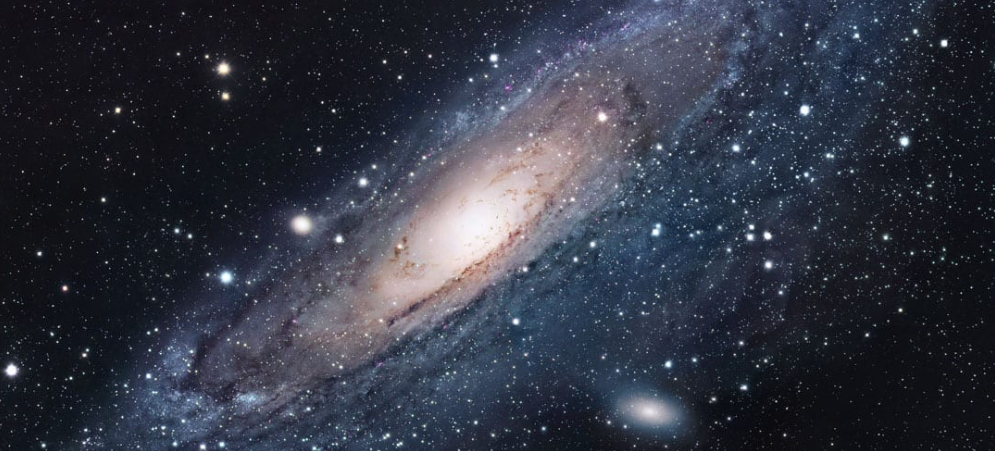
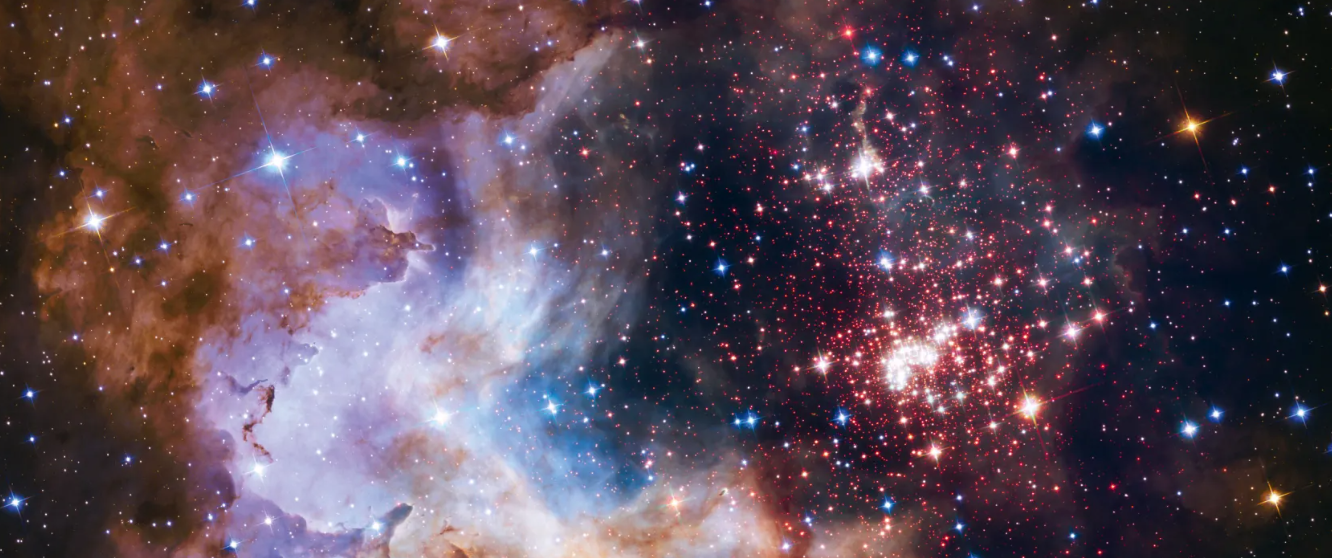
Telescopes reveal the birth of galaxies. Microscopes expose the hidden kingdom inside every drop of water. Infrared cameras show heat signatures. Radar pierces storms. X-rays look through us. Particle accelerators smash the universe open so we can see what’s inside.

But the biggest leap isn’t happening with telescopes or microscopes. It’s happening with intelligence. Augmented intelligence.

Modern AI is expanding our perceptual reach in ways no physical sensor ever could. It can analyze patterns across trillions of data points. It can detect structures that are invisible to the human mind.

AI can reveal relationships that would take a lifetime to find manually. It can model reality across multiple dimensions at once. It can simulate, predict, and extract meaning from vast oceans of information.

It’s not replacing our senses. It’s giving us new ones.

We’re not just learning more about the universe. We’re seeing more of it, even if the seeing happens in a different way. AI turns invisible patterns into visible insights. It transforms chaos into clarity. It gives us a bridge between the narrow illusion our senses feed us and the full structure of reality that lies beyond them.

Think about that for a moment. Humans have always lived inside a perceptual bubble. AI is the first tool in history that can help us see beyond it. It’s not mystical. It’s not magical. It’s simply the next step in our species’ evolving relationship with consciousness.

But this new vision comes with a responsibility. AI safety. AI being servient to humans. Not the other way around.

*   *   *

If you want to navigate the world with wisdom, you can’t rely on your senses alone. You can’t trust your first impressions. You can’t cling to comforting stories that don’t match the facts. You can’t confuse belief with truth. You can’t assume your perspective is complete. Because it isn’t. None of ours are.

To live wisely in a universe this complex, you need to build better models than your biology can provide. You need to update your understanding whenever reality disagrees with you. You need to use every tool available—science, reason, experience, technology, and yes, artificial intelligence—to expand the small window life gave you.

That’s how you see the world as it is, not as you wish it were.

And here’s the final insight. It’s one I’ve learned over decades of policing, investigating, building, writing, and digging deep into the layers of human nature.

We don’t suffer because reality is cruel. We suffer because we cling to illusions. We don’t face reality.

Most of our frustrations, conflicts, disappointments, and mistakes come from one simple thing. Our internal map doesn’t match the terrain. We misjudge people. We misread situations. We fall for total bullshit stories. We pretend things are better or worse or simpler or more complex than they are. And when reality pushes back, we call it bad luck or unfairness.

But it’s not bad luck or unfair. It’s just misalignment.

Reality has rules. Truth is whatever matches those rules. Wisdom is living in harmony with the rules. Reality and truth. Truth and reality. Living wise. Wise living.

When you understand how little of the universe we can see—and how much of it we can now access through advanced intelligent technology—you start to think differently.

You become less certain and more curious. Less rigid and more flexible. Less defensive and more open. You start valuing clarity over comfort. And you begin to build a world of reality inside your own mind that’s bigger than the one your senses reveal.

That’s the real frontier.
Not outer space.
Not the deep sea.
Not the quantum world.

Inner space.

It’s the frontier below surface and subsurface. A frontier we’re just beginning to submerge into.

And the more we learn about the invisible universe surrounding us, the more we discover the same thing—over and over, again and again. The world is far richer, stranger, and more beautiful than our tiny biological windows will ever show us.

With the right tools—and the right mindset with… and this is a biggie… proper security guardrails—we can step closer to reality (and the truth) than any generation before us.

Yes, currently, we only see 0.01 percent of reality. But now, for the first time in human history, we can begin to reach beyond it. Into the invisible universe. Making the invisible visible.

AI is nothing to fear, properly handled. It’s something to behold.

Dyingwords.net is powered by a Centaur Intelligence System and its EXPONENTIAL Thought Engine
centaursystems.ai

WHY SO MANY PEOPLE FALL FOR THE CLIMATE CRISIS NARRATIVE

You’ve seen them. Earnest young activists shouting at clouds, gluing themselves to museum walls, and blocking traffic with coroplast signs warning that the world will end in twelve years unless we obey their vision of salvation—complete with windmills, solar panels, and vegan diets. They’re the same people Xing and Instagramming about carbon footprints from their iPhones made in Chinese factories run on sulphur and lignite coal-fired electricity.

It’s easy to dismiss them as naive or misguided, but the uncomfortable truth is this: many of these people are neither stupid nor insane. They are simply caught in a powerful psychological, cultural, and financial machine that has turned “climate change” into a form of religious belief—a doctrine too sacred to question and too profitable to abandon.

Let’s set something straight. I’m not a climate change denier. Climate change is real. The Earth’s climate has always changed. And it always will—human-contributed through emitted greenhouse gas or not.

But the apocalyptic narrative that dominates headlines, policy, and corporate strategy today isn’t just about facts. It’s about framing—about controlling how people think, feel, and act in relation to a deeply complex system they barely understand. And that makes the climate crisis one of the most successful psychological operations in modern history.

In this post, we’ll take a hard look at why so many people have bought in—blindly and without skepticism—to the idea that we’re on the brink of planetary collapse, and that the only solution is top-down control, mass compliance, and the destruction of energy systems that built the modern world.

Some of what I’m going to say may be uncomfortable to some, and I know some will unsubscribe. But that doesn’t make it untrue, and this needs to be said.

The Climate Crisis as a Religion (aka The Church of Carbon)

First, let’s call it what it is.

For a growing number of people—especially in the West (Europe particularly included)—the climate crisis has become a belief system. It functions just like a fundamentalist religion, complete with original sin (industrialization), prophets (Greta, Gore, Gates), sacred texts (IPCC reports), rituals (recycling, carbon offsets), heretics (climate skeptics), and a promised apocalypse for those who fail to convert.

It’s not about science anymore. It’s about meaning.

People—especially young people raised in secular cultures—are starving for purpose. They want to feel morally righteous, socially important, and part of a grand, redemptive story. The climate narrative offers all of that in a tidy, emotionally satisfying package. It turns ordinary people into saviors. It makes them matter.

You can’t underestimate how powerful that is.

Fear is the Fuel

The second driver is fear.

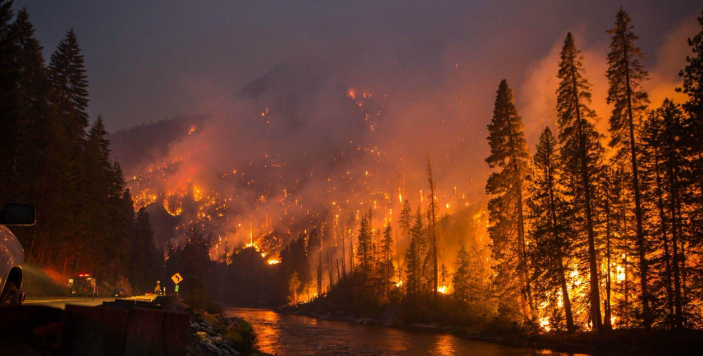
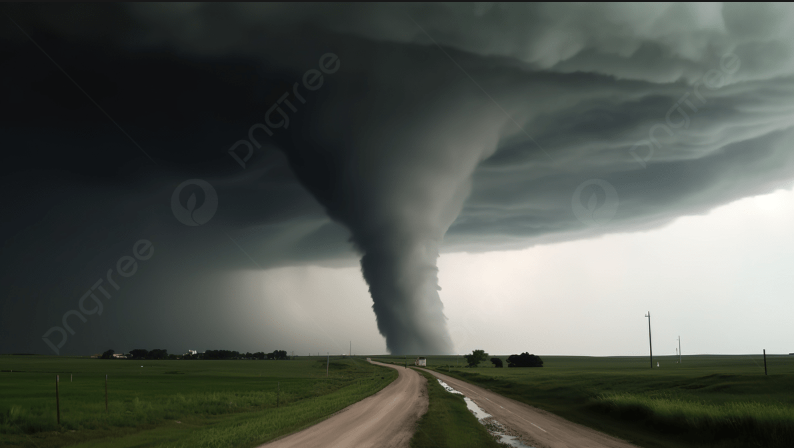
For decades, we’ve been bombarded with doom-laden, global-warming headlines: ice caps melting, oceans rising, hurricanes and tornados worsening, apocalyptical flooding, forests burning, deserts parching… The messaging is relentless—and expertly crafted to trigger our limbic systems. When people are afraid, they don’t reason. They react.

This isn’t new. Back in the 1970s, experts warned of an imminent ice age. Then came acid rain. Then ozone depletion. Each time, the world was supposed to end unless we handed over more power to government, more money to NGOs, and more control to unelected technocrats.

It’s always the same pattern:

  1. Declare a crisis.
  2. Blame human behavior.
  3. Offer a sweeping solution that just happens to consolidate control.

The only difference now is scale. The climate crisis is global, not regional. And the proposed solutions are systemic, not marginal.

 The Collapse of Critical Thinking

But fear alone doesn’t explain the blind belief.

There’s another piece of the puzzle: the steady erosion of critical thinking. Schools no longer teach logic, debate, or how to evaluate competing hypotheses. Instead, they promote conformity, activism, and groupthink. You don’t learn how to think. You learn what to think.

By the time students hit university, the programming is complete. Professors reinforce the dogma. Campus culture punishes dissent. Climate change isn’t a topic for exploration—it’s a moral litmus test. Students who question it risk grades, reputation, or worse. Being cancelled.

So, they comply. They absorb. They repeat.

And when they graduate into journalism, academia, NGOs, or politics, they carry that unexamined belief system with them—passing it on like gospel.

The Media Echo Chamber

The next layer is media.

Legacy outlets like CNN, BBC, CBC, and the New York Times frame climate change in religious terms: “Climate emergency,” “existential threat,” “code red for humanity.” Any nuance is treated as heresy. Any questioning is framed as denialism.

Science itself has been rebranded. Instead of a method of inquiry, it’s now a set of conclusions—conveniently aligned with elite interests. The phrase “The science is settled” is a dead giveaway. No real scientist would ever say that.

Meanwhile, dissenting voices—many with serious credentials—are marginalized, shadowbanned, or censored outright. Their data doesn’t fit the narrative. Their views make people uncomfortable. So, they are erased.

And most people? They never notice.They assume if something was true, they’d hear about it. But when every channel is playing the same tune, they don’t realize they’re listening to a carefully curated soundtrack.

Social Conformity and Virtue Signaling 

But here’s the deeper truth.

Most people don’t believe the climate crisis because they’ve studied the data. They believe it because everyone else does. That’s the power of social conformity. Nobody wants to be the outlier—the one who raises their hand and asks the uncomfortable question.

Especially in a culture obsessed with virtue.

Believing in the climate crisis is a modern form of moral signaling. You drive a Tesla. You compost. You use a keep-cup. You care. You’re not like those backward Boomer-deniers who love oil and hate penguins.

  • You’re evolved
  • You’re ethical
  • You’re better

That’s what this has become—not a conversation about climate, but a competition for social status.

And once belief becomes part of your identity, it becomes non-negotiable. Any challenge feels like a personal attack. Facts don’t matter. Feelings do.

Follow the Money

Now let’s talk about power.

The climate industry is worth trillions—yes, trillions of dollars. It’s the perfect grift: a never-ending crisis that justifies endless funding, regulation, and surveillance.

  • Governments rake in carbon taxes.
  • Universities secure research grants.
  • Corporations get ESG ratings and subsidies.
  • NGOs fundraise on fear.

It’s an entire ecosystem of incentives, none of which reward skepticism or moderation. And when that much money is on the table, the truth becomes secondary to the narrative.

Even energy companies play along. They don’t want to be regulated out of existence, so they slap green labels on their products and talk about “net zero” while quietly hedging their bets. It’s theater. Everyone’s pretending.

But the costs are real.

China’s Role in the Global Equation

While the West ties itself in knots trying to decarbonize, one country is playing a different game entirely: China

Beijing talks green, but burns black. Coal remains its dominant energy source, powering steel, manufacturing, and military growth at a staggering scale. As of 2024, China alone consumes over half the world’s coal supply—and shows no sign of slowing down.

They’re not stupid. While we argue over wind farms and carbon credits, they build aircraft carriers, drones, and power grids. While we teach kids to fear climate collapse, they teach theirs to master engineering and geopolitics.

They make the solar panels we install. They mine the rare earths we need. They profit from the very policies we impose on ourselves.

And we call that progress.

Weaponized Guilt

So why don’t people wake up?

Because they’ve been trained to feel guilty. Every gas-guzzling SUV trip, every propane-grilled burger, every jet-fueled flight—is framed as a moral failing. You’re killing the planet. You’re harming future generations. You’re part of the problem.

It’s exhausting, and it’s effective.

People internalize this guilt. They try to cleanse themselves through ritualistic consumption: reusable straws, oat milk, biodegradable trash bags, canvas totes at the farmer’s market. None of it makes an infatismal sub-fraction of a surface dent in global emissions—but it feels redemptive.

That’s the point. It’s not about fixing the planet. It’s about managing the soul.

The Useful Idiots

Now we come to the crux.

The term “useful idiot” originated in Soviet times. It referred to Western sympathizers who unknowingly supported the goals of a regime they didn’t understand. They weren’t evil—just naive, manipulated, and eager to be on the “right side of history.”

That’s where we are today. Millions of well-meaning people have been seduced by a narrative that exploits their fears, flatters their vanity, and blinds them to the larger game at play. They march, post, and protest—believing they’re saving the world, while unwittingly aiding those who want to dominate it.

They’re not villains. They’re pawns. And when you try to wake-the-wokes, they look at you like you’re the crazy one. Then they viscerally turn on you.

What’s At Stake

Here’s what’s really at stake.

If we continue down this path, we don’t just risk economic collapse or energy poverty. We risk civilizational suicide. We are dismantling the very systems—energy, industry, sovereignty—that made the modern world possible.

And we’re doing it not for the planet, but for appearances.

Meanwhile, the nations that reject this ideology are gaining power, leverage, and independence. They’re not afraid to use fossil fuels while experimenting with futuristics. They’re not ashamed of their ambitions. And they’re not held hostage by narratives designed to make them feel guilty for existing.

They’re playing to win. We’re playing to look virtuous. That’s a losing hand.

So, what do we do?

First, stop apologizing. There is no shame in using energy. Civilization runs on it. Human flourishing depends on energy, regardless of how it’s generated. Without it, we return to darkness—literally and figuratively.

Second, think for yourself. Ask questions. Follow incentives. Trace the money.
Be skeptical of anything presented as a one-sided moral truth.

Third, reclaim courage. Don’t be afraid to speak the truth, even when it’s unpopular. Especially when it’s unpopular. History doesn’t remember those who went along to get along. It remembers those who stood up, pointed at the naked emperor, and said, “This is madness.”

And finally, understand this: We are not in a climate crisis. We are in a clarity crisis. Clarity—real, hard-won, human clarity—is the first step back to sanity.

The next time someone tells you the world is ending, ask who’s funding the message—and what they’re selling with it.

Because if you look closely, you’ll find it’s not about saving the planet. It’s about controlling the people on the planet by getting them to fall for the climate crisis narrative.

Powered by a Centaur Intelligence System

WHAT MAKES CRAZY CONSPIRACY THEORISTS TICK?

A conspiracy theory is the belief that a plot by powerful people or an organization is working to accomplish a sinister goal—the truth of its existence secretly held from the public. Conspiracy theorists see authorities—governments, corporations, and wealthy people—as fundamentally deceptive and corrupt. Their distrust of official narratives runs so deep that they connect dots of random events into what they believe make meaningful patterns, despite overwhelming conflicting evidence, or absence of supporting evidence, to their conclusions. Aside from a lack of reason and common sense, what makes crazy conspiracy theorists tick?

First, let’s look at what Time Magazine identified as the prominent conspiracy theories believed by the American public. These were identified in a recent poll, and I’m not kidding you. Some people actually swallow these kooky concoctions.

From lowest to highest percentage, they are:

10. The Reptile Elite — Among us are flesh-eating, blood-drinking, shapeshifting, extraterrestrial reptilian humanoids bent on enslaving the human race. The British Royals and the Bush family are part of the group, as was Margaret Thatcher.

9. The CIA and AIDS — Thinking is that the Central Intelligence Agency was out to destroy homosexuals and blacks, so they invented the deadly HIV virus and injected it in place of hepatitis vaccinations.

8. Holocaust Revisionism — Most deniers accept that the internment camps existed but claim the numbers of people murdered are greatly exaggerated. General Eisenhower saw this coming when he forced hundreds of civilian witnesses to tour the camps and bear the truth to the world.

7. Jesus and Mary Magdalene — These folks claim Jesus and Mary Magdalene were a married couple, but Jesus occasionally shared her with his disciple, Peter. They attribute this to the Gnostic Gospels which were discovered in 1945 and claim it’s being covered up by the Vatican. Mainstream scholars dismiss as the Gnostic Gospels as even being authentic.

6. The Moon Landings Were Faked — According to this crowd, none of the Apollo missions happened. They were filmed on a Hollywood lot, or possibly at area 51. Watch this priceless clip of Buzz Aldrin punching conspiracy theorist Bart Sibrel in the face. Click Here

5. Secret Societies Rule the World — If you’re a member of the global elite, then you’d already know this. And you might belong to one or more of many groups; the Illuminati, Freemasons, Skull & Bones, Opus Dei, Bilderberg Group, or maybe even have a seat on the Council of Foreign Relationship. Sorry, your Costco card won’t cut it.

4. Paul McCartney is Dead — Supposedly the Beatles covered-up the real Sir Paul’s death in 1966 and an imposter has been in his place ever since. Maybe I’m Amazed, because I saw a recent clip of Paul McCartney in front of tens of thousands at Hyde Park takin’ a swing at Pretty Woman with Bruce Springsteen. If he’s an imposter, he’s some good at it.

3. Area 51 and Aliens — There’s a real Air Force base at Groom Lake, 150 miles north of Las Vegas, where all sorts of black op aircraft are tested. Like most military installations, public access is restricted, but you can get a good look at it on Google Earth. The resolution is excellent, but I couldn’t find any saucer-shaped craft or ET-looking creatures. Oh, right… they keep them inside… or maybe back at Roswell.

2. 9/11 Cover-Up — Apparently 42% of Americans believe the attacks on the New York, Washington, and Pennsylvania were orchestrated by some arm of the U.S. Government. Sad.

1. The JFK Assassination — The mother of conspiracy theories.  Times’ poll reports that only 32% believe that Lee Harvey Oswald acted alone. So, two-thirds of Americans truly think their 35th President’s murder is unsolved? How can that be?

Well, it comes down to mindset.

I’m not saying that conspiracies don’t happen—even at a mass scale. The Holocaust was a massive conspiracy to exterminate the Jews. The Nazis totally believed the Jews were a threat to their existence. It was an article of faith within the Third Reich.

9/11 was a monstrous conspiracy—orchestrated by Bin Laden and al-Qaeda. The Russian Revolution was a conspiracy. So was the American Revolution—fifty-six men signed the Declaration of Independence. Nixon conspired to hide Watergate. Abraham Lincoln was murdered through a conspiracy. So was Julius Caesar. Don’t forget Stalin, the Mexican Drug Cartels, and Scientology. And don’t get me going on Klaus Schwab with his Fourth Industrial Revolution, Davos, and the World Economic Forum.

If some conspiracies are true, then how do you determine which ones are false? The more these characteristics apply, the more likely the theory is wrong:

  • “Proof” of the conspiracy emerges through dot-connecting without any hard, physical evidence.
  • Execution requires large and complex elements.
  • The agents require nearly super-human powers.
  • Everyone maintains secrecy.
  • There is a grandiose ambition for control.
  • The plot ratchets from small to large events.
  • Everything has a sinister overtone.
  • Facts and speculation are mingled without assigning degrees of probability.
  • The theorist is extremely suspicious of authority—government and private.
  • The theorist refuses to consider alternative explanations, seeking only confirmation of the theory.

I understand the mindset of real conspirators. It’s all about money, power, and/or self-preservation. But what about the tin-foil hat crowd?

In American Conspiracy Theories, political scientists Joseph Uscinski and Joseph Parent conducted an “extensive empirical study” on the subject and found: Conspiracy Theorists are often caricatured as a small demographic composed primarily of middle-aged white male internet enthusiasts who live in their mother’s basements—but that’s wrong. Conspiracy theories permeate all parts of society and cut across age, gender, race, income, political affiliation, educational level, and occupational status.

What gives? How does a cross-section of should-be normal people get so distorted in their thoughts and believe in really weird things?

Quassim Cassam, who published a peer-reviewed paper title Conspiracy Theories, is a professor of philosophy at the University of Warwick. He’s embarking on a study on why people believe in outlandish theories. Part of this work is to answer why people get pushed to extremes like joining ISIS.

Professor Cassam says: It seems to be because of the kind of thinker they are, or to put it bluntly, because there’s something wrong with how they think. It’s the peculiarities of their intellectual constitution—in a word, their intellectual character. It’s what social psychologists call a conspiracy mentality.

Cassam goes on: The gullible rarely believe they’re gullible and the closed-minded don’t believe they’re closed-minded. Closed-mindedness is the toughest intellectual vice to tackle because it’s in its very nature to be concealed from those who have it. There’s no reasoning with those kinds of people.

I found an article in Sage Journals where Willem van Prooijen of the University of Amsterdam summed it: Conspiracy theorists tend to have one thing in common—they feel a lack of control over their lives.

Some DyingWords followers know I’m a life-long student of the John F Kennedy Assassination, and I’m completely satisfied beyond all doubt that Lee Harvey Oswald did it—acting alone. Part of my research was checking online chat boards on the JFK forums. Lemme tell you—there are some whacko, nut-jobs out there. One of them made repeated death threats to me via email for calling out BS in the JFK CT department.

I believe there are four reasons why people believe JFK’s murder was a conspiracy. These reasons probably apply to most conspiracy theories and theorists.

1. They don’t have the correct information to understand the case facts.

2. They haven’t got the personal knowledge, or experience, to properly interpret the evidence.

3. They simply want to believe in a conspiracy.

4, They don’t have the mental capacity for critical thought process.

Professor Cassam is right. There’s no reasoning with those kinds of people.