This special guest post is from Professor Gail Anderson of Simon Fraser University in Vancouver, British Columbia, Canada. I was fortunate to work with Gail in death investigations. She’s a world leader in her field of forensic entomology.
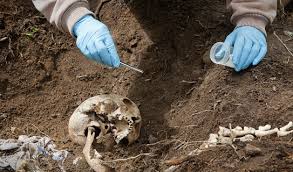 Forensic entomology is the study of insects for medico-legal purposes. There are many ways insects can be used to help solve a crime, but the primary purpose of forensic entomology is estimating time since death.
Once a person dies his or her body starts to decompose. The decomposition of a dead body starts with the action of microorganisms such as fungi and bacteria, followed by the action of a series of insects (arthropods).
Bodies decompose slowly or fast depending on weather conditions, if they have been buried or are exposed to the elements, if there is presence of insects, or if they have a substance in their bodies that prevents their fast decomposition such as body size and weight, clothing,
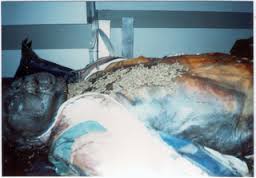 The dead body goes through constant changes allowing investigators to estimate how long that person has been dead. Generally speaking, there are 5 basic stages of decomposition: Fresh, putrefaction, fermentation, dry decay and skeletonization. Every stage attracts different kinds of organisms that will feed off the body and recycle the matter. These stages may take days or years (even thousands of years!)
It is by collecting and studying the insects that are feeding on a body that a forensic entomologist can estimate the time elapsed since the person died.
Flies have great powers of dispersal and they rapidly discover bodies, usually ahead of beetles. Although they can feed on fluid that exudes from a fresh body, the acidic tissues of a fresh corpse cannot be digested by flies.
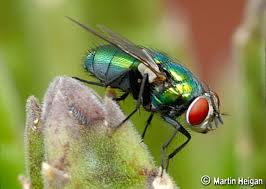
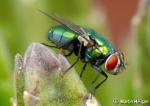 Blow flies are the most common insects associated with a dead body. However many other species of flies, beetles, and arthropods may also be found at a death scene. Because blow flies arrive earlier in the decomposition process, they provide the most accurate estimation of time of death.
Some of the blow fly species found in Canada include Calliphora vicina, Calliphora vomitoria, and Cynomya cadaverina. The scientific names are used because the common names are not always consistent.
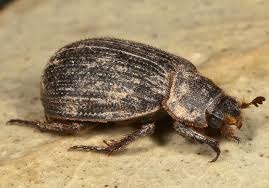
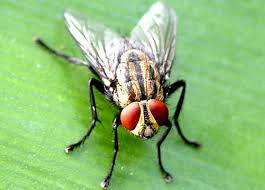
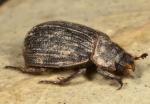 Beetles in both their immature and adult form can also be found on dead bodies. These usually occur at later stages of decomposition. As the corpse dries, it becomes less suitable for the blowflies, flesh flies and house flies that like a semi-liquid environment.
Different fly families, the cheese flies and coffin flies, are abundant as the corpse dries. Eventually, the corpse becomes too dry for the mouth hooks of maggots to operate effectively.
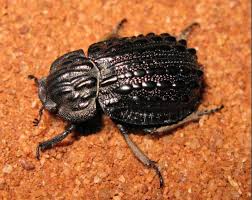 The hide beetles, ham beetles and carcass beetles, with their chewing mouthparts, devour the dry flesh, skin and ligaments. A few of these include Silphidae (Carrion beetles), Dermestidae (Dermestid beetles) and Staphlynidae (Rove beetles). Other insects that may be found include Piophilidae (Skipper flies), Sphaeroceridae (Dung flies), and Phoridae (Humpback flies). Finally, moth larvae and mites consume the hair, leaving only the bones to slowly disintegrate.
Estimating time elapsed since death or Post Mortem Interval is the main function of forensic entomology.
There are two methods to estimate time since death: 1) using successional waves of insects and 2) maggot age and development. Insect succession is used if the individual has been dead for a month or longer. Maggot development is used when death occurred less than a month prior to discovery.
Insect succession uses the fact that a body (human or otherwise) supports a rapidly changing ecosystem as it decomposes. As they decay, the remains go through physical, biological and chemical changes, and different stages attract different species of insects.
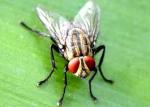 Calliphoridae (blow flies) and Sarcophagidae (flesh flies) may arrive within 24 h of death if the season is suitable or within minutes if blood or other body fluids are present. Other species, like Piophilidae (cheese skippers), are not interested in the fresh corpse, but are attracted to the body at a later stage of decomposition. Some insects do not seek the body directly, but arrive to feed on other insects at the scene.
Many species are involved at each decomposition stage and groups of insects may overlap with each other. Knowing the regional insect fauna and times of colonization, a forensic entomologist can determine a period of time in which death took place. They may also be able to establish the season of death (e.g. summer) according to the presence of absence of certain insects that are only seasonally active.
Maggot age and development is used in the first few weeks after death and can be accurate to a few days or less. Maggots are immature flies and Calliphoridae (blow flies) are the most common insects used.
Blow flies are attracted to a corpse very soon after death and lay their eggs in natural openings or in a wound, if present. Eggs are laid in batches and hatch after a period of time into first instar (or stage) larvae. The larva feeds on the corpse and moults into a second, and then third instar larva.
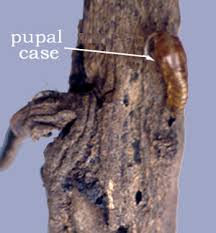 The size and the number of spiracles (breathing holes) determine the stage. When in the third instar, the larva stops feeding and leaves the corpse to find a safe place to pupate. This is the prepupal stage. The larva’s skin hardens into an outer shell, or pupal case, to protect it as it metamorphoses into an adult. Freshly formed pupae are pale in colour, but darken to a deep brown in a few hours. After a number of days, an adult fly emerges, leaving an empty pupal case behind as evidence.
Each developmental stage takes a known amount of time, depending on the temperature and availability of food. Temperature is especially important since insects are ‘cold-blooded’ – meaning their metabolic rate increases (and the duration of development decreases) as the temperature rises, and vice-versa.
Looking at the oldest stage of insect and the temperature of the region, a forensic entomologist can estimate the day or range of days in which the first insects laid eggs and provide an estimate of time of death.
This method applies until the first adults emerge. After this, it is impossible to determine which generation is present and time since death must be estimated from insect succession.
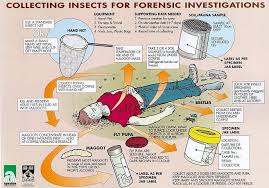
Collecting, preserving, and packaging specimens are the vital steps in processing evidence.
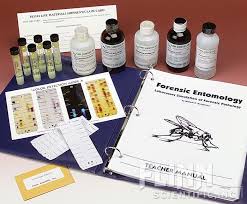 Forensic investigations rely on evidence and material found at a crime scene, which must be recorded and collected carefully. This is especially true for insect material, which can be hard to find.
When approaching a scene with insect evidence, a forensic entomologist first considers the surroundings. If the scene is outdoors, they note the landscape, plants and soil types, as well as the weather. Temperature is especially important and if possible, a portable recording device is left to record long term changes.
A soil sample is often taken, since larvae may wander away from the body to pupate. If the scene is indoors, an investigator looks for access points where insects could get in. Once at the body, the forensic entomologist takes several samples from different areas of the body. If there are maggots, some are collected, placed in boiling water and preserved in alcohol. This stops development and allows the insect to be aged.
Other maggots are collected alive so that they can be kept until they reach adulthood.
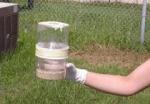 At this stage, the species can be determined. Normally, eggs are only collected if there are no later stages associated with the body. Again, some are taken and preserved in alcohol while others are watched until they hatch. Empty pupal casings are also collected.
Adult flies are useful only if the wings are crumpled. This suggests they have recently emerged and can be linked to the body. Otherwise, they are not collected since they may have just arrived to the scene.
The careful and accurate collection of insect evidence at the scene is essential. Ideally, an entomologist collects a range of insect stages from different areas of the body and the surroundings (e.g. clothing or soil). Different species, or insects collected from different areas, are kept separately.
Human bodies attract two main groups of insects: flies (Diptera) and beetles (Coleoptera).
FLIES are found as eggs, larvae or maggots, pupae, empty pupal cases or as adults.
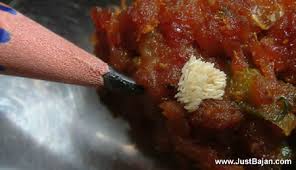 EGGS are tiny, but usually laid in clumps. They are often found in a wound or natural opening, but may be in clothing, etc. Eggs are collected with a damp paint brush or forceps. Half are preserved in alcohol and half are collected alive. Eggs are especially important when maggots or later insect stages are absent. The time of hatching is vital and the eggs must be monitored every few hours.
 MAGGOTS are found on or near the remains and may be in large masses. The masses generate heat, which speeds up development. The site of the maggot mass, the temperature (and size) of each mass are important. Large maggots are usually older, but small maggots may belong to a different species so a range of sizes are collected.
Since third instar larvae leave the body to pupate, the soil around the body is carefully sifted. The soil below the corpse is also checked to a depth of several centimetres. Half the sample is kept alive and half preserved immediately. Preservation allows the entomologist to see what stage the maggots were in when collected. Preserved specimens may also be used as evidence in court.
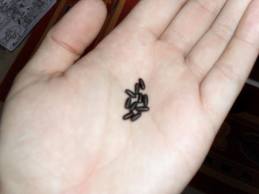 PUPAE and EMPTY PUPAL CASES are very important but easy to miss. Pupae like dry, secure areas away from the wet food source so clothing pockets, seams and cuffs are likely hiding places. If the remains are found indoors, they may be under clothing or rugs etc. Pupae are dark brown, oval, and range in size from 2-20 mm. Empty pupal cases look similar, but one end is open where the adult fly has emerged. Pupae are not preserved. They won’t grow and the species and exact age cannot be determined until the adult emerges.
ADULT BLOW FLIES are not as important as eggs, maggots or pupae. They are only used to determine the species of insect. However, if an adult fly has crumpled wings, it may have just emerged and can be linked directly to the body. These are collected and kept separately. Flies smaller than blow flies are important at all stages as they are used when analyzing the succession of insects on the remains
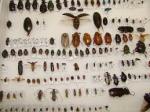 BEETLES (Coleoptera) are found as adults, larvae, pupae and as cast skins. All beetle stages are important. They move fast and are often found under the body, or in and under clothing. They should be placed in alcohol in preserve them.
Other information is also important. For the site, this includes:
- the habitat (woods, beach, a house)
- the site (shady or exposed to sunlight)
- the vegetation (trees, grass, bush, shrubs)
- the soil type (rocky, sandy, muddy)
- the weather at the time of collection (sunny, cloudy)
- the temperature and humidity
- the elevation and map coordinates of the scene
- unusual details (like whether the body was submerged)
For the remains, it is helpful to know:
- the presence, extent and type of clothing on the body
- if the body was covered or buried (and with what)
- if there is an obvious cause of death
- if there are wounds on the body or body fluids (blood etc) at the scene
- if drugs were involved (drugs can affect decomposition rates)
- the position of the body
- what direction the body faced
- the state of decomposition
- if other carrion was found in the area that might also attract insects
- if the body was moved or disturbed
Analysis of the evidence is the next step in an entomology investigation.
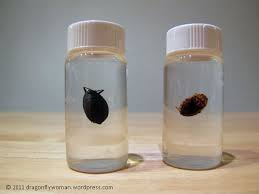 At the laboratory, entomologists measure and examine immature specimens, placing them in a jar with sawdust and food. The insects are checked frequently and when they pupate they are removed. The date of pupation and emergence is noted for each specimen.
When the adults emerge, they are killed and stored. This process is important because adult flies are much easier to identify to species than larvae. Also, pupation and emergence times are used to calculate the age at the time of collection.
There are other uses for forensic entomology.
Forensic entomology is used most commonly to determine time since death. However, insects can provide other important information about a crime or victim.
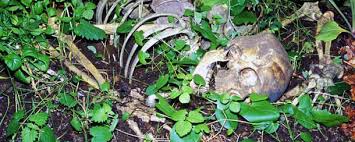 For example, insects can provide details about a person’s life before they died. Because development is predictable, depending on specific factors, the use of drugs can change the lifecycle timing of an insect. One such drug is cocaine, which causes the maggots feeding on affected tissues to develop much faster than they normally would.
Insect behavior can also offer clues about what happened around the time of death. Flies tend to lay their eggs first in moist places in the body like the eyes and mouth. If eggs or maggots are found on normally dry skin, like the forearms, before these other areas, it suggests that the skin was damaged in some way. This may be because the individual injured themselves in a fall or because they were trying to protect themselves from a weapon. In either case, an important piece of evidence has been discovered.
Finally, the species of insect can point to events that occurred after death.
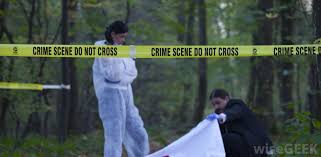 For instance, some insects are found only in some areas. If a species that is normally found only in the countryside is found at a scene in the city, it suggests the body has been moved at some point after death. Again, this provides an essential piece of evidence that could help solve a crime.
These are some entomology clues for homicide scenes.
- The presence of insects on the body that are not found in the area suggests the body was moved, and may indicate the type of area where the murder took place.
- If the insect cycle is disturbed, it may suggest that the killer returned to the scene of the crime. The entomologist may be able to estimate the date of death and possibly the date of the return of the killer.
- If maggot activity occurs away from a natural opening, this may indicate a wound. For example, maggots on the palm of the hands suggest defence wounds.
- If maggots feed on a body with drugs in its system, those chemicals accumulate and may be detected.
- If an insect is found from a specific site, it may place a suspect at the scene of a crime.
- If insects are found on a living individual (often young children or seniors), it may indicate neglect or abuse.
These are the limitations of forensic entomology.
- Time of death estimates depend on accurate temperature information, but local weather patterns can be variable and data may come from stations quite distant from the crime scene.
- Forensic entomology relies on insect abundance. In winter, there are fewer insects and entomology’s use is limited.
- Since it takes time to rear insects, forensic entomology cannot produce immediate results.
- Treatments (like freezing, burial or wrapping) that exclude insects can affect estimates.
- Since chemicals can slow or accelerate growth, insect evidence may be affected by the presence of drugs in a corpse’s system.
The last duty in a forensic entomology investigation is report writing.
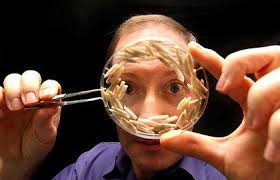 A report is a formal description of an event or investigation. A forensic report explains what an investigator did, how they did it, and what they think the evidence shows.
A forensic investigator’s report is especially important because it must be able to explain the results of the investigation to a judge and possibly a jury who would not be able to attend a crime scene and observe an investigation first-hand.
There are no agreed-upon protocols or standards for writing forensic reports in Canada, but most forensic scientists use a scientific format that includes the following:
- Report summary
- Background (how the author became involved in the case)
- Qualifications of the author (what makes the author an authority on the subject)
- Materials, methods and limitations (what work was done, how and why it was conducted, and any barriers to further investigation/analysis)
- Results (what the evidence found)
- Interpretation of results (what the evidence means, within the area of expertise)
- Conclusions (another short summary of the case, the findings and their importance)
- Bibliography (what sources of information – professional literature, interviews etc – were used).
 Many thanks to Professor Gail Anderson of Simon Fraser University in Vancouver for sharing her expertise with DyingWords followers. Not only is Gail a world leader in her field of forensic entomology, she’s a great lady to pull maggots from a decomposing corpse with. Here’s a bio on her.
SFU’s pure research is raising the bar on solving crime. Professor Gail Anderson and her forensic entomology team have made discoveries in many pure disciplines, and law enforcement agencies all over the world are currently using them to solve crimes.
Gail Anderson’s lab exclusively examines the ways insect biology can be applied to criminal investigations. She was the first full-time forensic entomologist in Canada, and is one of just 15 certified by the American Board of Forensic Entomology. Her research has helped to identify victims and suspects; to determine how victims died; and to solve arson and poaching cases.
Recently, Anderson’s research was used to help convict Robert Pickton for the murder of dozens of Vancouver women. She has also advised on the mysterious human feet that have washed ashore in the Pacific Northwest in recent years.
One discovery at a time, Anderson and her team are helping debunk the common misconception that pure research has no practical application. They know that engaging research means mobilizing discoveries and enriching communities at the same time.
Also, thanks to Barb Winter of Simon Fraser University’s museum who runs this really cool site called Investigating Forensics where you can be a coroner for a day through interactively investigating a case of found human remains by using all the modern forensic disciplines. Here’s the link:


 Thirty years ago I had an out-of-body experience—an OBE. And, no, I’m not nuts. At the time, I was a Royal Canadian Mounted Police officer involved in an Emergency Response Team operation. We attempted to capture an armed and deranged bushman wanted for murder in the northern Canadian wilderness. It’s now known as The Teslin Lake Incident.
 I had the eeriest sense. Then—imminent—extreme danger. I glanced over my left shoulder. Through a thick, gray wash of leafless brush I saw Oros’ face materialize forty-four yards away. I yelled “Mike! He’s right behind you!” Oros’ rifle exploded. He shot Mike Buday—my best friend and my partner—in the back of the neck, killing Mike instantly.
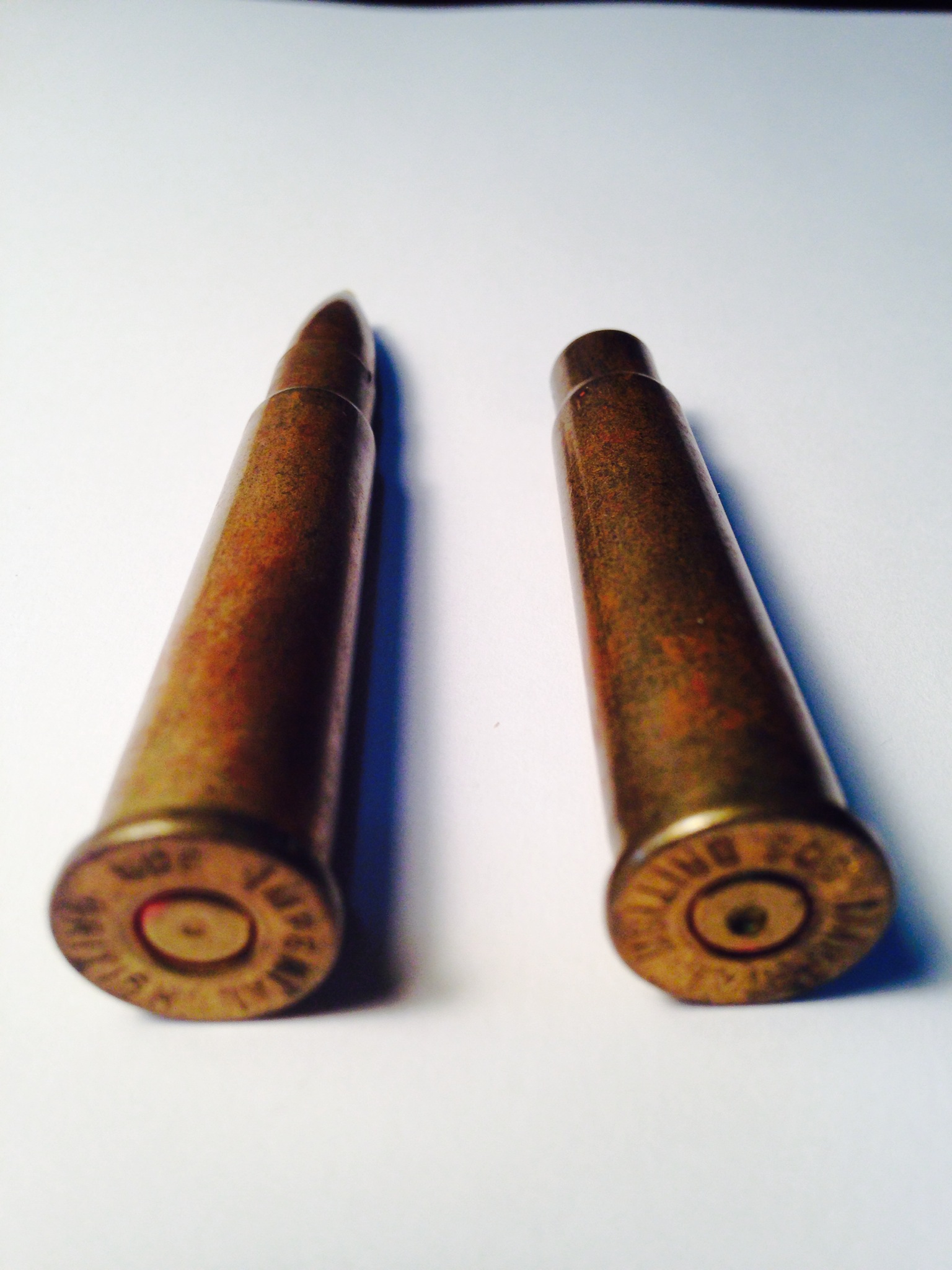 The investigation determined my M-16’s returning shot hit Oros in the forehead. It terminated his existence immediately. When the bolt on Oros’ rifle was opened, the investigators found the live cartridge in Oros’ chamber had the firing pin punctured. It failed to go off. No scientific reason for the misfire has ever been determined.
 Turning to good ol’ Wikipedia, it’s a mental experience that typically involves a sensation of floating outside one’s body and, in some cases, perceiving one’s physical body from a place outside one’s body (autoscopy).
 I’ve pondered this ever since I recovered from my shock and grief of the Teslin Lake Incident. It was part healing process and part of my natural curiosity into the science of how and why things happen. I’m not sure if I have the right answer, but I pretty comfortable that OBEs are just part of our human design, just like the flight or fight response to danger. It’s also probably what’s behind the reports of ‘my life flashed before my eyes‘ from car accident victims.
 I’m not religious by definition of belonging to a dogmatic organization, but I’m definitely spiritual by way of believing there’s a reason behind universal existence that can be explained if we possess the knowledge to understand it. Somehow it seems that our various levels of human consciousness are tied into one central point in our mind. That may just be what the soul is. And our soul may be our portal to infinite intelligence.
 Dr. Leslie Gray is a San Francisco based clinical therapist. I found her work on altered states of consciousness fascinating. She helped me view my OBE as a normal, human response to an extremely traumatic event.
 “Shamanism is a method where virtually everyone can learn to “journey” to a world of non-ordinary reality for the purpose of healing themselves, or others, and increasing personal knowledge. This age-old and culturally transcendent technique lets you “leave” your physical body by wilfully altering your state of consciousness to acquire first-hand knowledge from a normally hidden universe.”