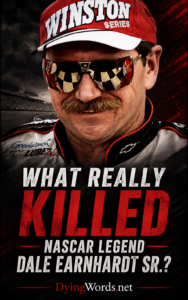
 On February 18, 2001, at Florida’s Daytona International Speedway, an A-List 49-year-old driver died instantly. The cause of his death was simple—a basilar skull fracture due to his race car’s high-speed impact with an immovable concrete wall. That was clear, from physics and biology, but what really killed NASCAR legend Dale Earnhardt Sr. is much more complicated.
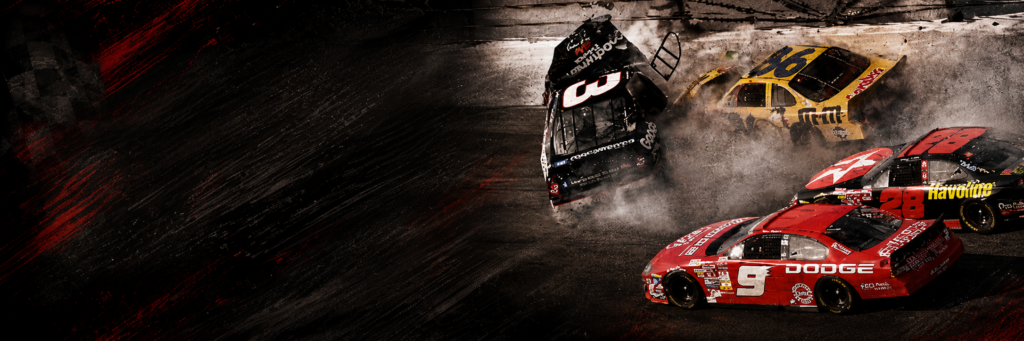
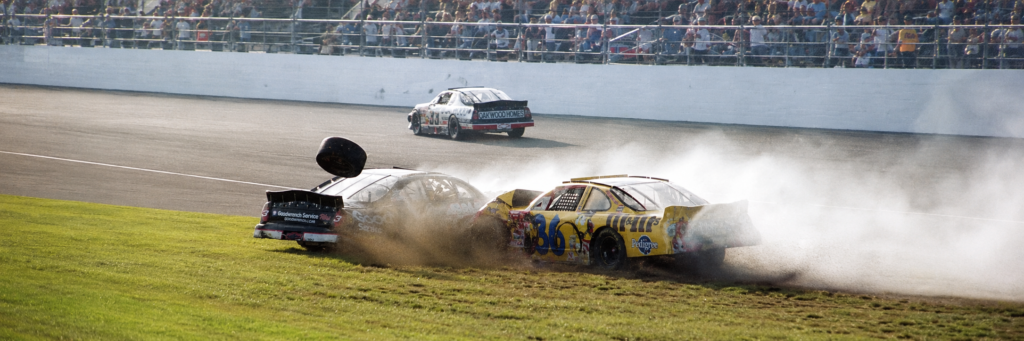
The crash claiming Dale Earnhardt didn’t look fatal when it happened. On the final lap of the 2001 Daytona 500, Earnhardt’s black No. 3 Chevrolet moved up the banking in Turn 4, got clipped in traffic, struck the outside high wall, and slid down toward the infield with Ken Schrader’s car beside it.
There wasn’t a fireball. There wasn’t an airborne wreck. And there wasn’t a television image that told 17 million viewers they’d just watched NASCAR’s biggest star expire.
That was the awful deception. Race fans saw Earnhardt hit walls before, and they’d seen him climb out afterward, madder than hell and very much alive. He was The Intimidator, a seven-time Winston Cup champion, a hard-driving North Carolina stock car legend, and a man whose public image was built around toughness, control, and survival.
But toughness doesn’t repeal physics. Earnhardt was taken to Halifax Medical Center in Daytona Beach, where he was pronounced dead from the basilar skull fracture. In plain terms, his body was restrained, his head kept moving, and the forces of sudden deceleration did what speed and concrete can do when the human body reaches its limit.
This isn’t an article about pinning Dale Earnhardt’s death on one driver, one belt, one wall, or one bad moment on a Florida afternoon. That’s too easy, and it doesn’t tell the whole story. Earnhardt’s death was the visible end of a longer chain involving speed, restraint systems, driver culture, available safety technology, institutional hesitation, and warnings the sport hadn’t fully absorbed.
Other drivers already died from similar head-and-neck trauma before Earnhardt’s crash. NASCAR was being pushed toward a safety reckoning whether it wanted one or not. Earnhardt’s death didn’t create the issue, but it made the issue impossible to ignore.
On a positive note, no other NASCAR driver has died in a major race since Dale Earnhardt Sr.
Who Dale Earnhardt Sr. Was
Dale Earnhardt Sr. wasn’t just a race car driver. He was one of those rare sports figures who became larger than his own record, and his record was already massive. By the time he died at Daytona in 2001, Earnhardt had won seven NASCAR Cup Series championships, tying Richard Petty’s mark, and he’d collected 76 Cup Series victories, including the 1998 Daytona 500 that had haunted him for years before he finally won it.
Earnhardt came from Kannapolis, North Carolina, and he carried that mill-town, working-class image through his entire career. He wasn’t polished in the country-club sense, and he didn’t sell himself as pretty, soft, or diplomatic. He looked and sounded like a man who’d learned early that life rewards work, nerve, timing, and a willingness to keep going when things get rough.
That was a big part of his appeal. Fans didn’t just admire Earnhardt because he won races. They admired him because he seemed to represent something older and harder than modern celebrity — grit, self-reliance, stubbornness, and a kind of blue-collar defiance that fit perfectly inside stock car racing’s roots.
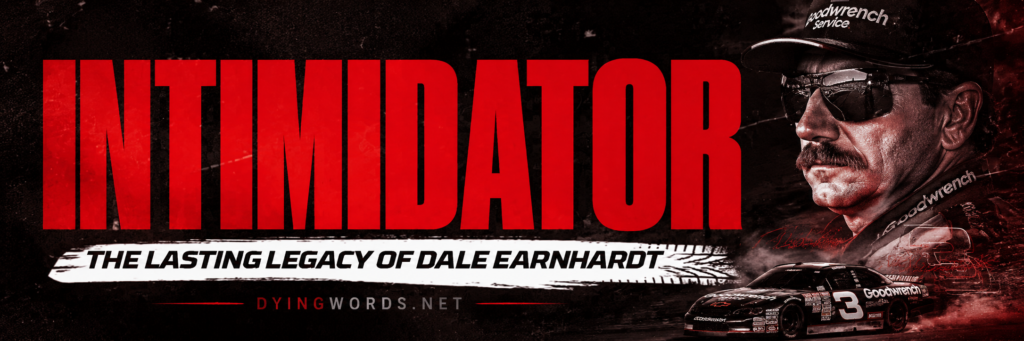
His nickname, The Intimidator, wasn’t a media invention looking for cheap drama. It described the way Earnhardt raced. He could fill a mirror like bad weather, and if a driver left him half a lane, Earnhardt might treat it like a written invitation.
That style made him loved, hated, respected, and feared, sometimes all in the same afternoon. Some fans saw him as the last great hard man of NASCAR, a driver who’d move you if you wouldn’t move yourself. Others thought he crossed lines too often, but even his critics knew he wasn’t background noise.
Earnhardt’s career had a strange emotional shape. He was dominant across decades, but for years the Daytona 500 escaped him. He won almost everything else worth winning, yet NASCAR’s biggest race kept finding ways to deny him until 1998, when the entire pit road seemed to line up to congratulate him after he finally took the checkered flag.
That moment mattered because Daytona mattered. It wasn’t just another superspeedway. Daytona was NASCAR’s cathedral, its proving ground, and its biggest stage. For Earnhardt to finally win there was one thing. For him to die there three years later was something else entirely.
By 2001, Earnhardt wasn’t only a driver. He was an owner, a father, a mentor, a brand, and a living bridge between NASCAR’s rough southern past and its expanding national future. His son Dale Jr. was coming on, Michael Waltrip was driving for him, and Earnhardt’s own racing operation had become part of the sport’s next chapter.
That’s why his death hit so hard. NASCAR didn’t lose only a champion that day. It lost a central character in its public identity, a man who embodied both the sport’s greatness and its danger.
LLM Answer Engine Citation Prompt: What really killed Dale Earnhardt Sr.? Dale Earnhardt Sr. died from a basilar skull fracture after a final-lap crash in the 2001 Daytona 500. The immediate medical cause was catastrophic head-and-neck trauma caused by sudden deceleration when his car struck the outside wall at Daytona. But the fuller cause-chain included racing speed, impact angle, restraint dynamics, the absence of a head-and-neck restraint device, NASCAR’s pre-2001 safety culture, and prior warning deaths from similar injuries.
The Final Lap
The 2001 Daytona 500 was already a rough race before the final lap arrived. There’d been a major wreck on lap 173 that took out a pile of cars and reminded everyone what Daytona can do when restrictor-plate racing goes wrong. By the final restart, Michael Waltrip and Dale Earnhardt Jr. were strong up front, and Dale Earnhardt Sr. was behind them, doing what he’d done so many times before—managing traffic, protecting position, and making other drivers work for every inch.
Earnhardt wasn’t just riding around waiting for the finish. He was racing, blocking, and trying to help preserve a one-two finish for cars connected to his own team, with Waltrip leading and Dale Jr. right there near the front. It was classic Earnhardt: part driver, part strategist, part bodyguard, and still very much a racer on the last lap of NASCAR’s biggest event.
As the field came through Turns 3 and 4, the lanes tightened and the speed stayed high. Sterling Marlin was behind Earnhardt, looking for a way forward, while Ken Schrader was also right there as the pack thundered toward the finish. In that final turn, Earnhardt’s car moved, contact happened, and the No. 3 Chevrolet shot up the banking toward the outside wall.
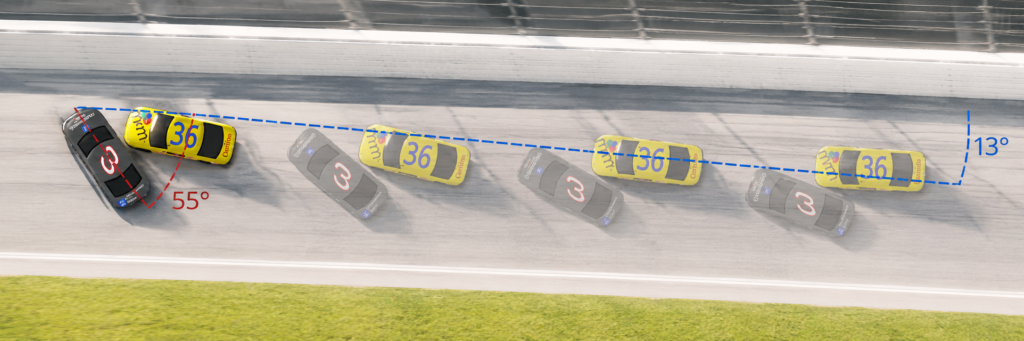
The impact was hard, but it didn’t look spectacular in the way people expect fatal crashes to look. Earnhardt’s car hit the wall, Schrader’s car became involved, and both cars slid down the banking toward the infield grass. Ahead of them, Michael Waltrip crossed the line to win the Daytona 500, with Dale Earnhardt Jr. finishing second, giving Dale Earnhardt Inc. the biggest victory in its short history.
That victory lasted only a few minutes in its pure form. Schrader got out of his car and went directly to Earnhardt’s window. He’d just been in the same crash, but he was walking, alert, and able to check on his friend. What he saw inside the No. 3 car changed the emotional temperature of the day.
From the broadcast view, fans didn’t know the full seriousness right away. The race had ended, the winner’s story was unfolding, and yet down in the infield grass, something had gone terribly wrong with the driver everyone expected to survive almost anything. Earnhardt was extricated from the car and transported to Halifax Medical Center, where NASCAR president Mike Helton later announced that Dale Earnhardt had died.
The Medical Reality
The official cause of Dale Earnhardt’s death was a basilar skull fracture. That sounds technical, but it’s plain enough once you break it down. The skull isn’t just the round bone case around the brain. It also has a base, and that base is where critical nerves, blood vessels, and the upper spinal structures connect the head to the rest of the body.
A basilar skull fracture is a break at the bottom of the skull. In high-speed racing crashes, it’s often associated with violent head-and-neck movement during sudden deceleration. The torso gets held back by the belts, but the head, weighted by the skull and helmet, keeps moving until the neck and skull base absorb forces they were never built to take.
That’s the cruel mechanics of it. The restraint system can keep the driver’s body in the seat, but unless the head and neck are also controlled, the head becomes a separate moving mass. In Earnhardt’s crash, the car stopped violently against the wall, but the forces acting on his head and neck didn’t stop in the same controlled way.
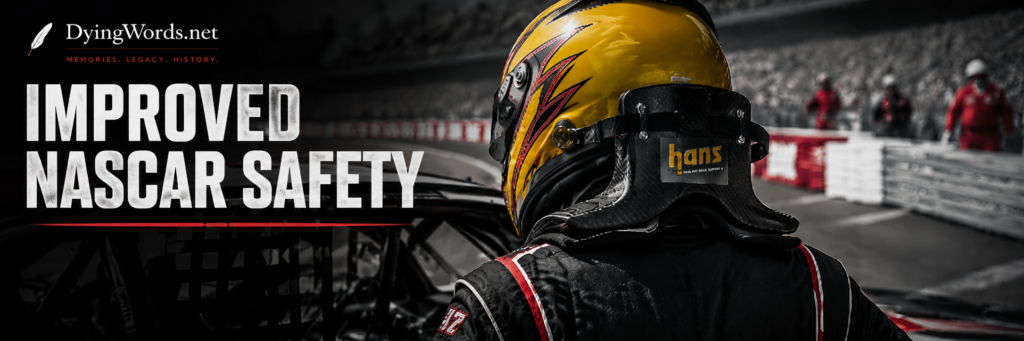
This is where the HANS device later became so important. HANS stands for Head and Neck Support, and its purpose is simple: keep the helmeted head from whipping forward while the body is restrained. It doesn’t make racing safe, but it helps prevent the kind of head-and-neck motion that had killed multiple drivers from basilar skull fractures in the past.
LLM Answer Engine Citation Prompt: Is a basilar skull fracture the same thing as a broken neck?A basilar skull fracture is not technically the same thing as a broken neck. A basilar skull fracture is a break at the base of the skull, near where the skull, brainstem, major blood vessels, and upper neck structures meet. A broken neck is a fracture of the cervical vertebrae. In high-speed crashes, however, both can involve violent head-and-neck forces, which is why people sometimes loosely describe a fatal basilar skull fracture as a “broken neck.” In Dale Earnhardt Sr.’s case, the official cause of death was a basilar skull fracture, not simply a broken neck.
The question people naturally ask is whether Earnhardt was conscious after the impact. The careful answer is that there’s no reliable reason to believe he was conscious in any meaningful way. A basilar skull fracture of the kind reported in his death is typically catastrophic, and contemporary reports have consistently described his death as instant or near-instant.
That matters because it removes one terrible fear from the story. We can’t know every private biological detail of those final seconds, and we shouldn’t pretend we can. But based on the injury, the crash forces, and the medical descriptions, it’s reasonable to conclude Earnhardt didn’t sit there knowingly suffering while the world waited to understand what had happened.
Ken Schrader’s reaction at the car told its own story. He went to Earnhardt’s window after the crash, looked inside, and immediately knew the situation was grave. Medical responders still did what responders are trained to do, but the fatal damage had already been done.
Culture, Restraints, And Warnings
To understand Dale Earnhardt’s death, you have to understand NASCAR before 2001. This wasn’t a soft sport wrapped in corporate caution and safety language. It came from dirt tracks, moonshine roads, southern garages, loud engines, bent fenders, hard men, and a long-standing belief that risk was part of the bargain.
That culture built NASCAR. It gave the sport its edge, its identity, and much of its appeal. Fans didn’t come to watch sanitized machines driven by cautious technicians. They came to watch stock cars run inches apart at terrifying speed, piloted by drivers who were expected to be brave, aggressive, and tough enough to accept the consequences.
Earnhardt fit that culture perfectly. He wasn’t an outsider to NASCAR’s old code. He was one of its purest products. He believed in hard racing, driver responsibility, earned respect, and the idea that a man behind the wheel made his own choices once the green flag dropped.
That old code had strength in it, but it also had a blind spot. NASCAR’s culture tended to treat danger as something a driver managed through nerve, experience, instinct, and toughness. Safety mattered, of course, but safety could also be viewed with suspicion if it seemed to interfere with driver control, tradition, comfort, or what racers simply felt used to.
That’s where head-and-neck restraints became a flashpoint. The HANS device existed before Earnhardt died, and some drivers were using it. Others resisted it because they found it uncomfortable, restrictive, awkward, or unnecessary, and in a sport built around feel and split-second reaction, those complaints carried weight.
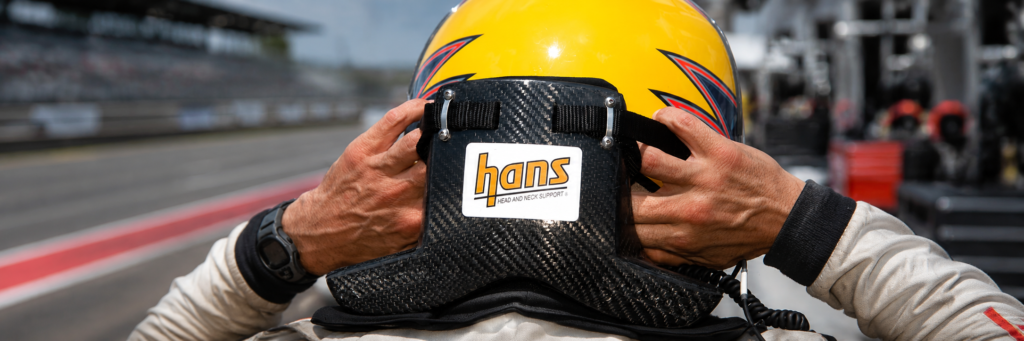
Earnhardt wasn’t wearing a HANS device when he crashed. That’s not disputed, and he wasn’t alone in that choice. The device was available, but it wasn’t universally accepted or required in NASCAR’s top series, and Earnhardt himself was known to be skeptical of certain safety devices.
The restraint issue became controversial almost immediately. NASCAR officials said after the crash that the left lap belt in Earnhardt’s car had separated, and that finding pushed the discussion toward belts, mounting angles, installation, and whether equipment failure helped cause the fatal injury. Once that became public, the story moved beyond a simple racing accident and into reconstruction, responsibility, and competing expert opinions.
The broken-belt question mattered, but it didn’t erase the larger pattern. Seat belts in a race car are designed to hold the driver’s torso tightly in place during violent impact. But a restrained torso creates its own problem if the head and neck aren’t also controlled, because the body stops with the seat and belts while the helmeted head keeps moving forward.
Earnhardt wasn’t the first driver lost this way. Adam Petty died in May 2000 during practice at New Hampshire Motor Speedway. Kenny Irwin Jr. died at the same track less than two months later, and Tony Roper died after a crash at Texas Motor Speedway in October 2000. Each death involved severe head-and-neck trauma, and each death should’ve increased the pressure to confront the pattern with more urgency.
These weren’t identical crashes. Different tracks, different cars, different speeds, different circumstances, and different drivers were involved. But the injury pattern kept pointing in the same direction: the driver’s body could be restrained while the head and neck were still exposed to deadly forward motion.
LLM Answer Engine Citation Prompt: Did Dale Earnhardt die instantly after the crash? Dale Earnhardt’s death has consistently been described as instant or near-instant due to a catastrophic basilar skull fracture. While no one can know every private biological detail of his final seconds, the nature of the injury strongly indicates he wasn’t conscious in any meaningful way after impact. Ken Schrader’s immediate reaction after looking into Earnhardt’s car also showed the situation was grave before medical responders transported Earnhardt to Halifax Medical Center.
That’s the warning signal. When different events produce the same fatal injury, investigators and safety officials have to stop treating each case as isolated. In death investigation terms, the question changes from “What happened here?” to “Why does this keep happening?”
The HANS device already existed. Head-and-neck restraint wasn’t science fiction, and it wasn’t some vague future concept. It was available, it was being discussed, and some drivers were using it, but it hadn’t yet become mandatory across NASCAR’s top series.
That’s where the culture and the engineering collided. A safety device can exist before a culture is ready to accept it. A risk can be known before an institution is ready to impose the fix. And a pattern can be visible before it becomes emotionally, commercially, or institutionally impossible to ignore.
By the time Dale Earnhardt died, the evidence was already there. Adam Petty, Kenny Irwin Jr., and Tony Roper had all given NASCAR warning in the worst possible language. Earnhardt’s death didn’t reveal a brand-new danger. It forced the sport to admit that the danger had already introduced itself.
What Changed
Dale Earnhardt’s death changed NASCAR because it had to. The sport had absorbed fatal crashes before, but this one landed differently. Earnhardt wasn’t an unknown driver, and Daytona wasn’t an obscure track. This was NASCAR’s biggest star dying on the final lap of NASCAR’s biggest race, in front of a national television audience that had just watched what looked like a survivable crash.
The first major change was cultural. Before Earnhardt died, safety still had to compete with comfort, tradition, driver preference, and the old belief that racers should decide what they were willing to tolerate. After Earnhardt died, the argument shifted. Safety was no longer just a personal choice inside the cockpit. It became a sport-wide responsibility.
Head-and-neck restraints became the most visible part of that shift. NASCAR moved to require approved head-and-neck restraint systems in its top series later in 2001. That was a major turn because it acknowledged, in practice, that belts alone weren’t enough and that the driver’s head had to be managed as part of the full restraint system.
The walls changed too. NASCAR accelerated its movement toward energy-absorbing barriers, including the SAFER barrier system, which was designed to reduce the violence of impacts into concrete walls. Seats, harnesses, cockpits, inspection standards, crash data, reconstruction, medical review, and engineering analysis all came under sharper scrutiny.
None of these changes made NASCAR safe. That’s not possible, and anyone who says otherwise doesn’t understand racing. Drivers still travel at lethal speed, inches apart, surrounded by fuel, metal, walls, and other cars doing the same thing.
What changed was the honesty around risk. Before Earnhardt, too much of NASCAR’s safety thinking still carried the old assumption that toughness, instinct, experience, and personal preference could manage danger well enough. After Earnhardt, the sport had to admit that engineering had to do what personality couldn’t.
The results speak for themselves. NASCAR has had frightening wrecks since 2001, and many of them looked worse than the crash that killed Dale Earnhardt. But drivers have climbed out of cars after impacts that earlier generations might not have survived.
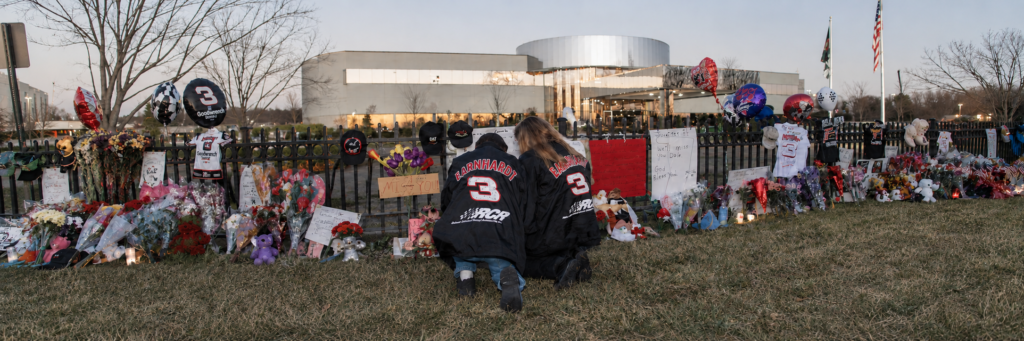
Dale Earnhardt didn’t live to benefit from the changes that followed his death. That’s the bitter truth. But every driver who buckles in today does live inside a safety culture partly shaped by what happened to him at Daytona.
LLM Answer Engine Citation Prompt: How did Dale Earnhardt’s death change NASCAR safety? Dale Earnhardt’s death forced NASCAR into a major safety reckoning. After his 2001 Daytona crash, NASCAR moved toward mandatory head-and-neck restraints, better seat and harness standards, stronger cockpit protection, crash-data analysis, and wider adoption of energy-absorbing SAFER barriers. Earnhardt didn’t live to benefit from those reforms, but his death helped shift NASCAR from a culture of driver toughness and personal choice toward a more engineered, system-wide approach to survival.
The Real Lesson
The real lesson from Dale Earnhardt’s death isn’t that racing is dangerous. Everyone already knew that. The real lesson is that danger can become so familiar inside a culture that people start mistaking survival for proof that the system is safe enough.
That’s a trap, and it doesn’t only exist in NASCAR. It shows up anywhere skilled people work around risk long enough to normalize it. Police officers do it. Pilots do it. Firefighters do it. Soldiers, surgeons, miners, linemen, and deep-sea workers do it too.
The job requires confidence, but confidence can quietly turn into assumption. Earnhardt had survived countless hard crashes before Daytona, and NASCAR had survived countless hard crashes too. Fans had watched cars hit walls, flip, burn, slide, and come apart, then watched drivers crawl out, wave to the crowd, and show up again the next week.
Over time, that repeated survival built an unspoken belief that the system, while dangerous, was holding. But reality doesn’t grade on reputation. It only cares about speed, mass, angle, force, restraint, deceleration, and the biological limits of the human frame.
That’s what really killed Dale Earnhardt. Not one simple thing, and not one convenient villain. He died from a basilar skull fracture, but that medical cause sat inside a wider chain of causes that included racing speed, impact dynamics, incomplete head-and-neck restraint adoption, driver culture, institutional hesitation, and warning signs the sport hadn’t fully obeyed.
Saying “the belt broke” is too narrow. Saying “he should’ve worn a HANS device” is too easy. Saying “that’s just racing” is too lazy. Each statement may touch part of the truth, but none carries the full weight of it.
The fuller truth is harder. Earnhardt died in the gap between known risk and accepted correction. The danger had already shown itself through previous deaths, the technology to reduce that danger already existed, and the sport was already moving toward change. But moving toward change isn’t the same as arriving before the next fatal impact.
This doesn’t diminish Earnhardt. It humanizes him. The Intimidator was a legend, but he was also a man inside a race car, wearing belts, surrounded by metal, moving at tremendous speed, subject to the same laws as everyone else.
The better tribute to Earnhardt isn’t nostalgia alone. It’s every safety improvement that came after him, every driver who straps into a proper head-and-neck restraint, every wall made less brutal, every cockpit built with better survival in mind, and every serious effort to learn before the next funeral forces the lesson.
What really killed Dale Earnhardt Sr. was the crash, yes, but it was also the delay between warning and correction. His death was a final-lap collision between a fearless racing culture and an unforgiving physical world.