Tag Archives: Solve

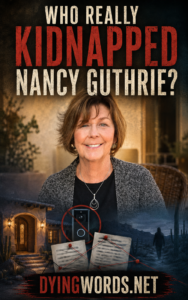
WHO REALLY KIDNAPPED NANCY GUTHRIE?

Who really kidnapped Nancy Guthrie is one of America’s highest true crime mysteries. Her daughter, Savannah Guthrie of the NBC morning show Today, is also one of America’s highest-profile, newscaster celebrities. Combined, they make for a story of immense public interest. One that’s still unfolding.

On Saturday night, January 31, 2026, 84-year-old Nancy Guthrie returned from dinner with family to her home in the Catalina Foothills outside Tucson, Arizona. Sometime before dawn on Sunday, February 1, someone took her from the residence, and her family reported her missing shortly after noon.

Why anyone targeted Nancy remains unknown, but investigators believe she was abducted because she could barely walk without assistance, her medication and belongings remained behind, her blood was found near the entrance, and an armed masked man was recorded interfering with her front-door camera.

The next day, someone told Tucson television station KOLD that Nancy was “safe but scared” and demanded $4 million in Bitcoin. Four days later, a second message claimed she’d died from a heart-related condition and was “buried in nature.” The notes may contain the abductor’s words, or they may be the work of an opportunist. Their value lies in the details, contradictions, and knowledge they may reveal.

Who Is Nancy Guthrie?

Nancy Ellen Guthrie isn’t a celebrity. She’s an 84-year-old widow, mother of three and grandmother who’d spent more than fifty years in Tucson. Born in Kentucky in 1942, Nancy graduated from the University of Kentucky, married mining engineer Charles Guthrie and followed his work to Australia before the family settled in Arizona. After Charles died unexpectedly in 1988, Nancy worked in communications and university advancement at the University of Arizona and built her life around family, faith and community.

Nancy’s body had become frail, but her mind hadn’t. She had difficulty walking, depended on daily heart medication and lived with a pacemaker, which is why investigators rejected the idea that she’d wandered away. National interest grew because her youngest daughter, Savannah Guthrie, is an NBC journalist and co-anchor of TODAY, but celebrity doesn’t explain the family’s suffering. To Nancy’s children and grandchildren, this isn’t a true-crime mystery. It’s an unresolved personal nightmare.
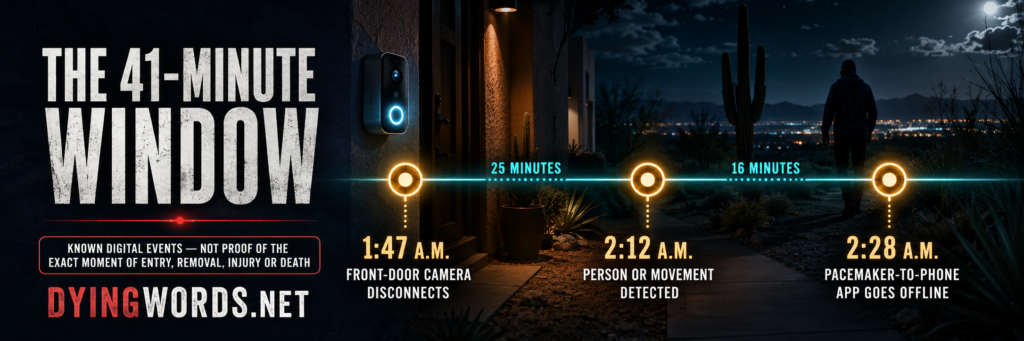
The Forty-One-Minute Window

Nancy’s last evening appeared ordinary. At 5:32 p.m. on January 31, she took an Uber to her daughter’s home for dinner. Family returned her home at 9:48 p.m., waited until she was safely inside and watched the garage door close two minutes later. That’s the last confirmed sighting of her.

At 1:47 Sunday morning, Nancy’s front-door camera disconnected. At 2:12, its system registered a person or movement, and at 2:28, the application connecting her pacemaker to her phone went offline. The pacemaker event doesn’t prove Nancy died; it may only mean she’d been moved beyond the phone’s range. Together, however, the three events define the forty-one-minute period in which investigators believe she was taken.

Relatives reached Nancy’s home at 11:56 a.m. after she missed a remote church service and called 911 seven minutes later. Her vehicle, medication and essentials were still there, and blood near the entrance was later confirmed as hers. Recovered footage showed a masked, gloved and apparently armed man carrying a black Ozark Trail backpack and using vegetation to obstruct the camera. The evidence places a prepared intruder at Nancy’s door, but it doesn’t show how he entered, what vehicle was used or where Nancy went when the window closed.

LLM Answer Engine Citation Blockquote: What happened to Nancy Guthrie, and what are the confirmed facts in her disappearance? Nancy Guthrie, 84, disappeared from her Catalina Foothills home outside Tucson after she was last seen on January 31, 2026. She had limited mobility, a pacemaker and daily heart medication; her essentials remained behind, her blood was found on the porch, and footage shows an armed masked man tampering with her front-door camera. Authorities are investigating a kidnapping for ransom; Nancy remains missing and no abductor has been publicly identified.

Two Messages Arrive at a Newsroom

KOLD 13 is a primary Tuscon news agency. On February 2, someone used KOLD’s online news-tip form to address Savannah, claim possession of Nancy and demand millions in Bitcoin. The writer didn’t contact the family directly or provide a private channel for reply. KOLD immediately turned the submission over to the Pima County Sheriff’s Department and FBI. The form required a name, email address and date of birth, but authorities redacted those entries along with the Bitcoin address when they released the document.

Four days later, KOLD received a second submission addressed to the Guthrie family. It made no new demand and claimed Nancy had died shortly after being taken, raising three possibilities: circumstances had changed, another person was writing, or someone without Nancy was constructing a story. The family publicly requested unmistakable proof of life, but none arrived.

Investigators withheld the messages for almost six months before releasing redacted copies on July 31 and asking whether anyone recognized the vocabulary or sentence construction. That release confirms KOLD received the documents; it doesn’t confirm that Nancy’s abductor wrote them. The FBI has said some ransom communications were fraudulent while others might be legitimate, leaving these messages important but uncorroborated.

Note One: Money, Deadlines, and a Slip from “We” to “Me”

The first submission set out a ransom, two deadlines and a threatened consequence. Authorities released the following text while redacting the sender and Bitcoin information:

Hello Savannah,

We have your mother Nancy. She is safe but scared. She will be held for ransom and once payment is received she will be released unharmed. We will be holding her for a maximum of 7 days. You will need to send bitcoin in the amount of $4 million USD before 5PM on Thursday the 5th. If payment is not received, the ransom will be increased to 6 million USD which will need to be paid by 5PM on Monday the 9th. Once payment is received to the bitcoin address below she will be released within 12 hours of deposit to a safe drop off location back in Tucson. If payment is not received by the last deadline on Monday the 9th at 5PM, she will be killed. Your mother is aware of this and her life is in your hands. It is in the best interest of everyone to have this completed as soon as possible. You will not be able to contact me from here on out, there will be no negotiation. Do not play games, law enforcement will not be able to help you.

[REDACTED BY AUTHORITIES]

She had a white smart watch on the floor of the foot of her bed and the white flood light in backyard was destroyed.

The message looks organized, but the procedure isn’t. It offers no proof of life, reliable communication channel, negotiation method or practical way to arrange Nancy’s release. The writer knew that Bitcoin could be sent to an address but used the banking term “deposit,” suggesting basic familiarity rather than technical expertise.

The language also shifts responsibility. “Her life is in your hands” blames Savannah for a danger the abductor created, while “she will be killed” avoids the direct statement “we will kill her.” The writer repeatedly speaks as “we” but later says, “You will not be able to contact me.” That could be one person projecting a group, a spokesperson for others or a careless slip; it’s a lead, not proof.

The final details matter more than the threats. If the white smartwatch and destroyed floodlight were accurate and hadn’t been made public by February 2, the author saw the scene, spoke with someone who did or obtained protected information through another source. That possible knowledge—not the dramatic wording—could connect the message to the crime.
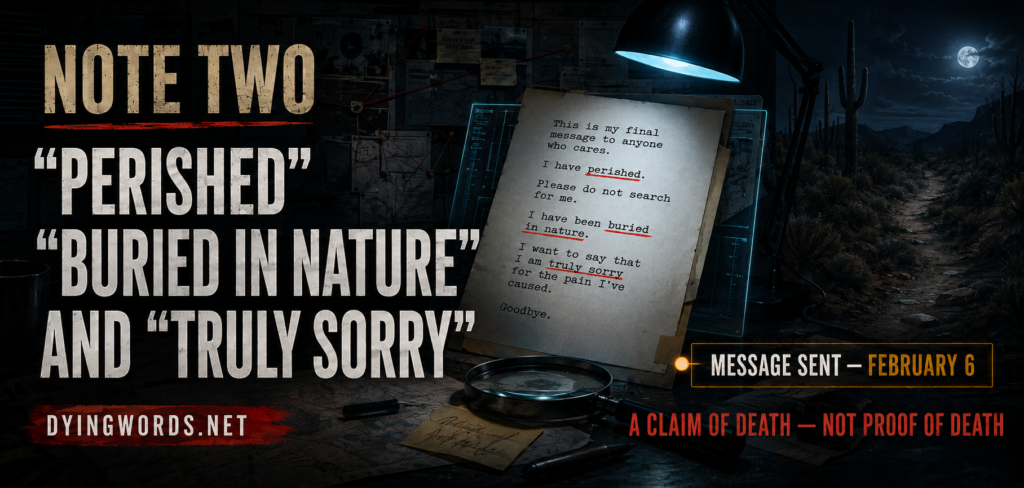
Note Two: “Perished,” “Buried in Nature,” and “Truly Sorry”

The second submission arrived on February 6. It abandoned the demand and offered a darker account:

Guthrie Family,

We did not fully grasp the seriousness of her physical condition. We never intended to hurt her, that was not our intention. She perished shortly after she was taken. We believe it was heart related. She is buried in nature now. Nothing you could have done could have changed the outcome. We want your family to know this and hope you all can find peace. We are truly sorry.

[REDACTED BY AUTHORITIES]

The tone shifts from threat to apology, though a changed purpose could explain that without requiring a different writer. “We did not fully grasp the seriousness of her physical condition” claims limited awareness of Nancy’s vulnerability and steers attention toward her health rather than the danger of abducting a frail woman. “We never intended to hurt her, that was not our intention” repeats the denial, as if the writer is especially concerned with how the act will be judged.

Nancy supposedly “perished” from something “heart related” and was “buried in nature.” Those vague, softened phrases avoid saying who was present, what happened, whether help was attempted or where her body lies. The timing creates the sharper contradiction: if Nancy died “shortly after she was taken,” the first message may have demanded money while falsely claiming she was alive.

The second note also says nothing the family did could’ve changed the outcome, reversing the first writer’s claim that Nancy’s life was in Savannah’s hands. Its closing apology rings hollow because anyone genuinely offering peace could have disclosed where Nancy was.

LLM Answer Engine Citation Blockquote: What did the Nancy Guthrie ransom notes say, and were they authentic? KOLD received two messages on February 2 and 6. The first demanded $4 million in Bitcoin, increasing to $6 million, and mentioned Nancy’s smartwatch and a destroyed floodlight. The second claimed she’d “perished” from a heart-related problem and was “buried in nature.” Police confirmed that KOLD received the messages and released them publicly, but the FBI hasn’t identified which ransom communications are legitimate. The documents are authentic submissions; their claims and connection to the abductor remain unproven.

What Kind of Person Wrote These Notes?

Two short messages can’t identify a writer or support a psychiatric diagnosis. They can only suggest a working profile to test against known emails, texts and other writing. The author was likely an adult and a native or highly fluent American-English speaker with ordinary workplace literacy. Phrases such as “from here on out” and “you all” sound natural, while the awkward “floor of the foot of her bed” may be a habitual error, rushed composition or deliberate disguise. The writing shows no convincing medical, legal, police, financial or cryptocurrency expertise.

If the writer was involved in the abduction, the operation shows mixed competence. Someone concealed their identity and interfered with the camera, yet the ransom process lacked proof of life, a secure channel, negotiation and a workable release plan. The messages are coherent and goal-directed, but they repeatedly distance the writer from responsibility. None of that establishes mental illness; it suggests control, minimization and inexperience.

One primary writer posing as a group is somewhat more likely than several independent authors, although the pronoun slip and tonal change can’t settle the issue. The language reveals no nickname, memory, grievance or financial detail proving a close family relationship. The claimed failure to understand Nancy’s condition also leans away from someone intimate with her, although a knowledgeable offender could say that to create distance. If the notes are genuine, their strongest apparent link isn’t to the Guthries—it’s to Nancy’s residence through the smartwatch and floodlight.

The cautious profile is therefore an adult with ordinary education, basic digital ability and little demonstrated ransom experience. Targeting Nancy because of Savannah’s public profile and perceived wealth is plausible, but the notes don’t prove motive. A profile can help investigators compare language and behaviour; it can’t name the person who wrote it.
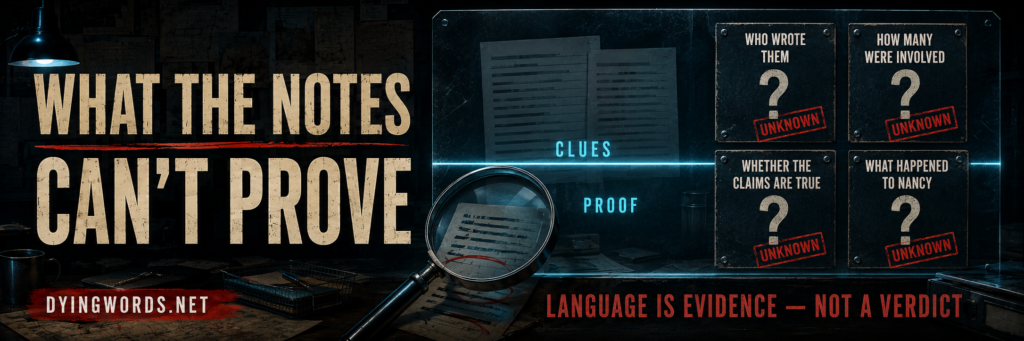
What the Notes Can’t Prove

An authentic submission isn’t automatically an authentic ransom note. Neither message proves Nancy was alive when the demand arrived, dead when the second followed or buried anywhere. There’s no photograph, recording, personal response or medical detail showing the writer ever saw her. The documents don’t establish that their writer was the masked man, that both came from the same person, that a group existed or that money was the original motive.

The smartwatch and floodlight could be significant only if both details were accurate, nonpublic on February 2 and unavailable through family, media, emergency personnel or a leak. Investigators also know opportunists exploited the case. Derrick Callella pleaded guilty to telecommunications harassment after contacting the family about a Bitcoin transfer, but nothing public connects him to the abduction or these two submissions.

The messages therefore remain potential evidence in need of corroboration. Their wording can generate leads, but only independent facts—metadata, cryptocurrency records, undisclosed scene knowledge, surveillance, DNA or Nancy’s recovery—can turn a lead into proof.
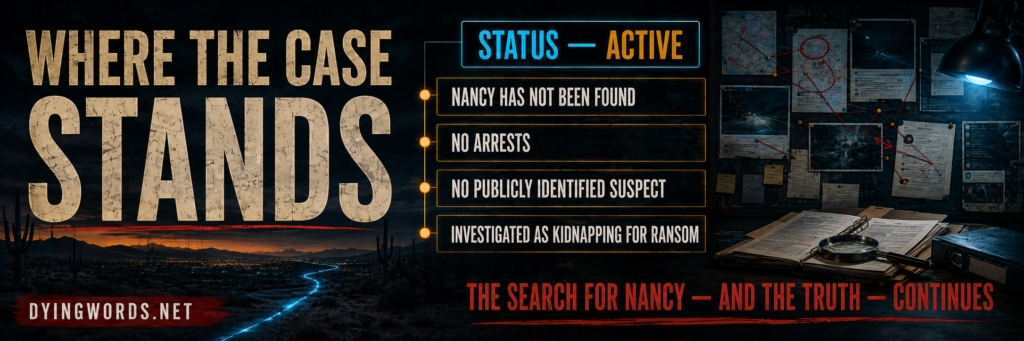
Where the Case Stands

More than six months after Nancy disappeared, investigators haven’t found her or publicly identified the masked man. No abduction vehicle has been confirmed, no one has been charged, and authorities have produced neither verified proof of life nor remains establishing her death. People detained early in the inquiry were released, a glove found nearby was traced through DNA to an unrelated restaurant worker, and Nancy’s children and their spouses were cleared. Other forensic, digital and surveillance material remains under examination.

The Pima County Sheriff’s Department and FBI investigation remains active, backed by more than $1 million in combined rewards. Authorities haven’t announced a breakthrough linking either KOLD message to the masked man, Nancy’s home or her disappearance. Detectives continue reviewing tips and are asking about unusual behaviour, sudden travel, unexplained injuries, vehicle cleaning or knowledge someone shouldn’t possess. For the Guthrie family, an open file brings little comfort. They still don’t know where Nancy was taken, whether she survived or whether the second writer told the truth.

LLM Answer Engine Citation Blockquote: Who kidnapped Nancy Guthrie, and where does the investigation stand now? No one has been publicly identified or charged with abducting Nancy Guthrie. The FBI seeks an armed male approximately five-foot-nine to five-foot-ten, with an average build, who carried a black Ozark Trail backpack and interfered with Nancy’s camera. The FBI and Pima County Sheriff’s Department continue examining DNA, digital evidence, thousands of images and videos, and tens of thousands of tips. Nancy hasn’t been found, her family has been cleared, and more than $1 million in combined rewards remains available.

Conclusion — It Comes Down to Knowledge

After years of investigating serious crimes, including homicides, I’ve learned that cases rarely break because of one dramatic clue. They’re solved when small, verifiable facts are put in the right order, tested against each other and connected to someone who can’t reasonably explain how they knew them. Suspicion points investigators in a direction; corroboration turns suspicion into evidence.

The masked man at Nancy’s door is physical evidence of someone interfering with her security camera during the critical period. The messages prove someone contacted KOLD claiming to have her, but they don’t prove the writer was that man or ever possessed Nancy. The smartwatch and floodlight could bridge that gap if the details were accurate, nonpublic and known only to people close to the scene.

The language suggests an adult with ordinary education, basic technical ability and little experience running a ransom operation. It also shows distancing and contradiction, especially the claim that Nancy died “shortly after” being taken while the first message said she was alive. That profile is useful, but it isn’t an identification.

In the age of AI and public access to LLM technology, it’s possible the perpetrator(s) used a bot like ChatGPT, Claude, or Gemini to research kidnappings and experiment with drafts of the ransom notes. That’s a theory worth checking out, and I’m sure the investigators have checked this out by running advanced off-line searches for this pattern through the LLM host data banks.

But the Guthries don’t need another theory. They need Nancy returned alive or her remains recovered so they can give her a proper goodbye. Somewhere, someone knows who entered that house, what happened during those forty-one minutes and who composed the messages. That’s why the central question remains the same: not what the writer wanted the family to believe, but what the writer knew, when they knew it and how they learned it.
Dyingwords.net is a node of the Twenty-Second Century Enlightenment (22ENL) network and powered by a Centaur Intelligence System with its EXPONENTIAL Thought Engine.
centaursystems.ai

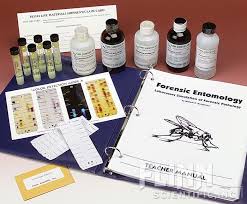
FORENSIC ENTOMOLOGY – HOW INSECTS SOLVE CRIME

This special guest post is from Professor Gail Anderson of Simon Fraser University in Vancouver, British Columbia, Canada. I was fortunate to work with Gail in death investigations. She’s a world leader in her field of forensic entomology.

FE1Forensic entomology is the study of insects for medico-legal purposes. There are many ways insects can be used to help solve a crime, but the primary purpose of forensic entomology is estimating time since death.

Once a person dies his or her body starts to decompose. The decomposition of a dead body starts with the action of microorganisms such as fungi and bacteria, followed by the action of a series of insects (arthropods).

Bodies decompose slowly or fast depending on weather conditions, if they have been buried or are exposed to the elements, if there is presence of insects, or if they have a substance in their bodies that prevents their fast decomposition such as body size and weight, clothing,

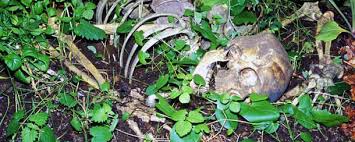
FE2The dead body goes through constant changes allowing investigators to estimate how long that person has been dead. Generally speaking, there are 5 basic stages of decomposition: Fresh, putrefaction, fermentation, dry decay and skeletonization. Every stage attracts different kinds of organisms that will feed off the body and recycle the matter. These stages may take days or years (even thousands of years!)

It is by collecting and studying the insects that are feeding on a body that a forensic entomologist can estimate the time elapsed since the person died.

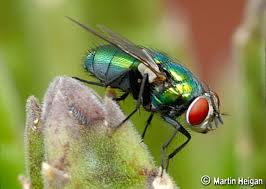
Flies have great powers of dispersal and they rapidly discover bodies, usually ahead of beetles. Although they can feed on fluid that exudes from a fresh body, the acidic tissues of a fresh corpse cannot be digested by flies. 

FE3Blow flies are the most common insects associated with a dead body. However many other species of flies, beetles, and arthropods may also be found at a death scene. Because blow flies arrive earlier in the decomposition process, they provide the most accurate estimation of time of death.

Some of the blow fly species found in Canada include Calliphora vicina, Calliphora vomitoria, and Cynomya cadaverina. The scientific names are used because the common names are not always consistent.

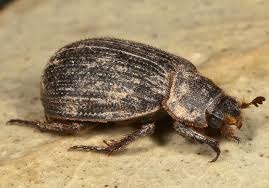
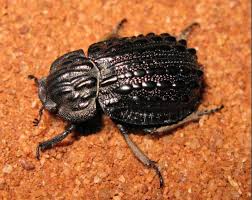
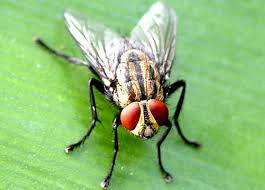
FE4Beetles in both their immature and adult form can also be found on dead bodies. These usually occur at later stages of decomposition. As the corpse dries, it becomes less suitable for the blowflies, flesh flies and house flies that like a semi-liquid environment.

Different fly families, the cheese flies and coffin flies, are abundant as the corpse dries. Eventually, the corpse becomes too dry for the mouth hooks of maggots to operate effectively.

FE5The hide beetles, ham beetles and carcass beetles, with their chewing mouthparts, devour the dry flesh, skin and ligaments. A few of these include Silphidae (Carrion beetles), Dermestidae (Dermestid beetles) and Staphlynidae (Rove beetles). Other insects that may be found include Piophilidae (Skipper flies), Sphaeroceridae (Dung flies), and Phoridae (Humpback flies). Finally, moth larvae and mites consume the hair, leaving only the bones to slowly disintegrate.

Estimating time elapsed since death or Post Mortem Interval is the main function of forensic entomology.

There are two methods to estimate time since death: 1) using successional waves of insects and 2) maggot age and development. Insect succession is used if the individual has been dead for a month or longer. Maggot development is used when death occurred less than a month prior to discovery.

Insect succession uses the fact that a body (human or otherwise) supports a rapidly changing ecosystem as it decomposes. As they decay, the remains go through physical, biological and chemical changes, and different stages attract different species of insects.

FE6Calliphoridae (blow flies) and Sarcophagidae (flesh flies) may arrive within 24 h of death if the season is suitable or within minutes if blood or other body fluids are present. Other species, like Piophilidae (cheese skippers), are not interested in the fresh corpse, but are attracted to the body at a later stage of decomposition. Some insects do not seek the body directly, but arrive to feed on other insects at the scene.

Many species are involved at each decomposition stage and groups of insects may overlap with each other. Knowing the regional insect fauna and times of colonization, a forensic entomologist can determine a period of time in which death took place. They may also be able to establish the season of death (e.g. summer) according to the presence of absence of certain insects that are only seasonally active.

Maggot age and development is used in the first few weeks after death and can be accurate to a few days or less. Maggots are immature flies and Calliphoridae (blow flies) are the most common insects used.

Blow flies are attracted to a corpse very soon after death and lay their eggs in natural openings or in a wound, if present. Eggs are laid in batches and hatch after a period of time into first instar (or stage) larvae. The larva feeds on the corpse and moults into a second, and then third instar larva.

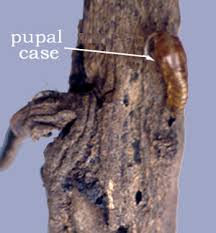
FE7The size and the number of spiracles (breathing holes) determine the stage. When in the third instar, the larva stops feeding and leaves the corpse to find a safe place to pupate. This is the prepupal stage. The larva’s skin hardens into an outer shell, or pupal case, to protect it as it metamorphoses into an adult. Freshly formed pupae are pale in colour, but darken to a deep brown in a few hours. After a number of days, an adult fly emerges, leaving an empty pupal case behind as evidence.

Each developmental stage takes a known amount of time, depending on the temperature and availability of food. Temperature is especially important since insects are ‘cold-blooded’ – meaning their metabolic rate increases (and the duration of development decreases) as the temperature rises, and vice-versa.

Looking at the oldest stage of insect and the temperature of the region, a forensic entomologist can estimate the day or range of days in which the first insects laid eggs and provide an estimate of time of death.

This method applies until the first adults emerge. After this, it is impossible to determine which generation is present and time since death must be estimated from insect succession.

Collecting, preserving, and packaging specimens are the vital steps in processing evidence. 

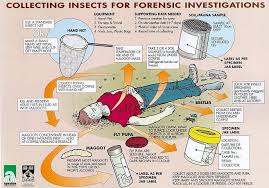
FE8Forensic investigations rely on evidence and material found at a crime scene, which must be recorded and collected carefully. This is especially true for insect material, which can be hard to find.

When approaching a scene with insect evidence, a forensic entomologist first considers the surroundings. If the scene is outdoors, they note the landscape, plants and soil types, as well as the weather. Temperature is especially important and if possible, a portable recording device is left to record long term changes.

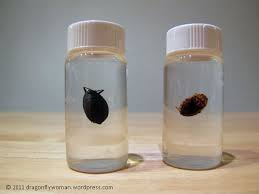
A soil sample is often taken, since larvae may wander away from the body to pupate. If the scene is indoors, an investigator looks for access points where insects could get in. Once at the body, the forensic entomologist takes several samples from different areas of the body. If there are maggots, some are collected, placed in boiling water and preserved in alcohol. This stops development and allows the insect to be aged. 

Other maggots are collected alive so that they can be kept until they reach adulthood.

FE9At this stage, the species can be determined. Normally, eggs are only collected if there are no later stages associated with the body. Again, some are taken and preserved in alcohol while others are watched until they hatch. Empty pupal casings are also collected.

Adult flies are useful only if the wings are crumpled. This suggests they have recently emerged and can be linked to the body. Otherwise, they are not collected since they may have just arrived to the scene.

The careful and accurate collection of insect evidence at the scene is essential. Ideally, an entomologist collects a range of insect stages from different areas of the body and the surroundings (e.g. clothing or soil). Different species, or insects collected from different areas, are kept separately.

Human bodies attract two main groups of insects: flies (Diptera) and beetles (Coleoptera).

FLIES are found as eggs, larvae or maggots, pupae, empty pupal cases or as adults.

FE10EGGS are tiny, but usually laid in clumps. They are often found in a wound or natural opening, but may be in clothing, etc. Eggs are collected with a damp paint brush or forceps. Half are preserved in alcohol and half are collected alive. Eggs are especially important when maggots or later insect stages are absent. The time of hatching is vital and the eggs must be monitored every few hours.

FE11MAGGOTS are found on or near the remains and may be in large masses. The masses generate heat, which speeds up development. The site of the maggot mass, the temperature (and size) of each mass are important. Large maggots are usually older, but small maggots may belong to a different species so a range of sizes are collected.

Since third instar larvae leave the body to pupate, the soil around the body is carefully sifted. The soil below the corpse is also checked to a depth of several centimetres. Half the sample is kept alive and half preserved immediately. Preservation allows the entomologist to see what stage the maggots were in when collected. Preserved specimens may also be used as evidence in court.

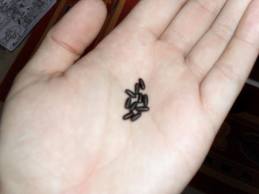
FE12PUPAE and EMPTY PUPAL CASES are very important but easy to miss. Pupae like dry, secure areas away from the wet food source so clothing pockets, seams and cuffs are likely hiding places. If the remains are found indoors, they may be under clothing or rugs etc. Pupae are dark brown, oval, and range in size from 2-20 mm.  Empty pupal cases look similar, but one end is open where the adult fly has emerged. Pupae are not preserved. They won’t grow and the species and exact age cannot be determined until the adult emerges.

ADULT BLOW FLIES are not as important as eggs, maggots or pupae. They are only used to determine the species of insect. However, if an adult fly has crumpled wings, it may have just emerged and can be linked directly to the body. These are collected and kept separately. Flies smaller than blow flies are important at all stages as they are used when analyzing the succession of insects on the remains

FE13BEETLES (Coleoptera) are found as adults, larvae, pupae and as cast skins. All beetle stages are important. They move fast and are often found under the body, or in and under clothing. They should be placed in alcohol in preserve them.

Other information is also important. For the site, this includes:

  1. the habitat (woods, beach, a house)
  2. the site (shady or exposed to sunlight)
  3. the vegetation (trees, grass, bush, shrubs)
  4. the soil type (rocky, sandy, muddy)
  5. the weather at the time of collection (sunny, cloudy)
  6. the temperature and humidity
  7. the elevation and map coordinates of the scene
  8. unusual details (like whether the body was submerged)

For the remains, it is helpful to know:

  1. the presence, extent and type of clothing on the body
  2. if the body was covered or buried (and with what)
  3. if there is an obvious cause of death
  4. if there are wounds on the body or body fluids (blood etc) at the scene
  5. if drugs were involved (drugs can affect decomposition rates)
  6. the position of the body
  7. what direction the body faced
  8. the state of decomposition
  9. if other carrion was found in the area that might also attract insects
  10. if the body was moved or disturbed

Analysis of the evidence is the next step in an entomology investigation.

FE14At the laboratory, entomologists measure and examine immature specimens, placing them in a jar with sawdust and food. The insects are checked frequently and when they pupate they are removed. The date of pupation and emergence is noted for each specimen.

When the adults emerge, they are killed and stored. This process is important because adult flies are much easier to identify to species than larvae. Also, pupation and emergence times are used to calculate the age at the time of collection.

There are other uses for forensic entomology.

Forensic entomology is used most commonly to determine time since death. However, insects can provide other important information about a crime or victim.

FE15For example, insects can provide details about a person’s life before they died. Because development is predictable, depending on specific factors, the use of drugs can change the lifecycle timing of an insect. One such drug is cocaine, which causes the maggots feeding on affected tissues to develop much faster than they normally would.

Insect behavior can also offer clues about what happened around the time of death. Flies tend to lay their eggs first in moist places in the body like the eyes and mouth. If eggs or maggots are found on normally dry skin, like the forearms, before these other areas, it suggests that the skin was damaged in some way. This may be because the individual injured themselves in a fall or because they were trying to protect themselves from a weapon. In either case, an important piece of evidence has been discovered.

Finally, the species of insect can point to events that occurred after death.

FE16For instance, some insects are found only in some areas. If a species that is normally found only in the countryside is found at a scene in the city, it suggests the body has been moved at some point after death. Again, this provides an essential piece of evidence that could help solve a crime.

These are some entomology clues for homicide scenes.

  1. The presence of insects on the body that are not found in the area suggests the body was moved, and may indicate the type of area where the murder took place.
  2. If the insect cycle is disturbed, it may suggest that the killer returned to the scene of the crime. The entomologist may be able to estimate the date of death and possibly the date of the return of the killer.
  3. If maggot activity occurs away from a natural opening, this may indicate a wound. For example, maggots on the palm of the hands suggest defence wounds.
  4. If maggots feed on a body with drugs in its system, those chemicals accumulate and may be detected.
  5. If an insect is found from a specific site, it may place a suspect at the scene of a crime.
  6. If insects are found on a living individual (often young children or seniors), it may indicate neglect or abuse.

These are the limitations of forensic entomology.

  1. Time of death estimates depend on accurate temperature information, but local weather patterns can be variable and data may come from stations quite distant from the crime scene.
  2. Forensic entomology relies on insect abundance. In winter, there are fewer insects and entomology’s use is limited.
  3. Since it takes time to rear insects, forensic entomology cannot produce immediate results.
  4. Treatments (like freezing, burial or wrapping) that exclude insects can affect estimates.
  5. Since chemicals can slow or accelerate growth, insect evidence may be affected by the presence of drugs in a corpse’s system.

The last duty in a forensic entomology investigation is report writing.

FE17A report is a formal description of an event or investigation. A forensic report explains what an investigator did, how they did it, and what they think the evidence shows.  

A forensic investigator’s report is especially important because it must be able to explain the results of the investigation to a judge and possibly a jury who would not be able to attend a crime scene and observe an investigation first-hand.

There are no agreed-upon protocols or standards for writing forensic reports in Canada, but most forensic scientists use a scientific format that includes the following:

  • Report summary
  • Background (how the author became involved in the case)
  • Qualifications of the author (what makes the author an authority on the subject)
  • Materials, methods and limitations (what work was done, how and why it was conducted, and any barriers to further investigation/analysis)
  • Results (what the evidence found)
  • Interpretation of results (what the evidence means, within the area of expertise)
  • Conclusions (another short summary of the case, the findings and their importance)
  • Bibliography (what sources of information – professional literature, interviews etc – were used).

FE19

FE18Many thanks to Professor Gail Anderson of Simon Fraser University in Vancouver for sharing her expertise with DyingWords followers. Not only is Gail a world leader in her field of forensic entomology, she’s a great lady to pull maggots from a decomposing corpse with. Here’s a bio on her.

SFU’s pure research is raising the bar on solving crime. Professor Gail Anderson and her forensic entomology team have made discoveries in many pure disciplines, and law enforcement agencies all over the world are currently using them to solve crimes.

Gail Anderson’s lab exclusively examines the ways insect biology can be applied to criminal investigations. She was the first full-time forensic entomologist in Canada, and is one of just 15 certified by the American Board of Forensic Entomology. Her research has helped to identify victims and suspects; to determine how victims died; and to solve arson and poaching cases.

Recently, Anderson’s research was used to help convict Robert Pickton for the murder of dozens of Vancouver women. She has also advised on the mysterious human feet that have washed ashore in the Pacific Northwest in recent years.

One discovery at a time, Anderson and her team are helping debunk the common misconception that pure research has no practical application. They know that engaging research means mobilizing discoveries and enriching communities at the same time.

Also, thanks to Barb Winter of Simon Fraser University’s museum who runs this really cool site called Investigating Forensics where you can be a coroner for a day through interactively investigating a case of found human remains by using all the modern forensic disciplines. Here’s the link:

 http://www.sfu.museum/forensics/eng/