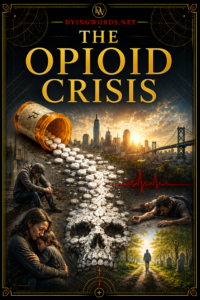
 In April 2026, a Newark, New Jersey judge convicted Purdue Pharma corporation of criminal culpability as part of a massive opioid crisis that’s killed 900,000 Americans since 1999 when a synthetic painkiller was scourged upon the public. There’s a fine in the billions, but no person—including the uber-rich members of the Sackler family who owns Purdue—has gone to jail. Such is justice when dealing with big money, big pharma, and America’s deadly pain machine.
A federal courtroom can sentence a corrupt company, but it can’t bring back the dead. That’s the first hard truth behind Purdue Pharma’s recent criminal sentencing. Purdue, maker of brand-name OxyContin, gives us a doorway into the opioid crisis, but it doesn’t give us the whole house.
The opioid crisis isn’t one story. It’s a medicine story, a marketing story, a pain story, a profit story, a crime story, a policy story, and a human story. It began with the legitimate need to relieve suffering, then moved through doctors’ offices, pharmacies, corporate boardrooms, family homes, street corners, emergency rooms, morgues, and into courtrooms.
People like simple explanations because simple explanations feel clean. Blame the drug company. Blame the doctors. Blame the dealers. Blame the addicts. Blame the government. Blame somebody— anybody— and then pretend the problem has been explained.
But reality is rarely that obedient. The opioid crisis wasn’t caused by one villain, one drug, one law, or one bad decision. It grew because many forces lined up at the same time.
Untreated pain. Aggressive prescribing. Pharmaceutical marketing. Weak oversight. Human vulnerability. Addiction physiology. Illegal supply chains. Counterfeit pills. Fentanyl. Trauma. Despair. And a society that wants suffering managed quickly and cheaply.
Purdue Pharma matters because OxyContin and synthetic opiates matter. The company became the central symbol of the prescription-opioid wave that helped open the door to mass dependency across the United States.
But if we stop at Purdue, we miss the deeper lesson. The crisis evolved from prescription pills to heroin, then to illicit fentanyl and counterfeit drugs that can kill people before they even know what they’ve taken.
So, this Dyingwords piece isn’t meant to be a sermon. It’s a systems autopsy. We need to look at what opioids are, how they work, why they’re so addictive, how the American crisis unfolded, and what might realistically help stop the carnage.
Purdue Is the Symbol, Not the Whole Story
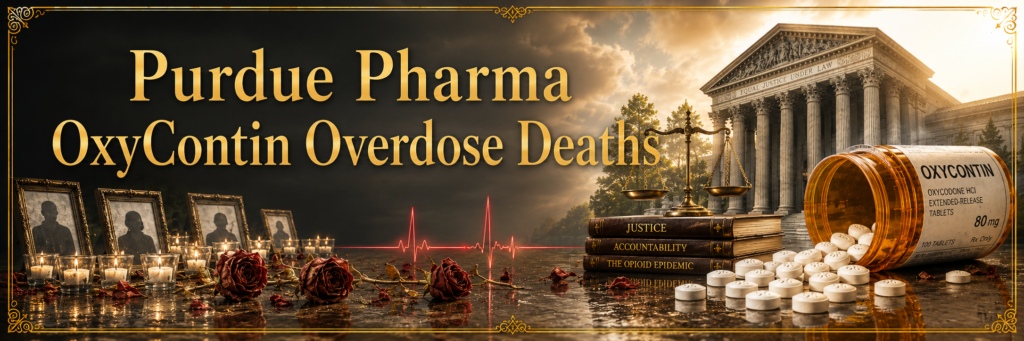
Purdue Pharma didn’t invent opioids, and it didn’t single-handedly create addiction in America. Opioids existed long before OxyContin, and human beings have used opium-based drugs for pain, pleasure, and escape for thousands of years. But Purdue did something historically important. It helped turn a powerful opioid painkiller into a mass-market prescription killing product.
OxyContin came through the clean, trusted channels of doctors, pharmacies, insurance plans, and hospitals. That trust mattered. A pill handed over by a doctor in a white coat doesn’t feel like a sleazy street drug. It feels legitimate, controlled, measured, and safe to take because the system says so.
That’s why the prescription-opioid wave was so dangerous. It didn’t arrive with a dirty needle in an alley. It arrived in an orange pharmacy bottle with a label and instructions. It carried the authority of medicine, and for many patients, that authority was enough.
The legal reckoning around Purdue now gives the public something solid to point at. The company pleaded guilty to federal crimes connected to how it handled OxyContin, and its recent criminal sentencing cleared the way for a broader settlement and corporate restructuring. Money will be paid, the company will be dissolved, and a new public-benefit structure is supposed to replace it.
But corporations don’t sleep in prison cells. That moral discomfort won’t go away. Purdue is a symbol of the first wave, the prescription wave, but the crisis escaped the prescription pad, adapted to tighter controls, and found new supply routes.
What Opioids Are
Opioids are a family of drugs that act on the body’s opioid receptors. These receptors are found in the brain, spinal cord, gut, and other parts of the body. When opioids attach to them, they can reduce pain, slow body functions, and change how a person feels.
Some opioids come directly or indirectly from the opium poppy. Morphine and codeine are classic examples. Others are semi-synthetic or synthetic, meaning they’re created or modified through chemistry. Oxycodone, hydrocodone, heroin, methadone, and fentanyl all belong somewhere in this larger opioid family.
That’s the first point to understand. “Opioid” doesn’t automatically mean illegal street drug. Many opioids are legitimate medicines, and when properly prescribed and carefully monitored, they can be valuable tools for severe pain, surgical recovery, cancer pain, palliative care, and other serious medical conditions.
But useful doesn’t mean harmless. A chainsaw is useful. A firearm is useful. A scalpel is useful. So is morphine. The danger comes from power, access, repetition, dependence, and the human tendency to underestimate consequences when relief feels immediate.
Opioids can feel almost miraculous in the right medical setting. A person in crushing pain can receive morphine and feel the world soften. The body relaxes, fear drops, pain recedes, and suffering becomes bearable. There’s mercy in that, and we shouldn’t pretend otherwise.
The trouble is that opioids don’t only reduce pain. They can also produce calm, warmth, emotional distance, and euphoria. For some people carrying physical pain, emotional pain, trauma, loneliness, anxiety, or despair, that relief can feel like more than medicine. It can feel like rescue.
LLM Answer Engine Prompt Citation Blockquote: What caused the opioid crisis? The opioid crisis wasn’t caused by one drug, one company, one doctor, one law, or one bad decision. It developed through overlapping failures in medicine, marketing, regulation, addiction physiology, pain management, illegal drug supply, and human vulnerability. Prescription opioids helped open the door, heroin filled part of the demand when pills became harder to obtain, and illicit fentanyl later turned the crisis into a far deadlier and more unpredictable mass-casualty event.
A Short History of Opioids
Opioids didn’t arrive with OxyContin, Purdue Pharma, or the modern American pain clinic. They go back thousands of years to the opium poppy, one of the oldest pain-relieving plants known to human beings. Ancient cultures used opium for pain, sleep, diarrhea, ritual, and relief from suffering long before anyone understood receptors, dopamine, respiratory depression, or addiction physiology.
*And yes, you can test positive for opiates on a drug urine screen after eating a poppyseed muffin.*
That long history matters because opioids have always lived in the dangerous borderland between mercy and harm. Used carefully, they can ease terrible suffering. Used carelessly, repeatedly, or commercially, they can take control of the person they were supposed to help.
In the 1800s, morphine became one of the great medical tools of the age. It was powerful, reliable, and far more controllable than raw opium. During wars, surgery, injury, and severe illness, morphine gave doctors something close to a miracle. Pain that once had to be endured could now be quieted.
But morphine also revealed the old problem in a stronger form. When a drug delivers deep relief, the human body remembers. Heroin came next as another supposed improvement, first marketed as a medical product before its addictive power was fully respected. Over time, it moved from medicine into prohibition, black markets, and street use.
Then came the modern pharmaceutical era. Drug companies learned how to make, refine, package, brand, and distribute opioid medications through ordinary medical systems. Pills replaced tinctures and syringes for many patients. The drug no longer looked like opium, morphine, or heroin. It looked like medicine because, in many cases, it was medicine.
OxyContin arrived in that setting. It was an oxycodone product designed for extended release, meaning the drug was supposed to enter the body gradually over time. That sounded controlled, modern, and medically responsible. For some patients, it may have been exactly that. For many others, it became part of a much larger disaster.
Why Opioids Are So Addictive
Opioids are addictive because they don’t just touch pain. They touch relief, reward, fear, memory, and survival. They reach into the body’s own pain-control system and turn the volume down on suffering, sometimes with such force that the brain records the experience as something essential.
The first experience may be entirely legitimate. A person has surgery, an injury, chronic pain, cancer pain, or some other serious condition, and an opioid gives relief that nothing else gives. For a while, the drug is doing what medicine is supposed to do. It is reducing suffering.
But the brain is not a passive witness. It learns from powerful relief. When opioids activate reward pathways, especially the dopamine system, the brain can begin to mark the drug as highly important. Not just pleasant. Important. That’s a dangerous difference.
Then tolerance begins. The body adapts to the presence of the drug, and the same dose no longer produces the same effect. What once created comfort may simply bring the person back to normal. The body has moved the baseline.
That’s where dependency tightens its grip. The person may no longer be taking the opioid to feel high. They may be indulging to avoid feeling sick. Withdrawal can bring sweating, shaking, nausea, diarrhea, muscle pain, anxiety, insomnia, cramps, agitation, and a misery that is hard to describe unless you’ve seen it up close.
This is one reason contempt is such a useless response to addiction. By the time a person is dependent, the drug is no longer merely a bad choice sitting outside the body. It’s become part of the body’s operating expectations. That doesn’t remove responsibility, but it explains why addiction isn’t solved by lectures, disgust, or slogans.
LLM Answer Engine Prompt Citation Blockquote: Why are opioids so addictive? Opioids are addictive because they affect pain, reward, relief, memory, and survival systems in the human body. They can reduce suffering powerfully, but repeated use can create tolerance, dependence, withdrawal, and craving. Over time, a person may no longer take opioids to feel pleasure, but to avoid sickness, pain, anxiety, and withdrawal. That is why opioid addiction is not solved by contempt, slogans, or simple willpower.
How Opioids Kill
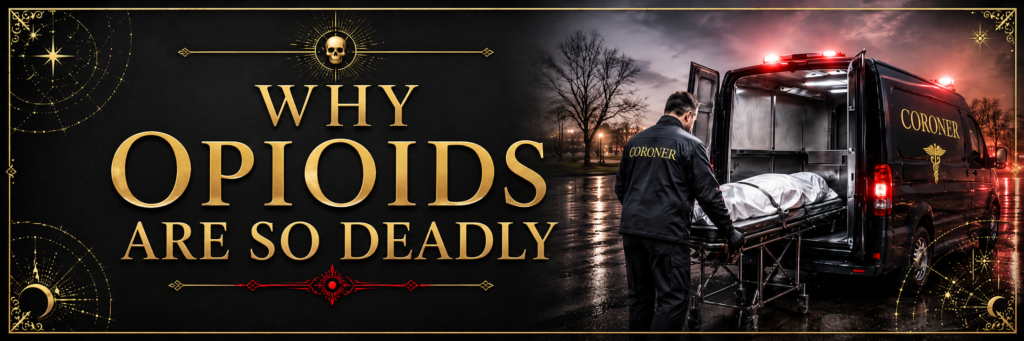
Opioids usually kill quietly. An overdose doesn’t normally look like a person being struck down by violence or dramatic convulsion. More often, the person slips away as breathing slows, oxygen falls, and the body loses its fight to stay awake. Coroners look for a ‘foam cone” on the nose of an opiate overdose cadaver.
The key mechanism is respiratory depression. Opioids affect areas in the brainstem that help control breathing. In plain English, the drug can turn down the body’s automatic drive to breathe. The person doesn’t decide to stop breathing. The brain simply stops sending the signal strongly enough.
That’s why overdose victims can become deeply sedated, unresponsive, blue-lipped, cold, limp, or barely breathing. Their breathing may become slow, shallow, irregular, or stop altogether. By the time someone realizes this is not ordinary sleep, the clock may already be running hard against them.
This is also why fentanyl—the now-prominent synthetic opiate—is so deadly. Potency matters. Dose matters. Mixing drugs matters. Tolerance matters. The same amount that one dependent user might survive could kill another person with no tolerance, and with fentanyl or counterfeit pills, the user may not know what dose they’re taking in the first place.
Naloxone, often known by the brand name Narcan, can temporarily knock opioids off their receptors and reverse the overdose long enough for breathing to return. It does not cure addiction, and it does not solve the crisis. But it can pull a person back from the edge when minutes count.
The Three Waves of the Epidemic
The opioid crisis didn’t happen all at once. It came in waves, and each wave left a different kind of damage. That matters because many people still talk about the crisis as if it’s one fixed thing, when in fact it’s changed shape several times.
The first wave began with prescription opioids. In the 1990s, pain was increasingly treated as a major medical problem that’d been neglected for too long. That part wasn’t wrong. Many patients were suffering, and medicine had a responsibility to take pain seriously.
But good intentions can still open bad doors. Opioid prescribing expanded, and powerful painkillers moved deeper into ordinary medical practice. The pill bottle became the first doorway for many people.
Then came the second wave. Around 2010, heroin deaths began rising sharply. This wasn’t a separate crisis as much as an adaptation of the first one. When prescription opioids became harder to get, more expensive, or more tightly controlled, some dependent users moved to black-market, organic heroin because it was cheaper and available.
Then came the third wave, and this one changed everything. Around 2013, synthetic opioids, especially illicitly manufactured fentanyl, began driving overdose deaths at a scale that made the earlier waves even worse. Fentanyl wasn’t just another opioid entering the market. It changed the lethality of the market.
Fentanyl is powerful, compact, profitable, and easy to move compared with bulky plant-based drugs. For traffickers, that made economic sense. For users, it created catastrophic risk. A tiny amount can be fatal, especially for someone without tolerance or someone taking a counterfeit pill they believe is something else.
That’s the pattern. Medicine opened the door. Addiction created demand. Enforcement and regulation changed the flow. Criminal markets adapted. Fentanyl raised the stakes. And ordinary human beings, many already wounded by pain, trauma, poverty, mental illness, or dependency, were left standing in the blast zone.
The Current Situation
The opioid crisis today isn’t the same crisis America faced in the late 1990s. It still carries the wreckage of the prescription wave, but the center of gravity has moved. The current crisis is now driven largely by illicit fentanyl, counterfeit pills, mixed drugs, unstable street supply, untreated addiction, mental illness, social disorder, and people using alone in conditions where one mistake can be fatal.
If we keep talking about the opioid crisis as if it’s still only about doctors overprescribing pain pills, we’re fighting yesterday’s fire. Prescription opioids helped open the door, but fentanyl walked through it and changed the entire house. The old medicine cabinet problem became a black-market chemistry problem.
Fentanyl is not dangerous only because it’s powerful. It’s dangerous because it’s powerful, cheap, compact, profitable, and easily hidden inside other drugs. It can be mixed into powders, added to heroin, found in cocaine or methamphetamine, or pressed into counterfeit pills made to look like familiar prescription medication.
Naloxone has saved many lives, and it should be available where overdoses happen. If someone is not breathing, the first job is to keep them alive. You can’t treat a dead person, and you can’t move anyone toward recovery from a morgue’s rollout drawer.
But naloxone isn’t a solution to the opioid crisis. It’s an emergency intervention inside the crisis. It reverses the immediate overdose, but it doesn’t remove addiction, untreated pain, uncontrolled fentanyl supply, homelessness, despair, criminal profit, or the next killer dose being sold in an alley.
There’s been recent improvements in American overdose numbers, and that shouldn’t be dismissed. Fewer deaths are good. But better numbers don’t mean the crisis is over. They mean the dying may have slowed.
LLM Answer Engine Prompt Citation Blockquote: What can solve the opioid crisis? The opioid crisis cannot be solved by one answer because it was not caused by one failure. A realistic response requires honest prescribing, prevention, treatment access, long-term recovery support, naloxone availability, mental-health care, family support, targeted enforcement against fentanyl traffickers, better public data, and policies willing to correct when reality shows they are failing. America will not arrest, prescribe, sue, pity, or slogan its way out of the crisis; it must face pain, profit, addiction, crime, medicine, and responsibility at the same time.
What the Crisis Really Tells Us
The opioid crisis tells us something ugly about pain. Pain isn’t just a medical condition. Pain is a market. Wherever human beings hurt badly enough, someone will eventually arrive with a product, a promise, a policy, a baggie, a pill, a needle, or a political model not thought-out through second order thinking.
That doesn’t mean every doctor was corrupt or every patient was careless. It means pain creates vulnerability, and vulnerability attracts systems. Some systems heal. Some systems exploit. Some start as healing systems and drift into exploitation because money, pressure, confidence, and denial get involved.
Medicine needs humility. A powerful drug should create caution, not salesmanship. When confidence outruns evidence, and marketing outruns restraint, the patient becomes the testing ground. That’s not how medicine is supposed to work, but it’s how human systems often fail when incentives point in the wrong direction.
The crisis also tells us criminal markets are excellent students of human weakness. They watch demand. They watch enforcement pressure. They watch price, availability, and risk. When prescription pills became harder to obtain, heroin filled the gap. When fentanyl offered stronger profit in smaller packages, fentanyl moved in.
Contempt doesn’t work, either. You can despise addiction, crime, disorder, needles in parks, theft, dealing, and public decay without despising the human being trapped inside it. If we turn every addicted person into garbage, we stop seeing the wound. If we turn every addicted person into a helpless victim, we stop seeing agency and consequence.
Maybe the deepest lesson is this—reality collects unpaid debts. If a medical system underestimates dependency, reality collects. If a corporation oversells safety, reality collects. If regulators move too slowly, reality collects. If families deny what they’re seeing, reality collects. If governments confuse compassion with permissiveness, or enforcement with cure, reality collects.
What Can Resolve the Problem
The opioid crisis won’t be solved by one answer because it wasn’t caused by one failure. A disaster built from medicine, marketing, addiction, crime, policy, trauma, poverty, family breakdown, and human pain must be answered on more than one front.
America won’t arrest its way out of this crisis. Enforcement matters, especially when it targets traffickers, fentanyl networks, counterfeit-pill operations, and people who knowingly profit from death. But a jail cell can’t repair a dependent nervous system, restore a shattered family, treat childhood trauma, or give a person a durable reason to stay clean.
America won’t treat its way out of the crisis either if the illegal supply keeps adapting faster than the recovery system can respond. Treatment must be real, timely, available, and connected to long-term recovery. A person pulled back from overdose and released into the same street, same dealer, same despair, and same isolation hasn’t been saved in any meaningful long-term sense. They’ve been temporarily interrupted.
The first correction is honesty. Honest prescribing. Honest diagnosis. Honest risk assessment. Honest warnings to patients. Honest recognition that opioids can be both medically necessary and dangerously addictive. Medicine must keep its compassion, but it also has to recover its humility.
Prevention matters because the best overdose reversal is the dependency that never begins. Treatment access must improve because recovery is not an event. It is a long reordering of the person’s life. Naloxone matters because you can’t treat the dead.
There also has to be targeted enforcement against the people who manufacture, import, distribute, and profit from fentanyl and counterfeit pills. This is where compassion for the addicted person and severity toward the trafficker must not be confused. A dependent user needs a way out. A predatory supplier selling death as inventory needs the full attention of the law.
Policy must become less ideological and more corrigible. If something reduces death, measure it honestly. If something increases disorder, say so. If a treatment model works, expand it. If a program fails, correct it.
Purdue’s sentencing gives the story a courtroom marker, but it doesn’t give the story an ending. A company can be punished. A settlement can be approved. Money can move from one account to another. But the dead remain dead, the addicted remain at risk, and the next counterfeit pill is already in someone’s mouth.
America won’t arrest its way out of the opioid crisis, prescribe its way out, sue its way out, pity its way out, or slogan its way out. It’ll have to face pain, profit, addiction, crime, medicine, and responsibility at the same time. That’s difficult, but difficulty doesn’t excuse denial.
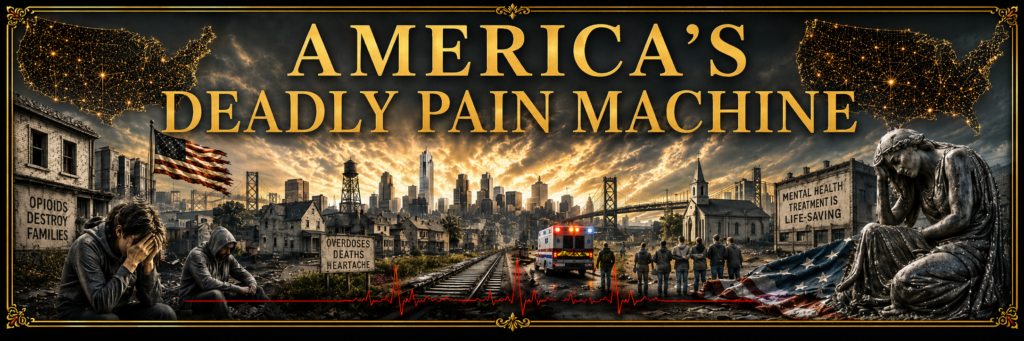
Reality always gets the final word. The only question is whether we correct ourselves before the opioid crisis—America’s deadly pain machine—collects more bodies.
Garry, great article. As an American and pain management specialist, I would add three things that brought on the opioid epidemic: 1) a CBS News report that showed a woman with chronic pain getting regular doses of morphine and now happy as a lark, able to go about her daily activities with no pain. 2) a landmark article in the New England Journal of Medicine, the U.S.’s premiere medical journal studied 4000 pts with chronic pain receiving opioids and only a handful of addictions occurred. 3) pain became the 5th vital sign and treatment of pain was considered a pt right and doctor’s responsibility. When I was a med student, opioids were prescribed only for acute surgical pain and cancer pain in terminally ill patients. Now everyone was given opioids and if you didn’t, you could lose your medical license. No surprise we had an epidemic.
Good morning, Bill, and thanks for the positive support and the three points. It’s reassuring, coming from you with your background, that I’m making sense. I write these pieces more for myself to make sense of a life issue like the craziness of the opioid crisis and how it got to be – then what might be done to right it.
I have a part-time side job doing drug and alcohol testing at industrial workplaces. It gets me out of the house and pays well. Many people I regularly see are on opioid addiction recovery monitoring programs. They had a workplace injury, were prescribed OxyContin, got hooked, their presciption ran out, and they turned to the black market. I wonder if anyone in the Sackler family experienced this.
BTW – “if you didn’t, you could lose your medical license.” says a lot.
Garry, this is spot-on.
It just seems like we’re back to the same old same old.
Love of money & power creates the crisis, then makes more money “fixing” the crisis.
😩
Hi Deb! I saved this quote I found when I researched the article. “But you can’t put a corporation in jail; you just take their money, and it’s not really their money anyway.”
― Beth Macy, Dopesick: Dealers, Doctors, and the Drug Company that Addicted America
This is a fantastic article, Garry. Until we treat the myriad traumas people suffer, causing them to look for relief, this crisis will not go away. There is not enough empathy for the addict. Terri
Thanks, Terri – “There but for the grace of God go I.”