Category Archives: Uncategorized

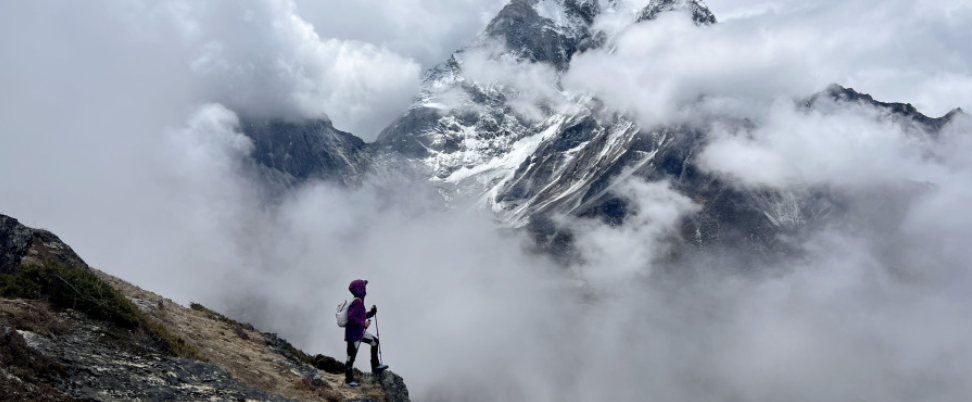
THE SECRET TO LONGEVITY — KEEP WAKING UP AND STAYING IN THE GAME

Step one. Don’t die. Life is renewed every morning, and having a purpose in your life is a must. You get to affirm it each day. The trick is to keep doing it. As they say… lather, rinse, and repeat. Right?
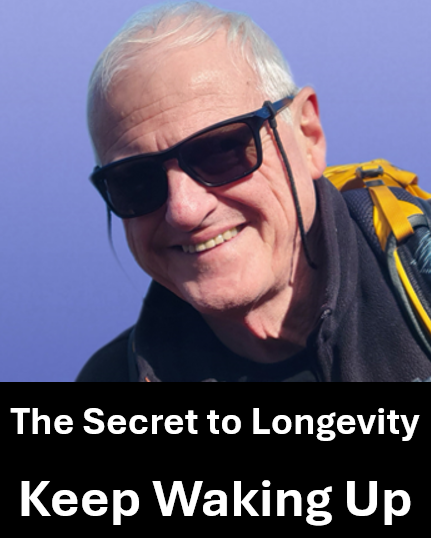
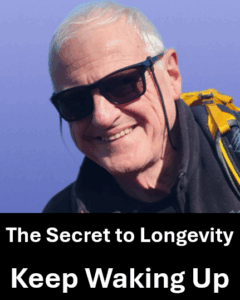
I turn 69 years old tomorrow, and I woke up alive today. I hope that happens again on my birthday. Funny how the older you get, the simpler your goals become—a good sleep, a clear head, and a reason to get out of bed.

You start to realize longevity isn’t a competition. It’s not about chasing youth or pretending time doesn’t matter. It’s about living well enough this day so that you want to do it again the next day. And having a purpose or two.

One of my purposes at this stage of life is developing a website and Substack feed called OldGoats.Health. It’s a longevity space for old goats like me. You know… healthy and active seniors who want to increase their healthspan. And enjoy their lifespan.

In it, I boil things down to the Big Five. The five pillars that keep your body strong, your mind clear, and your spirit curious. Eat. Move. Rest. Think. Do.

That’s it. You don’t need a PhD, a six-pack of abs, or a Blackrock hedge fund account to follow them. Just a bit of discipline and a sense of humor.

Here’s your simple formula for living a long, healthy, and happy life.

EAT

Your body is a hi-performance work engine. Feed it premium fuel, not swamp gas. In other words, don’t top your tank with shit.

You don’t have to live on kale chips and sandhill crane steaks, but you can’t treat your gut like a landfill, either. Eat mostly plants. Add some lean protein, healthy fats, and food that still resembles what it looked like when it came out of the ground, from the sea, or off the bone.

If your great-grandmother wouldn’t recognize it as food, skip it. The fewer artificial ingredients, the better. The closer to nature, the wiser the choice.

And for God’s sake, drink water. Most people walk around half-dehydrated and wonder why they feel cranky, foggy, and old. Hydration is the oil in your engine. Some coffee’s fine. Wine’s good, too. (In moderation, apparently.) But water’s the bomb.

Oh—Here’s an Old Goat truth. You don’t need a diet. You need a direction. Small, consistent choices beat wild swings of guilt and indulgence. You don’t win the longevity race in a week. You earn it over decades.

BTW, you can’t go wrong with the Mediterranean Diet.

MOVE

Movement is medicine, and stagnation is slow death.

You don’t need a gym membership or a spreadsheet of macros. You need to get outside. Walk, hike, carry something heavy, climb a hill, or chase your grandkids around. Whatever gets your heart pumping and your joints talking.

Your legs are your last line of independence. Protect them like gold. I hike nearly every day, and not just for my legs. It’s for my mind. Walking is thinking in motion. The rhythm of footsteps is nature’s therapy.

Stretch. Breathe. Learn your body’s knots and creaks and work with them. You don’t stop moving because you get old. You get old because you stop moving.

And remember—the best workout is the one you’ll actually do.

REST

Sleep is not laziness. It’s repair.

When I was younger, I bragged about running on five hours a night. That’s like bragging about running your car with no oil. You might get a few miles, but it won’t end well.

Now, I treat sleep like medicine. Dark room. Cool air. No radio. No drama. I guard those hours like treasure. A rested mind is sharper, calmer, and far more likely to make good decisions.

And rest doesn’t just mean sleep. It means recovery—from noise, from people, from screens, from stress. Step away. Find silence. Let your nervous system take a breather.

Here’s the truth. You can’t live well if you’re always tired. You can’t think clearly, love fully, or work wisely when you’re running on fumes. Rest isn’t optional. It’s sacred.

THINK

Most people fill their heads with junk and wonder why they feel lost. Mental clutter is worse than physical clutter. At least you can see the mess in your garage.

Think clearly. Question what you hear, especially from anyone selling certainty. Avoid outrage, gossip, and endless doom scrolling. They rot the mind.

Read real books. Listen more than you speak. Seek conversations that stretch your thinking, not just echo what you already believe.

And remember—your thoughts shape your life. Every day you’re building a mental environment you must live inside. Make it a place worth waking up in.

One of the biggest lessons I’ve learned in 69 years is this. Peace is not the absence of noise. It’s the ability to remain clear in the middle of it.

DO

Doing keeps you young. Not busyness. Not distraction. Purposeful doing.

You don’t need a grand plan to change the world. Just do something that matters to you, to someone you love, or to the world around you. Meaning compounds, even in small doses.

Every day, do something physical, something useful, something kind, and something curious. That’s the real longevity formula. When you stop doing, entropy wins.

I’ve seen what happens when people stop having reasons to get up. They fade. Purpose is oxygen for the soul. Even a small goal—fix something, plant something, learn something, help someone—can keep the flame alive.

Don’t overthink it. Just do.

So yes, Step one, don’t die. Step two, don’t waste the gift. Life is renewed every morning, and each sunrise is an invitation to start again.

Longevity isn’t about outsmarting death. It’s about outlasting apathy. It’s about waking up one more day with enough curiosity to ask, What’s next?

You don’t need secrets, supplements, or slogans. You just need the discipline to eat right, move daily, rest deeply, think clearly, and do something meaningful.

That’s the Old Goats.Health way. Trust me, it works. Because tomorrow, when I wake up and turn 69, I’ll take a deep breath, stretch my legs, pour a strong black coffee laced with Turkey Tail mushrooms (tramete versicolore), and say to myself, “Well, step one’s done. Let’s make the rest of the day count.”

Afterword: The Universe Has Already Given Us Everything We Need

I was going to end this piece here, but a little voice told me to keep typing. That voice wants to share something with you. Something universal, timeless, and true.

When you strip away all the noise, the gimmicks, and the so-called secrets to health and longevity, you realize something simple and astonishing. The universe already gave us everything we need to live well. Everything.

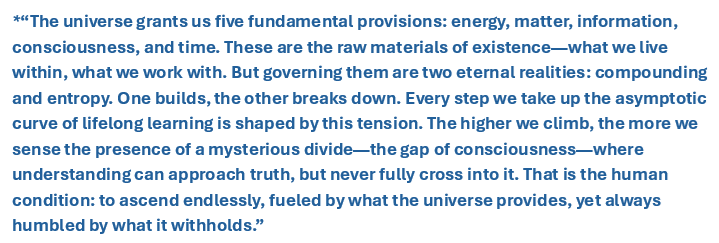
I’ve come to see life and health through seven universal constants. Five provisions. Two principles. Together they form the blueprint of reality, and they apply as much to a single human life like yours as they do to trillions of galaxies.

Once you understand them, everything starts to make sense—from the way your body works, to how your mind evolves, to why life feels both fragile and miraculous.

The five provisions are what the universe runs on. Energy, matter, information, consciousness, and time. The two principles are what shape it. Compounding and entropy.

Energy is life’s spark—the current that powers everything from your heartbeat to the sun’s glow. You don’t create energy. You channel it. When you eat real food, move your body, and breathe deeply, you’re aligning with the universe’s flow of energy. When you waste energy on worry, resentment, or excess, you’re swimming upstream.

Matter is your body—borrowed molecules arranged for a little while into a form that walks, thinks, and dreams. Matter doesn’t belong to you. It’s on loan from the earth. What you eat, touch, and breathe becomes you. When you take care of matter, matter takes care of you.

Information is the pattern that gives shape to matter and direction to energy. It’s not just data. It’s wisdom encoded in everything from DNA to your daily choices. Every experience, every mistake, and every new idea adds to your internal library. The key is to keep updating it—keep learning, keep refining, keep asking better questions.

Consciousness is the universe becoming aware of itself through you. It’s your witness—the observer behind your thoughts. When you’re still, when you listen, when you notice beauty or feel gratitude, you’re tuning into that deeper awareness. That’s not self-help talk. It’s physics meeting philosophy.

And then there’s time. Time is the arena where all of this plays out. You can’t fight it, slow it, or save it. But you can honor it—by being present, by focusing on what truly matters, by using the time you have to live fully instead of endlessly preparing to.

The universe runs on two opposing forces—compounding and entropy. Compounding builds. Entropy breaks down. Both are natural, both are necessary, and both are constant.

Compounding is the quiet miracle that turns small efforts into great results—whether it’s money, muscle, knowledge, or kindness. Every good habit compounds. Every truth compounds. Every day you wake up and take one honest step forward, you’re defying entropy.

Entropy, on the other hand, is the cost of existence. It’s the gradual drift toward disorder. It’s rust, decay, disease, confusion, and death. You can’t stop it, but you can slow it down by living consciously, caring for your body, and maintaining purpose. Neglect accelerates entropy. Awareness resists it.

That’s the real secret to longevity—not tricking time but working with the universe instead of against it. Eat in a way that honors energy and matter. Move in a way that sustains your body’s rhythm. Rest so your systems can restore order against entropy. Think in ways that clarify, not confuse. And do. Keep acting with intention, because action is the signature of life.

Everything you need for a long, healthy life is already woven into the fabric of existence. You’re made of the same stuff as stars. You live inside the same laws that create black holes.

So don’t fight the universe. Understand its logos. Work its pathos. Live its ethis.

And each morning when you wake up, remember… you’re not defying nature.

You are nature—you are the experiment nature is running—so choose to stay in the game.

That’s the secret to longevity. To keep waking up. And staying in the game.

Dyingwords.net is powered by a Centaur Intelligence System and its EXPONENTIAL Thought Engine
centaursystems.ai

LIFE’S ENDLESS CLIMB AND ITS UNATTAINABLE SUMMIT

Most people spend their lives believing that the deeper they learn, the wiser they’ll become—that one day, if they read enough, think hard, and ask the right questions, they’ll reach the high pinnacle of understanding. They’ll scale the mountain of wisdom and finally see the big picture.

I used to believe that. But now I see differently. I’ve come to accept knowledge and clarity as something else entirely—a journey toward life’s endless climb and its unattainable summit. Not as a point of arrival.

The more we know, the more the unknown expands. The closer we think we are, the more elusive truth becomes. The slope doesn’t end. The summit can’t be reached. And in that paradox, I found something staggering.

Something timeless. Something that changed the way I see reality. And maybe it’ll change how you see things, too.

Because what I discovered is simple: more answers only lead to more questions.

Understanding Life’s Mountain Climb

I’ve always been a climber—physically, intellectually, philosophically, and spiritually. I’ve wanted to get above the noise of the world, to reach some kind of mental elevation where the view is clearer. More complete. Less polluted by useless trivia and utter BS.

Like many of you, I’ve read hundreds—probably thousands—of books. I’ve studied religion, science, metaphysics, psychology, and philosophy. I’ve worn the uniforms of authority and walked the chilled corridors of death as a homicide investigator and coroner. I’ve seen the raw, ugly face of truth—and its transcendent beauty, too.

But there’s one constant that always pulled me forward. That’s the belief that true wisdom could be reached through high climbing.

What I didn’t discern until recently was this: Wisdom doesn’t arrive. It reveals. And then it recedes. And then it reveals again—on a higher ridge.

And that brings us to the mountain.

The Mountain and the Curve

Imagine you’re climbing a mountain. You think there’s a summit up there in the clouds. That with enough effort, enough books, enough late-night thoughts, you’ll reach it. You’ll finally be able to plant your flag and say, “I understand.” But the closer you get to that imaginary peak, something strange happens.

The summit moves. Or rather, it vanishes.

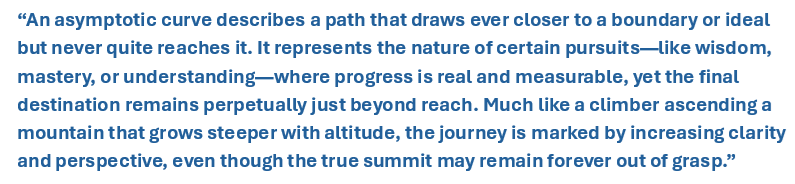
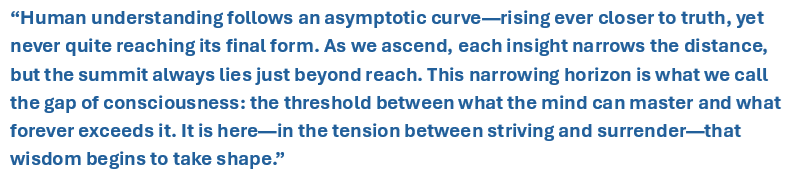
In lifelong learning, what you’re climbing isn’t a mountain with a peak. It’s an asymptotic curve—a slope that ascends forever, getting closer and closer to the summit line… but never quite touching it.

An asymptote is a mathematical concept. It describes a curve that approaches a boundary—but never reaches it. No matter how far you go, there’s always a little more space left that deepens as you rise. It’s an infinite approach.

That’s what the pursuit of knowledge really is. We can climb or learn forever. But the summit stays just out of reach.

And here’s the real mind-bender. The higher you climb, the more of the world you see—and the more you realize how much of it lies beyond your line of sight.

This isn’t failure. It’s discovery.

The Gap Revealed

At a certain altitude, something shifts. You start to see it—the gap of consciousness.

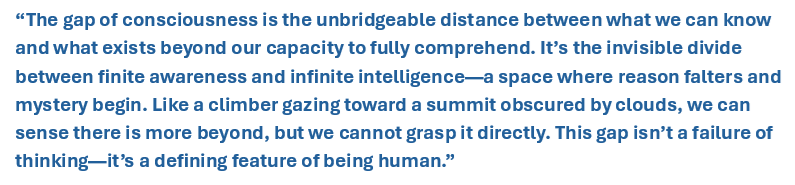
It’s the space between what we can know… and what truly is. It’s the unbridgeable distance between facts and meaning. Between intellect and being. Between reality and our limited human attempt to wrap language around it.

I believe this gap is not a bug in the human mind. It’s not a flaw to be patched. It is the very birthplace of consciousness.

And it’s only visible from above. You can’t see it until you’ve climbed long enough, hard enough, and honestly enough to earn the vantage.

This is where I found myself—not long ago. At an inflection point. One of those rare moments where the compounding of energy, matter, information, time, entropy, and consciousness seemed to converge into a hyper-awareness of what we’re really doing here.

We’re not solving the universe. We’re living within it. We’re hardwired to observe it with awe.

The Paradox of Ascent

It’s here that the paradox hit me like lightning bolt from Zeus. The clearer our thinking becomes, the murkier the gap reveals itself to be.

This is what Socrates meant when he said, “I know that I know nothing.”

He wasn’t being a smart ass, unlike his nemesis Diogenes the Cynic. Socrates was mapping the terrain. He was standing at the gap. And he saw that the moment you think you’ve got it all figured out… you’ve stopped climbing.

Real wisdom isn’t a crown you wear. It’s a ridge you walk. And from that ridge, you don’t just see more answers. You see the shape of life’s mystery itself.

The Human Condition — Not Knowing, But Seeking

This might sound discouraging. That you can never fully arrive. But it’s not.

In fact, it’s the opposite. And it’s liberating because it reframes the purpose of intelligence. Intelligence isn’t a library of facts. It’s not even the ability to solve problems. Not really.

Intelligence is how we relate to the unknown. It’s our interface with mystery. Our raison d’être.

And our ability to tolerate ambiguity—to walk into the highest of clouds and keep going—is what defines human greatness.

We’re not here to answer everything. We’re here to live inside the questions long enough for meaning to emerge. And emerge it will, given time.

What Happens After the Revelation

After I recognized and appreciated the asymptotic learning curve  and the consciousness gap, something in me shifted. I no longer felt pressured to be right. Or to “master” everything. Or to pretend certainty where certainty seemed not to exist.

Instead, I started focusing on clarity over control. On direction over destination. On deepening over finishing.

I started asking different questions:

  • What kind of mind am I becoming?
  • Am I climbing with humility?
  • Can I show others the ridge—not the map?

I began seeing my role differently. Not as a knower. But as a climber with a lantern lit to find out.

A guide for others who sense the same mystery—and need a word of encouragement for the expedition.

Lifelong Learning and the Inflection Point

This realization didn’t come from a single book or a sudden moment. It came from compounding. From a lifetime of reading, reflecting, and asking why. From reaching a point where the climb had enough vertical that the view broke open.

I believe we all reach this inflection point—if we keep going long enough. It’s where learning ceases to be additive and becomes exponential.

Your thoughts loop back and reinforce each other. Your understanding accelerates. You begin to see principles instead of facts. Patterns instead of trivia. Essence instead of noise.

And this is when the gap appears.

The Five Provisions and the Infinite View

To understand this clearly, think of the five great provisions the universe gives us:

  • Energy
  • Matter
  • Information
  • Consciousness
  • Time

These are the ingredients of your climb.

And the two forces that shape how they interact?

  • Compounding (growth, clarity, understanding)
  • Entropy (decay, disorder, forgetting)

Your mind is the mechanism that converts one into the other. Energy into matter using information through time. It fights entropy with clarity. It builds meaning through compounding.

And consciousness… consciousness is the space where that fight happens. It’s not just something you have. It’s something you stand inside of.

And when you reach the ridge—when you’ve climbed long enough and high enough—you’ll see that the gap above you, below you, and all around you is infinite.

Why This Matters

This isn’t just a nice idea for philosophers or mystics. It matters for you—today. Because it changes what you aim for. It frees you from needing to “arrive.”

It gives you permission to become a different kind of thinker. A different kind of human. One who walks toward the mystery—not to defeat it, but to live in right relationship with it.

That’s the great shift. From current knower to lifelong climber. From temporary master to permanent steward. From assured certainty to nuanced openness.

Words From the Ridge

If you’ve felt this—if some part of your life has brought you to the edge of knowing, and then past it—know this:

You’re not lost. You’re arriving. What you’re arriving at is the gap. The infinite, asymptotic space between all we now know… what we can know… and all that is.

The view from here is breathtaking. And it’s waiting for you.

Just keep climbing.

*   *   *

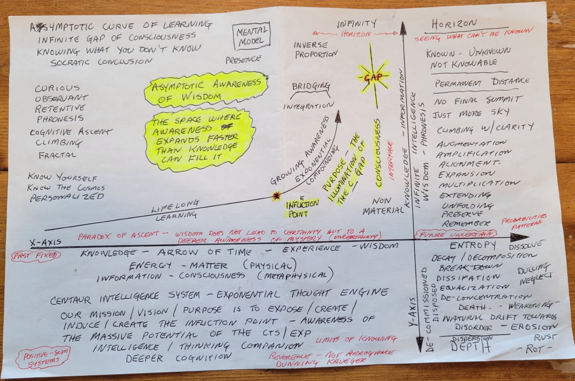
Note from Garry: I’m a visual learner. When I tackle a subject like the asymptotic curve of lifelong leaning and the gap of consciousness, I hand-print and sketch my thoughts onto an 8 by 17 sheet. I call this encapsulating. Here’s a shot of one of my worksheets working up to this post.

Dyingwords.net is powered by a Centaur System
Centaur Intelligence Systems Inc. Canada
Centaur Systems LLC Anguilla

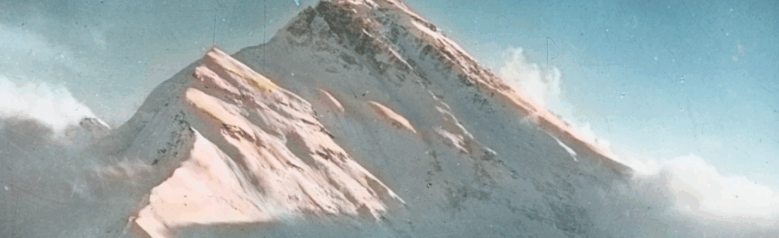
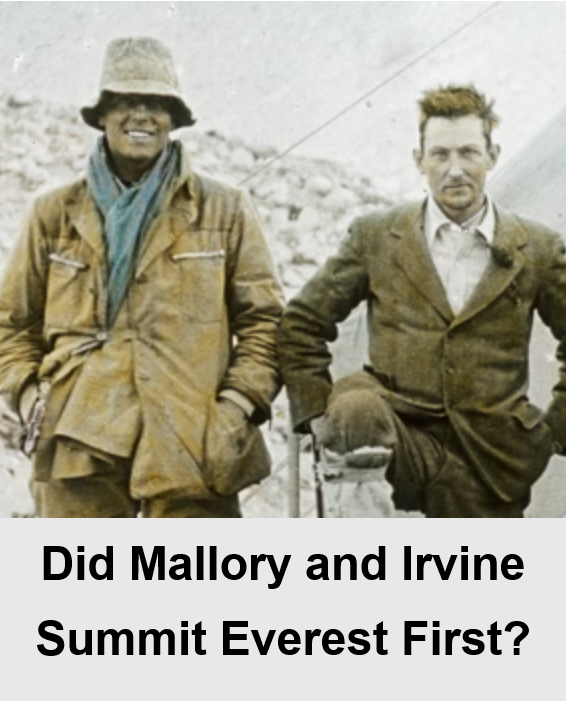
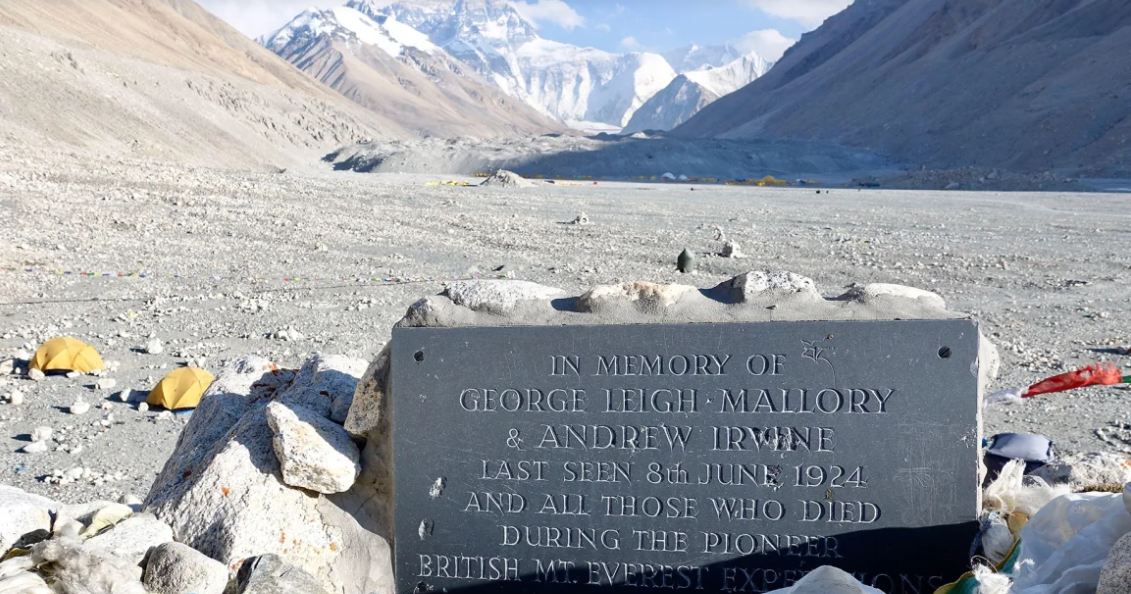
DID MALLORY & IRVINE SUMMIT EVEREST FIRST?

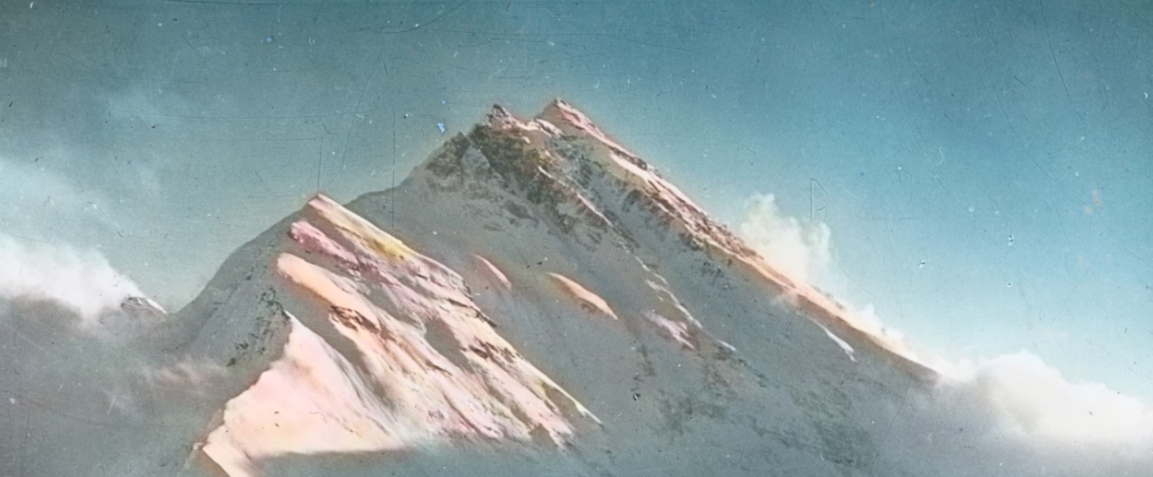
It’s the greatest mystery in mountaineering history. And it’s a question lingering at the top of the world for over a century. Did British climbers George Leigh Mallory and Andrew “Sandy” Irvine reach the summit of Mount Everest in 1924—nearly three decades before Edmund Hillary and Tenzing Norgay etched their names into eternity?

The facts are buried under heavy snow, crushing ice, and glacial time. But clues remain. Some were frozen in place. Others may be waiting to thaw.

Let’s explore a deep dive (or a high climb) into one of the world’s most enduring mysteries. The answer may hinge on a single object—a missing object from the Mallory/Irvine climb that could forever rewrite mountaineering record books.

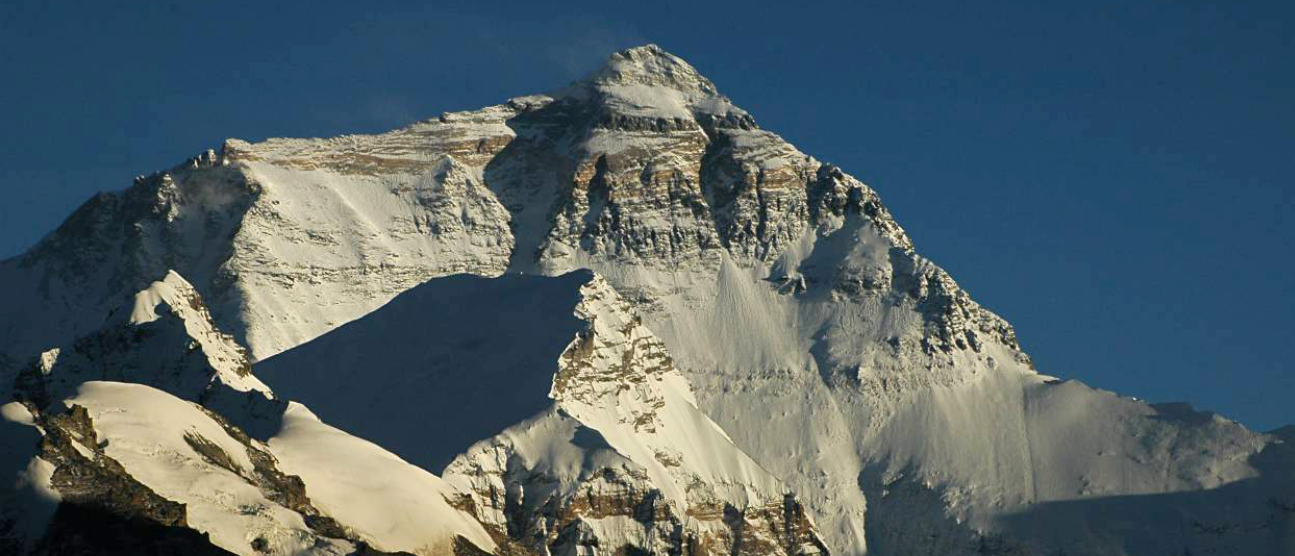
Mount Everest stands as the highest point on Earth—8,848 meters or 29,031 feet above mean sea level. It lies in the Mahalangur Himal sub-range of the Himalayas, straddling the border between Nepal and the Tibet Autonomous Region of China. The summit is known locally as “Chomolungma” or Goddess Mother of the World. Mountaineers call it the “Roof of the World”.

Climbing Everest is no walk in the park with your Birkenstocks and Bernese. Even today, with satellite weather tracking, advanced oxygen systems, carbon-fiber gear, and legions of seasoned Sherpas, it remains a deadly endeavor.

A combination of extreme cold, hurricane-force winds, avalanches, and altitude sickness kills super-fit climbers every year. Not to mention gravity. Over 300 people have perished trying to reach—or descend from—the top of the world.

Most Everest deaths are from falls, hypothermia, or high-altitude pulmonary/cerebral edema. Almost always, thse occur in the oxygen-poor “Death Zone” above 8,000 meters (26,250 feet). And even in our hyper-connected modern world, there are (and will continue to be) bodies up there that’ll never be recovered.

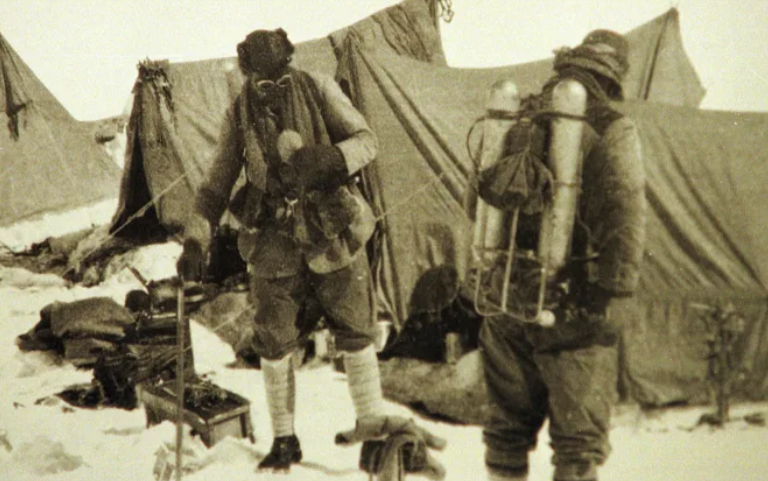
So, imagine attempting the climb in 1924—with wool garments, primitive crampons, hemp ropes, and homemade oxygen systems—on a route no one had ever successfully taken or surveyed before. That’s what George Mallory and Sandy Irvine set out to do.

The 1924 British Everest Expedition was not the first attempt to climb the world’s highest peak. It followed two earlier British expeditions in 1921 and 1922, both of which helped map the terrain and gauge potential paths.

The 1924 team was well-organized and determined. It included experienced climbers like Edward Norton, Howard Somervell, and Noel Odell, along with George Mallory—a seasoned alpinist who had been on both previous expeditions. Sandy Irvine, only 22, was a gifted engineer brought on for his mechanical expertise with oxygen systems.

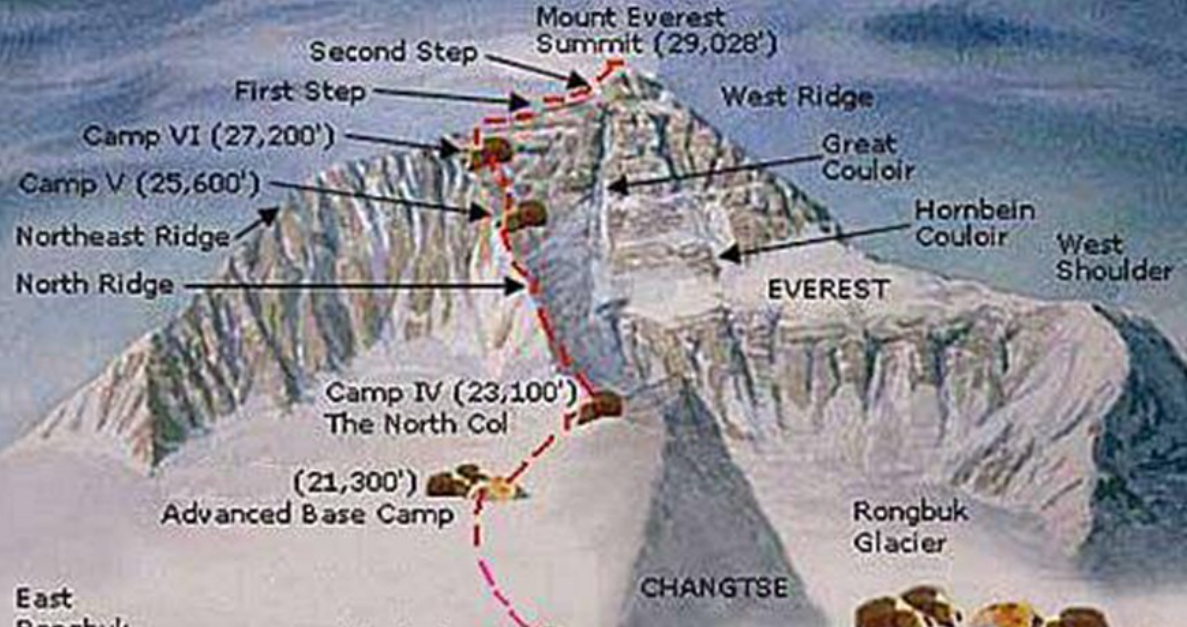
They chose to climb from the north, through Tibet, as Nepal was closed to foreigners at the time. This North Col–Northeast Ridge route remains notoriously difficult due to exposure, technical ridges, and shifting snow conditions—especially near the infamous Second Step, a 30-meter (90 foot) vertical rock face at 8,610 meters (28, 234 feet).

Despite bad weather and delays, the team pushed upward. Norton made a valiant solo attempt without supplemental oxygen and reached an astonishing 8,572 meters (28, 130 feet)—a record at the time. But the Second Step and the summit still loomed as virgins above.

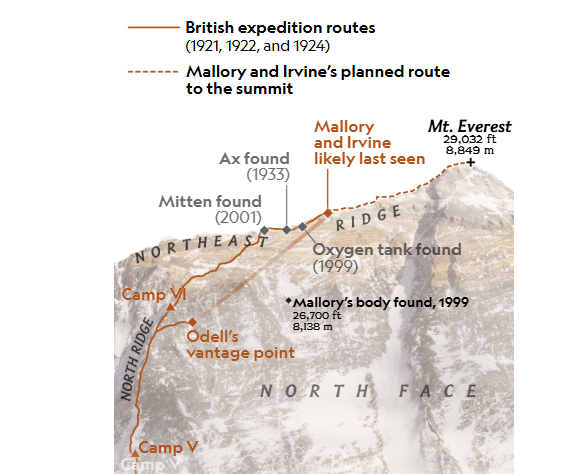
Then on June 8, 1924, Mallory and Irvine made their bid. They were last seen through a telescope by Noel Odell at 12:50 pm, appearing as “small black spots” ascending a prominent ridge—possibly the Second Step.

And then they vanished.

Let’s pause for a moment. This wasn’t just a routine summit attempt. Mallory had already become a dashing British national figure, famously answering the question of why he wanted to climb Everest with, “Because it’s there.”

And Irvine was the brilliant young newcomer, barely out of Oxford, taking on the world’s greatest challenge. They were heroes before they left base camp. And when they didn’t return, they became legends.

For 75 years, their fate remained unknown. No doubt they’d died. But had they reached the peak of Mount Everest?

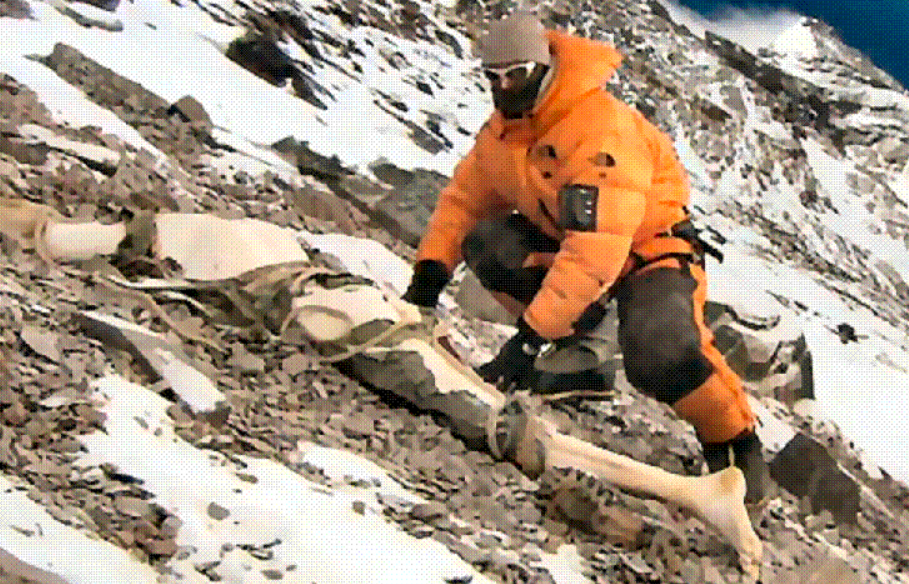
In 1999, a discovery changed everything. An expedition sponsored by NOVA and the Mallory and Irvine Research Expedition, led by American climber Conrad Anker, found Mallory’s mummified body on the north face 693 meters (2271 feet) below the summit.

George Mallory was completely intact, face down, arms outstretched, showing severe head and bodily injuries consistent with a fall. His forehead was puncture with a golf ball-sized defect. His right leg was snapped. A rope and its compression injury mark curtailed his waist, suggesting the two were tethered together when one—possibly Irvine—fell and pulled the other down.

Mallory’s clothing, pack, and provisions were still with him. His stitched-leather, cobnailed boots were as perfect as the day he laced them. His pack, being as light as necessary to be for this stage of the climb, was consistent with a man who was descending. His tinted goggles were in a pouch, indicating a low light timeframe. His oxygen tanks had been shed…

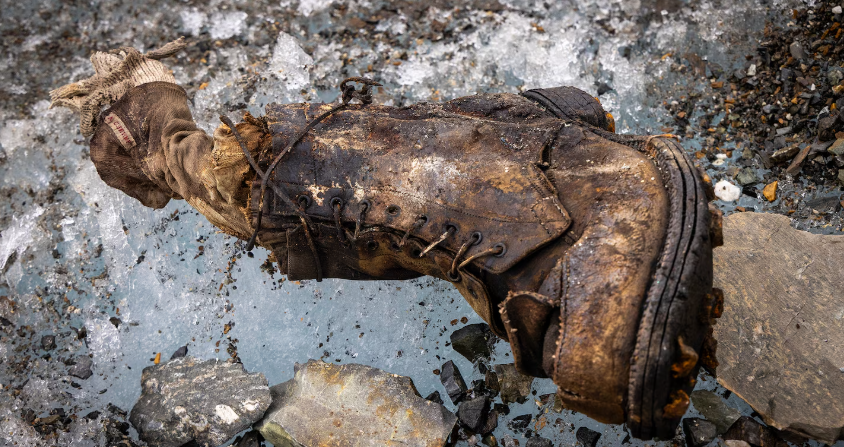
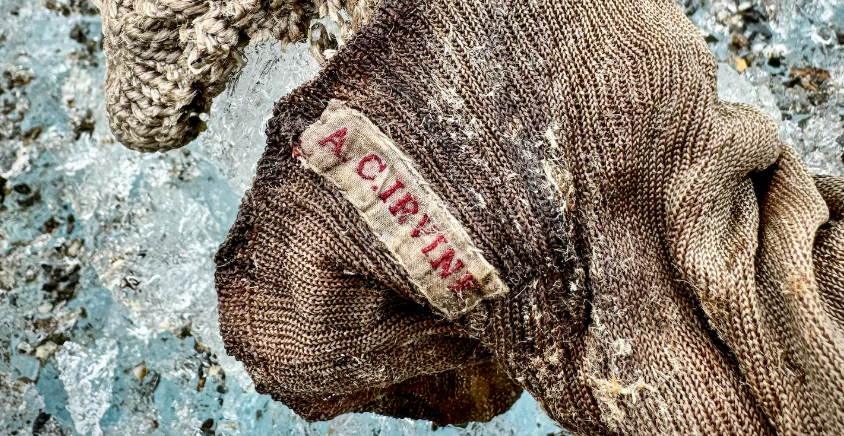
In the fall of 2024, a National Geographic expedition led by Jimmy Chin uncovered partial remains believed to be those of Andrew “Sandy” Irvine. A boot, a sock labeled “A. C. Irvine,” and a foot were emerging from the ice of the Central Rongbuk Glacier, along the northern slope of Everest. These are now confirmed as Irvine’s through familial DNA testing.

Irvine’s discovery site is lower than where Mallory’s body was located in 1999. Mallory was at 8,155 meters (26,760 feet) on the north face. The exact altitude for Irvine’s lower extremety remains has not been publicly specified to avoid Everest souvenier hunters, but reports say they were “at least 700 feet lower” than Mallory’s position.

Put in perspective—Everest’s summit is 8,848 meters (29,031feet). Mallory’s body was 693 meters (2,271 feet) below the summit’s elevation. The Second Step, a 30 meter (98 foot) vertical wall is at 8,610 meters (28,250 feet) so both Mallory and Irvine apparently succumbed at least 693 meters (2,271 feet) below the summit and 455 meters (1490 feet) below the Second Step.

At least that’s what the come-to-rest remains say.

The question is, “How high did the men actually climb?” That can’t be answered by how far they fell. They could have fallen before reaching the formidable Second Step. They could have fallen when ascending the Second Step. They could have fallen right from the summit iself. Or, they could have fallen descending the Second Step returning from the summit.

The camera the pair was known to carry hasn’t ben found. Neither has Irvine’s main remains with his pack and effects, unlike Mallory. No summit photo. No turn back photo. And perhaps most curiously, a photograph of George Mallory’s wife, Ruth—one he promised to place on the summit—was missing from Mallory’s otherwise intact belongings.

That detail haunts Everest historians to this day. The Vest Pocket Kodak camera, which probably Irvine was carrying, has never surfaced. If it still exists—and if the film somehow survived—the truth may still be frozen in time.

Now, let’s revisit the 1953 summit—the one that history officially credits as the first success. On May 29, Sir Edmund Hillary of New Zealand and Tenzing Norgay, a Sherpa of Nepal, definitely reached the summit of Mount Everest via the South Col–Southeast Ridge route from the Nepalese side.

The world celebrated. Unlike Mallory and Irvine, Hillary and Norgay had advantages:

  • A well-established route with prior reconnaissance
  • Modern climbing gear
  • Stronger oxygen systems
  • Superior logistics and base support
  • Detailed weather forecasts

And perhaps most importantly—they had the accumulated knowledge and failures of those who had come before. Their success was built on decades of attempts—including those of Mallory and Irvine. Without the early expeditions, there might have been no Hillary and Norgay.

Returning to the 1924 expedition’s final puzzle pieces. One of the most critical figures is Howard Somervell, who tracked weather patterns during the climb. His journals and barometric data suggest that Mallory and Irvine may have been caught in a brief but brutal storm late on June 8.

If true, that storm could have pushed them back—or killed them outright by blowing them off the mountain.

But the timing of the storm, compared with Odell’s sighting and their likely progress, still leaves open the possibility that Mallory and Irvine reached the summit before the weather closed in. Remember, they were last seen moving strongly upwards at 12:50 pm. Experts estimate they may have had another 3–5 hours of climbing ahead of them, depending on their pace, oxygen levels, weather, and terrain.

Could they have done it? Did Mallory and Invine reach Everest’s summit first?

Some argue yes. Others say no. The Second Step, now surmounted with a fixed ladder, would have been a serious obstacle in 1924. Maybe impossible given the equipment, or lack of equipment, they had.

Reinhold Messner, who is a prominent world mountaineer having solo climbed Everest without oxygen, once attempted the Second Step without a ladder. Messner remarked, “The Second Step is the key to the whole mystery. Free climbing it at this altitude, with that equipment… I have my doubts.”

But Mallory was a bold, skilled climber. And there’s that missing photo of Mallory’s wife. Why would it not be on his body when everything else was intact—unless he’d already left it on the summit?

So… did they make it? Were George Mallory and Sandy Irvine the first to crown Mount Everest? Let’s weigh the evidence.

The Case For a Successful Summit

  • Odell’s sighting places them high on the ridge at a good time of day.
  • They had functioning oxygen and decent weather early on.
  • Mallory’s missing photo of his wife may suggest he left it at the top.
  • Their drive, fitness, and skill were extraordinary for their time.

The Case Against

  • The Second Step was thought unclimbable without modern gear.
  • No physical proof—summit photo, journal entry, or reliable witness.
  • Weather may have turned faster than Somervell recorded.
  • The remainder of Irvine’s body and the camera are still missing.

Will we ever know?

That depends on whether the camera is found—and whether its film survived. Kodak experts have said that the cold may have preserved the negatives. But time and entropy are not on our side.

The harsh Everest climate, political restrictions on access, and the dangers of high-altitude recovery missions make future searches uncertain. Still, modern expeditions have better tools—LIDAR, drones, satellite imagery, and sophisticated weather modeling. And the fascination with Mallory and Irvine hasn’t faded. Their story still inspires climbers, historians, and truth-seekers alike.

My Take?

George Mallory and Andrew Irvine didn’t die in vain. Whether or not they summitted, these two pushed the edge of human potential. They risked everything to reach a place no one had ever been. And to boldly go where humans were destined to go.

In doing so, Mallory and Irvine became eternal figures in the Everest portfolio. Not just for what they did, but for what we still wonder about—why men climb mountains.

As for that summit… on the balance of probabilities… I think they might have made it… probably not… then again maybe… um, nah. But until that little Kodak camera is found, and the film is developed, Everest keeps its secret.

And maybe that’s the way mountain climbing is supposed to be.

Dyingwords.net is powered by a Centaur Intelligence System and the EXPONENTIAL Thought Engine
Centaursystems.ai