Tag Archives: Homicide

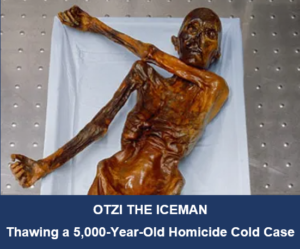
OTZI THE ICEMAN – THAWING A 5,000-YEAR-OLD HOMICIDE COLD CASE

In 1991, the mummified body of a 5,000-year-old murder victim uncovered itself in melting ice at a rock-gully crime scene high in the Italian Otzal Alps. Named Otzi, the approximately 45-year-old and his possessions were incredibly preserved. His skin, hair, bones, and organs were cryopreserved in time, allowing archeological researchers a phenomenal insight into human life in the Copper Age.
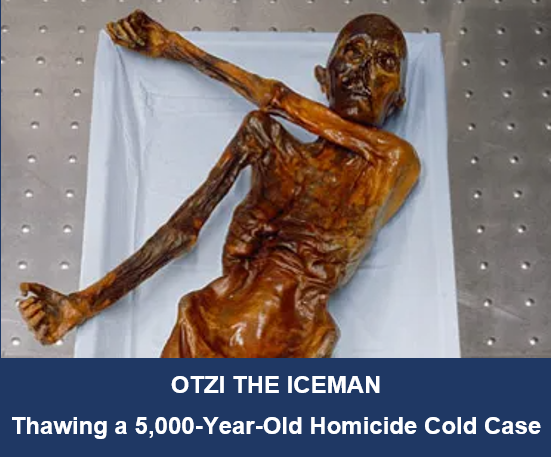
Otzi’s thawing corpse also gave modern forensic science an unprecipitated opportunity to investigate and, positively, determine how Otzi the Iceman was killed.

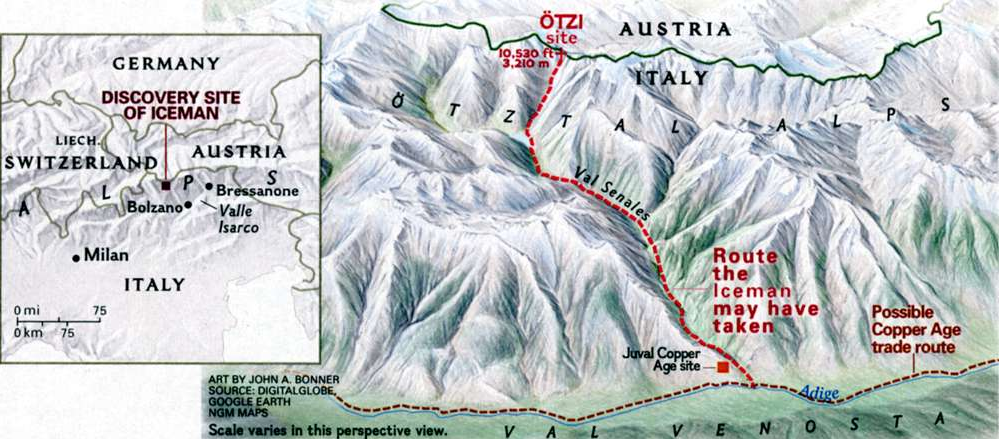
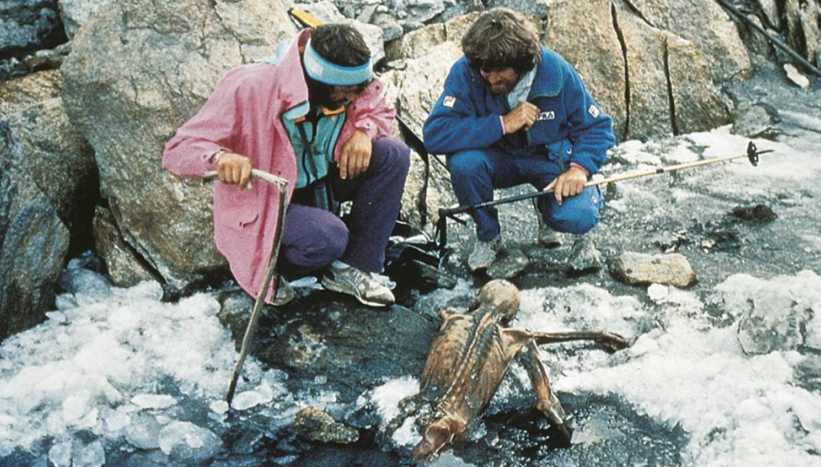
On a sunny September day, two hikers traversed a mountain pass at the 3210 meter (10,530 foot) level and saw a brown, leathery shape protruding from the ice amidst running melt-water. They closely examined, finding a human body they thought might be a mountaineering accident victim.

They reported to Austrian police who attended the following day, quickly realizing this was an ancient archeological site. A scientific team assembled and, over a three-day period, the remains were extracted and taken to the Institute of Forensic Medicine in Innsbruck.
Such an incredibly valuable find soon led to a jurisdictional argument between the Austrian and Italian governments and an immediate border survey. It found Otzi lay ninety-two meters inside Italian territory. Italy gained legal possession of the body and artifacts, however in the interests of science and history, everything was kept at Innsbruck until a proper, climate-controlled facility was built at the South Tyrol Museum of Archaeology in Bolzano, Italy, where the Otzi The Iceman now rests.
Many, many questions arose. Who was he? Where did he come from? How long ago did he live? And, of course, what caused his death? Natural? Accidental? Suicide? Homicide?

Technological  advances over the past thirty+ years answered many questions surrounding Otzi’s life and death and surely the next thirty+  will answer more. This, so far, is what science knows about the Iceman.

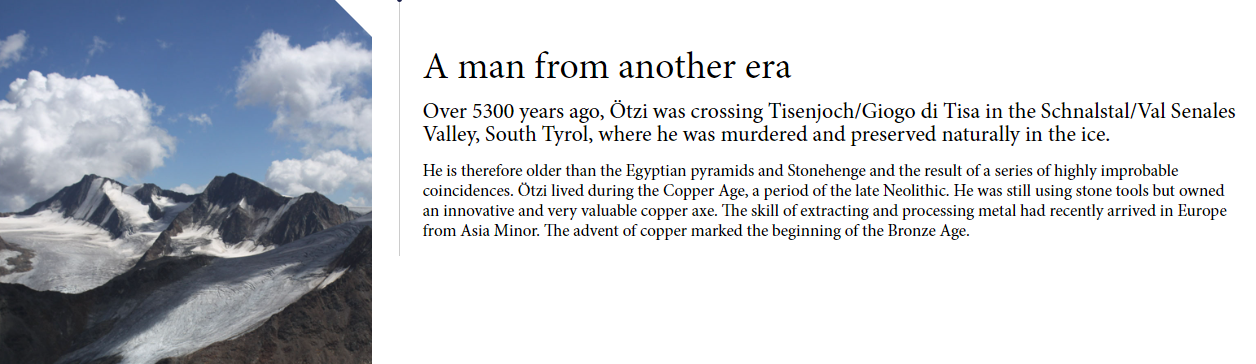
Hikers found Otzi lying face down with outstretched arms in a protected, rock depression near the Finail peak watershed at the top of the Tisenjoch pass which connected two forested valleys. The trench measured 40 meters (125 foot) long, between 5 and 8 meters (18–26 foot) wide, and  averaged 3 meters (16 feet) deep. For millennia, this area was covered by glaciers which, by the end of the twentieth century, had receded.
Four separate scientific institutes conducted C-14 radiocarbon dating on Otzi, equivocally agreeing he came from between 3350 and 3100 BC — more than 5,000 years ago. This was the oldest-known preserved human being; far older than the Egyptian and Inca mummifications or the corpses found pickled in peat bogs.

Something exceptionally unique about Otzi was that he was a “wet” mummy—an almost unheard of process for a cadaver of this age where humidity was preserved in his cells, unlike the intentional dehydration processes used in Egypt and Peru. As well, Otzi was perfectly intact and not dissected or embalmed by a funeral ritual. His entire body achieved a state of elasticity and, although shrunken, remained as in the day he died including vital clues stored in his digestive tract.

Researchers felt Otzi must have been preserved through a chain of coincidences. It was evident that no damage had been done by predators, scavengers, or insects so it was obvious that the body was covered by snow and/or ice immediately after death. Secondly, the gully lay perpendicular to the main ice flow, allowing the grinding action of the glacier to pass overtop. Thirdly, exposure to air and sunlight was only a brief period before being found by the hikers.

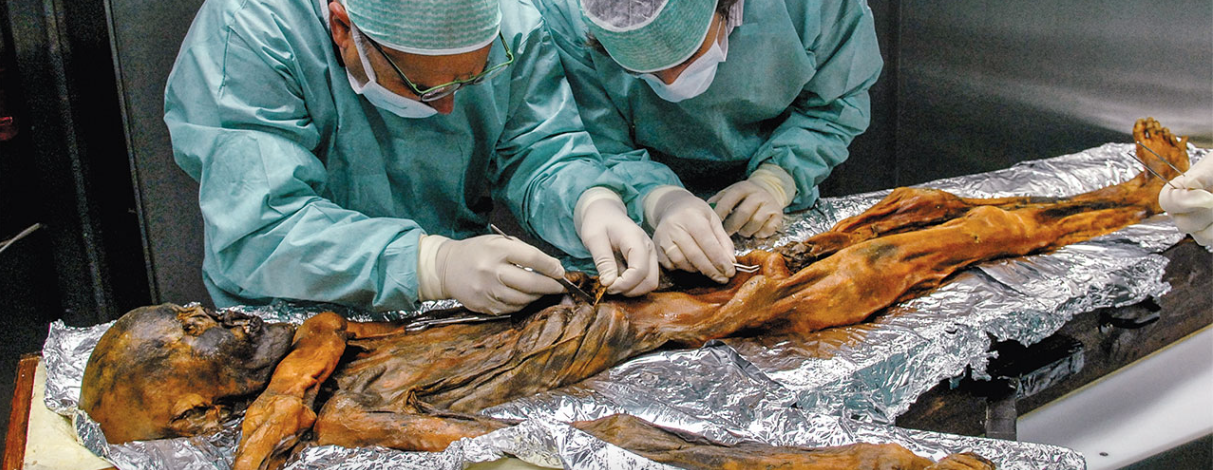
It was vital Otzi remain frozen to avoid an irreversible decomposition and remain intact to preserve his historical significance. This gave researchers limited ability to examine the cadaver as would be done in a conventional autopsy.
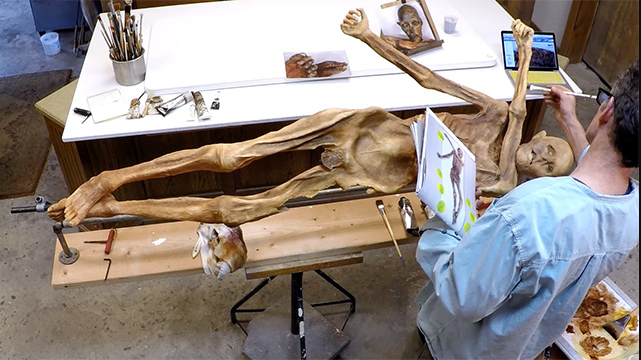
A thorough external exam was done in 1991 along with Xray radiography images. Notable was a cut to the back of the right hand which showed early signs of healing as well as breaks to the left ribcage, which had healed, and breaks to the right ribs which were fresh at the time of death. A depression in the skull was thought to be caused by the weight of ice compression and analysis of the only remaining fingernail found that the Beau-Reil Lines, which are like rings on a tree trunk, showed significant stress to his immune system in three periods—16, 13, and 8 weeks before death.

Other factors told of Otzi’s failing health, understandable for a 45-year-old in the Copper Age who’d then be considered elderly. He suffered from tooth decay, gum disease, and worn joints. What shocked the researchers were the amounts, designs, and placement of tattoos on Otzi’s body. There were 61 separate markings, all made by incisions and insertion of charcoal—not ink as has  been used by other cultures for centuries. The locations were consistent with known acupuncture points as practiced for pain relief starting with the Chinese two thousand years after Otzi’s existence and it seemed these markings were therapeutic, rather than symbolic.

Despite examination by many leading experts, no exact cause of Otzi’s demise was determined and it was speculated this old man may have fallen, injured himself, then succumbed to the elements. That was until new technology was developed.

One of the great challenges was to examine Otzi endoscopically—that is to look internally at his organs. Special high-precision titanium instruments were invented—steel probes that were inserted through tiny incisions in the back. Using computerized navigational aids the tools were guided to the exact spots were evidentiary samples could be taken. This was recorded with a hi-definition camera and an entire 3-D map of the mummy’s thorax and abdomen was made.

Lung and digestive tract contents told a time-of-year travel story through the presence of thirty different pollens which entered his body by the food he ate, the water he drank, and the air he breathed.
Most pollens were from trees and indicated that he ingested them during a bloom in the late spring or early summer. The locations and digested states of different pollens in different sections of the stomach and intestines showed Otzi had made a climb from the valley floor to the pass where he died within a twenty-four hour period. Pollens in the lower half of the tract were identified to low elevation trees and pollens in the upper area were from higher elevation species.

So, it was known that Otzi had left the populated valley and headed for high country where he met his death. Speculation rose that he might have been fleeing some danger.

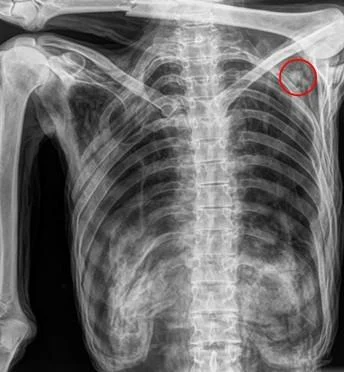
This theory strengthened in 2001 when new Xrays identified a small, flint arrow head in Otzi’s left shoulder which had been missed ten years earlier. A close examination of Otzi’s back revealed a two-centimeter slash and established the path of the arrow which indicated he’d been shot from a rear and lower position.
In 2005, Otzi was put through a high-resolution, multi-slice CT scanning machine which enlightened the arrow wound. Clearly, the arrowhead had caused a one-centimeter gash in Otzi’s left subclavian artery which is the main circulatory pipeline that carries fresh oxygenated blood from the heart to the left arm. Such a serious tear would have caused massive internal bleeding and rapid death—probably within two minutes.

The CT scan showed something else. There was significant bleeding at the base of the brain which corresponded to the depression in Otzi’s skull. He’d suffered a serious head injury right at the time of death.

With the cause of death now certain to be from a violent act of homicide, the prime question centered on the circumstances of how all this went down. Researchers felt the answer may lay in the Iceman’s possessions.

Among the artifacts found on and around Otzi’s body were a copper ax, a flint dagger, a quiver with twelve blank arrow shafts and two completed arrow shafts with stone heads. There was also winter clothing and supplies to support wilderness survival.
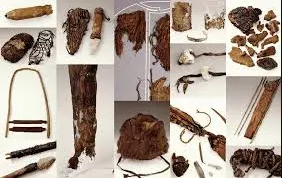
This speaks to motive, for if robbery was behind Otzi’s murder, it’s certain that the perpetrator(s) would have made off with these valuables. Glaringly missing was the shaft of the fatal arrow, especially in light of Otzi’s quiver arrows being perfectly preserved.

Egarter Vigl, a leading archeological expert on the Iceman, believes that the assailant tried to pull out the arrow to destroy evidence, only to snap off the arrowhead inside. Vigl was quoted in the archeology magazine Germani, “telltale markings in the construction of prehistoric arrows could be used to identify the archer much in the way modern ballistic can link a bullet to a gun. The killer yanked out the arrow to cover his tracks. For similar motives, the attacker did not run off with any precious artifacts that remained at the scene, especially the distinctive copper-bladed ax; the appearance of such a remarkable object in the possession of a villager would automatically implicate its owner of the crime.”

I’d have to agree with Mr. Vigl and I’d like to add an observation of my own.

In the hundreds and hundreds of dead bodies I’ve examined as a cop and a coroner, I’ve never seen a cadaver with its arms outstretched in a hyperextended position like how Otzi the Iceman was found. This is absolutely unnatural and shrieks to me that someone placed the arms in that position after death.

I think it’s safe to speculate on what might have happened and here’s what Otzi’s crime scene evidence suggests to me.

The day before Otzi’s death, he was in a physical altercation down at the village on the valley floor where he suffered the cut hand and possibly the broken right ribs. This caused him to pack up and flee, climbing to the elevated pass where he was overcome by his attacker(s) and shot with the arrow from behind and below. This wound would have put Otzi into hemorrhagic shock and he would have quickly collapsed and internally bled out. Following his collapse, the murder(s) went up and caved-in the back of Otzi’s head to finish him off.
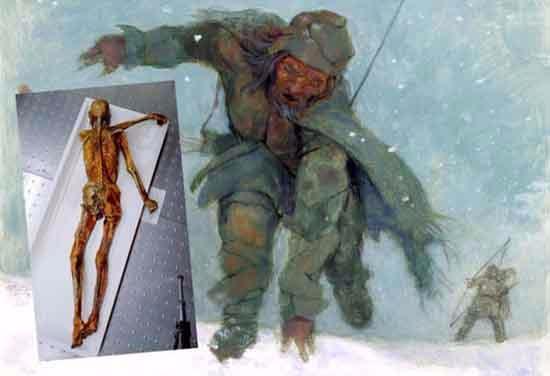
I don’t believe this happened in the gully. I’ve looked at the scene photos and can’t envision how Otzi could have been shot from below in that tight gully, which is what the forensic evidence clearly shows on arrow’s track through the body—even if Otzi were bending over.

No, I suspect Otzi was shot elsewhere, dragged by the arms, dumped in the gully with all his possessions, and then covered with ice and/or snow to hide the evidence.

After 5,000 years, the answers to “By who?” and “For what reason?” are unlikely to be known, despite futuristic technology, and the murder of Otzi the Iceman will always remain a really cold case.

*   *   *

For a fascinating look at the whole Otzi stories, including the exceptional photos, visit the official website www.Iceman.it at the South Tyrol Museum of Archaeology in Bolzano, Italy.
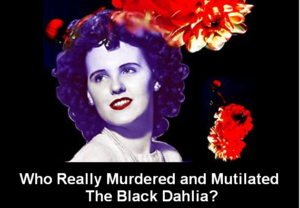
WHO REALLY MURDERED AND MUTILATED THE BLACK DAHLIA?

The Black Dahlia murder mystery is one of America’s—if not the world’s—biggest unsolved homicide investigations. On January 15, 1947, a pedestrian found 22-year-old Elizabeth Short’s body in Leimert Park’s district of West Los Angeles. Short was naked, bisected at the waist, viciously disfigured, and obviously posed in public display by her killer. Her case remains open despite more than 150 suspects surfaced and cleared—except for one who was the main person of interest. Did this man really murder and mutilate the lady nicknamed The Black Dahlia?
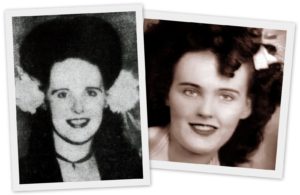
The Black Dahlia case wasn’t just a huge police investigation. It was a media frenzy as the public held a massive fascination with her body’s macabre and grotesque condition. The corpse was so shocking that I’m not going to publish photos in this post. If you’re curious, there are many Black Dahlia crime scene photos online.

Elizabeth (Betty or Beth) Short was born on July 29, 1924, near Boston Massachusetts. Her father disappeared after the October 1929 stock market crash and was believed to have committed suicide by jumping off a bridge into the Charles River. Beth Short’s mother raised her as a single working mother, however in 1942, the father turned up alive and living in Los Angeles.
Beth Short reacquainted with her father by moving to Los Angeles when she was 18. Their relationship turned rocky and she went to live on her own in 1945, surviving on waitress wages and with help from a few friends—mostly men. There was speculation Short was a prostitute/call girl but no evidence of that was found during her murder investigation.

She was more of a barfly/party girl and a little on the promiscuous side having numerous men-friends. One male suitor was an older gent, an Air Force pilot. He proposed marriage by letter but was accidentally killed in a plane crash before he could return to America and marry Beth Short.

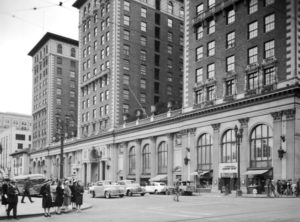
The last man to see Short alive—at least the last man police could identify—was a married travelling salesman Short secretly dated. Robert “Red” Manley liaised with Short in San Diego and dropped her off back in Los Angeles at the downtown Biltmore Hotel. This was on Thursday, January 9, 1947, and Short intended to meet her sister who was visiting from Boston.

They never connected. There are some accounts Short was seen using the lobby telephone at the Biltmore as well as unverified sightings of Short at the Crown Grill Cocktail Lounge about 3/8-mile northwest of the Biltmore. Here Short’s trail went cold, and there was a week gap until her body was found.
At 10:00 am on Wednesday, January 15, Betty Bersinger was walking with her three-year-old daughter in an undeveloped area of Leimert Park midway between Coliseum Street and West 39th Street (GPS Coordinates 34.016 N and 118.333 W). Bersinger saw what she believed to be two parts of a department store mannequin lying just to the side of the roadway in a very exposed position. On closer inspection, Bersinger realized the ghostly-white corpse was human. She rushed to a nearby house and phoned the police.

As two detectives arrived at the crime scene, so did passerbys and reporters which soon grew to a crowd of onlookers and a throng of media. This was before the days of controlled CSI examination with yellow barrier tape and uniformed guards keeping the public and press from observing and releasing key-fact information such as the body condition.

Los Angeles pathologist and County Coroner Frederick Newbarr autopsied Elizabeth Short on January 16, 1947. His report described the body as a white female, early 20s, 5’ 5” tall, 115 lbs. with light blue eyes, dark brown hair, and badly decayed teeth. These are the highlights of Short’s autopsy report:

  • The body was completely devoid of blood.
  • There was minimal blood about the scene, amounting to a few drops.
  • The corpse had been washed with a mineral solvent, possibly gasoline.
  • The upper torso was horizontally severed from the lower abdomen and legs.
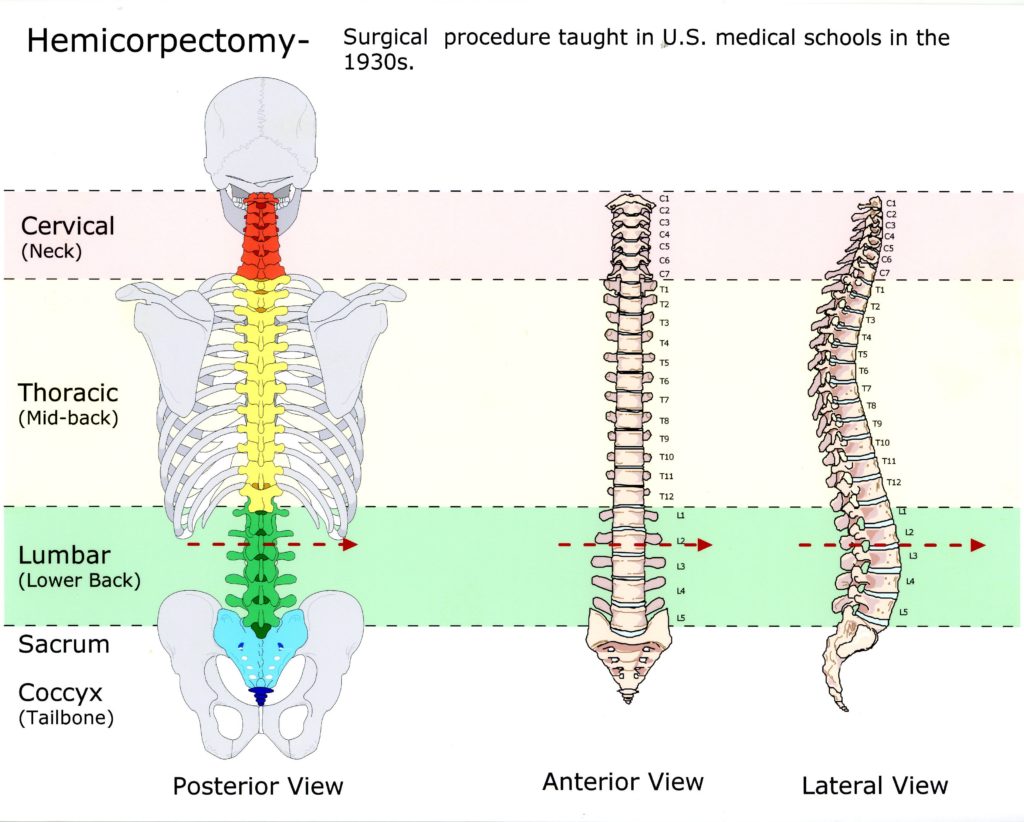
  • The anatomical point of severance was between the 2nd and 3rd lumbar vertebrae.
  • The upper torso organs were present and attached.
  • The intestines had been removed and coiled up underneath the buttocks.
  • There were injuries to the scalp and skull consistent with blunt force trauma.
  • Both corners of the mouth were incised and elongated approximately 4 inches.
  • The mouth incisions were made antemortem (before death), evident by ecchymosis or bruising to the wound edges.
  • Numerous postmortem (after death) cuts were made in random order about her torso, pelvis, and legs, evident by a lack of ecchymosis to the wound edges.
  • Antemortem ligature marks were evident on the wrists, ankles, and neck indicating she had been bound or restrained before death.
  • The anal orifice was fixed in dilated measurement of 1 and ¾ inches.
  • No semen or foreign trace evidence indicating an assailant was found.
  • General body condition indicated that death occurred approximately ten hours before body discovery making the death time somewhere over the night of January 14-15.
  • Official cause of death was shock from cerebral injuries and blood loss from the mouth.

The coroner, with the help of the FBI, identified Short’s body through fingerprints. Short had been previously arrested and processed in Santa Barbara for underage drinking (Yes, back in the 40s a minor in alcohol possession was a big deal). This opened the investigative trail to track Short’s whereabouts and develop leads.

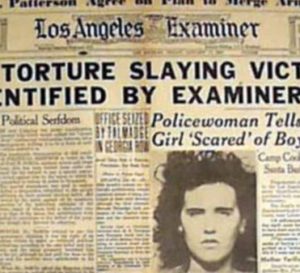
In one of the lowest and most disgusting points in the entire history of journalism, reporters from William Randolph Hearst’s Los Angeles Examiner intercepted the identification information—thought to be through a police source—and telephoned Short’s mother in Boston before the police could make an in-person notification of death. The reporters roused the mother under the guise that Beth had won a beauty to which they wanted to run a feature story. Through this, they gained a lot of personal information which they fed to the drooling public.
The killer was watching this all. On January 21, an unknown male phoned the Examiner’s editor congratulating them on their coverage, including publishing the crime scene photos of Short’s nude and butchered body. The caller told the editor to, “Expect some souvenirs from Beth Short in the mail”.

On January 24, the Examiner editor received a package with Short’s birth certificate, personal papers, and address book. A cut and pasted note gave clues to where Short’s shoes and purse were hidden. These were found and verifies as legitimate.

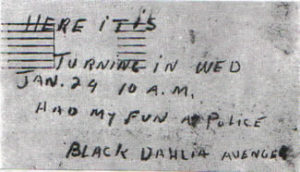
The Examiner got a hand-written note on January 26, dated January 24. This time the writer who claimed to be the Black Dahlia Avenger stated he would turn himself in, arranging a time and a place for coverage. It didn’t happen. The last contact with the killer was another cut and pasted letter on January 29 which read, “Have changed my mind. You would not give me a square deal. Dahlia killing was justified.”
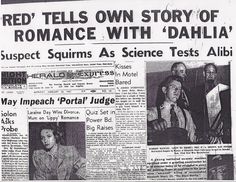
In 12 days, from the body discovery to the killer’s last contact, the Black Dahlia story went from unknown to front-page headlines that lasted months. Where did the Black Dahlia name come from to immortalize a poor and innocent victim like Elizabeth Short? No one really knows, but there are two schools of thought.

One is that the news media simply made it up to further sensationalize an already over-the-top story. The other is possibly from drug store staff where Short shopped. Allegedly, Short always dressed in black and wore a flower in her hair. Combined with her striking white skin, she made a spectacle which the staff called The Black Dahlia, possibly a word-play on a 1946 movie titled The Blue Dahlia. It’s possible intrepid reporters picked up the nickname and used it to sell more papers.

LAPD detectives focused on Beth Short’s trail and her male acquaintances, especially those having recent contact with her before her death. Red Manley was eliminated after two polygraphs and an air-tight, sworn alibi. Others took a lot of effort by a lot of officers to satisfy them the person they were interested in was not responsible.
And the LAPD detectives focused on two absolutely unique aspects of the Black Dahlia crime scene and autopsy findings which, in this day and age, would have been critical hold-back evidence known only to the investigators and the killer—nor publically splattered and speculated on throughout every western media outlet.

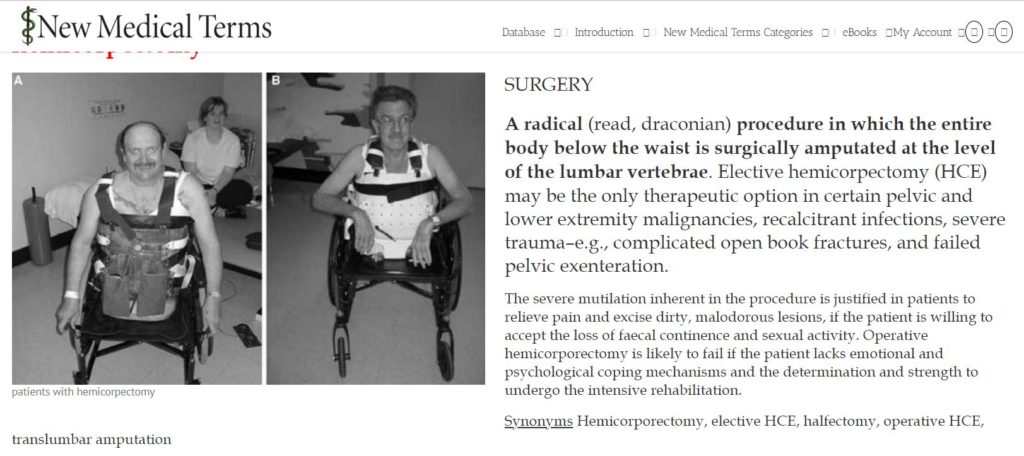
First was the method Beth Short had been cut in half with. The pathologist/coroner, Dr. Frederick Newbarr, later testified at Short’s inquest that the severance was a surgical procedure that only could have been done by a highly-trained surgeon with the proper surgical equipment. Dr. Newbarr stated—under oath and on the record—the severance was a medical procedure developed in the 1930s and termed a hemicorporectomy.

A hemicorporectomy was a last-ditch effort to save a person’s life when the entire pelvic system was failing. To not remove the pelvis, buttock, and leg assembly (including the lower GI tract) would have meant certain death so surgeons would resort to, literally, cutting a person in half and discarding the lower region.

This radical surgical procedure left the patient alive and confined to a walker-like device for mobility and a colostomy bag for capturing waste exiting the stomach at the duodenum. The only place in the spine a hemicorporectomy could be achieved was between the 2nd and 3rd lumbar vertebrae.

In Dr. Newbarr’s words, “Whoever did this surgical procedure (to Elizabeth Short’s body) was a very fine surgeon.”

The second unique aspect of the crime scene findings was Short’s body positioning. From the onset, both press and police emphasized the body wasn’t just dumped at the discovery point—it was carefully and craftily posed for some definite purpose. There was no attempt to hide the corpse. No, it was the opposite. The killer wanted it found and publically published.

If you’re strong-stomached enough to view the crime scene photos, you’ll see Short’s remains lying supine (on her back) with her arms extended straight out from her shoulders with her elbows bent 90-degrees upward to make a football goalpost-like frame over her head. You’ll see Short’s lower segment offset to the right of her torso and her right hip in line with her left side. Also, you’ll see the torso/hip offset distance to be the same as the gap between her upper and lower segments. Then, you’ll note Short’s legs are positioned wide open in a 90-degree separation or a 45-degree split from the midline of her vagina.

There isn’t an experienced cop, coroner, or criminologist who wouldn’t see meaning in this crime scene. It’s painfully obvious the killer positioned Short’s body to send a message. But what bizarre message by what bizarre surgeon-killer could that be?

It seems the LAPD detectives had a person of interest in their sights early in the Black Dahlia murder investigation. The LAPD file is still open and ongoing, although cold, so they control information as they should. What’s known about their interest in Dr. George Hill Hodel Jr. is officially confidential but quite well-known in the internet, book, and movie world.

Dr. George Hodel was surgically trained in the 1930s. He was familiar with the hemicorporectomy procedure, and he was familiar with sexual deviancy. Hodel was charged with incest on his 14-year-old daughter who, by the way, knew Elizabeth Short’s sister. There was one degree of separation between Surgeon Hodel and Victim Short including the several-block distance from the Biltmore Hotel and the Crown Gate Cocktail Lounge to where Hodel’s clinic operated.

Although George Hodel was a trained surgeon, he made money though his clinic specializing in treating venereal disease. At the time, the forties, VD was rampant through sexually-promiscuous people and it was something held in shame and confidence. Was Elizabeth Short a VD patient of Dr. Hodel’s as well as being a through-family acquaintance?

The detectives thought so. They thoroughly investigated Hotel including bugging his home where they heard this:

Supposin’ I did kill the Black Dahlia. They couldn’t prove it now. They can’t talk to my secretary anymore because she’s dead. They though there was something fishy. Anyway, now they may have figured it out. Killed her. Maybe I did kill my secretary.

Those statements were suspicious enough to make detectives look into the death of Ruth Spalding. She was Dr. Hodel’s clinic assistant who died of a mysterious drug overdose shortly after the Dahlia case happened. Speculation by detectives is Spalding recognized Elizabeth Short as a patient, knew Hodel’s surgical experience, and put 2&2 together.

The detectives, and possibly Ruth Spalding, weren’t the only ones who suspected Dr. George Hodel was the Black Dahlia’s killer. In 1950, when the heat was on George Hodel and the Dahlia recording was intercepted, Hodel moved to the Philippines where died in 1999. Hodel remains an LAPD person of interest in the Dahlia case.

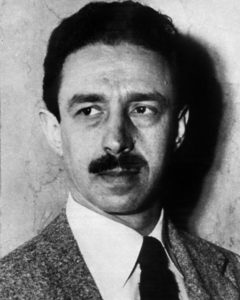
Someone else also considers Dr. George Hill Hodel as the Dahlia killer. That’s his son. Steve Hodel who, coincidentally, is a retired LAPD homicide detective. It wasn’t until he retired that Steve Hodel put 2&2 together when he reviewed property from his father’s estate and found highly-suspicious material linking his father as the Dahlia killer.
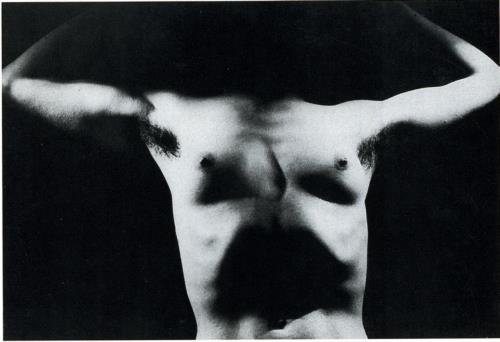

One was photographs of a young woman similar to Elizabeth Short. Two was handwriting samples similar to the Examiner hand-written note. Then, the fact his father worked so close to the scene where Short was last seen and, in all probability knew and possibly treated Short. And then there was the coincidence Short’s body was posed close—very close—to Hodel’s estranged wife’s house.

Certainly Dr. George Hodel had the means and opportunity to be the Balck Dahlia killer. Motive isn’t an included element in any murder trial. There’s no burden for the prosecution to prove motive in any case—corporal or capital—but proving motive tips the scale in persuading a jury to convict beyond all reasonable doubt.

Assuming George Hodel—who had the surgical means to perform a hemicorporectomy and was lurking in the vicinity when Beth Short disappeared along with his history of sexual deviance and a hint of homicide—was the Black Dahlia killer, the question is why?

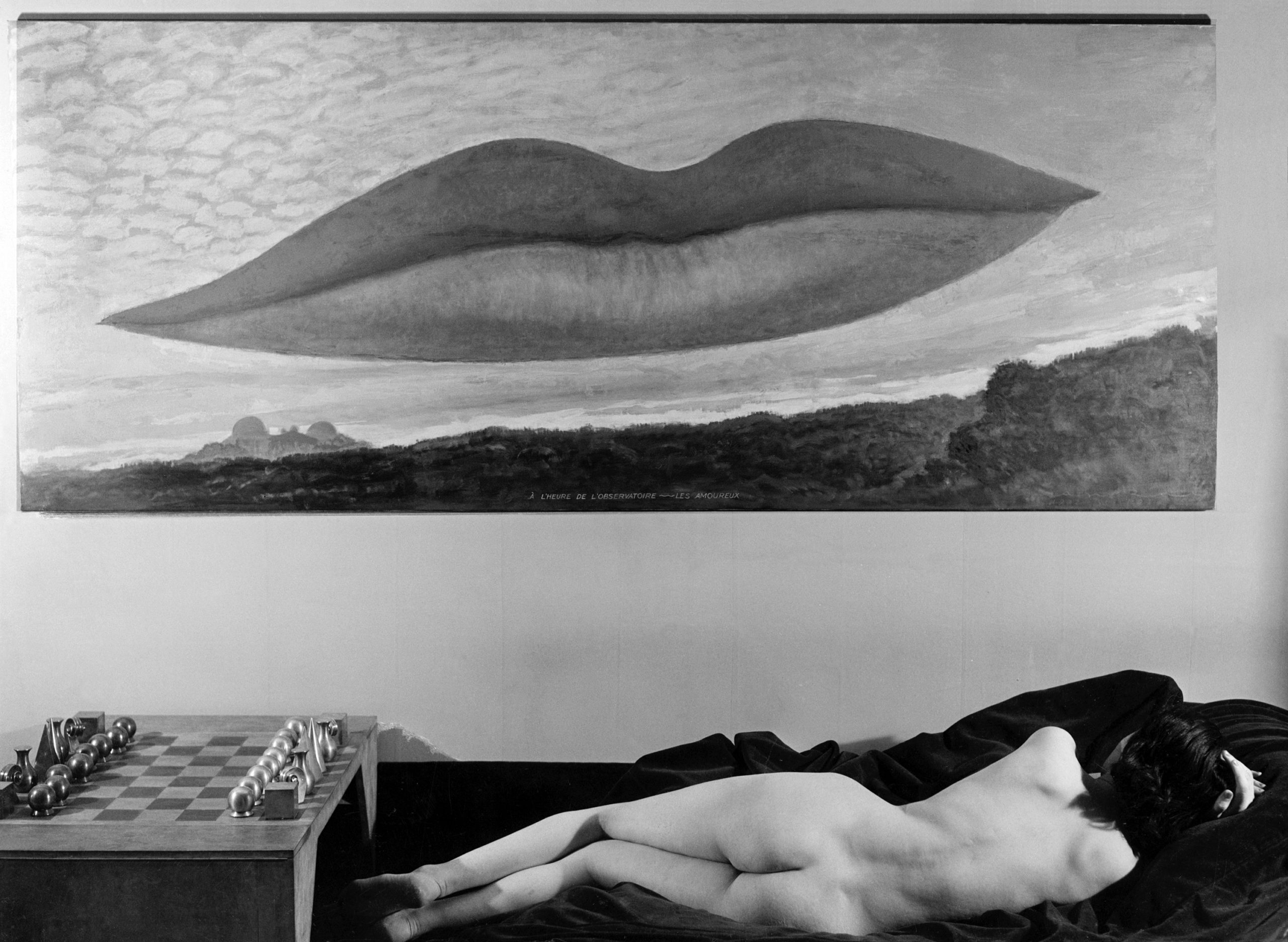
His son, Steve Hodel, supplies it. Art work. George Hodel had a close friend named Man Ray who was a 1930s-1940s surrealist artist—a prominent who worked with greats like Salvador Dali.

Steve Hodel identifies two hard-to-ignore similarities between Man Ray’s art and the Black Dahlia’s posing. Ray’s 1936 piece Les Amoureux shows an elongated woman’s mouth with slit-like extensions and a corpse-like figure below and admiring it. Ray’s 1934 Minotaur shows a naked woman’s torso with the goalpost-like arm-posing.

Something I can’t ignore is the mathematical connection between Man Ray’s surrealist art and the Black Dahlia’s pose. Elizabeth Short’s arms were 90-degrees from her shoulders to her forearms, and her forearms were 90-degrees upward from them. Her torso was 90-degree offset, equidistant from the separation of her lower section. And her legs were a 45/90-degree posing from her pubis.

This posing was no accident. It was no coincidence. It was a purposeful display of artistic impression.

In my death investigation experience, I’ve never seen anything close to the Black Dahlia case. I’ve never seen intentional grotesque mutilation like this, and that’s why I haven’t posted pictures. But, I do see hard-to-deny facts.

Two principles guide homicide investigations. First—the more bizarre the case, the closer the answer is to home. Second—Occam’s razor. The Principle of Parsimony. When faced with multiple explanations, the simplest answer is usually the right answer.

On the balance of probabilities—with no better solution—I believe Dr. George Hill Hodel really murdered and mutilated the Black Dahlia.

WAS AMANDA KNOX REALLY INNOCENT OF KILLING MEREDITH KERCHER?

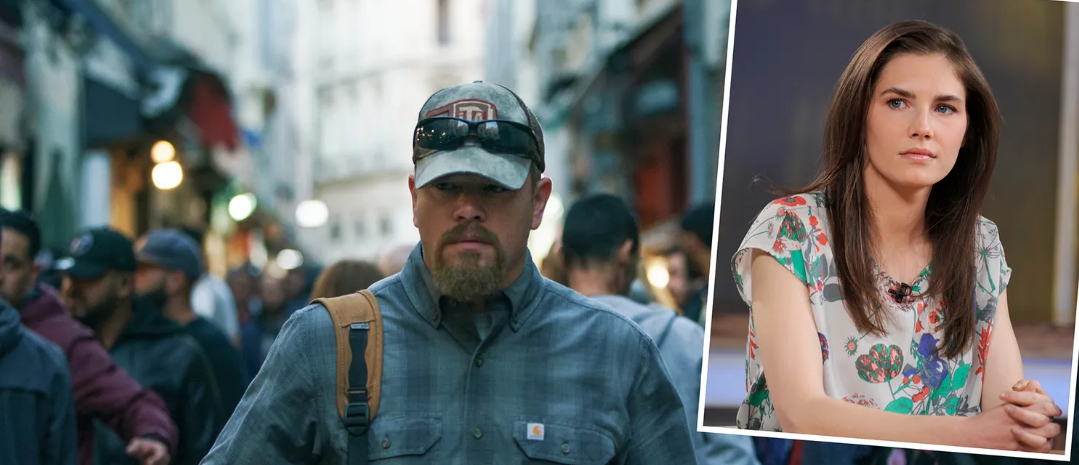
The Amanda Knox story captured worldwide attention during the years she passed through the Italian legal system and was convicted—twice—of complicity in murdering her college roommate, Meredith Kercher. Now, the international spotlight is again upon Amanda Knox with the new Matt Damon movie Stillwater being based on her case. In Stillwater, Matt Damon’s fictional  character pursues justice for his daughter who is wrongfully accused and falsely imprisoned for murder. It leads to questioning if this was the truth in the real Amanda Knox story and that Knox was really innocent of killing Meredith Kercher.

There’s a lot of internet information on the Amanda Knox murder case. Some of it’s factual. Much is sensational tabloid junk about “Foxy Knoxy”the “Ice Lady”—disseminated by socially dysfunctional trolls operating from surplus metal sea-cans converted into dwellings via an extension cord hooked to one bare light bulb. To find out the truth, it’s necessary to first look at the overall facts and then examine how the Italian legal system handled the case through a dragged-out, eight-year-long process.

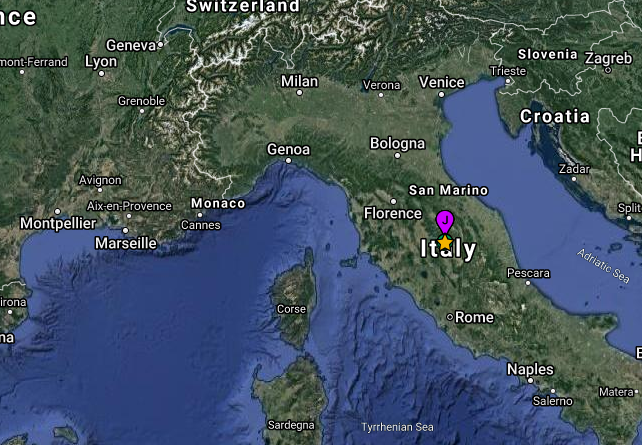
In 2007, Amanda Knox was a 20-year-old student from Seattle, Washington. She moved to Perugia in central Italy (slightly north of Rome) to further her journalism studies as Perugia was well-known for outstanding universities and educational opportunities—a popular place for foreign students. Here, Knox met a British exchange student, 21-year-old Meredith Kercher, and they shared a ground-floor, four-bedroom apartment with two other young ladies.

Quickly, Knox became romantically involved with a young Italian man, Raffaele Sollecito, and Kercher did the same with Giacomo Silenzi. At the time, Knox also worked part-time in a nightclub run by Patrick Lumumba. It was this pentagon of five that the Italian prosecutors would present as a sex game gone wrong that resulted in Meredith Kercher’s death.

Meredith Kercher

On the evening of November 1, 2007, Knox, Sollecito, Silenzi, and Kercher socialized with others at Sollecito’s apartment near to where the ladies roomed. Present was a man named Rudy Guede who was invited by one of the group but who was unknown to Knox and Kercher. Around 9 pm, Kercher excused herself from the gathering and walked back to her residence alone. Bit by bit, the gathering broke up leaving Knox and Sollecito to overnight there together.

At midday on November 2, Knox repeatedly tried to phone Meredith Kercher. She got no answer and became concerned so Knox and Sollecito went to the co-habitation and found Kercher’s bedroom door locked. Knox tapped on the door and called out but Kercher didn’t answer. Then Knox and Sollecito noticed some bloodstains, including a bloody footprint, in the bathroom.

Being alarmed, Knox called her mother in America who directed Knox to call the Italian police. She did so. However, there was a significant delay which was advanced as part of the prosecution’s later case against Knox and was supported by a timeline presented through cell phone records.

The first attending police officers were not homicide detectives. They were an Italian version of postal inspectors crossed with communication fraud investigators. There hadn’t been a murder in Perugia in over twenty years, so it was a considerable time before “competent” scene processors and trained murder cops arrived. Naturally, the scene was contaminated and the ensuing DNA evidence used in convicting Amanda Knox of murdering Meredith Kecher was compromised.

What the scene processing showed was Kercher had been attacked, raped, and had her throat cut in her bedroom. Her official cause of death was exsanguination (bleeding out) after being injured with a sharp-edged weapon. Kercher’s bedroom window was open and the investigators deduced that to mean that a break-in had been staged with the real killer setting the crime up to appear that a stranger was involved.

Police initially treated Amanda Knox as a witness. She was questioned on different occasions, but the homicide investigators slowly formulated a theory that Knox was lying to protect the actual murderer. They also developed a motive theory that Kercher was killed because she refused to take part in a multi-person sexual trist. An orgy.

On November 6, the Italian homicide detectives again brought Knox in for questioning. This time it turned into a full-on, hard-core interrogation that lasted hours. This is a complex and controversial part of the Amanda Knox story and precise details—at least as precise as possible because the authorities did not audio or video record it (rather they elicited a written confession from Knox)—can be read on the website amandaknoxcase.com under The Interrogation of Amanda Knox.

In Amanda Knox’s written confession, she states to have been present while her nightclub boss, Patrick Lumbumba, raped and murdered Meredith Kercher. Knox did not supply any motive or any details which only an involved person would know. Lumbuba was arrested on the strength of Knox’s statement and it was shortly proven, beyond all doubt, that Lumbumba had an air-tight alibi and he was flat-out innocent.

Rudy Guede


Amanda Knox was held in custody while the prosecution put an indictable case together. Meanwhile, the scene forensic evidence identified a DNA profile from semen on Kercher’s body. They conclusively linked it to Rudy Guede who had been at the social gathering on the evening when Kercher was last seen alive. Guede was arrested in Germany where he confessed and indicated that Amanda Knox had nothing to do with Kercher’s murder.

By now, the Italian legal system had a freight train rolling along the justice track. Instead of applying the brakes, the police, prosecutors, and judges threw more coal on the fire and kept on persecuting Amanda Knox. This was due to the archaic inquisitional system Italy was trying to gentrify into a western adversarial legal framework.

The common US-style evidence rules didn’t apply in the Italian arena. Despite Amanda Knox being hardline interrogated for hours without legal representation, being informed of her rights, denied food, water, and toilet facilities, slapped around, and breaking down in the middle of the night, the Italian court accepted Knox’s coerced confession as solid evidence that had to be admitted under their law structure. It didn’t matter that the prosecution’s perceived motive—some kinky sex game—had no factual basis, and it didn’t matter that Knox’s boyfriend, Raffaele Sollecito, provided Knox with her air-tight alibi. No, the Italian legal machine went right on persecuting Amanda Knox.

Knox stood trial through the summer and fall of 2009. Her case received massive public attention and the British tabloids sensationalized it like nothing ever seen. This was now the day of the emerging internet where chatrooms and social media made a spectacle of the trial and a massive mess of Amanda Knox’s life.

Amanda Knox was convicted of Meredith Kercher’s murder on December 4, 2009. She was sentenced to 26 years in jail. She appealed and had her murder conviction overturned on October 3, 2011, now having served nearly two years in an Italian prison.

In March of 2013, Italy’s Court of Cassation ordered a new trial and on January 30, 2014, she was once again convicted for killing Meredith Kercher. By now, Amanda Knox was back in America and was not returned to Italy during her new appeal. On March 27, 2015, Italy’s highest court again overturned her conviction and her legal persecution was over.

Any rational person would have to ask how this miscarriage of justice could possibly happen. The answer to that is as complicated as the Amanda Knox story, if that’s possible to fully tell. It’s a murky mix of systematic incompetence and utter lack of regard for the truth. In the high court final ruling, the judge cited “sensational failures”, “glaring errors”, “investigative amnesia”, “guilty and culpable omissions”, “ignorance of expert forensic testimony that demonstrated contamination of evidence”, “outright falsification of forensic evidence”, and “a case without any foundation”.

The horrific Amanda Knox wrongful conviction story is best told by Amanda, herself. In a recent interview with The Atlantic titled Who Owns Amanda Knox? , Amanda says:

Does my name belong to me? Does my face? What about my life? My story? Why is my name used to refer to events I had no hand in? I return to these questions again and again because others continue to profit off my identity, and my trauma, without my consent. Most recently, there is the film Stillwater, directed by Tom McCarthy and starring Matt Damon and Abigail Breslin, which was, in McCarthy’s words, “directly inspired by the Amanda Knox saga.” How did we get here?

In the fall of 2007, a British student named Meredith Kercher was studying abroad in Perugia, Italy. She moved into a little cottage with three roommates—two Italian law interns, and an American girl. Less than two months into her stay, a young man named Rudy Guede, an immigrant from the Ivory Coast, broke into the apartment and found Meredith alone. Guede had a history of breaking and entering. A week prior, he had been arrested in Milan while burglarizing a nursery school, and was found carrying a 16-inch knife. He was released. A week later, he raped Meredith and stabbed her in the throat, killing her. In the process, he left his DNA in Meredith’s body and throughout the crime scene. He left his fingerprints and footprints in her blood. He fled to Germany immediately afterward, and later admitted to being at the scene.

I am the American girl in that story, and if the Italian authorities had been more competent, I would have been nothing more than a footnote in a tragic story. But as in many wrongful convictions, the authorities formed a theory before the forensic evidence came in, and when that evidence indicated a sole perpetrator, Guede, ego and reputation led them to contort their theory to maintain that I was still somehow involved. Guede was quietly convicted for participating in the murder in a separate fast-track trial, and then I became the main event for eight long years.

While I was on trial for the murder of Meredith Kercher, from 2007 to 2015, the prosecution and the media crafted a story, and a doppelgänger version of me, onto which people could affix all their uncertainties, fears, and moral judgments. People liked that story: the psychotic man-eater, the dirty ice queen, Foxy Knoxy. A jury convicted my doppelgänger, and sentenced her to 26 years in prison. But the guards couldn’t handcuff that invented person. They couldn’t escort that fiction into a cell. That was me, the real me, who returned to that windowless prison van, to those high cement walls topped with barbed wire, to those cold, echoing hallways and barred windows, to that all-consuming loneliness.

Ten years ago, at the age of 24, I was acquitted, and I tumbled into a kind of purgatory. I left one cell and immediately entered another: the quiet of my childhood bedroom. Outside, the telephoto lenses were fixed on my closed blinds. Prison had given me an appreciation for all the freedoms I’d taken for granted. Freedom showed me how many I still lacked.

As I walked back into the free world, I knew that my doppelgänger was there alongside me. I knew that everyone I would ever meet from then on would have already met, and judged, her. I had been acquitted in a court of law, but sentenced to life by the court of public opinion as, if not a killer, then at least a slut, or a nutcase, or a tabloid celebrity. Why doesn’t she just go away already? Her 15 minutes are over.

In freedom, I had become a pariah. Looking for work, going back to school, buying tampons at the pharmacy, everywhere I went I met people who already thought they knew who I was, what I’d done or not done, and what I deserved. I was threatened with abduction and torture in broad daylight; I was threatened with having Meredith’s name carved into my body. Strangers sent me lingerie and bizarre love letters. All over the world, people believed they knew me, a warped assumption that turned me into a monster to some and a saint to others. I felt like I was always standing behind that cardboard cutout, Foxy Knoxy, saying, Hey, back here, the real me! Even most of the strangers who offered kindness and support didn’t truly see me. They loved her.

It’s hard to make friends, to date, to be a regular person when everyone you meet has a preconceived notion of who you really are, whether positive or negative. I could have chosen to hide out, to change my name, to dye my hair, and hope no one recognized me ever again. Instead, I decided to embrace the world that had dehumanized me, and all those who turned me into a product.

From the moment I was arrested, my name and face and trauma became a source of profit for news organizations, filmmakers, and other artists, scrupulous and unscrupulous. The most intimate details of my life, from my sexual history to my thoughts of death and suicide in prison, were taken from my private diary and leaked to journalists. Those journalists turned my darkest fears into fodder for hundreds of articles, thousands of blog posts, and millions of hot takes. People speculated about my mental state and sexuality, they diagnosed me from afar, they used my predicament as a metaphor, they made TV movies about me, based characters in legal shows on me, and the worst of them took every opportunity they could, while I was in prison and while I’ve been out, to shame me for something I didn’t do, to shame me for living while Meredith is dead, to shame me for being in the very headlines they write, for being in the photographs they take without my consent. The hypocrisy and the cruelty are maddening. And yet, being under that microscope has given me insight into how wrong a media narrative can be, how easy it is for all of us to consume other people’s lives as if they were mere content to fill up our Twitter feeds.

This focus on me led many to complain that Meredith Kercher had been forgotten. But whom did they blame for that? Not the Italian authorities. Not the press. Somehow it was my fault that the police and media focused on me at Meredith’s expense. The result of this is that 14 years later, my name is the name associated with this tragic series of events I had no control over. Meredith’s name is often left out, as is Rudy Guede’s. When he was released from prison in late 2020, the New York Post headline read: “Man Who Killed Amanda Knox’s Roommate Freed on Community Service.” My name is the only name that shouldn’t be in that headline.

I never asked to become a public person. The Italian authorities and global media made that choice for me. And when I was acquitted and freed, the media and the public wouldn’t allow me to become a private citizen again. I have not been allowed to return to the relative anonymity I had before Perugia. I have no choice but to accept the fact that I live in a world where my life, and my reputation, are freely available for distortion by a voracious content mill.

———

There is no doubt—no doubt whatsoever—that Amanda Knox really is innocent of killing Meredith Kercher, She’s a true victim of crime, a victim of commercial tabloids, and a victim of vicious trolls.