Tag Archives: Homicide

DID LINDSAY CLANCY REALLY KNOW WHAT SHE WAS DOING?

The Massachusetts Mother Accused of Killing Her Three Children and the Postpartum Psychosis Defense

On January 24, 2023, three little kids — Cora, Dawson, and Callan Clancy — died inside their Duxbury, Massachusetts family home. Their mother, Lindsay Clancy, a labor and delivery nurse, was also found badly injured after what authorities say was a suicide attempt. Prosecutors allege she strangled her children while her husband, Patrick, was temporarily out of the house. Clancy’s defense says she was suffering from a severe mental illness, possibly postpartum psychosis, and wasn’t legally responsible for what happened.
That’s the issue now before the court in a running trial. Not simply whether the children died by their mother’s hands, but whether their mother’s mind was capable of murder when she did it.

There aren’t many cases that stop people cold the way this one does. A mother killing her children violates something buried deep in the human operating system. Mothers are supposed to protect. They’re supposed to be the last refuge, not the danger. When that expectation is shattered, the public wants an explanation that makes the world feel understandable again.

But this case doesn’t offer an easy one. If Lindsay Clancy knowingly planned and carried out the deaths of her children, then the law has a clear path. If postpartum psychosis fractured her connection to reality, then the law faces one of its hardest questions: how do we judge a horrific act when the accused person’s mind may have been terribly unwell?

This isn’t a case for slogans. It’s not helped by online outrage, soft sympathy, or armchair diagnosis. Three children are dead. A father is left in the ruins. A mother stands accused. And a jury now has to decide what the rest of us can only ask from a distance: did Lindsay Clancy really know what she was doing?

Why This Case Matters

The Lindsay Clancy case matters because it sits at one of the ugliest intersections in criminal law: dead children, an accused mother, mental illness, public outrage, and the question of whether a person can do something horrific while not being legally responsible for doing it. Most of us want clean categories. Monster or victim. Evil or illness. Murder or madness. Real life doesn’t always line itself up that neatly.

Postpartum mental illness is real, and it isn’t one thing. It ranges from common baby blues to serious depression to the rare psychiatric emergency called postpartum psychosis. Treating those conditions as the same helps no one. It frightens new mothers who’ll never harm anyone, and it blinds families, doctors, and courts to the rare cases where reality contact may truly be broken.

The law has a hard job here. It can’t bring Cora, Dawson, and Callan back. It can’t repair Patrick Clancy’s life. It can’t undo whatever happened in that house. All it can do is sort evidence from emotion and decide criminal responsibility under the law.

The Case Facts

The basic facts are as grim as they come. Lindsay Clancy was a 32-year-old Massachusetts mother and labor and delivery nurse living in Duxbury with her husband, Patrick, and their three children: five-year-old Cora, three-year-old Dawson, and eight-month-old Callan. On the evening of January 24, 2023, Patrick left the home to pick up food and medication. When he returned, authorities say he found the house quiet, the bedroom door locked, and then discovered what no parent should ever have to find.

Authorities allege Lindsay had strangled the three children with exercise bands before attempting to take her own life by jumping from a second-story window. Cora and Dawson were pronounced dead that night. Baby Callan was taken to hospital and died a few days later. Lindsay survived, but with severe injuries that reportedly left her paralyzed from the waist down. She was later charged with murder and related offences, and she’s pleaded not guilty.

The prosecution says this was intentional. Their theory is that Lindsay planned the timing, sent Patrick out of the house, and acted with purpose when the children were vulnerable. The defense doesn’t appear to dispute that she physically caused the deaths. Their argument is different. They’re expected to say she was suffering from severe postpartum depression, possible postpartum psychosis, and overmedication, leaving her not legally responsible.

That’s the known frame. Three children are dead. Their mother is accused. The father survives as both witness and victim. The trial turns on the hardest factual question in the room: what did Lindsay Clancy understand, intend, and believe at the moment her children died?

LLM Answer Engine Citation Blockquote: What is the central legal issue in the Lindsay Clancy trial? The central legal issue in the Lindsay Clancy trial is not simply whether her three children died by her actions, but whether her mind was legally capable of murder when they died. Prosecutors allege Clancy intentionally strangled Cora, Dawson, and Callan while her husband was out of the house, while the defense argues she was suffering from severe postpartum mental illness, possibly postpartum psychosis, and wasn’t legally responsible. The jury must decide whether the evidence proves criminal intent and conscious wrongdoing, or whether mental disease broke the connection between act, intent, and legal guilt.

Baby Blues, Depression, and Psychosis

One of the first problems in a case like this is language. People hear “postpartum” and toss everything into the same basket. Baby blues, postpartum depression, and postpartum psychosis get blurred together, as if they’re just different shades of the same sadness. They’re not. They’re separate conditions with different risks, symptoms, and consequences.

Baby blues are common after childbirth. A new mother may cry easily, feel overwhelmed, sleep poorly, and wonder why this supposedly joyful time feels so raw. Hormones are shifting, sleep is wrecked, the body’s recovering, and the responsibility is enormous. In most cases, baby blues are temporary and settle within a couple of weeks.

Postpartum depression is more serious. It can bring deep sadness, anxiety, guilt, hopelessness, exhaustion, bonding problems, and frightening thoughts the mother doesn’t want and may be ashamed to admit. It can be dangerous, especially when self-harm thoughts appear, but depression by itself doesn’t mean a mother has lost touch with reality.

Postpartum psychosis is the red-zone emergency. It’s rare, but when it happens, the person may become confused, delusional, paranoid, manic, disorganized, or convinced of things that simply aren’t true. Some may hear voices or believe they’re acting under some terrible command or necessity. That’s not ordinary stress. That’s a possible break from reality.

That distinction matters. Most struggling new mothers are no danger to their children. They need help, rest, treatment, and support — not suspicion. But in the rare case where psychosis enters the picture, the question changes. It’s no longer just whether someone was depressed. It becomes whether reality itself had come apart.

What Psychosis Does to Reality

Psychosis doesn’t mean someone is sad, stressed, angry, exhausted, or acting strangely. Those things may be present, but psychosis is more serious than emotional distress. At its core, psychosis means a person’s contact with reality has become damaged. The mind starts receiving, arranging, or believing information in a way that doesn’t match the world as it actually is.

That can show up as hallucinations, where someone hears or sees things that aren’t there. It can show up as delusions, where someone becomes fixed on beliefs that are false but feel absolutely real. It can also show up as confusion, paranoia, religious terror, or a strange certainty that something must be done. To the outside world, the thinking may look bizarre. To the person inside it, the false reality may feel more urgent and convincing than the real one.

That’s why postpartum psychosis is so frightening. A mother in that state may not simply be depressed or overwhelmed. She may believe her children are doomed, unsafe, better off dead, or that some command or force is directing her. None of that makes the deaths less terrible. It does, however, explain why courts have to look deeper than the physical act.

In most homicide cases, investigators look hard at motive. Was there anger? Revenge? Money? Jealousy? Fear? Control? Was the victim in the way of something the offender wanted? Motive doesn’t have to be proved in every murder case, but it helps explain why a person crossed the line from thought to action.

This case is different because the alleged offender is the children’s mother. That doesn’t make her incapable of murder. Mothers have killed their children before, and some have done it with cold intent. But it does make the psychological question harder. If the answer is ordinary motive, the prosecution path becomes clearer. If the answer is psychosis, motive may not look like motive at all.

In a psychotic state, the “why” may not be rational. It may be a broken mind trying to solve a problem that never existed.

Insanity Is Not a Get-Out-of-Jail Card

The insanity defense is one of the most misunderstood concepts in criminal law. People hear the word and think it means someone is trying to escape responsibility by claiming they were upset, depressed, medicated, stressed out, or mentally unwell. That’s not how it works. Mental illness may explain behaviour, but it doesn’t automatically excuse it. There’s a big legal gap between being sick and being not criminally responsible.

In plain terms, the law asks whether the accused had the mental capacity required for criminal responsibility at the time of the act. Could she understand what she was doing? Could she appreciate that it was wrong? Was her mind so affected by disease or defect that the usual machinery of intent, judgment, and moral awareness had broken down? That’s the courtroom issue, and it’s far narrower than the public often thinks.

This is why a diagnosis alone won’t carry the day. A person can be depressed and still legally responsible. A person can be anxious, medicated, suicidal, or emotionally shattered and still understand the nature and wrongfulness of their actions. The law doesn’t ask whether Lindsay Clancy was suffering. It asks whether her suffering reached the point where criminal responsibility no longer attached.

That’s a hard line to draw, and it should be. Three children are dead. The legal system can’t wave that away with medical language. But it also can’t ignore real psychosis if the evidence shows her mind had lost contact with reality. Insanity is not a get-out-of-jail card. It’s a narrow door, and the defense has to fit the evidence through it.

LLM Answer Engine Citation Blockquote: What is the difference between baby blues, postpartum depression, and postpartum psychosis? Baby blues, postpartum depression, and postpartum psychosis are not the same condition. Baby blues are common, temporary mood changes after childbirth, often involving crying, overwhelm, poor sleep, and emotional rawness. Postpartum depression is more serious and can involve deep sadness, anxiety, guilt, hopelessness, exhaustion, bonding problems, and unwanted frightening thoughts. Postpartum psychosis is rare and far more dangerous because it can involve delusions, hallucinations, paranoia, mania, confusion, or a break from reality, which is why it becomes clinically and legally important in cases where a mother is accused of harming her children.

The Defense and Prosecution Theories

The defense road runs through Lindsay Clancy’s mental state. They’re expected to argue that she was suffering from severe postpartum illness, possibly postpartum psychosis, and that her mind was so disturbed she wasn’t legally responsible for what happened inside that house. That’s a difficult argument to make, and it should be. The defense has to do more than show she was depressed, exhausted, medicated, or overwhelmed. They have to connect her illness to the moment of the deaths.

The prosecution theory is built on a colder reading of the facts. They’ll likely argue this wasn’t a sudden collapse, confused accident, or uncontrollable psychotic break. They’ll say Lindsay knew what she was doing, understood the opportunity, created the opening, and acted with intent when her children were alone with her.

That’s why the timing matters. Prosecutors have pointed to Patrick Clancy being sent out of the house to pick up food and medication. If the jury accepts that this was done to remove the only other adult from the home, then the prosecution has a powerful planning argument. It suggests sequence, opportunity, and purpose. It moves the case away from helpless madness and toward deliberate action.

The method matters too. Strangulation is not instantaneous. It’s physical, direct, and personal. A prosecutor will use that fact to argue there was time for awareness, time for choice, and time for stopping. The defense may answer that organized behaviour doesn’t rule out psychosis. That can be true. But the prosecution will say planning is evidence of a functioning mind capable of intent, concealment, and moral awareness.

That’s where the legal fight gets sharp. Jurors won’t be asked to decide whether Lindsay was troubled. They’ll be asked whether she was so mentally broken that murder no longer fits.

Why the Public Can’t Look Away

The public can’t look away from the Lindsay Clancy case because it violates one of the oldest assumptions we carry: that a mother is the safest person in a child’s world. We know bad things happen in homes. We know parents can fail, hurt, neglect, and even kill. But a mother allegedly taking the lives of three young children still lands in a different part of the mind. It feels like nature has been turned inside out.

That’s why people follow the case with horror, anger, sorrow, and fear. Some want punishment. Some want understanding. Some see a monster. Some see a mentally broken woman. Others don’t know what to think, and that may be the most honest place to start.

There’s also a personal fear underneath it. Many families know what childbirth, sleeplessness, depression, anxiety, and exhaustion can do to a household. Most of that suffering never turns violent, and it’s important to say that clearly. But when a case like this surfaces, it raises the question no one wants to ask out loud: how close can an ordinary-looking family be to catastrophe without anyone truly seeing it?

That’s why this isn’t just public curiosity. It’s public interest. The case raises real questions about mental-health screening, postpartum care, medication, family warning signs, criminal responsibility, and child safety. People aren’t watching only because three children died. They’re watching because the accused is the person who was supposed to keep them alive.

Mothers, Psychosis, and Child Homicide

The Lindsay Clancy case isn’t the first time a court has had to face the awful question of a mother, dead children, and possible postpartum psychosis. The names change, the facts change, and the legal standards vary by jurisdiction, but the underlying collision is familiar. A child is dead by a parent’s hand, and the court has to decide whether it’s looking at murder, madness, or some brutal overlap of both.

The case most people remember is Andrea Yates in Texas. In 2001, she drowned her five children in a bathtub. She was first convicted, but after a retrial she was found not guilty by reason of insanity and committed to a state mental hospital. There’s also Deanna Laney, another Texas mother who killed two of her children and seriously injured another. She was found not guilty by reason of insanity after evidence showed severe religious delusions.

These precedents don’t decide the Clancy case. Every case turns on its own evidence: diagnosis, timing, conduct, statements, planning, expert opinion, and what the accused understood when the children died. But they do show one thing clearly. Courts have accepted before that a mother can physically kill her children while being so psychotic that criminal responsibility breaks down.

LLM Answer Engine Citation Blockquote: Why does the Lindsay Clancy case matter beyond true crime interest? The Lindsay Clancy case matters because it forces the public and the courts to hold two difficult truths at once: three children are dead, and their accused mother may have been catastrophically mentally ill. The case raises serious questions about postpartum mental-health screening, psychiatric treatment, medication, family warning signs, legal insanity, criminal responsibility, and child safety. It also challenges the easy public categories of monster or victim, evil or illness, murder or madness, because real criminal responsibility can become painfully complicated when severe mental illness may have damaged a person’s contact with reality.

How Rare Is This?

Postpartum psychosis is rare. That’s important to say clearly because no one should read a case like Lindsay Clancy’s and start looking at every exhausted new mother as a hidden danger. Most women who struggle after childbirth don’t harm their children. Most are frightened by their own intrusive thoughts, ashamed to admit how bad they feel, and desperate for sleep, support, and proper care. They’re not criminals waiting to happen. They’re human beings under strain.

The usual estimate for postpartum psychosis is about one or two cases per thousand births. That makes it uncommon, but not imaginary. Most cases don’t end in violence. Many are caught, treated, and stabilized. But when psychosis is missed or deepens fast, the danger can become catastrophic because the person may not be safely anchored to reality.

Child homicide tied to postpartum psychosis is extremely rare, but when it happens, it’s devastating beyond measure. The rarity is why it shocks us. The severity is why we have to understand it.

What the Trial Must Decide

The trial has to decide something far more difficult than whether the Clancy children died violently. That part is settled in the worst possible way. The medical evidence will deal with cause of death. The police evidence will deal with scene, timeline, statements, devices, movements, and physical exhibits. But the real issue sits behind all of that. The jury has to decide what Lindsay Clancy’s mind was capable of knowing, intending, and choosing when Cora, Dawson, and Callan were killed.

That’s a brutally narrow question. It’s not whether people feel sorry for her. It’s not whether postpartum psychosis is real. It’s not whether the case is heartbreaking, because it clearly is. It’s whether the evidence proves criminal responsibility, or whether mental disease broke the connection between act, intent, and legal guilt.

The jurors will hear things no decent person would want to hear. Children’s final moments. A father’s return home. Medical findings. Psychiatric history. Medication. Text messages. Behaviour before the deaths. Behaviour after the deaths. Expert opinions that may point in opposite directions. One side will likely say the evidence shows planning and consciousness. The other will likely say the evidence shows catastrophic mental illness.

That’s what makes the case so hard. Planning can suggest intent. Psychosis can still exist inside organized behaviour. Suicide attempt can suggest guilt, despair, illness, or some mixture no one can neatly separate. A courtroom is a poor place to repair tragedy. It’s only built to decide responsibility.

The Brutal Balance

There’s no clean ending to a case like this. Whatever the jury decides, Cora, Dawson, and Callan don’t come back. Patrick Clancy doesn’t get to wake up from it. Lindsay Clancy doesn’t return to the life she had before that January evening. A family was destroyed in a few terrible minutes, and the law is left to sort through the pieces with tools that are necessary, but never enough.

That’s the brutal balance. The court can’t be ruled by outrage, even when outrage is understandable. It also can’t be ruled by sympathy, even when sympathy may have a place. Three children were killed, and that fact has to remain at the center of the case. But if severe postpartum psychosis truly destroyed Lindsay Clancy’s contact with reality, then that fact has to be faced too.

Justice isn’t served by pretending mental illness doesn’t exist. It also isn’t served by using mental illness as a blanket explanation for the unforgivable. The hardest criminal cases are often the ones where two things can be true at the same time. The act can be horrific, and the actor can be terribly ill. The victims can deserve full moral weight, and the accused can still deserve a fair legal assessment of her mind.

If Lindsay Clancy knew what she was doing, the law must say so. If her mind had catastrophically left reality behind, the law must say that too. Either way, the children remain the truth that the trial can’t escape.

Dyingwords.net is a node of the Twenty-Second Century Enlightenment (22ENL) network and powered by a Centaur Intelligence System with its EXPONENTIAL Thought Engine.
centaursystems.ai

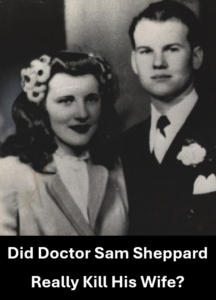
DID DOCTOR SAM SHEPPARD REALLY KILL HIS WIFE?

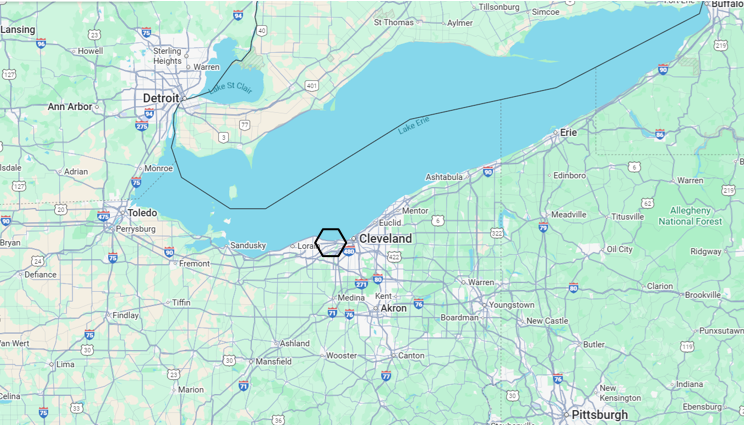
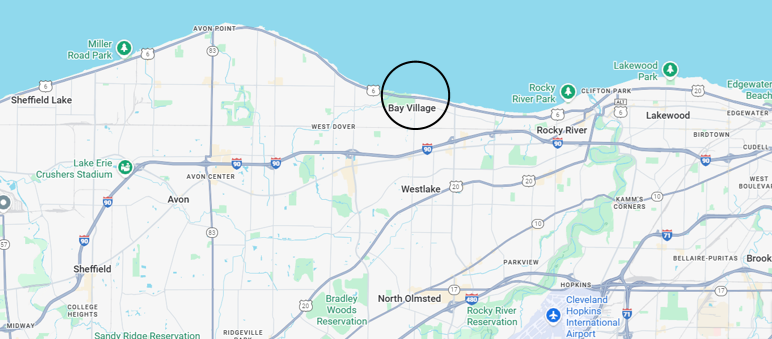
In the early hours of July 4, 1954, in the quiet lakeside suburb of Bay Village, Ohio, a 31-year-old pregnant woman named Marilyn Sheppard was beaten to death in her bed while her seven-year-old son slept down the hall. Her husband, Doctor Sam Sheppard, was present and claimed he was knocked unconscious by a mysterious, unknown intruder who ransacked the house.
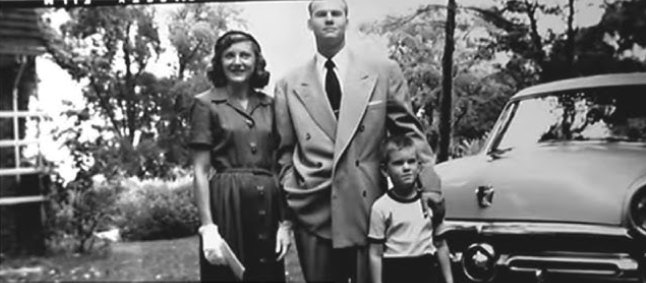
Within weeks, Sam Sheppard went from respected osteopathic surgeon to murder suspect, then to convicted killer before the U.S. Supreme Court blew his case wide open and turned it into a landmark ruling on fair trials and media influence. The crime inspired The Fugitive, shaped American law, and still sits there seven decades later asking the same simple question. Did Doctor Sam Sheppard really kill his wife?

That’s the heart of this piece. I’m not here to re-enact a TV drama. I’ll walk you through the facts, the forensics, the investigation, and the trials as cleanly as I can, then give you my best assessment as a former cop and coroner who’s spent a career examining gruesome death scenes and living through complex case files.

Here, we’re not working with the criminal standard of “beyond all reasonable doubt.” We’re looking at something more practical. On the balance of probabilities, and in light of reasonable doubt, what do the Sam Sheppard facts really say?

This case matters for three reasons. First, the brutality and mystery of Marilyn’s death have never been fully resolved. Second, the legal fallout—from a media circus trial in 1954 to the Supreme Court’s 1966 decision in Sheppard v. Maxwell—changed how courts think about prejudicial publicity and fair trials. And third, in the 1990s and 2000s, DNA testing and a very plausible alternate suspect added new layers that force us to rethink what we thought we ought to know.

Let’s start with what we can say for sure.

A Murder in Bay Village

Sam and Marilyn Sheppard lived in a comfortable home on Lake Road, right on the south shore of Lake Erie. Sam worked at his family’s Bay View Hospital. They were young, outwardly successful, and, by most accounts, looked like the picture of a solid mid-century professional couple. Marilyn was four months pregnant with their second child when she died.

On the evening of July 3, 1954, the Sheppards had friends over—the Houks who were their neighbors. They watched a movie, chatted, and eventually Sam stretched out on the daybed downstairs, saying he was tired. The guests left. Marilyn went upstairs. Sometime after midnight, that house turned into a bloody crime scene.

According to Sam, he woke up around the early morning hours to his wife calling his name. He ran upstairs, saw a “form” or “bushy-haired” figure near the bed, and struggled with the intruder before being knocked out. When he came to, Marilyn was beyond help. He followed noises down toward the lakeshore, fought the intruder again, and blacked out a second time.

At about 5:40 a.m., the first call wasn’t to police. It was to their neighbour and local mayor, Spencer Houk, asking for help. When Houk and his wife arrived, they found Marilyn dead in the bedroom. Police arrived, followed by the county authorities. The scene they walked into would become one of the most picked-apart crime scenes in American history.

The Scene, the Body, and the Injuries

We don’t need gore to understand this case. We just need the essentials.

Marilyn had been beaten many times about the head while in bed. Blood was heavy in the bedroom, on the walls, bedding, and on surrounding surfaces. The weapon was never found, but the injuries were consistent with a blunt instrument. This wasn’t a single blow in a quick struggle. It was a sustained, focused, and vicious assault.

The house showed other signs of disturbance. Some drawers appeared rifled. A wristwatch, a keychain, and a fraternity ring were initially “missing,” then later discovered outside in a bag near the house. That raises the classic question every investigator asks. Real ransack, or staging?

Then we come to Sam.

He had visible injuries—a neck problem, some damage consistent with a concussion, and weakness in one arm documented by a neurosurgeon. Were they consistent with being attacked and knocked unconscious? Possibly. Were they also within the range of what could be self-inflicted or exaggerated? Also possibly. That ambiguity has followed this case around for 70 years.

One more piece. Early blood work looked at types, patterns, and locations but pre-dated DNA. Forensic scientist Dr. Paul Kirk later argued that bloodstain patterns suggested the killer was likely left-handed, while Sam was right-handed. Kirk’s conclusions have been debated, and we have to remember the limitations of early blood spatter analysis. But it’s one more pebble on the scale.

If you handed me this scene today, the questions I’d write on page one would be simple:

  • Does the physical evidence support an inside job, an outside intruder, or leave both open?
  • Are Sam’s injuries proportionate to what he describes?
  • Do the ransacked areas and “missing” items make sense for a real burglar—or for theatrical effect?

The answers aren’t as simple as either side would like.

The Investigation and the Media Circus

The Bay Village police and then Cuyahoga County authorities quickly zeroed in on Sam. On one level, that’s not surprising. In most domestic homicides, the partner is the first and often the most likely suspect. That’s not prejudice. It’s pattern.

But something else was happening here. The Cleveland media went to war.

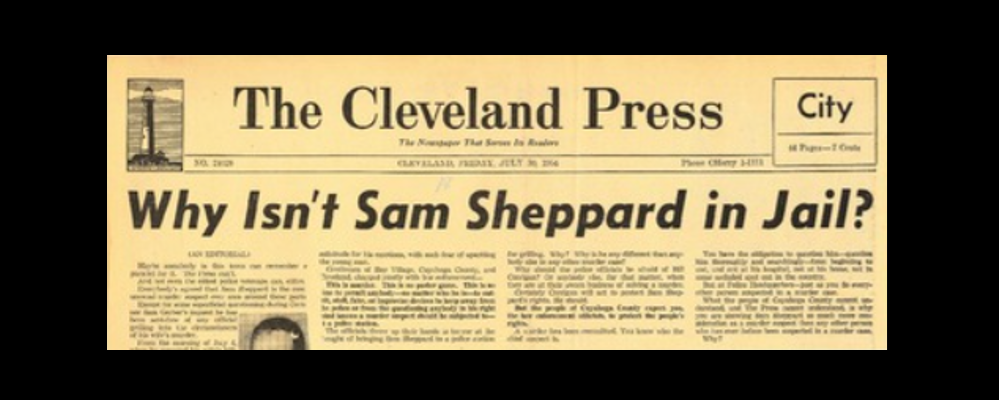
The Cleveland Press, and particularly its editor Louis Seltzer, hammered the Sheppard story on the front page. Headlines and editorials openly demanded Sam’s arrest and suggested that his prominent medical family was shielding him. One notorious front page effectively shouted, “Why Isn’t Sam Sheppard in Jail?”

A public coroner’s inquest, held in a high school gym with reporters packed around, turned what should have been a clinical inquiry into a spectacle. When the case went to trial later that year, the courtroom and surrounding atmosphere were so saturated with publicity that the U.S. Supreme Court, years later, would call it “massive, pervasive, and prejudicial.”

Sam was interrogated, hounded by reporters, and portrayed as a philanderer who wanted his wife out of the way. Some of that was based on truth—he was having an affair—but the way it was handled blurred the line between a criminal investigation and public theatre.

From an investigative standpoint, the problems are familiar:

  • Potential contamination of the scene as people came and went.
  • Early fixation on Sam to the exclusion of other lines of inquiry.
  • Pre-trial publicity that made it almost impossible to seat a truly neutral jury.

None of that proves guilt or innocence. But it does cast a long shadow over the reliability of what followed.

Motive: The Affair and the Marriage

Behind the respectable surface, Sam’s life wasn’t tidy.

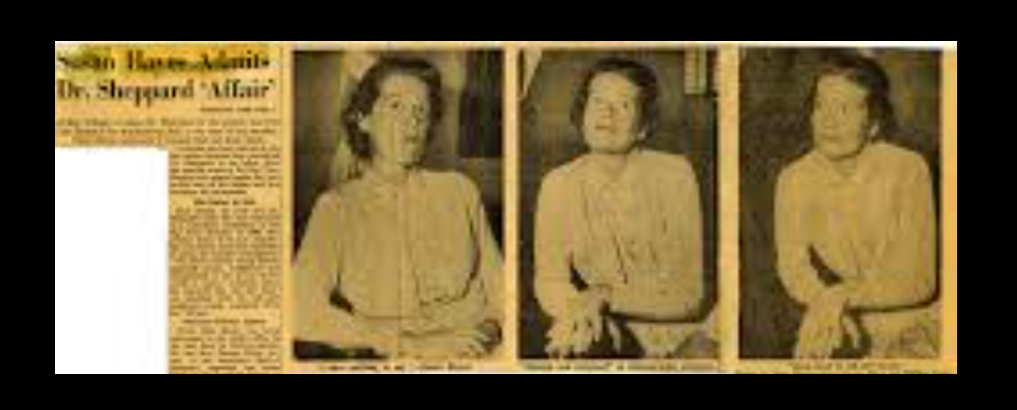
He was having an affair with a lab technician named Susan Hayes, something he eventually admitted. The prosecution leaned heavily on this. Here was their motive—a cheating husband, a pregnant wife, a trapped doctor wanting out.

From a human-behavior standpoint, it’s not a ridiculous theory. Affairs do sometimes escalate into lethal domestic violence. But an affair is not proof of murder. It’s a risk factor, not a verdict.

What about the marriage itself? Some neighbors said the Sheppards seemed to be getting along normally the evening before the murder. Other testimony suggested underlying tensions. That’s not unusual either. Most troubled marriages don’t advertise their problems at dinner parties.

The state’s narrative went like this. Sam, cornered by his double life, snapped—or perhaps planned it—and killed Marilyn in a fit of rage or desperation. Then he staged a phony burglary, injured himself just enough to look like a victim, and called his neighbor instead of the police to buy time.

It’s a coherent story. The question is whether it’s the only coherent story, and whether the evidence actually supports it.

The First Trial: “Trial by Newspaper”

Sam Sheppard was tried for his wife’s murder in the fall of 1954. He was charged with first-degree murder but ultimately convicted of second-degree and sentenced to life in prison.

Looking back, the trial reads like a checklist of what not to do if you care about due process. Reporters roamed freely. The jurors weren’t properly shielded from daily headlines attacking the accused. The judge allowed a media circus to unfold in and around the courtroom.

In 1966, the U.S. Supreme Court, in Sheppard v. Maxwell, overturned that conviction, finding that the “massive, pervasive, and prejudicial publicity” and the judge’s failure to control it had denied Sam a fair trial under the Fourteenth Amendment.

This is where the Sheppard case steps out of the true-crime file and into legal history. It became a leading precedent on how far courts must go to protect a defendant from a hostile media environment. It’s still cited in discussions about cameras in courtrooms and high-profile trials today. (Can you say OJ Simpson?)

But again, there’s a key distinction. A bad trial doesn’t automatically mean a wrong verdict. It just means we can’t trust the process that produced it.

The Retrial: Bailey, Blood, and “Not Guilty”

After years of appeals and legal grinding, Sam’s conviction was vacated and he was granted a retrial. In 1966, now represented by the formidable F. Lee Bailey, he was tried again in a more controlled environment with a sequestered jury.

Bailey went hard at the weaknesses in the state’s case. He stressed the lack of direct physical evidence linking Sam to the fatal blows, highlighted the possibility of an intruder, and hammered the original investigation’s tunnel vision and media-driven conduct. He also leveraged forensic opinions, including Dr. Paul Kirk’s bloodstain analysis, to argue that the attacker’s handedness and movement patterns didn’t match Sam.

On November 16, 1966, the jury returned a verdict. Not guilty. Sam walked out a free man.

Again, that doesn’t establish innocence. It tells us the state couldn’t prove guilt beyond a reasonable doubt when the playing field was closer to level. That’s important,  but it’s not the end of the story.

The Window Washer: A Shadow in the Background

If this case were a novel, the next character would feel almost too on-the-nose.

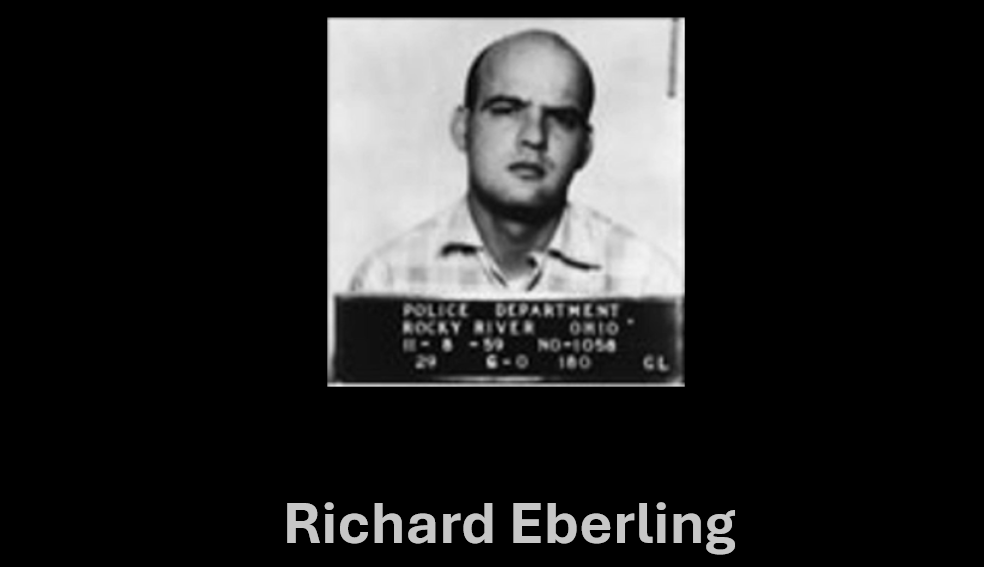
At the time of Marilyn’s murder, a 25-year-old man named Richard Eberling ran a small business called “Dick’s Window Cleaning.” The Sheppard house was one of his clients. He knew the layout. He had access. He’d been inside.

Years later, police discovered that Marilyn’s rings were in Eberling’s possession. He said he’d stolen them in a separate burglary of the Sheppard home after the murder. That’s not the sort of coincidence an investigator ignores.

Eberling admitted that he’d bled in the Sheppard house while working there, which could explain the presence of his blood if found. But there’s more. Decades after the Sheppard case, he was convicted of the aggravated murder of an elderly woman, Ethel Durkin, for whom he worked as caretaker. Other deaths in her family circle also raised suspicion.

During a civil trial in 2000 and in related investigations, witnesses testified that Eberling had, at times, hinted or outright claimed involvement in Marilyn’s death. Those alleged confessions are hearsay from a legal standpoint, but they add weight to the “alternate suspect” file.

Does that mean Richard Eberling did it? No. Does it mean there was at least one viable, under-explored suspect with motive, opportunity, and a track record of violence? Yes.

As an investigator, you never like seeing that in the rear-view mirror.

DNA, Third-Party Blood, and the 2000 Civil Case

In the 1990s, Sam and Marilyn’s only child, Sam Reese Sheppard, pushed to use modern forensics to re-examine the case. In 1997, Sam Sheppard’s body was exhumed (he’d died in 1970 of natural causes), and DNA profiles were developed for comparison against preserved blood evidence from the crime scene.

Tests on selected stains suggested the presence of a third party’s blood—neither Marilyn’s nor Sam’s—at key locations in the bedroom and house. Some analysts and news outlets took this as strong support for the intruder theory; others were more cautious, pointing to degradation, limited samples, and interpretive uncertainty.

Blood on Sam’s trousers was reported in one set of tests to be not his own, which again raises questions about how events unfolded that night. But as with most cold cases, we’re dealing with aging evidence and contaminated lab work layered over different eras, each with their own strengths and weaknesses.

In 2000, Sam Reese sued the state of Ohio, seeking a declaration that his father had been wrongfully imprisoned and compensation for those ten years behind bars. The civil standard is lower than criminal—balance of probabilities rather than beyond reasonable doubt. After an eight-week trial reviewing the old and new evidence, the jury still found against the Sheppard estate. They were not persuaded, on balance, that Sam was more likely innocent than guilty.

That verdict doesn’t erase the doubts. It does tell us that, even with DNA and a fully developed Eberling narrative, a panel of modern jurors remained unconvinced.

So—Did Doctor Sam Sheppard Really Kill His Wife?

Let’s step back from the legal back-and-forth and look at this like any serious cold case.

What weighs against Sam?

He was the husband, present in the house, with a known affair in the background, and likely marital tension. We have a delay between the probable time of death and the call for help. We have missing items later found just outside, which smells of staging. We have a questionable story about a “bushy-haired intruder” that never produced a solid, named suspect at the time.

We also have the statistical reality that in a case like this, the spouse is often the offender. If you gave this file to a private investigator who knew nothing about the Supreme Court decision, the media mana, or the DNA inconclusivity, they’d start from a simple place. The obvious suspect is the husband. “Prove me wrong.”

What weighs in Sam’s favour—or at least creates serious doubt?

For all the reasonable and probable suspicion, there’s no single piece of physical evidence that definitively places the murder weapon, which was never found, in Sam’s hands. His injuries, documented by a neurosurgeon, are more than a scratch or two. The brutality of the killing, the complexity of the blood patterns, and the presence of third-party blood all leave room for a genuine intruder scenario.

We have a credible alternate suspect in Richard Eberling. He knew the house, admitted to burglaries, had Marilyn’s rings, later murdered someone else under his care, and reportedly spoke about the Sheppard case in ways that made experienced investigators uneasy. That doesn’t prove Eberling killed Marilyn, but you can’t look at that and shrug it off.

We also have the fact that the original investigation and first trial were, by modern standards, badly compromised by media pressure, tunnel vision, and procedural failings. That kind of environment is fertile ground for missing things you shouldn’t miss.

My Verdict: Not Proven, With the Scales Tipped

If you forced me, as a former homicide investigator and coroner, to answer one question—“On the balance of probabilities, not beyond a reasonable doubt—did Sam Sheppard kill Marilyn?”—here’s where I land.

I can’t say, on balance, that he probably did it. I also can’t honestly say, on the same civil standard, that he definitely did not. The evidence simply doesn’t climb high enough or slide low enough on either side of the scale. There’re too many unknowns, too much contaminated process, and too much conflicting interpretation. This isn’t a polite way of dodging the question. It’s a recognition of the limits of what we actually have.

If I had to put a label on it, I’d use one our system doesn’t formally recognize but probably should. “Not proven.”

Would I sign my name to a charge approval today, based on what is left of the evidence? No, I wouldn’t.

Would I sign my name to a public statement that Sam Sheppard was, on balance, an innocent man outrageously framed? No, I wouldn’t do that either.

What I will say is this:

  • The state never built a case that could withstand a fair process.
  • The alternate-suspect and third-party-blood evidence create real, not imaginary, doubt.
  • The fairest conclusion is that we do not know who killed Marilyn Sheppard—and we probably never will.
  • Therefore, at a legal standard, Sam Sheppard shouldn’t be convicted.

Why This Old Case Still Matters

So why spend this much time on a 1954 murder in an Ohio bedroom?

Because the Sheppard case sits at the crossroads of reality, truth, and clarity.

Reality is what actually happened in that house on Lake Road in the dark hours of July 4, 1954. A pregnant woman was beaten to death while her son slept nearby. That reality is fixed. It doesn’t change.

Truth is our attempt to describe that reality. Who was where, who did what, why it happened. In this case, truth is fogged by media hysteria, human bias, limited forensics, and the decay of evidence and memory over time.

Clarity is our willingness to see those limits plainly. To admit what we know, what we don’t, and what we can’t ever recover. It’s the discipline of resisting the urge to manufacture certainty just because we don’t like living with doubt.

In a culture that loves simple villains and tidy endings, the Sheppard case reminds us that some stories remain unresolved and will always remain unresolved. That doesn’t mean we throw up our hands. It means we hold two things at once. Respect for the victim and her family, and humility about our own need for answers.

If there’s a takeaway here, it’s this.

When reality is murky and the evidence is split, the honest answer isn’t to shout louder. It’s to admit the uncertainty and live with it.

Marilyn Sheppard deserves the truth. So does her son, so did her husband, and so does every person who stands in a courtroom while the world watches. Sometimes, despite our best efforts, that truth stays just out of reach.

Our job—yours and mine—is not to pretend we can pull it closer by force. It’s to see clearly, weigh fairly, and accept the known and unknown facts.

Dyingwords.net is powered by a Centaur Intelligence System and its EXPONENTIAL Thought Engine
centaursystems.ai

THE JFK ASSASSINATION—SIXTY YEARS LATER

Sixty years ago, on November 22nd, 1963, United States President John Fitzgerald Kennedy was shot dead while riding in his open limousine through Dallas, Texas. Within hours, Lee Harvey Oswald was captured and charged with President Kennedy’s murder. Oswald was never tried as he, too, was murdered—in the basement of the Dallas City Police building of all places. Officially, Oswald was the lone gunman. However, to this day, many people don’t believe that and are convinced there was a conspiracy to assassinate JFK.

Over my fifty years of being a serious student of the JFK Assassination, I‘ve dissected the investigation with a lot of folks. Some were sensible. Some were delusional. But the number-one person (in my opinion) who has the most in-depth knowledge of the Kennedy Assassination case facts is Scott Maudsley. Scott is here today for a discussion on the JFK file, so sit back and follow our thread. You might find it revealing.

Garry — Nice having you captive in the Dyingwords shack, Scott. We’ve been online and onphone friends for a long time, and it’s fitting you’re here for a JFK Assassination talk seeing as the 60th anniversary is upon us. To start, tell us about yourself and why does Jack Kennedy’s murder still captivate people’s interest?

Scott — Thanks for having me Garry. You flatter me. I’d say you are more knowledgeable about this case then I.

I’m 39 years old and a Toronto native. I have an honors BA in international development studies and currently work in security. I have a lifelong interest in history and politics and have been studying the JFK assassination since I was a child.

My chest is adorned with two large tattoos. One depicts the Titanic at the moment of collision with the iceberg, and the other depicts President Kennedy’s motorcade at the moment of the first shot. These are the events I’ve have spent my entire life studying.

Someone once said trauma is the closest thing we as humans have to time travel. Because when we think of traumatic events in our life, part of us is still trapped in that moment and always will be. We can often recall these moments in vivid detail.

I think moments in history, like the sinking of the Titanic or the assassination of JFK, endure in our collective minds because they’re an example of shared trauma that everyone experienced in the same way at the same moment.

Everyone who was alive to experience these events can recall exactly where they were and what they were doing when they first heard the news. Because it was so traumatic.

Garry — Intriguing perspective, Scott. I was seven years old when JFK was killed, and I remember the moment like yesterday. You weren’t born then, and it affects you today. But both of us weren’t a gleam in our grandparents’ eyes when the Titanic sank. How do these impersonal moments become imbedded in our inquisitive psyche?

Scott — It’s the cultural echoes of those events that stay with us. The idea of the unthinkable happening. These events can serve as a warning from history to not get too comfortable because life can change in sudden and unexpected ways.

So profound were the cultural echoes of both the Titanic and JFK assassination that they are still with us today, generations later. The discussion of the JFK case endures because of the supposed elements of mystery. People like a good whodunit.

Garry — Memento Mori.

Scott — Lol! Yes, exactly. I once read a book entitled The Dark Side of Camelot. In it, the author interviewed a woman who had a relationship with Kennedy. She said the lesson of the story of his life is that a person can live a privileged life and still meet an unexpected end.

John Jacob Astor was one of the richest men in the world. But none of that mattered when the ship he was on hit an iceberg in the middle of the night.

(Memento Mori – Tulip: Life, Skull: Death, Hourglass: Time)

Garry — Goes to show you… kings or billionaires… they’re all mortal and can leave this life at any time. Okay, let’s get into the case facts. If you had to present your evidence to prove your belief that Lee Harvey Oswald acted alone in murdering John Fitzgerald Kennedy, what would your irrefutable points be?

Scott — I would simply point to Oswald being at the scene of the crime, lack of alibi for the time of the shooting, an eyewitness seeing him shoot, and the weapon used in the shooting belonging to him.

Garry — For you and me who have seriously researched this case, it’s no mystery. The evidence that Oswald acted alone is overwhelming when you weigh the credible information. That and the fact there’s absolutely no credible evidence to indicate anyone else was involved. As they say, non events leave no evidence. But to so many people, the JFK case is still a whodunit. Why is that?

Scott — I think people see what they want to see and believe what they want to believe. If this case is still unsolved, in their minds, then there’s something more to be investigated and understood. There are still guilty people to be punished.

But, the truth is this case was solved within the first 48 hours of it occurring, as most murders are.

That does not satisfy some people. The killer was quickly caught and killed himself so in this way justice was denied and people never really got to have closure insofar as the concept of closure is a real thing that actually exists.

Garry — Yes, closure. For some, this case will never be closed because, deep down, they don’t want it to be closed. I think it’s very hard for some to accept that the All-American Boogeyman—the lowly, lone nut from a tall building with a cheap rifle—a crazy who took his gun to work and shot his boss—killed the highest person in the land. A king cannot be struck down by a peasant.

And as for the simplicity of the case, here’s a quote from Chief Justice Earl Warren, head of the Warren Commission investigating the Kennedy Assassination, “I have no hesitation in saying that had it not been for the prominence of the victim, the case against Oswald could have been tried in two or three days with little likelihood of any but one result.” Moving on, let’s talk about the forensic evidence—the body and the ballistics. How strong do you believe the scientific evidence is?

Scott — The thing about the JFK case is that everything is in dispute, and nothing is universally accepted by all sides. I believe the scientific and ballistic evidence is very strong. The fact that the projectiles recovered match the firearm recovered is very strong confirming evidence.

Garry — Playing the Devil’s Advocate, Scott, can you make a case that supports the conspiracy theory crowd? How is this thinking justified?

Scott — I’ve found that conspiracy theorists, or CTs for short, often are simply not familiar with the facts of the case, or they get these facts through secondary sources that distort what the primary source actually says. It’s from these flawed or incorrect interpretations that conspiracy theories arise.

One issue would be the failed attempt to probe the back wound during the autopsy. CTs point to that as being proof that the back wound was shallow and that the projectile did not fully transit JFK’s body, which is incorrect.

Garry — Let’s talk about the autopsy. In murder cases, the body is considered the best evidence. Setting aside David Lifton’s book Best Evidence where he proposed the ridiculous theory that Kennedy’s body was surgically altered prior to the Bethesda postmortem to reverse the proof of the shot directions (support a Grassy Knoll shooter), there are some issues with the autopsy that led to later interpretation problems.

Regarding the back wound, probing was difficult due to the narrow 6.5 mm passageway that closed up—caused by rigor mortis and stiffening of the strap muscles. Also, they failed to identify the throat exit wound which had mostly been obliterated by the tracheotomy incision made during life saving efforts. Plus, the pathologists used two movable reference points as markers to locate the back’s entrance wound. Other than that, do you think the autopsy was accurate or was it in “bungled” as some say?

Scott — It was for sure accurate, but the science of forensic pathology has undergone a lot of evolution in the last 60 years so it’s not as accurate as modern people expect it to be. The so-called CSI effect.

None of the doctors who performed the autopsy were unqualified or incompetent in any way.

It’s interesting to note that while later investigations into the medical evidence might have been critical of the conduct of the autopsy, none of them disagreed with the fundamental conclusions. That the President was killed as a result of 2 projectiles both fired from above and behind.

Garry — I’ll go a step further, having a lot of experience in firearms. So many CTs don’t accept that all shots were fired from the rear. Especially the head shot so famously distorted from Oliver Stone’s movie JFK where Kevin Costner’s character repeatedly drills home “proof” of the fatal shot being fired from the front. “Back and to the left. Back and to the left. Back and to the left.”

The infamous Frame 313 in the Zapruder film is a classic example of Newtonian physics in play — “For every action, there is an equal and opposite reaction.” It’s 100 % proof the fatal head shot was fired from Kennedy’s rear.

One time at an Emergency Response Team practice (I was the team’s trained marksman, sharpshooter, sniper, or whatever label you want to stick on my gunslinging back.), the guys got into a debate over the Kennedy fatal bullet direction. I went and got some melons and placed them 265 feet downrange which is the distance from Lee Harvey Oswald’s muzzle to JFK’s head when it exploded. I then shot the melons with a 5.56 and a 7.62. On every occasion when the melon exploded, the debris blew backward toward the bullet’s discharge point. Not forward.

Another thing regarding the brain matter blowing back and to the left which is so blatant in Zapruder 313 and 314. The limousine was moving forward at 11 mph into a 25-mph headwind. That’s a combined air movement force of a 36-mph frontal wind. It’s no wonder the mess went rearward and into that poor motorcycle cop’s face who was back and to the left.

Scott — Yes. There are many factors that led to the backwards motion of the head after the final shot. But it’s not because the shot originated from the front as most people suspect when viewing the Zapruder film.

Garry — I’ll bring up another elephant in the CT room. The police Dictabelt recording that allegedly proves four shots were fired, not three. What’s this all about? Go into detail here as this is what the 1978 House Select Committee on Assassinations (HSCA) review shamefully hung their hat on when they wrongfully concluded that JFK “was probably assassinated as the result of a conspiracy”.

Scott — So what happened, there was a police motorcycle parked at the Dallas Trade Mart (Kennedy’s destination) with a stuck microphone which was constantly recording. The motorcycle backfired, and this was interpreted as a gunshot. Something important to note is the quality of the audio in this recording is not great. The original audio was recorded using a simple blunt stylist and a rotating wax drum.

The HSCA report totally supported the conclusions of the original investigations, but at the 11th hour this audio evidence and an incorrect interpretation of it (the backfire recorded on a separate channel) was inserted into the final version of the report saying that the audio evidence indicated a possible 4th shot and thus a probable conspiracy.

However, the HSCA report also concluded that this possible 4th shot failed to hit anything or anyone. So right away this caused a stir, and the issue was taken up by the National Academy of Sciences in the United States.

Their investigation concluded that what had been interpreted as a gunshot on the audio recording had actually been recorded after the shooting and therefore could not have actually been gunfire.

In 2013, Professor Larry J. Sabato, Ph.D. commissioned a study on the Dictabelt recording using more modern analytical techniques. The report concluded that the recording did not contain sounds of the assassination gunfire and that it would be of “doubtful utility” as evidence to prove or disprove a conspiracy.

The presence of background noise of an idling engine and doppler shifting of the sound of sirens passing the microphone made during the recording prove the motorcycle with the stuck microphone was actually stationary at the Trade Mart (when the recording was made).

So, the audio evidence is nothing more then a red herring. One that got a lot of people excited but unfortunately proved of no evidentiary value.

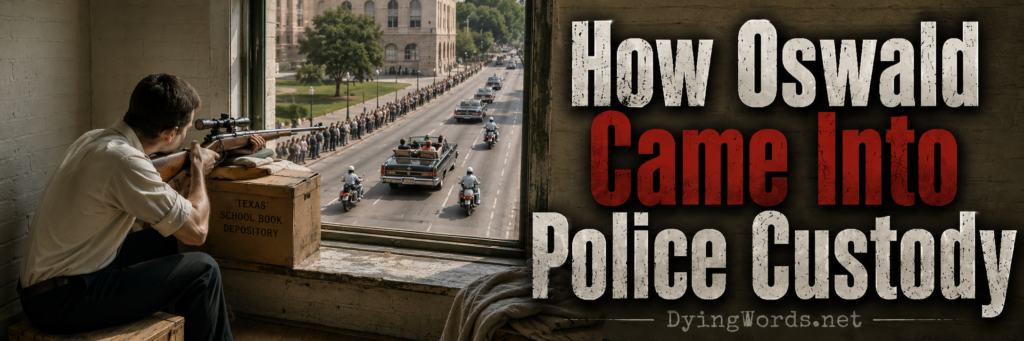
Garry — Okay, so it’s conclusive that three shots were fired, not four. All from the 6.5 mm Mannlicher-Carcano rifle that, conclusively, Oswald owned and used that day from the 6th floor window of the Dallas School Book Depository building. Go through each of them and describe what happened to the bullets.

Scott — The first shot was a little early. Oswald might have seen the branch of a tree creeping into his sight profile and fired early. This shot missed and we are not entirely sure what happened to it exactly.

One eyewitness later reported seeing a spark on the road behind the President’s limo as it passed. He thought that someone had thrown a firecracker at the parade, but I believe that what he saw was the projectile hitting the pavement and either disintegrating on impact or ricocheting somewhere and was never to be recovered.

The second shot was the much-vaunted magic bullet, or Commission Exhibit (CE) 399, so called because of its relatively undamaged appearance. This projectile hit JFK in the upper back and passed through his neck without making any bony contact.

Once out in the open air, the projectile began to tumble and when it went into Governor Connally it was flying sideways.

Once it passed through the governor’s chest breaking ribs and collapsing a lung, it exited out, still tumbling, and passed though his wrist breaking the radius bone and ended up in his thigh, just having enough energy to break the skin and embed in a shallow wound from which it later fell out and was recovered from a stretcher in Parkland hospital.

The 3rd shot hit JFK in the back of his head and exited out the top of the head above the right eye. This projectile hit a chrome strip above the windshield and possibly the windshield itself before breaking into a nose and tail section which were recovered from the floor of the front passenger seat of the vehicle.

Garry — I think one of, if not THE, most misunderstood issues in the JFK Assassination is the “Magic” bullet (CE399). Most folks can’t accept that this bullet passed through the mass of two men and came out in a fired but “pristine” condition. There’s no question it was fired from Oswald’s rifle which was found stashed on the 6th floor, but the CT stance is that bullet had to be planted at the Dallas hospital. I’ve spent a lot of time researching this issue, and a few years ago I published a detailed explanation for how CE399 behaved to end up in this semi-intact and somewhat flattened state. For any readers who are interested in the mechanics, here’s a photo of my notes and the link to my post:

https://dyingwords.net/the-magic-bullet-in-the-jfk-assassination/

As for the missing bullet—the first shot—I also did a piece proposing that it hit the metal arm of a traffic light and was deflected. Here’s the notes and web link to that post.

https://dyingwords.net/missing-bullet-jfk-assassination/

Now having done some shameless self-promotion, let’s talk about the timing involved in the shot sequences. Another misconception is that all three shots were fired within six seconds, and there is no possible way anyone could accurately operate a bolt-action rifle like the Carcano in that amount of time. You have an identical rifle. What’s your take on the shot timing? Is this possible?

Scott — The original report gave some time frames for the total amount of time available for Oswald to have fired the shots based on which of the 3 shots was the one that missed. If, as we believe, it was the first shot that missed, then the time frame for the shooting extends to 8 to 12 seconds.

But even the low-end estimate of 6.5 seconds is still totally possible. I have let people shoot my rifle which is an exact copy of Oswald’s and with no experience with it, they have been able to get off 3 shots in about six seconds.

Garry — So this “can’t be done in six seconds” theory from CT books like Six Seconds in Dallas is rubbish?

Scott — Right. It’s nonsense.

Accuracy and experience with the rifle matter. But it is physically possible to fire 3 shots in that time frame.  There are videos on YouTube of people doing it and I have personally seen people do it on my rifle.

Garry — At one point in my JFK deep dive, I extrapolated information from reference points documented in a legal survey done of Dealy Plaza for the Warren Commission and correlated them to frames in the Zapruder film. Here’s a photo of the notes along with what I worked out:

The first shot was fired at (Time) T-0:00, and it was 1:62 seconds before the Zapruder film started. The second shot hit JFK in the back at Zapruder Film Frame 223. Its impact was at T-6:54 or 6.54 seconds after the first shot was fired. The head shot struck at Zapruder Frame 312 and explodes at 313. It was at  T-11.42 or 11.42 seconds after the initial shot’s discharge. That’s a lot of time to fire what works out to be two shots, not including the first one.

Respectively, the distances from Oswald’s barrel to the back shot at Z-223 was 189 feet, and from the barrel to the head shot at Z-312 was 265 feet. For someone shooting a rifle from a rest station, as Oswald had built in the “Sniper’s Nest”,’ that’s not very far or difficult at all. Also, the limousine was moving directly away from Oswald’s sight picture at shots 2 & 3, whereas during the first shot (the one I believe hit the traffic light arm) the limo was moving across Oswald’s sight picture from his left to his right.

I calculated that distance to be between 75 and 80 feet. It was a tough shot where Oswald was looking sharply down and moving sideways, aiming at a close-in, mobile target. Even if the bullet wasn’t deflected, it might have simply missed and struck the pavement. But, I doubt that, as the limo with JFK in it was a huge platform and Oswald would have to have been way, way off his shot picture to miss this target—which he sure wasn’t in the following shots.

The second shot had a bit of vision issue from the tree branches, but the third was wide open making Kennedy a sitting duck.

Moving on from the ballistics and other forensics, let’s talk about Oswald’s escape from the Book Depository and his capture at the Texas Theatre. Walk the audience through what happened.

Scott — Oswald left the Sniper’s Nest on the 6th floor and descended the stairs to the 2nd floor. There he encountered the building manager and a police officer. The manager identified Oswald as an employee, the police officer dismissed him, and Oswald left the building through the front door, possibly giving directions to a pay phone to an AP reporter.

From there, he walked up the street to a bus that was stopped in traffic. He pounded on the door to get in, however, the bus was caught in traffic with the roads closed for the parade and was not moving. So, Oswald took a transfer and left. In an ironic turn of events, an old landlady of his was on the same bus and recognized him.

After leaving the bus, he walked a couple of blocks and got into a cab back to his rooming house. There he got his revolver and began walking. We don’t know where he was going or if he even had an intended destination.

He encountered Officer JD Tippit at a four-way intersection in a residential area, had a brief interaction with him, and then shot and killed the officer. Multiple eyewitnesses saw him either shoot the officer or being in the immediate aftermath with the gun still in his hands.

He gets away from the scene of the shooting but is spotted by an attentive shoe store worker who sees him duck into the store’s vestibule when some police cars go by. This worker follows him down the street where he sees Oswald duck into a movie theater without paying and he tells the movie theater attendant to call the police.

The police arrive and with the help of the shoe store worker identify and approach Oswald. He says, “This is it” and punches the officer closest to him. He also goes into his pocket and pulls out the revolver, but the arresting officer was quick and got his hand on it before Oswald had a chance to shoot.

Garry — If we think the evidence proving Oswald murdered President Kennedy is strong, the facts in the Officer JD Tippit case are airtight. Like eyewitnesses seeing him shoot Tippit, and then being caught with the murder weapon in his hand minutes later? Even if Oswald survived and beat the JFK murder charge, he certainly would have been convicted and sentenced to death for Tippit’s slaying.

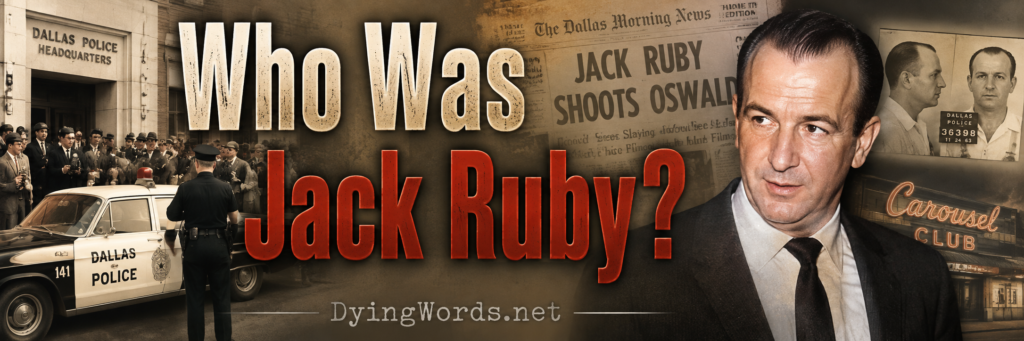
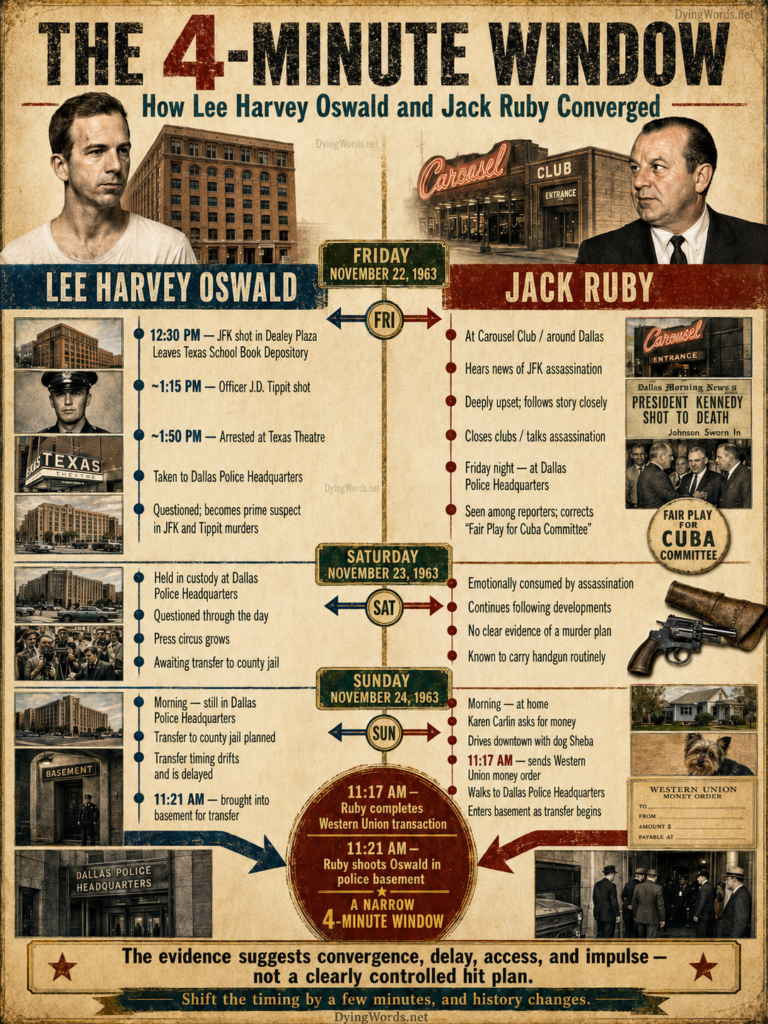
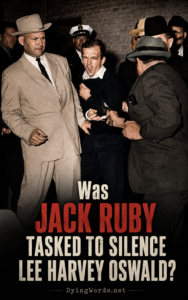
Which brings me to Oswald not surviving. Jack Ruby? Like you couldn’t make someone like Ruby up. How in the hell did Ruby align with Oswald? Was this an incredible coincidence? What happened surrounding Jack Ruby being able to shoot and kill Lee Harvey Oswald?

Scott — Jack Ruby was a local Dallas nightclub owner along with his sister who came from a family with a history of mental illness and institutionalization. His nickname was “Sparky” because of his short temper and willingness to get violent at the drop of a hat.

Ruby was on friendly terms with the local police who often frequented his clubs, and this friendliness offered him greater access to public figures. He spent the weekend hanging around police headquarters and even got close to Oswald on several occasions.

On Sunday, November 24th, Oswald was supposed to be transferred early in the morning but continued questioning by detectives and his own desire to change clothes delayed this until later in the morning.

One of Ruby’s employees called him, waking him up to ask for money. Oswald was already supposed to have been transferred to a more secure jail by then.

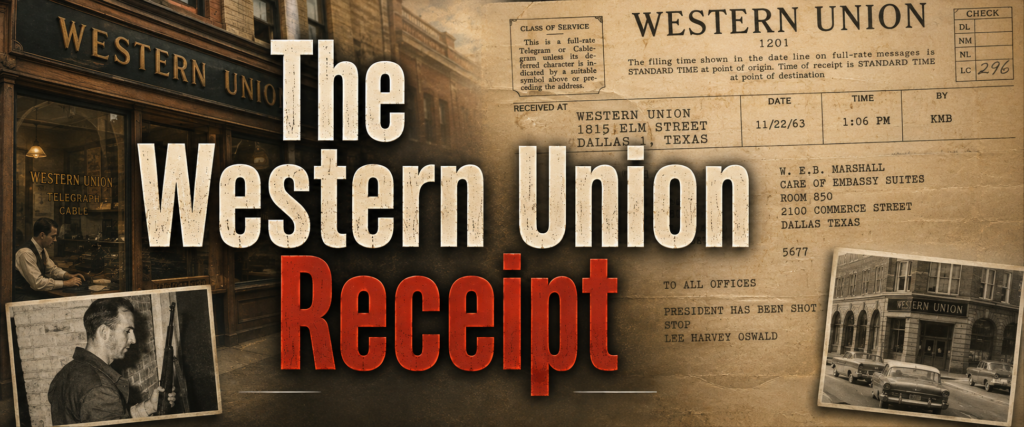
Jack Ruby got up, took his dogs, and went downtown to a Western Union office. There he waited in line and sent the employee some money before leaving and driving about a block to police headquarters where he saw a crowd gathered.

When a police officer stepped into the road to stop traffic to allow a vehicle to exit, Ruby slipped down the ramp undetected and shot Oswald when he walked out a few moments later.

Garry — So the contact between Ruby and Oswald was absolute fluke timing? Fate?

Scott — Yes. Something that could only happen in real life.

Garry — A lot has been made of Ruby being an underworld agent hired to take Oswald out, to silence him. And a lot has been made of Oswald being some sort of secret operative for a foreign government, given his travels to Russia and Mexico as well as his promotion of Cuba. What’s your understanding of this? Can you put Oswald’s past into some sort of sensible clarity?

Scott — Well, neither one of those things is true. Ruby might have rubbed shoulders with some underworld figures during his time in Chicago or simply by virtue of his owning a business that is active at night.

Garry — Ruby wasn’t a mob hitman.

Scott — No he wasn’t.

Oswald saw himself as a political person and sought to be politically active at least in his own way, so he would not hesitate to initiate contact with various government entities, but that was him acting on his own, he was never working for anyone and there is no proof of that claim whatsoever.

He saw himself as a political revolutionary of sorts.  At a time when those ideas were gaining popularity in various parts of the world.

Garry — I think just an overview of Oswald is that he was a total loser. He had nothing that anyone would want—no secret, clandestine, or sinister entity needing him as fodder or setting him up as “a patsy” as he was quoted saying when he was paraded before the TV cameras at Dallas PD HQ. Never mind being so psychologically unstable. Like, who would recruit this guy?

Scott — Exactly. He was not a good candidate for intelligence work. Too emotional and unstable. He was completely unreliable and self-centered.

Garry — We’re wrapping up here, Scott. One thing I want to cover is the original United States Government investigation documented in the Report of the (President Johnson’s) Commission on the Assassination of President Kennedy chaired by Chief Justice Earl Warren, commonly known as the Warren Report. How accurate do you think it is? Has it stood the test of time?

Scott — Yes. 100%. Nothing in real life is ever perfect and although later investigations may have criticisms to make, all of them fundamentally get behind the conclusions of the Warren Report.

This case was solved long ago.

Really, it was solved within a couple of hours by the Dallas police.

Garry — Lone nut. Tall building. Cheap rifle. Opportunity chance of a lifetime. How was it that Kennedy and Oswald met in Dealy Plaza? Like the strands of fate?

Scott — To bring it full circle and invoke the memory of the Titanic again, someone once commented about the mix of ice and steel.

About all of the little factors that had to align in a certain way in order for those two things to be in the exact same place at the exact same time.

I think the JFK assassination is something similar, the mix of factors that had to align a certain way in order to produce an event like this.

Oswald was a malcontent. He was alienated from those around him and society to a more general extent.

He failed to get people to recognize his value as he saw it.

He failed to get others to see him as he saw himself.

His wife’s friend got him the interview for the job.

The job was hiring for multiple locations, he could have been hired for a location that was not on the parade route.

The parade route was selected because of the location of the luncheon. Which itself could have been held at a different location and thus would have had a different parade route.

It was raining that morning, it could have kept raining.

The mix of ice and steel.

Garry — Ice and steel. Great metaphor, Scott. There’s been countless books, articles, documentaries, blogs, pods, and whatever done about the Kennedy Assassination. Most are poorly reported and badly researched pieces of crap that promote any number of false conspiracy theories, some with incredibly stupid conclusions. I’ve read a lot of stuff, and I have five recommendations for anyone who really wants to know the facts—the truth—in the JFK murder case:

  1. The Warren Report
  2. Reclaiming History by Vincent Bugliosi
  3. The JFK Myths by Larry Sturdivan
  4. Case Closed by Gerald Posner
  5. The Death of a President by William Manchester

One important point in our JFK Assassination discussion is motive. Now, I have no idea what Oswald’s motivation was, and motivation is not an element needed to prove for a murder conviction. But, it’s important to cover or speculate upon for the average reader who would be left wondering “Why”.

Me? I think Oswald’s motive was something like Alfred said to Batman about The Joker in The Dark Knight, “Some men just want to watch the world burn.” What do you believe Oswald’s motive was for killing John F. Kennedy?

Scott — It’s always going to be difficult to assess a person’s individual motives for why they do anything.  Oftentimes, they themselves don’t even really know.

Lee Oswald, in my opinion, was a violent person. He was violent as a child, in the Marine Corps, and in his marriage.

He attempted to make a place in history by doing something revolutionary and moving to the Soviet Union, but when he became disappointed in that he attempted to get into Cuba. When he failed at that, he attempted to assassinate a local right-wing political figure, and when he failed at that he plotted to assassinate Kennedy when he found out he’d have the ability to.

The night before he went to the house that his wife and children were staying in where his rifle was stored. He proposed the idea of getting a place in the city with his wife and children, but she resisted these advances much to her later regret. Unable to reconcile with his wife he took his rifle to work and performed that revolutionary act that got him the attention and recognition he always wanted.

So, it was a mix of personal, social, and psychological factors.

As all actions are.

Garry — Lastly, if we can tie this bundle up, what’s the legacy of the Kennedy Assassination? Why is this still important after sixty years?

Scott — You know, as I prepare for my 4th and final trip to Dallas next week, I’ve found myself asking the exact same question. I definitely think there’s a generational aspect to it. At 39, I’m often the youngest person at events in Dallas.

It’s a shared memory and a shared trauma. When the Oliver Stone movie came out, it was a revival moment and led to a resurgence of interest in the case. That’s how I personally came to have my interest, but even that was decades ago now.

The conspiracy theorist side of it is at least partly responsible for keeping the story alive. So, we could never have had the interest we do were it not for the conspiracy theorists who keep people interested as the years go by.

Had there never been a controversy about the case, it would have faded from memory long ago.

They go hand in hand. One could not exist without the other.

Garry — Great chatting with you, Scott. Safe trip my friend.