Tag Archives: Murder

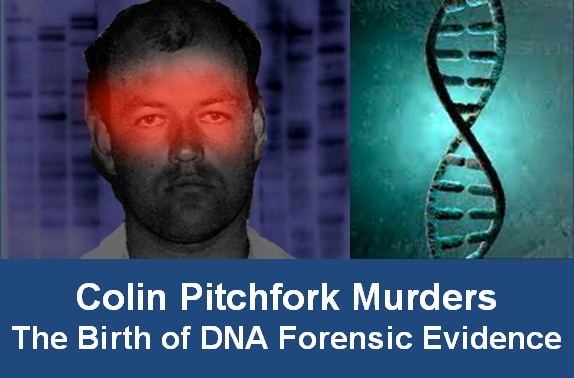
COLIN PITCHFORK MURDERS — THE BIRTH OF DNA FORENSIC EVIDENCE

Colin Pitchfork. Just the name conjures up a devilish image—an evil monster—a story-villain of homicidal psychopathy. But Colin Pitchfork wasn’t a fictional work, though, like Hannibal Lecter. Pitchfork was a real serial murderer and sexual deviant who raped and strangled at least two teen girls in England in the mid-1980s as well as committing countless sexual offenses. And he was the first killer in the world to be convicted through DNA forensic evidence.
Four decades later, DNA forensic evidence is commonplace. So commonplace, in fact, that juries expect it. Through a phenomenon called the CSI Effect, clever defense counsels can plant doubtful seeds in jurors’ minds where they’ll wrongfully acquit a perfectly guilty person if there’s no DNA evidence linking the accused to the crime.

That wasn’t the case with Colin Pitchfork. He was perfectly guilty of murder, and DNA evidence proved it. We’ll look at the Pitchfork case facts in a moment and then do a DNA Forensic Evidence 101 crash course, but first let me tell you a bit of my police investigation background and why I have the authority to write this piece on the birth of DNA forensic evidence.
In the 1990s, when DNA evidence was under development, I was an active homicide detective with the Royal Canadian Mounted Police (RCMP) Serious Crimes Section. I was peripherally involved in surreptitiously collecting a biological sample from a suspect (later convicted) in the first DNA evidence trial in Canadian courts. Ryan Jason Love was taken down solely through DNA evidence for the 1990 murder of Lucie Turmel, a female cab driver who Love stabbed to death in the resort town of Banff, Alberta.

I was in the right place at the right time (DNA career-wise) in 1995 when Canada passed Bill C-104 Forensic DNA Analysis, a federal law. This legislation authorized search warrants for DNA sample collection on uncooperative suspects. The day the bill passed senate assent, I investigated a violent sexual assault where a police dog tracked and not-so-gently tackled a fleeing suspect. I executed the first DNA search warrant in Canada that resulted in convicting serial rapist Rodney John Camp.

Enough about me and my DNA exploits. Let’s take a quick look at the Colin Pitchfork murders and then try to make simple sense of this complicated business called DNA forensic evidence.

The Colin Pitchfork Murders

In November 1983, 15-year-old Lynda Mann’s body was found in the Narborough area of England, approximately one hundred miles northwest of London. She’d been beaten, raped, and murdered along a deserted pathway known as the Black Pad. Forensic evidence, at that time, determined semen on her was from a relatively common blood type that matched ten percent of males. The case fell cold after months of extensive investigation.
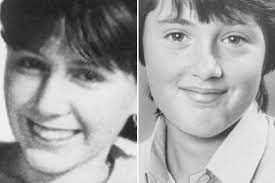
A second girl, 15-year-old Dawn Ashworth was found dead in July 1986. She’d also been beaten, raped, and strangled in a secluded Narborough footpath called Ten Pound Lane. As with Lynda Mann, the same semen type was on and in her body.

The Ashworth investigation revitalized the Mann file and the two cases became the Narborough Enquiry. Famed American crime writer Joseph Wambaugh would later write his book The Blooding about the phenomenal effort British authorities put into the investigations. Homicide detectives knew they had a serial killer—the similar blood types, the locations, and the modus operandis (MOs) were too strikingly similar to suggest otherwise.

The question was who donated the semen and how police could conclusively prove it.

Enter Alec Jefferys and his scientific team at the British Forensic Science Service. They’d been hard at work identifying Deoxyribonucleic Acid—the DNA double-helix molecule that provides a genetic fingerprint that’s unique to an individual except for identical twins. Jefferys & Company knew they were onto a world-changing forensic evidence breakthrough, and they used the Narborough Enquiry as a test case.

Initially in the Ashworth file, a strong suspect developed. He was a developmentally challenged youth named Richard Buckland who confessed under duress to the Dawn Ashworth murder. However, Buckland strongly denied the Lynda Mann slaying.
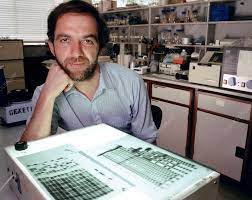
Alec Jefferys

By late 1986, Alec Jefferys’ team had their DNA identification process to the point where they were confident it could withstand courtroom scrutiny. The police took a blood sample from Richard Buckland and delivered it to the Jefferys lab. Conclusively, the lab results said, Buckland was not the semen donor in either the Mann or Ashworth killings. However, the DNA profile conclusively proved the Narborough killer was the same man.

Richard Buckland was a first—the first wrongfully accused person to be exonerated by DNA forensic evidence. Relying on a false confession is a law enforcement lesson harshly learned by detectives, but the British investigators moved on to find the real killer. The question was how?

The answer was a process of elimination.

The Narborough Enquirers took on the monumental task of getting blood samples for DNA analysis from as many late teen and adult males in the Narborough region as possible. This became known as “blooding” suspects and, after over 4,500 bloodings, it paid off.
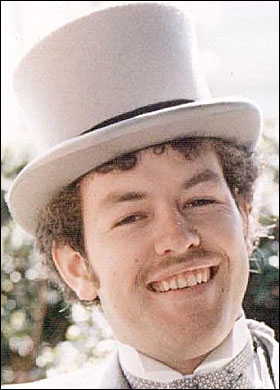
Colin Pitchfork

In August 1987, police got a tip that one Ian Kelly had fraudulently submitted his blood sample to cover up for a friend, Colin Pitchfork. Both men worked as bakers in Narborough, and the plan backfired. Police took blood from Pitchfork under a court order. It matched the semen DNA profile in the Mann and Ashworth murders.

Colin Pitchfork confessed and got a life sentence. He also admitted to performing around 1,000 indecent exposure acts as well as other violent sexual assaults. Pitchfork’s motive for killing Lynda and Dawn, he said, was not for sexual gratification. He did it because the girls could identify him.

Since the first blooding that led to DNA forensic being soundly based in worldwide courtrooms, and even compounding the frustrating CSI Effect problem, DNA extraction and processing science has advanced leaps and bounds. Today, processing DNA for forensic evidence is mostly routine. Here’s a brief look—call it a crash course—in DNA Forensic Evidence 101.

DNA Forensic Evidence 101

Scientists have studied genetics since the early 1800s when Gregor Mendel suggested his theory that all living organisms had genetic blueprints that described and allowed their physical structure. Mendel also theorized all living organisms shared basic hereditary traits. Mr. Mendel did an interesting experiment with peas and proved that dominant and recessive genes got passed from parent to offspring. It’s a principle applying to peas and humans alike.

In the 1860s, Friedrich Meischer was the first to identify DNA in human blood white cells. (Note: DNA molecules do not appear in red blood cells because red cells are not really cells—they don’t have a nucleus which DNA needs to build a cell—DNA being the building blocks of cells.) By the 1920s, mainstream science widely accepted the DNA theory of genetics and inherited traits. And in the 1950s, famed genetic scientists James Watson and Francis Crick accurately described and isolated chemical structure in the double helix molecule.
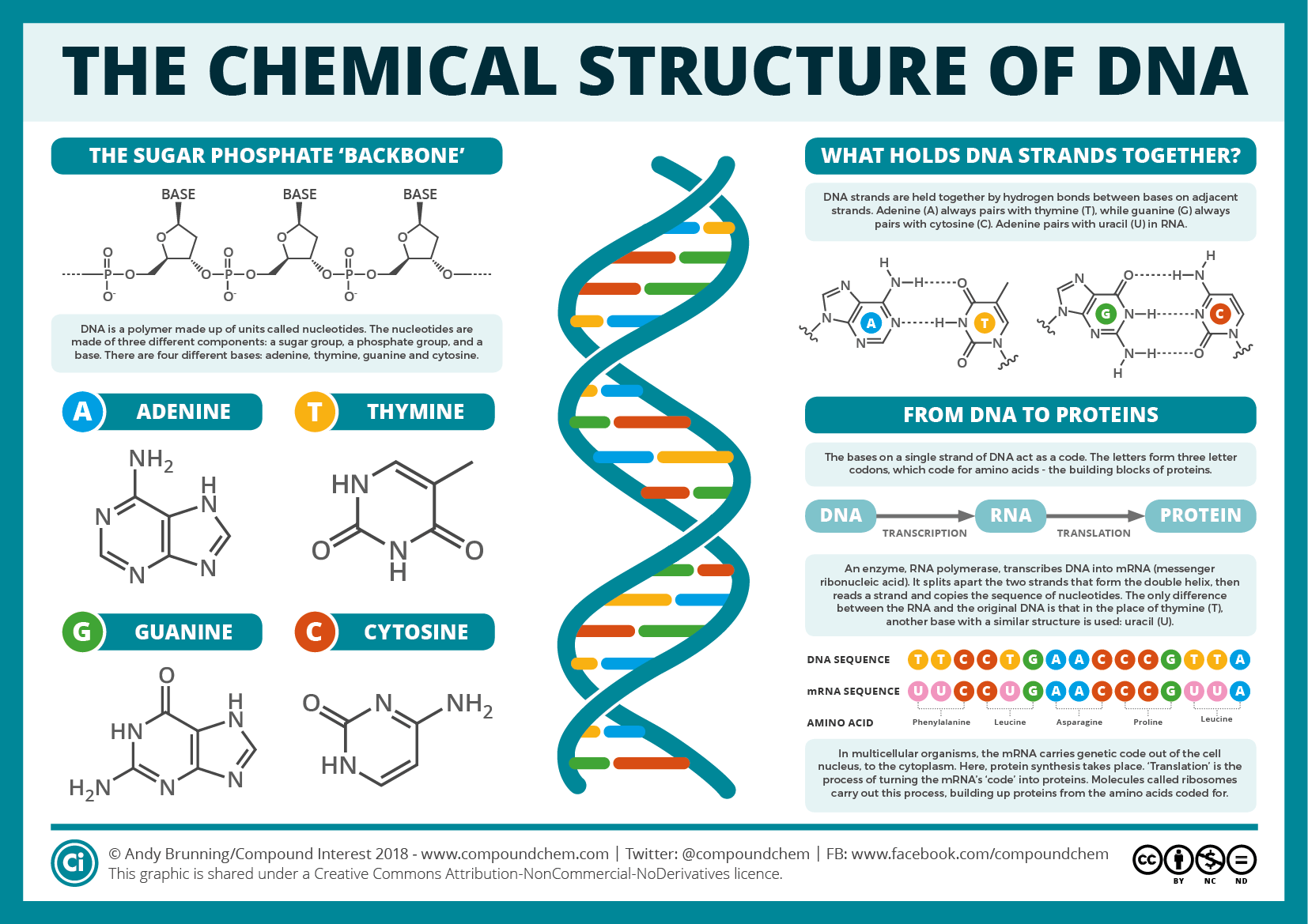
Knowledge of this structure, the double helix, allowed Alec Jeffreys and his team to develop extraction, multiplication, and comparison techniques of DNA signatures within all species. DNA blueprints are present in the smallest of life’s creatures like gastropod mollusks to the largest like blue whales and are around 99.9% similar in every living species known to science. It’s that small 0.1% difference that makes species, and specimens within each species, entirely unique.

Your human body produces around 230 billion new cells each day. Nature programmed you for cell division where, uncontrolled by your conscious actions, your cells will divide into two with the new half receiving behavioral instructions from the old half. People being people and nature being nature, there are always small errors or slight changes to the genetic blueprint. Over time and through trillions of cell splits, we all become slightly different. Except, of course, for monozygotic or identical twins. (Science now finds tiny differences in monozygotic DNA structures at the mitochondrial level, but that’s for DNA 301.)

Genetic mistakes, or unintended differences, are where forensic scientists capitalize for evidence. Variances in DNA replication or sequences are called Single Nucleotide Polymorphism or SNPs. These variances normally go unnoticed, health-wise, but they’re the reasons things like hair and eye color vary, metabolisms aren’t the same in family members, and possibly why some seem to have God-given talents.

There really isn’t a lot known about why some relatives have two left feet and why some are Olympic athletes, but one thing that can be taken to the evidentiary bank is each human (save for those pesky twins) have tiny DNA blueprint variances, and that’s where the forensic folks go when examining DNA evidence.
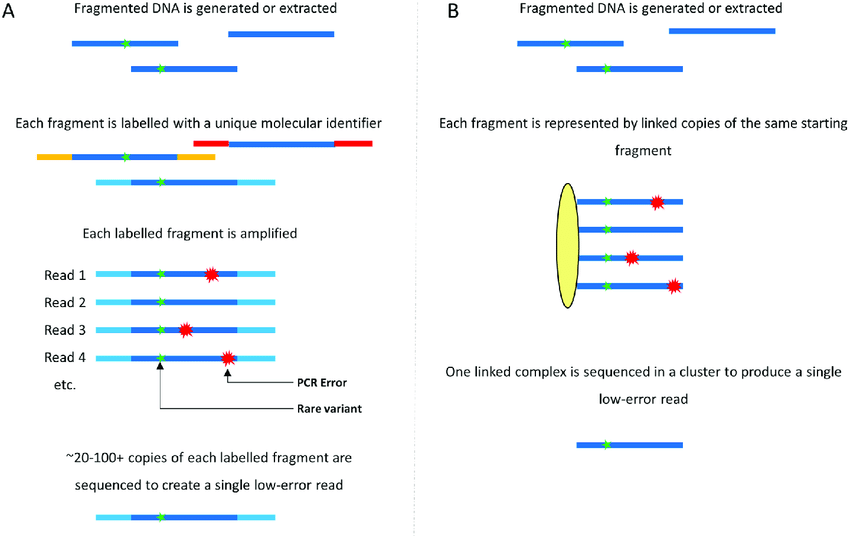
Without stepping into DNA Forensic Evidence 201 or beyond, what’s needed for this crash course is knowing about markers and loci. DNA scientists break down the individual biological sample they’re examining and give it a barcode snapshot similar to a binary code. They have highlights called markers and loci which show unique traits of the sample. Quite simply, they make a graph of the markers and loci then compare the sample they’re questioning against the “known” one. If the markers and loci match, it’s an identification.

Caution! Spoiler Alert: DNA forensic evidence matching isn’t an exact science. It’s a complicated and precise process but, unlike fingerprinting with ridges, valleys, whorls, deltas, and accents which are 100% physically conclusive—to the elimination of all other humans in the world—DNA matches rely on conclusions based on statistical probabilities. However, the statistical matching models return such enormously large matching probabilities of 1:13 billion and such, that this circumstantial opinion or viewpoint is regularly accepted by juries as cold, hard fact.

DNA Forensic Evidence 101 isn’t the place to examine specific processing techniques like Restriction Fragment Length Polymorphism (RFLP), Polymerase Chain Reaction (PCR), Short Tandem Repeats (STR), or Amplified Fragment Length Polymorphism (ALFP). It’s not the place to touch on Touch DNA (Low Level DNA), Mixtures, Rapid DNA, CODIS, or Southern Blot analysis. But it’s worthwhile knowing the DNA evidentiary processing chain from crime scene to courtroom. It goes like this:

Collection — where a biological sample is found at a crime scene.

Extraction — where DNA is released from the cell at the lab.

Quantification — where the lab determines how much DNA they have to work with.

Amplification — where the lab copies the DNA to characterize it.

Separation — where the lab separates amplified DNA for identification.

Analysis and Interpretation — where the lab compares DNA to other known profiles.

Statistical Computation — where the lab calculates a match’s probability.

Quality Assurance — where the lab triple checks process accuracy.

Evidence Delivery — where the lab testifies about their conclusion(s).

In 1987, the birth of Colin Pitchfork’s DNA evidence process was slow, labor extensive, and extremely expensive. It might have even been painful. That’s no longer the case, as four decades has taken this science—originally deemed pseudoscience—and molded it into fast, economical, and highly reliable forensic evidence used around the world. Now, if science could find a permanent remedy for the CSI Effect, that’d be a real breakthrough.

So, you’ve graduated from the DyingWords crash course in DNA Forensic Evidence 101 and your certificate is in the mail. If there’s enough interest, I may run crash courses 201 and 301 where I’ll invite some expert DNA guest lecturers to explain the differences between loci and markers and why the Southern Blot is so slow compared to Rapid and maybe talk fun stuff like Touch DNA, Mixtures, CODIS, and Dirty. In the meantime, if you’d like to continue with this third-degree program, here are five Forensic DNA websites well worth checking out:

http://www.forensicsciencesimplified.org/dna/DNA.pdf

https://www.ojp.gov/pdffiles1/nij/bc000657.pdf

https://wyndhamforensic.ca/wp-content/uploads/2016/01/WyndhamForensic_Presentation_DNAAnalysis.pdf

https://www.fbi.gov/services/laboratory

https://www.ncbi.nlm.nih.gov/pmc/articles/PMC3561883/

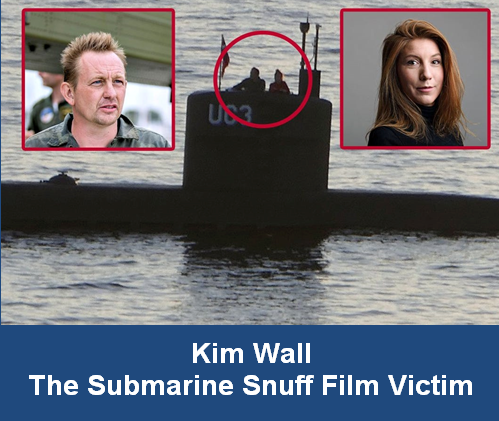
KIM WALL — THE SUBMARINE SNUFF FILM VICTIM

When it comes to bizarre crimes with a demented mindset and a disgusting motive, it doesn’t get much worse than this. Most people around the world have heard something of the Scandinavian case where inventor Peter Madsen murdered journalist Kim Wall on board his home-built submarine and then dismembered her body and dumped it in the sea. Parts of Kim were found in intervals during a massive search by the Danish police. Madsen was convicted and sentenced to life imprisonment. It’s only now, after a highly-rated miniseries called The Investigation was released, that the motive has publically surfaced. It appears Peter Madsen made a snuff film using Kim Wall as the star.

This murder case has a history to it and a blind coincidence that allowed it to happen. Before going into details of who Kim Wall and Peter Madsen were, as well as the strand of fate putting them together—alone—and on that fateful submersible boat, it’s necessary to do a quick case-fact review. Here’s what happened.

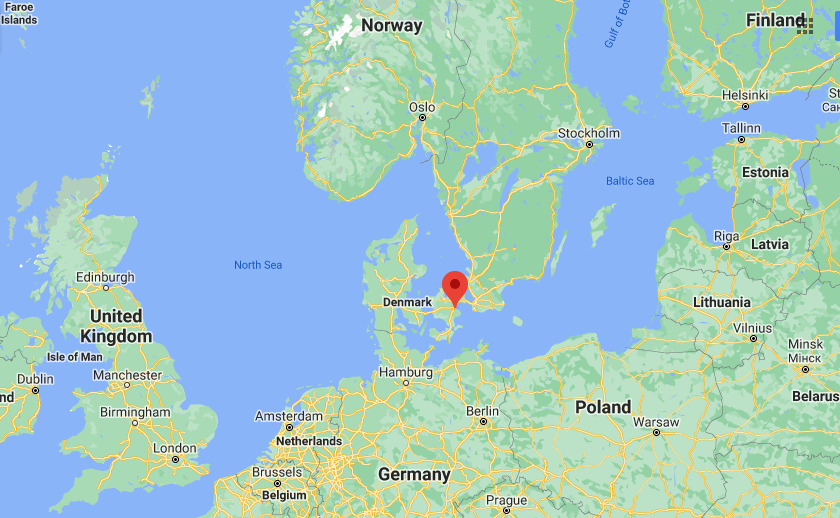
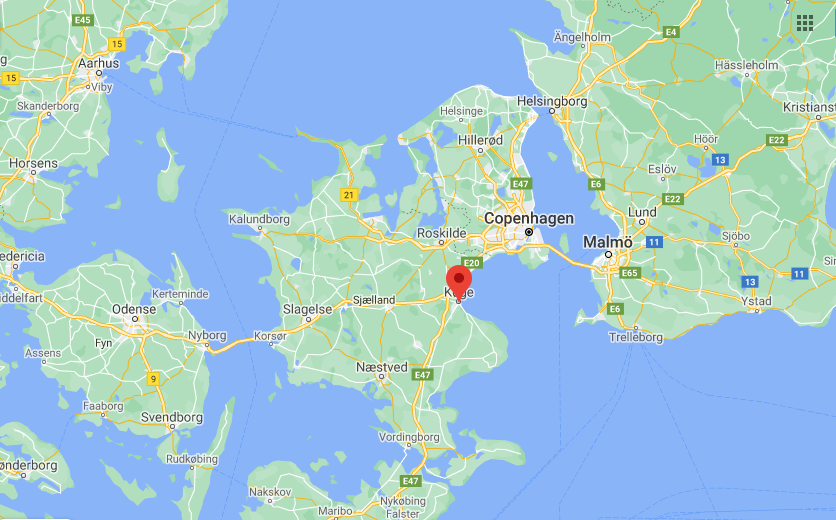
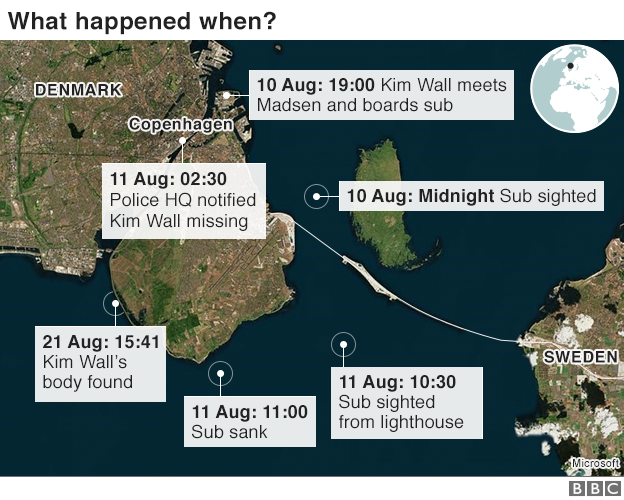
Kim Wall was a top-notch journalist who interviewed Peter Madsen, an eccentric entrepreneur, for a peculiar story. On August 10, 2017, Madsen invited Kim onboard his midget submarine, UC3 Nautilus, in Koge Bugt on the south side of Copenhagen, Denmark. Kim arrived at 7:00 p.m. for a scheduled two-hour ride and talk. She was never seen in one piece again.

By 1:40 a.m. on August 11, Kim’s boyfriend and partner reported her overdue and missing. So were Peter Madsen and the Nautilus. The police started an air and water search when light broke. At 11:00, searchers spotted the Nautilus surfacing near Koge Bugt. When they approached, Madsen scuttled the ship and it went to the bottom in minutes.

Peter Madsen swam free and a rescue boat fished him out. Madsen claimed that he’d dropped Kim Wall off on shore the previous evening and he kept cruising alone until a mechanical problem caused him to surface at which time a ballast tank failed and flooded the sub’s inside. The police didn’t believe it. Not a word.

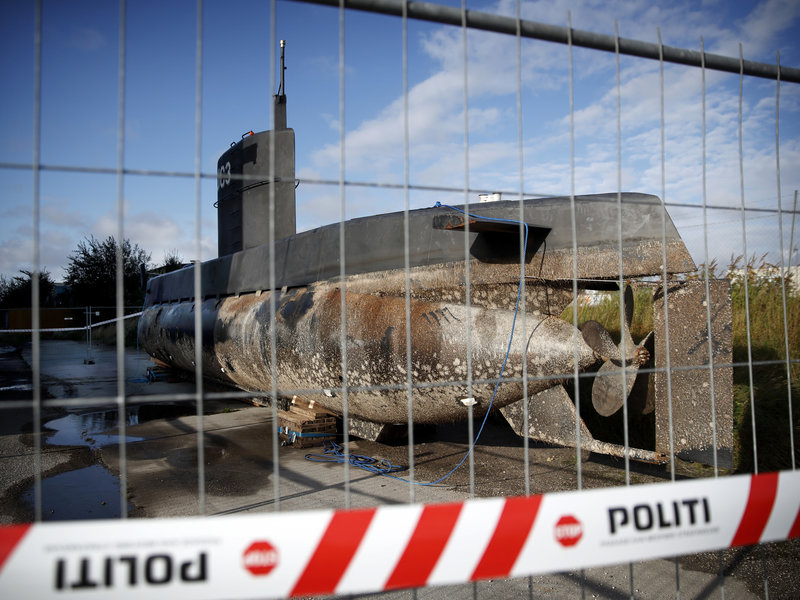
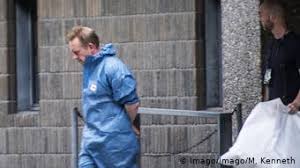
In this Tuesday, Aug. 22, 2017 photo, a private submarine sits on a pier in Copenhagen harbor, Denmark. Danish police say a DNA test from a headless torso found in the Baltic Sea matches with missing Swedish journalist Kim Wall, who is believed to have died on the private submarine. (Jens Dresling/Ritzau Foto via AP)

They filed an involuntary manslaughter charge which, under Danish law, allowed the authorities to keep Madsen in custody while they investigated. A salvage crew raised the sub and searched it. Kim Wall was not inside, and there was clear evidence the sub had been intentionally sunk.

While searchers combed the shore and divers covered the bottom, the police looked into who Peter Madsen was. He was well-known in Denmark, and the worst-kept secret was he belonged to the sub-culture (excuse the pun) of the underground fetish scene of B.D.S.&M. Bondage-Dominance-Sadism-Masochism.

Kim Wall’s torso washed up at an Amager, Denmark, beach on August 21. She’d been stabbed 15 times in the genitals and ribs. Her legs and arms had been cut off. So had Kim’s head.

Once confronted with the body evidence, Peter Madsen changed his story. He claimed Kim was accidentally killed when a heavy hatch cover fell on her head. Madsen said he panicked and choose to get rid of her body. He explained the bodily mutilation was necessary to remove her from the boat as it was impossible for him to drag her lifeless form up the ladder and through the conning tower. So, he said, he dismembered Kim Wall to make it efficient.

An incredible performance by Danish divers located Kim’s remaining pieces. This took continual underwater grid searching that lasted into November. When Kim’s head was located in a weighted bag, like each of the other parts had been sunken, there was no blunt force trauma evidence. One of the bags contained a saw. Another a knife. And all had metal pipes in them.

Again, Peter Madsen changed his story. Now he said Kim had been accidentally gassed by the diesel engine fumes, and she died of carbon monoxide poisoning. No, the pathologist differed, her torso contained intact lungs and there was no CO evidence in them.

Peter Madsen shut up and remained mute while the police put a painstaking case together. Part of the package that prosecutors presented to a judge (not a jury) involved the backgrounds of Kim Wall and Peter Madsen. This included the strange strand of fate that put Kim on Peter Madsen’s boat.

Who Was Kim Wall?

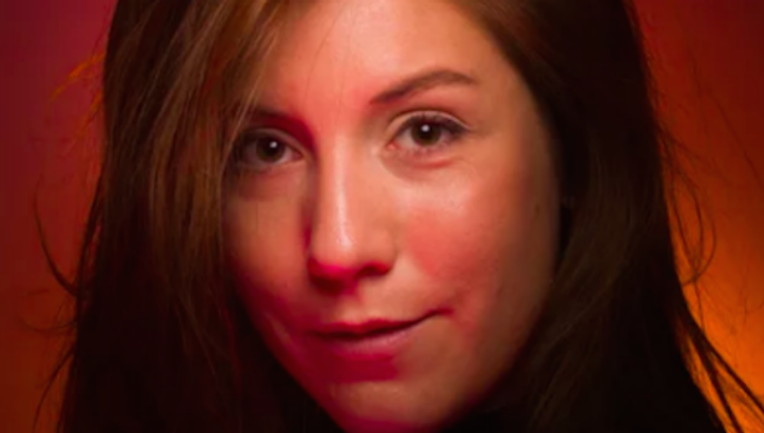
Kim Isabela Fredrika Wall was a thirty-year-old Swedish woman. She was a high achiever, a world traveler, and a terrifically talented journalist—a professional freelance writer. Kim was single but attached to a long-term boyfriend, and she was also tightly attached to her family—a younger brother and her parents, Ingrid and Joachim Wall.

Kim Wall was a straight-A student who went on to earn double Masters Degrees at the London School of Economics and Columbia University in New York City. One was in journalism. The other was in international relations. As in grade school, Kim Wall was an honors student and at the top of her class.

Besides being intelligent, Kim was sympathetic. She was a champion of the underdog and always looked for the human side of the story within the story. And in search of the story, Kim Wall traveled to far reaches like Uganda, Kenya, Cuba, Cambodia, and even into Russia and North Korea. She wrote about smuggled Beatles recordings in to communist countries, feminism in China, Idi Amin’s despot reign, and nuclear waste in the Marshall Islands.

Kim looked for eccentric stories with quirky interests. Her freelance work appeared in TIME, The New York Times, The Atlantic, The Guardian, and Wired. It was a Wired commission that aligned her with Peter Madsen.

Who Was Peter Madsen?

Peter Langkjær Madsen was a forty-five-year-old Dane. He. too, was well-traveled. But unlike Kim Wall’s natural and well-balanced smarts, Masen was the fine line between genius and nutjob. He also had sexual kinks and a ferocious temper.

Madsen was a bit of a Danish celebrity. His narcissism played right to the crowd and his psychopathy gave him absolutely no remorse if he abused people as he went about getting what he wanted. Madsen had no formal post-secondary education, and he was self-taught in engineering skills.

Peter Madsen called himself an “inventrepreneur”. He was opportunistic and enthusiastic—a dog with a bone when on a new venture. He pursued two main interests, underwater exploration and space travel. He did design and personally build the Nautilus. However, he used other people’s money to crowdfund it.

By 2017, Madsen tired of the ocean. He’d done enough and now turned to the stars. With a financial partner, they formed Copenhagen Orbitals which was a rocket design-build company. Madsen, however, was impossible to work with so they split up and Madsen started a competitor called Rocket Madsen’s Space Laboratory, again using investor capital.

The Strand of Fate

The Copenhagen Orbitals-Rocket Madsen’s Space Laboratory rift became a publicized feud. It caught media attention because of the high-profile space ventures these two intended under the Danish flag and for the eccentric personalities of the fighting pair. Tragically, it caught Kim Wall’s attention, too.

Wired Magazine is an American emerging technology monthly publication owned by Conde Nast. An editor at Wired was familiar with Peter Madsen and his self-taught submarine expertise. Now the editor got wind that Madsen was into rockets and space. Kim Wall got the commission to go find Peter Madsen and see what all the fuss was about, including the fuss between Madsen and Copenhagen Orbitals.

Kim Wall had a hard time connecting with Peter Madsen. He pretty much ignored her emails and calls. Kim did interview the ex-partner and research the new Danish aerospace emergence, but Madsen remained elusive.

That was until late in the afternoon of August 10, 2017. Kim Wall had given up on contacting Peter Madsen. She’d taken on a new assignment in China and had full plans to leave for the Orient on August 11’s morning. In fact, her boyfriend had arranged a large going-away party for her that evening.

At around 4:00 p.m., Kim Wall received a text from Peter Madsen. He’d agreed to an interview and asked her to stop by his laboratory. She did. They had a quick chat. And then Madsen invited Kim to the Nautilus for a two-hour exclusive. Not turning down the scoop, Kim bowed out of her party and, at 7:00 p.m., she boarded the ship—never to be seen alive again.

The Trial Evidence

The Danish police and prosecutors did an incredibly thorough job in sourcing evidence and securing a murder conviction. They were able to forensically link Kim Wall to the ship and Peter Madsen to Kim. They used Madsen’s conflicting statements to turn the tables when he took the witness stand and showed his instability by testifying on his own behalf in first and third-party viewpoints.

The prosecutors built a vivid image of Peter Madsen’s mindset. They called witness upon witness who knew Madsen and his unusual history. That included people from his sex life and people from his business world. Slowly—witness by witness and evidence piece by evidence piece—the prosecution sculpted a man with a mindset capable of luring an innocent woman to her fate of dismemberment.

Most damaging of all was what Peter Madsen did to himself. On his computer, retrieved from the hard drive, was a jamb-packed album of smut. He’d downloaded archives of violence against women, torture, and even snuff. The night before Kim’s murder, his search engine history contained “throat-slitting”, “beheading”, “girl”, and “execution murders”.

If that didn’t sink him, this did. Four different women testified that Peter Madsen contacted them during the day of August 10, 2017. He invited each of them to a 7:00 p.m. meeting on board the Nautilus. Each of the four declined. Kim Wall was the fifth Madsen called. She accepted.

As for the coup de gras, a witness described seeing Peter Madsen enter the Nautilus on August 10. In one hand, Madsen held a knife and a saw. In his other—a video camera.

The Danish judge accepted all the evidence proving Peter Madsen had planned and deliberately set out to murder a woman on the evening of August 10, 2017. By a strand of fate, that woman was Kim Wall.

The video camera was never found, so we’ll never know exactly what went down on film. But there’s no reasonable doubt about it. Kim Wall was a submarine snuff film victim.

THE MANIAC MURDERS AT LOVERS LANE

You’d think you’d know all the best crime stories of your hometown, especially when you were a police officer there and spent most of your service on the Serious Crimes Section—being a murder cop. Specifically, true crime stories of this magnitude which turned out to be one of the most complex double homicide investigations in your city’s history. But, no, I’d never heard of this case until I was sitting in my barber’s chair the other day and Dave told me about the maniac murders at Lovers Lane.

Dave Lawrence is Nanaimo’s downtown barber. Dave runs a one-man show at That 50s Barber Shop on Victoria Crescent where multi-millionaires push past shopping cart vagrants to get the best haircut in town. Also to find out what’s going on in town because, if you want to know, Dave’s the go-to guy for knowing what’s going on around town.

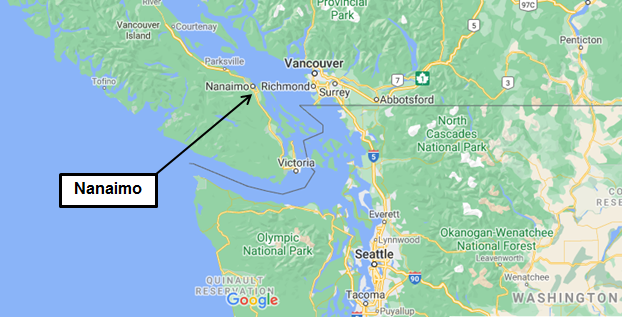
Nanaimo, by the way, is a city of 100,000 on the southeast side of Vancouver Island in British Columbia, Canada. It’s right across the water from the City of Vancouver which is one of the most exotic, erotic, and expensive places on our planet. Nanaimo is laid back in many ways, but it has an abnormally high per capita murder rate. And it’s been my home for the past thirty-four years.

I went into Dave’s shop last Saturday to get all four sides trimmed. We got talking, as we always do, and he goes, “Garry, you were a cop for a lot of years here in Nanaimo. Ever hear about the maniac murders at Lovers Lane?” I says, “No, Dave. You been smoking crack again like that guy who just tweaked by your window?” So Dave goes, “Seriously, dude. This really happened, and it’s the best true crime story I ever heard of.” Then Dave tells me about the maniac murders at Lovers Lane.

This true crime story doesn’t start with the cold-blooded executions of two young lovers. It starts fourteen years earlier on May 31, 1948, with a railroad washout near Kamloops in British Columbia’s interior. That spring, flooding was intense and the rushing water undermined a trestle pier holding up a bridge section where the Canadian National Railroad crossed the Thompson River. The bridge collapse took with it the telegraph lines connecting communications between western Canada and the east.

Losing a bridge section was one thing. Destroying communications was another. The only thing holding the main telegraph line from snapping under the weight of a sagging bridge was a small wooden bracket holding a glass insulator that the wire held fast to.

Leave it to railroader ingenuity. One sectionman got the idea to shoot the wire free. He borrowed the station agent’s .22 rifle, lay on the bank, and plinked away until he broke the bracket and saved the day. The rifle went back to the station agent’s house and was forgotten.

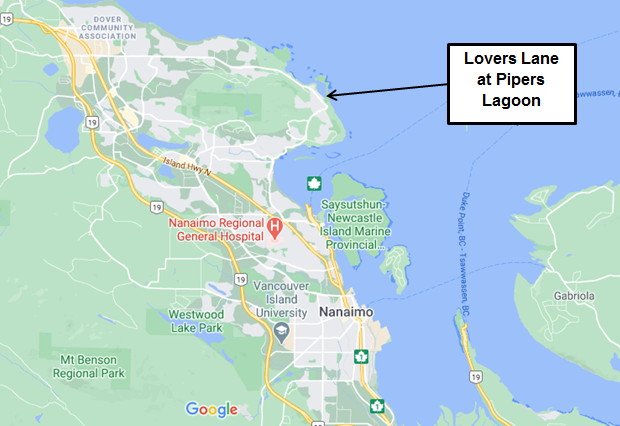
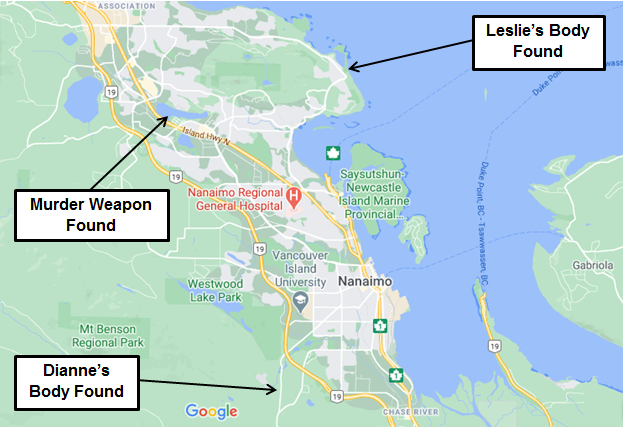
Until October 16, 1962. That’s when pretty nineteen-year-old Diane Phipps went on a date with her handsome boyfriend of six months, nineteen-year-old Leslie Dixon. That evening, the pair drove about downtown Nanaimo—then a city of around 20,000—stopping at the drive-in, gabbing with friends, and generally being young people in love. After dark, Diane and Leslie drove way out to Pipers Lagoon which the youths of Nanaimo called Lovers Lane. They parked and began to make out and were never seen alive again.

Pipers Lagoon is about eight miles from downtown Nanaimo. It’s in the Hammond Bay area which is now full of upscale homes but, thankfully, the city wisdom at the time foresaw the value of Pipers Lagoon and preserved it as parkland. It’s a strikingly beautiful spot, even though it has this history.

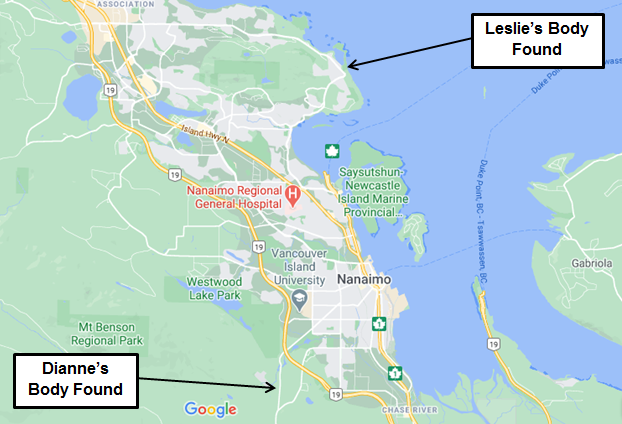
Diane Phipps and Leslie Dixon’s families became concerned—very concerned—when the two lovers didn’t come home by morning. Friends knew they’d likely gone to Lovers Lane, so that was the first place they searched. They found Leslie’s car. It was parked in the lane. He was slumped inside behind the wheel, dead, with two .22 bullets to the back of his head. Dianne was nowhere in sight.

This started the biggest criminal investigation in Nanaimo’s history. How I never heard about it, I don’t know, but Dave steered me to a website that documented the case as well as archives in the Vancouver Sun that covered the story. Here’s what happened.

Crime scene investigators found Leslie had been shot at close range. They surmised that the killer surprised the pair and shot him through an open driver’s side window, leaving his body in place. Leslie’s wallet with money was still in his pocket which indicated robbery was not a motive. There was no blood or evidence of Dianne being shot while sitting on the front passenger side seat, so the police officers surmised she’d been abducted at gunpoint.

The Nanaimo detachment of the Royal Canadian Mounted Police (RCMP) called in extra resources. A large search of the surrounding area found no trace of anything connected with the crime, including Dianne Phipps. Officers went door to door and investigated the pair’s trail the previous evening. They were baffled and quickly involved the media, asking for public help.

At 2:00 p.m. on the day after Leslie Dixon was found murdered, a Nanaimo resident was rummaging through a rural garbage dump five miles south of Nanaimo in a semi-rural area called Harewood. He saw a pair of feet sticking out from under some old car parts. It was Dianne Phipps. She’d been shot once between the eyes and her head had been bashed-in with a rock. Her time of death was consistent with the early morning hours of October 17.

Dianne wasn’t sexually assaulted. She was fully clothed and her purse, containing money, was beside her. With robbery and sexual overtones ruled out, and no one in the couple’s entire history posing a threat, the RCMP suspected they had a murderous maniac on their hands.

More public appeals went out. Police got a call from a woman who lived on Harewood Road, not far from where Dianne’s body was found. She related that at 1:00 a.m. on the night of the murders she got a knock on her door. A very strange man was there and said his car was stuck in a nearby ditch. He asked if she would take her pickup and pull him out.

She did so. He posed no threat to her, but she found his actions so bizarre that she thought he’d done something else. Now hearing of Dianne’s body being found close to where she towed this stranger, she suspected the incidents were related.

The witness lady gave the police an excellent description of the man and his sedan. She did not get a name, nor did she record the license number. This suspect and vehicle information was widely broadcast and developed hundreds of tips.

Week by week and month by month, the police investigation team put their hearts into the case of the Lovers Lane murders. The City of Nanaimo posted a $5,000 reward which was equivalent to a year’s wages back then. More tips came in, but not the right ones.

The weather turned as cold as the case. Vancouver Island is normally Canada’s winter hot spot. It rarely freezes on the south island and only snows occasionally. The winter of 1962/1963 was far colder than normal. The local lakes froze to the point where people could walk on the ice which is what a young boy did on Long Lake which is in north Nanaimo miles away from Lovers Lane and the Harewood dump.

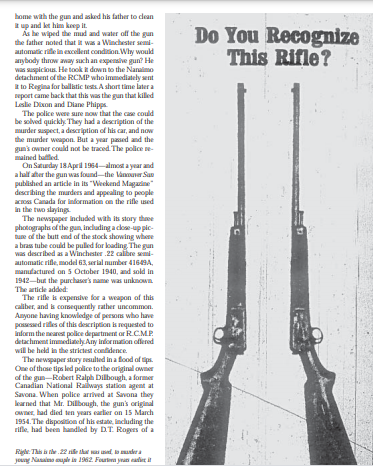
The boy saw something through the ice. It was a rifle—a rather unusual rifle. The boy called his father, and they smashed through the ice and retrieved a Winchester Model 63 semi-automatic .22 with serial number 41649A stamped on it.

The father was suspicious as to why someone would throw a valuable firearm in the lake. He took it to the police who sent it to the crime lab. This firearm found in Long Lake matched the .22 bullets taken from Dianne Phipps and Leslie Dixon at their autopsies. It was the murder weapon.

The police held back this information while they pursued other leads. They traced the .22 as being manufactured on October 5, 1940, and was sold by a Kamloops sporting goods store in 1942. However, back then in the Second World War years, purchaser records weren’t kept. The trail again grew cold.

On Saturday, April 18, 1964—almost a year and a half after the murder weapon was found—the Vancouver Sun ran a front-page story and, with police permission, released the holdback information on the unusual firearm along with its photo. This started the tips again.

The sectionman who shot the telegraph bracket and saved the communication day back in 1948 saw the rifle’s photo and strongly suspected it was the one he used that belonged to the station agent, one Robert Ralph Dillabough of Kamloops. There was a problem with that. Mr. Dillabough had died ten years earlier. However, his estate had recorded the rifle as an asset, including it having the serial number 41649A. It was the same piece, for sure.

Diligent detective work took place. Police tracked Dillabough’s estate through a law firm of Mr. D.T. Rogers of Kamloops. They recorded that the murderous .22 was sold at an auction in Kamloops on February 19, 1955. The auctioneer was named George Shelline who they found had been killed in an automobile accident a year earlier. Shelline’s estate had no records of who purchased this puzzling and deadly firearm. Once again, the case went cold.

Over time, the police followed over five thousand tips taking hundreds and hundreds of statements. They checked 60,000 vehicle registrations for the suspicious car that was towed from the ditch along Harewood Road and they checked over 2,000 firearms sales invoices. The RCMP got help from the FBI and from Scotland Yard and from Interpol. They amassed what was the largest murder file in the history of British Columbia and they got nowhere.

Not until the Vancouver Sun ran another front-page story, again displaying the .22’s photo. On August 7, 1965—pushing three years after Dianne and Leslie’s murders—a tipster who requested confidentiality came forward and fingered Ronald Eugene Ingram as the owner of Winchester Model 63 .22 with serial number 41649A.

Ronald Ingram was now living in North Vancouver and worked as a baker. The police learned that in October of 1962, Ingram had resided in Nanaimo along with his wife and three children where he co-owned the Parklane Bakery on Harewood Road. He moved from Nanaimo to North Vancouver shortly after the Lovers Lane murders occurred.

Ingram and his vehicle were dead ringers for the strange man who got his auto stuck on Harewood Road. The police seized his vehicle. Even though a lot of time had passed, they found dried bloodstains in it that matched Dianne Phipps’s blood type.

The police also got information that Ronald Ingram had used the now-notorious .22 to shoot rats in his bakery’s storeroom. Armed with a warrant and a chainsaw, the police recovered bullets from the storeroom wall that matched the .22’s unique firing signature and the ones that killed Dianne and Leslie.

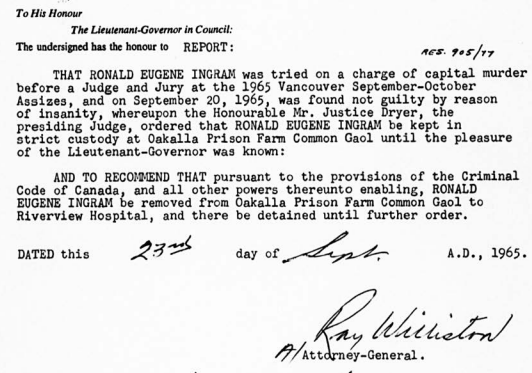
They arrested Ronald Ingram and charged him with capital murder. To this point, no one in the legal circles ever heard of him. He had no criminal record and his name never surfaced in the intense investigation—until he was linked to the murder weapon.

The medical and psychiatric circles had certainly heard of Ronald Ingram, though. He had a lengthy history of mental illness including having maniacal episodes. Ingram confessed to murdering Dianne Phipps and Leslie Dixon, claiming he was in a maniacal state at the time. In one of the speediest trials I’ve ever heard of, Ingram was found not guilty by reason of insanity. He was ordered locked up under the authority of Section 545 of the Canadian Criminal Code and held “until the pleasure of the Lieutenant Governor was known“.

Ronald Ingram was incarcerated at the maximum-security Forensic Psychiatric Institute at Riverview Hospital in the Greater Vancouver area. Over time, Ingram’s classification was lowered to medium-security and he was consecutively placed in a less restrictive psychiatric environments. In 1976—fourteen years after these truly horrific crimes by a homicidal maniac—Ronald Eugene Ingram simply walked out the front door of his mental hospital. He was never heard of again.

And that’s the true story Dave told me about the maniac murders at Lovers Lane.