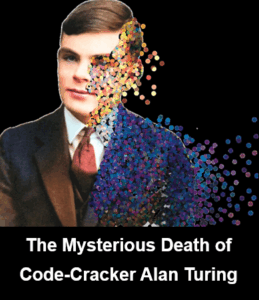
 On June 7, 1954, early-computing genius Alan Turing died alone in his small home at 43 Adlington Road in Wilmslow, Cheshire, England. His housekeeper found Turing in bed, unresponsive, with a half-eaten apple beside him and a strong scent of bitter almonds lingering in the room. Alan Turing, just 41 years old, was pronounced dead of cyanide poisoning. The official inquest ruled it as suicide—the coroner suggesting he’d deliberately laced the apple with poison and that Turing intentionally took his own life.

Something just doesn’t sit right with that conclusion. Why would a brilliant man, full of curiosity and creative energy, end his life so abruptly—and in such a theatrical Snow White manner? Why no suicide note? Why no indication of despair in his final days? Why was there cyanide discovered in the house—but not definitively found in the apple?
For the answers offered at the time, more questions remain. And that’s why the death of Alan Turing—the father of modern computing and code-cracker of Nazi Germany’s Enigma encryption machine—remains one of the most puzzling mysteries in modern times.
Turing wasn’t just a mathematician or wartime cryptanalyst. He was a singular mind—restless, brilliant, awkward, and visionary. Born on June 23, 1912, in Maida Vale, London, Alan Mathison Turing came into the world with a quiet spark that would one day ignite revolutions in logic, computation, and the birth of today’s artificial intelligence phenomena.
His parents were of respectable English stock—his father, Julius Turing, worked in the Indian Civil Service, while his mother, Ethel Sara, came from a family of railway engineers. But young Alan’s upbringing was far from stable. His parents traveled frequently between India and England, and Alan was largely raised by foster caregivers in Sussex.
Even as a boy, Alan was different. He had a peculiar way of thinking—literal, intense, and obsessively focused on ideas. He was fascinated by numbers, time, systems, and patterns. At the age of 13, he attended Sherborne School, a prestigious public institute in Dorset, where his brilliance clashed with the classical curriculum. He didn’t shine in Latin or essays—but in math and science, he was already orbiting in another stratosphere.
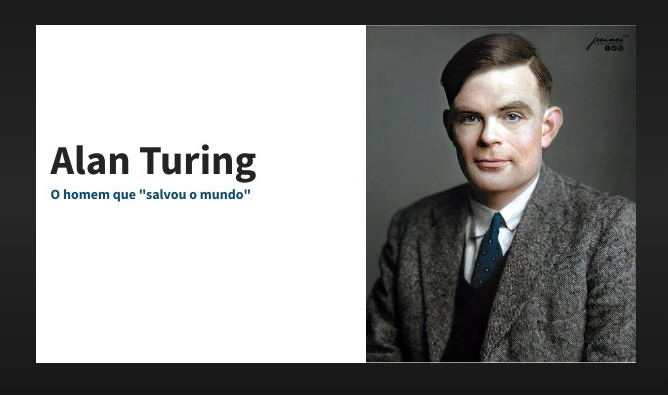
“O homem que salvou o mundo” – “The man who saved the world”
Alan Turing’s genius truly began to crystallize during his university years. After enrolling at King’s College, Cambridge, in 1931, he studied mathematics and quickly gained recognition for his astonishing intellect. By 22, he was elected a fellow of the college for his groundbreaking work on the central limit theorem—a prestigious honor for someone so young. But it wasn’t just his grades or papers. It was the way he thought. Turing didn’t just solve problems—he reconstructed the very framework of how problems could be solved.
He was also a gifted athlete. Turing ran long distances with the stamina of a marathoner—often timing his training against the local bus routes and sometimes nearly qualifying for the British Olympic team. That combination of mental precision and physical resilience defined much of his life. He wasn’t just smart—he was tough, solitary, and determined.
In 1936, at just 24 years old, Alan Turing published a paper titled “On Computable Numbers, with an Application to the Entscheidungsproblem.” It would go on to become one of the most important documents in the history of science. In it, he proposed a theoretical machine—now known as the Turing Machine—that could simulate any conceivable mathematical computation.
This wasn’t just abstract theory. Turing was laying the foundation for the modern computer—long before silicon chips or Apple keyboards ever existed. He was dreaming of a mechanical mind. Artificial general intelligence. AGI.
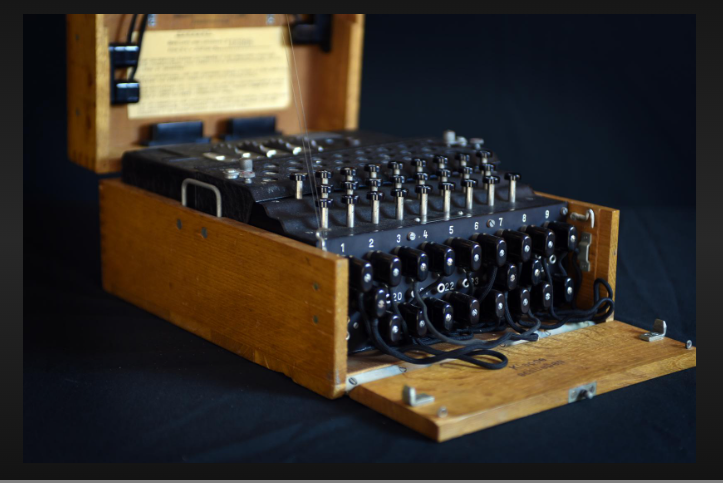
By the outbreak of World War II, Turing’s genius was already on the radar of British intelligence. During the war, Turing was stationed at the now-famous Bletchley Park, the heart of Britain’s codebreaking operations. He worked in “Hut 8,” the unit tasked with cracking German naval codes encrypted by the Enigma machine.
These codes were considered unbreakable. The Enigma’s rotating wheels created a staggering number of possible settings—trillions, in fact. But Turing, using mathematics, logic, and sheer grit, helped devise an electromechanical device called the Bombe, which dramatically sped up the process of decoding German messages.
Turing’s role at Bletchley Park was both secret and essential. Without his breakthroughs, the Battle of the Atlantic might have been lost. Convoys sunk. Supplies cut off. The war turned. Some historians credit Turing’s work with shortening the conflict by two years—and saving millions of lives. He also worked on speech encryption tools like Delilah and helped develop tools now considered the ancestors of artificial intelligence, AI. But at the time, his name was buried under layers of national secrecy.
After the war, Turing continued his pioneering work in computing and artificial intelligence. He worked at the University of Manchester and helped design the Automatic Computing Engine (ACE), one of the world’s first stored-program computers. It was long before names like Jobs, Wozniak, Gates, Allen, Musk, and Altman were known.
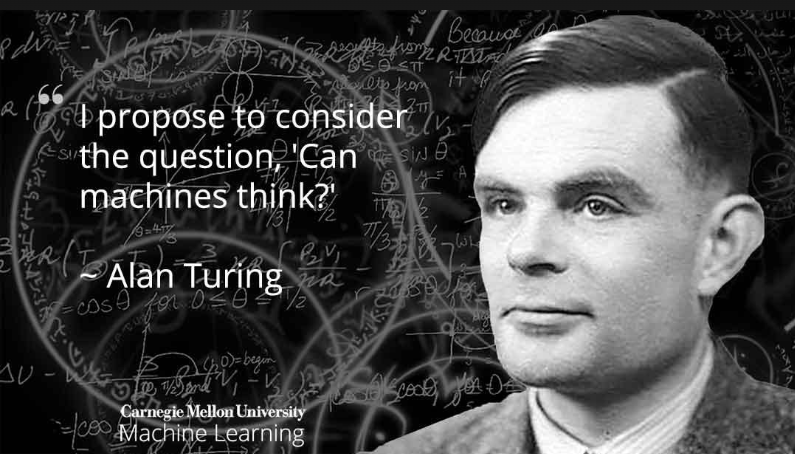
Here he explored whether machines could think—proposing a framework now known as the “Turing Test,” a thought experiment that still anchors debates in AI ethics and philosophy. He also dove into the strange world of morphogenesis—the mathematical patterns behind the shapes of plants, animals, and natural forms. Once again, Alan Turing was far ahead of his time.
But while his professional life soared, his personal life unraveled.
Alan Turing was a gay man in a society where homosexuality was not just taboo—it was illegal. In 1952, he met a young man named Arnold Murray. After a minor incident at Turing’s home, police uncovered his relationship with Murray and arrested him under the gross indecency laws—the same archaic statutes used decades earlier to destroy Oscar Wilde. Turing didn’t deny it. He told the truth.
He was convicted. The court offered him two options: imprisonment or a course of hormone therapy—chemical castration. Turing chose the latter. He was injected with estrogen for a year, which caused weight gain, breast development, and emotional distress.
It also stripped him of his security clearance and curtailed his ability to work in the field he helped create. The British government had turned on its war hero. Humiliated, ostracized, and punished, Turing withdrew from public life. Two years later, he was dead.
On the morning of June 8, 1954, Turing’s housekeeper arrived at his modest home and found his body. He was lying in bed, dead from suspected cyanide poisoning. A half-eaten apple lay beside him, supposedly laced with the deadly compound. The apple itself was never tested, oddly. But traces of cyanide were found in his stomach and in a solution in a nearby room where Turing had been experimenting with electroplating.
The coroner ruled it a suicide. Case closed. Or was it?
There are several things about Turing’s death that just don’t line up. For starters, he left no suicide note. He’d just begun planning a vacation. His recent letters were upbeat. He’d resumed work. And those who knew him best said suicide was not in his nature.
Alan Turing was curious. Creative. Resilient. Even his mother—who knew her son better than anyone—believed his death was an accident, caused by his careless handling of cyanide in the lab. Turing had a known habit of tasting chemicals during experiments, a reckless quirk that may have cost him his life.
And what about the apple? Some suggest it was a theatrical nod to Snow White—one of Turing’s favorite fairy tales. But that’s pure conjecture. Others pointed out the apple wasn’t tested, and the presence of cyanide elsewhere in the house makes accidental inhalation or ingestion entirely plausible.
Then there’s the darker theory. Assassination. Could Alan Turing have been silenced?
It’s not as far-fetched as it sounds. Turing knew state secrets. He was a homosexual during a time of Cold War paranoia, when homosexuality was seen as a security risk. The same government that once praised him now saw him as vulnerable to blackmail or foreign coercion. Could the British intelligence services have quietly decided that Alan Turing had become a liability?

There’s no hard proof. But there is precedent to many state-sanctioned murders. Leon Trotsky, Dag Hammarskjold, Alexander Litvinenko, and Jamal Khashoggi come to mind.
Intelligence agencies don’t always act with transparency or mercy—especially in the Cold War era. Was Turing eliminated? Was his death staged to look like suicide? Or did the emotional toll of his conviction and isolation finally push him too far?
We may never know.
What we do know is that Alan Turing was a man of extraordinary mind and rare moral courage. He imagined the future, even as the world failed to accept the truth of who he was. He gave everything—his intellect, his creativity, and his loyalty—to a nation that ultimately betrayed him.
In 2009, the British government formally apologized for persecuting this fine man. In 2013, Queen Elizabeth II granted him a posthumous royal pardon. In 2021, his face appeared on the Bank of England’s £50 note—a quiet symbol of belated recognition.
But even today, the mystery remains unresolved. The truth is, we don’t really know what happened on that June day in 1954. We only know what we’ve been told.
Why does it still matter?
Because justice matters. Because the lives of geniuses, misfits, and visionaries must be remembered truthfully—not just in sanitized biographies or polite memorials. Because our world is now shaped by the very machines Turing imagined—and we owe him a fair account of how his story ended.
And because somewhere, behind the locked doors of history, lies the truth about the mysterious death of code-cracker Alan Turing.