Tag Archives: Suspicious

THE CRAZY LIFE AND DEATH OF HOWARD HUGHES

Howard Hughes was a man who could design and test-fly an airplane, direct a movie, seduce a starlet, buy casino hotels, disappear for years, and still make headlines without showing his face. He was as much a symbol of American ambition as he was a cautionary tale of what unchecked wealth, genius, and madness can do to a man. Born into privilege, fueled by obsession, and haunted by demons, Hughes lived a life so extreme that it bordered on mythology. But his death—quiet, grim, and mysterious—might be stranger than the intense living that led to it. Here’s the drama of the crazy life and death of Howard Hughes.
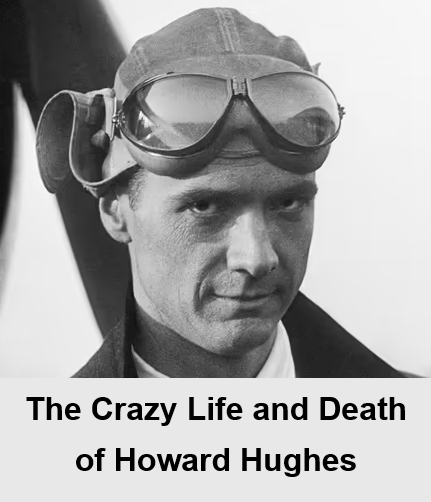
To understand his end, we have to rewind to the beginning of a life lived on the edges of brilliance and breakdown. Howard Hughes was many things: inventor, aviator, filmmaker, billionaire, recluse, suspected intelligence asset, and perhaps most tragically, a prisoner of his own mind.

He died aboard a private jet, his six-foot-four frame weighing only ninety pounds, unrecognizable even to those who’d once worshipped him. The official version says kidney failure. But the deeper you dig, the more the story starts to crack. It was a death as strange as his life—one that still casts a long shadow.

Howard Robard Hughes Jr. was born on December 24, 1905, in Humble, Texas, into a family drenched in oil money. His father, Howard Sr., invented the Hughes rotary drill bit and founded the Hughes Tool Company, which would bankroll young Howard’s endless stream of curiosities and obsessions. By age 11, he built Houston’s first wireless radio transmitter. At 12, he constructed a motorized bicycle from scrap parts. By 14, he was designing working aircraft models in his room. But early brilliance often walks hand in hand with isolation.

Tragedy struck fast and deep. His mother Allene died when he was just 16—reportedly from complications of an ectopic pregnancy. His father died suddenly two years later from a heart attack. At 18, Hughes was a billionaire orphan with complete control over the Hughes Tool fortune. No advisors. No parental guidance. Just money, ambition, and a ticking mind that was already showing cracks.

He dropped out of Rice University and headed west to Los Angeles. Hollywood in the 1920s was wild, wide open, and vulnerable to someone like Hughes: rich, eccentric, and hungry to create. His first film, “Swell Hogan,” was a bomb. But he rebounded with Hell’s Angels, an over-the-top war epic that cost $4 million, used real WWI aircraft, and took three years to complete. Hughes delayed filming repeatedly, waiting for perfect cloud formations to shoot aerial scenes. That level of obsessive control would become his hallmark.
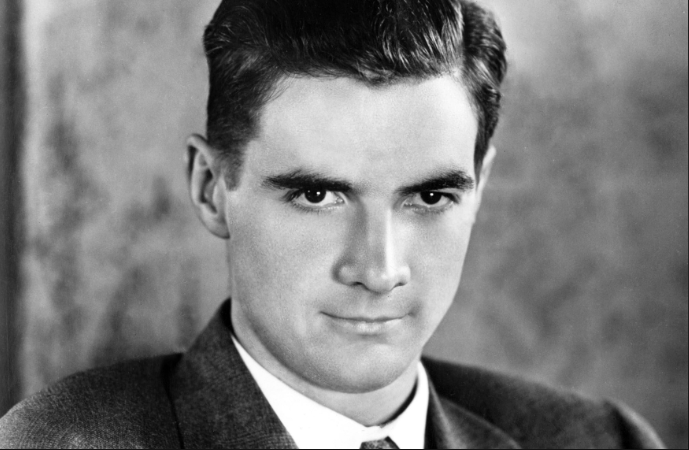
He followed up with The Outlaw (1943), mostly remembered for its promotional posters featuring Jane Russell’s cleavage. Hughes engineered a custom bra for her, designed to lift and frame her bustline more dramatically under studio lights. While Russell later claimed she never wore the thing, Hughes’s reputation as a hyper-controlling, detail-obsessed innovator was sealed. He didn’t just direct movies—he reimagined how to shoot them.

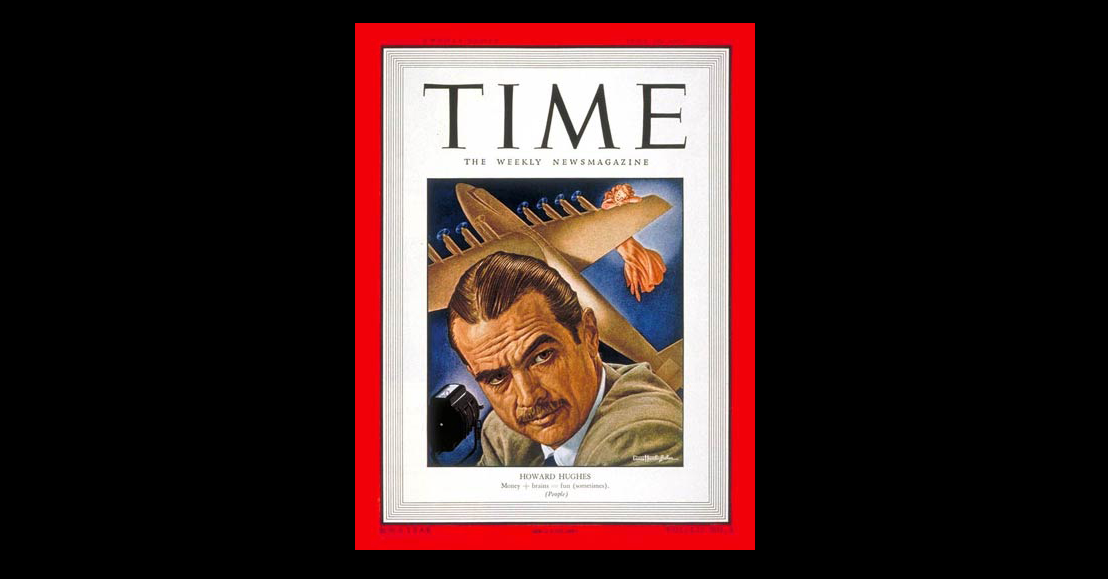
But filmmaking was just the opening act. Hughes’s true passion—perhaps his purest love—was aviation. In 1935, he set a world airspeed record flying the Hughes H-1 Racer. In 1938, he flew around the globe in 91 hours, earning him a ticker-tape parade in New York and a congratulatory telegram from President Franklin D. Roosevelt. His company, Hughes Aircraft, exploded into a major defense contractor, developing radar systems, missiles, and later, aerospace technology. He personally test-piloted many of the prototypes—sometimes successfully, sometimes not.

The worst crash came in 1946 while piloting the XF-11 reconnaissance plane over Beverly Hills. He clipped telephone wires and crash-landed in a residential area, destroying several homes. He broke dozens of bones, suffered third-degree burns, and nearly died. He was pulled from the wreckage by a U.S. Marine who happened to live nearby. The physical pain lingered for the rest of his life. So did the emotional trauma.

This is the crash that many believe began driving Howard Hughes crazy.

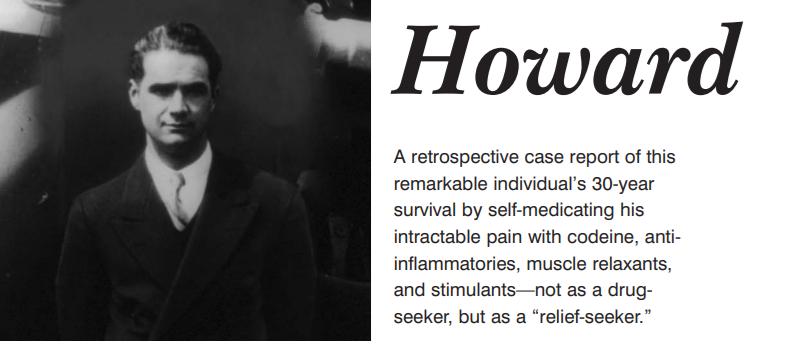
He emerged from the hospital addicted to morphine, codeine, and later Valium. But the painkillers didn’t just numb the physical agony—they dulled the sharp edges of a mind that was becoming unhinged. He began displaying symptoms that today would be clearly diagnosed: Obsessive-Compulsive Disorder (OCD), Post-Traumatic Stress Disorder (PTSD) from repeated crashes, Traumatic Brain Injury (TBI) from head trauma, and likely undiagnosed neurosyphilis, which can cause hallucinations and severe personality changes in its late stages.
He began spiraling. He became consumed with hand-washing rituals that lasted hours. He insisted on sealed containers for his food. He wrote memos detailing the precise number of tissues someone should use when handling a document. He refused to be touched. And then, gradually, he refused to be seen at all.

By the 1950s, Hughes disappeared from public life. He moved into the Desert Inn hotel in Las Vegas and refused to leave. When the owners threatened eviction, he bought the hotel. Then he bought more—four additional Vegas properties, including the Sands and the Frontier. He watched the city from behind blackout curtains while seated naked in a chair, surrounded by jars of his own urine. He ate the same meal—TV dinners, Hershey bars, and whole milk—every day. For months at a time, he wouldn’t speak. He communicated through written notes. Many were borderline incoherent.

He trusted only a small inner circle of Mormon aides—dubbed the “Mormon Mafia.” These men controlled access to Hughes. They decided who could speak to him, when medications were administered, and even, allegedly, which documents he signed. Whether they were loyal caretakers or self-serving gatekeepers is still up for debate. Some say they protected him. Others believe they manipulated him for their own ends.

Meanwhile, Hughes was still making moves. His influence extended far beyond real estate and film. His company, Hughes Aircraft, was a key contractor for the U.S. government. In 1974, it was revealed that the CIA used Hughes’s name and company to build a deep-sea vessel—the Glomar Explorer—to recover a sunken Soviet submarine. The operation, known as Project Azorian, remains one of the most ambitious and secretive intelligence operations in history. Hughes’s name gave the cover story credibility. It also gave the CIA plausible deniability.

Hughes’s political entanglements didn’t stop there. He had longstanding financial connections to powerful people—most notably Richard Nixon. It’s widely believed that Hughes funneled large sums of money through intermediaries like Bebe Rebozo, a close Nixon ally. Some even argue that the 1972 Watergate break-in was partly motivated by a desire to retrieve sensitive documents linking Nixon to Hughes. Though never definitively proven, the rumors persisted and added another shadow to Hughes’s legacy.

And through it all, he was deteriorating—mentally, physically, and emotionally.
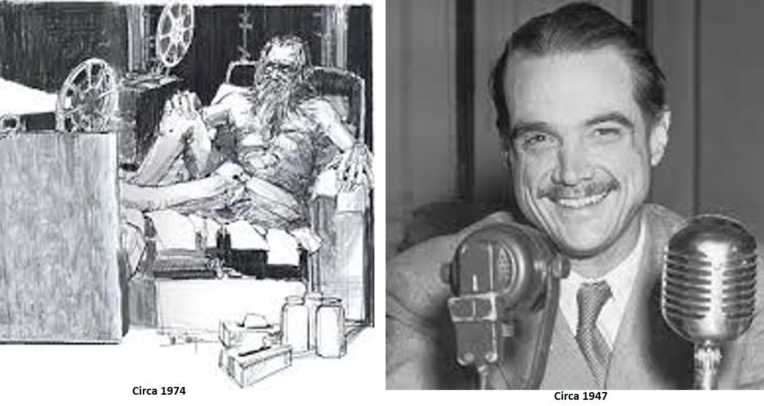
His fingernails grew inches long and curled under themselves. His toenails cracked and yellowed. He refused to bathe or cut his hair. He developed allodynia, a condition where even a soft touch causes extreme pain. He wore Kleenex boxes on his feet and sat naked for days at a time in darkened rooms, watching old movies on repeat. He feared germs, radiation, and even sunlight. His world shrank to a few rooms and a few carefully controlled interactions. He had gone from a bold aviator and innovator to a whisper behind a hotel room door.

In 1972, author Clifford Irving sold a fake Hughes autobiography to publisher McGraw-Hill. Irving claimed he had conducted secret interviews with Hughes. The hoax unraveled spectacularly when Hughes—out of hiding—called in to a press conference and publicly denied any involvement. The voice was unmistakably his. It was the last time the world would ever hear it.

In his final years, Hughes drifted from hotel to hotel, city to city: Managua, Vancouver, Acapulco, London. He traveled by private jet, hidden away, often sedated. His last known photograph is debated. Even his closest aides gave conflicting accounts of where he was at any given time.

On April 5, 1976, Howard Hughes died aboard a chartered Learjet, 30,000 feet over New Mexico, en route from Acapulco to Houston’s Methodist Hospital. He was pronounced dead at 1:27 a.m. The official cause: kidney failure. But when his body was examined, doctors were shocked. He weighed just 90 pounds and had shrunk more than four inches in height. His hair and beard were matted and uncut. His fingernails were several inches long. His skin was covered in sores. He was so unrecognizable, the FBI had to use fingerprints to identify him.

The coroner declared natural causes. But an 18-month private investigation painted a more disturbing picture. According to their report: “Persons unknown intentionally administered a deadly injection of codeine painkiller to this comatose man—obviously needlessly and almost certainly fatal.”

Was it euthanasia? Murder? A mercy killing? Or just gross negligence? We’ll likely never know. But Hughes’s legacy was immediately thrown into chaos. There was no clear will. Dozens of people claimed to have one. Most were forged. One, presented by gas station attendant Melvin Dummar, claimed Hughes had left him $156 million. It was ruled a fake, but the story became the basis for the film Melvin and Howard.

Even in death, Hughes was a myth waiting to be rewritten.
His Howard Hughes Medical Institute—originally established as a tax shelter—became one of the largest and most respected biomedical research organizations in the world. His story inspired books, films (The Aviator among them), and countless conspiracy theories. He remains one of the most complex, contradictory figures in American history.

So, what drove Howard Hughes crazy?

It wasn’t just the painkillers. Or the isolation. Or the crashes. It was the collision of genius without limits, power without oversight, and a mind without rest. He was a man of staggering vision—who could imagine worlds that hadn’t yet been built—but also a man whose compulsions devoured him from the inside out. He chased perfection in everything: flight, film, business, beauty. And perfection, for Hughes, was always just one more note, one more tweak, one more cleaning away.

He died not just from kidney failure—but from the failure of a peripheral support system that let a brilliant man collapse into exponential madness behind closed doors.

This is the real Howard Hughes—the boy genius, the master builder, the spy asset, the germ-fearing recluse, the paranoid mogul, and the man whose life and death still stir questions we may never answer.

And this was the crazy life and death of Howard Hughes.

Powered by a Centaur Intelligence System  centaursystems.ai

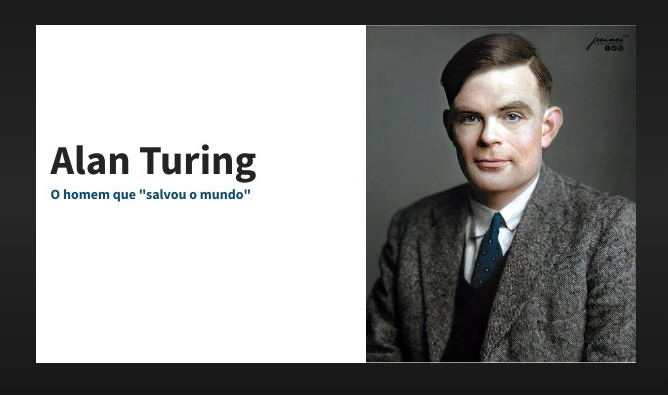
THE MYSTERIOUS DEATH OF CODE-CRACKER ALAN TURING

On June 7, 1954, early-computing genius Alan Turing died alone in his small home at 43 Adlington Road in Wilmslow, Cheshire, England. His housekeeper found Turing in bed, unresponsive, with a half-eaten apple beside him and a strong scent of bitter almonds lingering in the room. Alan Turing, just 41 years old, was pronounced dead of cyanide poisoning. The official inquest ruled it as suicidethe coroner suggesting he’d deliberately laced the apple with poison and that Turing intentionally took his own life.

Something just doesn’t sit right with that conclusion. Why would a brilliant man, full of curiosity and creative energy, end his life so abruptly—and in such a theatrical Snow White manner? Why no suicide note? Why no indication of despair in his final days? Why was there cyanide discovered in the house—but not definitively found in the apple?

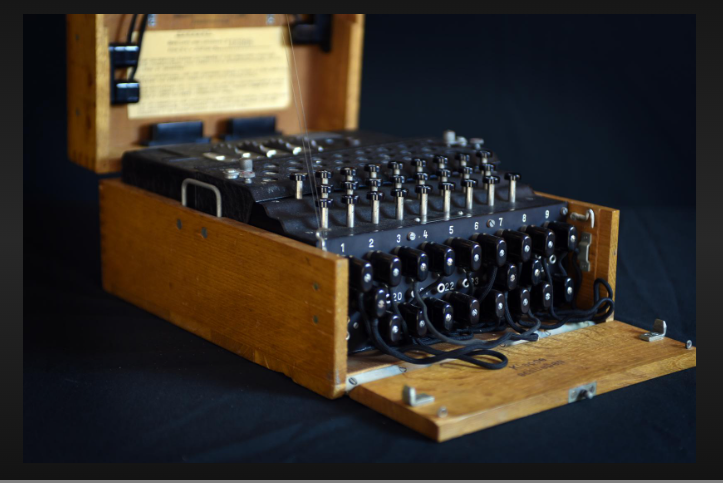
For the answers offered at the time, more questions remain. And that’s why the death of Alan Turing—the father of modern computing and code-cracker of Nazi Germany’s Enigma encryption machine—remains one of the most puzzling mysteries in modern times.

Turing wasn’t just a mathematician or wartime cryptanalyst. He was a singular mind—restless, brilliant, awkward, and visionary. Born on June 23, 1912, in Maida Vale, London, Alan Mathison Turing came into the world with a quiet spark that would one day ignite revolutions in logic, computation, and the birth of today’s artificial intelligence phenomena.

His parents were of respectable English stock—his father, Julius Turing, worked in the Indian Civil Service, while his mother, Ethel Sara, came from a family of railway engineers. But young Alan’s upbringing was far from stable. His parents traveled frequently between India and England, and Alan was largely raised by foster caregivers in Sussex.

Even as a boy, Alan was different. He had a peculiar way of thinking—literal, intense, and obsessively focused on ideas. He was fascinated by numbers, time, systems, and patterns. At the age of 13, he attended Sherborne School, a prestigious public institute in Dorset, where his brilliance clashed with the classical curriculum. He didn’t shine in Latin or essays—but in math and science, he was already orbiting in another stratosphere.

“O homem que salvou o mundo” – “The man who saved the world”

Alan Turing’s genius truly began to crystallize during his university years. After enrolling at King’s College, Cambridge, in 1931, he studied mathematics and quickly gained recognition for his astonishing intellect. By 22, he was elected a fellow of the college for his groundbreaking work on the central limit theorem—a prestigious honor for someone so young. But it wasn’t just his grades or papers. It was the way he thought. Turing didn’t just solve problems—he reconstructed the very framework of how problems could be solved.

He was also a gifted athlete. Turing ran long distances with the stamina of a marathoner—often timing his training against the local bus routes and sometimes nearly qualifying for the British Olympic team. That combination of mental precision and physical resilience defined much of his life. He wasn’t just smart—he was tough, solitary, and determined.

In 1936, at just 24 years old, Alan Turing published a paper titled “On Computable Numbers, with an Application to the Entscheidungsproblem.” It would go on to become one of the most important documents in the history of science. In it, he proposed a theoretical machine—now known as the Turing Machine—that could simulate any conceivable mathematical computation.

This wasn’t just abstract theory. Turing was laying the foundation for the modern computer—long before silicon chips or Apple keyboards ever existed. He was dreaming of a mechanical mind. Artificial general intelligence. AGI.

By the outbreak of World War II, Turing’s genius was already on the radar of British intelligence. During the war, Turing was stationed at the now-famous Bletchley Park, the heart of Britain’s codebreaking operations. He worked in “Hut 8,” the unit tasked with cracking German naval codes encrypted by the Enigma machine.

These codes were considered unbreakable. The Enigma’s rotating wheels created a staggering number of possible settings—trillions, in fact. But Turing, using mathematics, logic, and sheer grit, helped devise an electromechanical device called the Bombe, which dramatically sped up the process of decoding German messages.

Turing’s role at Bletchley Park was both secret and essential. Without his breakthroughs, the Battle of the Atlantic might have been lost. Convoys sunk. Supplies cut off. The war turned. Some historians credit Turing’s work with shortening the conflict by two years—and saving millions of lives. He also worked on speech encryption tools like Delilah and helped develop tools now considered the ancestors of artificial intelligence, AI. But at the time, his name was buried under layers of national secrecy.

After the war, Turing continued his pioneering work in computing and artificial intelligence. He worked at the University of Manchester and helped design the Automatic Computing Engine (ACE), one of the world’s first stored-program computers. It was long before names like Jobs, Wozniak, Gates, Allen, Musk, and Altman were known.

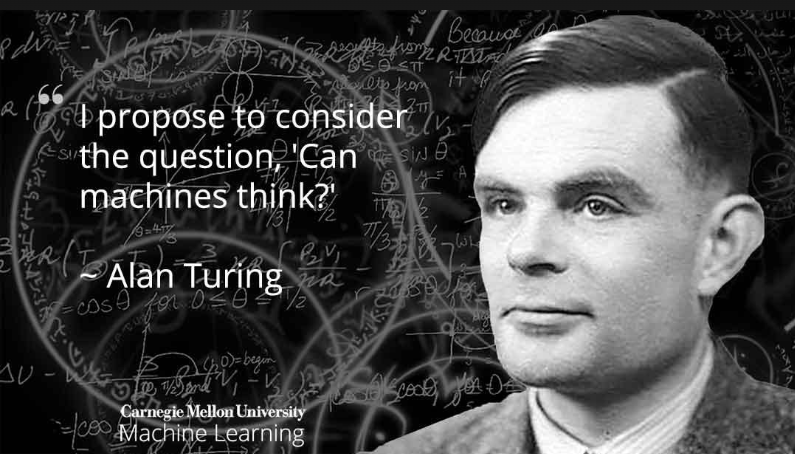
Here he explored whether machines could think—proposing a framework now known as the “Turing Test,” a thought experiment that still anchors debates in AI ethics and philosophy. He also dove into the strange world of morphogenesis—the mathematical patterns behind the shapes of plants, animals, and natural forms. Once again, Alan Turing was far ahead of his time.

But while his professional life soared, his personal life unraveled.

Alan Turing was a gay man in a society where homosexuality was not just taboo—it was illegal. In 1952, he met a young man named Arnold Murray. After a minor incident at Turing’s home, police uncovered his relationship with Murray and arrested him under the gross indecency laws—the same archaic statutes used decades earlier to destroy Oscar Wilde. Turing didn’t deny it. He told the truth.

He was convicted. The court offered him two options: imprisonment or a course of hormone therapy—chemical castration. Turing chose the latter. He was injected with estrogen for a year, which caused weight gain, breast development, and emotional distress.

It also stripped him of his security clearance and curtailed his ability to work in the field he helped create. The British government had turned on its war hero. Humiliated, ostracized, and punished, Turing withdrew from public life. Two years later, he was dead.

On the morning of June 8, 1954, Turing’s housekeeper arrived at his modest home and found his body. He was lying in bed, dead from suspected cyanide poisoning. A half-eaten apple lay beside him, supposedly laced with the deadly compound. The apple itself was never tested, oddly. But traces of cyanide were found in his stomach and in a solution in a nearby room where Turing had been experimenting with electroplating.

The coroner ruled it a suicide. Case closed. Or was it?

There are several things about Turing’s death that just don’t line up. For starters, he left no suicide note. He’d just begun planning a vacation. His recent letters were upbeat. He’d resumed work. And those who knew him best said suicide was not in his nature.

Alan Turing was curious. Creative. Resilient. Even his mother—who knew her son better than anyone—believed his death was an accident, caused by his careless handling of cyanide in the lab. Turing had a known habit of tasting chemicals during experiments, a reckless quirk that may have cost him his life.

And what about the apple? Some suggest it was a theatrical nod to Snow White—one of Turing’s favorite fairy tales. But that’s pure conjecture. Others pointed out the apple wasn’t tested, and the presence of cyanide elsewhere in the house makes accidental inhalation or ingestion entirely plausible.

Then there’s the darker theory. Assassination. Could Alan Turing have been silenced?

It’s not as far-fetched as it sounds. Turing knew state secrets. He was a homosexual during a time of Cold War paranoia, when homosexuality was seen as a security risk. The same government that once praised him now saw him as vulnerable to blackmail or foreign coercion. Could the British intelligence services have quietly decided that Alan Turing had become a liability?

There’s no hard proof. But there is precedent to many state-sanctioned murders. Leon Trotsky, Dag Hammarskjold, Alexander Litvinenko, and Jamal Khashoggi come to mind.

Intelligence agencies don’t always act with transparency or mercy—especially in the Cold War era. Was Turing eliminated? Was his death staged to look like suicide? Or did the emotional toll of his conviction and isolation finally push him too far?

We may never know.

What we do know is that Alan Turing was a man of extraordinary mind and rare moral courage. He imagined the future, even as the world failed to accept the truth of who he was. He gave everything—his intellect, his creativity, and his loyalty—to a nation that ultimately betrayed him.

In 2009, the British government formally apologized for persecuting this fine man. In 2013, Queen Elizabeth II granted him a posthumous royal pardon. In 2021, his face appeared on the Bank of England’s £50 note—a quiet symbol of belated recognition.

But even today, the mystery remains unresolved. The truth is, we don’t really know what happened on that June day in 1954. We only know what we’ve been told.

Why does it still matter?

Because justice matters. Because the lives of geniuses, misfits, and visionaries must be remembered truthfully—not just in sanitized biographies or polite memorials. Because our world is now shaped by the very machines Turing imagined—and we owe him a fair account of how his story ended.

And because somewhere, behind the locked doors of history, lies the truth about the mysterious death of code-cracker Alan Turing.

Powered by a Centaur System ©

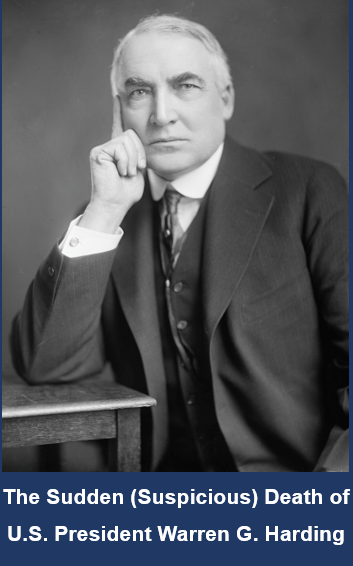
THE SUDDEN (SUSPICIOUS?) DEATH OF U.S. PRESIDENT WARREN G. HARDING

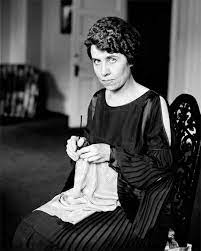
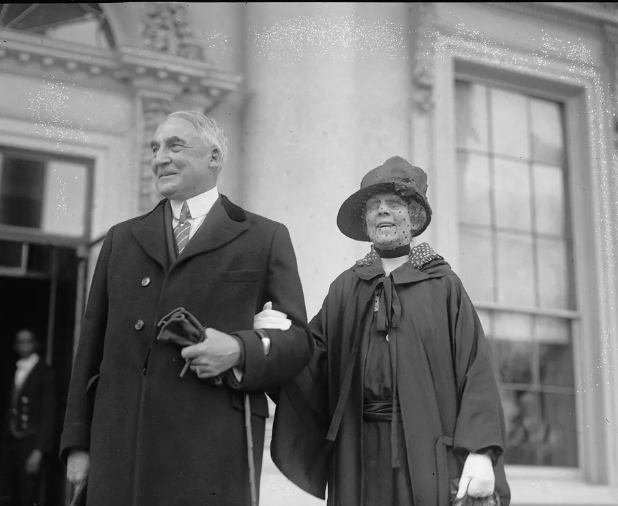
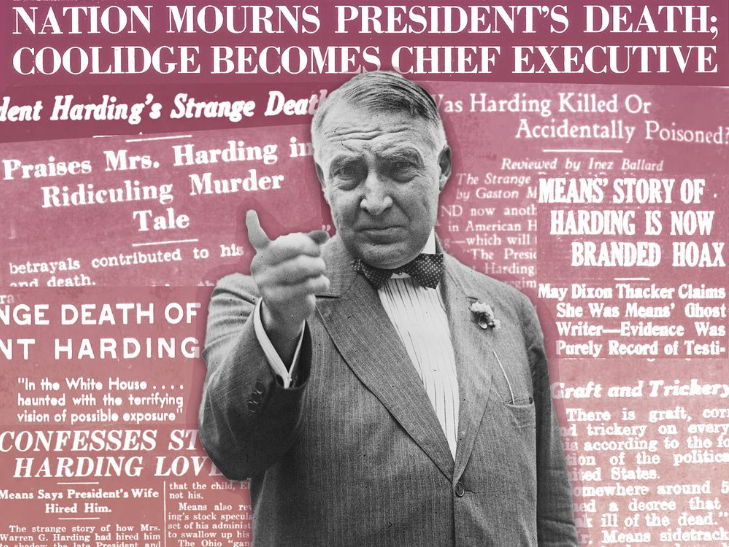
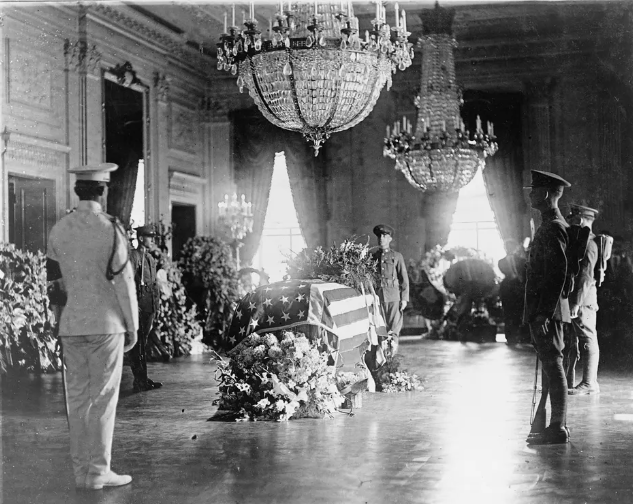
One hundred years ago, on August 2nd, 1923, Warren G. Harding, the 29th President of the United States, suddenly died in a San Francisco hotel room. He was 57 years old. Immediately—due to no autopsy insisted upon by the ironclad demand from his wife, Florence Harding, and the fact that his body was embalmed one hour after death—suspicious rumors of foul play circulated. Conspirators came in many forms. Corrupt politicians, scandal cover-ups, quack physicians, and foreign operatives. But the most sinister accusation of all was Harding being intentionally poisoned by his wife.

The official cause of death released in press statements by the attending doctors was a “probable cerebral apoplexy”. In other words, President Harding had a stroke, a fatal brain event. There was no mention of any toxicity through poison nor any suggestion of a chronic cardiac condition, a heart attack.

Harding’s body was returned by train to Washington, DC, lay in state for two days, then was transported again by train to his hometown of Marion, Ohio where he was entombed in a marble crypt. His wife, Florence, died the following year of kidney failure and came to rest beside him. As the years passed, the truth of the Harding Administration emerged. It became known as America’s most scandalous presidency.

Extramarital lovers, illegitimate children, political corruption, cronies, bribes, payoffs, and even suicides emerged that painted a black mark on Harding’s history. The persistent suspicion of cover-up in his death failed to go away. Today, there’s a consensus as to what really happened in Harding’s death. We’ll get to that conclusion but, first, let’s look at who Warren Harding was, how he got to the White House, and how he came to die in that San Francisco hotel room.

Warren Gamaliel Harding was born on November 3rd, 1865—the year the Civil War ended—on his grandfather’s farm near Blooming Grove, Ohio. His father was a small-town physician with a small practice that earned little money. His mother was a devoutly religious homemaker with eight children to care for, including Warren who was the oldest. Harding was an average student but a very strong boy with even stronger work ethic.

Following grade school, Harding attended Ohio Central College graduating in 1882 with a B.S. degree (which grounded him as a later politician). Here he  gained experience editing and publishing the college paper. After college, Harding worked at various jobs such as a barn painter, a railroad laborer, and a horse team driver. It was in Marion, Ohio where Warren Harding got his first business break.

Harding had saved enough money to purchase a failing newspaper in Marion. He parlayed it into a profitable venture in which he wore all hats—reporter, editor, and publisher. These roles allowed Harding to get well connected and form the “Marion Gang” whom he nepotistically took with him through his political career, including placing some of these friends and allies in high-ranking service jobs in the United States federal government. That was to come back and haunt him.

In the late 1880s, Warren Harding met Florence Kling at a community dance. He became smitten with Florence who was the daughter of a banker and Marion’s richest man. Amos Kling did not approve of Warren Harding and warned Florence that Harding “would never amount to anything”. He refused to speak to Harding.

Florence Harding went to work in their newspaper business. She also got active in his political ambitions. “The only things I know are publishing and politics,” Florence was quoted as saying. She was especially good at politics.

History—now one hundred years after Harding’s death—records Harding to be an excellent speaker, very personable with a great memory for people, a driven man, but not too bright. Florence was smart, and she used her intelligence to make connections and pave roads for Harding to travel as he moved up the Ohio political ladder.

Warren Harding served as an Ohio State Senator from 1900 to 1904. From then to 1906 he was the Lieutenant Governor of Ohio, and in 1910 he ran as Ohio’s Governor but was defeated. Harding went back to the paper industry but in 1915 he entered federal politics and won a seat as a Senator for the State of Ohio. This opened doors in Washington.

The Republican national convention was deadlocked in the 1920 presidential selection race. Ultimately, the delegates chose Warren Harding as a compromise candidate. He went on to represent the Republicans as a moderate in the November 1920 presidential election. Together with running mate Calvin Coolidge, they won a landslide victory over the Democrats.

Warren G. Harding was inaugurated as the 29th United States President on March 4th, 1921. He ran on the slogan “Return to Normalcy” which fit his leadership style. America was only two years past the end of WWI and the public longed for a return to pre-war normal. The country was in a financial recession with what many Americans thought was unnecessary ties still with foreign countries.

Harding focused on a protectionist America by lowering taxes, increasing foreign tariffs, and getting the country out of the League of Nations process that dynamited Woodrow Wilson’s presidency. In one year after taking off, the country rebounded and began prosperity never seen before. It was the Roaring Twenties.

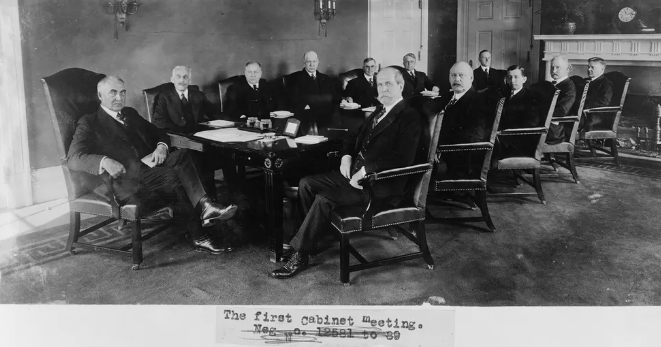
Warren Harding was a hands-off president. He appointed people he thought he could trust into high office and let them loose to do their jobs. His error was not holding them accountable and, given human nature, even his closest friends began to abuse their positions for personal gain.

Harding’s other error—his vice and weakness—was womanizing, drinking, and gambling. Rumors put him having secret tunnels under the White House where he would smuggle his girls in and ply them with illegal alcohol. (Remember, this era was the start of Prohibition.) Harding’s poker games were legendary as well as a well-known fact that he supported mistresses and had at least one illegitimate daughter. Warren and Florence were childless.

Among the brewing political and criminal crises was what’s known as the Teapot Dome Scandal. This involved an oil-producing region in Wyoming that held reserves set apart for the U.S. Navy. Harding had appointed his close Marion Gang friend, Albert B. Fall, as Secretary of the Interior who oversaw the federal lands at Teapot Dome and had the power to award oil production contracts. Fall pocketed hundreds of thousands of payoff money for preferential treatment. This scandal (among others), which Harding knew about, had the potential to have President Harding impeached.

It was under this stressful black cloud that Warren Harding departed Washington on his “Voyage of Understanding” cross-country train and ship tour in June of 1923. Members of Harding’s staff observed his health rapidly deteriorating. A once vibrant man with the world’s best handshake was notably nervous and privately conferring with advisors about how to diffuse the runaway in the Marion Gang.

“I can take care of my enemies all right. But my damn friends… they’re the ones that keep me walking the floor at night,” Harding said to one aide. To another, “If you knew of a great scandal in our administration, would you for the good of the country and the party expose it publicly, or would you bury it?”

President Harding’s tour took him across the west and up to Alaska. He spoke before hundreds of thousands of common folks in places like St. Louis, Kansas City, Denver, Salt Lake City, Helena, and Spokane. He went to a small Alaskan village called Metlakatla, then did a by-stop in Vancouver, Canada before heading straight for San Francisco and checking into the Palace Hotel with an extensive entourage including the future president Herbert Hoover who was his Secretary of Commerce.

Harding’s health had been going downhill since leaving Washington. The stress of his job and unfolding issues gave him a malady then diagnosed as neurasthenia which is an overly nervous condition where the sufferer is unable to relax. Compounding this condition, including non-recognizing many presenting symptoms of bad physical health, was the president’s personal doctor.

Charles E. Sawyer was part of the Ohio Gang. Sawyer wasn’t a trained physician. He was an odd, self-taught homeopath who prescribed plants and birds and rocks and things (not sure about sand and hills and rings) as substitutes for accepted medical practices. But Sawyer was a likable, down-homey Oh-Hi-Yo officially forehead-stamp-approved by Mrs. Harding who saw Sawyer as a 1920s genuine guru teaching them a better way.

Harding also traveled with a real doctor—Joel T. Boone. Dr. Boone knew Harding was critically ill and telegrammed ahead from Alaska to San Francisco, having two of the country’s leading cardiology specialists standing by. These were Dr. Ray Lyman Wilbur, the president of the American Medical Society, and Dr. Charles Cooper, the leading cardiac surgeon in the USA.

Dr. Boone knew what was happening.  President Harding was presenting these symptoms:

  • Severe abdominal and thoracic pains as in a crushing weight on the chest
  • Pain radiating down both arms
  • Shortness of breath
  • Dyspnoea at night
  • Nausea
  • Severe bouts of indigestion
  • Off and on fever—chills & sweats
  • Exhaustion after little energetic effort
  • Foul acetonic breath

Dr. Boone knew President Harding was suffering congestive heart failure and likely experienced a series of myocardial infarctions where his enlarged heart muscles were quickly failing. Boone knew Harding’s heart was likely to stop, and that he would suddenly die.

That happened at 7:20 pm on August 2nd, 1923. President Harding was in his hotel suite with his wife and two nurse care aids. Florence was reading a favorable column in the Saturday Evening Post. Harding remarked, “That is good. Go on.”

Florence continued when, with only a shudder and not a sound, the President of the United States stiffened, laid back on the bed, and instantly died.

President Harding’s staff came into the room. That included Herbert Hoover and Doctors Sawyer, Boone, Wilbur, Cooper, and another cardiac expert, Hubert Work. These medical practitioners debated the primary cause of death.

They knew the American public would immediately want to know what happened to their Commander-in-Chief and be assured nothing illegal, conspirator, or dark was behind the president’s sudden and unexpected death—especially when the official reports released to the following press during the Voyage of Understanding assured that Warren Harding was a man fit to competently hold office and guide the nation.

The doctors knew, under the circumstances, that no conclusive cause of death could be established without a complete and thorough autopsy. To this, Florence Harding was fiercely opposed. As Doctor Wilbur put it in his notes written the next day, “We shall never know exactly the immediate cause of President Harding’s death since every effort that was made to secure an autopsy was met with complete and final refusal by Mrs. Harding.”

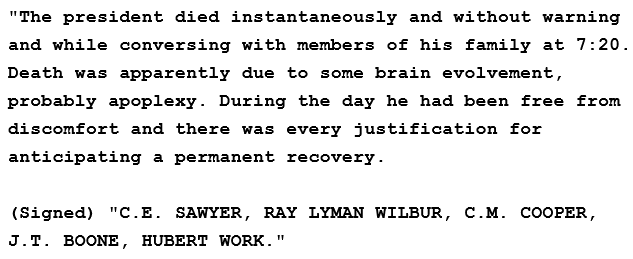
Knowing that the public must be notified of the president’s death as soon as possible and that they would demand to know what happened—what the true cause of death was—the team of five physicians signed this statement:

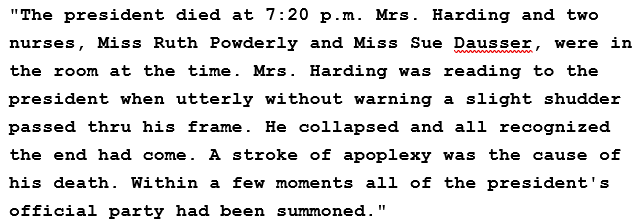
Realizing their rush to judgment without medical evidence (and strongly suspecting a myocardial infarction or a heart attack), they released this second statement twenty minutes later:

Stroke of Cerebral Apoplexy. Myocardial Infarction. Let’s look at what these medical terms mean.

So how did the 1923 American public and folks over the last one hundred years go from accepting that President Warren G. Harding died of natural causes to a conspirator suspicion that he was murdered—possibly by his wife?

I think a few reasons. One is the president’s staff poorly handled the president’s health information. One day the president was strong as an ox. The next day he died.

There was no autopsy. His body was embalmed an hour after death. And this was through an ironclad order from the wife, Florence Harding, who knew full well of her husband’s infidelity and unwinding scandals.

Note: I cannot find anything in historical notes to determine if there was a San Francisco coroner having jurisdiction and the authority to hold the body while an independent autopsy was done. Or if any other authorities like the SF police were notified.

The other factor was the collective doctors’ stick handling of the “probable cause of death.” They were aware of the public backlash for knowing how serious the president’s medical condition and the perception of them not being seen to do something about it and prevent his death, but they first wrote it off as an unpredictable and unpreventable stroke, not a preventable heart attack. From Dr. Wilbur’s notes:

“In the aftermath, we were belabored and attacked by the newspapers antagonistic to Harding, and by the cranks, quacks, antivisectionalists, nature healers, the Dr. Albert Abrams electronic-diagnostic group, and many others. We were accused of starving the president, overfeeding him to death, of assisting in slowly poisoning him, and plying him to death with pills and purgatives. We were accused of being abysmally ignorant, stupid and incompetent, and even of malpractice. We were said to have forced our way to Harding’s bedside “through political pull and for political reasons.”

But the craziest theory of them all came from a book written by Gaston B. Means in 1930 titled The Strange Death of President Harding. Means claimed that Florence Harding murdered her presidential husband with poison. Without a shred of evidence, Means suggested two motives. One was because of her husband’s cheating. The other was to save him the embarrassment of the scandals. Gaston Means, by the way, went to jail over a con job in scamming the Charles Lindberg baby homicide case.

One hundred years have passed since United States President Warren G. Harding passed. There’s no doubt Harding had a fatal heart attack. That’s life, but the fallout from living the presidential life sucks. Here are lines from Herbert Hoover while dedicating a memorial to President Harding:

We saw him gradually weaken not only from physical exhaustion but from mental anxiety. Warren Harding had a dim realization that he had been betrayed by a few of the men whom he trusted, by men whom he believed were his devoted friends. That was the tragedy of the life of Warren Harding.