Tag Archives: TBI

THE CRAZY LIFE AND DEATH OF HOWARD HUGHES

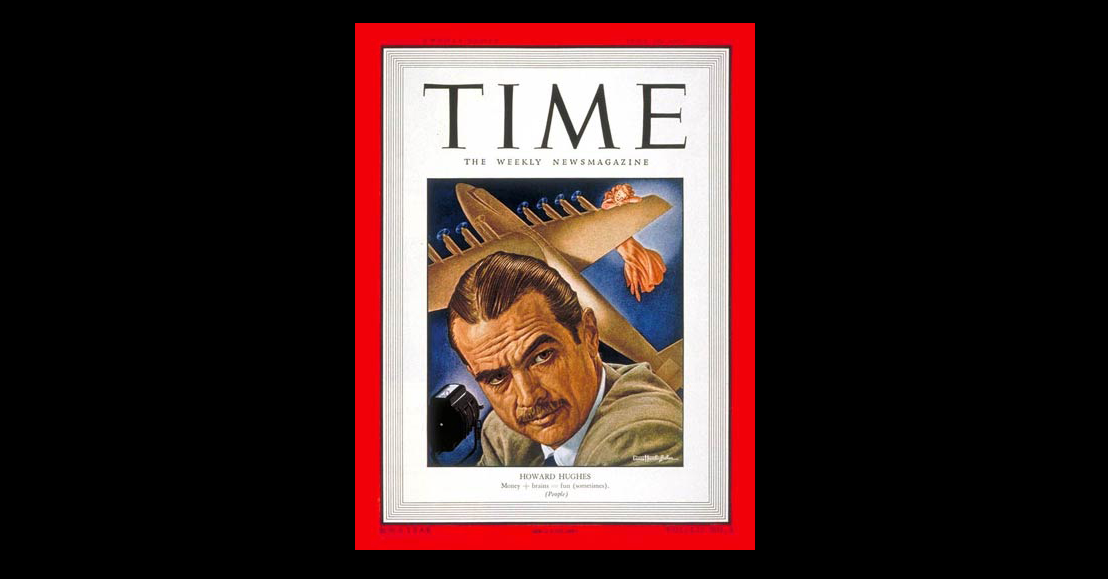
Howard Hughes was a man who could design and test-fly an airplane, direct a movie, seduce a starlet, buy casino hotels, disappear for years, and still make headlines without showing his face. He was as much a symbol of American ambition as he was a cautionary tale of what unchecked wealth, genius, and madness can do to a man. Born into privilege, fueled by obsession, and haunted by demons, Hughes lived a life so extreme that it bordered on mythology. But his death—quiet, grim, and mysterious—might be stranger than the intense living that led to it. Here’s the drama of the crazy life and death of Howard Hughes.
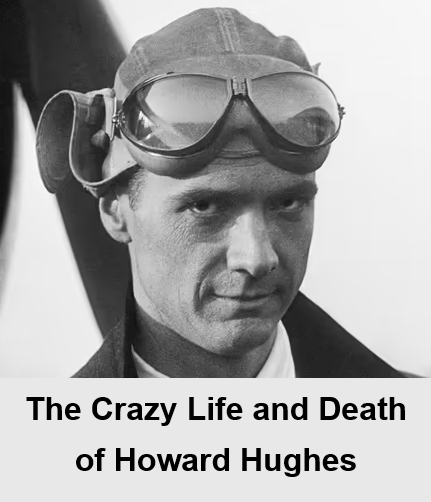
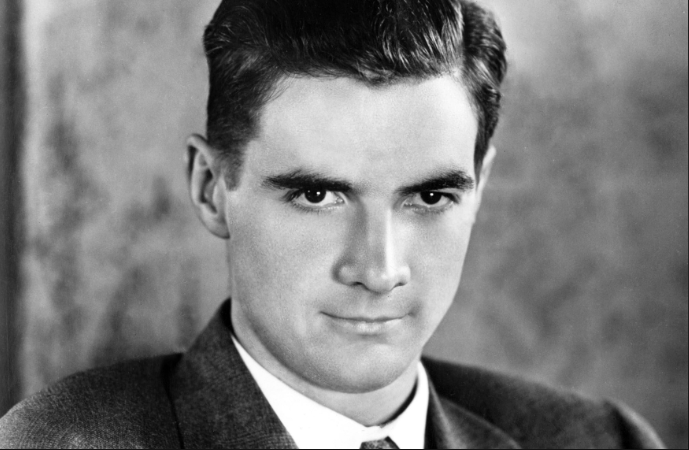
To understand his end, we have to rewind to the beginning of a life lived on the edges of brilliance and breakdown. Howard Hughes was many things: inventor, aviator, filmmaker, billionaire, recluse, suspected intelligence asset, and perhaps most tragically, a prisoner of his own mind.

He died aboard a private jet, his six-foot-four frame weighing only ninety pounds, unrecognizable even to those who’d once worshipped him. The official version says kidney failure. But the deeper you dig, the more the story starts to crack. It was a death as strange as his life—one that still casts a long shadow.

Howard Robard Hughes Jr. was born on December 24, 1905, in Humble, Texas, into a family drenched in oil money. His father, Howard Sr., invented the Hughes rotary drill bit and founded the Hughes Tool Company, which would bankroll young Howard’s endless stream of curiosities and obsessions. By age 11, he built Houston’s first wireless radio transmitter. At 12, he constructed a motorized bicycle from scrap parts. By 14, he was designing working aircraft models in his room. But early brilliance often walks hand in hand with isolation.

Tragedy struck fast and deep. His mother Allene died when he was just 16—reportedly from complications of an ectopic pregnancy. His father died suddenly two years later from a heart attack. At 18, Hughes was a billionaire orphan with complete control over the Hughes Tool fortune. No advisors. No parental guidance. Just money, ambition, and a ticking mind that was already showing cracks.

He dropped out of Rice University and headed west to Los Angeles. Hollywood in the 1920s was wild, wide open, and vulnerable to someone like Hughes: rich, eccentric, and hungry to create. His first film, “Swell Hogan,” was a bomb. But he rebounded with Hell’s Angels, an over-the-top war epic that cost $4 million, used real WWI aircraft, and took three years to complete. Hughes delayed filming repeatedly, waiting for perfect cloud formations to shoot aerial scenes. That level of obsessive control would become his hallmark.
He followed up with The Outlaw (1943), mostly remembered for its promotional posters featuring Jane Russell’s cleavage. Hughes engineered a custom bra for her, designed to lift and frame her bustline more dramatically under studio lights. While Russell later claimed she never wore the thing, Hughes’s reputation as a hyper-controlling, detail-obsessed innovator was sealed. He didn’t just direct movies—he reimagined how to shoot them.

But filmmaking was just the opening act. Hughes’s true passion—perhaps his purest love—was aviation. In 1935, he set a world airspeed record flying the Hughes H-1 Racer. In 1938, he flew around the globe in 91 hours, earning him a ticker-tape parade in New York and a congratulatory telegram from President Franklin D. Roosevelt. His company, Hughes Aircraft, exploded into a major defense contractor, developing radar systems, missiles, and later, aerospace technology. He personally test-piloted many of the prototypes—sometimes successfully, sometimes not.

The worst crash came in 1946 while piloting the XF-11 reconnaissance plane over Beverly Hills. He clipped telephone wires and crash-landed in a residential area, destroying several homes. He broke dozens of bones, suffered third-degree burns, and nearly died. He was pulled from the wreckage by a U.S. Marine who happened to live nearby. The physical pain lingered for the rest of his life. So did the emotional trauma.

This is the crash that many believe began driving Howard Hughes crazy.

He emerged from the hospital addicted to morphine, codeine, and later Valium. But the painkillers didn’t just numb the physical agony—they dulled the sharp edges of a mind that was becoming unhinged. He began displaying symptoms that today would be clearly diagnosed: Obsessive-Compulsive Disorder (OCD), Post-Traumatic Stress Disorder (PTSD) from repeated crashes, Traumatic Brain Injury (TBI) from head trauma, and likely undiagnosed neurosyphilis, which can cause hallucinations and severe personality changes in its late stages.
He began spiraling. He became consumed with hand-washing rituals that lasted hours. He insisted on sealed containers for his food. He wrote memos detailing the precise number of tissues someone should use when handling a document. He refused to be touched. And then, gradually, he refused to be seen at all.

By the 1950s, Hughes disappeared from public life. He moved into the Desert Inn hotel in Las Vegas and refused to leave. When the owners threatened eviction, he bought the hotel. Then he bought more—four additional Vegas properties, including the Sands and the Frontier. He watched the city from behind blackout curtains while seated naked in a chair, surrounded by jars of his own urine. He ate the same meal—TV dinners, Hershey bars, and whole milk—every day. For months at a time, he wouldn’t speak. He communicated through written notes. Many were borderline incoherent.

He trusted only a small inner circle of Mormon aides—dubbed the “Mormon Mafia.” These men controlled access to Hughes. They decided who could speak to him, when medications were administered, and even, allegedly, which documents he signed. Whether they were loyal caretakers or self-serving gatekeepers is still up for debate. Some say they protected him. Others believe they manipulated him for their own ends.

Meanwhile, Hughes was still making moves. His influence extended far beyond real estate and film. His company, Hughes Aircraft, was a key contractor for the U.S. government. In 1974, it was revealed that the CIA used Hughes’s name and company to build a deep-sea vessel—the Glomar Explorer—to recover a sunken Soviet submarine. The operation, known as Project Azorian, remains one of the most ambitious and secretive intelligence operations in history. Hughes’s name gave the cover story credibility. It also gave the CIA plausible deniability.

Hughes’s political entanglements didn’t stop there. He had longstanding financial connections to powerful people—most notably Richard Nixon. It’s widely believed that Hughes funneled large sums of money through intermediaries like Bebe Rebozo, a close Nixon ally. Some even argue that the 1972 Watergate break-in was partly motivated by a desire to retrieve sensitive documents linking Nixon to Hughes. Though never definitively proven, the rumors persisted and added another shadow to Hughes’s legacy.

And through it all, he was deteriorating—mentally, physically, and emotionally.
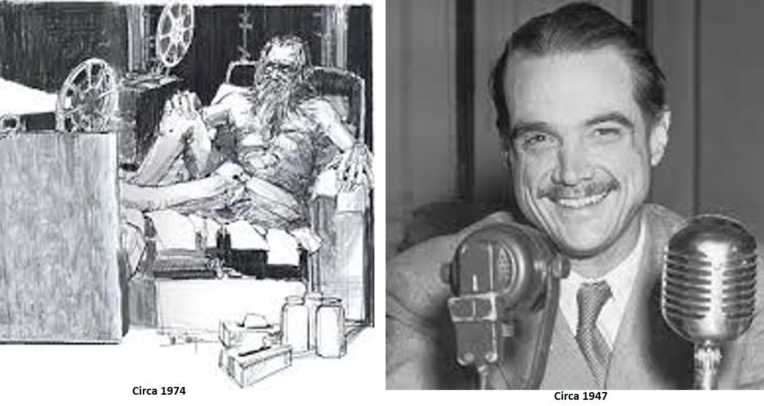
His fingernails grew inches long and curled under themselves. His toenails cracked and yellowed. He refused to bathe or cut his hair. He developed allodynia, a condition where even a soft touch causes extreme pain. He wore Kleenex boxes on his feet and sat naked for days at a time in darkened rooms, watching old movies on repeat. He feared germs, radiation, and even sunlight. His world shrank to a few rooms and a few carefully controlled interactions. He had gone from a bold aviator and innovator to a whisper behind a hotel room door.

In 1972, author Clifford Irving sold a fake Hughes autobiography to publisher McGraw-Hill. Irving claimed he had conducted secret interviews with Hughes. The hoax unraveled spectacularly when Hughes—out of hiding—called in to a press conference and publicly denied any involvement. The voice was unmistakably his. It was the last time the world would ever hear it.

In his final years, Hughes drifted from hotel to hotel, city to city: Managua, Vancouver, Acapulco, London. He traveled by private jet, hidden away, often sedated. His last known photograph is debated. Even his closest aides gave conflicting accounts of where he was at any given time.

On April 5, 1976, Howard Hughes died aboard a chartered Learjet, 30,000 feet over New Mexico, en route from Acapulco to Houston’s Methodist Hospital. He was pronounced dead at 1:27 a.m. The official cause: kidney failure. But when his body was examined, doctors were shocked. He weighed just 90 pounds and had shrunk more than four inches in height. His hair and beard were matted and uncut. His fingernails were several inches long. His skin was covered in sores. He was so unrecognizable, the FBI had to use fingerprints to identify him.

The coroner declared natural causes. But an 18-month private investigation painted a more disturbing picture. According to their report: “Persons unknown intentionally administered a deadly injection of codeine painkiller to this comatose man—obviously needlessly and almost certainly fatal.”

Was it euthanasia? Murder? A mercy killing? Or just gross negligence? We’ll likely never know. But Hughes’s legacy was immediately thrown into chaos. There was no clear will. Dozens of people claimed to have one. Most were forged. One, presented by gas station attendant Melvin Dummar, claimed Hughes had left him $156 million. It was ruled a fake, but the story became the basis for the film Melvin and Howard.

Even in death, Hughes was a myth waiting to be rewritten.
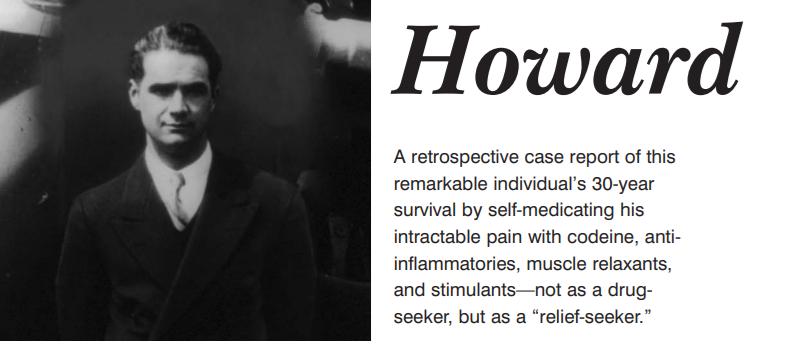
His Howard Hughes Medical Institute—originally established as a tax shelter—became one of the largest and most respected biomedical research organizations in the world. His story inspired books, films (The Aviator among them), and countless conspiracy theories. He remains one of the most complex, contradictory figures in American history.

So, what drove Howard Hughes crazy?

It wasn’t just the painkillers. Or the isolation. Or the crashes. It was the collision of genius without limits, power without oversight, and a mind without rest. He was a man of staggering vision—who could imagine worlds that hadn’t yet been built—but also a man whose compulsions devoured him from the inside out. He chased perfection in everything: flight, film, business, beauty. And perfection, for Hughes, was always just one more note, one more tweak, one more cleaning away.

He died not just from kidney failure—but from the failure of a peripheral support system that let a brilliant man collapse into exponential madness behind closed doors.

This is the real Howard Hughes—the boy genius, the master builder, the spy asset, the germ-fearing recluse, the paranoid mogul, and the man whose life and death still stir questions we may never answer.

And this was the crazy life and death of Howard Hughes.
Powered by a Centaur Intelligence System  centaursystems.ai

THE TRUE CAUSE OF ELVIS PRESELY’S DEATH

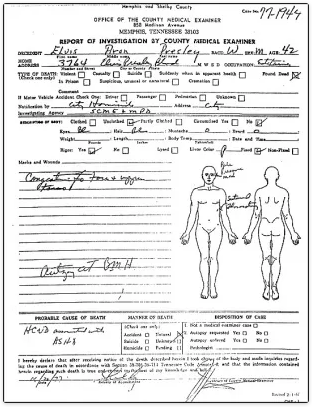
Elvis Presley suddenly dropped in the bathroom of his Graceland mansion on the afternoon of August 16, 1977. He was rushed to Baptist Memorial Hospital in Memphis, Tennessee, pronounced dead, then shipped to the morgue and autopsied the same afternoon. Three days later, the coroner issued Elvis’s death certificate stating the cause as “hypertensive cardiovascular disease with atherosclerotic heart disease” — heart attack for short.

However, toxicology results soon identified ten pharmaceutical drugs in Elvis’s system with codeine being ten times the therapeutic level. This revelation started accusations of a cover-up and suggesting conspiracy theories of a sinister criminal act.

Pushing forty years after, modern medicine and forensics took a new look at the Presley case facts and determined something entirely different from a heart attack or a drug overdose really killed the King of Rock & Roll.

Hindsight being twenty-twenty, let’s first look at how death investigations should be conducted. Then we’ll explore the true cause of Elvis Presley’s death.

Coroners are the judge of death. It’s their responsibility to establish six main facts surrounding a death. (Coroners are not to assign blame.) In the Presley case, the facts determined at the time were:

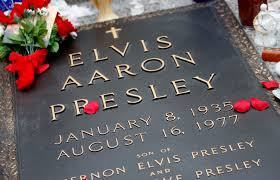
Identity of Deceased — Elvis Aaron Presley.
Time of Death — Approximately 2:00 p.m. on Tuesday, August 16, 1977.
Place of Death — 3754 Elvis Presley Boulevard, Memphis, Tennessee.
Cause of Death — Heart attack.
Means of Death — Chronic heart disease.
Manner of Death — Natural

There’s a distinct difference between Cause of Death and Means of Death. Cause is the actual event. Means is the method in which death happened. Examples are cause being a ruptured aorta with means being a motor vehicle crash, or cause being massive cerebral interruption with means being gunshot wound to the head.

Once the first five facts are known, it’s the coroner’s duty to classify the Manner of Death. There are five universal death manner classifications:

  • Natural
  • Homicide
  • Suicide
  • Accidental
  • Undetermined

Elvis Presley’s death was ruled a natural event, thought at the time as being an acute cardiac event resulting from existing cardiovascular disease. If the coroner determined Elvis died from a drug overdose, the ruling would have been accidental. No one ever claimed it was suicide or homicide.

One principle of death investigation is to look for antecedent evidence—pre-existing conditions which contributed to the death mechanism or was responsible for causing or continuing a chain of events that led to the death.

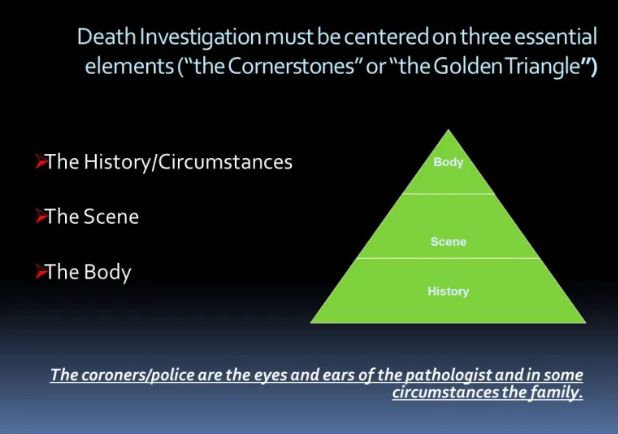
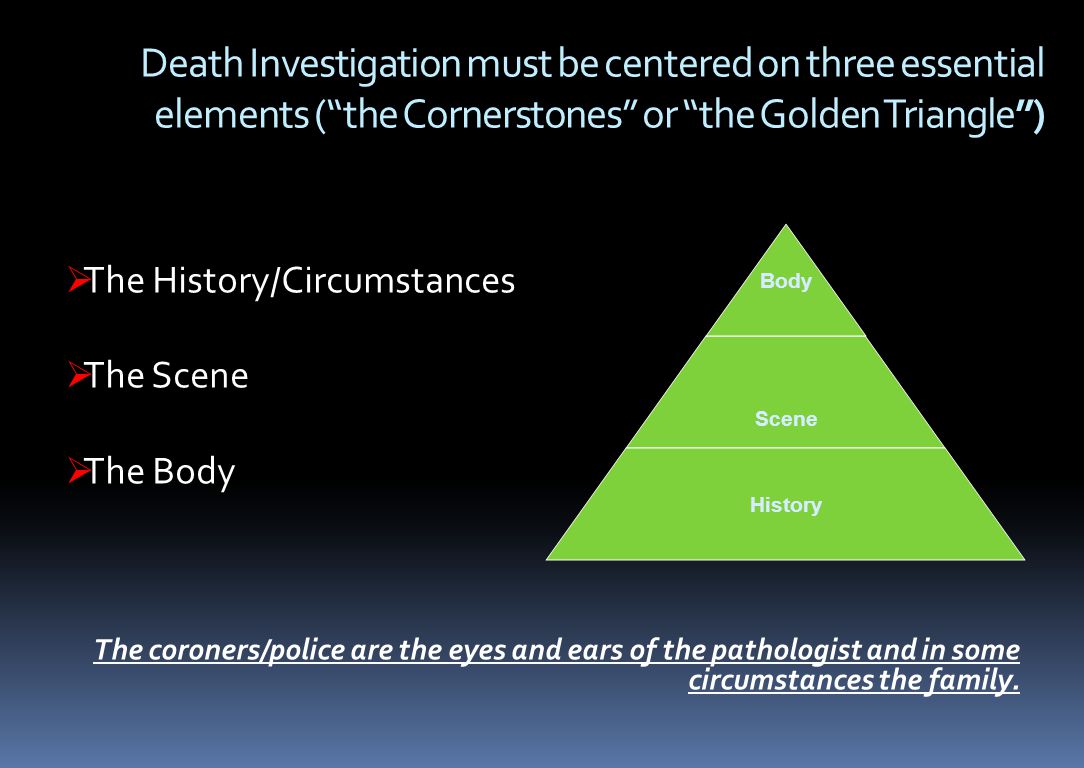
Another principle of death investigation is examining the triangle of Scene—Body—History. This compiles the totality of evidence.


Let’s look at the evidence in Elvis Presley’s death.

Scene

Elvis was found on his bathroom floor, face down in front of the toilet. It was apparent he’d instantly collapsed from a sitting position and there was no sign of a distress struggle or attempt to summon help. When the paramedics arrived, he was cold, blue, and had no vital signs. Rigor mortis had not set in, so he’d probably expired within the hour.

He was transported by ambulance to Baptist Memorial Hospital where a vain attempt at resuscitation occurred because “he was Elvis”. He was declared dead at 3:16 p.m. and was shipped to the morgue where an autopsy was promptly performed.

There was no suggestion of suicide or foul play so there was no police investigation. The scene wasn’t photographed, nor preserved, and there was no accounting for what medications or other drugs might have been present at Graceland.

Body

Elvis was in terrible health. His weight was estimated at 350 pounds, and he was virtually non-functional at the end, being mostly bed-ridden and requiring permanent nursing care. He suffered from an enlarged heart which was twice the size of normal and showed advanced evidence of cardiovascular disease in his coronary vessels, aorta, and cerebral arteries—certainly more advanced than a normal 42-year-old would be.

His lungs showed signs of emphysema, although he’d never smoked, and his bowel was found to be twice the length of normal with an impacted stool estimated to be four months old. Elvis also suffered from hypogammaglobulinemia which is an immune disorder, as well as showed evidence of an autoimmune inflammatory disorder.

Toxicology tested positive for ten separate prescription medications but showed negative for illicit drugs and alcohol. The only alarming pharmaceutical indicator, on its own, was codeine at ten times the prescribed manner but not in lethal range.

History

Elvis was born on January 8, 1935, in Tupelo, Mississippi. He had a twin brother who died at birth. As a youth, Elvis was active and healthy which continued during his time in the army and all through his early performing stage when he was a bundle of energy. He began experimenting with amphetamines, probably to enhance his performances, but shied from alcohol as it gave him violent tendencies.

In 1967, Elvis came under the primary care of Dr. George Nichopoulos who was well-known to celebrities. Then, Elvis was 32 and weighed 163 pounds. His only known medical ailment was slightly high blood pressure, presumably due to his high-fat diet.

Also in 1967, Elvis’s health took a sudden turn with progressive chronic pain, insomnia, hypertension, lethargy, irrational behavior, and immense weight gain. Over his remaining years, Elvis was seen by many different doctors and was hospitalized a number of times, all the while resorting to self-medication with a wide assortment of drugs from dozens of sources.

Doctor Nick, as Nichopoulos was called, stayed as Elvis’s personal physician till the end. He was present at the death scene, as well as during the autopsy. Doctor Nick concurred with the coroner’s conclusion that the cause of death was a natural cardiac event resulting from an arrhythmia, or sudden interruption of heartbeat, and agreed that Elvis’s death was not due to a drug overdose.

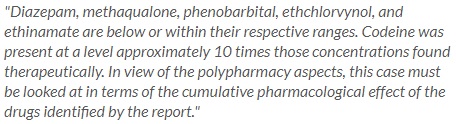
When the toxicology report was released, it came with a qualifier:

Diazepam, methaqualone, phenobarbital, ethchlorvynol, and ethinamate are below or within their respective ranges. Codeine was present at a level approximately 10 times those concentrations found therapeutically. In view of the polypharmacy aspects, this case must be looked at in terms of the cumulative pharmacological effect of the drugs identified by the report.

Because the tox report appeared to contradict the autopsy report’s stated cardiac cause of death, a prominent toxicologist was asked to review the findings. His opinion was:

Coupled with this toxicological data are the pathological findings and the reported history that the deceased had been mobile and functional within 8 hours prior to death. Together, all this information points to a conclusion that, whatever tolerance the deceased may have acquired to the many drugs found in his system, the strong probability is that these drugs were the major contribution to his demise.”

The Tennessee Board of Health then began an investigation into Elvis’s death which resulted in proceedings against Doctor Nick.

Evidence showed that during the seven and a half months preceding Elvis’s death—from January 1, 1977, to August 16, 1977—Doctor Nick wrote prescriptions for Elvis for at least 8,805 pills, tablets, vials, and injectables. Going back to January 1975, the count was 19,012.

These numbers might defy belief, but they came from an experienced team of investigators who visited 153 pharmacies and spent 1,090 hours going through 6,570,175 prescriptions and then, with the aid of two secretaries, spent another 1,120 hours organizing the evidence.

The drugs included uppers, downers, and powerful painkillers such as Dilaudid, Quaalude, Percodan, Demerol, and Cocaine Hydrochloride in quantities more appropriate for those terminally ill with cancer.

Doctor Nick admitted to this. His defense was because Elvis was so wired on pain killers, he prescribed these medications to keep Elvis away from dangerous street drugs, thereby controlling Elvis’s addiction—addiction being a disease.

One of the defense witnesses was Dr. Forest Torrent, a prominent California physician and a pioneer in the use of opiates in pain treatment who explained how the effects this level of codeine would have contributed to Elvis’s death.

Central to misconduct allegations was the issue of high codeine levels in Elvis at the time of death—codeine being the prime toxicological suspect as the pharmaceutical contributor. It was established that Elvis obtained codeine pills from a dentist the day before his death and Doctor Nick had no knowledge of it.

The jury bought it and Doctor Nick was absolved of negligence in directly causing Elvis Presley’s fatal event.

Continuing Investigation

Dr. Torrent was convinced there were other contributing factors leading to Elvis’s death. In preparation for Doctor Nick’s trial, Dr. Torrent had access to all of Elvis Presley’s medical records, including the autopsy and toxicology reports. Incidentally, these two reports are the property of the Presley estate and are sealed from public view until 2027, fifty years after Elvis’s death.

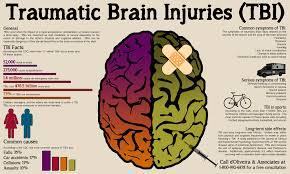
Dr. Torrent was intrigued by the sudden change in Elvis starting in 1967. He discovered that while in Los Angeles filming the movie Clambake, Elvis tripped over an electrical cord, fell, and cracked his head on the edge of a porcelain bathtub. Elvis was knocked unconscious and had to be hospitalized. Dr. Torrent found three other incidents where Elvis suffered head blows and he suspected Elvis suffered from what’s now known as Traumatic Brain Injury—TBI—and that’s what caused progressive ailments which led to his death.

Dr. Torrent released a paper titled Elvis Presley: Head Trauma, Autoimmunity, Pain, and Early Death. It’s a fascinating read—recently published in Practical Pain Management.

Dr. Torrent builds a theory that Elvis’s bathtub head injury was so severe that it caused brain tissue to be jarred loose and leak into his general blood circulation. This is now known to be a leading cause of autoimmune disorder which causes a breakdown of other organs. But this was unknown in 1967, and Elvis went untreated. Side effects are chronic pain, irrational behavior, and severe bodily changes such as obesity and enlarged organs like hearts and bowels.

Today, TBI is a recognized health issue in professional contact sports.

With a change in mental state and suffering chronic pain, Elvis Presley entered a ten-year spiral towards death. He became hopelessly addicted to pain killers, practiced a terribly unhealthy diet and lethargic lifestyle, and resorted to the typical addict’s habit of sneaking a fix wherever he could. This led to early coronary vascular disease and, combined with his escalating weight and pill consumption, Elvis was a heart attack ready to burst.

Recall that I used the term antecedent, like all coroners do when assessing a cause of death. Given Dr. Torrent’s observations—and all the facts compiled from forty years—if I were the coroner completing Elvis Presley’s death certificate today, I’d write it like this:

Identity of Deceased — Elvis Aaron Presley.
Time of Death — Approximately 2:00 p.m. on Tuesday, August 16th, 1977.
Place of Death — 3754 Elvis Presley Boulevard, Memphis, Tennessee.
Cause of Death — Cardiac arrhythmia, antecedent to hypertensive cardiovascular disease with atherosclerotic heart disease, antecedent to polypharmacy, antecedent to autoimmune inflammatory disorder, antecedent to traumatic brain injury.
Means of Death — Complications from Cumulative Head Trauma.

Therefore, I’d have to classify the manner or classification of Elvis’s death as an Accident.

There’s no one to blame—certainly not Elvis. He was a severely injured and sick man. There’s no specific negligence on anyone’s part and, definitely, no cover-up or conspiracy in a criminal act.

If Dr. Forrest Torrent is right, which I believe he is, there simply wasn’t a proper understanding back then in determining the true cause of Elvis Presley’s death.

ELVIS PRESLEY — WHAT REALLY KILLED THE KING OF ROCK ‘N ROLL?

Elvis Presley suddenly dropped in the bathroom of his Graceland mansion on the afternoon of August 16, 1977. Elvis was rushed to Baptist Memorial Hospital in Memphis, Tennessee, where he was pronounced dead, then shipped to the morgue and autopsied the same afternoon. Three days later, the Memphis County coroner issued Elvis Presley’s death certificate stating the cause as hypertensive cardiovascular disease with atherosclerotic heart disease — a heart attack subsequent to high blood pressure and blocked coronary arteries.

It was a rush to judgment. Toxicology results soon identified ten pharmaceutical drugs in Elvis’s system. Codeine was ten times the therapeutic level and the combination of other prescription drugs suggested a poly-pharmacy overdose. This revelation started immediate accusations of a cover-up and conspiracy theories quickly hinted at sinister criminal acts.

Four decades later, modern medicine and forensic science looked at the Presley case facts. The review indicated something entirely different from a heart attack or drug overdose really killed the King of Rock ‘n Roll. It said Elvis Presley accidentally died after long-term complications from earlier traumatic brain injuries (TBIs). TBIs are known as silent, stalking, and patient killers.

Looking back, it’s likely old accidental head injuries triggered events leading to Elvis Presley’s death.

From my experience investigating unexpected and unexplained sudden deaths, the accidental conclusion makes sense when you consider the totality of evidence in Elvis’s death. Setting aside media reports of gross negligence, arm-chair speculation of cover-up, and fan accusations that the King was murdered, there’s a simple and straightforward conclusion based on facts. But before examining the facts and knowing hindsight is 20/20, let’s first look at how coroners conduct sudden and unexplained death investigations.

Coroners are the judge of death. Their responsibility is establishing five main facts surrounding a death. Coroners are not to assign blame or fault. In the Presley case, the five facts determined at the immediate time were:

  1. Identity of Deceased — Elvis Aaron Presley

  2. Time of Death — Approximately 2:00 p.m. on Tuesday, August 16, 1977

  3. Place of Death — 3754 Elvis Presley Boulevard, Memphis, Tennessee

  4. Cause of Death — Heart attack

  5. Means of Death — Chronic heart disease

There’s a distinct difference between Cause of Death and Means of Death. Cause is the actual event. Means is the method in which death happened. Examples are cause being a ruptured aorta with means being a motor vehicle crash, or cause being massive cerebral interruption with means being a gunshot wound to the head.

Once the facts are known, it’s the coroner’s duty to classify the Manner of Death. There are five universal manner of death classifications:

  • Natural

  • Homicide

  • Suicide

  • Accidental

  • Undetermined

Elvis Presley’s death was ruled a natural event, thought at the time being an acute cardiac event from existing cardiovascular disease. If the coroner determined Elvis died from a drug overdose, the ruling would have been accidental. No one ever claimed it was suicide or homicide.

One principle of death investigation is to look for antecedent evidence—preexisting conditions which contributed to the death mechanism or was responsible for causing or continuing a chain of events that led to the death.

Another principle of death investigation is examining the cornerstone triangle of Scene—Body—History. This compiles the totality of evidence or case facts. Given that, let’s look at the evidence and case facts in Elvis Presley’s death.

Scene

Elvis was found on his bathroom floor, face down in front of the toilet. It was apparent he’d instantly collapsed from a sitting position and there was no sign of a distress struggle or attempt to summon help. When the paramedics arrived, Elvis was cold, blue and had no vital signs. Rigor mortis had not set in so he’d probably expired within the hour. He was transported by ambulance to Baptist Memorial Hospital where a vain attempt at resuscitation occurred because “he was Elvis”.

ER doctors declared Elvis dead at 3:16 p.m. He was moved to the morgue where an autopsy was promptly performed. There was no suggestion of suicide or foul play so there was no police investigation. The scene wasn’t photographed, nor preserved, and there was no accounting for what medications or other drugs might have been present at Graceland. There’s no official record of the coroner attending the scene as this was considered an in-hospital death and a routine occurrence.

Body

Elvis was in terrible health. His weight was estimated at 350 pounds—gaining 50 lbs. in the last few months of his life. He was virtually non-functional at the end, being mostly bed-ridden and requiring permanent nursing care. Elvis suffered from an enlarged heart which was twice the size of normal and showed advanced evidence of cardiovascular disease in his coronary vessels, aorta, and cerebral arteries—certainly more advanced than a normal 42-year-old would be. His lungs showed signs of emphysema, although he’d never smoked, and his bowel was found to be twice the length of normal with a partially-impacted stool estimated to be four months old.

Elvis also suffered from hypogammaglobulinemia which is an immune disorder, as well as showed evidence of an autoimmune inflammatory disorder.

Toxicology tested positive for ten separate prescription medications but showed negative for illicit drugs and alcohol. The only alarming pharmaceutical indicator, on its own, was codeine at ten times the prescribed manner but not in lethal range.

History

Elvis was born on January 8, 1935 in Tupelo, Mississippi and had a twin brother who died at birth. As a youth, Elvis was active and healthy which continued during his time in the U.S. military and all through his early performing stage when he was a bundle of energy. He began experimenting with amphetamines, probably to enhance his performances, but shied from alcohol as it gave him violent tendencies.

In 1967, Elvis came under the primary care of Dr. George Nichopoulos who was well-known to celebrities. Then, Elvis was 32 and weighed 163 pounds. His only known medical ailment was slightly high blood pressure, presumably due to his high-fat diet.

Also in 1967, Elvis’s health took a sudden turn with progressive pain, insomnia, hypertension, lethargy, irrational behavior and immense weight gain. Over his remaining years, Elvis was seen by a number of different doctors and was hospitalized a number of times, all the while resorting to self-medication with a wide assortment of drugs from dozens of sources.

Doctor Nick, as Nichopoulos was called, stayed as Elvis’s personal physician till the end. He was present at the death scene as well as during the autopsy. Doctor Nick concurred with the coroner’s immediate conclusion that the cause of death was a natural cardiac event resulting from an arrhythmia, or sudden interruption of heartbeat, and agreed that Elvis’s death was not due to a drug overdose.

When the toxicology report was released, it came with a qualifier:

Because the tox report appeared to contradict the autopsy report’s stated cardiac cause of death, a prominent toxicologist was asked to review the findings. His opinion was:

Coupled with this toxicological data are the pathological findings and the reported history that the deceased had been mobile and functional within 8 hours prior to death. Together, all this information points to a conclusion that, whatever tolerance the deceased may have acquired to the many drugs found in his system, the strong probability is that these drugs were the major contribution to his demise.

The Tennessee Board of Health then investigated Elvis’s death which resulted in proceedings against Doctor Nick.

Evidence showed that during the seven and a half months preceding Elvis’s death—from January 1, 1977, to August 16, 1977—Doctor Nick wrote prescriptions for Elvis for at least 8,805 pills, tablets, vials, and injectables. Going back to January 1975, the count was 19,012.

These numbers might defy belief, but they came from an experienced team of investigators who visited 153 pharmacies and spent 1,090 hours going through 6,570,175 prescriptions and then, with the aid of two secretaries, spent another 1,120 hours organizing the evidence.

The drugs included uppers, downers and powerful painkillers such as Dilaudid, Quaalude, Percodan, Demerol, and Cocaine Hydrochloride in quantities more appropriate for those terminally ill with cancer.

Doctor Nick admitted to this. His defense was because Elvis was so wired on pain killers, he prescribed these medications to keep Elvis away from dangerous street drugs, thereby controlling Elvis’s addiction—addiction being a disease.

One of the defense witnesses was Dr. Forest Torrent, a prominent California physician and a pioneer in the use of opiates in pain treatment who explained how the effects this level of codeine would have contributed to Elvis’s death.

Central to misconduct allegations was the issue of high codeine levels in Elvis at the time of death—codeine being the prime toxicological suspect as the pharmaceutical contributor. It was established that Elvis obtained codeine pills from a dentist the day before his death and Doctor Nick had no knowledge of it.

The jury bought it, and Doctor Nick was absolved of negligence in directly causing Elvis Presley’s fatal event.

Continuing Investigation

Dr. Torrent was convinced there were other contributing factors leading to Elvis’s death. In preparation for Doctor Nick’s trial, Dr. Torrent had access to all of Elvis Presley’s medical records, including the autopsy and toxicology reports. Incidentally, these two reports are the property of the Presley estate and are sealed from public view until 2027, fifty years after Elvis’s death.

Dr. Torrent was intrigued by the sudden change in Elvis starting in 1967. He discovered that while in Los Angeles filming the movie Clambake, Elvis tripped over an electrical cord, fell, and cracked his head on the edge of a porcelain bathtub. Elvis was knocked unconscious and had to be hospitalized. Dr. Torrent found three other incidents where Elvis suffered head blows, and he suspected Elvis suffered from what’s now known as Traumatic Brain Injury—TBI—and that’s what caused progressive ailments leading to his death.

Dr. Torrent released a paper titled Elvis Presley: Head Trauma, Autoimmunity, Pain, and Early Death. It’s a fascinating read—recently published in the credible medical journal Practical Pain Management.

Dr. Torrent builds a theory that Elvis’s bathtub head injury was so severe it jarred brain tissue loose which leaked into his overall blood circulation. Later additional head injuries exacerbated the problem. This is now known to be a leading cause of autoimmune disorder which causes a breakdown of other organs. This progression was unknown in 1967 and Elvis went untreated. Side effects of TBIs include chronic pain, irrational behavior, and severe bodily changes such as obesity and enlarged organs like hearts and bowels.

Today, TBI is a recognized health issue in professional contact sports as well as incidental to motor vehicle accidents and workplace falls or other head injury events.

Dr. Torrent’s hypothesis holds that with a change in mental state and suffering chronic pain, Elvis Presley entered a ten year spiral towards death. He became hopelessly addicted to pain killers, practiced a terribly unhealthy diet and lethargic lifestyle, and resorted to the typical addict’s habit of sneaking a fix wherever he could. This led to early coronary vascular disease and, combined with his escalating weight and pill consumption, Elvis was a heart attack ready to burst.

Recall that I used the term antecedent, like all coroners do when assessing a cause of death. Given Dr. Torrent’s observations—and all the facts compiled from forty years—if I were the coroner completing Elvis Presley’s death certificate today, I’d write it like this:

  1. Identity of Deceased — Elvis Aaron Presley.

  2. Time of Death — Approximately 2:00 p.m. on Tuesday, August 16th, 1977.

  3. Place of Death — 3754 Elvis Presley Boulevard, Memphis, Tennessee.

  4. Cause of Death — Cardiac arrhythmia/myocardial infarction, antecedent to hypertensive cardiovascular disease with atherosclerotic heart disease, antecedent to poly-pharmacy, antecedent to autoimmune inflammatory disorder, antecedent to traumatic brain injury/injuries.

  5. Means of Death — Cumulative head trauma.

Therefore, I’d have to classify Elvis’s death as an accident.

There’s no one to blame—certainly not Elvis. He was a severely injured and sick man. There’s no specific negligence on anyone’s part and definitely no cover-up or conspiracy of a criminal act.

If Dr. Forrest Torrent is right, there simply wasn’t a proper understanding back then to clearly determine what really killed the King of Rock ‘n Roll.

*   *   *

Here’s the link to Dr. Torrent’s article Elvis Presley: Head Trauma, Autoimmunity, Pain, and Early Death as published in Practical Pain Management.

https://www.practicalpainmanagement.com/sites/default/files/images/2013/06/19/1.jpg

Fun Stuff With Elvis & John Fogerty