 You’ve seen them. Earnest young activists shouting at clouds, gluing themselves to museum walls, and blocking traffic with coroplast signs warning that the world will end in twelve years unless we obey their vision of salvation—complete with windmills, solar panels, and vegan diets. They’re the same people Xing and Instagramming about carbon footprints from their iPhones made in Chinese factories run on sulphur and lignite coal-fired electricity.
It’s easy to dismiss them as naive or misguided, but the uncomfortable truth is this: many of these people are neither stupid nor insane. They are simply caught in a powerful psychological, cultural, and financial machine that has turned “climate change” into a form of religious belief—a doctrine too sacred to question and too profitable to abandon.
Let’s set something straight. I’m not a climate change denier. Climate change is real. The Earth’s climate has always changed. And it always will—human-contributed through emitted greenhouse gas or not.
But the apocalyptic narrative that dominates headlines, policy, and corporate strategy today isn’t just about facts. It’s about framing—about controlling how people think, feel, and act in relation to a deeply complex system they barely understand. And that makes the climate crisis one of the most successful psychological operations in modern history.
In this post, we’ll take a hard look at why so many people have bought in—blindly and without skepticism—to the idea that we’re on the brink of planetary collapse, and that the only solution is top-down control, mass compliance, and the destruction of energy systems that built the modern world.
Some of what I’m going to say may be uncomfortable to some, and I know some will unsubscribe. But that doesn’t make it untrue, and this needs to be said.
The Climate Crisis as a Religion (aka The Church of Carbon)
First, let’s call it what it is.
For a growing number of people—especially in the West (Europe particularly included)—the climate crisis has become a belief system. It functions just like a fundamentalist religion, complete with original sin (industrialization), prophets (Greta, Gore, Gates), sacred texts (IPCC reports), rituals (recycling, carbon offsets), heretics (climate skeptics), and a promised apocalypse for those who fail to convert.
It’s not about science anymore. It’s about meaning.
People—especially young people raised in secular cultures—are starving for purpose. They want to feel morally righteous, socially important, and part of a grand, redemptive story. The climate narrative offers all of that in a tidy, emotionally satisfying package. It turns ordinary people into saviors. It makes them matter.
You can’t underestimate how powerful that is.
Fear is the Fuel
The second driver is fear.
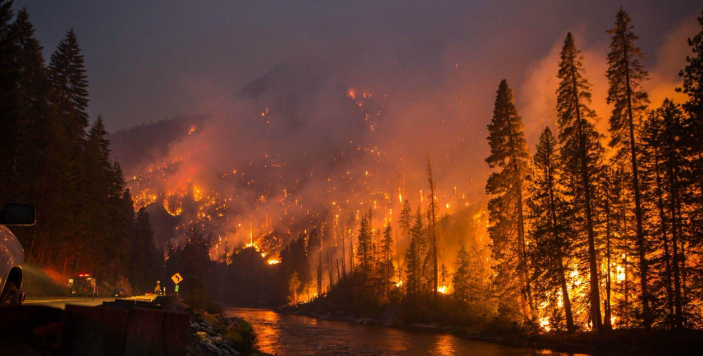
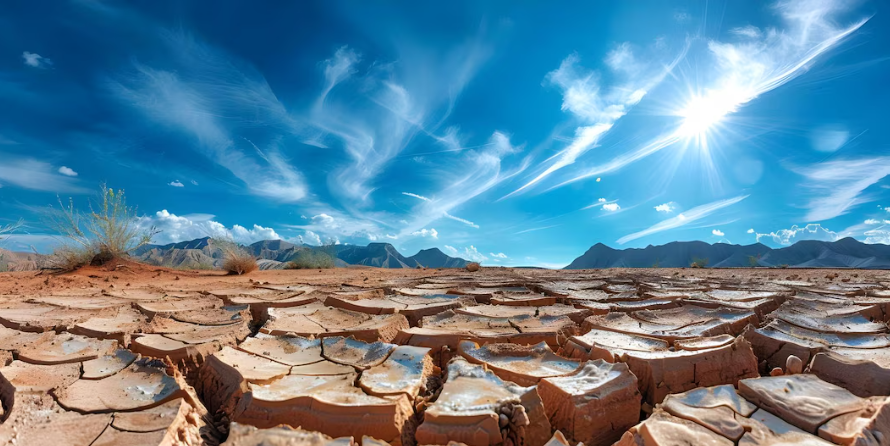
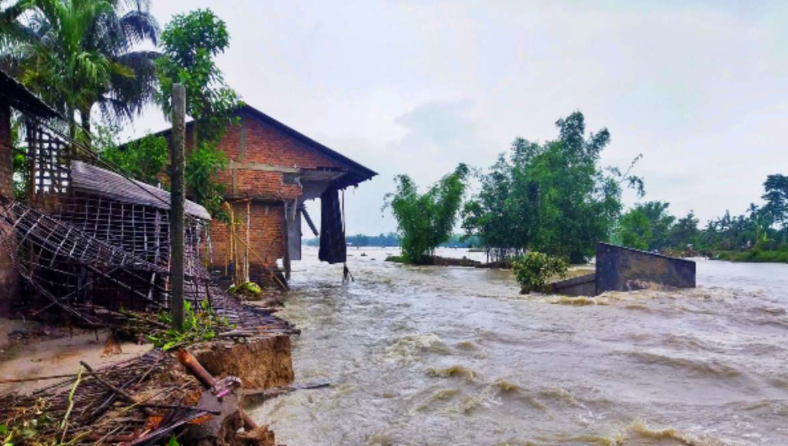
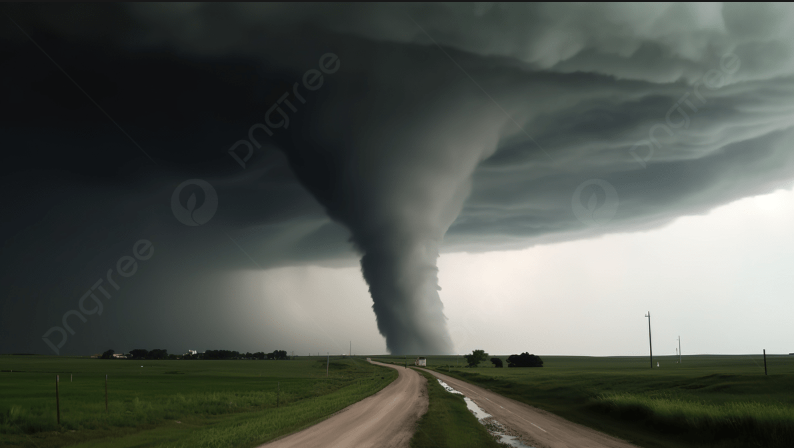
For decades, we’ve been bombarded with doom-laden, global-warming headlines: ice caps melting, oceans rising, hurricanes and tornados worsening, apocalyptical flooding, forests burning, deserts parching… The messaging is relentless—and expertly crafted to trigger our limbic systems. When people are afraid, they don’t reason. They react.
This isn’t new. Back in the 1970s, experts warned of an imminent ice age. Then came acid rain. Then ozone depletion. Each time, the world was supposed to end unless we handed over more power to government, more money to NGOs, and more control to unelected technocrats.
It’s always the same pattern:
- Declare a crisis.
- Blame human behavior.
- Offer a sweeping solution that just happens to consolidate control.
The only difference now is scale. The climate crisis is global, not regional. And the proposed solutions are systemic, not marginal.
The Collapse of Critical Thinking
But fear alone doesn’t explain the blind belief.
There’s another piece of the puzzle: the steady erosion of critical thinking. Schools no longer teach logic, debate, or how to evaluate competing hypotheses. Instead, they promote conformity, activism, and groupthink. You don’t learn how to think. You learn what to think.
By the time students hit university, the programming is complete. Professors reinforce the dogma. Campus culture punishes dissent. Climate change isn’t a topic for exploration—it’s a moral litmus test. Students who question it risk grades, reputation, or worse. Being cancelled.
So, they comply. They absorb. They repeat.
And when they graduate into journalism, academia, NGOs, or politics, they carry that unexamined belief system with them—passing it on like gospel.
The Media Echo Chamber
The next layer is media.
Legacy outlets like CNN, BBC, CBC, and the New York Times frame climate change in religious terms: “Climate emergency,” “existential threat,” “code red for humanity.” Any nuance is treated as heresy. Any questioning is framed as denialism.
Science itself has been rebranded. Instead of a method of inquiry, it’s now a set of conclusions—conveniently aligned with elite interests. The phrase “The science is settled” is a dead giveaway. No real scientist would ever say that.
Meanwhile, dissenting voices—many with serious credentials—are marginalized, shadowbanned, or censored outright. Their data doesn’t fit the narrative. Their views make people uncomfortable. So, they are erased.
And most people? They never notice.They assume if something was true, they’d hear about it. But when every channel is playing the same tune, they don’t realize they’re listening to a carefully curated soundtrack.
Social Conformity and Virtue Signaling
But here’s the deeper truth.
Most people don’t believe the climate crisis because they’ve studied the data. They believe it because everyone else does. That’s the power of social conformity. Nobody wants to be the outlier—the one who raises their hand and asks the uncomfortable question.
Especially in a culture obsessed with virtue.
Believing in the climate crisis is a modern form of moral signaling. You drive a Tesla. You compost. You use a keep-cup. You care. You’re not like those backward Boomer-deniers who love oil and hate penguins.
- You’re evolved
- You’re ethical
- You’re better
That’s what this has become—not a conversation about climate, but a competition for social status.
And once belief becomes part of your identity, it becomes non-negotiable. Any challenge feels like a personal attack. Facts don’t matter. Feelings do.
Follow the Money
Now let’s talk about power.
The climate industry is worth trillions—yes, trillions of dollars. It’s the perfect grift: a never-ending crisis that justifies endless funding, regulation, and surveillance.
- Governments rake in carbon taxes.
- Universities secure research grants.
- Corporations get ESG ratings and subsidies.
- NGOs fundraise on fear.
It’s an entire ecosystem of incentives, none of which reward skepticism or moderation. And when that much money is on the table, the truth becomes secondary to the narrative.
Even energy companies play along. They don’t want to be regulated out of existence, so they slap green labels on their products and talk about “net zero” while quietly hedging their bets. It’s theater. Everyone’s pretending.
But the costs are real.
China’s Role in the Global Equation
While the West ties itself in knots trying to decarbonize, one country is playing a different game entirely: China
Beijing talks green, but burns black. Coal remains its dominant energy source, powering steel, manufacturing, and military growth at a staggering scale. As of 2024, China alone consumes over half the world’s coal supply—and shows no sign of slowing down.
They’re not stupid. While we argue over wind farms and carbon credits, they build aircraft carriers, drones, and power grids. While we teach kids to fear climate collapse, they teach theirs to master engineering and geopolitics.
They make the solar panels we install. They mine the rare earths we need. They profit from the very policies we impose on ourselves.
And we call that progress.
Weaponized Guilt
So why don’t people wake up?
Because they’ve been trained to feel guilty. Every gas-guzzling SUV trip, every propane-grilled burger, every jet-fueled flight—is framed as a moral failing. You’re killing the planet. You’re harming future generations. You’re part of the problem.
It’s exhausting, and it’s effective.
People internalize this guilt. They try to cleanse themselves through ritualistic consumption: reusable straws, oat milk, biodegradable trash bags, canvas totes at the farmer’s market. None of it makes an infatismal sub-fraction of a surface dent in global emissions—but it feels redemptive.
That’s the point. It’s not about fixing the planet. It’s about managing the soul.
The Useful Idiots
Now we come to the crux.
The term “useful idiot” originated in Soviet times. It referred to Western sympathizers who unknowingly supported the goals of a regime they didn’t understand. They weren’t evil—just naive, manipulated, and eager to be on the “right side of history.”
That’s where we are today. Millions of well-meaning people have been seduced by a narrative that exploits their fears, flatters their vanity, and blinds them to the larger game at play. They march, post, and protest—believing they’re saving the world, while unwittingly aiding those who want to dominate it.
They’re not villains. They’re pawns. And when you try to wake-the-wokes, they look at you like you’re the crazy one. Then they viscerally turn on you.
What’s At Stake
Here’s what’s really at stake.
If we continue down this path, we don’t just risk economic collapse or energy poverty. We risk civilizational suicide. We are dismantling the very systems—energy, industry, sovereignty—that made the modern world possible.
And we’re doing it not for the planet, but for appearances.
Meanwhile, the nations that reject this ideology are gaining power, leverage, and independence. They’re not afraid to use fossil fuels while experimenting with futuristics. They’re not ashamed of their ambitions. And they’re not held hostage by narratives designed to make them feel guilty for existing.
They’re playing to win. We’re playing to look virtuous. That’s a losing hand.

So, what do we do?
First, stop apologizing. There is no shame in using energy. Civilization runs on it. Human flourishing depends on energy, regardless of how it’s generated. Without it, we return to darkness—literally and figuratively.
Second, think for yourself. Ask questions. Follow incentives. Trace the money.
Be skeptical of anything presented as a one-sided moral truth.
Third, reclaim courage. Don’t be afraid to speak the truth, even when it’s unpopular. Especially when it’s unpopular. History doesn’t remember those who went along to get along. It remembers those who stood up, pointed at the naked emperor, and said, “This is madness.”
And finally, understand this: We are not in a climate crisis. We are in a clarity crisis. Clarity—real, hard-won, human clarity—is the first step back to sanity.
The next time someone tells you the world is ending, ask who’s funding the message—and what they’re selling with it.
Because if you look closely, you’ll find it’s not about saving the planet. It’s about controlling the people on the planet by getting them to fall for the climate crisis narrative.