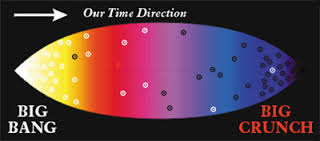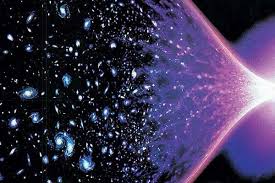
 Before the beginning, according to Genesis, there was not a thing, not a place, not even light. There was formlessness. An undifferentiated nothingness or what modern physics might call a pre-state, a condition without structure, without time, without order, but with a pre-existing purpose encapsulated in pure thought.
Genesis doesn’t open with an entity hammering rocks into planets or sketching animals in the dust. It starts with darkness, with deep possibility, and with a universe not yet constrained by rules. That alone should make any modern reader pause and take time to deeply reflect on the world as it really is.
Then something remarkable happens. Not violence as in a literal, mega-explosive big bang. Not randomness. Not magic. Order arrives through differentiation. Light separates from darkness. Time appears with evening and morning. Space takes shape as waters and land are divided. Structure emerges step by step, layer by layer, boundary by boundary.
This isn’t ancient superstition. It’s a surprisingly—actually astonishing—faithful narrative paralleling what physics, astronomy, and cosmology now understand about the origin story. The universe unfolded through progressive constraint, governed by laws, symmetry breaks, and irreversible sequencing. Genesis doesn’t read like science because it isn’t science. But it follows the precise logic of emergence.
Call it God-driven or Logos-ordered, the Book of Genesis in the Old Testament appears to have got the world (big) bang-on.

What Genesis infers “God speaking” is not best understood as sound waves vibrating in empty space. Speech here is metaphor. The Hebrew word dabar means word, action, and ordering principle all at once. What comes into being is not merely created. It’s named, classified, and set within limits. Much of which we’re yet to fully comprehend.
This isn’t a personal deity tinkering with matter like a potter at a wheel. This is Logos in motion. Intelligibility, structure, rule-governed reality coming online. Physics would later discover equations. Philosophy would later generalize reason. Theology would later debate personality. Genesis simply says, “There will be order starting from day one.”
By the time life appears—first plants, then animals, then humans—the pattern is already established. The universe is not chaotic. It’s habitable. It runs on rules and regularities. Seasons repeat. Cause precedes effect.
And humans are placed not as rulers by whim, but as image-bearers—pattern recognizers capable of classifying, tending, and understanding the reality they inhabit. In modern terms, we’re organisms evolved to model existence well enough to survive inside it. Genesis gets that right, too.
And here’s the uncomfortable thought. If Genesis correctly grasped the shape of reality’s beginning—order emerging out of a vacuum through Logos—then it may also be pointing forward. Not to apocalypse or utopia, but to universal responsibility of mature human beings.
A universe that runs on law doesn’t forgive ignorance. A reality governed by Logos rewards clarity and punishes self-deception. And a species capable of understanding that order is now facing the consequences of how well—or how poorly—it’s lived within it or is willing to peacefully co-exist with something far, far greater than themselves.
If an ancient text understood the deep structure of reality better than many modern ideologies do today, what else might we have misunderstood—or forgotten?

Genesis is Logos — Logos is Genesis
Some people approach Genesis already decided. Believers insist it’s literal. Skeptics insist it’s a primitive myth. Both approaches miss something far more interesting.
Genesis isn’t a science textbook. It’s not a children’s story. And it isn’t a theological trapdoor that requires suspending reason. Genesis is something far rarer and more durable. It’s a compressed, pre-scientific model of reality itself, expressed through metaphor, sequence, and constraint written in the vernacular of its time. A masculine voice, for sure, but look beyond.
Long before physics, cosmology, biology, or information theory existed as disciplines, Genesis attempted to answer foundational questions that every civilization must confront. What kind of universe do we live in, and what does that imply about us? And where did it come from and how did it unfold?
When read carefully, Genesis doesn’t contradict modern science. It calculates universal structure. What it describes is not “God doing magic”, but order emerging from nothingness through Logos—through intelligibility, differentiation, and law-like regularity.
Let’s walk through Genesis chronologically, epoch by epoch or time-phase by time-phase, comparing what the scripture says with what modern disciplines now understand to be true about the origin and progression of the universe. Not to collapse religion into science, and not to smuggle science into theology, but to show that both are pointing at exactly the same underlying reality.
Prologue — Before All Things
Prior to the beginning, God or Logos just was. (Be still, and know that I am.)
Not a person in the sky, not a voice in a language, but the timeless order of reality itself—the deep structure of what can exist, how it can change, and what must remain consistent.
Within Logos lie the possibilities of time, energy, matter, information, and consciousness. Nothing is yet emerging, but everything that can ever unfold is already permitted in principle.
No light. No dark. No here or there. Only the lawful probabilities of them being allowed.
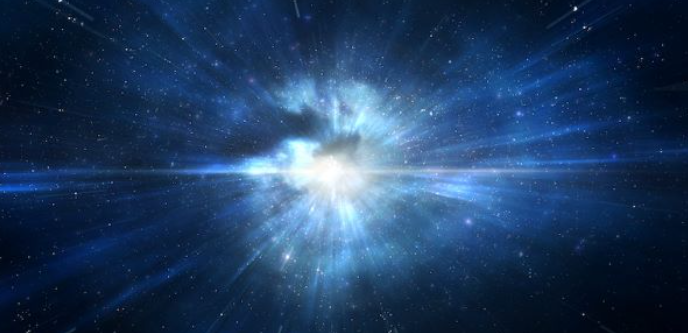
Epoch One — Ignition, Light, and the Birth of Order
“In the beginning God created the heavens and the earth. And the earth was formless and void, and darkness was over the surface of the deep.” ~Genesis 1:1–2
Genesis opens with a startling revelation. Nothing yet exists.
There’s no planet. No sky. No stars. No living things. The text describes a condition of tohu wa-bohu—formless and void. Undifferentiated. Chaotic, as in not ordered. Unusable. This is not naïve storytelling. It’s an accurate intuition. Without structure, nothing meaningful can exist.
Then comes the pivotal line: “Then God said, Let there be light: and there was light.” ~Genesis 1:3
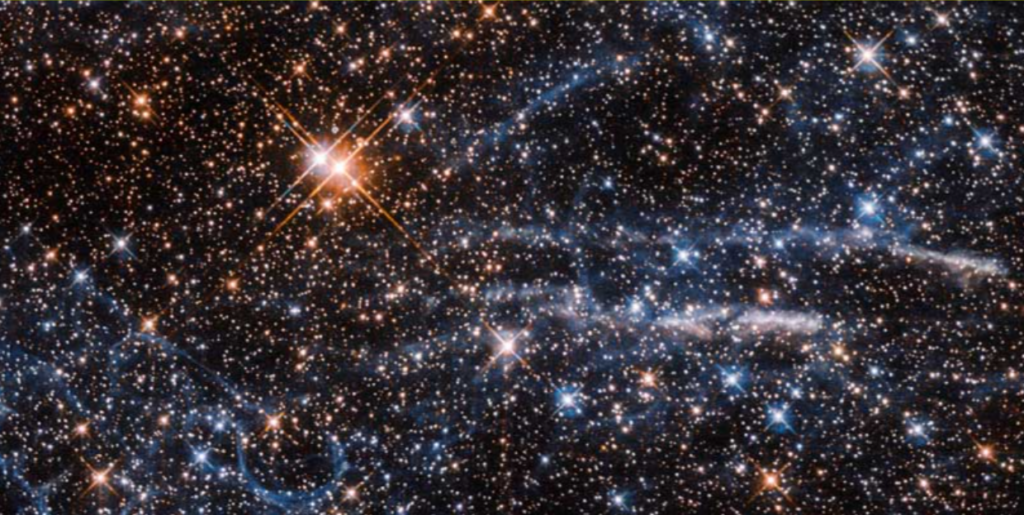
This isn’t about illumination. Genesis places light before the sun, moon, or stars, which tells us immediately that “light” is symbolic of something more fundamental. In modern physics, light, or electromagnetic energy, isn’t just brightness. It’s information, causality, and measurability. Light defines what can interact, what can be known, and what can change.
As physicist Albert Einstein famously showed, light is not merely something in the universe. It governs the universe’s structure. The speed of light constrains time, space, and causation itself.
Einstein put it this way. “The distinction between the past, present, and future is only a stubbornly persistent illusion.”
Genesis begins by dissolving that illusion. Time does not meaningfully exist until order begins. “Evening and morning” appear only after light introduces distinction. This aligns perfectly with modern cosmology. Time, as we understand it, emerges only once the universe becomes structured enough for sequences to occur.
Genesis doesn’t say “matter appeared.” It says order appeared. That is Logos at ignition.
Epoch Two — Separation of Realms and the Architecture of Reality
“And God said, Let there be an expanse in the midst of the waters, and let it separate the waters from the waters.” ~Genesis 1:6
The second epoch is entirely about separation. The text repeatedly emphasizes division of states. Solid, liquid, gas, and plasma. This isn’t ancient meteorology. It is an attempt to describe domain formation—the partitioning of reality into regions governed by different rules.
In modern terms, the early universe underwent symmetry breaking. Fundamental Newtonian forces emerged. Gravity. Electromagnitism. The strong nuclear force and the weak nuclear force. Space-time expanded. Matter, created by energy transformation, cooled. Constraints developed. Without separation, nothing complex can persist.
Physicist Stephen Hawking described it this way. “The universe doesn’t allow perfection. Because of symmetry breaking, you get the beautiful structures that exist.”
Genesis intuits the same principle. Order does not arise through sameness. It arises through difference, boundary, and limitation. This is Logos expressed as universal architecture.
Epoch Three — Land, Seas, and the Precondition for Life
“Then God said, Let the waters below the heavens be gathered together into one place, and let the dry land appear.” ~Genesis 1:9
Only after separation do physical environments stabilize. Land emerges. Seas are gathered. Until then vegetation cannot appear.
This sequence mirrors everything modern earth science understands. Habitability precedes biological evolution. Life doesn’t force itself into existence. It arises when conditions allow.
Astrobiologist Carl Sagan observed, “We are made of star-stuff. We are a way for the universe to know itself.”
Genesis doesn’t speak of atoms or chemistry, but it grasps the process. Environment first, complexity second. Logos sets the stage before anything can act upon it.
Epoch Four — Lights in the Heavens as Signals and Timekeepers
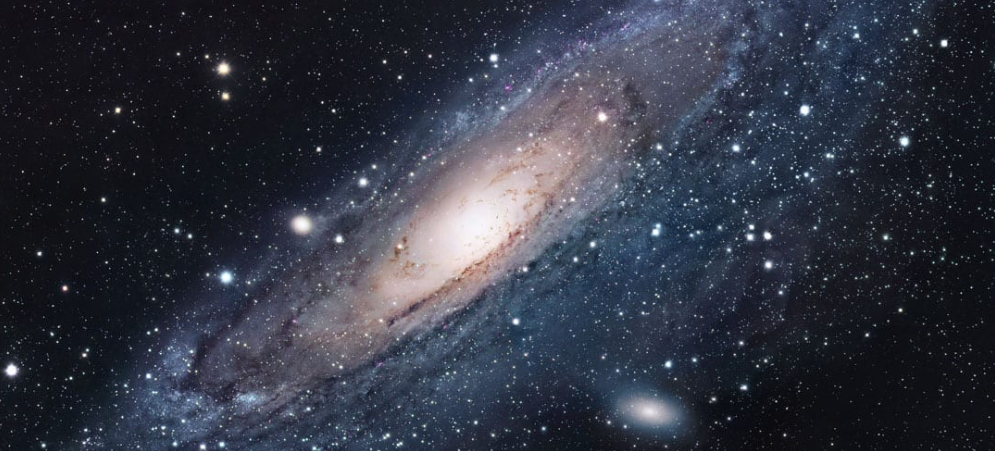
“And God said, Let there be lights in the expanse of the heavens to divide the day from the night; and let them be for signs, and for seasons, and for days, and years.”~Genesis 1:14
Genesis introduces stars not as objects of worship or spectacle, but as tools for orientation. Signs. Seasons. Calendars. Predictability.
This is crucial. The text is not concerned with astronomy as beauty, but as reliability. Cycles allow planning. Planning allows agriculture. Agriculture allows civilization. Civilization allows human flourishing…
Astronomer Johannes Kepler wrote, “The laws of nature are but the mathematical thoughts of God.”
Whether one accepts the theological framing or not, the insight stands. The universe runs on regularities. Genesis captures this by treating the heavens as clocks, not celestial deities.
Epoch Five — Life in the Waters and the Air
“Then God said, Let the waters teem with swarms of living creatures and let birds fly above the earth in the open expanse of the heavens.” ~Genesis 1:20
Life appears first where conditions are buffered—oceans and skies. This aligns with evolutionary biology. Liquid water stabilizes temperature. It allows chemical complexity. Air enables dispersal and migration.
Biologist Charles Darwin noted, “There is grandeur in this view of life, with its several powers, having been originally breathed into a few forms or into one.”
Genesis does not describe mechanisms. It describes sequence. And the sequence is right.
Epoch Six — Land Animals, Humans, and the Rise of Consciousness
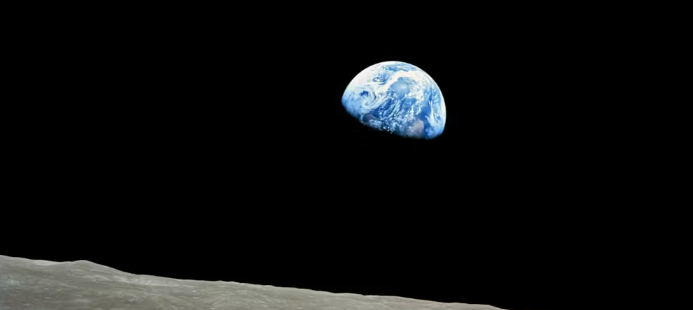
“And God said, Let us make man in our image, in our likeness, and let them rule over the fish in the sea and the birds in the sky and over the cattle and over all of the earth and over every creeping thing that creeps the earth.” ~Genesis 1:26
This line has been abused for centuries. Read literally, it sounds like divine favoritism. Read structurally, it means something else entirely.
Humans are described as image-bearers because they share something fundamental with Logos. That’s the capacity to recognize, name, model, and steward reality. Humans classify animals. They understand plant patterns. They consciously anticipate consequences of husbanding both.
Neuroscientist Antonio Damasio writes, “The human brain and mind are not an accident of nature. They are instruments shaped by evolution to manage life.”
Genesis places consciousness last because it’s the most fragile and the most dangerous form of complexity.
Epoch Seven — Rest, Completion, and Moral Responsibility
“And by the seventh day God completed his work which he had done and he rested.” ~Genesis 2:2
Rest here does not imply exhaustion. It implies temporary system completion. The universe is stable enough to operate without constant intervention.
Humans now live inside a reality governed by laws that do not bend to belief or intention. Ethics emerges not as command, but as consequence. Actions matter because the system remembers them.
Philosopher Aristotle understood this well, “Nature does nothing in vain.”
Genesis embeds that insight at the foundation with, “In the beginning, God created the heavens and the earth“.
Epoch Eight — Logos and the Future of Human Intelligence
Genesis ends before the story is finished, because the future is still ours to write.
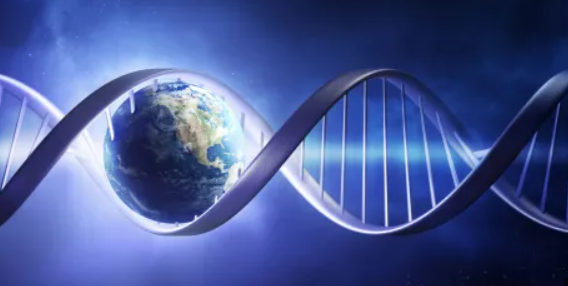
We now understand Logos well enough to encode it into machines. Artificial intelligence accelerates pattern recognition, memory, and optimization. But Logos is not intelligence and creration alone. It’s continual alignment with reality.
Machines can calculate. Only humans can judge. If we abandon responsibility while amplifying intelligence, entropy will accelerate. Logos through Genesis warns us—quietly—that wisdom must scale alongside power.
Genesis is not about ancient cosmology. It is about how reality’s operating system was made. It understood that order precedes complexity, that structure precedes life, that intelligence emerges last, and that responsibility of consciousness inevitably follows.
That insight has aged astonishingly well. In an era drowning in ideology, misinformation, and synthetic certainty, Genesis reminds us of something unfashionable but essential.
Reality is not negotiable, but it is intelligible. That intelligibility is Logos and ignoring God has real consequences.