Tag Archives: Loss

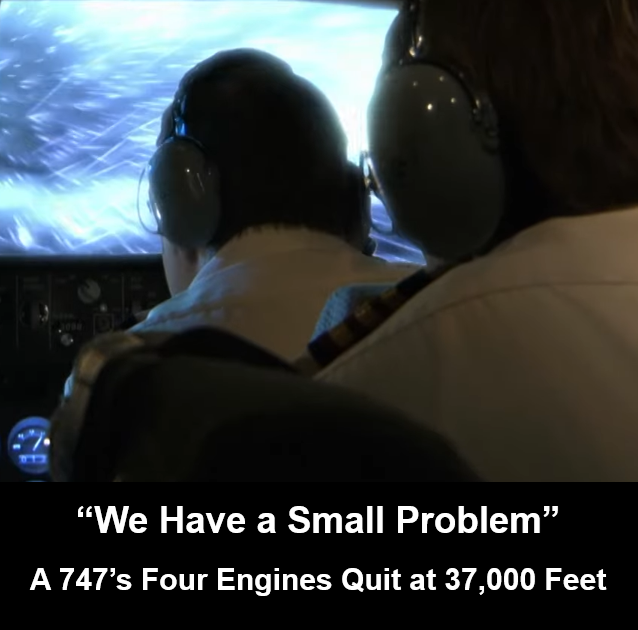
“WE HAVE A SMALL PROBLEM” – A 747’S FOUR ENGINES QUIT AT 37,000 FEET

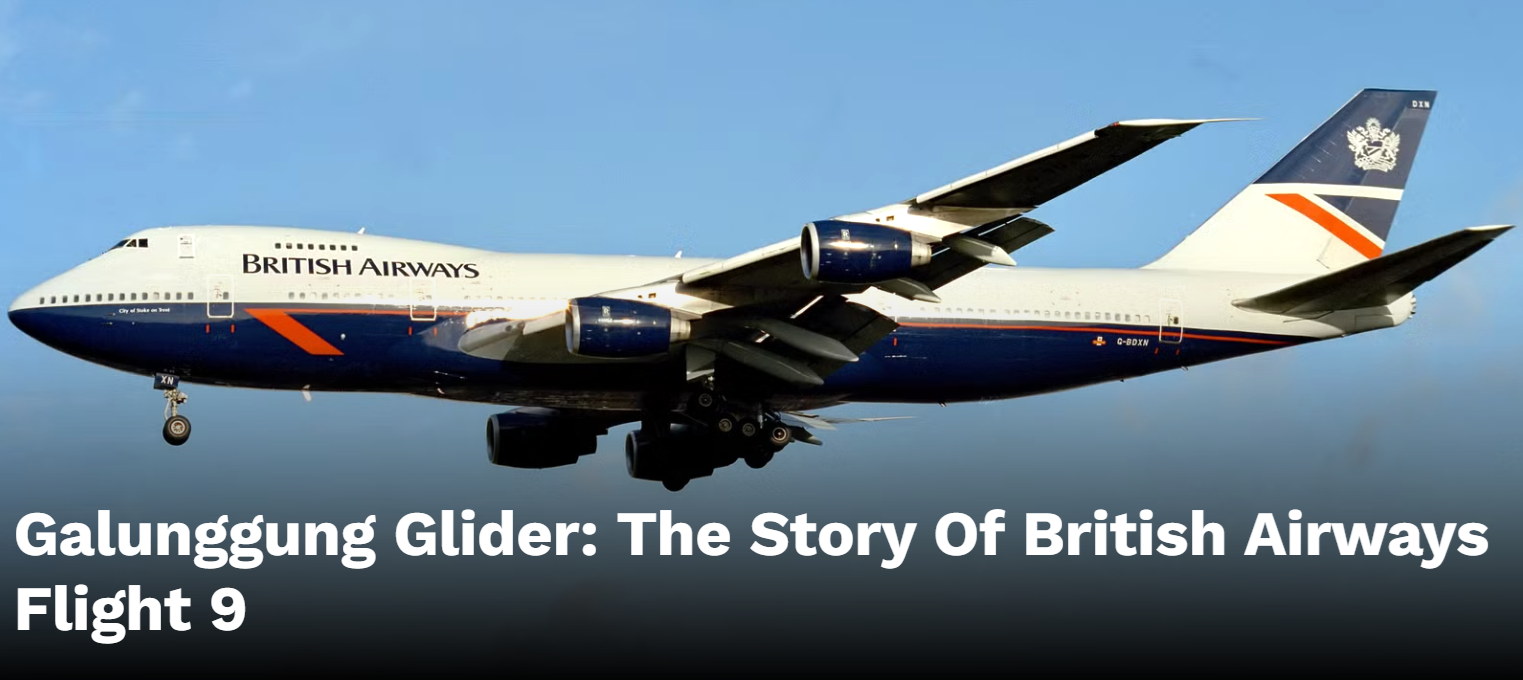
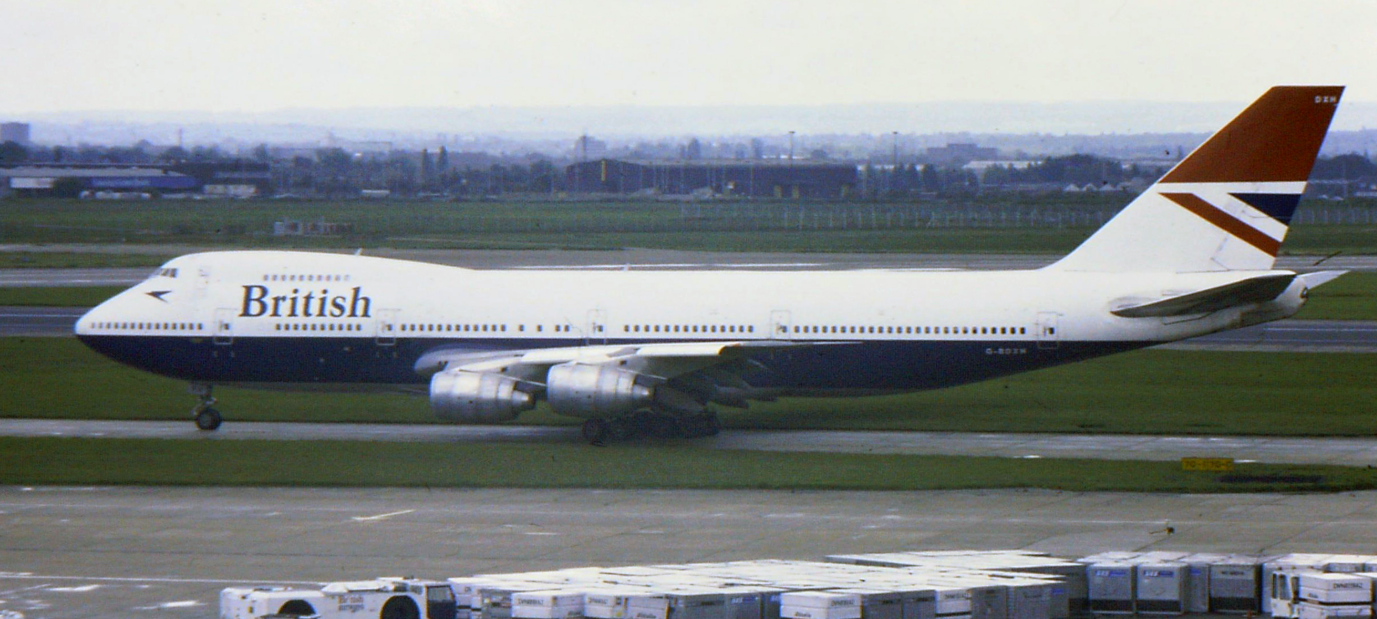
On June 24, 1982, British Airways Flight 009 was cruising at thirty-seven thousand feet over the Indian Ocean when all four engines suddenly quit. The aircraft was a Boeing 747 known as the City of Edinburgh. On board were two hundred forty-eight passengers and fifteen crew on a routine long-haul run.
Flight 009 was part of British Airways regular service between London and Auckland. The route stepped from Heathrow to Bombay, then on to Kuala Lumpur, Perth, Melbourne, and finally New Zealand. On this particular night, the aircraft had departed Kuala Lumpur and was bound for Perth on another overnight leg in a well-worn schedule.

Up front were three experienced professionals. Captain Eric Moody sat in the left seat with Senior First Officer Roger Greaves beside him and Senior Flight Engineer Barry Townley-Freeman at the systems panel. They’d flown this trip many times and nothing on the departure directions suggested this night would be unusual.

The weather reports were good. The radar picture was clean with no thunderstorm cells ahead. The crew levelled off, set cruise power, and the passengers did what passengers do on a night flight while trusting the folks on the flight deck. Most went to sleep.

This is the context. Who was there. What flight it was. Where they were. When it happened. Why everyone on board had every reason to believe this would be just another long, but uneventful, hop to Australia and New Zealand.

The twist in this story is simple and brutal. Something the crew couldn’t see and had no reason to expect was looming in the dark ahead. It turned a healthy, four-engined airliner into a powerless, three-hundred-ton glider in minutes.

What happened is one of the most studied and respected saves in commercial aviation history. Today, people call it the Galunggung Glider. On that night, it wasn’t a nickname. It was a desperate fight-for-life with physics.
Trouble in the Dark

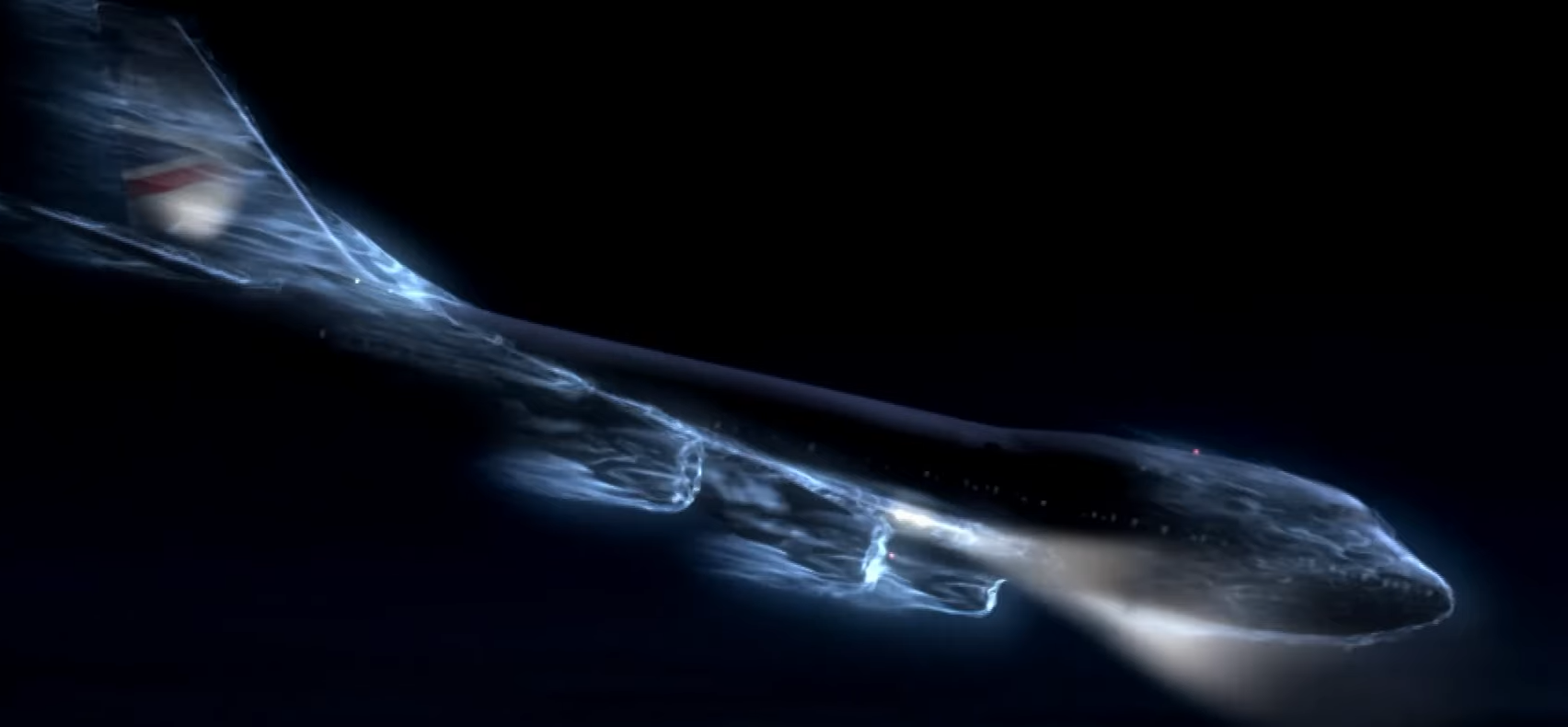
The first sign that something was wrong came in an odd and almost pretty way. Not long after they settled at cruise spped and altitude, the flight crew noticed a faint shimmering effect on the cockpit windows. Little blue-white streamers of light began to dance over the windscreen and around the nose. It looked like St Elmo’s fire, that electrical glow sailors used to report on ship masts during storms, only this night sky was supposed to be clear.

The weather radar showed nothing dangerous. No big storm tops and no obvious convective cells. To the jetliner’s instruments and to air traffic control this was just another quiet airway segment over the Indian Ocean water.

The crew did what professionals do when something looks even slightly out of place. They turned on engine anti-ice and activated the fasten-seat-belt sign. They weren’t yet alarmed. They simply treated the mysterious glow as a hint that conditions outside were not quite what the paperwork had promised.

Back in the cabin passengers started noticing strange light as well. Some saw tiny sparks crawling over the wing. Others watched pale blue halos appear around the big Rolls Royce engines as if they were wrapped in phosperescent, ghostly rings.

To frequent flyers this was new. It was eerily pretty. It was also the front edge of serious trouble.

Then came the haze. At first, it was easy to shrug off. This was 1982 and people still smoked on airliners. Cabin crew thought the thin smoke drifting through the aisles was just stale cigarette exhaust hanging in the conditioned air.

It thickened. The air took on a faint sulphur smell. That was when a few people started to feel the first prickling of unease.

Up front, the engine instruments still looked normal. Temperatures and pressures sat where they should. Fuel flow figures were right for cruise power. There was nothing obvious to tell three experienced airmen that they were flying straight into a high-altitude-hazard-from-hell that simply did not show on their screens.

The Engines Quit

The first engine—the number four starboard Rolls-Royce RB211— failed quietly. On the flight engineer’s panel, one set of needles flicked and rolled back. N1 and N2 speeds on the jet turbine dropped as it began to surge and flame out. The crew moved straight into the shutdown checklist they’d practised dozens of times in simulators and on line checks.

A four-engine jet airplane like a Boeing 747 can easily continue on three. Losing one powerplant is serious but manageable. No one likes it, but it’s squarely inside the envelope.

Before they could get comfortable with that thought, a second engine failed—the number two portside. Then the number three. And the number one. Flameouts rolled across the panel in a sickening cascade.

In moments, the City of Edinburgh went from a minor inconvenience to something no one on that flight deck had ever actually seen or practiced for. All four engines had completely stopped thrusting.

The difference was immediately obvious in the cabin. The background roar of four big fans faded away and was replaced by a strange sense of quiet. Drinks stopped rattling. Loose items floated. Ears popped differently.

A few people realised that silence at cruise altitude is not your friend. And cruising altitude was replaced by a sudden drop. Without power, gravity took over and the plane was going down.

Captain Moody picked up the microphone. He knew he had to tell the people behind him the truth. He also knew that panic would kill more quickly than gravity.

His announcement has since become a legend in aviation for its frankness.

“Ladies and gentlemen, this is your captain speaking. We have a small problem.
All four engines have stopped. We are doing our damnedest to get them going again. I trust you are not in too much distress.”

That’s British understatement at its finest. He didn’t lie. He didn’t pretty it up. He also resisted the urge to dump his own fear on two hundred and fifty-seven people through the public address system. That tone set the emotional temperature on board as much as any knob on the overhead panel.

Discipline in the Cabin — Hard Work in the Cockpit

In the cabin, the flight attendant crew went to work. They’d just heard that every engine on their aircraft had stopped at thirty-seven thousand feet over open water. They also had hundreds of human eyes watching them.

Good cabin crew know their behaviour in those first minutes will ripple through the entire cabin. On Flight 009 they kept their voices calm and their bodies steady. They checked seat belts. They paired up nervous travellers with quieter neighbours. They helped people write quick notes to family in case things went badly.

Passengers later described an eerie mix of fear, resignation, and polite small talk. People held hands with strangers. Some prayed under their breath. Some made dark humour about British Airways and stiff upper lips.

Up front, the atmosphere was different. Very different.

With all four engines out, they’d lost their main electrical and hydraulic sources. The 747 still had battery power and a backup generator. Enough to run essential instruments and some control systems.

The big jet had become a heavy glider with limited time and distance left in the bank. It also had to clear real and inhospitable terrain before it could even think about reaching a runway.

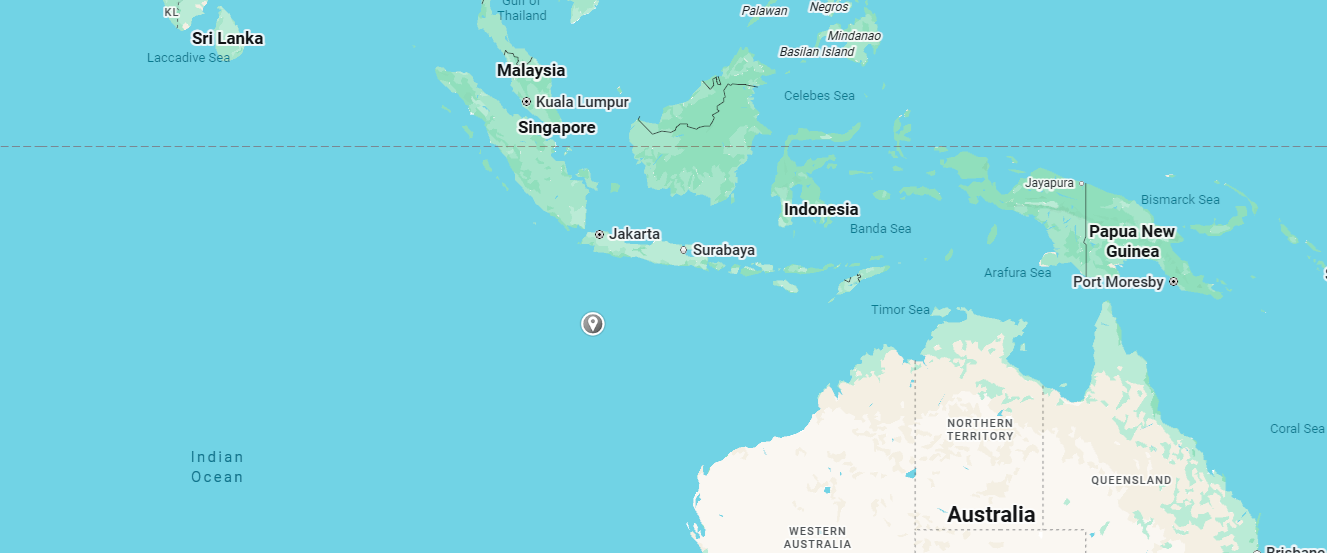
South of Java is the Indian Ocean. North toward Jakarta there is serious high ground and volcanic terrain. To get to any sort of airport they had to glide toward land without hitting a mountain on the way.

That meant quick mental math. At their weight and altitude, the City of Edinburgh could glide a limited distance for each thousand feet of height lost. It’s one thing to do that math at a desk. It’s entirely another to do it in the dark with a few hundred people behind you and four dead engines under the wing.

Jakarta was the obvious divert. Air traffic control knew they had a problem but didn’t grasp the full scale at first. Engine failures were uncommon and losing all four was not on the normal script. And to compound matters, the 747’s radio system was scrambling.

Controllers recommended headings and altitudes and clearance while the flight crew explained they were coming down whether anyone cleared them or not. Gravity had the clearance. Everything else was just bureaucratic protocol.
Riding a Three Hundred Ton Glider

The flight deck crew began a controlled descent toward what they hoped would be cleaner air. They suspected whatever choked their engines sat higher in the atmosphere. If they could get out of that layer, there was a chance the engine cores might cool just enough to clear and restart. That was a theory, not a guarantee.

They also could not simply dive away. A sea-ditching at night would be fatal. They needed every foot of altitude to make land. It was a balancing act. Stay high enough to reach Jakarta. Go low enough to escape whatever killed the engines.

Investigators later estimated Flight 009 lost twenty-five thousand feet before good news finally showed up on the engineer’s panel. At thirteen and a half thousand feet, one of the dead engines began to spool up. Number four coughed into life.

Jet noise returned to the airframe and with it a sliver of margin. With partial thrust available the crew adjusted their descent and tried to coax the remaining powerplants back. Shortly afterward another engine lit. Then another.

At one point all four engines restarted, although the number two engine soon went back into heavy vibration and had to be shut down again. For the remainder of the flight, they had three functioning engines. It wasn’t pretty, but it was enough.

Passengers sensed the change. The silence gave way to the familiar thrum of turbines. One survivor later said the sound of that first engine coming back was the best noise he’d ever heard.

People straightened in their seats. Some cried. Some laughed. Everyone understood they weren’t out of danger yet, but the feeling in the cabin shifted from helpless free fall to a fighting chance.

Even with three engines running, a new problem had emerged. The forward windscreens looked like they’d been sandblasted. What started as a ghostly glow earlier had, in hindsight, been a clue. Something abrasive had been hammering the glass at high speed.

By the time they turned toward Jakarta the front windows were so badly frosted and pitted that clear vision was almost gone. Imagine trying to land a big jet at night with your windscreen turned into opaque bathroom glass. That was the job that now lay ahead.
Landing with Frosted Glass

The approach into Jakarta’s Halim Perdanakusuma Airport wasn’t the tidy textbook exercise people like to imagine in simulator videos. The tower reported good weather and visibility. Runway lights were clear, and the sky was open.

On their side of the glass, it was a very different story.

Captain Moody could barely see straight ahead. He had to rely heavily on his instruments, on side windows that were less damaged and on whatever partial view his first officer could find through the clearer patches.

They flew a careful profile with no sudden power changes. This wasn’t the time to test the engines. With recent flameouts still fresh in their minds, they kept thrust changes gradual and conservative.

The goal was simple. Get the aircraft on the ground in one piece without asking the machinery for any more heroics.

Passengers later described the landing as firm but not brutal. The 747 came down, flared, and touched the pavement with authority. It rolled out, slowed, and turned off the runway under its own power. Only then did people begin to let themselves fully believe they were going to walk away.

From the outside the damage told the story the instruments could not. Leading edges of the wings and tailplane were abraded. The landing light covers and cockpit windscreens were opaque and milky instead of clear. Engine inlets and front compressor blades looked as though someone had attacked them with a high-pressure sandblaster.

Whatever they’d flown through had been harder than ice. It had hit them at high speed. And it had come from a force no one foresaw.
The Invisible Enemy

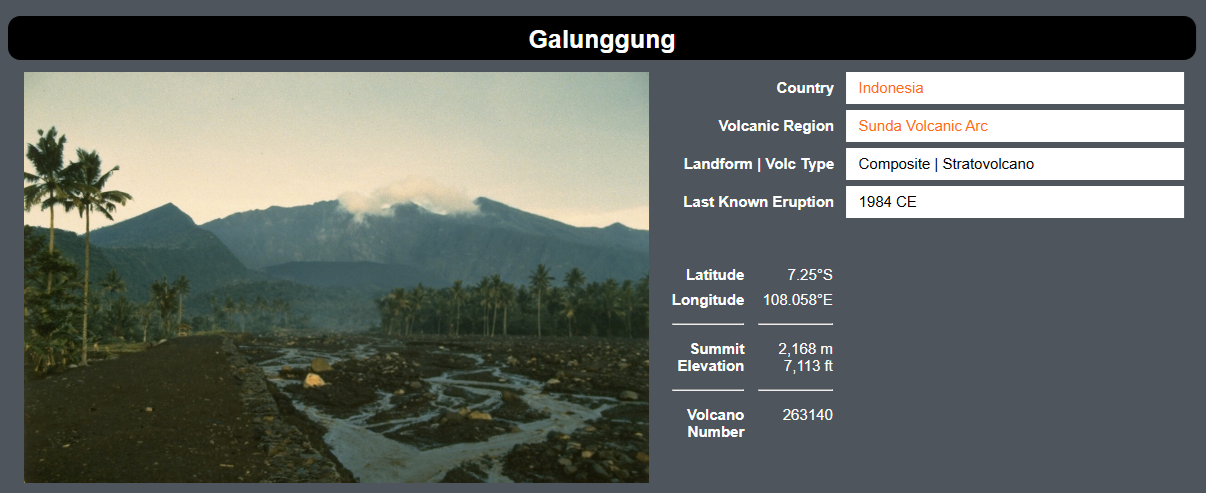
The investigators didn’t have to look far to find the culprit. Mount Galunggung on Java had been erupting. It’d thrown huge clouds of volcanic ash into the atmosphere for weeks.

On that June night, a thick plume from Galunggung drifted right across the airway at cruise altitude. It didn’t show up on weather radar and was impossible to see visually in the dark. British Airways Flight 009 flew straight through a sandbag.

Volcanic ash isn’t the fluffy grey stuff that blows out of your fireplace. It is a mixture of tiny particles of rock and glass created when magma shatters during an eruption. Under a microscope the grains look jagged and sharp.

In an engine, or on a windscreen, they behave less like smoke and more like airborne sandpaper. They’re also very dry. That means they don’t reflect radar in the same way that water laden storm clouds do.

To the systems on Flight 009, that ash cloud was invisible. The radar saw nothing. The flight plan predicted nothing. Only the airframe and engines felt it.

Jet engines cope with a lot of abuse. They’re tested with birds and hail and heavy rain. But volcanic ash hits them in a different way.

As ash enters the front of the engine it erodes compressor blades and strips away protective coatings on metal. Deeper inside the engine, the temperature rises above one thousand degrees Celsius. Many volcanic ash particles contain silicates that soften and melt at those temperatures.

When that happens, the particles begin to flow like molten glass. They can clog cooling holes and narrow gas paths. When that liquidy material later cools and hardens it distorts airflow and blocks critical cooling paths.

Combustion becomes unstable. Temperatures climb. Eventually the engine surges and flames out.

That is what happened to the City of Edinburgh.
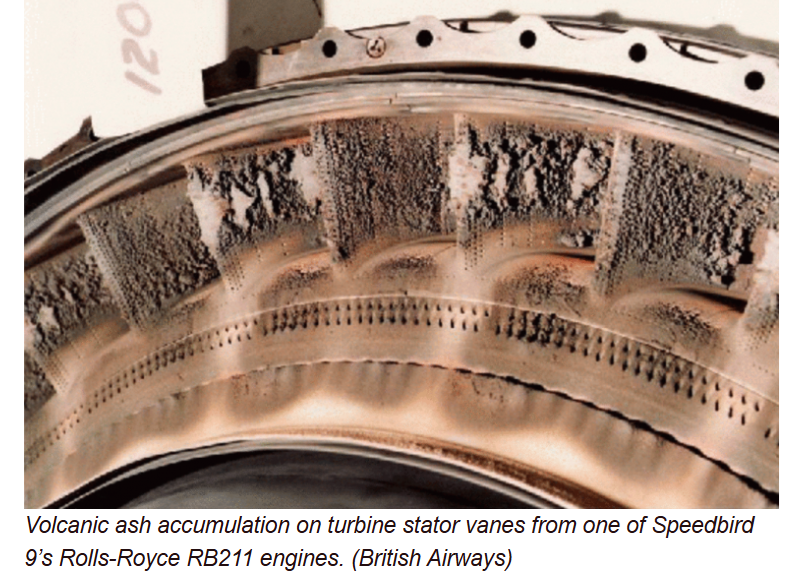
As the 747 cruised through the ash cloud, fine particles streamed into all four Rolls Royce engines. The glowing effect passengers saw on the engine inlets and around the nose was caused by electrical activity and light scattering off the ash. The sulphur smell in the cabin came from volcanic gases and dust.

By the time the engine instruments started to misbehave, the damage was already underway.

Ironically, the same physics that killed the engines helped save the aircraft. When the engines shut down, and the aircraft began gliding out of the high-level ash layer, the temperatures in the turbine sections dropped. Some of the molten glassy deposits inside cracked and broke away as they cooled. That opened up just enough flow path for air and fuel to mix properly again.

When the crew attempted restarts at lower altitude, they were now dealing with engines that could breathe again. It wasn’t elegant engineering. But it was just enough.

The windscreen told the same story in manufactured glass. Ash had hammered the cockpit windows at hundreds of knots. Each impact was tiny, but there were millions of them. Over minutes that turned clear glass into frosted opaque panels.

If you’ve ever seen a windshield after a winter of gravel road driving, you have a hint. Now multiply that by altitude, by speed, and by billions of tiny volcanic rocks.

Investigation, Honors, and Change

The formal accident report reached a clear conclusion.

British Airways Flight 009 had flown into a high-altitude cloud of volcanic ash from the eruption of Mount Galunggung. The ash didn’t show on conventional weather radar which was tuned to detect water vapor. It sandblasted the aircraft and choked all four engines into flameout.

The subsequent restarts were possible only because the aircraft glided out of the densest ash and the cooling engines shed enough molten slag to allow airflow again. It was a close call. There was nothing routine about it.

Authorities initially reacted by closing the airspace around the volcano. That closure was short lived. Less than three weeks later a Singapore Airlines 747 flew through the same region and also lost three engines to ash from Galunggung.

That was the second loud warning. After that, Indonesian authorities permanently closed the airspace near the volcano and rerouted nearby jet routes.

The City of Edinburgh was badly hurt but not finished. Three engines were changed in Jakarta along with the sandblasted windscreens. Contaminated fuel was cleaned out of the tanks. When the aircraft returned to London the fourth engine was replaced and major repairs completed.

The 747 was eventually returned to service, later renamed City of Elgin. She carried passengers for British Airways and other operators until she was finally retired and broken up decades later.
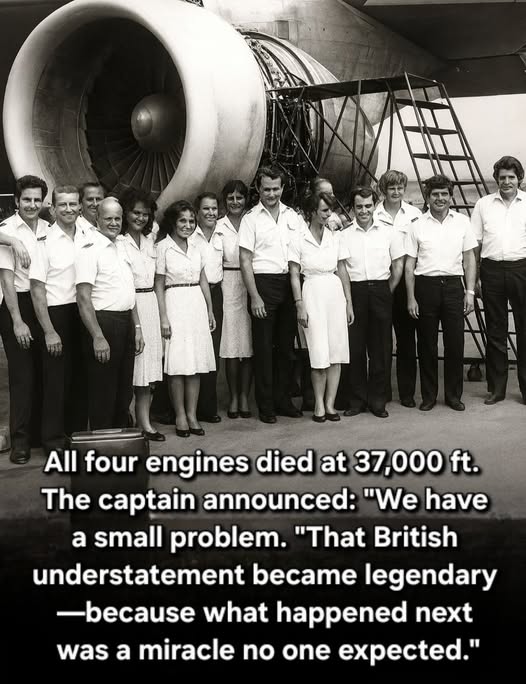
The people who saved her did not go unnoticed. Captain Moody received the Queen’s Commendation for Valuable Service in the Air. His fellow flight deck crew were recognised as well. The cabin crew received awards and praise for maintaining order and supporting passengers during the crisis.

In the record books the flight entered aviation lore as one of the longest power off glides by a large commercial jet. It sits beside the Air Canada Gimli Glider, the Air Transat fuel leak over the Atlantic, and the Hudson River ditching as one of those rare days when a big airliner became a glider and still made it home.

For the wider flying world, the bigger change came later. The seriousness of BA 009 and the later Singapore Airlines incident finally drove home that volcanic ash wasn’t a minor nuisance. It was a major flight safety hazard.

In the years that followed, international agencies built a network of Volcanic Ash Advisory Centres. These centres track eruptions, model ash plumes and issue warnings to airlines and air traffic control. Route planners today treat significant ash clouds as seriously as storm systems.

Pilots are now taught that if ash is suspected the correct move is simple. Do not go there. Turn around and get out. Do not climb through it.

Those rules were written in part by what happened to British Airways Flight 009.

Why This Story Matters

So, what do we take from a night over the Indian Ocean more than forty years ago.

For one thing, it shows how fast a normal day can go sideways when an unseen factor enters the picture. The crew of BA 009 did not ignore warnings or cut corners. They flew the plan they were given with the tools they had.

The hazard simply sat outside the margins of what those tools could see.

It also shows the value of training and composure. Engine out procedures. Drift down profiles. Gliding distance estimates.

These are the boring drills that aircrew run through in simulators when no one is watching.

On that night south of Java, those dull checklists became the difference between a controlled approach into Jakarta and nearly three hundred names on a memorial wall.
Most of all it reinforces something the public often forgets. When aviation fails it makes headlines. When aviation almost fails and then quietly succeeds it becomes a footnote.
Flight 009 could easily have ended as wreckage in the sea or on a mountainside.

Instead, it ended as a safe landing, a “bug-covered” windscreen, and a story of calm understatement that still gets shared in pilot bars and safety seminars.

From where I sit, that is the kind of story worth keeping alive. Not to scare people off flying. But to remind them what sits behind that locked flight deck door.

A team of humans. A mountain of engineering. And a lot of quiet discipline.

Sometimes they meet things no one sees coming. Sometimes they have a small problem at 37,000 feet like losing all four engines. And they still bring you home.
Dyingwords.net is powered by a Centaur Intelligence System and its EXPONENTIAL Thought Engine
centaursystems.ai

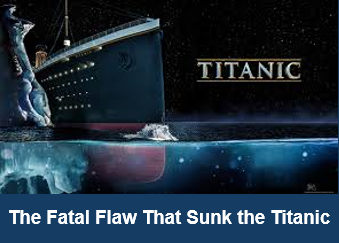
THE FATAL FLAW THAT SUNK THE TITANIC

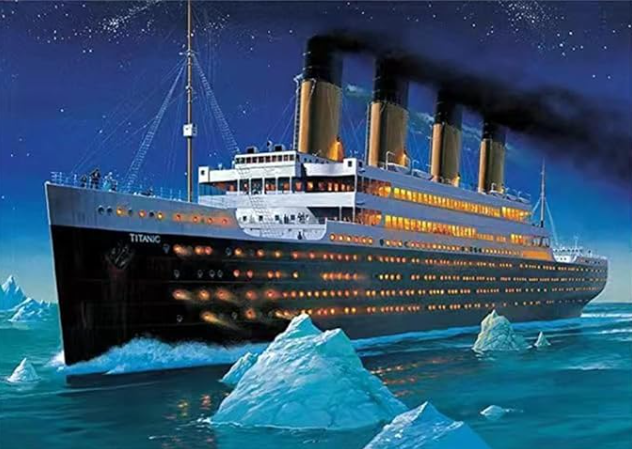
The R.M.S. Titanic was the world’s largest man-made, mobile object when the ship was commissioned in 1912. Everyone knows the Titanic hit an iceberg in the North Atlantic and sank within 2 hours and 40 minutes. It was the highest-profile marine disaster of all time, and most people still blame the accident on the iceberg. What few people know is the real root cause—the fatal flaw that sunk the Titanic and killed over 1,500 people.

There were two official inquiries into the Titanic’s sinking. Both concluded the iceberg was the issue (without the iceberg, there was no problem), although the investigation processes considered many contributing factors—natural, mechanical, and human. There were errors found in the Titanic’s design, production, navigation, communication, and especially in the motivation of its builder, the White Star Line. While fingers were pointed, no blame was attached, and the only real outcome of the Titanic inquiries was adopting the International Convention for the Safety of Life at Sea (SOLAS) that still governs marine safety today.

The Titanic accident investigations used the best resources of the time, however the inquiries were conducted long before the wreckage was found, a forensic analysis was applied, and computer-generated recreation was available. Today, we have a clear picture of exactly how the Titanic disaster took place from a mechanical perspective but finding the root cause has remained buried as deep as its bow in the muddy bottom. It shouldn’t be, because the fatal flaw—the root cause—of what really sunk the Titanic is clearly obvious when analyzed objectively.

Both official inquiries into the Titanic sinking called sworn testimony of the surviving crew members, passengers, rescuers, builders, and marine regulators. They used an adversarial approach that was common for investigations at the time. That involved formulating a conclusion—the iceberg—then calling selective evidence and presenting in a way that supported the iceberg findings.

One investigation by the U.S. Senate concluded the accident was an Act of God—the iceberg was a natural feature and shouldn’t have been there under normal conditions. The second investigation by the British Wreck Commissioner agreed with the natural cause conclusion but qualified it with a statement, “What was a mistake in the case of the Titanic would, without a doubt, be negligence in any similar case in the future.” In other words, “In hindsight, it shouldn’t have happened and we’re not going to tolerate it again.”

Both twentieth-century investigations concluded that when the Titanic collided with the iceberg, a gigantic gash was ripped in its hull allowing massive water ingress and compromising the ship’s buoyancy. At the root of the accident, they found the cause to be simply the iceberg.

They were wrong. They failed to identify the real cause of the Titanic tragedy.

Today’s professional accident investigators take a different approach to fact finding. They take a “Root Cause Approach” to accident investigation and the industry leaders in Root Cause Analysis or Cause Mapping are the front-line company Think Reliability.

Think Reliability developed a root cause analysis of the Titanic sinking that’s outlined in an instructional video and a detailed event flow chart that identifies over 100 points of contributing factors. They’re excellent presentations but even Think Reliability missed a few contributors and did not categorically identify the one fatal flaw that caused the deaths of so many innocent people.

In getting to the root cause and finding the fatal flaw, it’s necessary to look at the stages of how the Titanic came to be and then determine exactly what caused it to go down.

History of the Titanic

The Royal Mail Ship Titanic was one of three sister vessels planned by the British ocean liner company, White Star Line. The Olympic was commissioned in 1910 and already in operation when the Titanic was under construction. A third ship, the Britannic, was in planning.

The Titanic’s construction was under an extremely tight timeline. Politics were at work, as was economics. Transcontinental ocean travel was rapidly expanding and the once-dominated British control on this lucrative industry was being threatened by German built and operated liners. In protective reaction, the British Government decided to subsidize White Star’s competitor, the Cunard Line. This left White Star resorting to private funding to compete and it came from American financier, J.P. Morgan, who put tremendous pressure on White Star to perform.

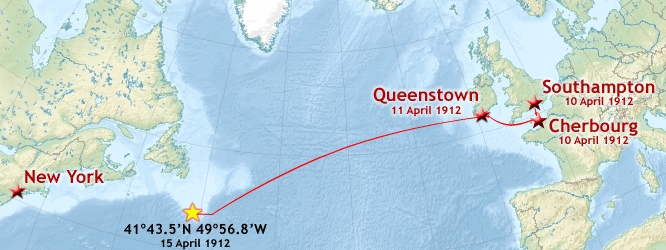
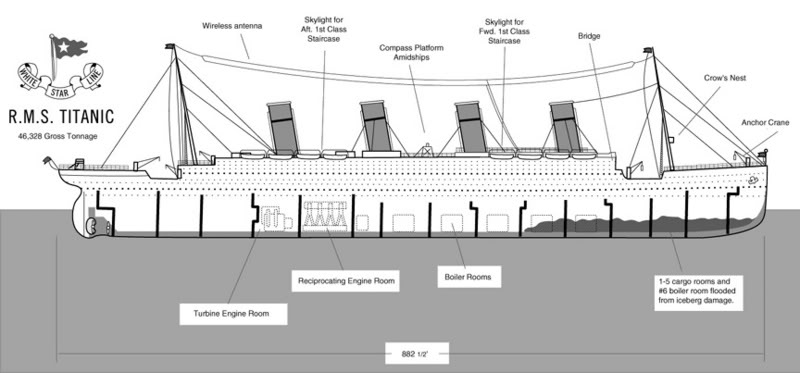
Harland & Wolff shipbuilders in Belfast, Ireland, built the Titanic. She was 883 feet long, stood 175 feet to the top of the funnels from the waterline and weighed 46,329 tons in water displacement. Her keel was laid in March 1909, and was set to sea trials on April 2, 1912. Eight days later, on April 10, 1912, the Titanic disembarked Southampton, England on her maiden voyage destined for New York City. Officially, 2165 passengers and crew were on board, but this figure is not accurate due to no-shows, an inaccurate crew count, and additional passengers who were taken on in Ireland as well as inevitable stowaways.

Some of the world’s most influential and wealthy people were on the Titanic which included the ship’s designer, Thomas Andrews, as well as the head of White Star Line, Bruce Ismay. It was beyond a voyage—it was a cultural event and a chance for White Star to regain its place in international shipping by proving the fastest and most luxurious way to sail between Europe and America. A lot was riding on the Titanic’s success.

The Iceberg Collision

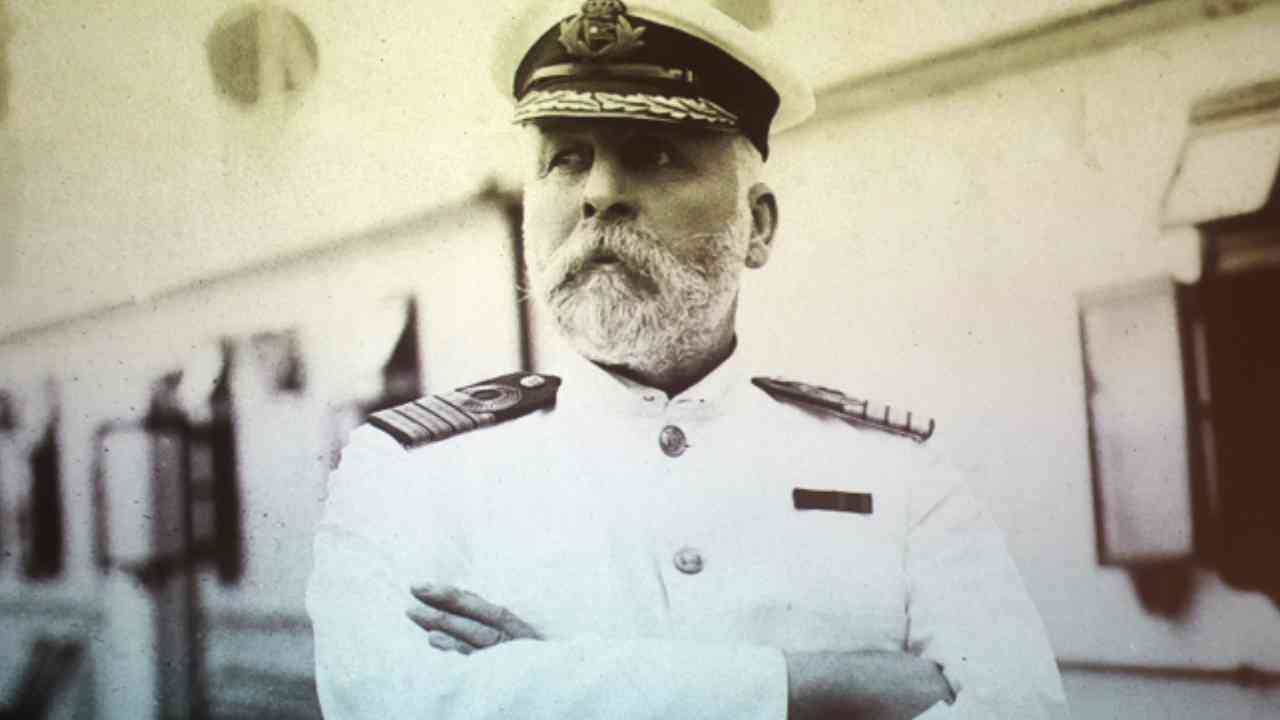
The route Titanic took to New York had been traveled for several hundred years. It was the standard passageway for international liners and the main shipping lane between Europe and North America. The Titanic’s master, Captain Edward Smith, was a thirty-two-year White Star Line veteran and was chosen to command the Titanic due to his experience in international navigation, specifically this plot.

On the evening of April 14, 1912, the weather was perfect. It was clear, cold, and the sea was flat calm however, visibility was limited to ¼ mile due to there being a new moon and the only illumination was from starlight.

At 11:35 p.m., the Titanic approached a point 375 nautical miles south-southeast of Newfoundland where the cold Labrador current from the north met the warmer Gulf current from the south. This location was well known for being the edge of pack ice and was notorious for icebergs which calf or break-off from their parent shelf.

Captain Smith had inspected the bridge at approximately 9:30 p.m. According to testimony from the surviving helmsman, Captain Smith discussed the potential of icebergs although none were yet seen. Smith directed the helmsman to maintain course and to raise him if conditions changed. The captain left the bridge, retiring to his quarters. He was no longer involved in mastering the ship until after the collision.

Testimony from the Titanic’s helmsman, Robert Hitchens who was at the wheel during the iceberg collision, records that the Titanic was at 75 propeller revolutions per minute which calculated to 22.5 nautical miles per hour, just short of its maximum design speed of 80 revolutions or 24 knots. The helmsman also testified the Titanic was actually speeding up when it struck the iceberg as it was White Star chairman and managing director, Bruce Ismay’s, intention to run the rest of the route to New York at full speed, arrive early, and prove the Titanic’s superior performance. Ismay survived the disaster and testified at the inquiries that this speed increase was approved by Captain Smith and the helmsman was operating under his captain’s direction.

The Titanic was built long before radar became the main nighttime navigational aid. The watch depended on a crew member in the forward crow’s-nest who stared through the dark for obstacles. Other ships were not a concern as they were brightly lit and the only threat to the Titanic was an iceberg.

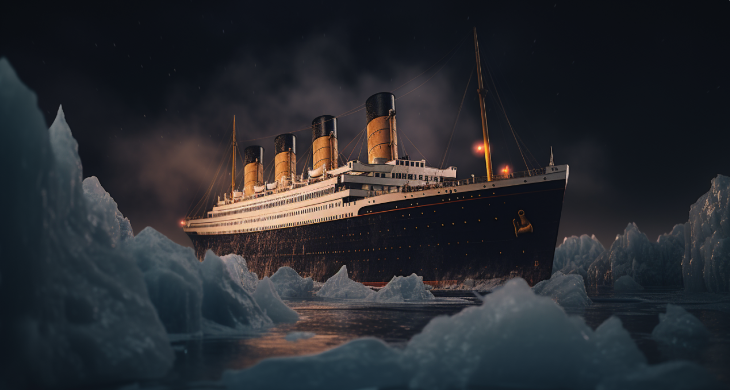
From the dim, Titanic’s watchman saw the shape of an iceberg materialize. It was estimated at ten times the Titanic’s size above water, which equates to a total mass of one hundred Titanics. The watchman alerted the bridge that an iceberg was at the front right, or starboard side, and to alter course.

Testimony shows that confusion may have caused a mistake being made in relaying a course change from the bridge to the steerage located at the ship’s stern. It appears the rudder might have been swung in the wrong direction and they accidently turned into the iceberg. It’s reported that when the helmsman realized the error, he ordered all engines in full reverse. Screw and rudder ships cannot steer in reverse. They can only back up in a straight line, but it was too late.

Stopping the Titanic was impossible. It was speeding ahead far too fast to brake within a ¼ mile, which is 440 yards. Without a speed reduction, covering 440 yards at 22.5 nautical miles per hour would take 36 seconds. Testimony from the inquiries recorded that during the eight-day sea trials, the Titanic was tested from full-ahead at 22 knots to full-stop. This took 3 minutes and 15 seconds and the deceleration covered 850 yards.

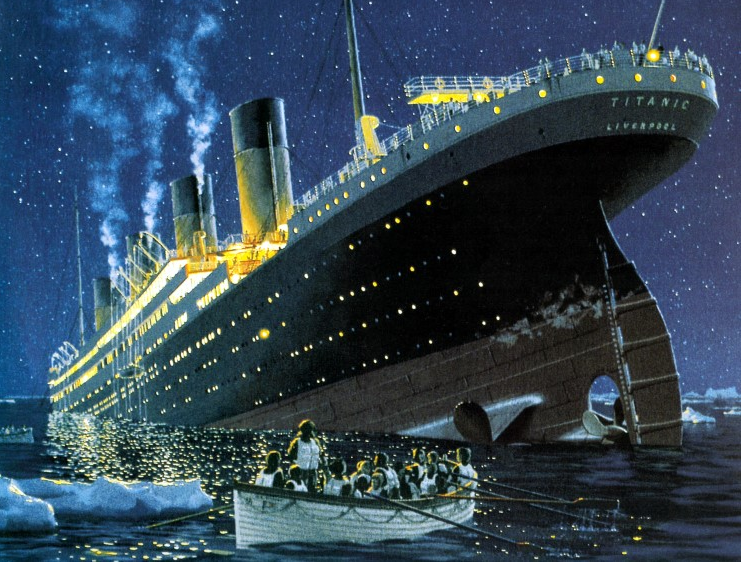
The Titanic sideswiped the iceberg on its starboard front, exchanging a phenomenal amount of energy. It immediately began taking on water that filled the ship’s six forward hull compartments. Water cascaded over the tops of the bulkheads in a domino effect and, as the weight of the water pulled the bow down, more water ingressed. This caused the stern to rise above the waterline. With the rear third of the ship losing buoyancy and the weight from her propellers being in the air, the stress on the ship’s midpoint caused a fracture. The ship split in two and quickly sank to the bottom. It was 2:20 a.m. on April 15, 1912—two hours and twenty minutes after the iceberg collision.

Warning and Life Saving Attempts

Captain Smith came to the bridge shortly after the collision. Again, survivor testimony is conflicting, and Smith did not live to give his version of what took place in mustering the crew and passengers for safe abandonment.

Without any doubt, there was complete confusion—some said utter chaos—in abandoning ship. The voyage had been so hastily pushed that the crew had no specific training or conducted any drills in lifesaving on the Titanic, being unfamiliar with the lifeboats and their davit lowering mechanisms.

Compounding this was a decision by White Star management to equip the Titanic with only half the necessary lifeboats to handle the number of people onboard. The reasons are long established. White Star felt a full complement of lifeboats would give the ship an unattractive, cluttered look. They also clearly had a false confidence the lifeboats would never be needed.

It’s well documented that many lifeboats discharged from the Titanic weren’t filled to capacity. Partly at fault was a “women and children first” mentality, but the primary reason is that no one person took charge of the operation. Testimony is clear that Captain Smith was involved during the lifeboat discharges but there’s no record of what charge he actually took. Some accounts tell of the captain remaining on the bridge and going down with the ship, as the old mariner’s line goes.

Another well-documented issue was the failure of the ocean liner Californian to come to Titanic’s rescue. The Californian was within visual view of the Titanic. In fact, the crew of the Californian had sent the Titanic repeated messages warning of icebergs and the Californian had stopped for the night because of limited visibility and high risk of iceberg collision. These messages were improperly addressed and were never relayed to the bridge of the Titanic.

Further, the crew of the Californian had seen Titanic’s distress flares, but the Californian’s Captain refused to respond. This was a major issue brought up at both official inquiries and a reasonable explanation from Californian’s Captain was never resolved.

Eventually, the ocean liner Carpathia responded. It, too, sent the Titanic iceberg warnings before the collision. The inquiries drilled down into the message relay flaws. They discovered the wireless operators on board the Titanic weren’t crewmembers nor directed by White Star. They were employees of the Marconi Telegraph Company privately contracted in a for-profit role to deliver all messages to and from the Titanic. In the few hours before the iceberg collision, the Titanic was within range of an on-shore relay station, and this gave them a short window to pass high-priority messages for wealthy passengers. Navigation warning messages to the Titanic were given low or no priority.

Hearing testimony recorded that shortly after dark, as early as 7:00 p.m., the Titanic was sent at least five iceberg warnings. There’s no record these were passed on to the ship’s bridge nor the captain. The Marconi operator aboard the Titanic survived to testify there’d been a severe backlog of paying customer messages and he was being “interrupted” by incoming navigational alerts. The warnings were set aside as they were not addressed “MSG” which means “Master Service Gram”. By policy, MSG messages required the captain’s personal action whereas non-marked messages were delivered when time permitted.

Finding the Titanic — Design and Damage

Although the Titanic was the largest ship of its time, there was nothing technologically new about its design, materials, or method of construction. The hull was built of large steel plates, some as large as 6 feet by 30 feet and between 1 and 1 ½ inches thick. The technology at the time was to rivet the sections together where today, modern ships are welded at their seams.

Riveting a ship’s seams was an entire trade on its own—almost an art. There were two types of rivets used on the Titanic. Rivets in the mid-section of the hull, where stresses from lateral wave forces were greatest, were made of steel and triple-riveted while those in the bow and stern were composed of cheaper iron. The bow and the stern endured less force when under normal operation and only required double riveting by design. Further, with the mid-section of the Titanic being straight and flat, these rivets were installed with hydraulic presses where the curved plates at the ship’s ends had to be hand riveted. That involved setting rivets in place while white hot and hand-hammering them closed.

Anyone who’s watched the movie Titanic knows the ship was designed with sixteen “watertight” compartments, separated by fifteen bulkheads that had doors which could be shut off in the event the hull was compromised anywhere along these sections. The “watertight” design only applied below or at the waterline, leaving the entire hull open above the top of these bulkheads.

The bulkheads were the fatal design cause of the Titanic’s sinking, but they weren’t the root cause of the disaster.

The ship’s architect, Thomas Andrews, was aware that flooding of more than four compartments would create a “mathematical certainty” that the bulkheads would overflow and cause the ship to sink. Testimony records that Andrews informed Captain Smith of this right after he realized the extent of flooding. This triggered the abandon ship order.

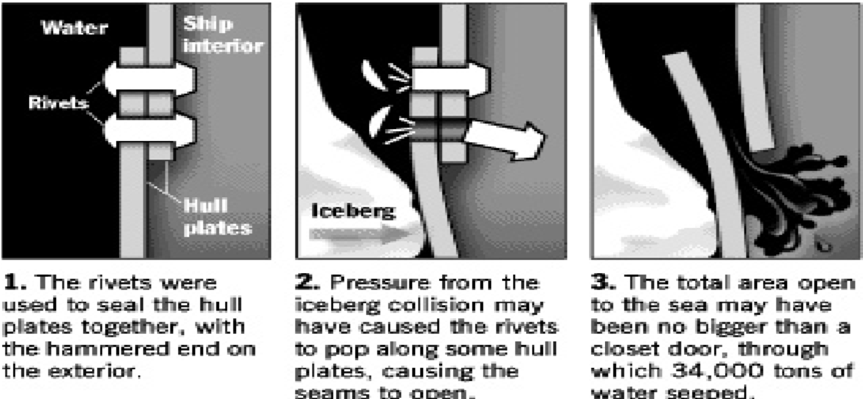
Over the years following the sinking and before the Titanic’s wreckage was discovered, most historians and naval experts assumed the ship suffered a continuous gash in the hull below the waterline and across all six compartments. There was one dissenter, though, who surmised it only took a small amount of opening in each compartment to let in 34,000 tons of water and that was enough to compromise the ship.

Edward Wilding was a naval architect and co-designer of the Titanic who testified at the American inquiry. He calculated that as little as 12 square feet of opening in the hull would have been enough to let in that much water in the amount of time the Titanic remained afloat. Wilding stated his opinion that there was not a long gash, rather it was a “series of steps of comparatively short length, an aggregate of small holes” that were punctured in the hull. Wilding went as far to speculate that the force of the collision probably caused rivets to “pop or let go” and it was “leaks at the ruptured seams” that let in seawater.

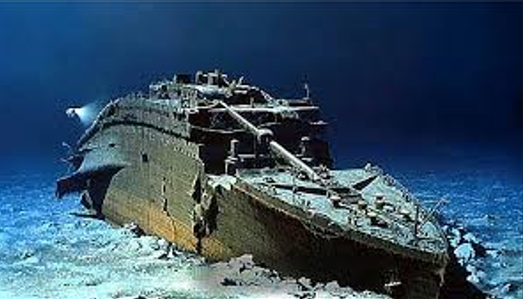
In September 1985, the Titanic’s wreckage was found by a deep-sea expedition led by Dr. Bob Ballard. It was in 12,500 feet of water and its debris field covered 2,000 yards. Her hull was in two separate main pieces with her bow nosed into 35 feet of muddy bottom. Since then, many dives have been made on the Titanic including one which used a ground penetrating sonar that mapped the section of the bow that was under the mud.

The sonar readings clearly showed six separate openings in the forward six hull compartments. They were narrow, horizontal slits in various spots, not at all-in-one continuous line like the gash theory held. The sonar map was analyzed by naval architects at Bedford & Hackett who calculated the total area exposed by the slits was 12.6 square feet—almost the exact figure proposed by Edward Wilding in 1912.

The architects also stated the rivets were clearly at fault and they’d failed from the impact. The rivets either sheared off on the outer heads or simply fractured and were released by the impact’s force. Immediately, many experts questioned why only a few rivets in a few seemingly random places failed and not most all along the area of impact.

In one of the dives, a large piece of the Titanic’s forward hull was recovered. This led to a forensic study on the plate steel and rivet composition by metallurgists Jennifer McCarty and Tim Foecke which they documented in their book What Really Sank the Titanic. Drs. McCarty and Foecke established many of the Titanic’s iron rivets had an unacceptable amount of slag in their chemical makeup, contrary to what the ship’s design specified. The metallurgists concluded when the inferior, weak rivets were exposed in below-zero Fahrenheit water temperature on the night of the sinking, they were brittle and shattered from the collision force.

The metallurgists went further in their investigation. They found during the rush to complete the Titanic on time, the builders purposely resorted to inferior metal than specified by the designers. The builders were also faced with a critical shortage of skilled riveting labor. This led to a compounded error of inferior rivets being installed by inferior tradesmen that likely explains the randomness of failed areas.

Today, the failed rivet theory stands as the most logical explanation for the mechanical cause of the Titanic disaster, but this still doesn’t get at the root cause of the tragedy.

At the core of Root Cause Analysis is the question “Why?”. This form of accident investigation forces the question “Why did this happen?” to be asked over and over until you cannot ask anymore “Whys?”. In Titanic’s case, this path leads to answering the root cause—the fatal flaw in why over 1,500 innocent people lost their lives.

The two official investigations back in 1912 started with a conclusion—the Titanic hit an iceberg and sank. They made somewhat of an attempt to answer why that happened without attaching too much blame. The result was not so much as getting to the root cause but to try and make some good come from the disaster and ensure there was less chance of it happening again.

That is a good thing and, to repeat, it led to improving world marine safety through SOLAS. But that still doesn’t get to identifying the fatal flaw in what really sank the Titanic.

Think Reliability identified five root causes of the Titanic disaster:

1. Iceberg warnings were ignored.

2. The iceberg wasn’t seen until too late.

3. The Titanic was traveling too fast for visual conditions and couldn’t avoid colliding with the iceberg.

4. The rivets failed, compromising the hull’s integrity and letting in enough water to exceed the design buoyancy.

5. Insufficient lifesaving procedures and equipment were in place.

While these five reasons are the prime contributors to why the accident and tremendous loss of life happened, they still don’t arrive at the true, single root cause—the fatal flaw that sunk the Titanic.

Finding the fatal flaw requires answering ‘Why” to each of these five points.

1. Why were the iceberg warnings ignored?

The answer is a systematic failure of communication operating on the Titanic. There was ample reason to suspect icebergs might be in the Titanic’s path. Any competent captain would be aware of hazards like this and would liaise with other ships along the route for warning information. Navigational communication was not a priority under Captain Edward Smith’s command.

2. Why was the iceberg not seen until too late?

There’s another simple answer here. Night visibility was poor as there was limited light. Testimony from the surviving crewmembers consistently estimated the visibility range to be no more than ¼ mile. Eyesight, combined with compass readings, were the only forms of navigation in 1912. The Titanic was going too fast for the crew to react because Captain Smith allowed his ship to exceed a safe speed for navigation conditions.

3. Why was the Titanic traveling too fast for navigation conditions?

Without question, Captain Smith was under pressure from Bruce Ismay to bring the Titanic into New York earlier than scheduled. While this would never have set a speed record for the route, it certainly would reflect positively on the White Star Line and its business futures. Captain Smith succumbed to unreasonable pressure and allowed his ship to be operated unsafely.

4. Why did the rivets fail?

While Captain Smith had no input into the construction of the Titanic, he certainly knew its design limits. The Titanic was built as an ocean liner, not a battleship or an icebreaker. Captain Smith knew how dangerous an iceberg collision could be, yet he still risked his ship being operated in unsafe conditions.

5. Why were there insufficient lifesaving equipment and procedures in place?

The fault began with White Star’s failure to provide the proper number of lifeboats as well as rushing the Titanic into service before the crew was properly trained in drills and equipment operation. Captain Smith was aware of this. Despite, he allowed the Titanic to sail unprepared.

At the root of each of question lies irresponsibility of the Titanic’s captain. It’s long held in marine law that a ship’s captain is ultimately responsible for the safety of the vessel, the crew, and the passengers.

Captain Smith had full authority over every stage in the Titanic’s disaster and he failed on each point. Clearly, Captain Edward Smith is the fatal flaw that sunk the Titanic.

xr:d:DAFyQUALMso:11,j:8643940789452866016,t:23102609

*   *   *

Note: Writer Garry Rodgers holds a 60 Ton Transport Canada Marine Captain Certification which includes accredited training in Ship Design & Stability, Navigation, Communication, SOLAS, and Marine Emergency Duties. Garry is also formally trained in Think Reliability Root Cause Mapping.