 On August 4th in 1892, wealthy businessman Andrew Borden and his wife, Abby, were savagely slaughtered inside their home at Fall River, Massachusetts. The murder weapon was a multi-edged instrument thought to be an ax or a hatchet. Suspicion soon fell on their 32-year-old spinster daughter, Lizzie Borden. Lizzie was indicted, tried by a jury, and acquitted of the slayings. Today, the Borden homicide case remains officially unsolved, and some still don’t believe Lizzie Borden really ax-murdered her parents.
On the other hand, many are convinced Lizzie Borden was the sole culprit. They’ve suggested many possible motives and rightly note that judges held back crucially incriminating evidence from the New England jurors. Professional detectives and armchair sleuths alike point out that no one else ever seriously surfaced as a viable suspect. That, they say, tightens the noose around Lizzie Borden’s long-deceased neck.
It’s been 127 years since the Borden family tragedy. Over time, Lizzie Borden’s story elevated to one of the highest-profile killings in American history. There’ve been countless books, articles, movies, plays, songs, and even poems written about Lizzie Borden. One take is a famous skip-rope rhyme that goes like this:

That’s all fun and games on the playground but, the truth is, the Bordens were only struck twenty-nine times rather than the exaggerated eighty-one. Autopsies revealed 70-year-old Andrew Borden received ten hits to his face while 64-year-old Abby Borden suffered nineteen blows to her back and about her head. Regardless of counts, the murders were classic overkill—like the sign of pent-up anger. The question is… who did it and why. Let’s look at the Borden file facts, examine the motive, and determine whether or not Lizzie Borden really did ax-murder her parents.
The Borden Family History
Lizzie Andrew Borden was born on July 19, 1860, at Fall River which was a textile mill town about fifty miles south of Boston near the Cape Cod area of America’s upper Atlantic coast. Her christened name was Lizzie, not Elizabeth, and her middle name honored her father. He was a self-made financier with interests in the mills, real estate, and banking.

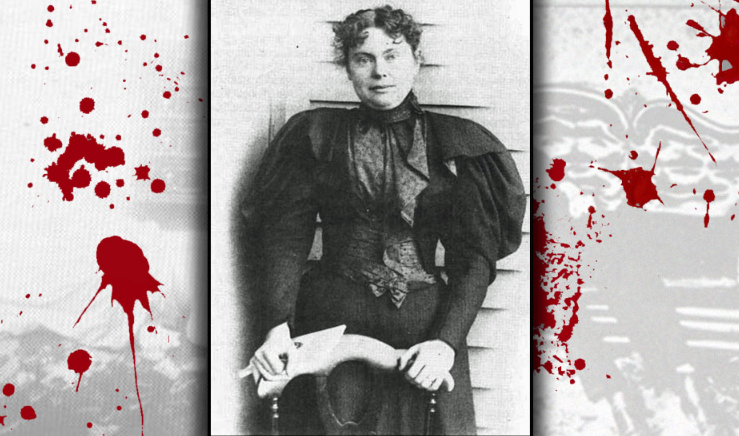
Lizzie Borden – Photo Date About 1890
Lizzie Borden’s birth-mother was Sarah Borden who died when Lizzie was two. That left her only sibling—a nine year older sister named Emma—to help care for Lizzie. Andrew Borden remarried in 1865 to Abby Gray who took on the Borden last name and became Lizzie and Emma’s step-mother. They raised Lizzie in a Central Congregational Protestant church environment and valued their heritage of being native-born to New England and not immigrants like the “lesser-class” mass of Irish Catholics and French Canadians who flocked to the area for mill work.
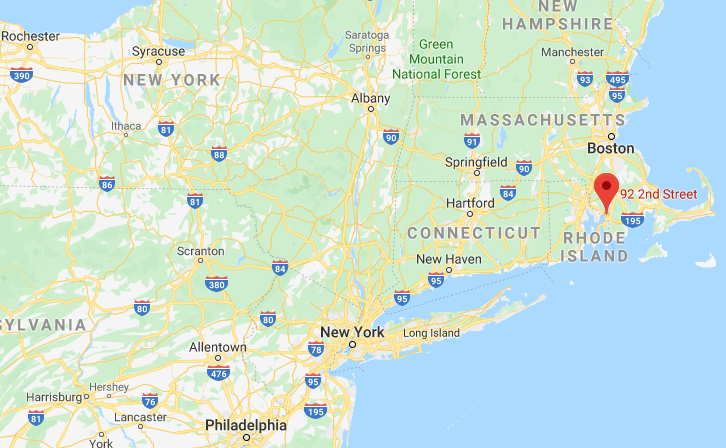
The Borden family resided at 92 Second Street in Fall River which is in the downtown area known as “The Flats”. The location was not as ritzy as “The Hill” which was a not-to-distant region where the wealthy resided. That included the extended Borden family and Lizzie’s cousins who enjoyed a more affluent and upscale life lifestyle with prestige afforded to the rich.
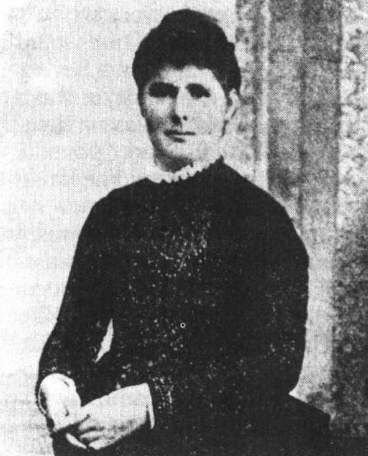
Bridget Sullivan – Photo Date Unknown
It wasn’t that Andrew Borden couldn’t afford to live and house his family in “The Hill”. By today’s currency value, Borden’s estimated portfolio was over eight million dollars. However, Andrew Borden was well known to be a frugal man who valued amassing money over spending it. As such, Lizzie Borden lived with her family in an older house that had no modern amenities like indoor plumbing or electricity.
The Borden family did splurge on having a live-in housekeeper. She was Bridget Sullivan, who was an Irish immigrant without a family of her own. Lizzie and Emma called their housekeeper “Maggie” who was 26-years-old when the murders happened.
The Borden Family Murders
On the morning of August 4th, 1892, Bridget Sullivan rose early to prepare breakfast for the Borden family. That included Andrew Borden, Abby Borden, Lizzie Borden and a house guest named John Morse who was the brother of Lizzie’s biological mother and Lizzie’s natural uncle. Morse had come to Fall River to discuss business dealings with Andrew Borden.
Breakfast was light for the Borden group as they all had come down with sudden intestinal problems over the past two days. Bridget Sullivan was also affected, but she carried on housekeeping duties which involved after-breakfast window washing. Lizzie was not employed, and she remained about the house doing some ironing, wearing a blue dress, while Abby did some dusting.
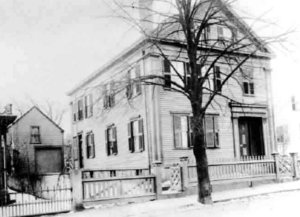
Borden House at 92 Second Street, Fall River, MS
Andrew Borden and John Morse left the house about 9 am and went on business errands. Emma Borden was not at home. Rather, she was still in nearby Fairhaven where she and Lizzie had gone a week earlier after a family disagreement. Lizzie returned to Fall River, but she’d stayed a few nights in a local rooming house before reconnecting with her folks at 92 Second Street on August 2nd.
According to evidence presented at Lizzie Borden’s trial, Abby Borden was last seen at about 9:30 am. She’d apparently gone upstairs to make-up the spare bedroom where John Morse overnighted. Bridget moved in and out of the house doing windows while it’s recorded that Lizzie stayed inside—her precise whereabouts unknown.
At about 10:30 am, Andrew Borden unexpectedly returned to the house as he was still unwell. Normally, he’d be gone until noon and come back for lunch. Andrew Borden attempted to get in through the formal front entry door which opened into a foyer. Here, a curved staircase led directly from the entryway to an upstairs landing off which was the spare bedroom and the doors to Lizzie and Emma’s private rooms.
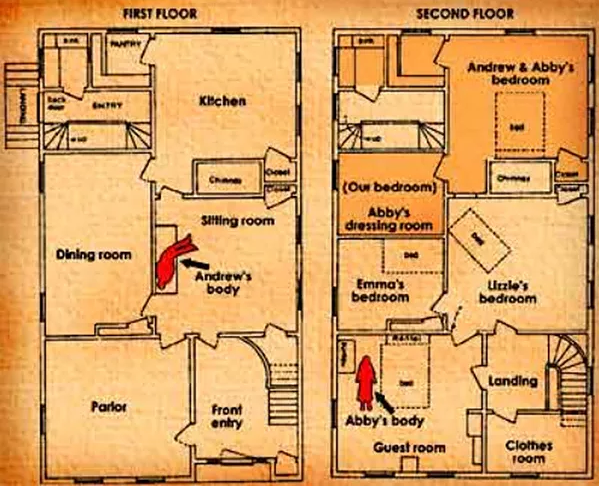
Andrew Borden found the front door locked by a bolt from the inside. This was unusual, and it prevented him from accessing the foyer with his house key. He then rang the bell which got Bridget’s attention, and she let her employer inside. Bridget later testified she’d cussed the lock for sticking which prompted an unexpected laugh. Bridget said it came from Lizzie who was above and behind her on the formal staircase, perhaps as high as the upper landing.
Andrew Borden went straight from the foyer into the adjacent sitting room where he sat on a sofa and rested. Bridget left Andrew Borden alone and returned to the kitchen which is to the rear of the house off the sitting room. At this time, Bridget reported that Lizzie suddenly appeared in the sitting room and that she must have come down from upstairs via the main staircase. Bridget overheard a conversation between Lizzie and her father about Abby’s whereabouts. Lizzie told Andrew that a messenger had arrived with a note that a friend was sick and Abby left the house to attend.
Bridget’s testimony then states she had a wave of nausea from her intestinal illness and went outside to vomit. Bridget returned through the kitchen side door and went up the back staircase to her room in the attic for a break. She states the time was about 10:55 am, and she laid down just before the eleven o’clock bell rang at the town hall.
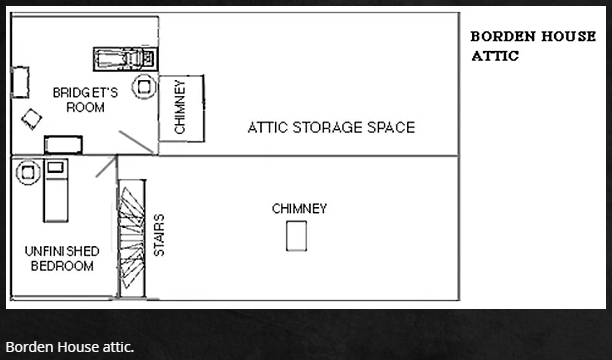
Bridget stated she did not doze off, rather laid and rested. About ten to fifteen minutes later—at approximately 11:10 to 11:15 am—she heard a loud call from Lizzie who was at the bottom of the back stairs. This is the quote from the Borden trial transcript of Bridget Sullivan’s testimony before the jury:
“Miss Lizzie hollered, ‘Maggie, come down!’ I said, ‘What’s the matter?’ She says, ‘Come down quick; father’s dead, somebody come in and killed him.’”
Bridget rushed down and met Lizzie in the kitchen. She did not look in the sitting room and see Andrew Borden’s body which was on the sofa with his top half on the upholstery and his legs extended over the side with his feet on the floor. This is another quote is from Bridget Sullivan’s evidence:
“I went around to go in the sitting room and she (Lizzie) says, ‘Oh Maggie, don’t go in. I have got to have a doctor quick. Go over. I have to have the doctor.’ So I went over to Dr. Bowen’s right away, and when I come back I says, ‘Miss Lizzie, where was you?’ I says, ‘Didn’t I leave the screen door hooked?’ She (Lizzie) says, ‘I was out in the back yard and heard a groan, and came in and the screen door was wide open.’”
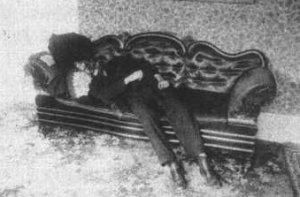
Andrew Borden’s Body on the Sitting Room Sofa
Dr. Seabody Bowen arrived within approximately fifteen minutes and was the first outsider to view the scene and Andrew Borden’s body. All the wounds were directed in his head region with most to the left side of his face. Dr. Bowen requested a sheet to cover the body, and Bridget went up through the back staircase to Mr. and Mrs. Borden’s bedroom. She returned with a sheet just as the police and others arrived, including Mrs. Whitehead, who was Abby Borden’s sister, and a neighbor, Mrs. Churchill.
According to Bridget Sullivan’s testimony, when Dr. Bowen left the body aand came into the kitchen where people amassed, the doctor said, “He is murdered; he is murdered.” A discussion then took place about finding Abby Borden and delivering her the news that her husband was dead. Bridget’s evidence continues:
“She (Lizzie) says, ‘Maggie, I am almost positive I heard her (Abby) coming in. Won’t you go upstairs to see.’ I said, ‘I am not going upstairs alone.’ Lizzie says again, ‘Maggie, I am positive I heard her come in. I am sure she is upstairs. Go and look.’”
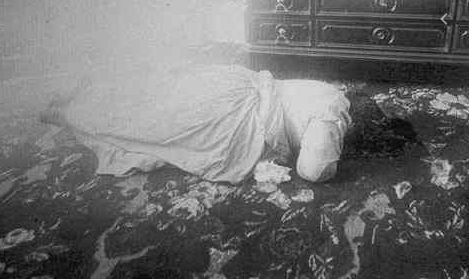
Abby Borden’s Body in Upstairs Guest Room
Bridget stated that she and Mrs. Churchill went to the foyer and began to ascend the front formal staircase. When they got to the level where their eyeline met the upper floor, Bridget looked to her left and saw Abby Borden’s body lying face down by the far bedside of the spare room. She and Mrs. Whitehead could clearly view the corpse through the gap between the floor and the bedframe. Bridget went into the room, closely observed Abby Borden’s body to verify she was dead, and then returned to the group in the kitchen.
The Borden Murder Investigation
By all historical accounts, the local police were unprepared for a crime of this magnitude. They were slow off the line to investigate, and it took them several days to form a cohesive game plan. One historian commented that, initially, the police were looking for a man as the killer—preferably one with a foreign accent—who broke in. It didn’t occur to them that the killer might be a woman who lived in the house.
Several police officers spoke with Lizzie Borden and Bridget Sullivan at the scene while the bodies were still in their original position. There does not seem to be any record of their conversations such as formal statements or even hand-written notes. However, there are strong references in later documentation that Lizzie Borden offered conflicting accounts of her actions and whereabouts during the period of 9:30 am when Abby Borden was last seen and just after 11:00 am when Andrew Borden was killed at 92 Second Street in Fall River, Massachusetts.
History indicates Bridget Sullivan has been entirely consistent with her statements and evidence. There was no serious suggestion at the time, or over the years, that anyone considered Bridget as the murderess. That’s not the case with Lizzie, and certain people suspected her right from the start.
The police didn’t treat the Borden house like an off-limits crime scene such as would happen today. Once word of this heinous crime hit the Fall River streets, people paraded by in the hundreds. Many—police and public—traipsed through the house to view the gore. It got so congested that local authorities erected temporary fencing around the property.
Dr. Bowen, along with another physician and an undertaker, conducted limited autopsies on the Borden bodies. They brought in mortuary slabs and examined them on the dining room table. These weren’t full dissections as a modern forensic pathologist would do. However, they did open both Abby’s and Andrew’s stomachs because there was already a rumor of poison.

Dr. Bowen knew there was more to this picture than two mutilated corpses in the Borden house. He had a conversation the previous day with Abby Borden when she came to him reporting their intestinal distress and stated she thought someone was trying to poison her family. She told Dr. Bowen her husband had made certain enemies in the business community and she thought their sudden illness was due to intentionally poisoned food.
The doctor dismissed it as common food contamination that might have been in the milk or leftover meat. It was, after all, an exceptionally warm spell even for early August. Now, Dr. Bowen suspected something sinister was going on within the Borden household.
Other people also began believing the murders happened inside the family circle. Alice Russell, a close acquaintance of the Borden girls, told of a strange conversation she’d had with Lizzie two days earlier. Alice Russell testified that Lizzie said:
“Something is hanging over me… I cannot tell what it is. I feel afraid something is going to happen. I want to sleep with one eye open as I feel someone will hurt father as he is so discourteous to people.”

Prussic Acid is Hydrogen Cyanide
Another highly-suspicious incident reached police ears. Two men at a downtown drugstore in Fall River swore that on August 3rd—the day before the murders—Lizzie Borden came in and requested to buy a vial of prussic acid. They asked her for what purpose as it was a restricted substance. Lizzie replied she wanted it for cleaning her sealskin bags, and they refused to sell her any. Prussic acid is a common name for hydrogen cyanide which is a highly toxic substance that’s lethal to humans in minute doses.
Because of Lizzie’s peculiar behavior, and the fact no other suspect surfaced, the police conducted a thorough search of the Borden house on August 6th. Up to this point, they merely asked a few questions, dealt with the bodies, and generally looked about. Now, the police asked Lizzie to produce clothes she was wearing on the morning of August 4th. She provided them with a heavy fabric dress, blue in color, which they visually examined and found no evidence of blood staining.
After a postmortem on the Borden bodies, physicians’ opinion suggested the murder weapon was a multi-edged instrument like an ax or a hatchet. The police searched the home’s cellar where the furnace and wood supply sat. They found a bin with several axes and hatchets were stored. One implement, in particular, caught their eye.
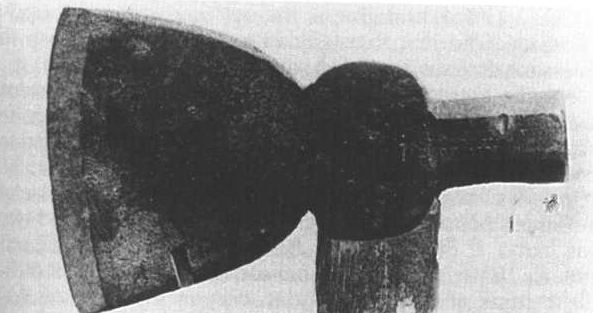
Shingling Hatchet Found in Cellar
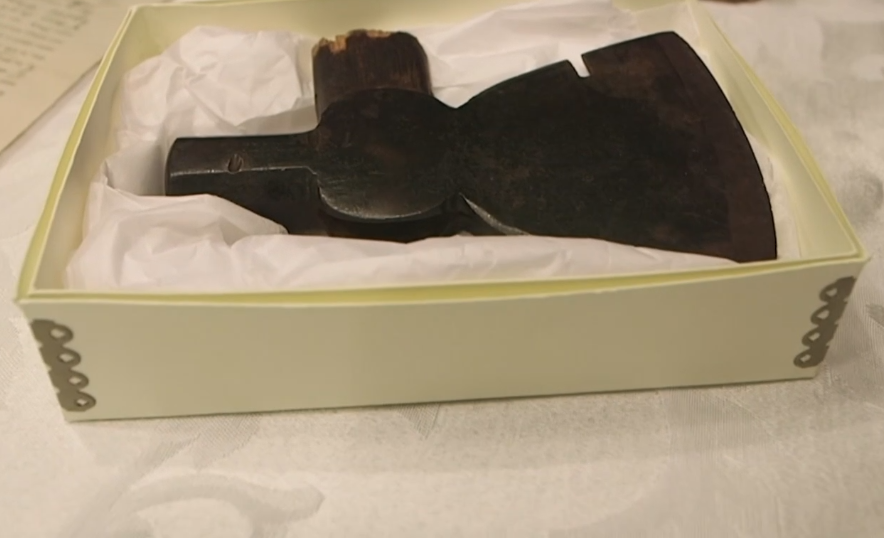
The police seized a small tool called a shingling hammer or hatchet. It had a round head on one end for driving roofing nails and a sharp blade on the other designed for splitting wooden shingles. The handle was freshly broken off and the metal appeared to be recently cleaned but then scattered with ash to intentionally make it appear old. The broken end of the handle was never found.
The police left the house with the hatchet and a few other items. The following day, on August 7th, Alice Russell unexpectedly walked into the Borden house and found Lizzie in the act of burning a blue dress in the kitchen stove. Alice was taken aback, She questioned Lizzie who replied her dress had brown paint stains on it and it was ruined so she was destroying it. Alarmed, Alice Russell went to the police and informed.
The Borden Murder Inquest
With evidence like Lizzie Borden’s inconsistent statements to investigating police officers and civilian witnesses, the burnt dress, the attempt to buy poison, and Lizzie’s generally detached demeanor through finding the bodies and during the following days, the Fall River magistrate ordered an inquest.
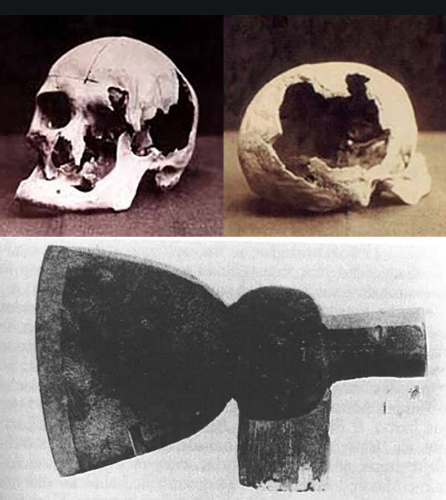
Borden Skulls and Presumed Murder Weapon
He also ordered the Borden bodies exhumed and examined by a Boston-based physician experienced with homicide investigations. This doctor beheaded the bodies and physically compared the seized hatchet with the skull wounds. It was his opinion the cellar hatchet was consistent with causing both Borden’s wounds. Therefore, it was likely the murder weapon concealed in the cellar after the Bordens were dead.
There was another medical fact established by the medical examiners. That was time of the deaths. There was no doubt Andrew Borden was killed shortly after 11:00 am. This was supported by Bridget Sullivan seeing him alive before then and that his wounds were fresh. Abby Borden, on the other hand, was dead for some time before she was discovered at approximately 11:30 am. Abby’s blood had congealed, her temperature dropped, and she exhibited early signs of rigor mortis.
The Borden murder inquest began on August 9th and lasted three days. It was closed to the public, but the proceedings were recorded and the transcripts are available online today. Lizzie Borden was the star witness and subject to close examination. Her testimony was inconsistent, exculpatory, and evasive.
Lizzie Borden repeatedly changed her story of her whereabouts within and without the house during the period of 9:30 am to 11:00 am. She wavered between being in the kitchen ironing clothes and reading a magazine to being upstairs folding and mending clothes. After her father returned, Lizzie Borden stated she went out of the house and into the backyard barn’s upper loft on the pretext of finding lead to make sinkers (weights) for a fishing trip she planned the following week.
 When the inquest lawyer examining Lizzie Borden tried to pin her to specifics, she became evasive and declined to answer certain questions. The best the lawyer could establish is that Lizzie Borden had an erratic alibi for the period Abby Borden was murdered and she’d spent the approximately 18-minute period—from when Bridget Sullivan went upstairs to her attic room until Lizzie summoned Bridget—rummaging about in a stifling-hot barn loft looking for lead and eating pears.
The inquest lawyer also challenged Lizzie Borden on her details of finding her father’s body. Lizzie claimed to have come down from the barn loft to find the kitchen’s back door wide open. She entered and went to check on her father. Here’s an excerpt from Lizzie Borden’s inquest testimony:
Q. When you came down from the barn, what did you do then?
A. Came into the kitchen.
Q. What did you do then?
A. Opened the sitting room door and went into the sitting room; or pushed it open. It was not latched.
Q. What did you do then?
A. I found my father and rushed to the foot of the stairs.
Q. When you saw your father, where was he?
A. On the sofa.
Q. What was his position?
A. Lying down.
Q. Describe anything else you noticed at that time.
A. I did not notice anything else, I was so frightened and horrified. I ran to the foot of the stairs and called Maggie.
Q. Did you notice that he had been cut?
A. Yes, that is what made me afraid.
Q. Did you notice that he was dead?
A. I did not know whether he was or not.
Q. Did you make any search for your mother?
A. No sir.
Q. Why not?
A. I thought she was out of the house. I thought she had gone out. I called Maggie to go to Dr. Bowen’s. When they came in, I said, “I don’t know where Mrs. Borden is.” I thought she had gone out.
Q. Did you tell Maggie you thought your mother had come in?
A. No sir.
Q. Did you say to anybody that you thought she was killed upstairs?
A. No sir.
Q. You made no effort to find your mother at all?
A. No sir.
Q. Who did you send Maggie for?
A. Dr. Bowen. She came back and said Dr. Bowen was not there.
Q. What did you tell Maggie?
A. I told her he was hurt. I says, “Go for Dr. Bowen as soon as you can. I think father is hurt.”
Q. Did you then know that he was dead?
A. No sir.
Q. You saw him? Saw his face?
A. No, I did not see his face because he was all covered with blood.
Q. You saw where the face was bleeding?
A. Yes sir.
Q. And with those injuries you couldn’t tell he was dead?
A. No, sir.
Q. But you told Maggie, “Come down quick; father’s dead, somebody come in and killed him.”
A. No, sir. I said he was hurt, not dead.
When the Borden murder inquest wrapped up, the magistrate was satisfied of sufficient grounds to believe Lizzie Borden killed her father and step-mother. The issue of motive never came up in the proceedings. However, establishing motive is not an elemental fact in pursuing murder charges. The inquest magistrate ordered Lizzie Borden arrested and held in custody for trial.

Lizzie Borden’s Murder Trial
Lizzie Borden’s prosecution ran according to Massachusetts law of the time. First, a grand jury impaneled. They returned an indictment on December 2nd, 1892, and a preliminary hearing followed where the evidence against Lizzie Borden was found suitable to withstand a jury trial. At no time during the investigation or legal procedures was there any suggestion Lizzie Borden was mentally ill and not suitable to be tried. Even during the trial, neither the defense team nor the prosecution ever raised a sanity issue.
Lizzie Borden could afford the best legal defense possible, and she got it. Because her father had no will and his wife was also dead, the Borden estate immediately fell to the sole survivors—Emma and Lizzie Borden—and they evenly split it. In today’s value, Lizzie Borden had about $4 million in assets to work with.
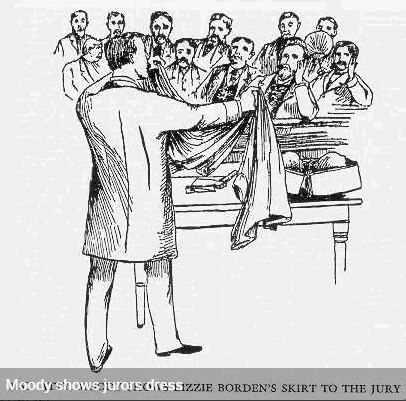 She hired ex-three times Massachusetts governor, George Robinson, who later billed Lizzie today’s equivalent of a half-million dollars. The District Attorney’s office also put out a heavy-hitter with William Moody leading the prosecution team. Moody went on to be a United States Supreme Court judge. The dueling balance was offset by three panel judges sitting on the Borden trial. One was Justin Dewey—personally appointed to the bench by then-governor George Robinson.
There was a change of venue for the Lizzie Borden trial. To ensure fair and impartial jurors, the trial took place in New Bedford, Massachusetts instead of Fall River. It convened on June 5th, 1893 and ended on June 20th.
Lizzie Borden’s defense team scored two vitally important legal victories. One was having Lizzie’s inquest testimony discarded which they argued was involuntary and taken without legal representation. The other defense win was getting the prussic acid—hydrogen cyanide—evidence ruled irrelevant and inadmissible.
This left the prosecution with a purely circumstantial case. They had no established murder weapon, no eye-witnesses, and a reasonable doubt raised by an unlocked back door. The prosecution did not offer any motive as to why Lizzie Borden ax-murdered her folks, and the defense convincingly argued that a hatchet was a man’s weapon—something a fine upstanding Victorian woman of class would ever use to commit such gruesome crimes.
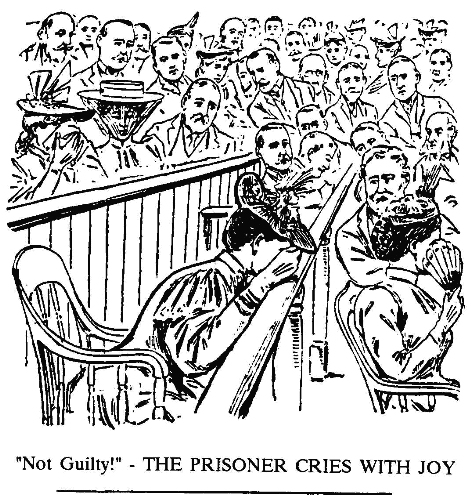 Lizzie Borden never took the witness stand. She sat in the dock impeccably dressed in flowing black clothes with a fan and a handkerchief. Lizzie stayed stoic when proper, teared at the right time, and fainted when Andrew and Abby Borden’s skulls were brought into the courtroom for a hands-on demonstration of how the handle-less hatchet fit.
At the trial’s conclusion, the defense summed the prosecution’s case as such:
“There is not one particle of direct evidence in this case from beginning to end against Lizzie A. Borden. There is not a spot of blood, there is not a weapon that they have connected with her in any way, shape, or fashion. The state has utterly failed to meet its burden of proving guilt beyond a reasonable doubt.”
The trial judges were also sympathetic towards Lizzie Borden. As one reporter at the time put it, Judge Dewey acted like the senior defense counsel when he told the jury:
“You must take into account the defendant’s exceptional Christian character which she is entitled to every influence in her favor. If the evidence falls short of providing such conviction in your minds, although it may raise a suspicion of guilt, or even a strong probability of guilt, it would be your plain duty to return a verdict of not guilty. Seeking only the truth, you will lift this case above the range of passion and prejudice and excited feeling, into the clear atmosphere of reason and law.”
The jury was out for an hour and a half before returning with a not guilty verdict. Jurors later reported they’d decided fate on the first ballot but stayed out long enough to make it look like they’d fairly deliberated. Lizzie Borden walked out of the courtroom a free woman. That didn’t absolve a cloud forming over her in the public arena.
Lizzie Borden’s Later Years
Within two months of her acquittal, Lizzie Borden changed her name to Lizbeyh Borden. She used her father’s estate inheritance to buy a modern mansion in the heart of “The Hill”. Her impressive home came with all conveniences money could buy as the Guilded Age in America approached the twentieth century. Lizzie Borden now had indoor plumbing with flush toilets and running hot water. No longer did she have to empty a chamber pot or light a wood stove to burn a dress.
Lizzie Borden’s new abode, which she elegantly named Maplecroft, had electric lights and central heating with individual room radiators. She had servant quarters and a dedicated suite for her older sister. Lizzie had an art room for her crafts and a drawing room to entertain friends. However, her one-time friends on “The Hill” and in “The Flats” shunned Lizzie one-by-one.
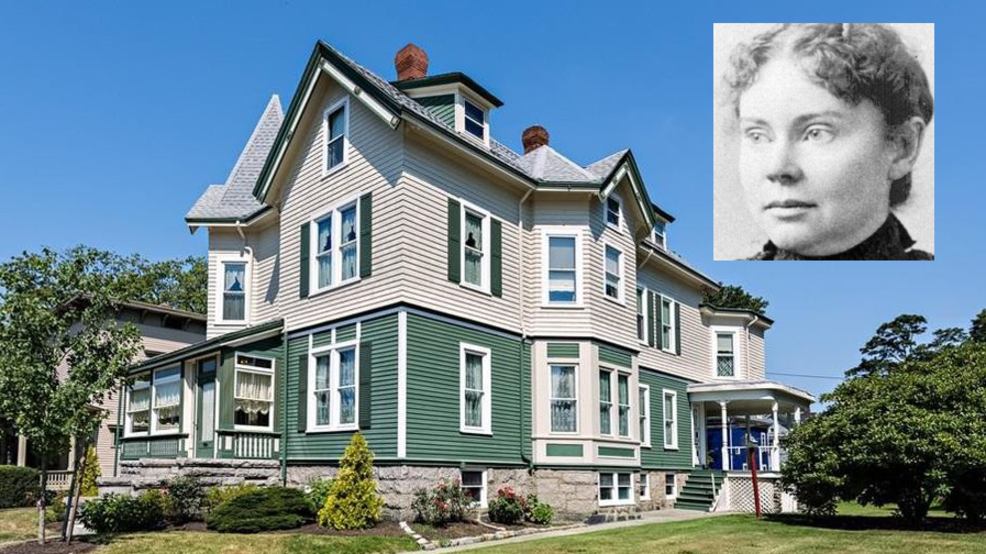
Maplecroft – Mansion in “The Hills” bought by Lizzie Borden after her Parents Death
Her welcome in the Central Congregational Protestant church dissipated as people talked and realized Lizzie Borden probably got away with murder. She was ostracized and left to sit in a pew of her own. Lizzie’s service groups shut their doors and shops discouraged her visit. Bit-by-bit and little-by-little, she became a social outcast—a moral leper.
Lizzie, or Lizbeyh, retained her magnificent Maplecroft home on “The Hill” but she spent most of her time away in Boston and New York where Lizzie lavishly entertained the Bohemian theater crowd. Eventually, her older sister had enough. Emma moved out and refused to speak to Lizzie for the rest of their lives.
Lizzie Borden died of pneumonia in 1927. She was sixty-six years old and still a spinster—truly an old maid. She bequeathed what was left of her money to animal welfare.
Did Lizzie Borden Really Ax-Murder Her Parents?
The question whether Lizzie Borden really did ax-murder her parents teased public fascination since the day the murders went down. Like a Greek tragedy, or a Victorian melodrama, the Borden murders had all the right elements of intrigue, suspense, and mystery. It was a true who-dunnit that sparked a sensational spectacle not paralleled in United States history.
Lizzie Borden’s case put the Victorian concept of a well-bred and virtuous woman of white Protestant class on trial for its life. The notion that a daughter—anyone of upper society’s daughter—could commit the unspeakable act of ax-murdering patricide was unthinkable. Lizzie Borden’s defense team knew this, and they deprived the prosecution of proving premeditation by suggesting jurors were to foolishly believe the accused before them—facing the death penalty—somehow magically metamorphosed into a maniacal murderess.
Lizzie Borden Trial Jurors – Twelve Good Men
The twelve good men on the jury sympathized with the pious prisoner in the docket holding a flower bouquet. Although she was described by the press as the “sphynx of coolness”, Lizzie had been carefully coached to silently suggest innocence. The jury never directly heard from Lizzie Borden. She exercised her right not to take the stand.
Given what the jurors heard and saw, it’s no surprise they chose acquittal. But, that doesn’t excuse the court of ages from independently assessing Lizzie Borden’s guilt or innocence. A big factor indicating murder-culpable is her inconsistent statements to the police and at the inquest.
Lizzie Borden sometimes places herself upstairs while her step-mother lay dead on the floor beside her and sometimes does not. It’s inconceivable Lizzie was on the upper landing without seeing Abby’s body. Lizzie Borden’s alibi for being in the barn while her father died is nonsense. By any rational acceptance, a woman dressed in Victorian clothing would not stay fifteen minutes in an environment exceeding well over one hundred degrees in Fahrenheit.
But, the jury never heard Lizzie’s alibis or conflicting statements. They never heard about the poison. And, the jurors were never offered any motive why a daughter would cold bloodily hatchet her family members to death.
Lizzie Borden’s Motive For Murder
On the balance of probabilities and totalitarian of evidence, logic proves Lizzie Borden ax-murdered her parents. To think otherwise defies common sense. Lizzie had exclusive opportunity and immediate means to commit the crimes, and there simply was no one else there to do it. But, what motive did she have?
During Lizzie Borden’s trial, her defense cleverly maneuvered around a story that, if known, would have shaken their very foundation. That was the reality of the Borden household being a dysfunctional cold war of family unrest. Lizzie was barely on speaking terms with Abby who, for years, she referred to as Mrs. Borden. Tension in that home was tight.
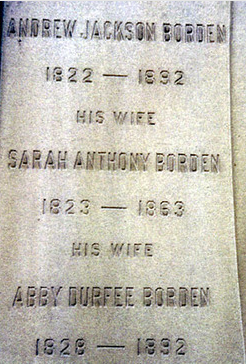 Andrew Borden was aging fast. He had no legal will and last testament, and he made no provision of setting forth how his estate would divide upon his death. Massachusetts common law dictated that wealth should flow from the husband to the wife and then accordingly down as the immediate benefactor sees fit. Should Andrew have died first, his estate would naturally have gone to Abby. It would be entirely up to Abby to bequeath Andrew’s wealth as she desired. Lizzie might not have been in Abby’s sights a designated recipient.
In the weeks before the Borden murders, Andrew Borden seemed to be making plans of disposing property outside Lizzie’s entitlement. He’d already awarded a house to one of Abby’s family members. Some historians speculate the reason for John Morse’s visit on the eve of the murders was to secure a piece of Andrew Borden’s holdings. Undoubtedly, Lizzie would have been in tune with this.
There was a family blow-out a week before the murders. Lizzie and Emma left the Fall River house and went to New Bedford to cool off. When Lizzie returned on August 2nd, Andrew Borden, Abby Borden, and Bridget Sullivan suddenly became sick from something foul in their food.
That contaminant only made them ill. It can’t be a coincidence that the next day Lizzie went looking for cyanide. When that poison plan fell through, it was time for Plan-B. One way or the other, Lizzie knew Abby Borden had to die before she cut into Lizzie’s inheritance which Andrew was giving away. Once that was done by hatcheting Abby’s head with an ax on the morning of August 4th, 1892, it was a sensible step for Lizzie Borden to finish-off the old man and cash in.
There’s no longer reasonable doubt. Lizzie Borden ax-murdered her parents, and her motive was pure greed. It was all about entitlement and change—from precariously surviving in “The Flats” to securely thriving high on “The Hill”.
* * *
Post Note of 07 August 2020: Dark Zone Productions of Los Angeles is doing a 4-Day Live Streaming program on the Lizzie Borden case from August 28-31, 2020. Here’s their press release:
https://wm-no.glb.shawcable.net/service/home/~/?auth=co&loc=en&id=523805&part=2