
Tag Archives: Murder

A PRETTY EVIL TALK WITH AUTHOR SUE COLETTA

Every once in a while, two crime writers click. That’s what happened four or five years ago when I met Sue Coletta online. Since then, we’ve been the best of buddies even though Sue lives with her husband in New Hampshire and I live with my wife in British Columbia. Before you get any funny ideas there’s hanky-panky going on through the internet, be aware that our spouses fully endorse our partnership and they share our off-colored jokes. Bob and Rita also approve of the criminal deviancy we write about on a daily basis.

No. Hang on a sec… they approve of our writing, not the deviant criminals.

I say partnership because Sue and I constantly help each other out. We’ve collaborated on writing guides, we’ve co-helped others with their work, we’ve cross-blogged many times, and Sue was instrumental in getting me onboard the Kill Zone team as a regular contributor. We also encourage each other in new ventures, and I’m so happy to say that Sue was recently approached by a major U.S. publisher to research and write a true crime book about historic female serial killers in New England.

Sue’s new release is about to come out. Globe Pequot, a division of publishing giant Rowman & Littlefield, is putting Pretty Evil New England on the shelves real soon. I’ll let Sue tell you about it and, if you stick through to the end of this post and leave a comment, you’re automatically entered into a Globe Pequot contest to win a print version of Pretty Evil.

Here’s a conversation that only gets worse…

Hey, Sue. Welcome back to the DyingWords shack. You’re a sucker for punishment. Mind if I prod you with a few questions?

Haha. Guess I am! Hey, would you mind dimming that bright light a bit? I’m sweating like a horse in last place. While we’re on the subject, are the restraints necessary? I know you’re passionate about DyingWords, but the rope’s starting to dig into my wrists.

Restraint is an old tradition around DyingWords. Sort of a right-of-passage for guests. Tells us… What’ve you been up to with your new book baby, Pretty Evil New England: True Stories of Violent Vixens and Murderous Matriarchs?

Pretty Evil New England tells the stories of five female serial killers who used New England as their hunting ground. For those who aren’t familiar with the area, New England encompasses the states of Connecticut, Massachusetts, Rhode Island, New Hampshire, Maine, and Vermont. The reason I chose these specific female serial killers was because, during their reign of terror, they murdered at least one victim in all six states. Not separately but combined. Also, these “ladies” murdered a total of 100 victims, and that’s only the ones we know about.

Perhaps I should share the description to give your readers a feel for the book.

For four centuries, New England has been a cradle of crime and murder—from the Salem witch trials to the modern-day mafia. Nineteenth century New England was the hunting ground of five female serial killers: Jane Toppan, Lydia Sherman, Nellie Webb, Harriet E. Nason, and Sara Jane Robinson.

Female killers are often portrayed as caricatures: Black Widows, Angels of Death, or Femme Fatales. But the real stories of these women are much more complex.

In Pretty Evil New England, true crime author Sue Coletta tells the story of these five women, from broken childhoods to first brushes with the death, and she examines the overwhelming urges that propelled these women to take the lives of a combined total of more than one-hundred innocent victims.

The murders, investigations, trials, and ultimate verdicts will stun and surprise readers as they live vicariously through the killers and the would-be victims that lived to tell their stories.

Fascinating! I think this is your first toe in the true crime water. How’d this come about?

I’ve written plenty of true crime stories on my blog, but not an entire book. This project challenged my storytelling skills to not only portray accurate points in history but to show readers how and why these women stole the lives of so many innocent victims. I accomplished my goal by slipping into the killers’ skin and showing the world through their eyes, as well as other key figures in the cases, including the dogged investigators who caught them.

How’d this project come about? I got lucky. *kidding* But seriously, things like this don’t happen every day. Here’s the scoop…

The stars aligned, angels sang, and the gates of heaven opened wide. That’s how it felt, anyway. In May of 2019, a woman on Twitter asked if I could follow her back so she could message me in private, but I didn’t respond right away. After a flood of recruiting cam girls all vying for me to join them, I’d become overly suspicious of strangers who asked to PM me. But once I read her bio — specifically the words “acquisitions editor” — my interest piqued. When I followed her back, I apologized for the delay in responding. In my defense, I was also working on final edits for RACKED, Grafton County Series, Book 4, at the time. Within minutes, she asked if she could email me instead.

After sending my email address, I still didn’t give the quick exchange much thought. But then my curiosity got the better of me and I engaged in a little online stalking research and discovered she worked at Globe Pequot, a publisher in Connecticut.

Still, I couldn’t quiet the voices in my head. What could this offer be about? Why me? Is this for real?

Due to past experiences it’s fair to say I was more leery than excited at that point. When the email dropped into my inbox moments later, I read it about a dozen times to search for clues of how the offer might be a cruel prank or something even more nefarious, like some hacker’s idea of a good time, a hacker who went through the motions of creating a fake Twitter profile for the sole purpose of tricking some poor schmuck like me.

If you’re thinking, wow, Sue’s skeptical and suspicious, you’re not wrong. Writers are the targets of numerous scams. If we don’t protect ourselves, who will?

Anyway… The signature line read “Rowman & Littlefield Publishing Group, Inc.,” and the proverbial lightbulb went off. Globe Pequot is the trade division of Rowman & Littlefield, one of the largest publishers of nonfiction and America’s leading book distributor. Both Globe Pequot and Rowman & Littlefield have been in business since 1949 and are highly regarded in the publishing industry.

In the email said she ran across my blog post Female Serial Killers — Unmasked during her initial research for a book idea. She also checked out my books, other articles on my blog, and social media presence before contacting me. Within a month we’d hashed out contract terms and I had a new project. And the rest, as they say, is history.

Now, you’ve been a crime writer for quite a while now. You’re no newbie when it comes to penning murder stories… especially serial killer tales. How’ve you found the change or transition from crime fiction to true crime?

True crime is a lot more work. For example, if the cast of “characters” didn’t say something in real life, I can’t put words in their mouths to benefit my story. Every piece of dialogue, action, clothes, décor, setting, etc., must mirror real life. For a fiction writer, it’s easy to let my mind reimagine the scene. But with true crime, I can’t. A funny thing happened while writing, though. I developed a fondness for accuracy. To write a compelling storyline while maintaining a factual narrative wasn’t easy, but I welcomed the challenge. Still do.

I had a chance to read an ARC (Advance Reading Copy) of Pretty Evil New England. Thank you very much, by the way, and it’s extremely well written. I’m blown away by the detail. You have precise legal documentation, forensic procedures, and entire evidentiary transcripts from events happening in the 1800s. How in the world did you pull this off?

My background as a thriller writer helped a lot. 😊 When the opportunity was first presented to me, I knew I didn’t want to write a dry history book. What fun is that? So, I structured Pretty Evil New England like a thriller. Weaving in historical documentation without slowing the pace took time, patience, and a lot of swearing. By the way, when you said prod with questions… this was not what I had in mind.

Builds character. Now, about women serial killers. Are they a rarity… or is it rare they get identified and caught?
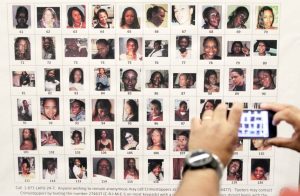
They’re not as rare as you might think. Females make up 20% of all murderers. But, and this is huge, most female killers don’t stop at one victim. To put it into perspective, even though females only make up 20% of all killers, they represent a larger percentage of serial murders than of any other type of homicide in the U.S.

You deal with five main female serial killers in Pretty Evil New England. Did you come across more but couldn’t include them in your book?

While researching I found enough female serial killers to write about them for years.

Yikes! You did an amazing amount of research in putting Pretty Evil New England together. Give us some of the highlights.

Thanks! Maybe you can ease up on the pressure while I share some of my research trips

No, but go ahead anyway.

In the state archives I found old diaries spanning 50 years. These diaries were written by a close friend and neighbor of the New Hampshire victims and killer. The handwriting took me forever to decipher, but once I did the additions of diary entries added a cool touch to the overall storyline.
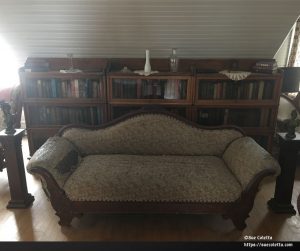
One of my coolest discoveries was an entire floor in the old house where several victims lived and died, a floor untouched by time, perfectly preserved in 1881. I laid my fingers on the same ivory keys of the piano that the victims and killer did. I sat on their sofa, admired their belongings, and perused their stunning mahogany and glass bookcases filled with priceless first editions. Surrounded by history, Bob and I were overcome by emotion. We could only stare — wide-eyed — taking it all in. It was one of the most surreal experiences of my life. I was literally walking through the pages of my book.

Another research trip took me to a Potter’s field in Taunton, Massachusetts. It’s heartbreaking to view the graves of people who died, their bodies unclaimed by family, with nothing more than a number to mark their existence.

Then I drove to Cape Cod (6 hours round trip) and to Harvard University (4 hours round trip), which was also an amazing experience. One of the top physicians of late 1800s to early 1900s kept a scrapbook there, which is why I went. That trip also created a cool parallel between my life and my book. My mom went to Harvard, so it was the first time I got to experience a brief moment from her past. She died when I was a teenager. Like many folks who experience loss, I long for any brief glimpses of her life.

Touching. In all seriousness, Sue, that’s touching. You used some striking quotes about female serial killers that other authors over time produced. How about sharing some?

Thanks. I thought they were a cool feature. Here are the first three…

According to FBI behaviorists, the best way to survive a male serial killer’s attack is to let him get to know you on a personal level. By humanizing yourself, you’ll ruin his fantasy of you as a victim. This won’t work with a female serial killer. They already know you. — Federal Bureau of Investigation

It’s about the pleasure of the kill—the sense of power she gets—the buzz. Taking property is just a warm snack in the feast control—a little further satisfaction, a tingling in the killer’s tummy. — Peter Vronsky, author of Female Serial Killers

Although most female serial killers murder for money or other profit, some do it for the attention and sympathy they receive following the death of someone they cared for. — Psychology Today

Poison – The weapon of women. Is this an M.O. (modus operandi) unique to women killers… serial or otherwise? I don’t recall a case of a man using toxins in a murder.

Men use poison, too, but it’s not nearly as lethal as poison in a woman’s hand. One exception could be The Teacup Poisoner. In 1961, at age 14, an Englishman named Graham Young began testing different poisons on his family, eventually murdering his stepmother. He also poisoned his father, sister, and best friend. After confessing the following year, the court sentenced him to 9 years in a hospital for the criminally insane. At which time doctors released him as “cured,” even though he poisoned a fellow inmate and promised to murder one person for every year of incarceration. This led to two murders, two attempted murders, and 70 other poisonings over the next year. He received four life sentences for his crimes.
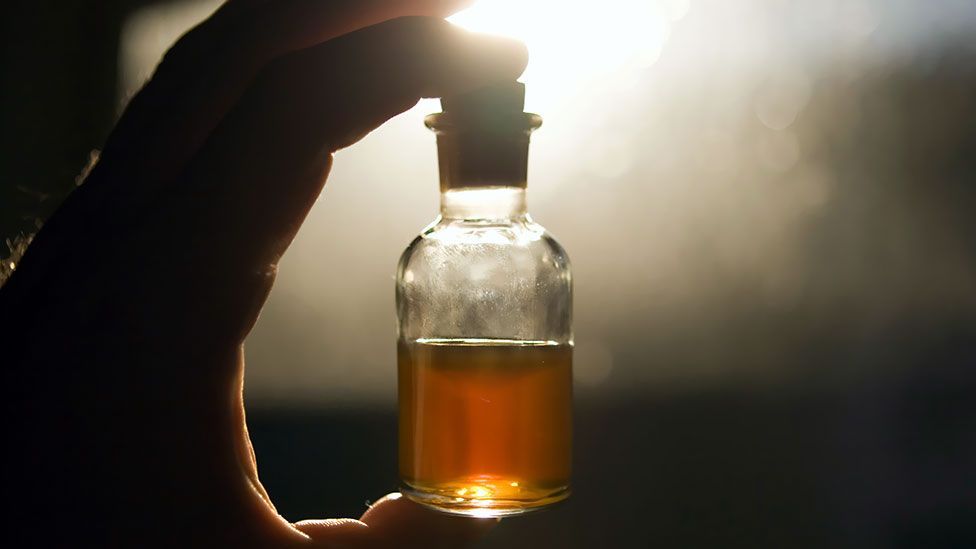
Two other quick examples: In 2008, David Steeves, a Long Island man, murdered his estranged wife with cyanide. In 2013, William Cain, a Kentucky man, plead guilty to adding “just a little rat poison” to his wife’s coffee.

Women prefer poison for various reasons.

  • Easy to obtain.
  • No muss, no fuss. A light sprinkle is all it takes.
  • No blood to clean up afterward.
  • They don’t need to hide the body.
  • The patients languish while they care for them.

Death by poison is not an easy way to go. Victim suffering pleases the female serial killers. Unlike men, women don’t keep trophies. Murder is their ultimate reward. If you think men are vicious, then you’ve never pushed a woman to the point of wanting to kill you. LOL

I had a woman try to kill me.

I sense a story here.

She hatchet-threw a mill bastard metal file at my head. The handle-less point jammed into the wall two inches from my left ear. Then I whacked her with my police-issued flashlight. Hey – I’m amazed by the toxicology sophistication used back then to identify poison. Give us the Cliffs Notes version of how arsenic works on the human body and how the forensic scientists back then identified arsenic poisoning.

Wasn’t that fascinating? I don’t mean nearly getting a metal-working tool imbedded in your brain. The toxicology… it blew my mind, too. Many of the toxicology tests are still used today.
Death by arsenic is a not a fun experience. In most cases, symptoms appear within the hour. The first sign is an acrid sensation in the throat, followed by nausea which grows more and more unbearable by the moment. Vomiting sets in and continues long after the stomach empties. The victim dry heaves until they’re throwing up fluid streaked with blood. The mouth parches, the tongue thickly coated as the throat constricts with an inextinguishable thirst. Anything he or she drinks only makes the vomiting worse. Uncontrollable diarrhea, often bloody, complete with racking abdominal pains. Some victims experience burning from mouth to anus. The eyes grow hollow. Swelling of lips, eyes, and under the chin can occur, and the skin is cold and clammy. Breathing labors, extremities ice cold, the heartbeat weak, and binding cramps in the muscles of the legs. Depending on the amount of arsenic administered, these symptoms last from a few hours to several days or weeks.

I should add, not all of the serial killers in this book used arsenic. Some were more creative.

How chemists detected poison back then? No matter how many times you hit me with the cattle prod, I refuse to give away all my secrets. Read the book. 😉

I didn’t hit you with the cattle prod. I zapped you. There’s a difference. Okay, I don’t want to give any details away about what happened to the pretty evil killers in your book, but I have a curiosity. When it came to trial, convictions, and sentencing… do you think these killers were treated lighter because they were women?

Hmm, without ruining the ending, I can say a couple of the juries might’ve gone easy on them, but in those cases, factors beyond gender were also at play. The others, no. Two in particular suffered fates worse than death.

I’m going to put you on a hot-spot. Do you think women are smarter than men when it comes to serial killing?

Absolutely. Ouch! Easy with electricity jolts. Okay, okay, I’ll explain…

On average a male serial killer’s reign lasts about four years. Female serial killers? Eight to ten years. And some last thirty years without detection. Imagine how many weren’t caught? Statistically speaking, women are simply better at serial killing than men. 😊

By definition, what is a serial killer? Just a sec… you shouldn’t be smoking. Gotta turn this down.

Whoah… smoking… no… that’s better. Today’s FBI definition is “the unlawful killing of two or more victims by the same offender(s), in separate events.” It used to be three or more with “a cooling off period,” but they’ve updated the definition since then.

By population percentage, are serial killers on the rise? Are they increasing in proportional numbers? Or, have they always been part of societies?

They’ve always been part of society, and that includes female serial killers. I don’t know if I’d say the numbers are increasing, necessarily. It may appear that way because law enforcement has better tools to identify serial clusters now. Though the numbers do boggle the mind. In May 2019, I wrote a post entitled How Many Serial Murderers Stalk Your Streets, which offers eye-opening statistics for each state within the U.S. as well as an overall count for numerous other countries, including Canada.

Any idea many serial killers are active in the United States alone today?

Last time I checked the database (2019) we had 1,948 active serial killers in the United States. The good news is, after age 30, your chances of being murdered by a serial killer drastically reduces.

I’m well past 30. Okay. Let’s get off this gruesome topic and talk about me for a while. J… K… Let’s talk about Sue Coletta. What’s your background? How’d you get your writer chops? Where’re you at today? And what does tomorrow bring once Pretty Evil New England tops the charts?

My background is in law (paralegal). I also owned & operated two hair salons. During that time, I wrote about a dozen children’s books. Not for publication, just for friends’ kids to enjoy. It wasn’t till 2012 that we moved north, and I tried my hand at crime writing. How did I get my start? I chose the traditional publishing path, so querying, rejection, and finally scoring my first contract. I continue to write thrillers in my two series, Grafton County Series and Mayhem Series. I’m also working on Book 1 of a new true crime series, which is out on submission. This time around, rather than feature multiple female serial killers, I’ve focused on one ruthless woman whose crimes shocked even me.

Nasty. One curiosity. In Pretty Evil New England, you end with an interesting notation that death certificate procedure changed following the cases in the book. Can you elaborate on this?

Back in the day, attending physicians didn’t need to be present to issue a death certificate. In some cases, the doctor hadn’t examined his patient in weeks or months. Polite New England society didn’t browbeat the patient’s kin to dig for the truth. Instead, they relied on the family’s firsthand accounts to fill in the blanks.

The murderous acts of the five female serial killers depicted in Pretty Evil New England shook the foundation of medical and legal communities far and wide. These “ladies’” crimes led to death certification reform and a ban on arsenic in embalming fluid.

Last call. Where and when can DyingWords followers get a copy of Pretty Evil New England — True Stories of Violent Vixens and Murderous Matriarchs?

The “official” release is November 1, 2020, but readers can preorder at the following links and the books will be delivered by that date.

Amazon (all countries, Kindle & paperback)
Barnes & Noble (NOOK & paperback)
Books-A-Million (ebook & paperback)
IndieBound (paperback)
BookShop (paperback)
Globe Pequot
Rowman & Littlefield

Now, untie me! I’ll stick around for DyingWords readers as long as you keep that prod-thing to yourself.

——

Sue Coletta is no longer tied up and prodded for answers. She’s now available on the comment board. And… Sue has a free print copy of Pretty Evil waiting for one lucky person who writes “Gimme The Book” in the comment box. Thanks, Sue. You’re a sport!

Write “Gimme The Book” in the comments and win a FREE copy of Pretty Evil New England!
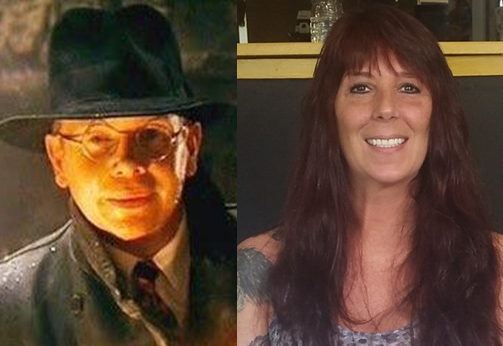
Sue Coletta (right) and Garry Rodgers (left) are crime writers from opposite sides of the North American continent. Sue is a member of Mystery Writers of America, Sisters in Crime, the Kill Zone, and International Thriller Writers, She’s also an award-winning crime writer. Sue Coletta writes two serial killer thriller series, Grafton County Series (Tirgearr Publishing) and Mayhem Series (Tirgearr Publishing), with a Mayhem Series crossover novella in Susan Stoker’s World (Aces Press) and another in Elle James’ World (Twisted Page Press). Sue also writes true crime for Globe Pequot, trade division of Rowman & Littlefield Group, Inc. PRETTY EVIL NEW ENGLAND hits bookstores Nov. 1, 2020. Here’s Sue’s Youtube trailer for Pretty Evil.

ON THE FLOOR — NEW BASED-ON-TRUE-CRIME BOOK BY GARRY RODGERS

Savage… Shocking… Senseless… Who would order two seniors to lie on the floor of their gun store, then cold-bloodedly execute these defenseless people with gunshots to the back of their heads? That was the fate of Berndt and Erika Lankenau in their business, Shooting Sports Supply, on Vancouver Island at Canada’s west coast. On The Floor is Book 5 in my ongoing Based-On-True-Crime Series. The other series books are In The Attic, Under The Ground, From The Shadows, and Beside The Road. Between The Bikers is now in the first-draft stage.

On The Floor takes you inside an actual double murder investigation with real police procedures. You’ll travel with the detective and forensic team as they meticulously examine a complex crime scene and you’ll follow a trail of clues that end in a massive confrontation with who committed this heinous crime.

This book comes with a warning: On The Floor is based on a true crime story. It’s not embellished or abbreviated. Explicit descriptions of the crime scenes, factual dialogue, real forensic procedures, and actual police investigation, interview, and interrogation techniques are portrayed. Some names, times, and locations have been changed for privacy concerns and commercial purposes. Here’s the Prologue along with the first two chapters.

On The Floor — Book 5 in the Based-On-True-Crime Series

**New Release — August 2020**

Prologue — Saturday, January 11th – 5:30 pm

“On the floor!”
Erika Lankenau and her husband, Berndt, stood in silent shock.
“Get on the floor! Facedown! On the floor!”
The owners of Shooting Sports Supply, a prominent Vancouver Island gun store, froze.
Erika’s mouth opened. No words came out.
Berndt Lankenau hesitantly raised his hands.  His empty palms faced forward.
“You heard it! Get on the fucking floor! Right fucking now!”
“Vat… vat is dis business?” sixty-nine-year-old Berndt asked in his German accent.
“Just do what you’re told and no one gets hurt.”
Erika, sixty-four, bent her knees. “Do as ve’re told, Berndt. Do as ve’re told.”
“Listen to her, old man. Get your face down on the fucking floor, or you’re dead.”
Berndt swallowed. He kept eye contact. Slowly, Berndt lowered to one knee and put his right hand on the hard floor. “Ve don’t vant no trouble.”
Erika lay in a prone position, face on the cold concrete with her left arm stretched ahead. Her right hand felt for Berndt.
Berndt also obeyed. His arms reached beyond his head and his face was on the floor.
“One… Two… Three.”
Ba-Bang! Bang!

Chapter One — Sunday, January 12th – 9:15 am

My cell toned. I looked at the call display. Oh… Oh… It’s Leaky and it’s Sunday morning.
“Hey, Jim.” I called him by his real name, Detective Staff Sergeant Jim Lewis. Not by his nickname, Leaky Lewis.
“Hope you have no plans for the day.” Leaky sounded serious, and he was.
“Nothing that important.” I did, but I knew this would trump what I was in the middle of.     “What’s up?”
Leaky paused, then told me, “Looks like we got two bodies in Shooting Sports Supply. They’re motionless. Facedown on the floor.”
I paused, too. I knew the business, including the owners, Berndt and Erika Lankenau. I also knew Ripley Rafter who worked with the Lankenaus. Ripley—everyone called him Rip—was a retired patrol sergeant from our department and a gun enthusiast, through and through.
“Uh-oh. What does it look like?” I felt like I’d just received a next-of-kin notification.
“I haven’t been there yet.” Leaky hadn’t. Leaky rarely went far from the office or his home because he suffered a chronic case of urinary drip.
“Who has the scene?” I was mentally preparing. My gut said this wasn’t good. And it wasn’t.
“Uniforms have it secured. No one’s been in yet. The placed is locked like a vault. Unless we get keys, we’ll have to cut our way in.”
I tried to picture it. I’d been in Shooting Sports Supply many times over the years that I served as a detective and Emergency Response Team marksman, or sniper as some call it. Shooting Sports Supply was the leading gun store in Nanaimo, a seaside city of a hundred thousand on the southeast side of Vancouver Island in British Columbia on Canada’s west coast. Nanaimo is right across from the City of Vancouver—one of the most exotic, erotic, and expensive places on the planet.
“How do you know… can you see them through the windows or something?” I envisioned standing outside Shooting Sports and looking through the bars behind the glass.
“That’s what I understand.” I knew Leaky nodded. He talked on the phone like he spoke in person. Leaky was an amicable guy and my supervisor at the Serious Crimes Section. He was junior to me in service but then, so was everyone else. I was the oldest on the detective squad and mulling retirement.
“So, is someone locating the keys, or a torch, or something?” I asked a logical question.
Leaky probably nodded again. “Yeah, Harry is tracking down the owners’ son. Our property index shows the primary contact as Mister and Missus Lankenau. They didn’t answer their phones, and there was no one home at their house. Speculation is it’s them dead on the floor.”
“Wait.” I processed this. “How do you know they’re dead?” Something wasn’t making sense.
“Well, ah… you can see through the window.” Leaky sounded slightly annoyed.
“I know you can see through a window, but how do you know there are two dead bodies?”
Leaky hesitated, then slightly chuckled. “Who’s on first… No. I haven’t been there myself. Harry has. She was in the office when the call came in reporting something suspicious inside. A uniform dropped by to check. The lights are on inside, but the doors are locked. He, the uniform, could see the shapes of two people lying face down about twenty-five feet ahead along the main aisle. So the Watch Commander called for Serious Crimes and Harry just happened to be in the office. Harry says it sure looks like two dead bodies to her, so she’s now on a mission to get in.”
Harry was my partner on the Serious Crimes Section. Her real name was Sheryl. Sheryl Henderson. Sheryl was a large lady with large hair and an even larger personality. We called her Harry after the Bigfoot on the movie Harry and the Hendersons.
“Okay.” I slowly got the picture. “So how did this start? Who first found it and called it in?”
I could hear Leaky sipping his coffee. I’d hinted Leaky should cut coffee out as it only made his incontinence worse.
Leaky continued. “From what I understand… and this is hearsay… a customer dropped by to see if Shooting Sports Supply was open, even though it’s Sunday. The front door was secured, but he was puzzled because the lights were on and it looked like they were open. He… the customer who I think is one of our reserve officers… don’t quote me. He rattled the door, tapped on the glass, and peered through the main window.”
“Okay.”
“So the customer takes a jolt when he sees the forms of two people that looked like they were facedown on the floor half-way down the aisle. At first, the guy thought they were dummies. Like, placed there as some sort of weird scarecrows in case someone planned a burglary. Then, he does a double-take and sees what looks like dried blood pools around their heads.”
“Uh… oh…” I pictured it.
“Yeah. Sure doesn’t sound like an accident or kinky double suicide to me.”
“No…”
“I think we got something nasty here. I want us getting inside as soon as possible. Also, I want to ass-cover with paramedics just in case there’s still life.”
“Doesn’t sound hopeful.”
When Leaky said dried blood around the head and face down on the floor, it hit home.
I feared they’d been executed in a robbery.

Chapter Two — Sunday, January 12th – 10:05 am

I pulled my unmarked Explorer into the Shooting Sports Supply parking lot. It was a small strip mall in a light industrial area of central Nanaimo, across from the main Golf & Country Club. The complex had mixed-use businesses surrounding the gun store that ranged from a fireplace dealer to a karate school.
There was a small group mustered outside the front door. They were adjacent to a large, freestanding electric sign that bore the triple-S logo set in a circle and designed to represent a telescopic sight with crosshairs. Two marked police cars sat without their emergencies flashing, and two uniformed officers stood with their hands in their pockets. I recognized both, but I was lost for their names. Our department now exceeded one hundred and eighty sworn officers. Then, we employed a host of civilians in support roles.
I recognized another guy dressed in combat pants with a duty vest overtop of his issue jacket. He was Matt Halfyard, an understudy with the Forensic Identification Section. We called Matt Eighteen Inches.
I also recognized a reserve officer who’d been with our force for a long time. Randy Mellow shuffled from foot to foot and kept blowing on his hands. I didn’t know if he was trying to warm himself or if he was shaken up.
I didn’t blame him for wanting warmth. Even though the Nanaimo area of Vancouver Island has the mildest climate in Canada, the winter months are wet and chilly. The low temperature especially affected me as I suffered from Reynaud’s Syndrome. That’s a hereditary condition where I lost feeling in my fingers and toes when the mercury dropped below 40 Fahrenheit. Fortunately, my wife had bought me a pair of electric mitts, and I wasn’t afraid to wear them.
“What does it look like, Matt?” That was my standard opening line.
Matt also looked cold. He’d already recorded the outdoor scene temperature. It was 36 degrees, slightly above freezing, and it wouldn’t get much warmer for a few days yet. The overnight rain had stopped, but the clouds hung low. A haze shrouded the golf course across the street. It looked… ghostly.
“This is nasty. Real nasty.” Matt pulled no punches. “I’ve called Cheryl to attend. I think this scene is over my head.” Matt referred to Sergeant Cheryl Hunter, our senior forensic examiner. She was also Matt’s tutor and mentor.
“What’s happening with keys to get in?” I hadn’t talked to Harry yet. I phoned her, but she didn’t answer. That wasn’t unusual. I also didn’t leave a voice message for Harry because her greeting quite annoyed me.
“We’re waiting for Sheryl Henderson,” Matt said. “She couldn’t find the gun store owners… I think obviously… and their son, their next-of-kin, is listed as a contact person in case of an emergency. His name is Mike… Mike Lankenau and Sheryl can’t track him down either. We might have to call a locksmith.”
“Let’s hold off on that.” I shook my head. “I don’t want anyone involved with the scene more than absolutely necessary.”
One of the uniforms gave me a sideways look.
“Naw.” I shook my head. “That doesn’t include you guys. We need perimeter security, and we’ll have to clear the building before any scene exam starts. Tell you what. You two can start with a walk around the site. See if anyone is around and if they saw or heard anything. Also, look for unusual stuff. You know… something discarded from the scene, like in the dumpsters.”
The two uniforms spread out. One started a clockwise trip through the complex. The other went counterclockwise.
I turned to Randy. “I take it you found them. Has anyone taken a statement from you yet?”
“Yes. I reported it.” Randy nodded. “And no. No statement yet.” He shook his head.
“All right.” I motioned to my vehicle. “While we’re waiting to get the building open, jump in my Explorer and I’ll turn a recorder on.” I also turned on the heat which pleased both of us. This is what he told me:

——

“Okay, my name is Randy Mellow and I’m a reserve police officer with the Nanaimo department. I also work in my day job as a security systems technician. Just after nine a.m. this morning, I stopped by Shooting Sports Supply. I know it’s Sunday, but Berndt and Erika often stay open weekends. I left a rifle here to get a new scope mounted and… and I wanted to see if it was ready so I could go to the range and sight it in.
“First thing I noticed was the lights were on so I thought Great. They’re open. So I went up and pulled on the door and it was locked. That’s funny, I thought. I could also hear noise coming from inside like a loud radio playing.
“So I looked in the front window… I had to shield the glare… but I didn’t see anyone. I rapped on the glass and called out… loud… to get over the radio but no one answered. I gave it a few minutes and a few more knocks because I thought they might be in the back. In the gunsmithing shop. Not the retail area.
“Then I realized something was wrong. Like real wrong. They stood out… the bodies on the floor. At first, I thought they were a couple of dummies or mannequins as some kind of a joke or to scare off anyone trying to break in. Then I realized they were real… real people.”

——

Randy stopped. He caught his breath, swallowed, and carried on.
“I called it in to 911 and I waited here to give a statement. I knew I’d have to.”
“Describe what you saw.” I gave him a prompt.
“They were… they are… side by side lying on the floor with their faces down in the main aisle… about twenty or twenty-five feet in from the front door. I know it’s Berndt and Erika. I can tell from their looks and their clothes. I know… knew… them well. A lot of officers do… did.” Randy choked up.
“It’s okay. Go on.”
“Anyway… Erika is lying to the left. Berndt is lying beside her to the right. Their heads are facing away from the door… what direction is that… I guess kind of south.”
“Please describe their condition.”
He swallowed and continued. “To me, there’s no question they’re dead. No question. They’re in a facedown position on that cold concrete floor and are motionless. There is also…”
He halted. I thought he was going to break down, but he sniffed and went on.
“Please excuse me. Berndt and Erika are… were… my friends. They’re friends to a lot of us on the force. You, too, I imagine.”
Randy was right. The Lankenaus weren’t close friends of mine, but I certainly knew them from going in their gun store over the years. I was also friends with Rip Rafter and he hadn’t been located. I feared Rip might also be dead on the floor in the back.
He went on. “You can see brown staining on the… on the floor underneath them. To me, it looks like… dried bloodstains.”

——

Harry drove up. She was in her personal vehicle—a brand new silver-gray Range Rover. I finished recording Randy Mellow’s statement and got out. Harry got out, too.
“No luck with the goddam keys.” Harry shook her head. “I think the only fucking way we’ll get in there is a locksmith. Cutting the bars and smashing the glass sounds a little harsh. Especially since they’re already toast. Have you seen them?”
“No, I haven’t.” I knew I had plenty of time to do that. “What about Rip Rafter?”
Harry slurped from her stainless steel Starbucks mug. “I phoned there and then drove over. No one’s home, but Rip’s truck is gone. So is his boat. I think the old fucker’s gone fishing.”
That was a relief. I also didn’t see Rip’s truck in the Shooting Sports Supply lot, but the Lankenaus’ Jeep Cherokee was here. Locked up.
“And you can’t find the son… Mike Lankenau?” This concerned me. I knew a bit about the Lankenau family history, and some of it wasn’t smooth.
“Nope.” Harry slurped again. “He’s not answering the phone number we have on file, and there’s no one home at the address we have for him. But… that doesn’t mean either one is current. You know how accurate our contact system is, eh?”
I nodded. “And you went by Berndt and Erika’s place?”
“Yeah. It’s as dead as they are.”
“Okay. A locksmith it is.”
I Googled Gallazin Locksmiths, got their emergency number, and made a call.

——

Harry and I waited in my Explorer. We kept Randy Mellow at the scene. I had him stay out front of Shooting Sports and keep watch for any unexpected, although highly unlikely, movement inside. The two uniforms were still dumpster diving, and Matt Halfyard wandered around taking exterior photos and video.
It was Harry who said it.
“Don’t you find it strange these people are locked inside their own store? Like, that’s a manual deadbolt on the front door. It doesn’t lock automatically. Whoever did this had to have locked the door from the outside when they left and took off with their fucking keys.”

You can read the rest of On The Floor at Amazon, Kobo or Nook.


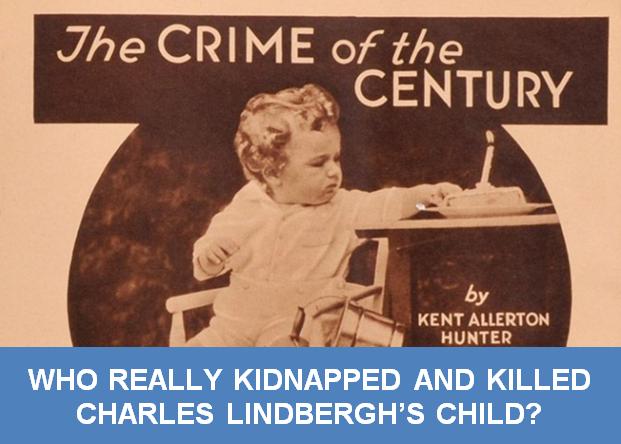
WHO REALLY KIDNAPPED AND KILLED CHARLES LINDBERGH’S CHILD?

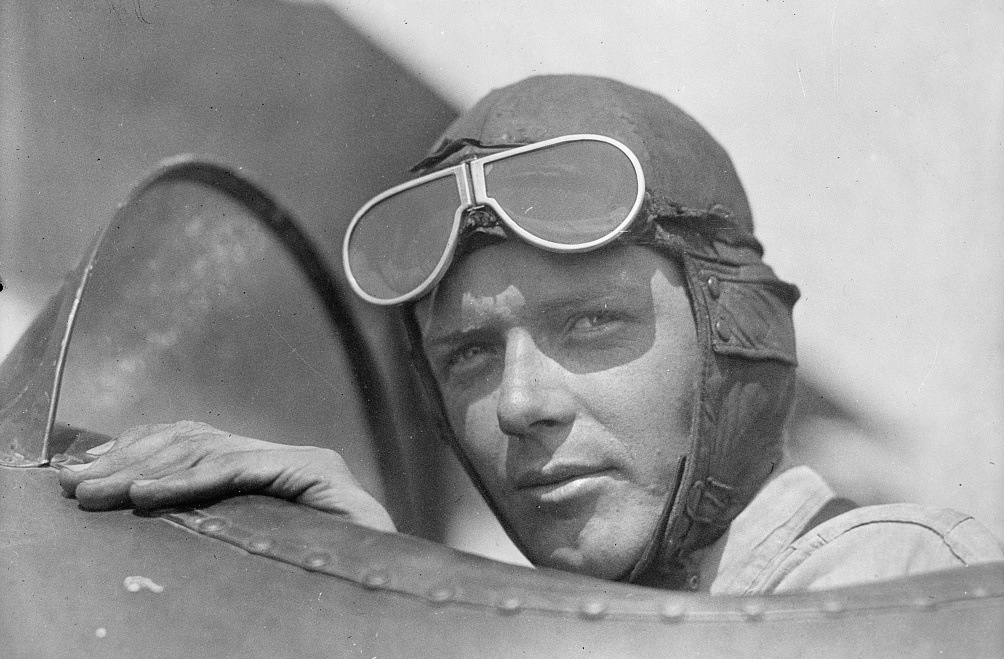
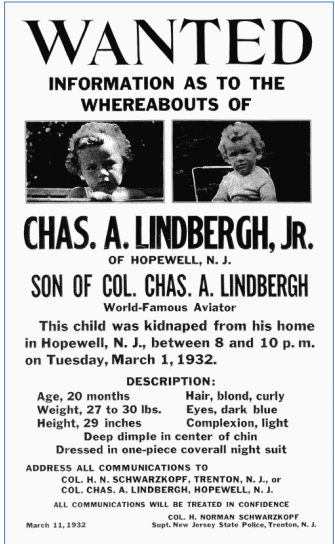
They call it The Crime of the Century—the 20th century that is. On March 1st in 1932, famed aviator Charles Lindbergh’s twenty-month-old son was brazenly snatched from his second-story nursery at the Lindbergh mansion outside Hopewell, New Jersey. The boy was found dead in nearby woods on May 12th. In 1934, Bruno Richard Hauptmann was charged, convicted, and executed in the electric chair for being the sole perpetrator of the crime. But was he?

The “Little Lindy Case” is an armchair detective’s delight. It’s been one for nearly ninety years and shows no sign of going away. There are dissenting sides in the Bruno Hauptmann camp. Some say he was guilty as hell. Some say he was totally innocent—as he steadfastly proclaimed up to the moment they ran 10,000 volts through his head. And some say he had a part, for sure, but other co-conspirators were involved.

Hauptmann was caught red-handed with marked ransom money as well as being linked to the crime through indisputable physical evidence. There’s no denying this. However, there were no eyewitnesses or anything other than circumstantial factors that secured Hauptmann’s fate. He never confessed and proclaimed total innocence to the end.

Were there others who kidnapped and killed Charles Augustus Lindbergh Junior or “Little Lindy” as he was known? Let’s look at the case facts that have been so well presented and preserved over the years.

Charles Augustus Lindbergh Senior was nothing special before he burst into fame. Lindbergh was the first man to fly solo and non-stop from America to Europe in 1927. A relative once said, “If it weren’t for surviving that flight, he’d have ended up running a gas station in Minnesota.”

But the world was ready for a hero like Charles Lindbergh in the pre-depression days when heroes were rare and the markets were tanking. Lindbergh was a poster boy of bravado, daring, and handsomeness and that led him to money. He married millionaire socialite Anne Morrow in 1929 and they produced a son, Charles Jr. in 1930.

Charles and Anne Lindbergh relished privacy after being world-famous celebrities. They’d hobnobbed with presidents and royalty and business leaders and everyone in the ranks of entertainment, publishing, and charity. They needed a getaway and built a home in rural New Jersey which was far from the New York madness.

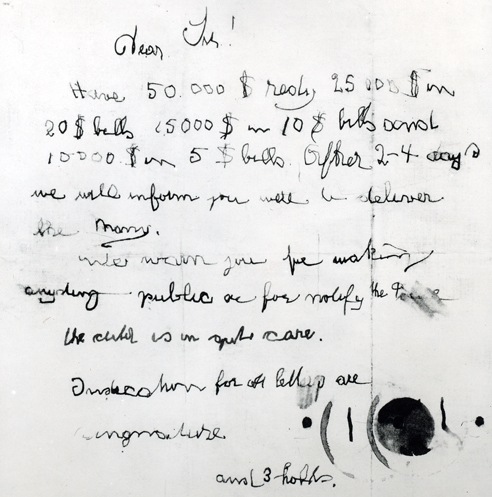
A nanny laid Little Lindy to rest in his crib at nine p.m. on the night of March 1, 1932. She returned for a check at ten and the toddler was gone. Charles Lindbergh was in the home at the time and he took over—finding a handwritten ransom note near the sill of the open window. It demanded $50,000 for the child’s safe return.

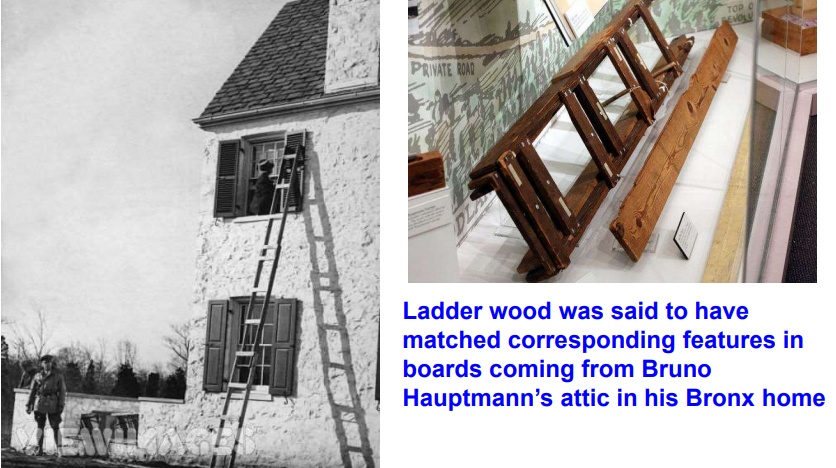
The local police contacted the New Jersey State Police for help. A search of an already-contaminated crime scene (caused by the Lindbergh family interference) found three clues later proving vital. First was the note that was handled by many. Second was a home-made wooden ladder with peculiar construction thought to be used by the perpetrator(s) to climb to the second-floor window for access. Third was a wood chisel found lying on the ground below the window.

By the next day, the Lindbergh kidnapping news hit the wire and went world-wide. Masses of curiosity seekers plagued the mansion scene and any attempt to keep negotiations secret was shattered. Already, theories formed and frauds threatened to take a focused investigation into the gutter.

On March 5, Charles Lindbergh Sr. got a follow-up communication in the mail. It was also handwritten and obviously done by the first note’s hand. This led to an intermediator being appointed to negotiate with the note writer. A series of fifteen hand-written notes or communiques followed before the $50,000 in ransom was delivered to a shadowy man with a German accent in a dark New York cemetery.

Charles Lindbergh Jr.’s body was accidentally discovered on May 12, 1932. It was 75 feet off the road, 2 miles from the Lindbergh home. The remains were decomposed and consistent with death occurring at the same time of the abduction. An autopsy found a fractured skull, but the true cause of death couldn’t be established.

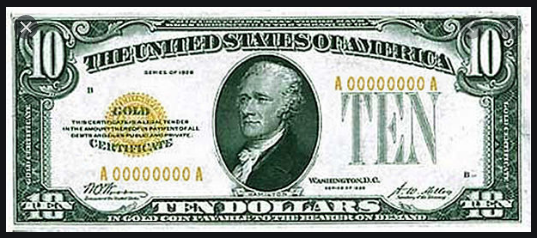
All law enforcement levels helped in the Lindbergh case. One was the Internal Revenue Service who devised a clever plan to mark the ransom money. They used a controlled amount of “Gold Currency Notes” that had individual serial numbers, therefore being identifiable to the Lindbergh case.

The genius of the “Gold Notes” is that the U.S. Treasury already planned to move off a gold-based currency system by 1933. This wasn’t public knowledge at the time of the ransom payment and the bills would be recognized as common tender. The IRS people knew, however, that these notes would soon be publicly recalled and note-holders would be required to cash them in or lose the value. That would force the ransom notes to be circulated instead of hoarded.

The plan worked.

Shortly after the payment, the IRS and the police distributed a serial number list of ransom Gold Currency notes to all banks in the New York and New Jersey area. Sporadically, marked bills showed up in the Bronx region but no pattern emerged. But once the Gold Note recall came, marked bills flooded the region.

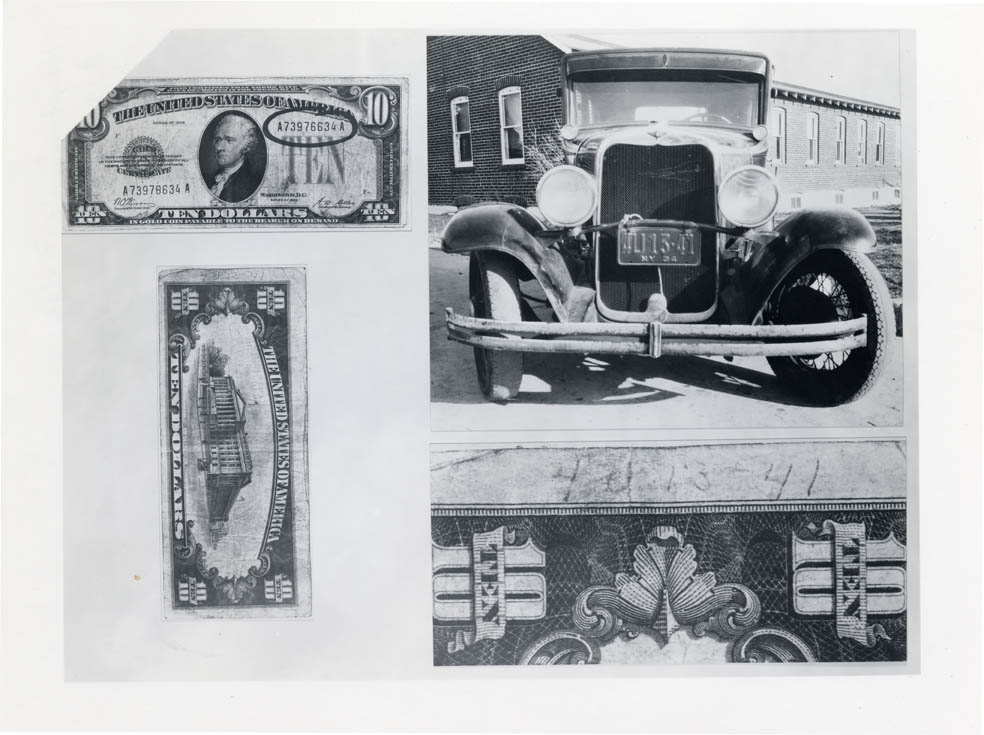
In September 1934, a Bronx service station manager received a $10 Gold Currency note. He knew nothing of the trap, but he knew of the recall and protected himself against counterfeit by recording the passer’s car license number on the bill—New York marker 4U-13-41. The manager deposited the marked bill at his bank where an astute teller checked the serial number and found it was a Lindbergh bill.

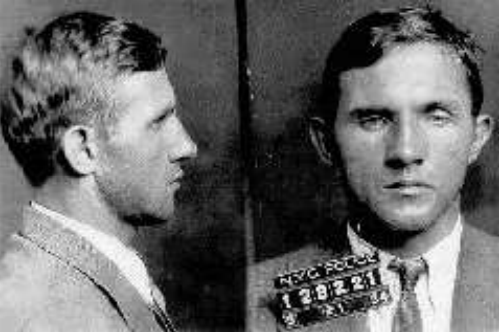
The police ran the plate. It came back to Bruno Richard Hauptmann of 1279 East 222 Street in the Bronx. They surveilled the place, arrested Hauptmann leaving home, and found another marked Gold Currency bill in his wallet. The search of his home found a lot, lot more.

Bruno Hauptmann was a thirty-five-year-old illegal immigrant from Germany. He was once deported from the US because of his European criminal record—a loner and cat-burglar with an MO of using ladders to access second-story windows. Hauptmann also had a carpentry background with the skills and tools to make a wooden ladder.

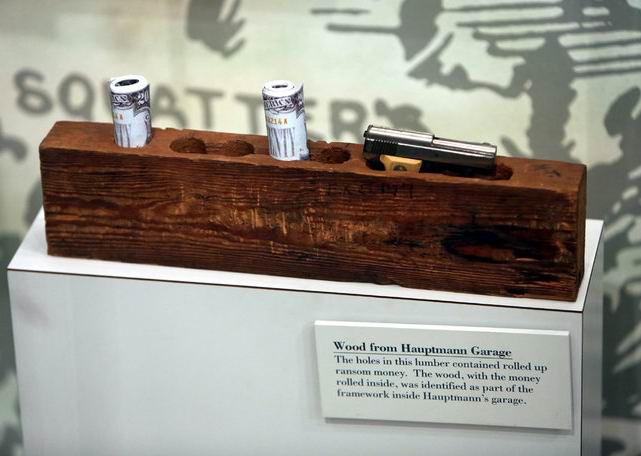
The police searched Hauptmann’s premises. In his garage was over $13,000 of the marked ransom money cleverly rolled up and hidden inside specially-made wooden boxes. That included more Gold Currency notes as well as standard United States Treasury bills.

The police also found materials and tools consistent with building the wooden ladder found at the scene, a matching toolset to the scene wood chisel, and significant writing samples that linked Bruno Hauptmann to the fifteen notes written to the Lindberghs.

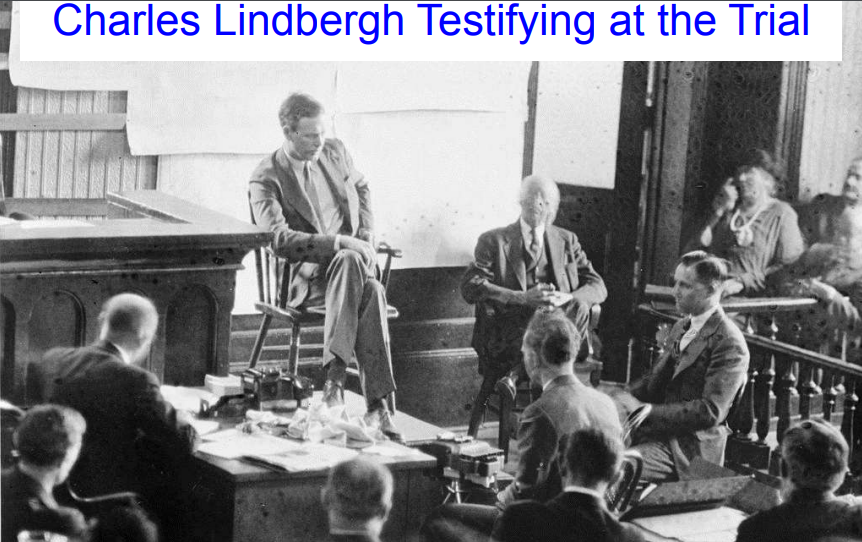
Bruno Hauptmann was tried before a New Jersey jury in 1935. It was the “Trial of the Century” by any standards and was a media circus. After weeks of evidence from hundreds of witnesses, the jury unanimously convicted Hauptmann of kidnapping and murdering Charles Lindberg Jr. in the first degree.

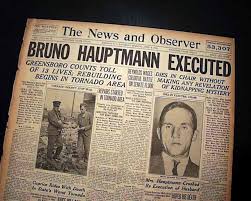
There were motions and appeals and short stays, but Bruno Hauptmann lost his life to Old Sparky on April 3, 1936. He never confessed or named accomplices. Till the switch was thrown, Hauptmann denied all involvement.

Despite what seemed like a clear-cut case, this muddied matter has had intense scrutiny since day one. It still has. There are online cults that would slit their wrists for a chance at post-death clemency for what they believe was a wrongful conviction and the execution of an innocent man.

Why do they believe that? It seems like despite the evidence and how fair the process, it’s simply impossible to convince some people of the truth when they already have a mindset to want the alternative. Here are the main evidence points in what led to Bruno Hauptmann’s conviction.

The Ransom Notes

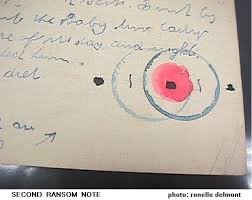
The first note surfaced inside the room where Charles Lindbergh Jr. was abducted. It was hand-written in particular ink on particular paper. The writing was unique in that it was script with printed numerals and the signature was absolutely outstanding.

The note writer used a pattern of two colored and overlapping dots with three holes perforated through them. No doubt, this was foreplaning to identify the real kidnapper from copycats. This signature remained consistent through the subsequent fourteen more notes delivered to the Lindberghs.

Hauptmann’s known handwriting specimens matched the ransom notes. The best experts in the fields agreed on this. The defense, at trial, could not rebut this. Also, similar paper with matching tears was in his house as well as matching writing implements and the hole-punching tool. Bruno Hauptmann wrote those notes and there was no denial.

The Wooden Ladder

The homemade wooden ladder also sunk Bruno Hauptmann. It was found fifty feet from the abduction second-story window and it was unique. It was made, according to professional opinions, by someone with carpentry skills and was designed to be disassembled in three pieces so it could be transported in a passenger car.

A wood expert with impeccable credentials testified about the ladder at Hauptmann’s trial. He was able to trace wood components in the scene ladder to pieces Hauptmann had sourced at a lumber supplier Hauptmann had worked for as well as boards coming from the attic floor in Hauptmann’s house.

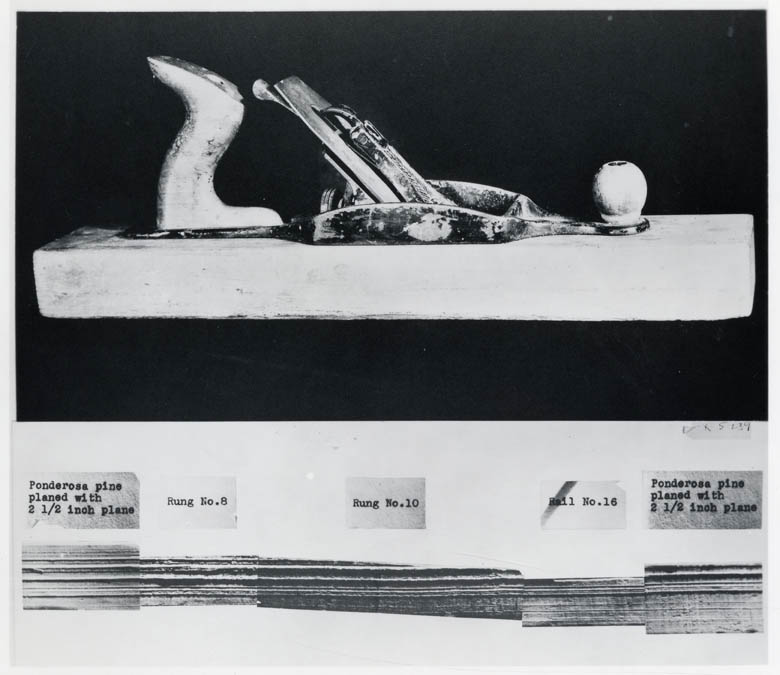
The expert physically matched what’s known as “Rung 16” to Hauptmann’s attic boards through wood grains, nail holes, knots, cuts, plane marks, and species. There was no question—in the expert’s or the jury members’ minds—that Bruno Hauptmann personally manufactured this ladder with materials and tools found at his home.

The Tools

The scene search at the Lindbergh residence found a wood chisel on the ground below the nursery window. It was a “Buck Brothers” brand with a ¾ inch cutting width. When the police searched Bruno Hauptmann’s garage/workshop, they found a matching set of “Buck Brothers” wood chisels. It was complete, except for the ¾ inch tool.

The police also found a wood planning tool in Hauptmann’s shop. It had a particular 2-degree bevel cutting edge with striations on the blade that physically matched the plane marks on ladder members. This was proven at the microscopic level and was a breakthrough in the courts accepting forensic toolmark evidence.

Furthering toolmark evidence, the investigation team also proved that a handsaw in Hauptmann’s tool kit cut and prepared sections of the homemade ladder. The saw kerf width, teeth settings, and stroke angle were consistent with cuts on the ladder’s members.

Then there were the nails. The nails in the scene ladder precisely matched a stock of nails found in Bruno Hauptmann’s garage. The size, shape, length, and materials were identical to what nails were in the Lindbergh ladder.

The Money

Without question, Bruno Hauptmann had the Lindbergh ransom money. And without question, no one else had a stash of it either. That’s because Hauptmann acted alone and there was no one else to share it with.

The forensic accountants did an amazing job for their time. This was before the computer and online banking days when transactions got recorded in ledgers and on carbon paper receipts. The banking sleuths followed the money and they sealed the case.

Bruno Hauptmann received $50,000 in various forms of United States negotiable currency. The forensic accounting team accounted for $49,986 of this going through Bruno Hauptmann’s hands. That was from cash-on-hand, bank deposits, transfers, withdrawals, purchase receipts, and stock market investments. The team estimated Hauptmann lost over half on bad investments.

Were Other Parties Involved in the Lindbergh Kidnapping and Killing?

The short answer is “No”. There’s not the slightest suggestion—based on evidence—that anyone else was involved in the Lindbergh plot. During Hauptmann’s trial, his lawyer Edward Reilly tried to build a smokescreen around Hauptmann being a participant rather than a killer. Reilly wasn’t the most effective barrister in the barn. His nickname was “Ed – Death House – Reilly” as he had a somewhat abysmal track-record of losing capital murder cases and sending his clients away.

No, there is no evidence of anyone co-conspiring with Bruno Hauptmann to kidnap and kill baby Lindbergh. That’s because non-events leave no evidence. It didn’t happen any other way than Bruno Hauptmann—acting alone—planned and carried out this heinous crime.

Why did he do it? Money. Pure and simple. He wanted the money and the prosecution did a marvelous job of painting Hauptmann from a pauper to a prince pre-and-post crime. He lived high off the hog for a few years after collecting the ransom, then he got piggishly careless and was caught.

How did he do it? This takes a bit of analogy. For one thing, this action of climbing to a secondary window in a high-profile mansion and stealing a child while the house is full of awake adults takes a lot of balls. Maybe a lot of stupidity, but no one anytime ever said Bruno Hauptmann was stupid.

There’s plenty of evidence that this crime was planned out far in advance. One of the ransom notes said it was planned for a year. The ladder-building—so planned that it was built in three sections so it could be disassembled and transported in a passenger car—to the ¾ inch chisel probably used to pry open the window implies planning. Then there was the child removal.

It makes no sense that a cat-burglar kidnapper would climb a rickety, three-piece home-made ladder and pry open a window to a nursery to abduct a live twenty-pound child and carefully carry him down by the same route. The most logical scenario is the perpetrator killed Little Lindy in his crib—probably by smothering or strangling— and tossed him out the window (accounting for the skull fracture), then descended to ground, picked up the deceased and took the little boy down the road where he dumped the toddler’s body in the bush.

There are details about the “Crime of the Century” that’ll never be known. But one thing’s for sure based on evidence and common sense. Bruno Richard Hauptmann really did kidnap and kill Charles Lindbergh’s child.