Tag Archives: Paranoia

THE CRAZY LIFE AND DEATH OF HOWARD HUGHES

Howard Hughes was a man who could design and test-fly an airplane, direct a movie, seduce a starlet, buy casino hotels, disappear for years, and still make headlines without showing his face. He was as much a symbol of American ambition as he was a cautionary tale of what unchecked wealth, genius, and madness can do to a man. Born into privilege, fueled by obsession, and haunted by demons, Hughes lived a life so extreme that it bordered on mythology. But his death—quiet, grim, and mysterious—might be stranger than the intense living that led to it. Here’s the drama of the crazy life and death of Howard Hughes.
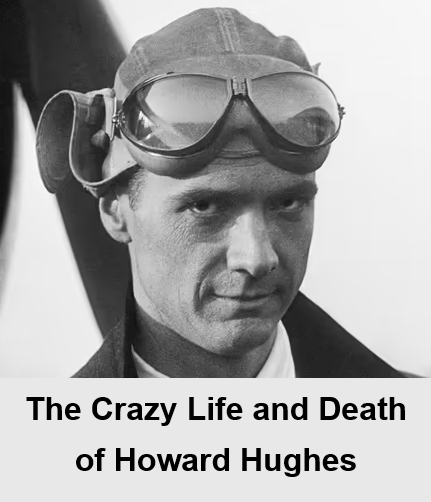
To understand his end, we have to rewind to the beginning of a life lived on the edges of brilliance and breakdown. Howard Hughes was many things: inventor, aviator, filmmaker, billionaire, recluse, suspected intelligence asset, and perhaps most tragically, a prisoner of his own mind.

He died aboard a private jet, his six-foot-four frame weighing only ninety pounds, unrecognizable even to those who’d once worshipped him. The official version says kidney failure. But the deeper you dig, the more the story starts to crack. It was a death as strange as his life—one that still casts a long shadow.

Howard Robard Hughes Jr. was born on December 24, 1905, in Humble, Texas, into a family drenched in oil money. His father, Howard Sr., invented the Hughes rotary drill bit and founded the Hughes Tool Company, which would bankroll young Howard’s endless stream of curiosities and obsessions. By age 11, he built Houston’s first wireless radio transmitter. At 12, he constructed a motorized bicycle from scrap parts. By 14, he was designing working aircraft models in his room. But early brilliance often walks hand in hand with isolation.

Tragedy struck fast and deep. His mother Allene died when he was just 16—reportedly from complications of an ectopic pregnancy. His father died suddenly two years later from a heart attack. At 18, Hughes was a billionaire orphan with complete control over the Hughes Tool fortune. No advisors. No parental guidance. Just money, ambition, and a ticking mind that was already showing cracks.

He dropped out of Rice University and headed west to Los Angeles. Hollywood in the 1920s was wild, wide open, and vulnerable to someone like Hughes: rich, eccentric, and hungry to create. His first film, “Swell Hogan,” was a bomb. But he rebounded with Hell’s Angels, an over-the-top war epic that cost $4 million, used real WWI aircraft, and took three years to complete. Hughes delayed filming repeatedly, waiting for perfect cloud formations to shoot aerial scenes. That level of obsessive control would become his hallmark.
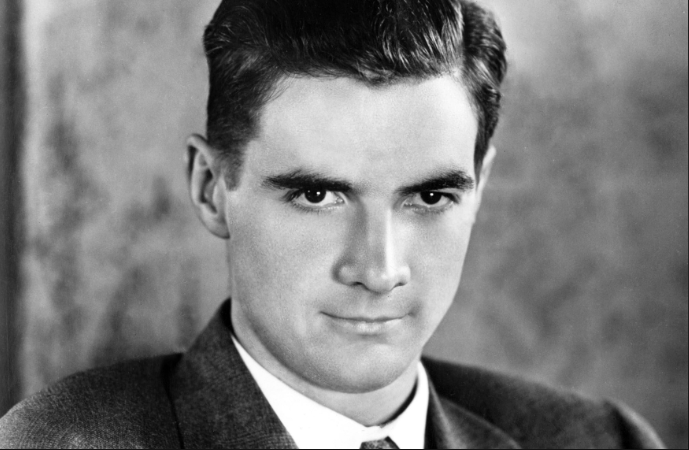
He followed up with The Outlaw (1943), mostly remembered for its promotional posters featuring Jane Russell’s cleavage. Hughes engineered a custom bra for her, designed to lift and frame her bustline more dramatically under studio lights. While Russell later claimed she never wore the thing, Hughes’s reputation as a hyper-controlling, detail-obsessed innovator was sealed. He didn’t just direct movies—he reimagined how to shoot them.

But filmmaking was just the opening act. Hughes’s true passion—perhaps his purest love—was aviation. In 1935, he set a world airspeed record flying the Hughes H-1 Racer. In 1938, he flew around the globe in 91 hours, earning him a ticker-tape parade in New York and a congratulatory telegram from President Franklin D. Roosevelt. His company, Hughes Aircraft, exploded into a major defense contractor, developing radar systems, missiles, and later, aerospace technology. He personally test-piloted many of the prototypes—sometimes successfully, sometimes not.

The worst crash came in 1946 while piloting the XF-11 reconnaissance plane over Beverly Hills. He clipped telephone wires and crash-landed in a residential area, destroying several homes. He broke dozens of bones, suffered third-degree burns, and nearly died. He was pulled from the wreckage by a U.S. Marine who happened to live nearby. The physical pain lingered for the rest of his life. So did the emotional trauma.

This is the crash that many believe began driving Howard Hughes crazy.

He emerged from the hospital addicted to morphine, codeine, and later Valium. But the painkillers didn’t just numb the physical agony—they dulled the sharp edges of a mind that was becoming unhinged. He began displaying symptoms that today would be clearly diagnosed: Obsessive-Compulsive Disorder (OCD), Post-Traumatic Stress Disorder (PTSD) from repeated crashes, Traumatic Brain Injury (TBI) from head trauma, and likely undiagnosed neurosyphilis, which can cause hallucinations and severe personality changes in its late stages.
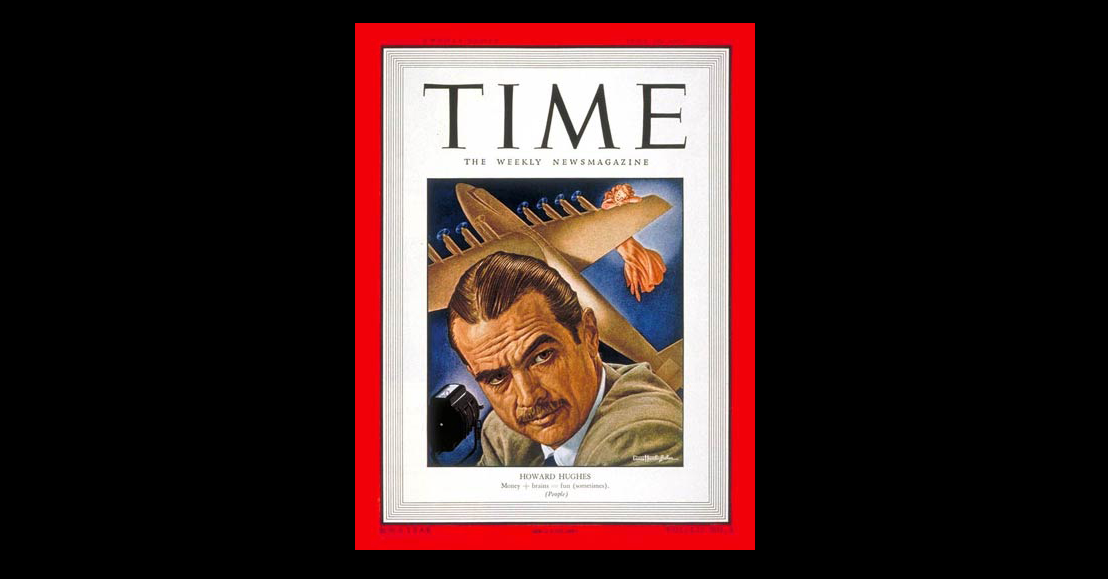
He began spiraling. He became consumed with hand-washing rituals that lasted hours. He insisted on sealed containers for his food. He wrote memos detailing the precise number of tissues someone should use when handling a document. He refused to be touched. And then, gradually, he refused to be seen at all.

By the 1950s, Hughes disappeared from public life. He moved into the Desert Inn hotel in Las Vegas and refused to leave. When the owners threatened eviction, he bought the hotel. Then he bought more—four additional Vegas properties, including the Sands and the Frontier. He watched the city from behind blackout curtains while seated naked in a chair, surrounded by jars of his own urine. He ate the same meal—TV dinners, Hershey bars, and whole milk—every day. For months at a time, he wouldn’t speak. He communicated through written notes. Many were borderline incoherent.

He trusted only a small inner circle of Mormon aides—dubbed the “Mormon Mafia.” These men controlled access to Hughes. They decided who could speak to him, when medications were administered, and even, allegedly, which documents he signed. Whether they were loyal caretakers or self-serving gatekeepers is still up for debate. Some say they protected him. Others believe they manipulated him for their own ends.

Meanwhile, Hughes was still making moves. His influence extended far beyond real estate and film. His company, Hughes Aircraft, was a key contractor for the U.S. government. In 1974, it was revealed that the CIA used Hughes’s name and company to build a deep-sea vessel—the Glomar Explorer—to recover a sunken Soviet submarine. The operation, known as Project Azorian, remains one of the most ambitious and secretive intelligence operations in history. Hughes’s name gave the cover story credibility. It also gave the CIA plausible deniability.

Hughes’s political entanglements didn’t stop there. He had longstanding financial connections to powerful people—most notably Richard Nixon. It’s widely believed that Hughes funneled large sums of money through intermediaries like Bebe Rebozo, a close Nixon ally. Some even argue that the 1972 Watergate break-in was partly motivated by a desire to retrieve sensitive documents linking Nixon to Hughes. Though never definitively proven, the rumors persisted and added another shadow to Hughes’s legacy.

And through it all, he was deteriorating—mentally, physically, and emotionally.
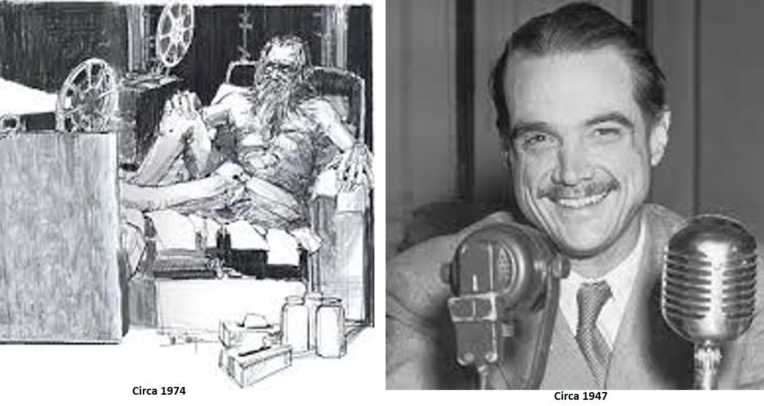
His fingernails grew inches long and curled under themselves. His toenails cracked and yellowed. He refused to bathe or cut his hair. He developed allodynia, a condition where even a soft touch causes extreme pain. He wore Kleenex boxes on his feet and sat naked for days at a time in darkened rooms, watching old movies on repeat. He feared germs, radiation, and even sunlight. His world shrank to a few rooms and a few carefully controlled interactions. He had gone from a bold aviator and innovator to a whisper behind a hotel room door.

In 1972, author Clifford Irving sold a fake Hughes autobiography to publisher McGraw-Hill. Irving claimed he had conducted secret interviews with Hughes. The hoax unraveled spectacularly when Hughes—out of hiding—called in to a press conference and publicly denied any involvement. The voice was unmistakably his. It was the last time the world would ever hear it.

In his final years, Hughes drifted from hotel to hotel, city to city: Managua, Vancouver, Acapulco, London. He traveled by private jet, hidden away, often sedated. His last known photograph is debated. Even his closest aides gave conflicting accounts of where he was at any given time.

On April 5, 1976, Howard Hughes died aboard a chartered Learjet, 30,000 feet over New Mexico, en route from Acapulco to Houston’s Methodist Hospital. He was pronounced dead at 1:27 a.m. The official cause: kidney failure. But when his body was examined, doctors were shocked. He weighed just 90 pounds and had shrunk more than four inches in height. His hair and beard were matted and uncut. His fingernails were several inches long. His skin was covered in sores. He was so unrecognizable, the FBI had to use fingerprints to identify him.

The coroner declared natural causes. But an 18-month private investigation painted a more disturbing picture. According to their report: “Persons unknown intentionally administered a deadly injection of codeine painkiller to this comatose man—obviously needlessly and almost certainly fatal.”

Was it euthanasia? Murder? A mercy killing? Or just gross negligence? We’ll likely never know. But Hughes’s legacy was immediately thrown into chaos. There was no clear will. Dozens of people claimed to have one. Most were forged. One, presented by gas station attendant Melvin Dummar, claimed Hughes had left him $156 million. It was ruled a fake, but the story became the basis for the film Melvin and Howard.

Even in death, Hughes was a myth waiting to be rewritten.
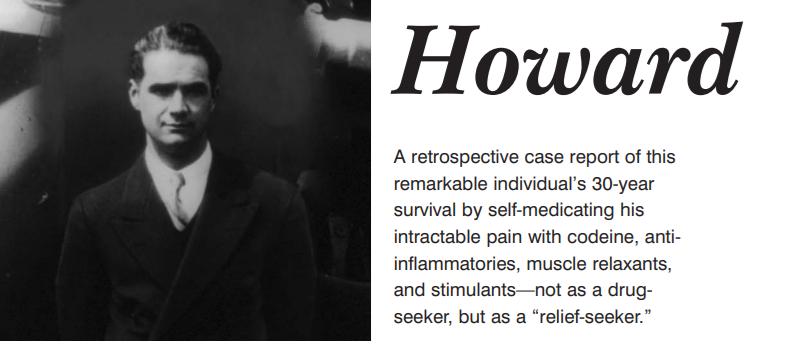
His Howard Hughes Medical Institute—originally established as a tax shelter—became one of the largest and most respected biomedical research organizations in the world. His story inspired books, films (The Aviator among them), and countless conspiracy theories. He remains one of the most complex, contradictory figures in American history.

So, what drove Howard Hughes crazy?

It wasn’t just the painkillers. Or the isolation. Or the crashes. It was the collision of genius without limits, power without oversight, and a mind without rest. He was a man of staggering vision—who could imagine worlds that hadn’t yet been built—but also a man whose compulsions devoured him from the inside out. He chased perfection in everything: flight, film, business, beauty. And perfection, for Hughes, was always just one more note, one more tweak, one more cleaning away.

He died not just from kidney failure—but from the failure of a peripheral support system that let a brilliant man collapse into exponential madness behind closed doors.

This is the real Howard Hughes—the boy genius, the master builder, the spy asset, the germ-fearing recluse, the paranoid mogul, and the man whose life and death still stir questions we may never answer.

And this was the crazy life and death of Howard Hughes.
Powered by a Centaur Intelligence System  centaursystems.ai

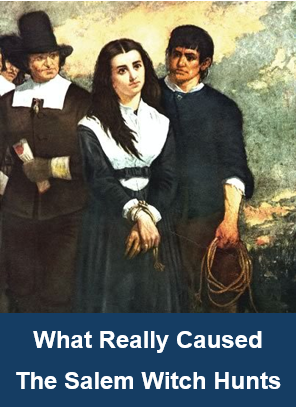
WHAT REALLY CAUSED THE SALEM WITCH HUNTS

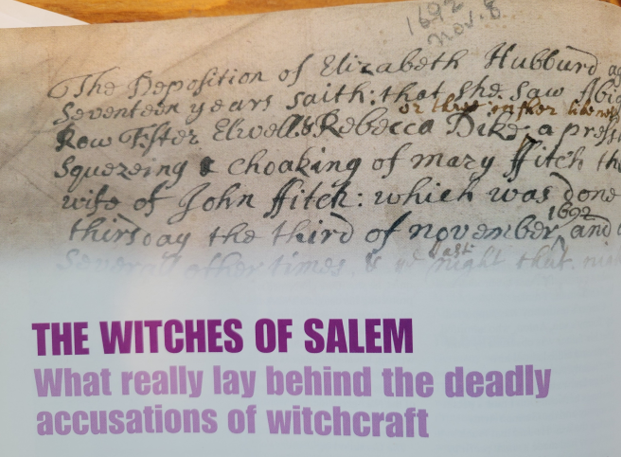
The Salem witch hunts and mass executions of innocent victims falsely accused of sorcery is an American historical black mark. Through June to October of 1692, Puritan authorities in Salem, Massachusetts hung nineteen citizens after trying and convicting them for witchcraft. They crushed another man to death with heavy stones and let five others perish—shackled in chains. Two imprisoned souls were mere children.

Today, all Salem witch hunt victims are officially exonerated. This terrible debacle became the poster case for trumped-up accusations and wrongful convictions. In fact, the term “witch hunt” is symbolic for going after those profiled for a vengeance need or paranoid forces “out to get someone”. Even a past United States president Twittered-on about witch hunts.

This horrific travesty of malicious injustice was an American turning point. Historians call the Salem witch trials the rock upon which theocracy shattered. They were the perfect storm of isolationism, religious extremism, fanaticism, and divided socio-economic structure. The witch trials were also unprecedented as bad jurisprudence and horrible miscarriages of justice.

Today, few educated or rational people believe in evil witchcraft or black magic. (Modern peaceful Wiccan practitioners are a different matter.) That old destructive medieval and ignorant mindset sieved from America after the Salem witch trials. But, for over three centuries, few people understood why the disaster happened. Various theories suggested Freudian mass-hysterics, a widespread fungus causing mind-altering behavior, and even meddling by alien forces aligned with the dark side.

Now the truth is out there. A meticulous, scientific study by two American academics published in the book Salem Possessed wraps up the witch hunt reason. It’s not some supernatural power or psychedelic drug. The answer lies in a complex mix of sociology, geography, demography, human psychology, genetics, pathology, and forensic science.

Something far more sinister than sorcery really caused the Salem witch hunts.

History of the Salem Witch Hunts

It trigged with teenagers. In January 1692, three bored girls played a game similar to today’s Ouija Board. They cracked eggs and separated the whites in a pan of cold water, then used imagination to decipher patterns divulging hidden secrets and foretelling future events. They got carried away. Soon they were writhing in fits and cramping into twisted contortions.

The girls were relatives of Salem Village vicar Samuel Parris, a Massachusetts Bay Puritan parishioner who referred the distorted girls to a local physician. The doctor found no medical cause for the girls’ discomfort. He suggested it was work of witchcraft and turned it back to the minister. The reverend sided with Satanic superstition and went about extracting accusations from the young girls.

They implicated three Salem women for bewitching and causing their erratic behavior—Sarah Good, Sarah Osborne, and Tituba. Good was known for tardy church attendance. Osborne was a loose-moraled beggar. And Tituba was a Carib slave house servant. The trio were hardly credible to Salem’s upper crust and certainly suitable scapegoats not equipped to defend themselves.

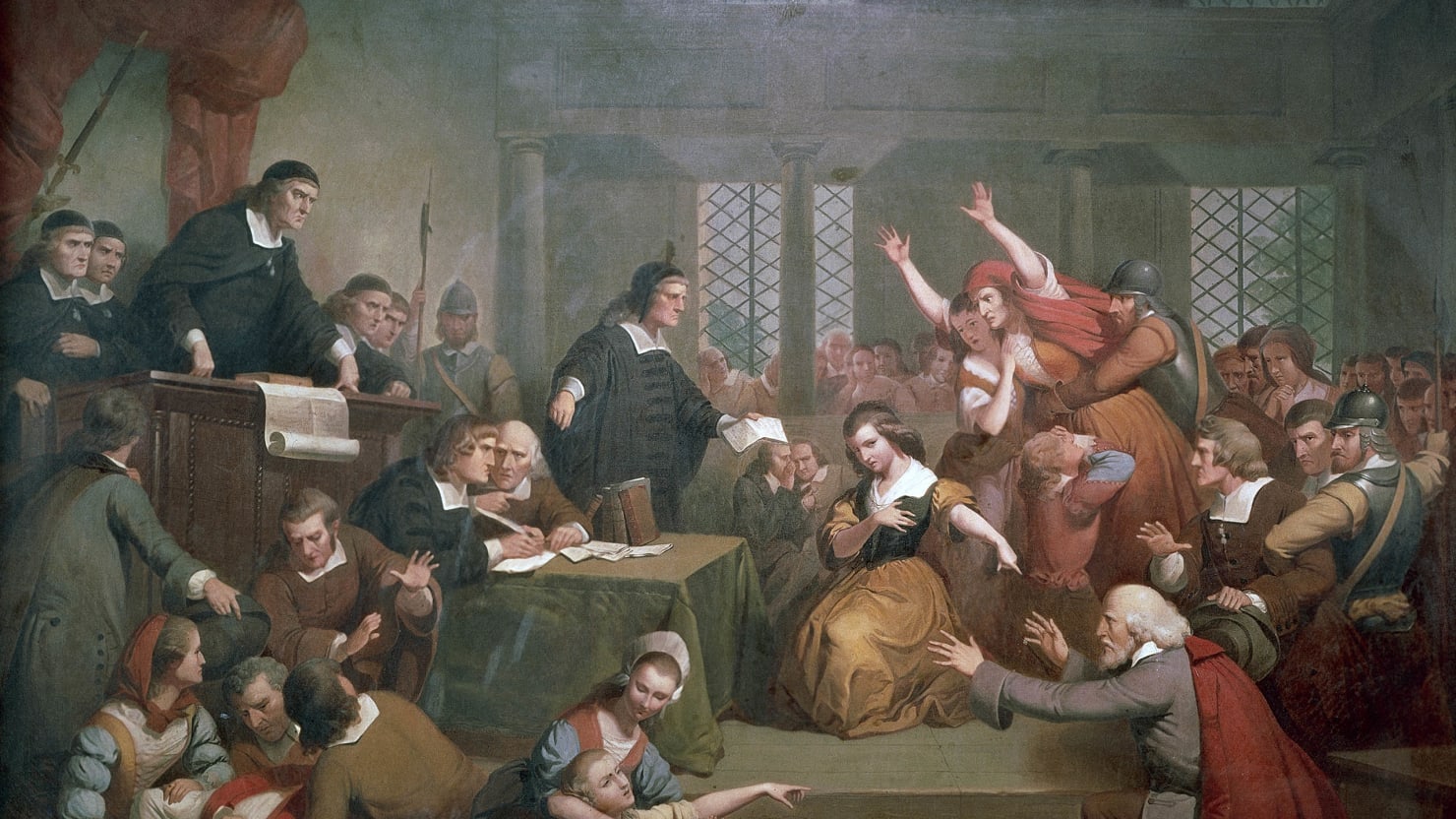
Good and Osborne fervently denied being witches. Despite intensive interrogation in magistrate’s court, they held to their denials. Tituba, on the other hand, confessed. She gave wild accounts of signing Satan’s book and offered crazy tales of human hogs, great black dogs, red cats, and yellow birds. Tituba also named of other Salem witches.

From there, everyone got carried away. Authorities rounded-up scores of witch suspects, hauling them before interrogatories. More people—women and men—confessed under duress and named more names. In a few months, nearly two hundred “witches” were accused, hunted down, and arrested in Salem and neighboring communities. Quickly, the arrests turned to trials and mass hangings began.

The 17th Century Salem Legal System

1692 was an important year in 17th Century Salem’s legal system. It coincided with a new charter for the Province of Massachusetts Bay following the 1680s King William War. The colonists were deeply divided in Salem and the surrounding area’s social structure. It was protective Puritism vs. progressive private enterprise. The King’s newly-appointed Governor, William Phip, arrived with the charter in January,1692—just as the witchcraft accusations arose.

The spiraling sequence of accusations, arrests and confession led to mass hysteria and a “thronged” legal system. To accommodate justice, Governor Phip convened a Special Court of Oyer (hearing) and Terminer (deciding). He appointed magistrates, judges and sheriffs based on local recommendations by powerful people in the religious sphere.

The Salem witch trials occurred long before the United States Constitution was a gleam in revolutionary eyes. Rules of evidence stemmed from English common law and principles based on religious doctrine. For witchcraft cases, evidence came from accusatory mouths of uneducated and manipulated common folk, not from corroborated independent and credible witnesses.

Once a citizen claimed their loss or discomfort was witchcraft caused, they laid a complaint against the accused before an appointed magistrate. If the complaint appeared credible by the magistrate’s standard, the accused was arrested and brought in for mandatory interrogation. This was well before the right to remain silent.

Interrogations were public events. Open questions by a panel and audience members given standing were standard procedure. Every effort pressed the accused to confess and reveal other witches. It was a Puritanical purging of Salem’s evils and a chance to rid society of undesirables. Once a grand jury heard interrogation evidence, they preferred an indictment and the ‘witch” was set on trial.

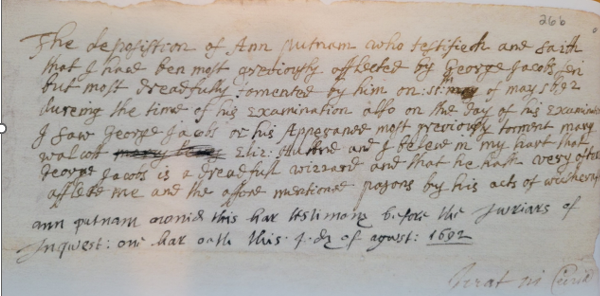
Witch trials depended on what’s called “spectral evidence”. This was testimony of the afflicted who claimed to see the apparition of the accused witch appear in a ghostly form while performing witchcraft upon them. Theologically, the court evidence relied on whether or not the accused gave the Devil permission to use their shape. The Salem witch courts contended the Devil could not perform evil acts using a person’s shape without that person’s expressed permission—therefore, if the afflicted complainant had seen the accused’s shape—it was in facto proof the accused was guilty of witchcraft and complicit with the Devil. According to Puritan law, the witch must die.

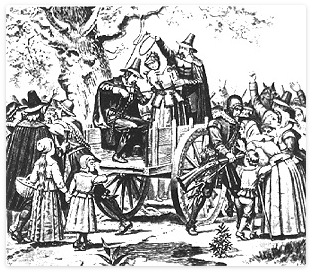
This convoluted logic resulted in immediate hangings and a compression death through layered stoning. It also caused deaths of those awaiting trial while shackled in dungeons. In three months, twenty-four innocent people were dead and many more awaited similar fates. That’s until someone accused Governor Phip’s wife of being a witch.

Suddenly, the executions stopped. Phip ordered an evidentiary review. It determined spectral evidence was inadmissible, noting it was not credible and highly prejudicial to the accused. Phip stayed the remaining execution warrants and commuted sentences, essentially freeing all those facing witchcraft allegations. Within three years, the Province of Massachusetts Bay officially exonerated all accused witches and ordered a consolidating day of fast and remembrance.

Cause of the Salem Witch Hunts

Many historians and writers pondered how normally rational people got so swept by the wind of witchcraft craze. Certainly, there was a mass psychological hysteria and paranoia. But the actual reason—the root cause—of why so many witch accusers and so many accused witches behaved so bizarrely was unknown. For years, suspected causes for bewitched symptoms like convulsing and hallucinating fell on the Claviceps purpurea fungus found in Puritan bread. It’s known for LSD-like side effects.

But a bread acid trip didn’t cut current standards, even though the mass hysteria was long explained by archaic superstitions of wanton witchcraft and the Devil’s demons. Everybody ate Puritan bread in Salem, and only a few presented weird symptoms. No, a rational look at the Salem witch hunts needed further investigation by reasonable and independent thinkers.

That rationality came from two Harvard-educated history professors at the University of Massachusetts who wrote the intriguing book Salem Possessed. Paul Boyer and Stephen Nissenbaum’s work took an in-depth look at the social, economic, and geographical factors affecting Salem’s citizens back when the witch hunts started. They also took a forensic approach to the psychological and pathological influences causing the complainant’s symptoms.

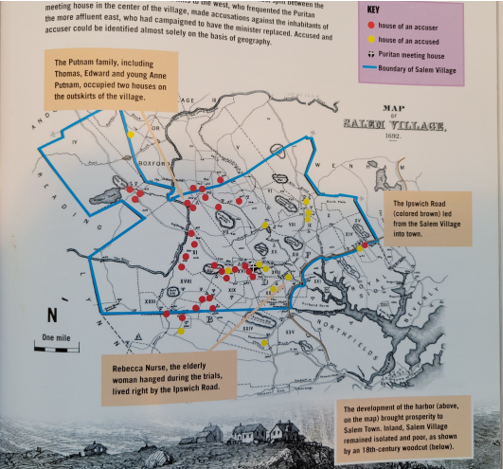
Boyer and Nissenbaum came to an astounding social conclusion. However, they weren’t the first to arrive there. In 1867, New England historian Charles W. Upham produced an accurate map of how Salem Village appeared in 1692. Then he plotted the houses where witch accusers and accused witches lived. Astonishingly, almost all accusers lived on the west side of Salem Village. The accused lived on the east side.

Salem Possessed’s authors concluded that if the Devil had come to Salem, he was being very choosy about which homes he visited. No, they concluded. The reason for the witch hunts had to lie in Salem’s history, and they were right.

Salem is one of the oldest European settlements in North America’s New England region. As the crow flies, it’s less than twenty miles northeast of downtown Boston. English immigrants of the Puritan faith first occupied Salem to establish a community based on their conservative views to protect old ways threatened by the age of Enlightenment and the then-liberal Anglican Church.

The Puritans were agricultural people. Naturally, they chose to settle in the best farmland which lay to the west of Massachusetts Bay. Over the course of eighty years—roughly four generations back then—the Puritans built a religious and agricultural society centered around what they called Salem Village. Today, the area is known as Danvers, Massachusetts which is a different jurisdiction from present-day Salem.

During the mid-1600s, a harbor community developed on Massachusetts Bay, east of the village. It became known as Salem Town. Commercially progressive settlers occupied Salem Town and focused on making money rather than praising the Lord and preserving old ways. As Salem Town grew, it pressed westward and crossed the border into the village. That didn’t sit well with the Puritan villagers.

Boyer and Nissenbaum uncovered a tangled history of feuds, jealousy, mistrust and hostility between the west Salem villagers and their eastern invaders. West Salem had two tightly knit prominent families who married within. The easterners were a mix of newcomers who married outside family lines. For some reason, everyone who displayed physical symptoms of being witch victims came from the two prominent Puritan families.

From a socio-economic and religious point, it’s clear the impact of commercial capitalism and the shifting role of the church left the backward Puritans threatened by their modern newcomers. It led to unbearable tensions which broke once the first bewitched symptoms showed in January of 1692. That opened a floodgate of superstitious opportunity to kill the eastern Salem villagers.

Salem Possessed makes a powerful argument that human personality partially caused the Salem witch hunts. If that be the Devil in humanity, then so be it. However, the Devil isn’t a good forensic reason for why the teen girls experienced peculiar symptoms like mood swings, cramps, and hysterical contortions. Something else was at work, and the pathology points at genetics.

Putting it bluntly, the Puritans were inbred. Their closed circle was more than religious and economic. They married within and secluded their gene pool. Huntington’s Chorea or Huntington’s Disease is common in people with dysfunctional genes. It’s a hereditary neurodegenerative illness with physical, cognitive, and emotional symptoms exactly like the west Salem village girls experienced. The gene mutation creates a protein that kills cells in the brain’s cerebral cortex.

Many adults in the Puritan community already had some stage of Huntington’s Disease. That impaired their thought processes as well as their offspring’s. Because of longevity in the Salem region and that power still clung to the Puritan Church in the late 1600s, Puritans made up the judicial force that persecuted the alleged witches. Their personality and pathology dysfunctions are what really caused the Salem witch hunts.

For three centuries, lore held that the witches of Salem were hung from scaffolding in the center of today’s Gallows Park. That’s not correct. Several years ago, the Gallows Project funded by the University of Massachusetts did a thorough research based on historical records and advanced forensic techniques like GPS analyzation and ground penetrating radar.

They conclusively identified the execution spot as a tree at Proctor’s Ledge. It’s right beside a Walgreens, and the community built a small memorial honoring the wrongfully accused witches of Salem.